Loading...


1 - Introduction to Geography
Quiz by Luis Cardenas
Customize this quiz to suit your class
Instantly translate to 100+ languages
Tag the questions with any skills you have. Your dashboard will track each student's mastery of each skill.
Which imaginary line divides the Earth into the northern and southern hemispheres?
Axis
North Pole
Equator
Prime Meridian
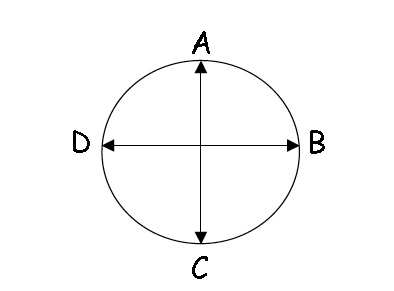
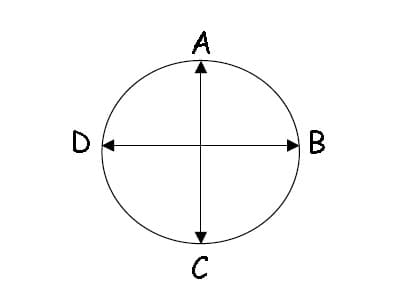
Match the letters with the compass rose.
Which imaginary line divides the Earth into the northern and southern hemispheres?
Match the letters with the compass rose.
Give this quiz to my class
To the Lakota, and other indigenous people on North America's Great Plains, the bison was an essential part of their culture ( expressed in the quote on the previous page). The bison provided meat for nutrition, a hide for clothing and shelter, bones for tools, and fat for soap. The bison was also central to their religious beliefs. So, when European settlers hunted the bison nearly to extinction, Lakota culture suffered. Culture is central to a society and the identity of its people, as well as its continued existence. Therefore, geographers study culture as a way to understand similarities and differences among societies across the world, and in some cases, to help preserve these societies. Analyzing Culture All of a group's learned behaviors, actions, beliefs, and objects are a part of culture. It is a visible force seen in a group's actions, possessions, and influence on the landscape. For example, in a large city you can see people working in offices, factories, and stores, and living in high-rise apartments or suburban homes. You might observe them attending movies, concerts, or sporting events. Culture is also an invisible force guiding people through shared belief systems, customs, and traditions. Culture is learned, in that it develops through experiences, and not merely transmitted through genetics. For example, many people in the United States have developed a strong sense of competitiveness in school and business, and believe that hard work is a key to success. These types of elements, visible and invisible, are cultural traits. A series of interrelated traits make up a cultural complex, such as the process of steps and acceptable behaviors related to greeting a person in different cultures. A single cultural artifact, such as an automobile, may represent many different values, beliefs, behaviors and traditions and be representative of a cultural complex. Since culture is learned there are many ways that one generation passes its culture to the next. Children and adults learn traits three ways: • imitation, as when learning a language by repeating sounds or behaviors from a person or television • informal instruction, as when a parent reminds a child to say "please" • formal instruction, as when students learn history in school 132 HUMAN GEOGRAPHY: AP" EDITION CULTURAL COMPLEX OF THE AUTOMOBILE The automobile provides much more than just transportation, as it reflects many values that are central to American culture. Origins of Culture The area in which a unique culture or a specific trait develops is a culture hearth. Classical Greece was a culture hearth for democracy more than 2,000 years ago. New York City was a culture hearth for rap music in the 1970s. Geographers study how cultures develop in hearths and diffuse-or spread-to other places. Geographers also study taboos, behaviors heavily discouraged by a culture. For example, many cultures have taboos against eating certain foods, such as pork or insects. What is considered taboo changes over time. In the United States, marriages between Protestants and Catholics were once taboo, but they are not widely opposed now. Traditional, Folk, and Indigenous Cultures With the beginning of the Industrial Revolution in the late 18th century, modern transportation and communication connected people as never before and led to extensive cultural mixing, especially as cities have grown. The world prior to this time was very different; however, remnants of the past are still evident in our modern cultures. Traditional, folk, and indigenous cultures share some important characteristics and are often grouped together, but they do have some subtle differences. Traditional Culture Recently, the meanings of traditional, folk, and indigenous culture have begun to merge, causing geographers to debate when each should be used. Increasingly, the term traditional culture is used to encompass all three cultural designations. All three types share the function of passing down long-held beliefs, values, and practices and are generally resistant to rapid changes in their culture. Folk Culture The beliefs and practices of small, homogenous groups of people, often living in rural areas that are relatively isolated and slow to change, are known as folk cultures. Like all cultures, they demonstrate the diverse ways that people have adapted to a physical environment. For example, people around the world learned to make shelters out of available resources, whether 3.1: INTRODUCTION TO CULTURE 133 it was snow or mud bricks or wood. However, people used similar resources such as wood differently. In Scandinavia, people used trees to build cabins. In the American Midwest, people processed trees into boards, built a frame, and attached the boards to it. Many traits of folk culture continue today. Corn was first grown in Mexico around 10,000 years ago, and it is still grown there today. While many elements of folk culture exist side by side with modern culture, there are people whose societies have changed little, if at all, from long ago. These people practice traditional cultures, those which have not been affected by modern technology or influences. They often live in remote regions, such as some small tribes in the Amazon rainforest, and have scant knowledge of the outside world. As the lines continue blurring between cultural designations, the Amish of Pennsylvania are often referenced as both folk and traditional culture. Indigenous Culture When members of an ethnic group reside in their ancestral lands, and typically possess unique cultural traits, such as speaking their own exclusive language, they are considered an indigenous culture. Some indigenous peoples have been displaced from their native lands, but still practice their indigenous culture. Native Americans in the United States, such as the Navajo, have kept indigenous cultural practices. First Nations of Canada, such as the Inuit, have also retained their indigenous culture. Globalization and Popular Culture As a result of the Industrial Revolution, improvements in transportation and communication have shortened the time required for movement, trade, or other forms of interaction between two places. This development, known as space-time compression (see Topics 1.4 and 3.6), has accelerated culture change around the world. In 1817, a freight shipment from Cincinnati needed 52 days to reach New York City. By 1850, because of canals and railroads, it took half that long. And by 1852, it took only 7 days. Today, an airplane flight takes only a few hours, and digital information takes seconds or less. Similar change has occurred on the global scale. People travel freely across the world in a matter of hours, and communication has advanced to a point where people share information instantaneously across the globe. The increased global interaction has had a profound impact on cultures, from spreading English across the world to instant sharing of news, events and music. Globalization specifically refers to the increased integration of the world economy since the 1970s. The process of intensified interaction among peoples, governments, and companies of different countries around the globe has had profound impacts on culture. The culture of the United States is intertwined with globalization. Through the influence of its corporations, Hollywood movies, and government, the United States exerts widespread influence in other countries. But other countries also shape American culture. For example, in 2019, the National Basketball Association included players from 38 countries or territories. When cultural traits- such as clothing, music, movies, and types of 134 HUMAN GEOGRAPHY: AP. EDITION businesses-spread quickly over a large area and are adopted by various groups, they become part of popular culture. Elements of popular culture often begin in urban areas and diffuse quickly through globalization processes such as the media and Internet. These elements can quickly be adopted worldwide, making them part of global culture. People around the world follow European soccer, Indian Bollywood movies, and Japanese animation known as anime. With people in many nations wearing similar clothes, listening to similar music, and eating similar food, popular cultural traits often promote uniformity in beliefs, values, and the cultural landscape across many places The cultural landscape, also known as the built environment (see Topic 3.2), is the modification of the environment by a group and is a visible reflection of that group's cultural beliefs and values. Traditional Culture to Popular Culture Popular culture emphasizes trying what is new rather than preserving what is traditional. Many people, especially older generations or those who follow a folk culture, openly resist the adoption of popular cultural traits. They do this by preserving traditional languages, religions, values, and foods. While older generations often resist the adoption of popular culture, they seldom are successful in keeping their traditional cultures from changing, especially among the young people of their society. One clash between popular and traditional culture is occurring in Brazil. As the population expands to the interior of the rain forest, many indigenous cultures, like the Yanamamo tribe, have more contact with outside groups. Remaining isolated by the forest is becoming increasingly difficult as many young people from the indigenous cultures become exposed to popular culture and begin to integrate into the larger Brazilian society. As the young people leave their communities, they are more likely to accept popular culture at the expense of their indigenous cultural heritage, which threatens the very existence of their folk culture. Traditional culture typically exhibits horizontal diversity, meaning each traditional culture has its own customs and language that makes it distinct from other culture groups. Yet, people people within each group are usually homogeneous, or very similar to each other. By contrast, popular culture typically exhibits vertical diversity, meaning that modern urban societies are usually heterogeneous, or exhibiting differences, within the society and usually contain numerous multiethnic neighborhoods. However, on a global scale popular cultures are relatively similar with the same type of malls, shops, fast food, and clothing. Urban global culture centers are not identical, yet, global cities often do not have as much horizontal diversity across space as folk cultures. 3.1: INTRODUCTION TO CULTURE 135 COMPARING TRADITIONAL AND POPULAR CULTURE Trait Traditional Culture Popular or Global Culture Society • Rural and isolated location • Urban and connected location • Homogeneous and • Diverse and multiethnic indigenous population population • Most people speak an • Many people speak a global indigenous or ethnic local language such as English or language Arabic • Horizontal diversity • Vertical diversity Social • Emphasis on community and • Emphasis on individualism and Structure conformity making choices • Families live close to each • Dispersed families other • Weakly defined gender roles • Well-defined gender roles Diffusion • Relatively slow and limited • Relatively rapid and extensive • Primarily through relocation • Often hierarchical • Oral traditions and stories • Social media and mass media Buildings and • Materials produced locally, • Materials produced in distant Housing such as stone or grass factories, such as steel or glass • Built by community or owner • Built by a business • Similar style for community • Variety of architectural styles • Different between cultures • Similar between cities • Traditional architecture • Postmodern / contemporary architecture Food • Locally produced • Often imported • Choices limited by tradition • Wide range of choice • Prepared by the family or • Purchased in restaurants community Spatial Focus • Local and regional • National and global Artifacts, Mentifacts, and Sociofacts Whether a cultural attribute is considered traditional, folk, indigenous, or popular in nature, it is valuable to differentiate between elements of culture that can be seen and those that can not. There are artifacts that comprise the material culture, which consists of tangible things, or those that can be experienced by the senses. Art, clothing, food, music, sports, and housing types are all tangible elements of culture. Another element of the study of artifacts is understanding the techniques to use or build a specific artifact. Artifacts can be unique to a particular culture, or can be shared. For example, people of all cultures need to communicate through language, yet there are many groups that possess languages unique to their culture. The ability to read, write and understand the English language is an artifact of importance for much of popular global culture. 136 HUMAN GEOGRAPHY: AP" EDITION Mentifacts comprise a group's nonmaterial culture and consist ofintangible concepts, or those not having a physical presence. Beliefs, values, practices, and aesthetics (pleasing in appearance) determine what a cultural group views as acceptable and desirable. Mentifacts can also be unique or shared. People of many cultures possess an belief in one or many deities, and often the deities are unique to that culture. The belief in a god is a mentifact-the religious building or symbols are artifacts. Cultural groups also possess sociofacts, which are the ways people organize their society and relate to one another. Taken altogether, people tend to see the whole of their culture as greater than the sum of its individual parts. Sociofacts are embodied through families, governments, sports teams, religious organizations, education systems, and other social constructs. As with artifacts and mentifacts, sociofacts may also be unique or similar to other societies. Families are the foundations of most societies, yet what constitutes the structure of a family may vary widely between cultural groups. For example, Western cultures tend to view the nuclear family, consisting of the parents and their children as the basic family unit. By contrast, in many Western African cultures the norm is the extended family, consisting of several generations and other family members such as cousins living under one roof.Introduction to Human Geography (1.1)Empowerment Technologies: Navigating the Digital World I. Introduction to ICT (Information and Communication Technology) • Definition and Importance of ICT in daily life, education, and business • Evolution from Web 1.0 (static web) to Web 2.0 (interactive and collaborative web) • Examples of ICT tools: computers, smartphones, cloud apps, internet ________________________________________ II. Web 2.0 and Online Platforms • Features of Web 2.0: user-generated content, social media, blogs, wikis • Difference between Web 1.0, Web 2.0, and Web 3.0 (basic intro) • Examples: Facebook, YouTube, Google Docs, Wikipedia ________________________________________ III. Online Etiquette and Digital Citizenship • Netiquette: responsible behavior online o Be respectful and polite in digital communication o Avoid flaming, spamming, and trolling • Importance of digital footprint and online reputation ________________________________________ IV. Online Safety, Security, and Privacy • Cyber threats: phishing, malware, identity theft • Tips to stay safe online: o Use strong passwords o Avoid clicking suspicious links or emails o Enable privacy settings on social platforms • Digital addiction: recognizing and managing screen time ________________________________________ V. Productivity Tools and Applications • Common productivity software: o Word processors: MS Word, Google Docs o Spreadsheets: MS Excel, Google Sheets o Presentation tools: MS PowerPoint, Canva, Google Slides • Cloud computing: accessing tools and files via the internet (e.g., Google Drive) ________________________________________ VI. Open-Source and Licensing • Understanding open-source software: free to use, modify, and distribute o Examples: LibreOffice, GIMP, Moodle • Creative Commons licenses: o Allows creators to share work legally o Different license types (BY, SA, NC, ND) ________________________________________ VII. The Digital Divide • Definition: the gap between individuals who have access to technology and those who do not • Causes: economic status, geography, infrastructure • Importance of digital literacy and inclusion Introduction to Hedging Instruments: Forwards, Futures, Options, and Swaps Hedging instruments are financial tools used by businesses and investors to mitigate risk. These instruments help protect against adverse price movements in assets such as commodities, currencies, interest rates, or securities. The four main hedging instruments are forwards, futures, options, and swaps. 1. Forwards A forward contract is a customised agreement between two parties to buy or sell an asset at a predetermined price on a specified future date. Key Characteristics: Over-the-counter (OTC): Traded directly between parties, not on an exchange. Customisation: Can be tailored to suit the needs of the parties involved. Settlement: Occurs at the end of the contract, which may involve physical delivery or cash settlement. Risk: Forwards carry counter-party risk, as there is a possibility one party may default. Example: A company that needs to import raw materials in six months may enter into a forward contract to lock in the current price, avoiding the risk of price increases. 2. Futures A futures contract is similar to a forward, but it is standardised and traded on an exchange. This standardisation eliminates counter-party risk. Key Characteristics: Standardised: Contract size, expiration, and other terms are fixed by the exchange. Mark-to-market: Gains and losses are settled daily. Liquidity: Futures are highly liquid because they are traded on exchanges. Regulation: As they are traded on formal exchanges, they are more regulated than forwards. Example: A wheat farmer may sell futures contracts to hedge against a possible decline in wheat prices before harvest. 3. Options Options provide the right, but not the obligation, to buy or sell an asset at a specified price on or before a certain date. There are two types of options: call options and put options. Call Option: Gives the holder the right to buy an asset at a predetermined price. Put Option: Gives the holder the right to sell an asset at a predetermined price. Key Characteristics: Premium: The buyer pays a premium upfront to obtain the option. Limited Risk: The maximum loss is limited to the premium paid. Flexibility: Options can be used for speculative or hedging purposes. Example: An investor holding stocks may buy a put option to protect against potential declines in the stock's price. 4. Swaps A swap is a contract in which two parties agree to exchange cash flows or liabilities over a specific period. The most common types are interest rate swaps and currency swaps. Key Characteristics: Customizable: Like forwards, swaps are often tailored to meet the needs of the parties involved. Counterparty Risk: Swaps are typically OTC instruments, exposing parties to default risk. Common Uses: Used to manage interest rate risk or currency risk. Example: A company with a variablerate loan may enter into an interest rate swap to exchange its variable payments for fixedrate payments, thus locking in stable costs. Hedging instruments are essential for managing financial risk in volatile markets. Each instrument serves different purposes, with varying levels of complexity, risk, and customization. Whether through forwards, futures, options, or swaps, businesses can better plan for the future by reducing exposure to uncertain price fluctuations. Hedging Strategies for Market Risk, Credit Risk, and Currency Risk 1. Hedging Strategies for Market Risk Market risk (also known as systematic risk) arises from fluctuations in asset prices, such as stocks, bonds, commodities, and interest rates, due to economic factors or market volatility. Key Hedging Instruments for Market Risk: Derivatives (Options, Futures, and Forwards): These instruments allow investors to hedge against unfavorable price movements in stocks, commodities, or interest rates. Example: An investor holding a large stock portfolio might buy a put option to protect against a potential market downturn. If the market declines, the put option increases in value, offsetting losses in the portfolio. Short Selling: Investors can sell borrowed assets with the expectation of buying them back at a lower price, profiting from the decline. Example: A fund manager expecting a market decline may short sell stocks to hedge a portfolio against losses. Common Hedging Strategies: Portfolio Diversification: Reducing market risk by spreading investments across various asset classes (stocks, bonds, commodities) and sectors. Using Index Futures: Large portfolios can be hedged using index futures that track the performance of the overall market. If the market declines, profits from the short position in the futures contract will offset losses in the portfolio. Risk Parity: Allocating assets based on the level of risk rather than the dollar amount invested, balancing risk exposure across asset classes. 2. Hedging Strategies for Credit Risk Credit risk refers to the possibility that a borrower will default on a debt obligation. This is especially important for banks, lenders, and institutions dealing with bonds and loans. Key Hedging Instruments for Credit Risk: Credit Default Swaps (CDS): A financial derivative where the buyer of a CDS pays a premium to the seller in exchange for protection against a default on a loan or bond. Example: A bank holding corporate bonds can buy a CDS to ensure they are compensated if the issuing company defaults. Collateralised Debt Obligations (CDOs): These instruments pool together various debt instruments and allow risk to be distributed among multiple investors. Credit Insurance: Companies may use insurance to protect against the risk of a customer defaulting on payments. Common Hedging Strategies: Diversification of Loan Portfolio: Spreading out credit exposures across various industries, geographies, and borrower profiles reduces the overall risk of default. Tightening Lending Standards: Limiting exposure to highrisk borrowers by implementing stringent credit assessments. AssetBacked Securities: Banks can sell loans or bonds packaged as assetbacked securities to reduce their exposure to credit risk. 3. Hedging Strategies for Currency Risk Currency risk (or exchange rate risk) arises from fluctuations in foreign exchange rates, which can affect companies involved in international trade or with investments in foreign countries. Key Hedging Instruments for Currency Risk: Forward Contracts: A firm agrees to exchange a specified amount of currency at a predetermined exchange rate on a future date. Example: A U.S. exporter expecting payment in euros might enter into a forward contract to sell euros and lock in a favorable exchange rate. Currency Options: These give the right, but not the obligation, to buy or sell currency at a specific price. Example: A U.S.based company buying goods from Japan might buy a call option on the yen to hedge against the risk of yen appreciation. Currency Swaps: Two parties exchange interest payments and principal in different currencies to hedge against exchange rate fluctuations. Common Hedging Strategies: Natural Hedging: Companies can offset currency risk by balancing foreign revenue with costs in the same currency. For example, if a company generates revenue in euros, it can also incur expenses in euros, reducing exposure to exchange rate fluctuations. Multi-Currency Invoicing: Firms can invoice in their home currency, shifting the currency risk to the buyer. Currency Diversification: Holding a diversified basket of currencies can reduce exposure to large fluctuations in any one currency. Effective hedging strategies are crucial for managing various types of risks in financial markets. Market risk can be managed using instruments like futures and options, while credit risk can be mitigated through diversification and credit derivatives. Currency risk, often faced by multinational firms, can be hedged using forward contracts, options, or swaps. Each strategy helps firms and investors protect their portfolios, ensure financial stability, and reduce the impact of adverse movements in the financial markets. Portfolio Risk Management Techniques: Diversification, Asset Allocation, and Risk Budgeting Managing risk is a fundamental aspect of portfolio management. Investors use various techniques to control and reduce the risks inherent in investing. Three key techniques used in portfolio risk management are diversification, asset allocation, and risk budgeting. Each of these techniques helps in mitigating potential losses while aiming to achieve the desired return. 1. Diversification Diversification is a risk management strategy that involves spreading investments across different assets, sectors, or geographic regions to reduce exposure to any single risk. The idea is that different assets perform differently under various market conditions, so losses in one investment can be offset by gains in others. Key Benefits of Diversification: Reduction of Unsystematic Risk: Unsystematic risk, which is unique to a specific company or industry, can be reduced by holding a variety of investments that respond differently to market conditions. Improved Stability: A diversified portfolio is less volatile, as the negative performance of one asset can be balanced by the positive performance of others. Methods of Diversification: Across Asset Classes: Investing in a mix of asset classes such as stocks, bonds, commodities, and real estate. Example: A portfolio with 60% equities, 30% bonds, and 10% commodities is more diversified than one solely consisting of stocks. Within Asset Classes: Diversifying within a single asset class (e.g., holding stocks from different sectors like technology, healthcare, and energy). Geographic Diversification: Investing in assets across various countries or regions to mitigate country-specific risks. Example: Holding U.S. stocks along with emerging market equities can reduce risks related to a downturn in one country's economy. 2. Asset Allocation Asset allocation refers to the process of dividing investments among different asset classes (such as stocks, bonds, and cash) to align with an investor's risk tolerance, time horizon, and financial goals. Asset allocation plays a crucial role in portfolio risk management by determining the overall risk-return profile of the portfolio. Key Elements of Asset Allocation: Strategic Asset Allocation: A longterm approach that involves setting target allocations for different asset classes based on financial goals and risk tolerance. Example: A young investor with a longterm horizon might allocate 70% to stocks, 20% to bonds, and 10% to cash. Tactical Asset Allocation: A more active approach that involves adjusting the asset mix in response to short-term market conditions. Example: If the investor expects an economic downturn, they might temporarily reduce exposure to equities and increase exposure to bonds. Types of Asset Allocation Models: Conservative: Focuses on preserving capital with a larger allocation to bonds and cash (e.g., 20% stocks, 80% bonds). Balanced: A moderate risk approach with an equal focus on growth and income (e.g., 50% stocks, 50% bonds). Aggressive: Targets higher returns by investing predominantly in equities, accepting higher risk (e.g., 80% stocks, 20% bonds). Example of Asset Allocation: A 40 year old investor with moderate risk tolerance may allocate their portfolio as follows: 50% equities, 40% bonds, and 10% in alternative investments such as real estate or commodities. The equities provide growth potential, while the bonds and alternative assets offer stability and income. 3. Risk Budgeting Risk budgeting is a method of allocating risk across different components of a portfolio, rather than focusing solely on returns. The goal is to optimise the portfolio’s risk-return profile by distributing risk in a way that aligns with the investor’s objectives and risk tolerance. Key Concepts of Risk Budgeting: Risk Contribution: Each asset class or investment in the portfolio contributes a certain amount of risk (measured by metrics such as volatility or Value at Risk). Risk budgeting ensures that no single asset class dominates the overall risk of the portfolio. Example: A portfolio may contain 60% stocks and 40% bonds, but if the stocks are highly volatile, they may contribute 90% of the portfolio's risk. Target Risk: Investors set a maximum acceptable level of risk (e.g., a portfolio volatility of 10%) and allocate investments so that the total risk remains within this target. Techniques in Risk Budgeting: Risk Parity: Allocates risk evenly across asset classes, rather than allocating capital based solely on return expectations. Example: In a risk-parity portfolio, both bonds and stocks might be balanced in such a way that they contribute equally to the overall portfolio risk, even though the dollar investment in bonds may be larger due to their lower volatility. Value at Risk (VaR): This technique measures the potential loss in a portfolio over a specific time period, under normal market conditions, at a given confidence level. The risk budget ensures that the potential loss stays within acceptable limits. Example of Risk Budgeting: An investor targets an overall portfolio risk of 8% volatility. After analyzing the risk contribution of each asset class, they determine that equities, which currently make up 60% of the portfolio, contribute 70% of the risk. To adhere to the risk budget, the investor may reduce their equity exposure and increase their allocation to bonds or other less volatile assets. Diversification, asset allocation, and risk budgeting are complementary techniques used in portfolio risk management. Diversification reduces unsystematic risk by spreading investments across various assets. Asset allocation ensures that investments align with an investor's goals and risk tolerance. Risk budgeting focuses on managing the contribution of risk from each asset class to create a balanced and efficient portfolio. Together, these strategies help investors achieve a balance between risk and return, ensuring longterm portfolio stability. Risk Mitigation Through Insurance, Securitisation, and Other Financial Engineering Techniques Risk mitigation is a core objective in financial management, and various strategies can be employed to reduce or manage risks. Three major approaches are insurance, securitisation, and financial engineering techniques. Each of these methods helps firms and individuals transfer, reduce, or eliminate certain financial risks. 1. Insurance as a Risk Mitigation Tool Insurance is a traditional risk transfer method that protects against financial losses by shifting the risk to an insurance company in exchange for premium payments. It is widely used to mitigate various forms of risk, such as operational, liability, and property risks. Key Aspects of Insurance for Risk Mitigation: Risk Transfer: The insurer takes on the risk in exchange for a premium, thus protecting the insured party from unexpected financial losses. Indemnity: In the event of a loss, the insurance policy compensates the insured based on the terms of the contract. Customisable Coverage: Insurance policies can be tailored to address specific risks, such as property damage, business interruption, liability, or cyber risks. Types of Insurance for Businesses: Property and Casualty Insurance: Covers physical assets like buildings, machinery, and inventory from risks like fire, theft, or natural disasters. Liability Insurance: Protects businesses against legal liabilities arising from accidents, negligence, or professional errors. Business Interruption Insurance: Compensates for lost income if a business has to halt operations due to unforeseen events. Credit Insurance: Shields companies from losses due to the nonpayment of trade receivables. 2. Securitisation as a Risk Mitigation Technique Securitisation is a financial engineering process that involves pooling various financial assets (such as loans, mortgages, or receivables) and converting them into marketable securities. This process allows firms to transfer risk to investors, thereby reducing their exposure. Key Elements of Securitisation: Risk Transfer: By securitising assets, companies can transfer the risk of default or nonpayment to investors who purchase the securities. Liquidity Creation: Securitisation converts illiquid assets (like mortgages or loans) into liquid, tradeable securities, improving cash flow for the originating firm. Diversification of Risk: Pooling assets with different risk profiles reduces the impact of individual defaults, spreading the risk across multiple investors. Common Forms of Securitisation: MortgageBacked Securities (MBS): Pools of mortgages are bundled and sold as securities to investors, transferring the risk of mortgage defaults. Example: A bank that issues home loans can bundle those loans into MBS and sell them to investors, transferring the credit risk of potential defaults. Asset-Backed Securities (ABS): Similar to MBS, but backed by other types of assets like credit card receivables, auto loans, or student loans. Collateralised Debt Obligations (CDOs): Structured financial products that pool different types of debt, such as loans and bonds, and sell them as securities with varying risk levels. Example: A bank may issue a portfolio of auto loans and then pool these loans into an assetbacked security (ABS). The ABS is sold to investors, who take on the risk of loan defaults. By securitising the loans, the bank reduces its exposure to credit risk and generates immediate cash flow. 3. Financial Engineering Techniques for Risk Mitigation Financial engineering involves the use of complex financial instruments, derivatives, and structured products to manage or mitigate financial risks. These techniques allow firms to hedge against specific risks, optimize capital structure, and improve financial stability. Common Financial Engineering Techniques: Derivatives: Financial instruments like futures, forwards, options, and swaps are used to hedge against price fluctuations, interest rate changes, or currency movements. Example: A company with significant foreign exchange exposure may use currency forwards or options to hedge against exchange rate fluctuations, ensuring predictable cash flows. Options and Futures: Options: Provides the right (but not the obligation) to buy or sell an asset at a predetermined price, allowing firms to hedge against unfavorable price movements. Example: An airline company can buy options on jet fuel to hedge against rising fuel prices. Futures: Standardized contracts to buy or sell an asset at a set price on a future date, commonly used to hedge commodities or financial assets. Example: A wheat producer may use futures contracts to lock in a favorable price for its crop, hedging against a potential price drop. Swaps: These involve the exchange of cash flows between two parties, often used to manage interest rate risk or currency risk. Interest Rate Swaps: Firms can exchange floatingrate interest payments for fixedrate payments to hedge against rising interest rates. Currency Swaps: Used to hedge exchange rate risk in crossborder transactions by exchanging principal and interest payments in different currencies. Example: A company with a variablerate loan may enter into an interest rate swap to exchange its variable payments for fixedrate payments, locking in stable costs. Structured Products: These are customised financial instruments designed to achieve specific riskreturn objectives. They often combine derivatives with other securities to create tailored risk exposures. Example: A structured note that combines a bond with an embedded option, offering downside protection while allowing for potential upside linked to the performance of an equity index. Credit Derivatives: Tools like credit default swaps (CDS) allow investors to transfer credit risk to other parties. Example: A bondholder worried about a company’s potential default may purchase a CDS, which pays out in case of a default event. Example: A company may issue a bond with an embedded call option, allowing it to repurchase the bond if interest rates decline. This financial engineering tool enables the company to mitigate the risk of rising interest rates, reducing future borrowing costs. Risk mitigation through insurance, securitisation, and financial engineering offers businesses a variety of tools to manage and transfer risks. Insurance allows for the direct transfer of risk to an insurer, while securitisation helps companies offload risk by packaging and selling assets as securities. Financial engineering techniques, including derivatives, swaps, and structured products, provide sophisticated ways to hedge market, interest rate, and currency risks. Each approach helps organizations improve financial stability, enhance liquidity, and manage potential losses in a volatile market environment.1. Settlements Importance of Rivers Fertile Land: The soil near rivers was great for farming, thanks to regular flooding that added nutrients. Trade and Travel: Rivers made moving things and people easy, which helped trade and communication. Protection: Rivers could act as natural barriers, making it harder for enemies to attack. Food: Rivers were full of fish and other food, adding to what people could eat. Energy: People used the river's flow to power machines, for example, grinding grain. Cleanliness: Rivers were used to wash away waste, keeping settlements cleaner. Culture: Rivers often had spiritual importance, and ceremonies and stories revolved around them. Common Geographic Features of Ancient Civilizations Mesopotamia: the Tigris and Euphrates Rivers in central Iraq Indus River Valley: the river runs in the northwestern part of India Nile River Valley: the major river of Egypt Yellow River Valley: a major river flowing through the southern part of China Rivers provided water, food, transportation, and shaped the way of life and development of these ancient civilizations. Impact of Mountains on Settlements Mountains served as barriers to early settlement due to the lack of technology to cross them. The Himalayan Mountains isolated much of India and China during their early development. Impact of Deserts on Migration Deserts posed significant challenges to people who wanted to migrate due to their harsh and unforgiving conditions. Notable deserts include the Empty Quarter in Saudi Arabia and the Sahara Desert in Africa. Changes in Migration and Cultural Blending Advancements in transportation technology post-Industrial Revolution increased cultural blending. Transportation advancements enabled global migration. Before, cultures were isolated, focusing on beliefs and local adaptations. The Industrial Revolution transformed migration and cultural blending. 2. How Humans Modify and Adapt to Their Environment Ways Humans Modify Their Environment Mining: Removing the earth's surface for precious metals. Irrigation: Diverting water for farming. Transportation: Moving goods with trains, cars, airplanes, and boats. Mining Strip mining removes large layers of the earth. Can impact the environment by removing plants and polluting water sources. Irrigation Diverting water for farming and urban development. Transportation Moving goods using trains, cars, airplanes, and boats. Human Adaptation to the Environment Adjusting to environmental conditions by changing behavior. Examples: Wearing specific clothing, using specific building materials. Human Modification of the Environment Changing the earth to meet human needs by physically altering the environment. Examples: Dams, canals, roads, bridges. Impact of Weather and Geological Events on Humans Events like earthquakes, hurricanes, and cold weather affect human settlements. Examples: Building earthquake-resistant buildings, creating levees, using ice for tourism. 3. Understanding Culture Introduction to Culture Culture refers to the way of life of a group of people who live in a particular place. It includes traditions, beliefs, values, and the way they do things. Cultural Characteristics Religious traditions Language Family values Laws Cultural characteristics make each culture unique. Cultural Representations Art Architecture Music Literature Cultural representations express a culture's creativity and show their beliefs and history to the world. Government and Culture Types of government reflect cultural beliefs and traditions. Examples: democratic republic, communist state. The way a country is governed tells a lot about its culture. Economic Systems and Cultures Economic systems reflect cultural values. Examples: bartering, modern economies (e.g., United States, China). How people earn and spend money also reflects their culture. Spread of Cultural Ideas Trade: Spreading ideas through interactions during trade. Travel: Visitors bringing new ideas. War: Conquering armies imposing beliefs. Cultural ideas spread through trade, travel, and war. Multicultural Societies Blending of multiple cultural and ethnic groups. Common in advanced societies with immigration. Multicultural societies create something new by bringing together different cultures. Cultural Adaptation Cultures can change and adapt by taking new ideas and blending them with their own traditions. Example: 'Tex-Mex' food, which blends Mexican and Texan traditions.اسئلة استاذ عماد لغاية سؤال 5 Question 1: "What is the purpose of your report, and who is your target audience?" Answer: "The purpose of my report is to analyze the effects of climate change on coastal ecosystems. My target audience includes students and teachers who want to understand environmental challenges and solutions." Question 2: "Which part of your report did you find most challenging to write?" Answer: "The methodology section was the most challenging because I had to collect data from multiple sources and ensure it was accurate and relevant." Question 3: "How did you organize your report? Explain the structure briefly." Answer: "I divided my report into four sections: introduction, methodology, findings, and conclusion. This helped me present the information logically." Question 4: "What visual aids did you use, and why?" Answer: "I included charts and maps to visually represent data trends and geographical impacts. Visual aids make complex information easier to understand." Question 5: "What did you learn from this report-writing process?" Answer: "I learned how to conduct thorough research, critically evaluate sources, and present information clearly. It improved my time-management skills too."1 - Introduction to veterinary toxicology 1. INTRODUCTION TO MICROECONOMICS 1.1. Definition of economics 1.2. Economic concepts 1.3. The scope of economics 1.4. The economic problems 1.5. The economic systems 1.6. Economics from Islamic perspective