Loading...

10.märts 2023
Quiz by Mari Kivipõld
Customize this quiz to suit your class
Instantly translate to 100+ languages
Tag the questions with any skills you have. Your dashboard will track each student's mastery of each skill.
Give this quiz to my class
Kirjuta lühikesed sulghäälikud
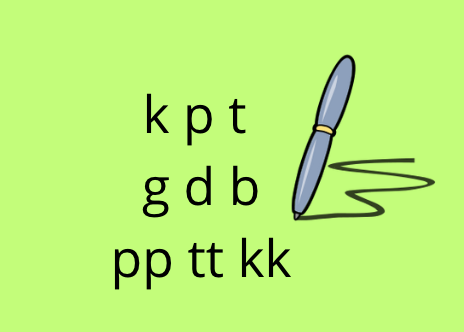
Vali sõna, kus on pikk sulghäälik
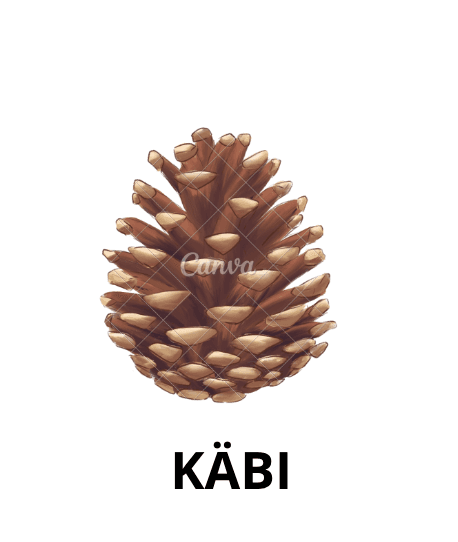
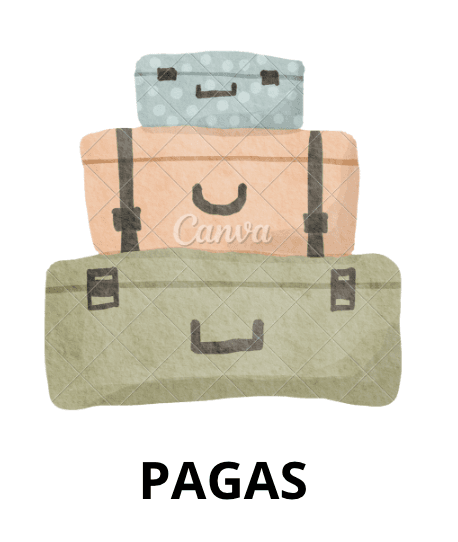
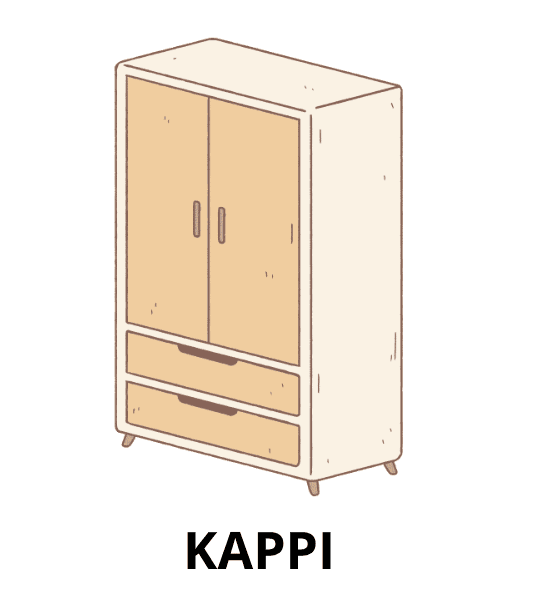

Kirjuta lühikesed sulghäälikud
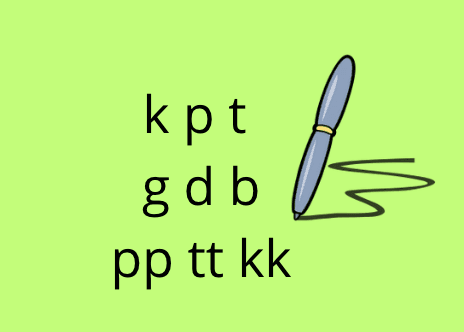
Vali sõna, kus on pikk sulghäälik
kuidas nimetame seda, kui taaskasutame vahendeid? ntks paberit

Vali sõna, kus on rõhutatud pikk sulghäälik.
Mis on lahutamistehte vastuse nimetus?

Lahutamistehte puhul kasutan . . . märki?

Mis tehte puhul kasutan + märki?
Millega lõppeb lause?

Milline arv on neist vähendatav 13-5=8
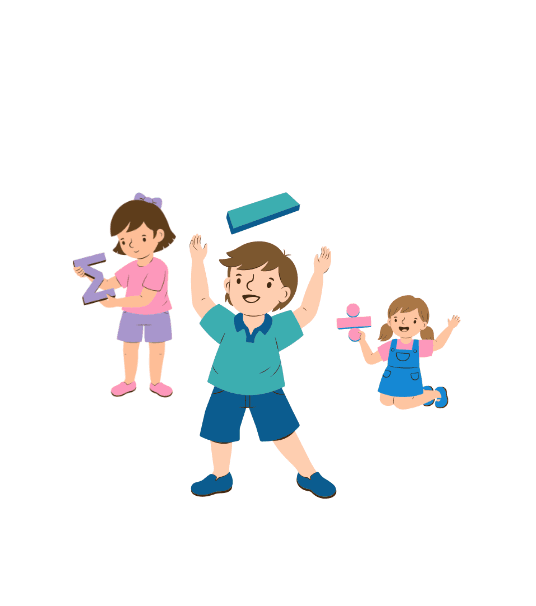
Milline arv tehtes on liidetav 8+4=12
Mis arv on kastist puudu?
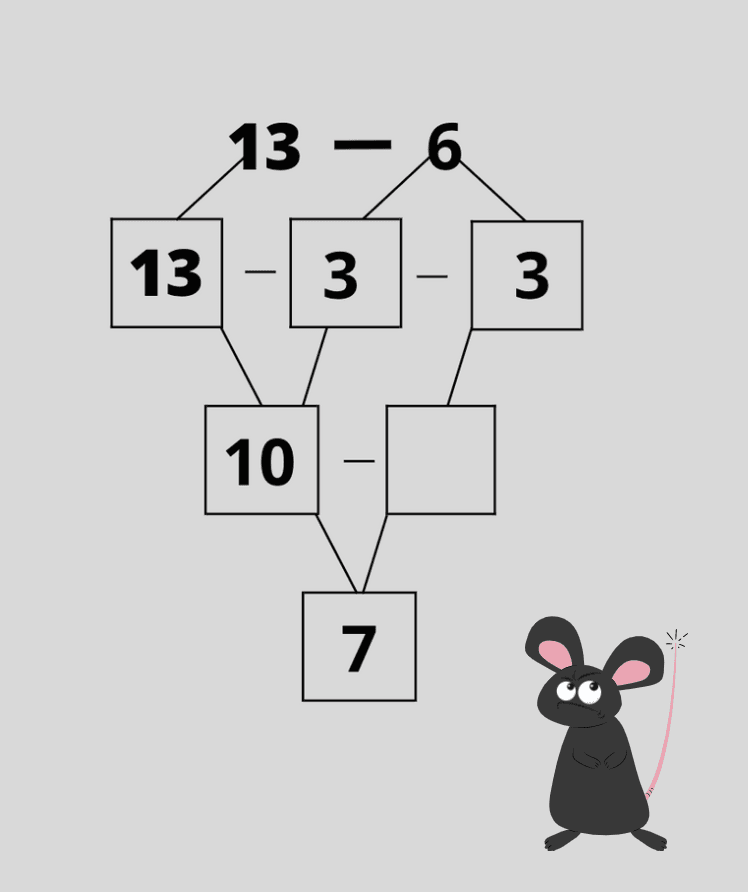
Vali kevadkuud?
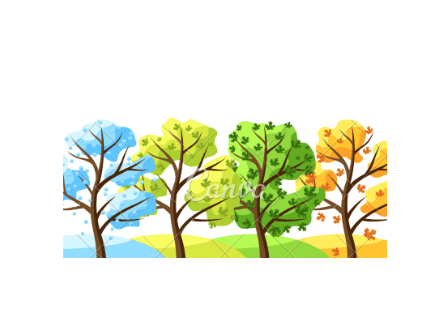
Vali, mis prügi viskad pakendiprügisse?

Ühenda õppeaine ja omandatav oskus/tegevus
Segades omavahel sinist ja kollast värvi saame tulemuseks. . .
Vali sõna, kus on lühike sulghäälik
Mitut sorti erinevat prügi sorteeritakse?
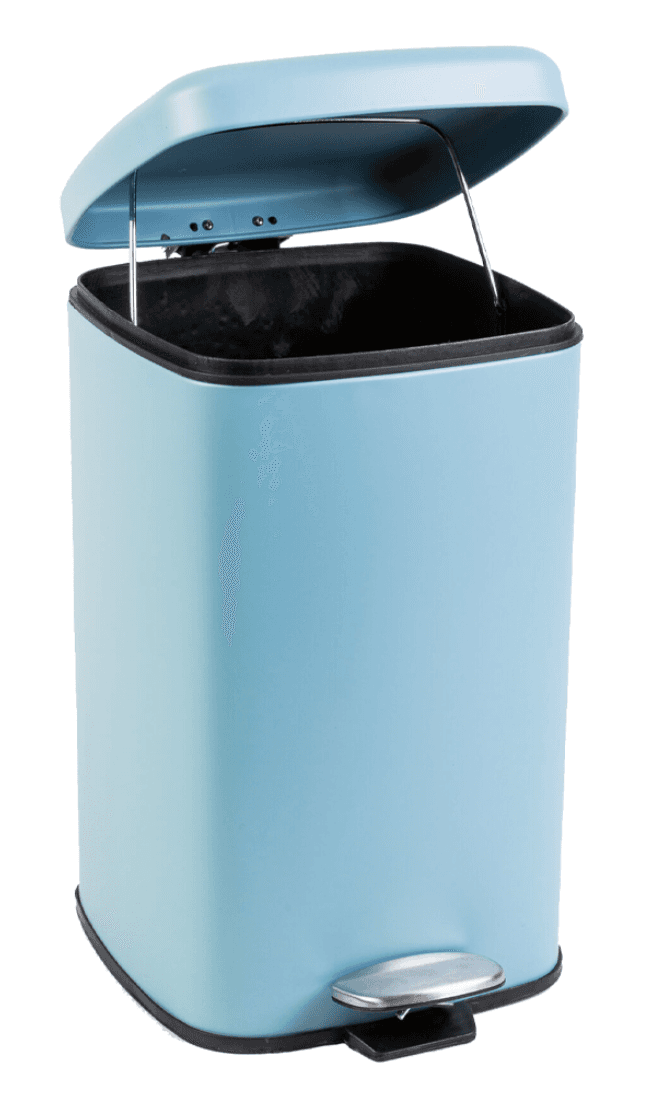
Mida viskad biojäätmete hulka
Kas internetis on ohutu?

Millised neist on digiseadmed?

Ühenda omavahel elusad ja eluta
 Aparthied and the negotiations (10 marks)8th Dec/Third Inter/Revision/Reading Text/Fat children in USA/Quizalize/10 Marks Section 1: Numbers, Operations, and Relationships (15 marks) 1. Number Concepts (5 marks) 1.1. Decompose the following numbers into tens and ones: (2 marks) a. 34 b. 67 1.2. Count the objects in the pictures below and write the total number: (3 marks) [This section would need images of objects. You can provide images of groups of objects, e.g., 3 groups of 4 apples each and ask the students to count the total number.] 2. Solve Problems (5 marks) 2.1. Solve the following word problem using drawings: (3 marks) Samantha has 5 baskets. Each basket has 8 apples. How many apples does she have in total? Samantha has 5 × 8 = 40 5×8=40 apples. 2.2. Solve the following word problem by building up and breaking down numbers: (2 marks) There are 4 boxes. Each box has 6 chocolates. How many chocolates are there in total? There are 4 × 6 = 24 4×6=24 chocolates in total. 3. Calculations (5 marks) 3.1. Multiply the following numbers using drawings: (3 marks) a. 5 × 4 = 20 b. 4 × 5 = 20 3.2. Use a number line to solve: (2 marks) a. 3 × 5 = 15 b. 2 × 4 = 8 Section 2: Patterns, Functions, and Algebra (10 marks) 4. Number Patterns (10 marks) 4.1. Complete the number sequences: (5 marks) a. 180, 170, 160, 150, 140, 130, 120, 110, 100, 90 b. 150, 152, 154, 156, 158, 160, 162, 164, 166, 168 4.2. Count in twos and fill in the missing numbers: (5 marks) a. 102, 104, 106, 108, 110, 112, 114, 116 Section 3: Space and Shape (Geometry) (10 marks) 5. Position (10 marks) 5.1. Follow the directions to move around the classroom: (5 marks) Draw a path showing how you would move from your desk to the teacher's table by following these steps: Move 3 steps forward. Turn left and move 2 steps. Turn right and move 4 steps. [Students would draw a path based on these directions.] 5.2. Use the language of position to describe the following: (5 marks) a. The pencil is on the book. b. The chair is beside the desk. c. The bag is under the table. d. The ruler is next to the notebook. e. The eraser is inside the pencil case.ISET 1001 - Value Assessment Card [ 10.00 Marks]Repaso de vocabulario Martes 6/10 Accidents are unexpected events or happening at home, school, on the road or at work which can lead to injuries or death. It can cause pain, sorrow, discomfort or deformation of the body. Some accidents are caused by mistakes, stubbornness, carelessness or disobedience. The accident at home is called domestic accident. TYPES OF ACCIDENT 1) BURNS: These are caused by hot objects like hot iron. Burns could be caused through fire incidents. 2) BITES: These are caused by animals such as snakes, dogs, insects etc. Some insect’s bites may lead to itching of the spot and its surroundings. This may later lead to a serious discomfort. 3) BRUISES: These are marks on the skin which results when one falls of hit by a person in a fight. This action causes the swelling of the skin. 4) SCALDS: Scalds are caused by hot water, hot oil or acid if it mistakenly touches or pours on the body. 5) CUTS: These are caused by sharp objects such as knife, blades, scissors. 6) ROAD ACCIDENTS: These are caused by Reckless driving, bad roads(potholes). 7) AIR AND SEA ACCIDENTS: These are mainly caused by poor weather and engine failure. It can lead to materials and human beings lost. 8) RAIL ACCIDENTS: These are caused by bad railways and careless crossing by motorists. THE FOLLOWING ARE THE WAYS OF PREVENTING ACCIDENTS. 1. Do not play near an open fire or flame. 2. Do not run up the staircase but walk smartly. 3. Do not dare a strange dog. 4. Do not play with sharp objects likes blades, knives and scissors. 5. Do not play with harmful insects. 6. Avoid rough plays to prevent bruises and wounds and other forms of accidents. 7. Remove all objects that can cause a fall on the way. 8. Wear dry rubber slippers before operating an electrical appliance like Television, refrigerator and pressing iron. 9. Always obey your parents’ instructions. 10. Always keep the floor clean at all time. THE SOAR SYSTEM A solar system is a group of planets and other celestial bodies that revolve around a star. A solar nebula- a vast cloud of gas and dust, mostly hydrogen and helium. How the Solar System Form • COLLAPSE AND SPINNING DISK FORMATION - Gravity pulls material inward. The cloud flattens into a spinning disk due to conservation of angular momentum. • PROTOSTAR FORMATION- (BIRTH OF THE SUN). Material collects at the center, and begun to heat up. When it reaches to 10 million KELVIN, nuclear fusion begins. thus, SUN is born. • PLANETESIMALS AND PROTOPLANETS. Dust and gas in the disk stick together via static and gravitational forces. These form planetesimals, which grow into protoplanets collision and accretion. • PLANET FORMATION. Inner disk: too hot for gas rocky planets form Mercury, Venus, Earth, Mars. • PLANET FORMATION. Outer disk: gas and ice giants. Jupiter, Saturn, Uranus, Neptune • LEFTOVER DEBRIS. Remaining materials forms moon, asteroids, comets and dwarf planets. DIFFERENT HYPOTHESIS IN THE FORMATION OF SOLAR SYSTEM. 1. NEBULAR HYPOTHESIS- The Solar system formed from a rotating cloud of Gas and Dust (solar nebula). As it rotates conservation of angular momentum caused the cloud to flatten into a disk. the Sun formed at the center (DISK) while planets formed from the surrounding materials through acceleration. thus, it explains the coplanar and nearly circular orbit of the planets all planets orbits around the sun on the same flat, disk shaped plane. Proposed by Immanuel Kant in 1755 and Modified by Pierre Simon Laplace in 1756. PROTOPLANET HYPOTHESIS. The Solar system formed from a rotating cloud of Gas and Dust (solar nebula). As it rotates conservation of angular momentum caused the cloud to flatten into a disk. 2. Protoplanet hypothesis. Builds on the nebular model but focuses more on the role of planetesimals which then form into full planets. PROCESS: - Small solid particles stick together through collisions. As collisions takes place, it grows into kilometer-sized planetesimals. Gravitational interactions lead to the formation of planets. Lead to formation of steroids belts and varying planet sizes 3. Encounter hypothesis. States that the sun encountered a rogue star. The encounter led to the removal of hot gas from both stars due to their gravitational interaction. The hot gas then accumulated and formed the planets. The materials from the less dense rogue star formed the other planets, while that from the sun formed the inner planets. 4. TIDAL HYPOTHESIS. (also called the Tidal Theory) is an early scientific idea about how the solar system might have formed. Proposed by James Jeans and Harold Jeffreys. A massive star passed very close to the early Sun. The hot gas then accumulated and formed the planets. The materials from the less dense rogue star formed the other planets, while that from the sun formed the inner planets. Streams of hot gas were drawn out from the Sun in elongated shape. These streams eventually condensed and cooled, forming planets, moons, and other bodies in the solar system. 5. Not accepted theory. Later studies showed the streams of hot gas would disperse too quickly into space instead of condensing into planets. The theory also couldn’t explain the specific orbital patterns and compositions we see today. Modern science favors the Nebular Hypothesis, which explains solar system formation through the collapse of a rotating gas cloud. Earth as the only habitable planet 1. Right Distance from the Sun (The Goldilocks Zone). Not too hot, not too cold — just right for liquid water to exist. 2. Atmosphere with Oxygen. Earth has a mix of gases, especially oxygen, which most living things need to survive. 3. Liquid Water. Earth has oceans, rivers, and rain — water is essential for all life. 4. Magnetic Field. Earth’s magnetic field protects us from harmful solar radiation. 5. Stable Climate. The atmosphere and natural cycles keep temperatures and weather mostly stable over time. 6. Rich Resources. Earth has soil for growing food, minerals, and energy sources that support life and technology. Solar explorations 1. AUGUST 6, 2014. First space craft to orbit a comet (ROSETTA PROBE). Captures the comet photograph. -Comets have coma and tail as it approaches to the sun. 2. JULY 14, 2015. NASA’s New Horizons spacecraft made history by becoming the first spacecraft to fly by Pluto, giving us our first close-up look at the dwarf planet. First time visiting Pluto. Before this, Pluto was just a blurry dot in telescope images. Revealed a surprising world New Horizons showed mountains of ice, smooth plains, and a heart-shaped region called Tombaugh Regio. Changed what we knew. Scientists thought Pluto would be dull and frozen — instead, it turned out to be geologically active and incredibly complex. 3. SEPTEMBER 8, 2016. NASA launched OSIRIS-REx, the first U.S. mission to collect a sample from an asteroid and return it to Earth. Changed what we knew. Scientists thought Pluto would be dull and frozen — instead, it turned out to be geologically active and incredibly complex. OSIRIS-REx stands for: Origins, Spectral Interpretation, Resource Identification, Security–Regolith Explorer It was sent to study the asteroid Bennu, a near-Earth asteroid about 500 meters wide. Mission Goals: Collect a sample of surface material from Bennu Study the asteroid’s omposition, structure, and history. Mission Goals: Help scientists understand the origins of the solar system. Learn more about asteroids that could impact Earth. 4. August 12, 2018: Launch of NASA’s Parker Solar Probe, the first spacecraft to "touch" the Sun by flying through its outer atmosphere, called the corona. Mission Goal: To study the Sun up close and help scientists understand: How the solar wind (a stream of charged particles) is formed. Why the Sun’s corona is hotter than its surface. What causes solar storms that can affect Earth’s satellites and power grids. 5. November 26, 2018: NASA’s Insight Lander Touches Down on Mars. Its mission was focused on studying the interior of the Red Planet (crust, mantle, and core of the planet). Why the Sun’s corona is hotter than its surface. What causes solar storms that can affect Earth’s satellites and power grids 6. November 26, 2018: NASA’s Insight Lander Touches Down on Mars. Its mission was focused on studying the interior of the Red Planet (crust, mantle, and core of the planet) 7. JULY 30, 2020 PERSEVERANCE PROBE. Perseverance rover as part of the Mars 2020 mission aboard an Atlas V-541 rocket This marked a major step in Mars exploration. 8. DECEMBER 25, 2021-JAMES WEBB SPACE TELESCOPE. Investigate exoplanets’ atmospheres for signs of habitability. Observe the first galaxies formed after the Big Bang. Study the formation of stars and planetary systems. Look deeper into the infrared universe than ever before. RESULTS OF EXPLORATION • Evidence of Ancient Life-friendly Environment. • Sedimentary rocks formed in water-rich environments. • Signs of clay and carbonate minerals, which can preserve biosignatures (traces of past life). • Evidence of Ancient Life-friendly Environment. • Sedimentary rocks formed in water-rich environments. • Signs of clay and carbonate minerals, which can preserve biosignatures (traces of past life). • Evidence of Ancient Life-friendly Environment. • Sedimentary rocks formed in water-rich environments. • Signs of clay and carbonate minerals, which can preserve biosignatures (traces of past life).Got you now 👍 — you don’t want a code, you want ready-made quiz content you can paste into Quizalize so a teacher/class can use it. I’ll generate a proper SSS1 quiz bank (Maths, English, Basic Science) in a clean format. You can copy this into Quizalize “Create Quiz”. 📘 SSS1 QUIZ (READY FOR QUIZALIZE) 🧠 MATHS (10 QUESTIONS) What is 9 × 8? A. 72 B. 64 C. 81 D. 74 Answer: A Solve: 3x = 15 A. 3 B. 5 C. 6 D. 9 Answer: B What is 12²? A. 124 B. 144 C. 132 D. 122 Answer: B Simplify: 18 ÷ 3 A. 3 B. 5 C. 6 D. 9 Answer: C What is the square root of 49? A. 5 B. 6 C. 7 D. 8 Answer: C Find x: x + 7 = 20 A. 11 B. 12 C. 13 D. 14 Answer: C 5 × 5 × 5 = ? A. 125 B. 100 C. 150 D. 75 Answer: A What is 100 ÷ 4? A. 20 B. 25 C. 30 D. 40 Answer: B What is 15 + 17? A. 31 B. 32 C. 33 D. 34 Answer: B What is 10% of 200? A. 10 B. 20 C. 30 D. 40 Answer: B 📘 ENGLISH (10 QUESTIONS) Choose correct spelling A. Recieve B. Receive C. Receve D. Recive Answer: B Opposite of “fast” A. Quick B. Slow C. Sharp D. Rapid Answer: B Synonym of “happy” A. Sad B. Angry C. Joyful D. Tired Answer: C A noun is a name of a… A. Action B. Place/Person/Thing C. Verb D. Adverb Answer: B He ___ to school every day A. go B. going C. goes D. gone Answer: C Plural of child A. Childs B. Childes C. Children D. Childer Answer: C Antonym of “big” A. Large B. Huge C. Small D. Wide Answer: C A verb is a word that shows A. Name B. Action C. Place D. Thing Answer: B She is ___ honest girl A. a B. an C. the D. no article Answer: A Past tense of go A. Goed B. Gone C. Went D. Going Answer: C 🔬 BASIC SCIENCE (10 QUESTIONS) Plants absorb carbon dioxide during A. Respiration B. Photosynthesis C. Digestion D. Movement Answer: B Human breathing organ A. Heart B. Liver C. Lungs D. Kidney Answer: C Water boils at A. 0°C B. 50°C C. 100°C D. 150°C Answer: C Which is a metal? A. Rubber B. Copper C. Wood D. Plastic Answer: B The sun is a A. Planet B. Star C. Moon D. Comet Answer: B Force is measured in A. Joule B. Newton C. Watt D. Kelvin Answer: B Solid → Liquid is called A. Freezing B. Melting C. Evaporation D. Condensation Answer: B Earth revolves around A. Moon B. Mars C. Sun D. Jupiter Answer: C Human blood is pumped by A. Brain B. Heart C. Lungs D. Kidney Answer: B Energy from the sun is called A. Nuclear B. Solar C. Chemical D. Sound Answer: B ⚡ HOW TO USE IN QUIZALIZE Go to Quizalize Click Create Quiz Choose Manual Input Copy each question Paste with options + correct answer Set timer per question (5–10 sec for pressure mode) 🔥 IF YOU WANT NEXT LEVEL I can also: �Turn this into 100-question exam paper �Add hard WAEC/JAMB-level traps Or �simulate inter-house elimination rounds Just say: “upgrade me” 😈