Loading...


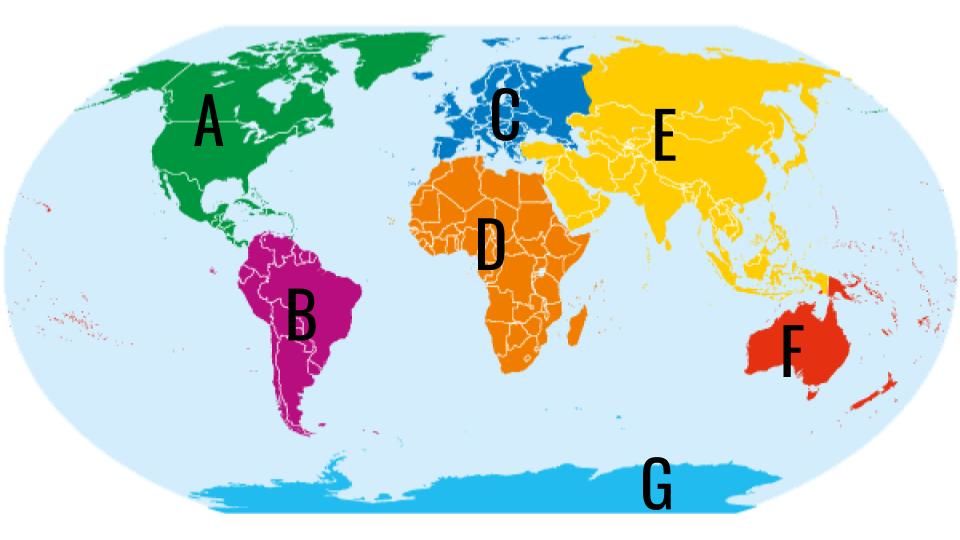
1.1 C Continents of the World MC
Quiz by Heather Logan
Customize this quiz to suit your class
Instantly translate to 100+ languages
Tag the questions with any skills you have. Your dashboard will track each student's mastery of each skill.

Give this quiz to my class
 Received: 26 November 2019 Revised: 10 January 2020 Accepted: 19 January 2020 DOI: 10.1111/obr.13005 PEDIATRICS/PHYSIOLOGY Adipokines: A gear shift in puberty Desirée Nieuwenhuis | Natàlia Pujol-Gualdo Amanda J. Kiliaan Department of Anatomy, Radboud university medical center, Donders Institute for Brain, Cognition and Behaviour, Preclinical Imaging Center PRIME, Nijmegen, The Netherlands Correspondence Amanda J. Kiliaan, PhD, Associate Professor, Department of Anatomy, Donders Institute for Brain, Cognition, and Behaviour, Preclinical Imaging Center PRIME, Radboud university medical center, 6500 HB Nijmegen, Geert Grooteplein 21N 6525 EZ Nijmegen, The Netherlands. Email: amanda.kiliaan@radboudumc.nl Funding information Europees Fonds voor Regionale Ontwikkeling (EFRO), Grant/Award Number: BriteN 2016 1 | INTRODUCTION The prevalence of obesity in adolescents and children is increasing in | Ilse A.C. Arnoldussen | Summary In this review, we discuss the role of adipokines in the onset of puberty in children with obesity during adrenarche and gonadarche and provide a clear and detailed overview of the biological processes of two major players, leptin and adiponectin. Adipokines, especially leptin and adiponectin, seem to induce an early onset of puberty in girls and boys with obesity by affecting the hypothalamic-pituitary- gonadal (HPG) axis. Moreover, adipokines and their receptors are expressed in the gonads, suggesting a role in sexual maturation and reproduction. All in all, adipokines may be a clue in understanding mechanisms underlying the onset of puberty in child- hood obesity and puberty onset variability. KEYWORDS adipokines, obesity, puberty 1,2 the age of 5 years were overweight or were with obesity in 2016, and 3 Obesity is defined by an excessive accumulation of white adipose tissue (WAT), and it is often indicated by a body mass index (BMI) 4 above 30. Two main types of adipose tissue were described: WAT and brown adipose tissue (BAT), which differ in morphology and func- 5-7 Ilse A.C. Arnoldussen and Amanda J. Kiliaan contributed equally to this work. This is an open access article under the terms of the Creative Commons Attribution License, which permits use, distribution and reproduction in any medium, provided the original work is properly cited. © 2020 The Authors. Obesity Reviews published by John Wiley & Sons Ltd on behalf of World Obesity Federation Obesity Reviews. 2020;21:e13005. wileyonlinelibrary.com/journal/obr 1 of 10 https://doi.org/10.1111/obr.13005 alarming rates. Specifically, worldwide, 41 million children below this number is expected to increase to 70 million in 2025. obesity is associated with various severe health complications, includ- ing increased risk of diabetes mellitus type 2, hypertension, heart dis- eases, and disturbances in sex hormone levels. 5,6 and mitochondria and plays a role in thermogenesis. Adipocytes in tion. BAT consists of adipocytes containing multiple lipid droplets WAT contain only a few mitochondria and a single lipid droplet. Adipose tissue has several functions including the storage of energy, thermogenesis, and the production and secretion of adipokines Generally, two physiological processes, adrenarche and gonadarche, 11,24 Childhood 5,7,8 a key role in puberty onset. Puberty is known as a period through which the body changes physically, being a physiological process resulting in the maturation of children, i.e. they develop sexual characteristics and obtain reproduc- 9,11 Adipokines are involved in a number of physiological processes including blood pressure, metabo- lism, glucose, and vascular homeostasis and may play amongst others 8-10 (hormones, cytokines, and peptides). tive functions. between obesity and puberty,2,12-23 the biological mechanisms under- lying obesity and puberty onset remain unclear. Hereafter, we review in detail the role of adipokines in the onset of puberty in childhood obesity. Although many studies have shown associations 2 | INITIATION OF PUBERTY PHYSIOLOGICAL PROCESSES IN THE interact to regulate the onset of puberty. During adrenarche, the adrenal cortex secretes steroid hormones (including 2 of 10 NIEUWENHUIS ET AL. androstenedione, dehydroepiandrosterone, dehydroepiandrosterone sulfate (DHEAS), androstenedione, and cortisol), insulin-like growth factor, and growth hormone, which contribute to the pubertal insights on new genetic loci (e.g. melanocortin-4 receptor, mitochon- drial carrier 2, and mitogen-activated protein kinase 13) and on sev- eral pathways that regulate the timing of puberty; however, it partly 34 9,24,25 Both adrenarche and gonadarche are involved in the development growth spurt, body odor, skin oiliness, and skeletal maturation. explains puberty timing variation. Thereby, defining the role of 25 adipokines is of importance in elucidating the variability in puberty as the expression of adipokines is sex-specific and is altered with body composition, adiposity, and during growth spurts. Moreover, adipokines and their receptors are expressed in gonads and several brain regions suggesting involvement in the onset of puberty and sex- ual maturation. Lastly, adipokines interfere in processes regulating timing and duration of puberty, for instance in the HPA and HPG axes which are both key players during adrenarche and gonadarche. Involvement of adipokines in the onset of puberty and specifically in individuals with obesity will be further reviewed in the next 2,24 3 | Puberty onset in girls is assessed using different markers, such as thelarche (breast development), menarche (the start of of pubic hair. pituitary-gonadal (HPG) axis is activated,2,26 and several hormones have been identified to participate in the activation of the HPG axis During gonadarche (Figure 1), the hypothalamic- 2,27 Kisspeptin, neurokinin B, and dynorphin are released by specialized including kisspeptin, neurokinin B, dynorphin, leptin, and ghrelin. 28 key regulator of the pulsatile secretion of gonadotropin releasing neurons, the KNDy neurons in the hypothalamus. Kisspeptin is a 29,30 B stimulates, and dynorphin inhibits the release of kisspeptin, which hormone (GnRH) from the hypothalamus. In addition, neurokinin implies that both coordinate a pulsatile release of kisspeptin. 31 Sub- sections. sequently, the activated HPG axis induces the pituitary gland to secrete luteinising hormone (LH) and follicle stimulating hormone (FSH). As a result, gametogenesis occurs, and the gonads will release sex hormones. Consequently, secondary sex characteristics develop including breast development in girls and an increased testicular vol- 2,26,32 is possibly due to differences in levels of body fat, hypothalamic-pitui- THE ONSET OF PUBERTY IN GIRLS ume in boys. The age at puberty onset varies greatly among individuals, which 19 35 menstruation), and pubic hair development. 33 genome-wide association studies have provided important new tary-adrenal (HPA) axis activity, and genetic background. Recent The average age of However, this age differs between cultures and ethnicities, and since 1980, age at menarche is girls at start of menarche is 12.4 years. 36 significantly decreasing. 36-39 F I G U R E 1 Hormonal regulation in the initiation of puberty in boys and girls. The secretion of kisspeptin, neurokinin B, and dynorphin from KNDy neurons initiate the release of gonadotropin releasing hormone (GnRH) from the hypothalamus. This activates the pituitary gland to produce and secrete luteinising hormone (LH) and follicle stimulating hormone (FSH), which in turn stimulate the gonads to produce estrogen and testosterone in girls and boys, respectively 1467789x, 2020, 6, Downloaded from https://onlinelibrary.wiley.com/doi/10.1111/obr.13005, Wiley Online Library on [10/03/2024]. See the Terms and Conditions (https://onlinelibrary.wiley.com/terms-and-conditions) on Wiley Online Library for rules of use; OA articles are governed by the applicable Creative Commons License NIEUWENHUIS ET AL. 3 of 10 T A B L E 1 Summary of included studies Authors Year Country Study Design Primary Outcome Sex Sample Size (n) Age (y) Data Collection Lian et al21 2019 China Cross-sectional Puberty starts earlier in Chinese Han girls with obesity compared with Chinese Han girls with normal weight. Girls 2996 9-19 2012 and 2013 Biro et al12 Lazzeri et al20 2018 USA 2018 Italy Longitudinal Cross-sectional Body mass index had a greater effect on age at menarche than did race and ethnicity. Girls 946 6-16 2004-2014 Li et al23 2018 China Longitudinal For both, boys and girls, a higher BMI (ie, overweight and obese) is associated with earlier onset of puberty Girls Girls Boys Girls 542 Deng et al22 Flom et al15 2017 China Cross-sectional Increased BMI is associated with early timing spermarche and menarche. Boys Girls Girls 1278258 9-15 2005-2012 He et al24 Holmgren et al17 2017 China 2017 Sweden Cross-sectional Longitudinal Onset of puberty is not related to obesity in boys. Boys Boys Girls Girls 782 7-17 972 929 5839 Kelly et al19 2017 UK 2016 Brazil 2016 USA Longitudinal prospective cohort Higher BMI in girls is associated with the onset of menstruation at an earlier age. 11 10-18 11-17 Barcellos Gemelli et al25 Cross-sectional Longitudinal Excess weight is associated with early age of menarche. Girls 727 2014 2003-2009 Glass et al16 Lee et al26 In girls, but not in boys, greater adiposity is associated with the earlier onset of puberty. Boys Girls 135 Cabrera et al27 Leonibus et al14 2014 USA 2013 Italy Cross-sectional Longitudinal Thelarche occurred earlier than recently reported, while age of menarche remained unchanged. Girls 610 3-17.9 2007 2005-2012 Currie et al13 2012 Europe, USA, Canada Cross-sectional Overweight/obesity during childhood predicts the early onset of puberty in girls. Girls 20410 11, 13, 15 2005-2006 2017 USA Prospective birth cohort Overweight/obese status at the age of 7 ye was associated with increased risk of early menarche 788 From birth to menarche occurred Pregnancies 1959-1966 2016 USA Cross-sectional Boys with overweight enter puberty earlier compared with boys with normal weight or obesity, while puberty starts later in boys with obesity compared with boys with normal weight and overweight. Boys 3872 6-16 2005-2010 Overweight during childhood shows a relation with the early onset of puberty in girls. 6535 4259 695 11 15 5.8-12.2 2009/2010 2013/2014 2014-2017 Higher BMI during childhood is associated with early puberty. 2008 and 2009 2000-2002 Obesity during childhood is related to the earlier onset of puberty. Boys Girls 84 123 71 (Continues) 1467789x, 2020, 6, Downloaded from https://onlinelibrary.wiley.com/doi/10.1111/obr.13005, Wiley Online Library on [10/03/2024]. See the Terms and Conditions (https://onlinelibrary.wiley.com/terms-and-conditions) on Wiley Online Library for rules of use; OA articles are governed by the applicable Creative Commons License 4 of 10 NIEUWENHUIS ET AL. 3.1 | Fat storage For the initiation of puberty, the timing of stimulation and/or inhibi- tion of different hormones is important, and additionally, a certain amount and distribution of body fat is needed in order to start menar- che, which emphasizes the importance of body fat. From an evolution- ary point of view, body fat increases in mammalian females during puberty onset, and it highlights the need to guarantee a healthy preg- 40 women with anorexia nervosa. particularly body fat localized predominantly on the gluteofemoral fat depots, is profoundly associated with start of menarche, more than nancy, offspring, and maternal survival. fat, sex-hormones, and neuroendocrine alterations can evolve in men- strual dysfunction, for instance, in women with severe obesity or in 41-43 44-46 to gluteofemoral fat depots suggesting that leptin may convey infor- amount of total body fat. mation on body fat distribution to the hypothalamus during puberty. An improper level of body Importantly, body fat distribution, Blood leptin levels are strongly related 45 3.2 | HPG axis The HPG axis is activated by the release of kisspeptin resulting in the release of GnRH from the hypothalamus, and LH and FSH from the pituitary gland. In girls, FSH is involved in the development of the folli- cles in the ovaries, and it promotes the secretion of estrogen. LH stim- ulates the production of androgen hormones and induces ovulation 48 9,47 the release of kisspeptin and neurokinin B, and kisspeptin thereby (Figure 1). The secretion of estrogen has an inhibitory effect on inhibits the GnRH release from the hypothalamus. pattern of GnRH is important for the regulation of the menstrual cycle. This roughly 28-day-cycle comprises several phases, including the follicular phase and luteal phase. During the follicular phase, increasing levels of FSH stimulate the maturation of follicles and the production of estrogen from the ovaries. This in turn inhibits the release of FSH from the pituitary gland. A high level of estrogen will induce the production of LH by the pituitary gland, resulting in ovula- tion. The matured follicle secretes progesterone thereby inhibiting the release of GnRH. When the corpus luteum is demolished, there is less 48 3.3 | Adipokines According to results from studies reported in Table 1, girls with obe- sity enter puberty earlier compared with girls with normal higher leptin concentrations inhibit the intake of food and increases inhibition of GnRH. As a consequence, the cycle will start again. whole process, starting from the activated HPG axis, results in the development of the secondary sex characteristics in girls including 9,47 thelarche and menarche. 13,14,16-23,49-51 weight. these girls might be found in the secretion of adipokines. For instance, leptin is positively associated with the amount of body fat. Generally, energy expenditure. 9,52-54 An explanation for the early onset of puberty in The expression This TABLE 1 (Continued) Authors Year Country Study Design Primary Outcome Sample Sex Size (n) Age (y) Data Collection Herman-Giddens et al28 2012 USA Cross-sectional Observed mean ages of beginning genital and pubic hair growth and early testicular volumes were earlier than in past studies, depending on the characteristic and race/ethnicity. Boys 4131 6-16 2005-2010 Sorensen et al29 Aksglaede et al30 2010 2009 Denmark Denmark Cross-sectional/longitudinal Longitudinal Puberty onset at earlier ages was associated with an increased BMI in boys. Boys 1528 5.8-19.9 1991-1993/2006-2008 1930-1969 Juul et al31 Ribeiro et al32 2007 2006 Denmark Portugal Retrospective cohort Cross-sectional Higher BMI is associated with early voice break. 11-15 10-15 1990-1999 Kaplowitz et al18 Abbreviation: BMI, body mass USA Cross-sectional The early onset of puberty in Caucasian girls is likely related to an increased BMI. 5-12 1992-1993 2001 index. The higher BMI in boys and girls at 7 y of age, the earlier they enter puberty. Boys 21 612 Girls 135 223 Boys 463 Boys 382 Girls 437 Girls 10 750 Early sexual maturation in boys and girls is associated with overweight. 1467789x, 2020, 6, Downloaded from https://onlinelibrary.wiley.com/doi/10.1111/obr.13005, Wiley Online Library on [10/03/2024]. See the Terms and Conditions (https://onlinelibrary.wiley.com/terms-and-conditions) on Wiley Online Library for rules of use; OA articles are governed by the applicable Creative Commons License NIEUWENHUIS ET AL. 5 of 10 Leptin may possibly play a role in adrenarche as its plasma level increases with higher levels of body fat and as it can modulate both girls. 33 ing adrenarche. In coherence, in children with obesity, the androgen These findings suggested that lower reproductive status was associated with higher total adiponectin concentrations and that a higher reproductive status was related to higher HMW adiponectin the HPA and HPG axes. These axes are functionally integrated dur- DHEAS was positively associated with leptin levels. Nevertheless, concentrations in girls. In addition, individuals with obesity often another study showed that enhanced adrenal androgen secretion in girls with premature adrenarche was not explained by leptin or BMI 55 ated with androgen levels in girls ; however, it was not related to levels. and IL-6. TNF-α alters, and IL-6 inhibits the expression of 56 8 In addition, the adipokine adiponectin was negatively associ- 57 differences of adiponectin seem to develop during the progression of 56 adiponectin (Figure 2). Thereby, a low level of total adiponectin and/or high levels of inflammatory cytokines in individuals with obe- sity can promote the onset of puberty. Many more adipokines are secreted by WAT including omentin, 52,65-67 9,36,62,68 adrenarche in girls with Prader-Willi syndrome. Interestingly, sex puberty. adrenarche; however, both are not required factors. Thus, leptin and adiponectin might be able to influence In gonadarche, leptin can stimulate the secretion of kisspeptin, and subsequently activation of the HPG axis, which eventually increases the expression of estrogen and androstenedione in the ova- 58 2,60 65-67 The expression of these ries (Figure 2). Ob gene in WAT, resulting in the synthesis and secretion of leptin. Thus, high levels of leptin promote onset of puberty in girls via secre- tion of kisspeptin, and estrogen stimulates leptin secretion addition- ally. Moreover, adiponectin can affect the HPG axis due to the expression of adiponectin receptors in the hypothalamus, pituitary In return, estrogen stimulates the expression of the 59 gland, and gonads. onset as it inhibits the secretion of kisspeptin and GnRH in the hypo- thalamus and the release of GH and LH in the pituitary gland, and 2,60-62 52,60 63 girls with central precocious puberty (CPP). Moreover, total adiponectin had negative correlations with progression of puberty in girls (defined by Tanner stages), whereas HMW adiponectin had FIGURE 2 Adipokinesaffectingthe initiation of puberty in girls. Leptin stimulates the release of kisspeptin in KNDy neurons, which activates the hypothalamus to produce gonadotropin releasing hormone (GnRH). In response to the release of GnRH, the pituitary gland secretes follicle stimulating hormone (FSH) and luteinising hormone (LH), which stimulates the ovaries to release estrogen resulting in the formation of secondary sex characteristics in girls. Estrogen stimulates the production of leptin. Adiponectin inhibits GnRH release resulting in reduced levels of GnRH and thereby a delayed onset of puberty. TNF- α and IL-6 inhibit the production of adiponectin and therefore stimulate the onset of puberty In detail, adiponectin is a regulator of puberty thereby inhibiting the onset of puberty (Figure 2). with obesity often have low levels of adiponectin. et al. showed that total adiponectin was significantly lower, whereas high molecular weight (HMW) adiponectin was significantly higher in ment. 55 63 develop a chronic low-grade inflammatory state, which can be indi- cated by a high level of circulating inflammatory cytokines like TNF-α 64 Individuals Sitticharoon positive associations with LH levels and the progression of puberty in 63 visfatin, resistin, and chemerin. and visfatin are expressed in the ovaries. adipokines in the ovaries suggests a role within the reproductive sys- tem; however, the exact biological processes have to be examined. Thus, specifically leptin, adiponectin, and inflammatory cytokines pro- duced by WAT could be permissive key players during an early onset of puberty in girls with obesity. As an exception, HMW adiponectin seems to have a stimulatory effect on peripheral repro- ductive function as HMW is not able to cross the blood brain 63 barrier. 4 | Markers that are used to assess puberty onset in boys are THE ONSET OF PUBERTY IN BOYS spermarche, voice break, testicular volume, and pubic hair develop- 35 spermarche develop in the early stages of puberty onset, voice In women, omentin, chemerin, While pubic hair development, larger testicular volume, and 69 testicular volume increases, which occurs at an average age of break usually appears in later stages of puberty. Generally, first 1467789x, 2020, 6, Downloaded from https://onlinelibrary.wiley.com/doi/10.1111/obr.13005, Wiley Online Library on [10/03/2024]. See the Terms and Conditions (https://onlinelibrary.wiley.com/terms-and-conditions) on Wiley Online Library for rules of use; OA articles are governed by the applicable Creative Commons License 6 of 10 NIEUWENHUIS ET AL. 11.9 years, followed by the development of pubic hair at 12.2 years of average, and lastly, boys experience spermarche around an aver- 55 related with leptin levels. Thereby, leptin plausibly has a minor impact in adrenarche in boys. Since leptin receptors are found in the hypothalamus, pituitary gland, and testes, they might be involved in the onset of puberty by affecting the HPG axis during gonadarche. Leptin stimulates the release of kisspeptin and GnRH, and as a consequence, it accelerates the onset of puberty (Table 1, Figure 3). In contrast, adiponectin inhibits the secretion of GnRH, GH, LH, and FSH therewith delaying the onset of puberty. However, adiponectin levels are generally lower in men compared with women and even lower in men with obe- age age of 13.4 years. 70 4.1 | Fat storage Many aspects of the reproductive physiology are energetically demanding,71 and therefore, an adequate energy level is necessary. In boys, a dynamic change in body composition occurs around the age of 10 to 13 years, in which they gain approximately 40% of sity. culating inflammatory cytokines. levels can stimulate the HPG axis and therewith an early onset of puberty in boys. Nevertheless, leptin can inhibit the production of tes- 72 mostly consisting of lean mass, which causes exhaustion of most of fat. Subsequently, a growth spurt follows in which they gain tissue 72 in boys, an adequate amount of body fat is important in the onset of their body fat. These alterations in amount of body fat indicate that 4.2 | Puberty in boys is initiated by the release of kisspeptin. As mentioned before, this activates the HPG axis, resulting in the release of GnRH from the hypothalamus, and consequently the release of LH and FSH 9,74 puberty. tosterone from the testes, to estrogen (Figure 3). of the development of secondary sex characteristics in boys. Additionally, leptin can affect fertility in men as it can modulate the nutritional support of spermatogenesis, and moreover, dysfunction of spermatogenesis is associated with an increased leptin level and 73 58 2,60-62 HPG axis from the pituitary gland (Figure 1). and LH stimulates the secretion of testosterone from the testes, which inhibits the release of kisspeptin from the KNDy neurons and 9,48 in men, the release of kisspeptin is more consistent, causing a con- 29,48 subsequently GnRH from the hypothalamus. receptors expressed on KNDy neurons. In humans, KNDy neurons Contrarily to women, LH-induced testosterone levels lead to the stant release of LH. development of secondary sex characteristics in boys. differences between sexes in kisspeptin release are related to a sex- specific and sex steroid-dependent kisspeptin system as estrogen and progesterone modulate kisspeptin activity through the sex-steroid 48 in the infundibular nucleus are involved in negative and positive sex- 48 tal exposure to sex steroids and result in sex-specific differences in steroid feedbacks. kisspeptin release. These sexual dimorphisms are induced by perina- 75,76 4.3 | Adipokines The association between obesity and puberty onset in boys is rather controversial compared with findings in girls. Most studies reported an early onset of puberty in boys associated with increased ate adipose tissue from actual breast tissue. stages are more difficult to assess than female stages as boys lack a more determined marker such as menarche. Thirdly, puberty onset can be indicated by the activation of the HPG axis, and the presence of these secondary sex characteristics is the result of hormonal 2 14,17,22,23,50,51,77,78 BMI, 20,49 all while others reported no associations at Current markers used 79 16,80 or a delayed onset of puberty (Table 1). The presence of excessive adipose tissue can be involved in puberty onset in boys as the secretion of adipokines can modulate both adrenarche and gonadarche. Leptin can affect adrenarche by modulating both the HPG and HPA axes,33 and moreover, androgen levels were positively 55 nal androgen secretion in boys with premature adrenarche was not associated with plasma leptin levels. Nevertheless, enhanced adre- 9 In more detail, 61,62 adiponectin, and individuals with obesity often have high levels of cir- Moreover, inflammatory cytokines, TNF-α, and IL-6, inhibit expression of the leptin receptor in the testis. FSH induces spermatogenesis, too. function and role still have to be examined. 64 High leptin and low adiponectin and fat tissue can convert testosterone Both processes might result in the delay 29,61,79 81,82 In men, other adipokines like chemerin are found in the gonads 65 Thus, particularly high leptin and low adiponectin levels stimulate the HPG axis and thereby accelerate the onset of puberty in boys. Additionally, leptin can dysregulate the development of secondary sex characteristics and spermatogenesis by affecting testosterone levels and nutritional sup- port of spermatogenesis. 5 | LIMITATIONS AND FUTURE RESEARCH DIRECTIONS Even though multiple epidemiological studies have shown the link between puberty onset and obesity, there are some important limita- tions. Firstly, determining both the onset and stage of puberty is rather difficult. For instance, assessing the stage of breast develop- ment in girls with obesity is complicated as clinicians should differenti- 2 changes in response to the activated HPG axis. to determine the onset of puberty refer to secondary sex characteris- tics, such as testicular volume in boys and breast development in girls. A more accurate measurement of puberty onset would be to combine secondary sex characteristics with plasma or serum hormone level measurements such as LH, FSH, adipokines, e.g. leptin. Thereby, differences in puberty measurements could explain variations in the age of puberty onset between boys and girls within different Thereby, resistin is expressed in the testes of rats, but its exact 83 Secondly, male pubertal 1467789x, 2020, 6, Downloaded from https://onlinelibrary.wiley.com/doi/10.1111/obr.13005, Wiley Online Library on [10/03/2024]. See the Terms and Conditions (https://onlinelibrary.wiley.com/terms-and-conditions) on Wiley Online Library for rules of use; OA articles are governed by the applicable Creative Commons License NIEUWENHUIS ET AL. 7 of 10 FIGURE 3 Adipokines affecting the initiation of puberty in boys. Leptin activates kisspeptin secretion in KNDy neurons, this activates the production of gonadotropin releasing hormone (GnRH) from the hypothalamus. GnRH stimulates the pituitary gland to secrete follicle stimulating hormone (FSH) and luteinising hormone (LH), activating the production of testosterone from the testes allowing the development of secondary sex characteristics. Leptin also inhibits the production of testosterone, which may cause a delayed onset of puberty. Adiponectin inhibits GnRH release. Low levels of adiponectin, as a result of TNF-α and IL-6 expression, lead to a reduced inhibition of GnRH. In response to GnRH release, the pituitary gland will secrete FSH and LH, and the testes will produce testosterone resulting in the development of secondary sex characteristics in boys countries, and In addition, the inclusion of a of puberty. ferent time points is complicated, as subjects examined several decades ago presented pronounced differences concerning lifestyle patterns such as nutrition and exercise habits. Lastly, obesity or over- weight is often determined by BMI, a classification based on weight and height measurements. Additionally, it is important that all studies studies or across continents, ethnicities proper age range (8-16 years) is important when assessing the onset (Figure 4). 12-15,17,20-23,49,77-79,84,85 30,47 Furthermore, comparison between studies from dif- 86 Specifically in children, BMI is often dependent on age and growth use the same anthropometric standards and sex-specific cut-offs. 13,14,16-23,49-51,77-80 fat and would represent a more accurate measurement in its regard. Based on this review, several suggestions can be made for further research. Firstly, the roles of adipokines like resistin, chemerin, visfatin, and omentin in puberty onset, fertility, and sexual maturation should be examined in detail. Secondly, future research examining the onset of puberty should combine indicators of puberty onset (e.g. breast development or testicular volume) with plasma or serum hor- mone measurements such as LH, FSH, sex-steroids, adipokines (e.g. spurts. ment in case of growth spurts. distribution of body fat should be taken into account in determining puberty and obesity in children. For instance, the body adiposity index (BAI), which was introduced in 2011 by Bergman et al.,87 uses hip cir- cumference and height in order to estimate the percentage of body 87 Thereby, BMI is a less accurate measure- F I G U R E 4 87,88 Therefore, both percentage and Average age of puberty onset in Europe, China, and the United States according to several studies from Table 1. Age of puberty onset ranges from 8.47 to 13.33 years in girls and from 8.63 leptin), and body fat distribution (e.g. BAI,87 waist-hip ratio's and/or dual-energy X-ray absorptiometry (DXA)2). Additionally, defining con- sistent and general measurements of puberty in both boys and girls, combined with a proper age range (8-16 years), would facilitate the comparisons between different studies and their results. 12-15, 17, 20-23, 25-29, 31 to 13.7 years in boys. included if average age of markers used to assess puberty was not reported. Pink: girls. Blue: boys Studies (Table 1) were not 39, 56 1467789x, 2020, 6, Downloaded from https://onlinelibrary.wiley.com/doi/10.1111/obr.13005, Wiley Online Library on [10/03/2024]. See the Terms and Conditions (https://onlinelibrary.wiley.com/terms-and-conditions) on Wiley Online Library for rules of use; OA articles are governed by the applicable Creative Commons License 8 of 10 NIEUWENHUIS ET AL. 6 | CONCLUSION In conclusion, epidemiological data regarding obesity and puberty onset in girls show similar outcomes as adiposity results in the early onset of puberty in girls. The majority of the studies examining boys with obesity indicate an early onset of puberty, while not all reported an earlier onset of puberty. In detail, high leptin, TNF-α, and IL-6 levels combined with low adiponectin levels stimulate the activation of the HPG axis in girls and boys with obesity, and 5, 45, 50, 51 REFERENCES 1. Kumar S, Kelly AS. Review of childhood obesity: from epidemiology, etiology, and comorbidities to clinical assessment and treatment. May- o Clin Proc. 2017;92(2):251-265. 2. Reinehr T, Roth CL. Is there a causal relationship between obesity and puberty? The Lancet Child & adolescent health. 2019;3(1):44-54. 3. WorldHealthOrganization. Facts and figures on childhood obesity. 2017. 4. Guglielmi V, Sbraccia P. Obesity phenotypes: depot-differences in adipose tissue and their clinical implications. Eat Weight Disord. 2018; 23(1):3-14. 5. Gomez-Hernandez A, Beneit N, Diaz-Castroverde S. Escribano O. Dif- ferential role of adipose tissues in obesity and related metabolic and vas- cular complications. 2016;2016:1-15, 1216783. 6. Zwick RK, Guerrero-Juarez CF, Horsley V, Plikus MV. Anatomical, physiological, and functional diversity of adipose tissue. Cell Metab. 2018;27(1):68-83. 7. Gulyaeva O, Dempersmier J, Sul HS. Genetic and epigenetic control of adipose development. Biochimica et Biophysica Acta (BBA)— Molecular and Cell Biology of Lipids. 2019;1864:3-12. 8. Khan M, Joseph F. Adipose tissue and adipokines: the association with and application of adipokines in obesity. Forensic Sci. 2014;2014: 711-724, 328592. 9. Alotaibi MF. Physiology of puberty in boys and girls and pathological disorders affecting its onset. J Adolesc. 2019;71:63-71. 10. Cousminer DL, Stergiakouli E, Berry DJ, et al. Genome-wide associa- tion study of sexual maturation in males and females highlights a role for body mass and menarche loci in male puberty. Hum Mol Genet. 2014;23(16):4452-4464. 11. Ahmed ML, Ong KK, Dunger DB. Childhood obesity and the timing of puberty. Trends in endocrinology and metabolism: TEM. 2009;20(5): 237-242. 12. Biro FM, Pajak A, Wolff MS, et al. Age of menarche in a longitudinal US cohort. J Pediatr Adolesc Gynecol. 2018;31(4):339-345. 13. Currie C, Ahluwalia N, Godeau E, Nic Gabhainn S, Due P, Currie DB. Is obesity at individual and national level associated with lower age at menarche? Evidence from 34 countries in the Health Behaviour in School-aged Children Study. The Journal of adolescent health: official publication of the Society for Adolescent Medicine. 2012;50(6): 621-626. 14. De Leonibus C, Marcovecchio ML, Chiavaroli V, de Giorgis T, Chiarelli F, Mohn A. Timing of puberty and physical growth in obese children: a longitudinal study in boys and girls. Pediatr Obes. 2014; 9(4):292-299. 15. Flom JD, Cohn BA, Tehranifar P, et al. Earlier age at menarche in girls with rapid early life growth: cohort and within sibling analyses. Ann Epidemiol. 2017;27(3):187-93.e2. 16. Glass NA, Torner JC, Letuchy EM, et al. The relationship between greater prepubertal adiposity, subsequent age of maturation, and bone strength during adolescence. Journal of bone and mineral research: the official journal of the American Society for Bone and Min- eral Research. 2016;31(7):1455-1465. 17. Holmgren A, Niklasson A, Nierop AF, et al. Pubertal height gain is inversely related to peak BMI in childhood. Pediatr Res. 2017;81(3): 448-454. 18. Kaplowitz PB, Slora EJ, Wasserman RC, Pedlow SE, Herman- Giddens ME. Earlier onset of puberty in girls: relation to increased body mass index and race. Pediatrics. 2001;108(2):347-353. 19. Kelly Y, Zilanawala A, Sacker A, Hiatt R, Viner R. Early puberty in 11-year-old girls: Millennium Cohort Study findings. Arch Dis Child. 2017;102(3):232-237. 20. Lazzeri G, Tosti C, Pammolli A, et al. Overweight and lower age at menarche: evidence from the Italian HBSC cross-sectional survey. BMC Womens Health. 2018;18(1):168-174. thereby an early onset of obesity. leptin can inhibit the production of testosterone in boys and subse- quently inhibit the development of secondary sex characteristics affecting spermatogenesis. for other adipokines, like resistin and omentin, are present in the testes and ovaries suggesting a role in puberty or reproduction; 58, 71 however, their plausible function is still unknown. that adipokines may be key regulators in an early onset of puberty in both girls and boys with obesity, specifically by affecting the HPG axis during gonadarche. Future research should focus on assessing puberty onset by measuring consistent puberty markers and determine the percentage of body fat and its distribution and adipokines and hormone serum levels particularly involved in the HPG axis. CONFLICTS OF INTEREST The authors declare no conflict of interest. FUNDING INFORMATION This research was funded by Europees Fonds voor Regionale Ontwikkeling (EFRO), project BriteN 2016. ORCID Ilse A.C. Arnoldussen Amanda J. Kiliaan https://orcid.org/0000-0002-7395-5284 https://orcid.org/0000-0002-2158-6210 13, 14, 16-26, 29-32 Furthermore, several receptors Nevertheless, We conclude Search strategy We searched PubMed for articles published before Novem- ber 15th, 2019 using relevant keywords, including ‘onset of puberty and adiposity/obesity’, ‘onset of puberty’, ‘children with obesity’, ‘adipose tissue’, ‘childhood obesity’, ‘adiposity’, ‘obesity’, ‘adipokine(s)’, ‘HPG axis’, ‘adipokines ovary/ova- ries’, or ‘adipokines testes’, either alone or in combination. Selection criteria used were English language, longitudinal or cross-sectional studies assessing the onset of puberty, including menarche, thelarche, spermarche, or voice break, combined with high BMI or obesity/adiposity, and articles assessing or reviewing adipokines and its effects on the reproductive system. 1467789x, 2020, 6, Downloaded from https://onlinelibrary.wiley.com/doi/10.1111/obr.13005, Wiley Online Library on [10/03/2024]. See the Terms and Conditions (https://onlinelibrary.wiley.com/terms-and-conditions) on Wiley Online Library for rules of use; OA articles are governed by the applicable Creative Commons License NIEUWENHUIS ET AL. 9 of 10 21. Lian Q, Mao Y, Luo S, et al. Puberty timing associated with obesity and central obesity in Chinese Han girls. BMC Pediatr. 2019; 19(1):1-7. 22. Deng Y, Liang J, Zong Y, et al. Timing of spermarche and menarche among urban students in Guangzhou, China: trends from 2005 to 2012 and association with Obesity. Sci Rep. 2018;8(1):263-270. 23. Li W, Liu Q. Association of prepubertal obesity with pubertal devel- opment in Chinese girls and boys: a longitudinal study. 2018;30: e23195. 24. Mendle J, Beltz AM, Carter R, Dorn LD. Understanding puberty and its measurement: ideas for research in a new generation. Journal of research on adolescence: the official journal of the Society for Research on Adolescence. 2019;29(1):82-95. 25. Pagani S, Meazza C, Gertosio C, Bozzola E, Bozzola M. Growth hor- mone receptor gene expression in puberty. Hormone and metabolic research = Hormon- und Stoffwechselforschung = Hormones et metabolisme. 2015;47:581-584. 26. Abreu AP, Kaiser UB. Pubertal development and regulation. Lancet Diabetes Endocrinol. 2016;4(3):254-264. 27. Aguirre RS, Eugster EA. Central precocious puberty: from genetics to treatment. Best Pract Res Clin Endocrinol Metab. 2018;32(4): 343-354. 28. Sultan C, Gaspari L, Maimoun L, Kalfa N, Paris F. Disorders of puberty. Best Pract Res Clin Obstet Gynaecol. 2018;48:62-89. 29. Skorupskaite K, George JT, Anderson RA. The kisspeptin-GnRH path- way in human reproductive health and disease. Hum Reprod Update. 2014;20(4):485-500. 30. Dahl SK, Amstalden M, Coolen L, Fitzgerald M, Lehman M. Dynorphin immunoreactive fibers contact GnRH neurons in the human hypothal- amus. Reprod Sci. 2009;16(8):781-787. 31. Navarro VM, Gottsch ML, Chavkin C, Okamura H, Clifton DK, Steiner RA. Regulation of gonadotropin-releasing hormone secretion by kisspeptin/dynorphin/neurokinin B neurons in the arcuate nucleus of the mouse. J Neurosci. 2009;29(38):11859-11866. 32. Zhai L, Liu J, Zhao J, et al. Association of obesity with onset of puberty and sex hormones in chinese girls: a 4-year longitudinal study. PLoS ONE. 2015;10(8):1-12, e0134656. 33. Cizza G, Dorn LD, Lotsikas A, Sereika S, Rotenstein D, Chrousos GP. Circulating plasma leptin and IGF-1 levels in girls with premature adrenarche: potential implications of a preliminary study. Horm Metab Res. 2001;33(3):138-143. 34. Cousminer DL, Widén E, Palmert MR. The genetics of pubertal timing in the general population: recent advances and evidence for sex-spec- ificity. Curr Opin Endocrinol Diabetes Obes. 2016;23(1):57-65. 35. Marshall WA, Tanner JM. Variations in pattern of pubertal changes in girls. Arch Dis Child. 1969;44(235):291-303. 36. Lacroix AE, Whitten R. Physiology. Treasure Island (FL): Menarche. StatPearls. StatPearls Publishing; 2018. 37. McDowell MA, Brody DJ, Hughes JP. Has Age at Menarche Chan- ged? Results from the National Health and Nutrition Examination Sur- vey (NHANES) 1999–2004. J Adolesc Health. 2007;40(3):227-231. 38. de Muinich Keizer SM, Mul D. Trends in pubertal development in Europe. Hum Reprod Update. 2001;7(3):287-291. 39. Talma H, Schönbeck Y, van Dommelen P, Bakker B, van Buuren S, Hirasing RA. Trends in menarcheal age between 1955 and 2009 in the Netherlands. PLoS ONE. 2013;8:e60056-e60056. 40. Kaplan HS, Lancaster JB. An evolutionary and ecological analysis of human fertility, mating patterns, and parental investment. Off- spring: Human fertility behavior in biodemographic perspective. 2003;1: 170-223. 41. Mitan LA. Menstrual dysfunction in anorexia nervosa. J Pediatr Adolesc Gynecol. 2004;17(2):81-85. 42. Xu H, Li P-H, Barrow TM, et al. Obesity as an effect modifier of the association between menstrual abnormalities and hypertension in young adult women: Results from Project ELEFANT. PLoS ONE. 2018; 13(11):e0207929-e0207929. 43. Tauqeer Z, Gomez G, Stanford FC. Obesity in women: insights for the clinician. J Womens Health (Larchmt). 2018;27(4):444-457. 44. de Ridder CM, Thijssen JH, Bruning PF, Van den Brande JL, Zonderland ML, Erich WB. Body fat mass, body fat distribution, and pubertal development: a longitudinal study of physical and hormonal sexual maturation of girls. J Clin Endocrinol Metab. 1992;75(2): 442-446. 45. Lassek W, Gaulin S. Brief communication: menarche is related to fat distribution. Am J Phys Anthropol. 2007;133(4):1147-1151. 46. Loomba-Albrecht LA, Styne DM. Effect of puberty on body composi- tion. Curr Opin Endocrinol Diabetes Obes. 2009;16:10-15. 47. Simonneaux V, Bahougne T. A multi-oscillatory circadian system times female reproduction. Front Endocrinol. 2015;6:1-15. 48. Marques P, Skorupskaite K, George JT, Anderson RA. Physiology of GNRH and gonadotropin secretion. In: Feingold KR, Anawalt B, Boyce A, et al., eds. Endotext. Endotext.org: South Dartmouth (MA); 2000. 49. Barcellos Gemelli IF, Farias EDS, Souza OF. Age at menarche and its association with excess weight and body fat percentage in girls in the Southwestern Region of the Brazilian Amazon. J Pediatr Adolesc Gynecol. 2016;29(5):482-488. 50. Aksglaede L, Juul A, Olsen LW, Sorensen TI. Age at puberty and the emerging obesity epidemic. PLoS ONE. 2009;4:1-6, e8450. 51. Ribeiro J, Santos P, Duarte J, Mota J. Association between over- weight and early sexual maturation in Portuguese boys and girls. Ann Hum Biol. 2006;33(1):55-63. 52. Budak E, Fernandez Sanchez M, Bellver J, Cervero A, Simon C, Pellicer A. Interactions of the hormones leptin, ghrelin, adiponectin, resistin, and PYY3-36 with the reproductive system. Fertil Steril. 2006;85(6):1563-1581. 53. Castellano JM, Tena-Sempere M. Metabolic control of female puberty: potential therapeutic targets. Expert Opin Ther Targets. 2016; 20(10):1181-1193. 54. Venancio JC, Margatho LO, Rorato R, et al. Short-term high-fat diet increases leptin activation of CART neurons and advances puberty in female mice. Endocrinology. 2017;158(11):3929-3942. 55. l'Allemand D, Schmidt S, Rousson V, Brabant G, Gasser T, Gruters A. Associations between body mass, leptin, IGF-I and circulating adrenal androgens in children with obesity and premature adrenarche. Eur J Endocrinol. 2002;146(4):537-543. 56. Böttner A, Jr K, Müller G, et al. Gender Differences of adiponectin levels develop during the progression of puberty and are related to serum androgen levels. J Clin Endocrinol Metabol. 2004;89(8):4053- 4061. 57. Unanue N, Bazaes R, Iñiguez G, Cortes F, Avila A, Mericq V. Adre- narche in Prader-Willi syndrome appears not related to insulin sensi- tivity and serum adiponectin. Horm Res. 2007;67(3):152-158. 58. Michalakis K, Mintziori G, Kaprara A, Tarlatzis BC, Goulis DG. The complex interaction between obesity, metabolic syndrome and repro- ductive axis: a narrative review. Metabolism: clinical and experimental. 2013;62(4):457-478. 59. Machinal-Quelin F, Dieudonne MN, Pecquery R, Leneveu MC, Giudicelli Y. Direct in vitro effects of androgens and estrogens on ob gene expression and leptin secretion in human adipose tissue. Endo- crine. 2002;18(2):179-184. 60. Dobrzyn K, Smolinska N, Kiezun M. Adiponectin: A new regulator of female reproductive system. Int J Endocrinol. 2018;2018:1-12, 7965071. 61. Martin LJ. Implications of adiponectin in linking metabolism to testic- ular function. Endocrine. 2014;46(1):16-28. 62. Mathew H, Castracane VD, Mantzoros C. Adipose tissue and repro- ductive health. Metabolism: clinical and experimental. 2018;86:18-32. 1467789x, 2020, 6, Downloaded from https://onlinelibrary.wiley.com/doi/10.1111/obr.13005, Wiley Online Library on [10/03/2024]. See the Terms and Conditions (https://onlinelibrary.wiley.com/terms-and-conditions) on Wiley Online Library for rules of use; OA articles are governed by the applicable Creative Commons License 10 of 10 NIEUWENHUIS ET AL. 63. Sitticharoon C, Sukharomana M, Likitmaskul S, Churintaraphan M, Maikaew P. Corrigendum to: Increased high molecular weight adiponectin, but decreased total adiponectin and kisspeptin, in central precocious puberty compared with aged-matched prepubertal girls. Reprod Fertil Dev. 2017;29:2506-2517. 64. Das UN. Is obesity an inflammatory condition? Nutrition. 2001; 17(11-12):953-966. 65. Comninos AN, Jayasena CN, Dhillo WS. The relationship between gut and adipose hormones, and reproduction. Hum Reprod Update. 2014; 20(2):153-174. 66. Singh A, Choubey M, Bora P, Krishna A. Adiponectin and chemerin: contrary adipokines in regulating reproduction and metabolic disor- ders. Reproductive sciences (Thousand Oaks, Calif). 2018;25:1462- 1473. 67. Tsatsanis C, Dermitzaki E, Avgoustinaki P, Malliaraki N, Mytaras V, Margioris AN. The impact of adipose tissue-derived factors on the hypothalamic-pituitary-gonadal (HPG) axis. Hormones (Athens). 2015; 14:549-562. 68. Kang MJ, Oh YJ, Shim YS, Baek JW, Yang S. Hwang IT. The usefulness of circulating levels of leptin, kisspeptin, and neurokinin B in obese girls with precocious puberty. 2018;34:627-630. 69. Lee J, Song J, Hootman JM, et al. Obesity and other modifiable fac- tors for physical inactivity measured by accelerometer in adults with knee osteoarthritis: data from the osteoarthritis initiative (OAI). Arthritis Care Res (Hoboken). 2012;53-61. 70. Bramswig J, Dubbers A. Disorders of pubertal development. Deutsches Arzteblatt international. 2009;106:295-303. quiz 04 71. Elias CF, Purohit D. Leptin signaling and circuits in puberty and fertil- ity. Cell Mol Life Sci. 2013;70(5):841-862. 72. Riumallo J, Durnin JV. Changes in body composition in adolescent boys. Eur J Clin Nutr. 1988;42(2):107-112. 73. Siervogel RM, Demerath EW, Schubert C, et al. Puberty and body composition. Horm Res. 2003;60(Suppl 1):36-45. 74. Zhang J. Gong M. Andrologia: Review of the role of leptin in the regu- lation of male reproductive function; 2018. 75. Kauffman AS, Gottsch ML, Roa J, et al. Sexual differentiation of Kiss1 gene expression in the brain of the rat. Endocrinology. 2007;148(4): 1774-1783. 76. Zeydabadi Nejad S, Ramezani Tehrani F, Zadeh-Vakili A. The role of kisspeptin in female reproduction. Int J Endocrinol Metab. 2017;15:1- 11, e44337. 77. Sorensen K, Aksglaede L, Petersen JH, Juul A. Recent changes in pubertal timing in healthy Danish boys: associations with body mass index. J Clin Endocrinol Metab. 2010;95(1):263-270. 78. Juul A, Magnusdottir S, Scheike T, Prytz S, Skakkebaek NE. Age at voice break in Danish boys: effects of pre-pubertal body mass index and secular trend. Int J Androl. 2007;30(6):537-542. 79. Lee JM, Wasserman R, Kaciroti N, et al. Timing of puberty in overweight versus obese boys. Pediatrics. 2016;137(2):137-146, e20150164. 80. He F, Guan P, Liu Q, Crabtree D, Peng L, Wang H. The relationship between obesity and body compositions with respect to the timing of puberty in Chongqing adolescents: a cross-sectional study. BMC Pub- lic Health. 2017;17:664-673. 81. Ishikawa T, Fujioka H, Ishimura T, Takenaka A, Fujisawa M. Expres- sion of leptin and leptin receptor in the testis of fertile and infertile patients. Andrologia. 2007;39(1):22-27. 82. Martins AD, Moreira AC, Sa R, et al. Leptin modulates human Sertoli cells acetate production and glycolytic profile: a novel mechanism of obesity-induced male infertility? Biochim Biophys Acta. 1852;2015: 1824-1832. 83. Morash BA, Willkinson D, Ur E, Wilkinson M. Resistin expression and regulation in mouse pituitary. FEBS Lett. 2002;526(1-3):26-30. 84. Cabrera SM, Bright GM, Frane JW, Blethen SL, Lee PA. Age of thelarche and menarche in contemporary US females: a cross- sectional analysis. Journal of pediatric endocrinology & metabolism: JPEM. 2014;27(1-2):47-51. 85. Herman-Giddens ME, Steffes J, Harris D, et al. Secondary sexual characteristics in boys: data from the Pediatric Research in Office Settings Network. Pediatrics. 2012;130(5):e1058-e1068. 86. WHO. Physical status: the use and interpretation of anthropometry. Report of a WHO Expert Committee. World Health Organ Tech Rep Ser. 1995;854:1-452. 87. Akin I, Tolg R, Hochadel M, et al. No evidence of “obesity paradox” after treatment with drug-eluting stents in a routine clinical practice: results from the prospective multicenter German DES.DE (German Drug-Eluting Stent) Registry. JACC Cardiovasc Interv. 2012;5(2): 162-169. 88. Marcovecchio ML, Chiarelli F. Obesity and growth during childhood and puberty. World Rev Nutr Diet. 2013;106:135-141. How to cite this article: Nieuwenhuis D, Pujol-Gualdo N, Arnoldussen IAC, Kiliaan AJ. Adipokines: A gear shift in puberty. Obesity Reviews. 2020;21:e13005. https://doi.org/ 10.1111/obr.13005 1467789x, 2020, 6, Downloaded from https://onlinelibrary.wiley.com/doi/10.1111/obr.13005, Wiley Online Library on [10/03/2024]. See the Terms and Conditions (https://onlinelibrary.wiley.com/terms-and-conditions) on Wiley Online Library for rules of use; OA articles are goverWhen Europeans met American Indians in the late 15th century, the people of two continents exchanged many beneficial customs and goods. Europeans received New World crops such as potatoes and corn. American Indians acquired cloth and horses. However, besides the beneficial exchanges, Europeans and American Indians often traded deadly germs–bacteria and viruses–for which they had no immunity. Smallpox and Indians Image 1: Smallpox epidemics helped Europeans conquer the Aztec and Incan Empires of Mexico and South America. North American Indians quickly concluded that contact with Europeans often resulted in devastating diseases that caused widespread death. This drawing, made in the 1500s in Mexico, shows how the disease was passed from a European to an American Indian through simple contact. Many of the diseases that were common in Europe were entirely new to the peoples of North America. Diseases such as tuberculosis and measles could be fatal, but Europeans had developed resistance to the disease, so many people survived. However, when European diseases infected American Indians with no previous exposure, the people suffered terribly. The most devastating of these diseases was smallpox which is caused by a virus (Variola major). Smallpox, like many other diseases, had a latent period of about one week between the time the person was exposed to the disease and the time when signs of the disease became apparent. During this time, the sick person might begin a journey and carry the germs along with him. Anyone the person met would be exposed to smallpox. Anything the victim touched including clothing, bedding, or unwashed dishes carried living germs of smallpox. Cotton Mather Image 2: Cotton Mather was a Boston minister. When smallpox threatened Boston, he remembered reading about how the Turks inoculated people with dried material from smallpox blisters. The inoculation usually gave the person a mild case of the disease and future immunity. The procedure was highly controversial, but it helped save the lives of 274 people who were inoculated during the Boston smallpox epidemic of 1721. Symptoms of the disease began with fever, chills, and aches. The fever might raise a person’s temperature from the normal 98.6o to a dangerous 106o. After four days of misery, the victim entered the second stage when large pustules (fluid-filled bumps) appeared on the body. The rash made the person feel as if their skin were on fire. After suffering with the rash for nine days, the victim entered a new stage-if he or she had survived this long. The pustules opened and dried up. Each pustule formed a scab that turned into a scar that marked the person’s face for the rest of his or her life. Complications of smallpox for those who survived might include loss of vision or damage to the lungs, heart, or liver. Waterhouse Image 3: Dr. Benjamin Waterhouse of Harvard University brought Jenner’s smallpox preventative to the United States. It was called vaccination and used cowpox as the infective material. This much milder form of pox gave immunity to smallpox with fewer complications. Dr. Waterhouse encouraged President-elect Thomas Jefferson to promote vaccination. Jefferson responded, “Every friend of humanity must look with pleasure on this discovery, by which one evil more is withdrawn from the condition of man.” (T. Jefferson 12/25/1800 to Benjamin Waterhouse, December 25, 1800) Historians have found evidence of smallpox as far back as 1157 B.C. when the Egyptian pharaoh Ramses V apparently died of smallpox. From Egypt, where scientists believe smallpox began, the disease spread to Asia. Europeans began to experience periodic epidemics of smallpox in the14th century when Crusaders returning from the Middle East brought smallpox to Europe. People who survived the disease were immune and could not get smallpox again. This fact explains why epidemics struck periodically and the disease was not a constant threat to European societies. Smallpox Vaccination 1803 Image 4: Dr. Edward Jenner’s new smallpox vaccination (from cowpox) was widely accepted. This medical image was published by a Spanish physician to teach colonial doctors how to apply the vaccine to native Mexicans. The scratches were supposed to go through several stages of development as evidence that the vaccine had given the patient immunity. Vaccination was very effective in preventing smallpox epidemics among those who received the vaccine. In 1520, while Cortés was trying to conquer the Aztecs, smallpox broke out among the Spaniards and was transferred to the Aztecs. By 1527, the disease had migrated through Central America to Peru where it helped Pizarro conquer the Incas. (See Image 1.) In 1633, smallpox infected American Indians living near the English colony of Plymouth, Massachusetts. The disease traveled very quickly to tribes living far inland from the English colonies. In 1721, a smallpox epidemic threatened the English colonists of Boston. (See Image 2.) Cotton Mather, a Boston minister, wanted to inoculate people against the disease. He knew that Turkish healers took material from a dried smallpox scab and injected it into the body of a healthy person by scratching the surface of the skin. The patients developed a mild form of the disease from which they recovered. The procedure was highly controversial in Boston where about 280 Bostonians accepted inoculation. The epidemic infected more than half of the people living in Boston at the time. About 15% of those who got sick died of the disease. Among those who were inoculated, only six (2%) died of smallpox. The practice of inoculation spread to other English colonies, but not to the American Indian tribes living near the colonies. Late in the 18th century, British doctor Edward Jenner recognized that people who milked cows never came down with smallpox. They had already been infected with cowpox, a similar, but much milder disease that gave them immunity to smallpox. In 1796, Jenner inoculated a young man with cowpox virus he had collected from a milkmaid. The young man had a mild infection for less than 24 hours and recovered. Jenner’s efforts resulted in a widespread acceptance of vaccination (vaccine comes from Latin words meaning “taken from a cow”). By 1800, many Americans were receiving smallpox vaccinations. (See Image 3.) President Thomas Jefferson supported and encouraged the vaccination program in major American cities. (See Image 4.) By the middle of the 19th century, smallpox was under control, but broke out from time to time among unvaccinated people. Bismarck, Dakota Territory, experienced a small outbreak of smallpox in 1882. American Indians, however, were still subject to the disease in its most dangerous form.Generate exact multiple choice questions as give below 1. **Which round of negotiations led to the establishment of the World Trade Organization (WTO)?** - (a) Doha Round - (b) Tokyo Round - (c) Uruguay Round - (d) Kennedy Round **Answer:** (c) Uruguay Round 2. **The General Agreement on Tariffs and Trade (GATT) dealt with:** - (a) Goods only - (b) Services only - (c) Intellectual property only - (d) All of the above **Answer:** (a) Goods only 3. **The 'National Treatment' principle means:** - (a) Exported products are treated equally in the domestic market - (b) Imported goods are treated the same as local goods in the domestic market - (c) Exported products should have the same tariff - (d) None of the above **Answer:** (b) Imported goods are treated the same as local goods in the domestic market 4. **'Bound tariff' refers to:** - (a) A limit on tariffs for imports based on WTO commitments - (b) The tax rate on all exports - (c) The overall cost of tariffs - (d) A tariff-free trade condition **Answer:** (a) A limit on tariffs for imports based on WTO commitments 5. **The Most-Favoured Nation (MFN) principle ensures:** - (a) Equal treatment for all WTO members - (b) Only certain countries receive benefits - (c) Tariffs are raised annually - (d) One country is favored over others **Answer:** (a) Equal treatment for all WTO members 6. **The Agreement on Agriculture includes commitments in:** - (a) Market access, domestic support, and export subsidies - (b) Increasing crop yield and technology access - (c) Subsidizing imports only - (d) Agricultural tariffs only **Answer:** (a) Market access, domestic support, and export subsidies 7. **Which agreement replaced the Multi-Fiber Arrangement (MFA)?** - (a) Agreement on Textiles and Clothing - (b) Agreement on Agriculture - (c) TRIPS Agreement - (d) Technical Barriers to Trade Agreement **Answer:** (a) Agreement on Textiles and Clothing 8. **The WTO's TRIPS Agreement pertains to:** - (a) Agricultural products - (b) Intellectual property rights - (c) Investment measures - (d) Customs valuation **Answer:** (b) Intellectual property rights 9. **The Doha Round primarily focuses on:** - (a) Tariffs on manufactured goods - (b) Trade in agricultural goods - (c) Technology trade - (d) Intellectual property in medicine **Answer:** (b) Trade in agricultural goods 10. **The WTO aims to:** - (a) Restrict all trade - (b) Facilitate free and fair trade - (c) Promote monopoly - (d) Limit member negotiations **Answer:** (b) Facilitate free and fair trade 11. **RTAs aim to:** - (a) Block international trade - (b) Reduce trade barriers within a group of countries - (c) Increase tariffs among members - (d) Promote non-trade-related policies **Answer:** (b) Reduce trade barriers within a group of countries 12. **Customs unions require members to:** - (a) Keep individual external tariffs - (b) Impose the same external tariff on non-members - (c) Remove tariffs only temporarily - (d) Avoid any tariffs within the union **Answer:** (b) Impose the same external tariff on non-members 13. **The WTO's highest decision-making body is:** - (a) General Council - (b) Ministerial Conference - (c) TRIPS Council - (d) Dispute Settlement Body **Answer:** (b) Ministerial Conference 14. **Which principle prevents discrimination between WTO members?** - (a) MFN - (b) National Treatment - (c) Market Access - (d) Subsidy Reduction **Answer:** (a) MFN 15. **A common market involves:** - (a) A shared currency - (b) Free movement of goods, services, and factors of production - (c) Only trade agreements for goods - (d) No tariffs on agriculture **Answer:** (b) Free movement of goods, services, and factors of production 16. **The Agreement on Subsidies and Countervailing Measures addresses:** - (a) Trade in textiles - (b) Subsidies that distort trade - (c) All intellectual property laws - (d) Agricultural trade only **Answer:** (b) Subsidies that distort trade 17. **The WTO's TRIMs Agreement regulates:** - (a) Investments - (b) Trade in goods - (c) Trade in services - (d) Agricultural products **Answer:** (a) Investments 18. **The primary goal of the WTO's SPS Agreement is:** - (a) To allow subsidies on food exports - (b) To prevent arbitrary sanitary restrictions on trade - (c) To regulate intellectual property - (d) To impose environmental standards **Answer:** (b) To prevent arbitrary sanitary restrictions on trade 19. **A trading bloc is:** - (a) A group of countries with no trade agreements - (b) A group of countries that may have a common external tariff - (c) Only formed by countries from the same continent - (d) An agreement that restricts all trade **Answer:** (b) A group of countries that may have a common external tariff 20. **The GATT was succeeded by the WTO because:** - (a) GATT was only for developed countries - (b) WTO covers more areas like services and intellectual property - (c) GATT was non-binding - (d) WTO allows subsidies for agriculture **Answer:** (b) WTO covers more areas like services and intellectual property Certainly! Here are an additional 30 multiple-choice questions based on the document content, with answers provided after each question. --- ### Additional Questions and Answers 21. **The WTO’s Agreement on Technical Barriers to Trade (TBT) seeks to:** - (a) Restrict imports to a minimum - (b) Prevent standards from becoming unnecessary trade barriers - (c) Allow countries to set any standard for goods - (d) Promote only national standards for products **Answer:** (b) Prevent standards from becoming unnecessary trade barriers 22. **The Trade Policy Review Mechanism (TPRM) is designed to:** - (a) Impose tariffs on certain goods - (b) Regularly review and assess national trade policies - (c) Regulate customs duties globally - (d) Control intellectual property rights **Answer:** (b) Regularly review and assess national trade policies 23. **The principle of “progressive liberalization” means that:** - (a) Trade barriers are reduced gradually over time - (b) All tariffs are removed immediately - (c) Only developed countries reduce trade barriers - (d) No commitments are required from developing countries **Answer:** (a) Trade barriers are reduced gradually over time 24. **Which council oversees the Agreement on Trade-Related Aspects of Intellectual Property Rights (TRIPS)?** - (a) General Council - (b) Services Council - (c) TRIPS Council - (d) Agriculture Council **Answer:** (c) TRIPS Council 25. **The WTO’s 'Dispute Settlement Body' is responsible for:** - (a) Deciding on national trade policies - (b) Settling trade disputes between member countries - (c) Creating new trade agreements - (d) Setting tariffs for member countries **Answer:** (b) Settling trade disputes between member countries 26. **A customs union differs from a free trade area because it:** - (a) Allows tariffs between member countries - (b) Establishes a common external tariff for non-members - (c) Applies only to services - (d) Imposes import quotas on all goods **Answer:** (b) Establishes a common external tariff for non-members 27. **Which of the following agreements deals with cross-border investments?** - (a) TRIPS - (b) TBT - (c) TRIMs - (d) GATS **Answer:** (c) TRIMs 28. **In a preferential trade agreement, member countries:** - (a) Impose the same tariffs as non-members - (b) Reduce trade barriers for each other only - (c) Apply high tariffs to non-member countries - (d) Have no external trade barriers **Answer:** (b) Reduce trade barriers for each other only 29. **The WTO’s Agreement on Agriculture includes which commitment?** - (a) Export subsidies for all agricultural goods - (b) Reduction of domestic support for farmers - (c) Complete elimination of tariffs on food products - (d) Increase in import quotas on agricultural goods **Answer:** (b) Reduction of domestic support for farmers 30. **The Agreement on Anti-Dumping allows countries to:** - (a) Increase exports by lowering prices - (b) Impose duties on imports sold below fair market value - (c) Eliminate all tariffs on certain goods - (d) Restrict domestic production of certain goods **Answer:** (b) Impose duties on imports sold below fair market value 31. **The main objective of WTO’s “National Treatment” principle is to:** - (a) Prevent imports altogether - (b) Treat foreign goods the same as domestic goods - (c) Impose tariffs on all foreign products - (d) Promote exports **Answer:** (b) Treat foreign goods the same as domestic goods 32. **Which of the following is a major goal of the WTO?** - (a) Ensuring trade restrictions remain high - (b) Promoting international free trade and competition - (c) Limiting access to global markets - (d) Supporting only developed countries **Answer:** (b) Promoting international free trade and competition 33. **An economic and monetary union involves:** - (a) A free trade area only - (b) A common currency among members - (c) No external trade agreements - (d) Different currencies for each member country **Answer:** (b) A common currency among members 34. **The WTO's Ministerial Conference meets:** - (a) Annually - (b) Every two years - (c) Quarterly - (d) Every five years **Answer:** (b) Every two years 35. **The WTO Agreement on Trade-Related Aspects of Intellectual Property Rights (TRIPS) mandates:** - (a) Free trade for all countries - (b) Uniform intellectual property protection standards - (c) Different IP laws for each country - (d) No IP protection for developing countries **Answer:** (b) Uniform intellectual property protection standards 36. **The WTO principle of 'transparency' requires member countries to:** - (a) Keep trade policies secret - (b) Publicly disclose trade policies and practices - (c) Have identical trade policies - (d) Eliminate tariffs on all goods **Answer:** (b) Publicly disclose trade policies and practices 37. **One of the WTO's objectives in dispute settlement is to:** - (a) Resolve trade disputes peacefully - (b) Impose sanctions on non-members - (c) Regulate global tariffs - (d) Control member states' import quotas **Answer:** (a) Resolve trade disputes peacefully 38. **Under the WTO's Market Access commitment, member countries agree to:** - (a) Allow unrestricted imports - (b) Set maximum tariff levels on imported goods - (c) Ban certain goods from other countries - (d) Only trade with specific countries **Answer:** (b) Set maximum tariff levels on imported goods 39. **GATS, or the General Agreement on Trade in Services, governs trade in:** - (a) Agricultural goods - (b) Intellectual property - (c) Services - (d) Manufactured products **Answer:** (c) Services 40. **The Agreement on Pre-shipment Inspection (PSI) aims to:** - (a) Ensure high tariffs on all imports - (b) Allow for inspection of goods before shipping - (c) Eliminate export taxes - (d) Control intellectual property trade **Answer:** (b) Allow for inspection of goods before shipping 41. **Which of the following agreements aims to harmonize customs valuation?** - (a) Anti-Dumping Agreement - (b) Customs Valuation Agreement - (c) TRIMs Agreement - (d) Agreement on Subsidies **Answer:** (b) Customs Valuation Agreement 42. **A significant aspect of the Doha Round is:** - (a) Reducing tariffs on agricultural products - (b) Restricting intellectual property rights - (c) Eliminating all forms of trade - (d) Blocking services trade agreements **Answer:** (a) Reducing tariffs on agricultural products 43. **The term “dumping” in international trade refers to:** - (a) Exporting goods at prices lower than domestic market prices - (b) Importing goods illegally - (c) Increasing domestic prices - (d) Imposing excessive tariffs **Answer:** (a) Exporting goods at prices lower than domestic market prices 44. **WTO members are expected to follow which key principle in reducing tariffs?** - (a) National Treatment - (b) Progressive Liberalization - (c) Quota System - (d) Non-Discrimination **Answer:** (b) Progressive Liberalization 45. **The WTO aims to promote fair competition by:** - (a) Allowing tariffs as the only form of protection - (b) Supporting MFN and anti-dumping measures - (c) Limiting access to agricultural products - (d) Increasing subsidies **Answer:** (b) Supporting MFN and anti-dumping measures 46. **A plurilateral agreement within the WTO:** - (a) Includes all WTO members - (b) Involves only specific countries with shared interests - (c) Bans all tariffs for members - (d) Imposes global trade restrictions **Answer:** (b) Involves only specific countries with shared interests 47. **Trade facilitation in the WTO context means:** - (a) Making trade faster, cheaper, and more predictable - (b) Increasing tariffs on imports - (c) Eliminating all customs procedures - (d) Restricting trade with non-members **Answer:** (a) Making trade faster, cheaperContinental Drift Theory. From the discussion of the rock cycle, it has been pointed out that through Earth's external and internal processes. Earth's surface is constantly changing. However, this idea of a changing environment did not conform with the belief of earlier scientists. Rather, they thought that the geographic positions of ocean basins and continents have been static since the beginning of time. It was around the 1500s when Leonardo da Vinci, upon his discovery of fossil seashells found at the high mountains of Italy, first thought of the idea that the areas where mountains are located may have been oceans in the past. Through time, other fossils of marine organisms found far above the current sea level further supported the idea that mountains were uplifted and weathering wore them down. At around the 1800s, most scientists have accepted the idea that Earth's crust is undergoing large vertical movements or uplifting. There was also evidence of possible horizontal movements, but the scientists then were not convinced about it. Alfred Wegener showed evidence of horizontal or lateral movement of the continents in his continental drift theory. According to him, the continents have drifted around the world and have once formed a giant landmass or supercontinent called Pangaea. To support his theory, Alfred Wegener presented a set of geographical, biological, and climatic evidence.Wegener's geographical evidence included the jigsaw puzzle fit of the current continents. He pointed out that the coastlines of South America and Africa seem to fit together. He also pointed the presence of mountain ranges having similar rock types and age but separated by vast oceans, like that of the folded rocks of the Caledonian mountains. The same folded rocks run through West Africa, North America, Newfoundland, Ireland, Wales, Scotland, Greenland, and Norway, all of which are now separated by the Atlantic Ocean. A geographical evidence on the similar rock types in West Africa, North America, Greenland, and Europe is found. The biological evidence came in the discovery of similar plant and animal fossils in different continents separated by oceans. The animal fossils of Mesosaurus and Lystrosaurus indicate that they were not capable of crossing the oceans to reach the other continents. If they were, the fossils should have been more widely distributed Africa, Australia, India, and South America were too large to be carried by wind. This indicates that the areas where the fossils were found were closely linked. It has also been found out that the plant only grew in areas with subpolar climate, which would indicate that the landmasses were located near the South Pole.Lastly, for his climatic evidence, Wegener discovered that a glacial period occurred during the late Paleozoic era in Southern Africa, South America, Australia, and India. The initial explanation for this event was global cooling, but it was rejected because large tropical swamps with so much vegetation were found at the same time in the Northern Hemisphere. This further supported the idea that the supercontinent was indeed near the South Pole, and the continents in Northern Hemisphere were once near the equator. The glacial period also left glacial striations, or the scratches glaciers make as they move across on the underlying bedrock, on the aforementioned continents. For such an event to happen, the continents would have to be connected. SCIENCE PIONEER. Alfred Wegener (1880-1930). Alfred Wegener was a German polar researcher, geophysicist, and meteorologist. He was known for his work on the continental drift theory. In his effort to defend his work, he went to the Greenland ice sheet where he died.Even with all the compelling evidence, the continental drift theory hardly convinced the scientific community at that time because Wegener was unable to identify a credible mechanism that drives the continental drift. He was unable to clearly explain how the continents moved and how the larger continents broke through the ocean floor. Eventually, critics of the continental drift began to accept the theory when new evidence supporting the theory was discovered. The new evidence led to a more encompassing theory the theory of plate tectonics. This theory provided a more convincing explanation as to how the continents moved. The evidence that paved the way for the theory of plate tectonics was the idea of wandering poles. Scientists began studying volcanic rocks to determine the location of the magnetic poles. When volcanic rocks crystallize, the minerals with magnetic properties align themselves parallel to Earth's magnetic field at the time the minerals were formed. This finding allowed scientists to determine the polarity of Earth's magnetic field and the magnetic inclination that showed the location of the poles. Upon studying the paleomagnetism of the rocks, geophysicists found out that rocks from various locations point to different magnetic north poles, suggesting that the poles have wandered. Since movement of magnetic poles is very unlikely, scientists have accepted the idea that the continents are indeed moving. And if the continents are moving, scientists thought that maybe the ocean basins are moving too. They also discovered that some rocks showed magnetic reversals, which led them to believe that the magnetic north pole now was not always the magnetic north pole. Seafloor Spreading. After World War II, exploration on the ocean floor became the focus of many geologic studies. It was only then that the ocean ridge system was discovered. A geologist in Princeton University named Harry Hess, along with other scientists, studied this ocean ridge system and hypothesized that the oceanic crust was moving away from the ridge. His hypothesis, known as seafloor spreading, showed that the ocean floor is split along the ridge where the magma rises to form the new ocean floor.Because of this, rocks located near the ridge are younger than those that are located magnetic polarity of Earth is also preserved in those rocks. Withe ridge scientists were able to see the magnetic reversals in the ocean floor, and they were able to make use of information to determine that the ocean floor is moving at a rate of about 10 cm per year. Plate Tectonics. Confirmation of the seafloor spreading hypothesis proved that continents are not moving above the ocean floor. Rather, it is the fragments of the lithosphere. The lithosphere is the rigid layer that is composed of the uppermost mantle and the crust that carry the continents and the ocean basins along. These fragments of the lithosphere are called plates. Underneath the lithosphere is a weaker region in the mantle known as asthenosphere that behaves like a fluid. Thus, the lithosphere floats above the asthenosphere, making it detached and free to move. This became the basis of the theory of plate tectonics. Now that it has been made clear that it is the plates which are moving, the question as to how they move remained. Sir Arthur Holmes proposed the driving force for this plate movement in 1919. He suggested that the movement in the mantle carries the plates along. It was previously discussed that Earth's interior is very hot due to the heat produced by radioactive decay. Convection takes place in the mantle, keeping the asthenosphere hot and weak. The convection currents produced in the asthenosphere are the ones carrying the lithospheric plates and making them move. However, convection currents are not enough. Mechanisms such as ridge push and slab pull aid the convection currents to slowly move the lithospheric plates. Ridge push occurs at mid ocean ridges which are higher in elevation than the surrounding trenches and abyssal plains. The new ocean floor from the ridge is hot and relatively thin. As it moves away from the ridge, it cools down and gets denser, heavier, and thicker. Below this cooling ocean floor is the asthenosphere, which is less dense. This area becomes a massive shear zone and the new ocean floor will effectively slide down the slope of the asthenosphere. When the plate collides with another plate with lesser density, the denser plate sinks and a subduction zone is formed. When the subducting plate sinks, it pulls on the rest of the plate behind it. These mechanisms explain the movement of the plates.Earth has seven major lithospheric plates that account for 94% of Earth's surface. These are the North American Plate, South American Plate, Pacific Plate, African Plate, Eurasian Plate, Indo-Australian Plate, and Antarctic Plate. These plates are constantly moving relative to the other plates. Thus, the interaction of plates occurs mostly along the boundaries. These movements are plotted using information from earthquakes and volcanic activities. There are three main types of plate boundaries: convergent, divergent, and transform boundaries Convergent boundaries are boundaries where two plates move towards each other A convergent boundary is also known as destructive margin since this is where the collision between two plates occhins. There are three types of convergence-oceanic oceanic, oceanic-continental, and continental-continental. Trenches are features of the ocean floor that are present in both oceanic-oceanic boundary and oceanic-continental boundary. Subduction occurs at the trenches, therefore, these are characterized as the deepest parts of Earth. A divergent boundary is the opposite of convergent boundary: two plates move away from each other. Divergent boundaries create new crust; thus, they are also known as constructive margins. The ocean ridge system is a divergent boundary where new ocean floor is produced as magma rises, pushing the older rocks aside.Transform boundary is also known as conservative plate margin since two plates just move past one another, neither creating nor destroying land. Earthquake epicenters are usually detected at transform boundaries because the rocks tend to break and not fold or sink, like in convergent boundaries. Evolution of the Ocean Basins. Both the movement of the plates and seafloor are responsible for the evolution of ocean basins. Along the divergent boundary where ocean ridge systems are found, magma is released and new ocean floor is created. Along convergent boundaries, the ocean floor is being destroyed. The evolution of the ocean basins started during the time when Pangaea was still present and was surrounded by the vast ocean or superocean known as Panthalassa, also called Paleo-Pacific or "old Pacific." Upon the initial break up of Pangaea into Laurasia and Gondwanaland, the Tethys Sea began to form. Then, the Eurasian and North about, forming the North Atlantic. The South Atlantic only started to form when the African Plate and South American Plate separated. The continued movement of the plates created the Himalayas at one side and separated the Pacific Ocean and Atlantic Ocean at the other side, which consequently formed the current ocean basins. Both the movement of the plates and seafloor are responsible for the evolution of ocean basins. Along the divergent boundary where ocean ridge systems are found, magma is released and new ocean floor is created. Along convergent boundaries, the ocean floor is being destroyed. The evolution of the ocean basins started during the time when Pangaea was still present and was surrounded by the vast ocean or superocean known as Panthalassa, also called Paleo-Pacific or "old Pacific." Upon the initial break up of Pangaea into Laurasia and Gondwanaland, the Tethys Sea began to form. Then, the Eurasian and North about, forming the North Atlantic. The South Atlantic only started to form when the African Plate and South American Plate separated. The continued movement of the plates created the Himalayas at one side and separated the Pacific Ocean and Atlantic Ocean at the other side, which consequently formed the current ocean basins.Continents do not immediately end at the point where the ocean meets the land. They may extend slightly into the oceans. The portion of the continent that is submerged is called continental margin. There are two types of continental margin: passive margin and active margin. A passive continental margin consists of a continental shelf, continental slope, and continental rise. It is not associated with plate boundaries; thus, there are very little tectonic activities. An active continental margin only has a continental shelf and a continental slope. It is associated with plate boundaries; thus, a main feature of this boundary is a trench. The different features of a continental margin are the following: 1. The continental shelf is the gently-sloping submerged portion of the continent. 2. The continental slope is the steep slope after the continental shelf. It is still part of the continent. 3. The continental rise is the gently-sloping area after the continental slope and before the ocean floor. 4. The trenches are the deepest parts of the ocean. These are narrow depressions caused by the subduction of the ocean floor along the convergent boundaries. 5. The mid-oceanic ridge is the mountain range system in the ocean. It is responsible for the production of new ocean floor. This is the region where new magma constantly emerges from. SCIENCE CAREER. A scientific illustrator uses art to inform and communicate complex details and concepts of science. He/She makes use of scientifically informed observations and research along with his/her technical art and aesthetic skills to make accurate representations. In Natural History, the scientific illustrators recreate how the extinct species look like by working with scientists and fossil records. Moreover, with the advances in technology, illustrators are now into 3D modelling, animation, and video making. Earth's History. All the processes that have been discussed require long periods of time to create a noticeable change on Earth's surface. You can just imagine how long it would take to create an oceanas vast as the Pacific Ocean if the ocean floor moves only at about 10 cm/year. It is then important to know the history of Earth to learn the complexities of its past and be able to use it to understand the present. Just like learning the history of a country that requires one to read a lot of books, learning the history of Earth involves studying a lot of rocks. Rocks, especially sedimentary rocks, contain a lot of information about Earth's past. It holds the key to most of the geologic processes that happened on Earth and the key to uncovering how life on Earth evolved. But these discoveries are worthless if there is no time perspective. Thus, one of the most important contributions of geologists to mankind is the geologic time scale, which holds a history that is exceedingly long.1. Battle of Lexington At the Battle of Lexington in 1775, British soldiers and colonial militia faced each other on the village green. A shot was fired, but no one knows for sure who fired first. Even so, this moment is often called the beginning of the American Revolution. Why is the Battle of Lexington still considered the start of the American Revolution, even though it is unclear who fired the first shot? A. It marked the first time colonists and British soldiers fought in open battle B. It proved that colonists planned the war long before the fighting began C. It showed that British soldiers were fully responsible for starting the war D. It confirmed that colonists had already declared independence from Britain 2. Battle of Concord After the fighting at Lexington, British troops marched to Concord to destroy colonial supplies. Instead, colonial militia gathered and fought back, forcing the British to retreat toward Boston. Why is the Battle of Concord considered an important turning point in the early American Revolution? A. It showed that colonial militias could organize and successfully push back British troops B. It proved that the British army had already lost control of all the colonies C. It confirmed that the colonies had officially declared independence from Britain D. It demonstrated that foreign countries were already helping the colonial forces 3. Second Continental Congress Much of the early violent conflict between colonists and British soldiers took place in Boston. After fighting broke out at Lexington and Concord near Boston, colonial leaders met at the Second Continental Congress in 1775 to decide what to do next. Which answer best describes the main actions taken by the Second Continental Congress? A. They created an army, chose a leader, and tried to avoid war with Britain B. They declared independence, wrote the Constitution, and ended the war C. They raised taxes, formed a monarchy, and supported British rule D. They ended slavery, gave women rights, and expanded voting laws 4. Olive Branch Petition In 1775, colonial leaders sent a letter called the Olive Branch Petition to King George III of Britain. Based on this situation, what was the main purpose of the Olive Branch Petition sent to the king? A. To ask the king to restore peace between both sides B. To declare independence from Britain and begin a new nation C. To request help from foreign countries in the war effort D. To organize protests against British taxes across the colonies 5. Battle of Bunker Hill On June 17, 1775, during the Battle of Bunker Hill in Boston, colonial forces fought against the British on a hill overlooking the city. The fighting was intense and led to heavy losses on both sides. Which statement best explains why the Battle of Bunker Hill was an important battle in the war? A. The colonists won the battle, showing they were stronger than British forces B. The colonists won the battle, showing the British that the war would be short and easy for the colonists C. The British won the battle, showing the war would be difficult and costly for both sides D. The British won the battle, showing British forces could defeat the colonists easily 6. Pamphlets During the American Revolution, pamphlets were short printed writings that were inexpensive to produce and often written in everyday language so many colonists could read them. How did these features of pamphlets most affect their role in the American Revolution? A. They helped spread ideas widely, allowing more colonists to form and share opinions B. They limited ideas to educated leaders, keeping most colonists uninvolved C. They replaced newspapers entirely, becoming the only source of information D. They prevented disagreement, causing most colonists to think the same way 7. Thomas Paine’s Common Sense In 1776, Thomas Paine published Common Sense, a widely read piece of writing about the relationship between the colonies and Britain. How did this pamphlet most influence colonial thinking during the American Revolution? A. It encouraged colonists to support independence from Britain B. It convinced colonists to remain loyal to the British government C. It explained how colonial armies should organize attacks D. It described laws colonists were expected to follow 8. Declaration of Independence In July 1776, the Declaration of Independence listed complaints against King George III and explained the colonists’ ideas about government and rights. How do these parts of the Declaration of Independence work together to support the colonists’ decision? A. They connect ideas about rights to real examples, justifying separation from Britain B. They describe past events in detail, showing how the war had already ended C. They list future plans for government, explaining how leaders would be chosen D. They organize military actions, showing how the colonies planned to win 9. Washington Crosses the Delaware and Battle of Trenton In December 1776, George Washington led his army across the Delaware River and launched a surprise attack on Hessian mercenaries in Trenton. Which statement best explains why Washington’s crossing of the Delaware and the attack on Trenton was an important turning point in the war? A. It defeated British forces completely, ending the war in a short time B. It boosted morale, helping discouraged soldiers choose to keep fighting C. It brought foreign allies into the war, adding support for the colonies D. It led to independence, allowing the colonies to form a new nation 10. Battle of Saratoga In 1777, American forces defeated the British at the Battle of Saratoga, a major event during the American Revolution. Which statement best explains why the Battle of Saratoga was an important turning point in the war? A. It brought French support, helping Americans gain a strong advantage in the war B. It ended the war quickly, forcing Britain to surrender all control in the colonies C. It improved army training, helping soldiers become more skilled in future battles D. It changed leadership roles, causing new generals to take control of the army 11. Battle of Yorktown In 1781, American forces surrounded British troops at Yorktown, leading to a major moment in the American Revolution. Which statement best explains why the Battle of Yorktown was an important event in the war? A. French forces helped the Americans win, leading to the end of major fighting in the war B. Italian forces helped the British win, leading to a final victory over the American army C. German forces switched sides and helped the Americans win, leading to a final defeat for British troops D. French forces helped the British win, leading to a complete end of the war in the colonies 12. Treaty of Paris After the Battle of Yorktown, British public opinion turned against the war, and peace negotiations began. In 1783, American leaders signed the Treaty of Paris, which included agreements between the United States and Britain. Which statement best explains how the Treaty of Paris reflected the outcome of the American Revolution? A. Both sides made agreements, recognizing independence B. Americans gained independence, taking land without agreements C. British leaders kept control, ending the war with power D. Both sides refused compromise, continuing the warLesson 1: Continental Drift Theory and the Evidences that support the Theory Continental drift describes one of the earliest ways geologists thought continents moved over time. Today, the theory of continental drift has been replaced by the science of plate tectonics. The theory of continental drift is most associated with the scientist Alfred Wegener. In the early 20th century, Wegener published a paper explaining his theory that the continental landmasses were “drifting” across the Earth, sometimes plowing through oceans and into each other. He called this movement continental drift. Pangaea Wegener was convinced that all of Earth’s continents were once part of an enormous, single landmass called Pangaea. Wegener, trained as an astronomer, used biology, botany, and geology describe Pangaea and continental drift. For example, fossils of the ancient reptile mesosaurus are only found in southern Africa and South America. Mesosaurus, a freshwater reptile only one meter (3.3 feet) long, could not have swum the Atlantic Ocean. The presence of mesosaurus suggests a single habitat with many lakes and rivers. Wegener also studied plant fossils from the frigid Arctic Archipelago of Svalbard, Norway. These plants were not the hardy specimens adapted to survive in the Arctic climate. These fossils were of tropical plants, which are adapted to a much warmer, more humid environment. The presence of these fossils suggests Svalbard once had a tropical climate. Finally, Wegener studied the stratigraphy of different rocks and mountain ranges. The east coast of South America and the west coast of Africa seem to fit together like pieces of a jigsaw puzzle, and Wegener discovered their rock layers “fit” just as clearly. South America and Africa were not the only continents with similar geology. Wegener discovered that the Appalachian Mountains of the eastern United States, for instance, were geologically related to the Caledonian Mountains of Scotland. Pangaea existed about 240 million years ago. By about 200 million years ago, this supercontinent began breaking up. Over millions of years, Pangaea separated into pieces that moved away from one another. These pieces slowly assumed their positions as the continent we recognize today. Today, scientists think that several supercontinents like Pangaea have formed and broken up over the course of the Earth’s lifespan. These include Pannotia, which formed about 600 million years ago, and Rodinia, which existed more than a billion years ago. Tectonic Activity Scientists did not accept Wegener’s theory of continental drift. One of the elements lacking in the theory was the mechanism for how it works—why did the continents drift and what patterns did they follow? Wegener suggested that perhaps the rotation of the Earth caused the continents to shift towards and apart from each other. (It doesn't.) Today, we know that the continents rest on massive slabs of rock called tectonic plates. The plates are always moving and interacting in a process called plate tectonics. The continents are still moving today. Some of the most dynamic sites of tectonic activity are seafloor spreading zones and giant rift valleys. In the process of seafloor spreading, molten rock rises from within the Earth and adds new seafloor (oceanic crust) to the edges of the old. Seafloor spreading is most dynamic along giant underwater mountain ranges known as mid-ocean ridges. As the seafloor grows wider, the continents on opposite sides of the ridge move away from each other. The North American and Eurasian tectonic plates, for example, are separated by the Mid-Atlantic Ridge. The two continents are moving away from each other at the rate of about 2.5 centimeters (1 inch) per year. Rift valleys are sites where a continental landmass is ripping itself apart. Africa, for example, will eventually split along the Great Rift Valley system. What is now a single continent will emerge as two—one on the African plate and the other on the smaller Somali plate. The new Somali continent will be mostly oceanic, with the Horn of Africa and Madagascar its largest landmasses. The processes of seafloor spreading, rift valley formation, and subduction (where heavier tectonic plates sink beneath lighter ones) were not well-established until the 1960s. These processes were the main geologic forces behind what Wegener recognized as continental drift.LESSON 1 Origin of Life on Earth Learning Objectives • Describe how Earth was formed. • Describe the events that happened during Earth's formation. When and where did life possibly start? Many cultures develop different versions about the origin of life. However, modern scientists are still exploring the works of some well-known experts in the history of science in search of the true origin of life. Earth is said to be a little over 4.5 billion years (Gigaannum or Ga) old. The oldest material found on Earth that is estimated to be 4.3 billion years old is a zircon crystal. No one witnessed how Earth was formed and what exactly happened during that moment, but there are evidence that show how it all started. Earth's earliest times were geologically violent. There were continuous bombardment from meteorites. As Earth cooled and the surface solidified, the first solid rocks formed. Continents were not yet present; only a huge ocean with scattered small islands. Events such as erosion, sedimentation, and volcanic activities that were assisted by possible meteor impacts, gradually created the oceanic plates, which later evolved into continents. About 3.8 Ga, life on Earth initially began with single-celled organisms called prokaryotes. Over a billion year later, multicellular life evolved. Some studies show that life-forms began to evolve around 570 million years ago (Ma). This evolution started with early arthropods, followed by the fish (530 Ma), and land plants and forests (475 Ma and 385 Ma, respectively). It was only at around 200 Ma that early mammals emerged. Homo sapiens is believed to have evolved about 200000 years ago. Many things were revealed using fossil evidence, yet many questions remain unanswered about the origin of life. Science is continuously searching for answers on what was in the beginning.FRANK BURSLEY TAYLOR(1908) He proposed that continental drift once happened. He believed that the continental drift happened without expansion. He suggested that the continents were dragged towards the equator because of increased Luna gravity during cretaceous, thus forming the Himalayas and Alps on the southern faces ALFRED WEGENER (1912) He was the first person to openly come up with the theory. He studied previous people's theory about continental drift and came up with his own. He noticed that the different landmasses fit together like a jigsaw. WRITTEN BY: RICHARD G. CHIO, Teacher III, ZCHS (Main) EVIDENCES OF CONTINENTAL DRIFT THEORY Evidence 1: The Continental Jigsaw Puzzle The edge of one continent surprisingly fits the edge of another continent like a piece of a puzzle. These pieces of evidence #1 and #2 are instrumental in the Continental Drift Theory.