Loading...

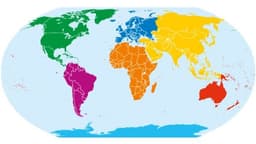
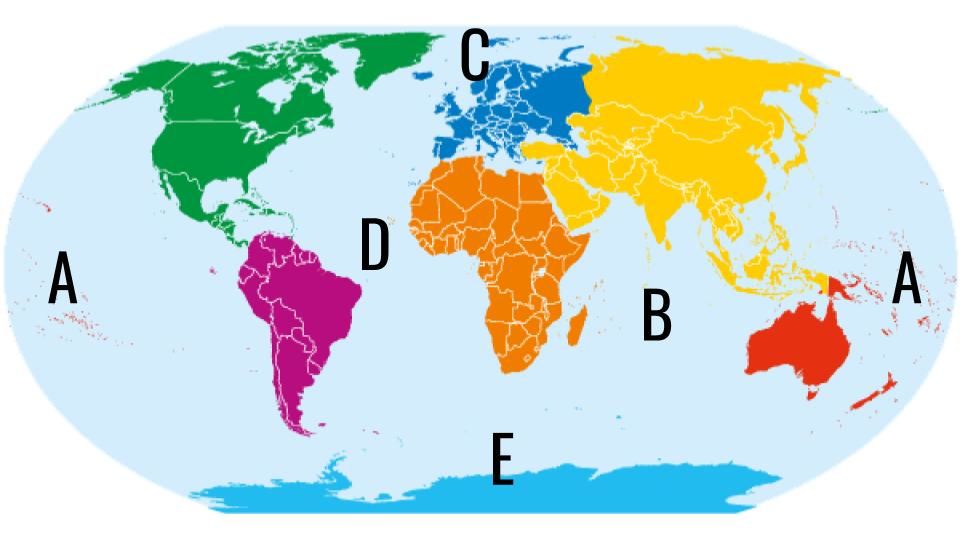
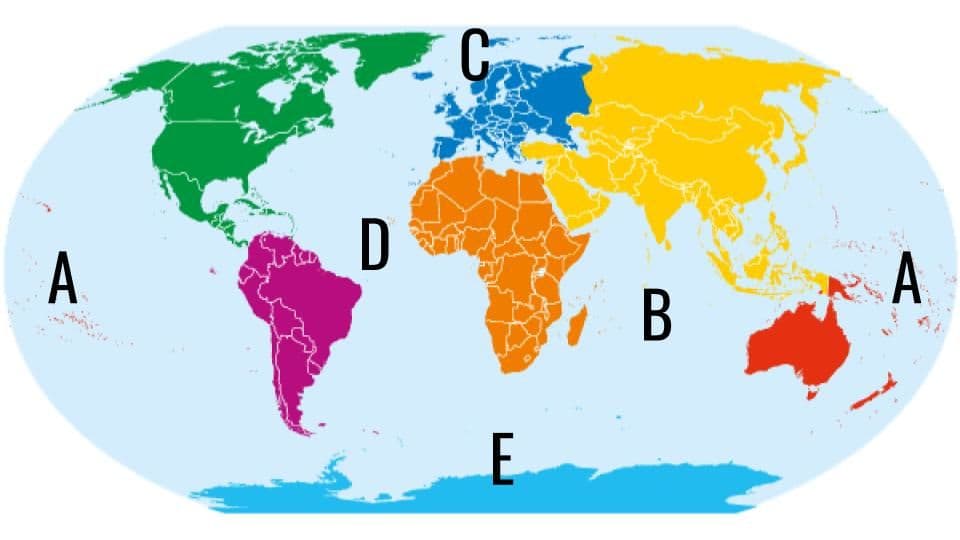
1.1 C Oceans of the World MC
Quiz by Heather Logan
Customize this quiz to suit your class
Instantly translate to 100+ languages
Tag the questions with any skills you have. Your dashboard will track each student's mastery of each skill.
Give this quiz to my class
 Chapter 8: The Worlds of North and South Geography Geography refers to the seasons, climate, soil, and physical features of a region (mountains, rivers, etc.) The differences in geography b/t the N and S is one of the major reasons slavery b/c entrenched in the S while it died out in the N. Geography of the North The N has diverse geography and experiences four distinct seasons including long, harsh winters. The Great Plains region has some of the best farmland in the country. New England has rocky, hilly wilderness, not well suited for farming. It has hundreds of bays and harbors along its coastline. States farther S had rich soil and coastal access through rivers. The N also experienced mass deforestation b/c of the need for lumber and to make room for farms. Geography of the South Climate: the S had mild winters, and a long, hot, humid growing season. It has fertile lowlands, marshes and swamps. It's ideal for growing tobacco, sugar, rice, indigo, and cotton (cash crops). B/c of the geography of the S, their whole way of life was based on agriculture and geography is one of the major reasons why slavery took off in the S. Economies Economy basically refers to the way people make and spend money. The Northern economy was far more diversified than the Southern. Economy of the North The North experienced the Industrial Revolution—the shift from handmade goods to machine-made goods. This resulted in new jobs, increased production, and improved efficiency in agriculture. IOW, you can make things faster, easier, and cheaper. More ppl get more stuff. Factories were almost always located next to rivers. The Reaper The Indust. Rev. changed northern agriculture with Cyrus McCormick’s reaper. It could cut 28xs more grain than a single man. The Sewing Machine Elias Howe's sewing machine; At 250 stitches a minute, Howe's lockstitch mechanism out-stitched the output of five hand seamstresses with a reputation for speed, completing in one hour what took the sewers 14.5 hours. The Textile Mill Francis Cabot Lowell's textile mill: essentially the first factory in the US, Lowell set the model for all future factories. Interchangeable Parts Eli Whitney's interchangeable parts; considered the "dawning of a new age" of machinery. This concept was applied to pretty much all manufacturing. Economy of the South The South's economy was based on AGRICULTURE. Most southerners were agrarians. Most had small farms, some owned plantations. Slavery beginning to decline in late 1700s; prices went down (tobacco, indigo) and cotton was difficult. King Cotton Cotton was South’s most important crop. Earned more money than all other exports combined. The S would go on to supply 75% of the world's cotton demand. Cotton Gin Eli Whitney invented the cotton gin in 1794 and forever changed the US. The gin made cotton incredibly profitable. We start to see the effects of the cotton gin around 1820. Slavery and Cotton Southerners put all their money into slaves and land, and almost none into building factories. With the spread of cotton, demand for slaves increased. 1790 to 1850, number of slaves rose 600%. Transportation Again, the N was far more inventive in their approach to transportation than the S. Transportation in the North National Road National Road stretched from the East (the Potomac), over the Appalachians, to the West (Illinois), over 620 miles. Steamboat In 1807, Robert Fulton invented the steamboat. It traveled 150 miles UP the Hudson River at a speed of 5 mph. Erie Canal Built b/t 1817 and 1825, the canal spanned 363 miles and connected Lake Erie to the Hudson River. This connected farms in the W to cities in the E and the Atlantic Ocean. Clipper Ship Clippers were narrow w massive sails that were built for speed. They cut the time it took to cross the Atlantic in half. Locomotive The fastest and cheapest way to move goods was by steam-powered trains. The first RR was the B&O which was built in 1827. Transportation in the South Most people and goods in the South traveled by rivers in steamboats. The South had trains, but less than half the amount of railroad track than the North had. Society (The People) The people who made up the N and S could not have been more different. The S was primarily agrarian while the N was b/c urbanized. The S was holding on to the past, while the N was embracing change. Society in the South Society was organized into 3 distinct classes of people: rich plantation owners at the top; then white farmers and workers; slaves on the bottom. This rigid social class system was the result of a slave-based agricultural system. Power Structure Only 1 in 4 whites owned a slave. Plantation owners, who owned more than 20 slaves, dominated politics and the economy. Society in the North 7 of 10 Northerners still lived on farms by the 1840s (6 of 10 by 1860), but urbanization was growing fast in the N. The N relied on wage labor as opposed to slave labor, so most blacks in the N were free. N blacks were not treated equally and the N was about as racist as the S. Immigration Compared to the S, the N population was exploding, in large part bc of immigration. Between 1845 and 1860, 4 million immigrants came to the North. Most were German and Irish. Irish--a potato famine; German--a failed revolution. Ethnic neighborhoods developed as a result.WHAT IS SCIENCE? - is a way in which answers related to NATURAL events are proposed. - a way in which people can learn and UNDERSTAND events in the NATURAL WORLD - based on OBSERVABLE EVENTS - a study of the NATURAL WORLD - a method of DISCOVERY and UNDERSTANDING by using a PROBLEM-SOLVING process called the?? - A systematic body of knowledge based on observation and experimentation. FOUR COMMON CHARACTERISTICS OF SCIENCE: 1. It focuses on the NATURAL WORLD. 2. Goes through experiment. 3. Relies on evidence. 4. Passes through the scientific community. WHAT IS TECHNOLOGY? Brian Arthur (2009) defined technology as: 1. a means to fulfill a human purpose 2. assemblage of practices and components 3. a collection of devices and engineering practices available to a culture. SOCIETY ST (Science Technology) would not exist without society. WHAT IS STS? Science and Technology and Society (STS) is the study of how society, politics and culture affect scientific research and technological innovation and how these, in turn affects society, politics and culture. EVENTS IN THE HISTORY OF SCIENCE AND TECHNOLOGY THAT TRANSFORMED THE SOCIETY (IN THE WORLD) ANCIENT PERIOD 3500 BC. - 500 AD EUROPE - use of fire by Homo Erectus CA 750,000 - Stone Headed Spears CA 45,000 - Wooden bow and arrow CA 20,000 - The Minoans build palaces in Crete CA 2,000 THE AMERICAS - The Folsom people living on eastern side of the Rocky Mountain developed sophisticated tools CA 8,000. - Pottery is made in South America CA 6,000 - Olmec sculpture carves figurines and giant human heads. CA 1200 ASIA AND OCEANA - Earliest known clay pots are made in Japan CA 11,000. - Bronze is first made in Thailand CA 4000 - A lunar calendar is developed in China CA 2950 - Chinese doctors begin using acupuncture CA 2500 - The Hindu calendar of 360 days was introduced in India CA 1000 AFRICA AND MIDDLE EAST - Homo erectus uses stone tools CA 1000000 - CA 15000 in Africa, bone harpoons are used for fishing. - Clay tokens are used for record keeping in Mesopotamia CA 7500 - Mesopotamian mathematicians discover the Pythagorean Theorem MEDIEVAL PERIOD CA 500 -1500 - Dark ages because few written records and evidences remained - Scholastic tradition was established by Charlemagne - Vertical windmills, spectacles, mechanical clock, water mills, gothic style were invented - Johannes Gutenberg invented the printing press RENAISSANCE PERIOD 14TH – 17TH CENTURY - Rebirth of revival - Printing with movable type allowed Bible, secular books made in large amount - Nicolas Copernicus presented a heliocentric theory - Galileo Galilei invented telescope INDUSTRIAL REVOLUTION 18TH CENTURY - Skilled workers were set aside because of the machines - Iron production, steam engine and textile flourished - Scottish James Watt improved steam engine Robert Fulton (steam boat) - The following were invented: Light bulb, telephone, first steam powered locomotive 19TH CENTURY - Age of machine and tools - Herman Helmholtz (law of conservation of energy) - James Clark Maxwell (light as electro-magnetic wave) - Henry Becquerel (radioactivity) - Marie and Pierre Curie (radium) - Hans Christian Oersted (electric current near the magnet) - Michael Faraday (magnet produces electricity) - Atomic Theory proposed by John Dalton - Electron discovered by JJ. Thomson - Telegraph developed by Samuel Morse 20TH CENTURY - Communication, transportation, military research were developed - Personal computer was created - Intel developed microprocessor - Apple was introduced by Steve Jobs and Steve Wozniak - Internet was created (ARPANET) - Henry Ford's mass production of cars - Artificial Intelligence was invented SCIENCE, TECHNOLOGY AND SOCIETY (PHILIPPINE HISTORY) Stone Age - Archeological findings show that modern man from Asian mainland first came over land on across narrow channels to live in Batangas and Palawan about 48,000 B.C. - Subsequently they formed settlement in Sulu, Davao, Zamboanga, Samar, Negros, Batangas, Laguna, Rizal, Bulacan and Cagayan. Inventions - They made simple tools and weapons of stone flakes and later developed method of sawing and polishing stones around 40,000 B.C. - By around 3,000 B.C. they were producing adzes ornaments of seashells and pottery. Pottery flourished for the next 2,000 years until they imported Chinese porcelain. Soon they learned to produce copper, bronze, iron, and gold metal tools and ornaments. Iron Age - The Iron Age lasted from the third century B.C. to 11th century A.D. During this period Filipinos were engaged in extraction smelting and refining of iron from ores, until the importation of cast iron from Sarawak and later from China. INVENTIONS AND DISCOVERIES - They learn to weave cotton, make glass ornaments, and cultivate lowland rice and dike fields of terraced fields utilizing spring water in mountain regions. - They also learned to build boats for trading purposes. - Spanish chronicles noted refined plank built warships called caracoa suited for interisland trade raids 10TH CENTURY A.D. - Filipinos from the Butuan were trading with Champa (Vietnam) and those from Ma-I (Mindoro) with China as noted in Chinese records containing several references to the Philippines. These archaeological findings indicated that regular trade relations between the Philippines, China and Vietnam had been well established from the 10th century to the 15th century A.D. TRADING - The People of Ma-I and San-Hsu (Palawan) traded bee wax, cotton, pearls, coconut heart mats, tortoise shell and medicinal betel nuts, panie cloth for porcelain, leads fishnets sinker, colored glass beads, iron pots, iron needles and tin. SOME PRESPANISH FILIPINO SCIENCE AND TECHNOLOGY - Curative values of plants extract use as medicine - Alphabet (Alibata) - Counting Methods - Weights - Measuring system (isang gatang) - Calendar based on the periods of moon - Banaue Rice Terraces SPANISH REGIME Religion the Catholic Church - The latter part of the 16th Century Development of schools: - Colegio de San Ildefonso-Cebu-1595 - Colegio de San Ignacio-Manila-1595 - Colegio De Nuestra Senora del Rosario-Manila 1597 - Colegio De San Jose-Manila-1601 Colegio De San Ildefonso De Cebu - In 1863 the colonial authorities issued a royal degree to reform the existing educational system. In 1871 the school of medicine and pharmacy were opened to UST, after 15 years it had granted the degree Of Licenciado En Medicina to 62 graduates. Medicine - Development of hospitals San Juan Lazaro hospital the oldest in the far east was founded in 1578. Roads and Bridges Among other Spanish contributions: - Arithmetic - Algebra - Geometry - Trigonometry - Physics - Hydrography - Meteorology - Navigation - Pilotage American Period and Post Commonwealth Era - BUREAU OF GOVERNMENT LABORATORIES (1901) - BUREAU OF SCIENCE (1905) - INSTITUTE OF SCIENCE (1946) RA 2067 OTHERWISE KNOWN AS THE “SCIENCE ACT OF 1958”. - This was enacted to integrate, coordinate, and intensify scientific and technological research and development and to foster invention including allocation of funds and other purposes. NATIONAL RESEARCH COUNCIL WAS ESTABLISHED ON DECEMBER 8, 1933. - Its Mandate (Nrcp) Promotes And Supports Fundamental Or Basic Research For The Continuing Total Improvement Of The Research Capability Of Individual Scientists Or Group Of Scientists; Provides Advice On Problems And Issues Of National Interest; Promotes Scientific And Technological Culture To All Sectors Of Society; And Fosters Linkages With Local And International Scientific Organizations For Enhanced Cooperation In The Development And Sharing Of Information NATIONAL RESEARCH COUNCIL WAS ESTABLISHED IN DECEMBER 8, 1933. - Its Mandate (NRCP) promotes and supports fundamental or basic research for the continuing total improvement of the research capability of individual scientists or group of scientists; provides advice on problems and issues of national interest; promotes scientific and technological culture to all sectors of society; and fosters linkages with local and international scientific organizations for enhanced cooperation in the development and sharing of information. It was during the American Period when Science was inclined towards: - Agriculture - Food Processing - Forestry - Medicine - Pharmacy - NursingLESSON 4. Cellular Respiration • Define cellular respiration • Identify the stages of clan respiration You have just learned how the energy from the sun is captured, processed, and stored in the form of glucose. Cellular respiration, another important life process, is the means by which cells release the stored energy in glucose to make adenosine triphosphate (ATP). The primary goal of this life process is to convert stored energy into usable form, such as ATP, for the cells to carry out their functions. Cellular respiration involves several chemical reactions. The reactions can be summed up in the following equation: C6 H12 O6 + 602 ----- 6 CO₂ +6H₂O + ATP Glucose oxygen carbon dioxide water energy Aerobic respiration reactions, or cellular respiration that takes place in the presence of oxygen, can be grouped into three stages glycolysis, Krebs cycle, and electron transport chain (ETC). Stage 1: Glycolysis Glycolysis is the process that breaks down one molecule of 6-C glucose into 3-C pyruvates or pyruvic acids. It also releases four molecules of ATP. This process occurs in the cytoplasm of the cell. The following is the step-by-step process of glycolysis. Take note that several enzymes are involved in this process. 1. The first step of glycolysis requires energy. It can only proceed when the two ATP molecules donate energy to the glucose by transferring a phosphate group with the help of an enzyme, producing glucose 6-phosphate 2. Then, a specific enzyme promotes the rearrangement of the atoms, producing the fructose 6-phosphate. 3. The action of the enzyme in step 2 promotes the transfer of a phosphate group from another ATP molecule, forming fructose 1,6-bisphosphate. 4. The resulting fructose 1,6-bisphosphate molecules, with the help of another enzyme, splits into two molecules, each with three carbon backbones. These two sugars are dihydroxyacetone phosphate and glyceraldehyde 3-phosphate. 5. Another important enzyme then rapidly interconverts the molecules of dihydro-xyacetone phosphate and glyceraldehyde 3-phosphate. This produces two molecules of glyceraldehyde 3-phosphate or 3-phosphoglyceraldehyde (PGAL) 6. The succeeding step involves another enzyme-mediated action. The hydrogen (H) from PGAL is transferred to the oxidizing agent, nicotinamide adenine dinucleotide (NAD), which forms NADH. A phosphate (P) is also added from the cytosol of the cell to oxidize the two molecules of PGAL, forming two 1.3-bisphosphoglycerate. 7. A phosphate (P) from 1,3-biphosphoglycerate is transferred to ADP to form ATP. This happens for each of the two 1,3-bisphosphoglycerate. resulting to a yield of two ATP and two 3-phosphoglycerate molecules. 8. A phosphate is transferred from 3-phosphoglycerate molecules from the third carbon to the second carbon, forming 2-phosphoglycerate molecules A hydrogen atom and a hydroxyl ((OH) group is released, which then combines to form water (H2O). The removal of H2O from 2-phosphoglycerate results in the formation of 2- phosphoglycerate molecules. 9. A hydrogen atom and a hydroxyl ((OH) group is released, which then combines to form water (H2O). The removal of H2O from 2-phosphoglycerate results in the formation of two phosphoenolpyruvic acid (PEP) 10. Phosphate (P) from PEP is transferred to ADP (and forms ATP) and the final product, pyruvic acid. This reaction yields two molecules of pyruvic acid and two ATP molecules In summary, a single glucose molecule that undergoes the process of glycolysis produces two molecules of pyruvic acid, four molecules of ATP, two molecules of NADEL and two molecules of H.O. However, only two molecules of ATP are counted as net products since two molecules of ATP are spent throughout the process. Stage II: Krebs Cycle The Krebs cycle, named after its proponent Sir Hans Adolf Krebs, is a cyclical series of enzyme-controlled reactions. This stage of cellular respiration occurs in the matrix of the mitochondria. It is sometimes. called the citric acid cycle (CAC) since it produces citric acid. Citric acid contains three carboxyl (COOH) groups; hence, it is also called the tricarboxylic acid cycle (TCA). This requires the pyruvic acids produced during glycolysis. The main function of this cycle is to produce high-energy-yielding molecules, namely, NADH and flavin adenine dinucleotide (FADH) that will later on be used in the electron transport chain reaction. Figure 6-7. Summary of glycolysis and corresponding products in each reaction presented (See Appendix F on page 285 for an enlarged and complete version of the image.) An initial process is needed for the Krebs cycle to begin. As a pyruvate molecule from glycolysis enters the mitochondrion, it undergoes an important preliminary ate to form acetyl-CoA reaction. Coenzyme-A (COA) combines with pyruvate help of an enzymatic complex. This conversion also produces CO, and NADH. The Krebs cycle is summarized as follows. Take note that several enzymes are involved in this process. 1. The Krebs cycle technically begins when the acetyl-CoA combines with oxaloacetic acid (OAA), a 4-C molecule, to produce citric acid, a 6-C molecule. 2. With the aid of an enzyme, the citric acid now goes through a series of reactions that releases energy. Water molecule is removed from the citric acid and is returned in a different location. The-OH group is repositioned, forming the molecule isocitrate. 3. Isocitrate is then oxidized, forming the a-ketoglutarate, a 5-C molecule. The byproducts of this reaction are NADH and CO, 4 The a-ketoglutarate loses its CO, and a coenzyme-A is added in its place. The decarboxylation occurs with the help of NAD, which then becomes NADH. The resulting molecule is called succinyl-CoA. 5. Succinyl-CoA is converted into succinate. Also in this reaction, a molecule of guanosine triphosphate (GTP) is synthesized. The GTP molecule has similar structure and energy properties to that of ATP and is used by cells the same way. The free phosphate group attacks the succinyl-CoA molecule, which detaches the COA. Then, phosphate is attached to GDP to come up with GTP, similar to the process that occur in ATP synthesis (from ADP to ATP). 6. Two hydrogens are removed from succinate, A molecule of flavin adenine dinucleotide (FAD), a coenzyme similar to NAD, is reduced to FADH, as it takes the hydrogens from the succinate. This reaction produces the fumarate. 7. Fumarate is then converted into malate as the addition of a water molecule is catalyzed. The final reaction is the regeneration of oxaloacetate. The resulting byproduct of this regeneration is NADH Recall that two pyruvate molecules were produced during glycolysis, causing the Krebs cycle to turn twice. Each tuts produces three molecules of NADH, single ATH one FADIH, and the by-product CO, which is exhaled. Stage III: Electron Transport Chain The electron transport chain (ETC) is a series of photon pumps on the inner membrane of the mitochondrion. Electron transport is the last stage of the cellular respiration. In this stage, the energy from NADH and FADH, from the Krebs cycle is transferred to ADP to produce ATP. This process is generally known as oxidative phosphorylation. This energy coupling mechanism in the cell was revealed by the work of Peter stored energy in the form of proton (1) gradient to phosphorylate (add phosphate) ADP and produce ATP. The pumping of hydrogen sons across the inner membrane creates higher concentration ions in the inner membrane than on the outside of the membrane. This chemiosmotic gradient causes the ions to flow back across the membrane where the concentration of ions is lower. ATP synthase lined in the matrix serve as a channel protein, helping the ions to move across the membrane. The chemiosmotic gradient powers the phosphorylation of ADP to ATP, which also occurs in the ATP synthase. After passing through the ETC, the oxygen, being the final hydrogen acceptor, combines with two electrons and two protons, forming a water molecule. Water is a by-product of cellular respiration and is excreted. MINI TEST 6-3 1. Which energy-releasing pathway yields the most ATF in each glucose molecule? 2. Briefly describe the two stages of aerobic respiration that follow glycolysis: (a) Krebs cycle (b) Electron transport chain Anaerobic Respiration Most cells carry out arrobic respiration when oxygen is present. Aerobic respiration is an efficient process that yields a lot of ATP. However, many organisms thrive in mud, marshes, animal gut, canned goods, sewage treatment pond, and deep oceans where oxygen is scarce. Organisms that can live without oxygen are called anaerobes. Cellular respiration that proceeds without the presence of oxygen is called anaerobic respiration. In the event that the oxygen supply becomes low, aerobic cells also perform fermentation and lactic acid fermentation anaerobic pathways. There are two common anaerobic pathways in these cells, alcoholic fermentation and lactic acid fermentation. In alcoholic fermentation, ethyl alcohol and carbon dioxide are produced by some cells using the pyruvate from glycolysis. Each pyruvate molecule is rearranged into acetaldehyde and carbon dioxide, which is eventually released. NADII gives up electrons to acetaldehyde to form ethanol Fermentation is widely used in the industry. Yeast, a fungus used in making bread. can undergo anaerobic respiration. Bakers aux sugar, flour, water, and yeast to form the bread dough. The dough rises due to the carbon dioxide and alcohol released by the yeast cells trapped in air bubbles. Beer and wine manufacturers, we yeast to ferment the sugars in wheat and grape juice, forming alcoholic beverages such as beer and wine. In some cells, glycolysis produces two pyruvates, two NADH molecules, and two ATP molecules. Pyruvate itself becomes the final acceptor of the electrons from the NADH that produces the final product: lactate. Oftentimes, this product is called lactic acid. Human skeletal muscles can carry out fermentation when the blood cannot supply the cells with adequate oxygen during strenuous activities. When lactic acid builds up in the muscles, fatigue, burning sensation, and cramps result. Lactic acid will continue to build up until there is adequate supply of oxygen. Lactic acid is then converted back into pyruvate in the liver. Muscles also restore normal functions. Have you ever wondered why milk or cream turns sour after some time? Bacterial cells that undergo fermentation are responsible in producing lactate that turns the milk sour. These bacteria are used in manufacturing yogurt and sour milk products. Fermentation pathways do not breakdown and utilize the glucose completely. ATP is no longer produced beyond the process of glycolysis. Thus, energy produced is just enough for some single-celled organisms, or the energy can only be used by multicellular organisms for a short period.1. How are mountains formed? A) Only by wind and water B) As a result of tree growth C) Due to the movement of tectonic plates D) By ocean currents Correct answer: C 2. Which of the following is a volcanic mountain? A) Altai B) Himalayas C) Mount Fuji D) Ural Mountains Correct answer: C 3. What is a main part of a volcano? A) Solar radiation B) Crater C) Atmospheric layer D) Basin Correct answer: B 4. Which volcano is considered active? A) Kokshetau B) Mount Etna C) Edinburgh rock D) Carpathians Correct answer: B 5. Which is NOT a benefit of mountains? A) Source of water B) Flat land for agriculture C) Tourist attraction D) Home to biodiversity Correct answer: B1. [Force] Part A: A student wants to test how friction affects a toy car. She rolls the car across a sheet of sandpaper and then across a sheet of wax paper. Which is the independent (changing) variable? A. The speed of the car B. The type of surface C. The distance traveled D. The size of the car Part B: On which surface will the car likely stop the SOONEST? A. The wax paper B. The sandpaper C. Both will be the same D. Neither surface has friction 2. [Magnets] Which of these is a measurable question for a magnet experiment? A. Are magnets more fun than springs? B. What is the prettiest color for a magnet? C. How many steel paperclips can a bar magnet lift? D. Why were magnets invented? 3. [Earth's Changes] A student observes a statue in a park that has lost its nose and has smooth edges after many years of rain and wind. What process caused this? A. Erosion B. Deposition C. Weathering D. Evaporation 4. [Earth's Changes] When a river reaches the ocean, it slows down and creates a landform called a delta by dropping sand and silt. This "dropping off" is called: A. Weathering B. Deposition C. Condensation D. Friction 5. [Resources] Why is coal considered a nonrenewable resource? A. It can be burned to make electricity. B. It is found deep underground. C. It takes millions of years to form and cannot be replaced quickly. D. It is made from ancient plants. 6. [Conservation] A school replaces all its old lightbulbs with energy-efficient LED bulbs. This is an example of: A. Weathering a resource B. Conserving a resource C. Deposition of energy D. Creating a renewable resource 7. [Aquifers] An aquifer is like a giant underground sponge. What characteristic of the rocks allows them to hold water? A. The rocks are solid and water-proof. B. The rocks are porous, with tiny spaces for water to sit. C. The rocks are magnetic and pull water toward them. D. The rocks are melted into a liquid state. 8. [Water Cycle] On a humid morning, you see dew on the grass even though it didn't rain overnight. Which part of the water cycle formed the dew? A. Evaporation B. Precipitation C. Condensation D. Transpiration 9. [Climate] Which of the following is a description of CLIMATE? A. "It is currently 85 degrees in McAllen." B. "There is a 40% chance of rain this afternoon." C. "South Texas typically has mild winters and very hot summers." D. "The wind is blowing from the North at 10 mph today." 10. [Weather/Climate] A scientist is looking at a chart that shows the total annual rainfall in a city from 1990 to 2020. What is the scientist most likely studying? A. The daily weather forecast B. The climate of the region C. The water cycle of a single pond D. The rate of erosion on a local hillLe microplastiche Le microplastiche rappresentano il 20% delle 8 milioni di tonnellate di plastica che finiscono negli oceani ogni anno le più comuni sono le microfibre provenienti per la maggior parte da capi di abbigliamento sintetici l'università di Newcastle ha studiato per oltre 50 anni le acque del Mare del Nord facendo luce sull'impatto del cambiamento dei microrganismi dei livelli di nutrienti e del riscaldamento globale ma ora i ricercatori stanno utilizzando i campioni d'acqua raccolti per analizzare una crescente invisibile minaccia che sta colpendo i nostri oceani: le microfibre di plastica. Alla radice del problema c'è l'industria tessile. che produce più di 40 milioni di tonnellate di prodotti sintetici l'anno. La grande maggioranza sono vestiti, realizzati in poliestere, un materiale che ha molti benefici, viene utilizzato per lo sport e l'attività all'aperto, si asciuga bene, è economico, ma la sua resistenza rende difficile la sua decomposizione. Ecco cosa succede ogni volta che indossiamo un capo realizzato con fibre sintetiche. Cosa ti fa pensare la parola poliestere? Agli abiti degli anni settanta? Alle camicie inamidate? Una volta era così, oggigiorno lo indossano tutti.” I pantaloncini per yoga, maglioni di lana, l’intimo” sono fatti tutti con fibre sintetiche come Il poliestere più poliestere vuol dire maggiore richiesta per i materiali che lo producono, ma non servono nuovi materiali, alcune aziende producono in poliestere da materiali usati come le bottiglie di plastica. Ogni giorno si consumano miliardi di bottiglie di plastica, e questo è il problema. Certo la soluzione sarebbe usare meno plastica, ma mentre si cerca di diluire il consumo di plastica alcune aziende trasformano le bottiglie in oggetti che ci piacciono. Bevete, gettate la bottiglia, fatela riciclare, tagliatela, tessetela, indossatela, lavatela, indossatela di nuovo, lavatela di nuovo, sembra la soluzione perfetta No? Ma se ci pensiamo meglio in questo comportamento si nascondono molti problemi: Il primo è che la gente potrebbe usare più plastica usa e getta, pensando che venga riciclata continuamente. Ma c'è un altro problema, un micro problema, che si somma a tutti gli altri: ogni volta che si lavano le fibre sintetiche, sia che si ricavano da bottiglie riciclate o da materiali nuovi dei minuscoli pezzetti di plastica le microfibre finiscono nello scarico dell’acqua, quindi dopo centinaia di migliaia di lavaggi i nostri capi si disintegrano. Più vecchi sono peggio è. Il problema maggiore è che queste fibre sono così piccole che non sempre vengono filtrate negli impianti, finendo nei fiumi, nei laghi, nell'oceano, una volta nell'oceano agiscono come spugne risucchiando gli altri agenti inquinanti, sono come delle piccole bombe tossiche, cariche di olio per motori, pesticidi, sostanze chimiche industriali, che finiscono nello stomaco dei pesci e quindi nei nostri. Si stima che ce ne siano 1,4 milioni di trilioni negli oceani cioè 200 milioni di microfibre a persona. Questo è l'altro lato della medaglia, di quella che sembravano soluzione al problema, sarebbe il caso che queste aziende ripartano da zero, perché se è vero che possiamo lavare meno i nostri vestiti o evitare di comprare abiti sintetici non possiamo risolvere il problema senza di loro, se vogliamo che la questione diventi una priorità di queste aziende, dobbiamo farci sentire, troviamo una soluzione reale per rendere i nostri vestiti sicuri per l'ambiente sicuri per gli oceani e sicuri per noi.Crea un quiz basandoti sul seguente testo: La Repubblica Popolare Cinese (中華人民共和國T, 中华人民共和国S, Zhōnghuá Rénmín GònghéguóP ascolta la pronuncia in mandarino standardⓘ), detta anche solo Cina (中國T, 中国S, ZhōngguóP; lett. "Paese di mezzo"),[7] è uno Stato dell'Asia orientale. La Repubblica Popolare Cinese è stata in passato indicata come Cina popolare, al fine di distinguerla dalla Repubblica di Cina, comunemente chiamata Taiwan (o Formosa), indicata invece come Cina nazionalista. Entrambe le entità reclamano il controllo sul territorio complessivo cinese. La Repubblica Popolare Cinese con 1 miliardo e 400 milioni di abitanti nel 2023 è lo stato più popoloso del mondo insieme all'India.[4] La Cina è una repubblica popolare in cui il potere è esercitato dal Partito Comunista Cinese (中国共产党 oppure 中共). Il governo ha sede nella capitale Pechino (北京首都) ed esercita la propria sovranità su ventidue province (省), cinque regioni autonome (自治区), quattro municipalità direttamente controllate (直辖市) (Pechino 北京, Tientsin 天津, Shanghai 上海 e Chongqing 重庆) e due regioni amministrative speciali 特别行政区 (Hong Kong 香港 e Macao 澳门) parzialmente autonome. La Cina rivendica la propria sovranità anche su Taiwan, che a propria volta rivendica la propria sovranità sulla Cina continentale. L'isola è rimasta dal 1949 sotto il controllo del governo della Repubblica di Cina (中華民國 o Taiwan), che precedentemente governava anche la Cina continentale, ed è rivendicata dalla Repubblica Popolare Cinese come provincia di Taiwan. La complessa condizione politica di Taiwan è una delle conseguenze della guerra civile cinese, che ha preceduto la fondazione della Repubblica Popolare Cinese. Con la sua superficie di circa 9 572 900 km², la Cina è il quarto stato più grande del mondo per superficie. Il paesaggio della Cina è vasto e diversificato: va dalle steppe della foresta e i deserti dei Gobi e del Taklamakan nell'arido nord alle foreste subtropicali e umide del sud. L'Himalaya, il Karakorum, il Pamir e il Tian Shan sono le catene montuose che separano la Cina meridionale dall'Asia centrale. Il Fiume Azzurro (长江) e il Fiume Giallo (黄河), rispettivamente il terzo e il sesto più lunghi del mondo, scorrono dall'altopiano del Tibet verso la costa orientale, densamente popolata. La costa della Cina lungo l'oceano Pacifico è lunga circa 14 500 chilometri ed è delimitata dal mare di Bohai, dal mar Giallo, dal mar Cinese Orientale e dal mar Cinese Meridionale. L'antica civiltà cinese, una delle più antiche al mondo, si sviluppò inizialmente nelle pianure comprese tra il Fiume Giallo e il Fiume Azzurro. A partire dall'età del bronzo, verso la fine del II millennio a.C., si ha evidenza di strutture feudali, in cui i nobili si raccoglievano intorno a monarchie ereditarie. Vi sono testimonianze di una casata regnante nella prima metà del I millennio a.C., nota come dinastia Zhou (周朝), il cui declino condusse alla nascita di un discreto numero di regni indipendenti in competizione per il predominio sulla regione (periodo delle Primavere e Autunni, 春秋), con stagioni di conflitto che si fecero particolarmente accese nel periodo che va dall'VIII al III secolo a.C. Nel 221 a.C. lo Stato di Qin sconfisse e conquistò i territori di tutti gli altri Stati combattenti, dando vita al primo impero della storia cinese sotto la guida del primo imperatore cinese Qín Shǐ Huángdì della dinastia Qin (秦朝). Da quel momento il titolo di imperatore della Cina divenne il sinonimo della raggiunta supremazia. La dinastia Qin non durò a lungo, infatti i popoli precedentemente conquistati vennero poco dopo riuniti sotto l'egida della dinastia Han (汉朝, III secolo a.C. - III secolo d.C.). I quattro secoli in cui regnarono i sovrani della dinastia Han sono considerati cruciali per la definizione e l'affermazione della identità culturale cinese, tanto da divenire il termine con cui i cinesi definirono se stessi (con il termine appunto di etnia o popolo han, 汉族). Da allora, la storia cinese ha visto l'alternarsi di periodi di divisione e fasi di unificazione, con conseguenti periodi di frammentazione, contrazione o espansione territoriale, sotto l'egida di diverse dinastie, talora di etnia straniera, come avvenuto nel caso dei mongoli o dei mancesi. L'ultima dinastia fu quella dei Qing, il cui regno si concluse nel 1911 con la fondazione della Repubblica di Cina (中华民国). Dopo la sconfitta dell'Impero giapponese (大日本皇国) durante la seconda guerra mondiale, il Paese fu scosso dalla guerra civile, che vedeva contrapposte le forze nazionaliste del Kuomintang (国民党), il partito che allora deteneva il governo del paese, e le forze facenti capo al Partito Comunista Cinese. Nel 1949 la guerra si concluse con la sconfitta del Kuomintang e la conseguente fuga del governo nazionalista sull'isola di Formosa, nella cui capitale Taipei (台北) ha tuttora sede l'attuale Repubblica di Cina, altresì nota come Taiwan. In seguito alla vittoria conseguita sul continente, il 1º ottobre del 1949 a Pechino le forze comuniste guidate da Mao Zedong proclamarono ufficialmente la nascita della Repubblica Popolare Cinese. Dopo l'introduzione di riforme economiche nel 1978, l'economia cinese è diventata quella dalla crescita più rapida al mondo. A partire dal 2013, è la seconda economia più grande al mondo sia come PIL totale nominale sia per parità di potere d'acquisto; per quanto riguarda solamente il PIL nominale, invece, la Cina ha sorpassato il Giappone, sino ad allora seconda potenza mondiale dal 1987, nel 2010. Nel 2022 il prodotto interno lordo cinese è sui ventimila miliardi di dollari.[8] Essa è anche il più grande esportatore e importatore di merci al mondo. La Cina è ufficialmente uno Stato munito di armi nucleari e ha il più grande esercito permanente del mondo, con il secondo più grande bilancio della difesa. È, inoltre, membro dell'ONU dal 1971, quando ha preso il posto della Repubblica di Cina tra i seggi dei membri permanenti del Consiglio di sicurezza delle Nazioni Unite, e quindi gode del potere di veto. La Cina è anche membro di numerose organizzazioni multilaterali,[9] tra cui l'OMC, l'APEC, il BRICS, l'Organizzazione di Shanghai per la cooperazione, il BCIM[10] e il G20. La Cina, unanimemente riconosciuta come grande potenza dal consesso internazionale, è una potenziale superpotenza secondo un certo numero di accademici e analisti che si occupano di questioni militari, politiche ed economiche. Dissidenti politici e gruppi per i diritti umani hanno denunciato la dittatura del governo cinese per diffuse violazioni dei diritti umani, tra cui repressione politica, repressione delle minoranze religiose ed etniche, censura, sorveglianza di massa e la violenza utilizzata nel reprimere il dissenso, come quella esibita durante le proteste di piazza Tienanmen del 1989.TEKS Grade 8 Science - 8.11.C Ocean Systems