Loading...


1a Evaluación Neurociencias
Quiz by Norma Moy
Customize this quiz to suit your class
Instantly translate to 100+ languages
Tag the questions with any skills you have. Your dashboard will track each student's mastery of each skill.
Give this quiz to my class
Lea atentamente las instrucciones de cada uno de los reactivos.
Indica cuál de las siguientes estructuras no forma parte del Sistema Nervioso Central
Nervios espinales
Médula espinal
Cerebro
Cerebelo
Protuberancia anular
Indica cuales de los siguientes enunciados son verdaderos (escoge las casillas de las opciones correctas)
Lea atentamente las instrucciones de cada uno de los reactivos.
Indica cuál de las siguientes estructuras no forma parte del Sistema Nervioso Central
Indica cuales de los siguientes enunciados son verdaderos (escoge las casillas de las opciones correctas)
Selecciona la respuesta correcta en las siguientes preguntas
En la mayoría de las personas las funciones verbales para comprender el lenguaje hablado y escrito está relacionada con el
En el Sistema Nervioso Central, la sustancia blanca está principalmente constituida por
Estructura que asegura una función protectora del sistema nervioso central frente a los agentes patógenos, toxinas y ciertas hormonas presentes en la sangre, la cual sólo permite la entrada de sustancias altamente liposolubles, de bajo peso molecular y precursores del metabolismo cerebral
Las siguientes afirmaciones con relación al sistema nervioso periférico son correctas excepto
¿Cuál de las siguientes funciones no está asociada a los núcleos amigdalinos?
Durante el desarrollo postnatal, el proceso de "podado o poda sináptica" se caracteriza por
¿Cuál de las siguientes afirmaciones describe mejor una diferencia clave entre el tálamo y el hipotálamo?
Una persona con el "Síndrome de Klüver-Bucy", resultante de una lesión bilateral del lóbulo temporal que incluye a la amígdala, mostraría probablemente
La mielinización es la formación de una vaina lipoproteica (mielina) alrededor de los axones, que actúa como un aislante eléctrico
El proceso de "migración neuronal" es crucial para la formación correcta de la corteza cerebral porque asegura que las células gliales provean suficiente mielina para las neuronas piramidales
El tálamo actúa como estación de relevo para filtrar y dirigir la información sensorial (excepto el olfato) hacia la corteza cerebral
El cerebelo está situado en la parte anterior y superior de la cavidad craneal
El hipotálamo controla las necesidades básicas del organismo, tales como hambre, ingesta de agua, conducta sexual, temperatura, entre otras
Si un estímulo doloroso es percibido conscientemente como tal, es porque la información nociceptiva ha pasado a través de núcleos Núcleo Ventral Posterolateral (VPL) y Ventral Posteromedial (VPM) del tálamo, y es proyectada a la corteza somatosensorial
La membrana celular de la neurona está constituida por una bicapa de proteínas y una de lípidos
Una persona sufre un accidente cerebrovascular que daña al hipocampo. Como resultado, es completamente incapaz de formar nuevos recuerdos sobre hechos y eventos de su vida
La Corteza Cerebral, específicamente la Corteza Prefrontal, es fundamental para un conjunto de funciones cognitivas de alto nivel conocidas como "Funciones Ejecutivas"
Las neuronas son las únicas células del sistema nervioso capaces de generar y transmitir impulsos eléctricos
Relaciona las letras del esquema correspondiente a cada uno de Lóbulos marcados

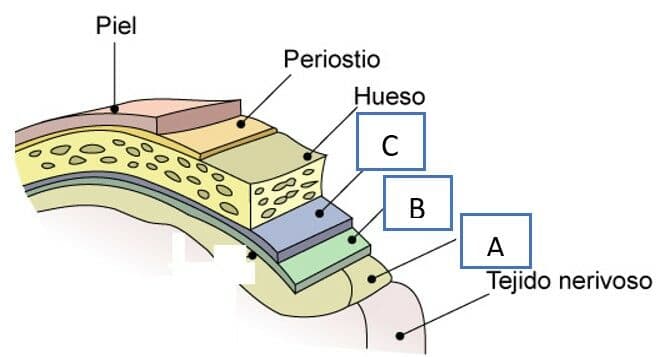
Ubique en el esquema las 3 capas de las meninges y relaciónelas con las letras
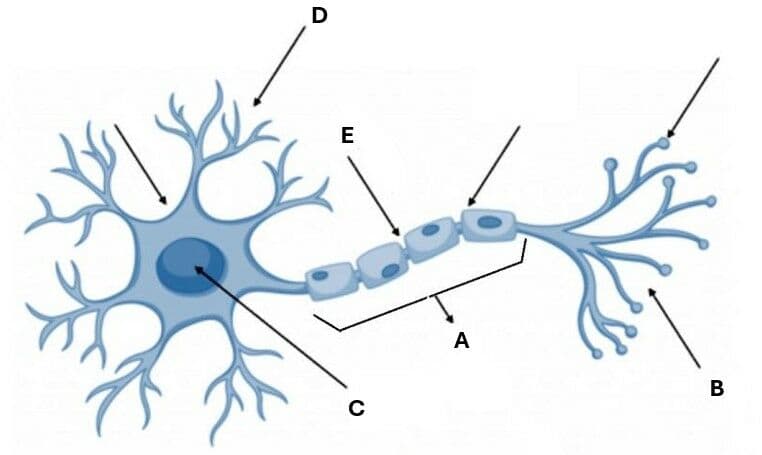
Relaciona las letras del esquema con las principales partes de la neurona
Relaciona las fases del potencial de acción de acuerdo a los iones y procesos que identifican a cada una de ellas
 1a Serie evaluación 2o. bimestre (10 puntos)1er Evaluaciòn Corta Lenguaje 1ªEvaluación del 2o. Bimestre 1a. SerieILLINOIS PROFESSIONAL TEACHING STANDARDS (2013) Standard 1 - Teaching Diverse Students – The competent teacher understands the diverse characteristics and abilities of each student and how individuals develop and learn within the context of their social, economic, cultural, linguistic, and academic experiences. The teacher uses these experiences to create instructional opportunities that maximize student learning. Knowledge Indicators – The competent teacher: 1A) understands the spectrum of student diversity (e.g., race and ethnicity, socioeconomic status, special education, gifted, English language learners (ELL), sexual orientation, gender, gender identity) and the assets that each student brings to learning across the curriculum; 1B) understands how each student constructs knowledge, acquires skills, and develops effective and efficient critical thinking and problem-solving capabilities; 1C) understands how teaching and student learning are influenced by development (physical, social and emotional, cognitive, linguistic), past experiences, talents, prior knowledge, economic circumstances and diversity within the community; 1D) understands the impact of cognitive, emotional, physical, and sensory disabilities on learning and communication pursuant to the Individuals with Disabilities Education Improvement Act (also referred to as “IDEA”) (20 USC 1400 et seq.), its implementing regulations (34 CFR 300; 2006), Article 14 of the School Code [105 ILCS 5/Art.14] and 23 Ill. Adm. Code 226 (Special Education); 1E) understands the impact of linguistic and cultural diversity on learning and communication; 1F) understands his or her personal perspectives and biases and their effects on one’s teaching; and 1G) understands how to identify individual needs and how to locate and access technology, services, and resources to address those needs. Performance Indicators – The competent teacher: 1H) analyzes and uses student information to design instruction that meets the diverse needs of students and leads to ongoing growth and achievement; 1I) stimulates prior knowledge and links new ideas to already familiar ideas and experiences; 1J) differentiates strategies, materials, pace, levels of complexity, and language to introduce concepts and principles so that they are meaningful to students at varying levels of development and to students with diverse learning needs; 1K) facilitates a learning community in which individual differences are respected; and 1L) uses information about students’ individual experiences, families, cultures, and communities to create meaningful learning opportunities and enrich instruction for all students. Standard 2 - Content Area and Pedagogical Knowledge – The competent teacher has in-depth understanding of content area knowledge that includes central concepts, methods of inquiry, structures of the disciplines, and content area literacy. The teacher creates meaningful learning experiences for each student based upon interactions among content area and pedagogical knowledge, and evidence-based practice. Knowledge Indicators – The competent teacher: 2A) understands theories and philosophies of learning and human development as they relate to the range of students in the classroom; 2B) understands major concepts, assumptions, debates, and principles; processes of inquiry; and theories that are central to the disciplines; 2C) understands the cognitive processes associated with various kinds of learning (e.g., critical and creative thinking, problem-structuring and problem-solving, invention, memorization, and recall) 2 and ensures attention to these learning processes so that students can master content standards; 2D) understands the relationship of knowledge within the disciplines to other content areas and to life applications; 2E) understands how diverse student characteristics and abilities affect processes of inquiry and influence patterns of learning; 2F) knows how to access the tools and knowledge related to latest findings (e.g., research, practice, methodologies) and technologies in the disciplines; 2G) understands the theory behind and the process for providing support to promote learning when concepts and skills are first being introduced; and 2H) understands the relationship among language acquisition (first and second), literacy development, and acquisition of academic content and skills. Performance Indicators – The competent teacher: 2I) evaluates teaching resources and materials for appropriateness as related to curricular content and each student’s needs; 2J) uses differing viewpoints, theories, and methods of inquiry in teaching subject matter concepts; 2K) engages students in the processes of critical thinking and inquiry and addresses standards of evidence of the disciplines; 2L) demonstrates fluency in technology systems, uses technology to support instruction and enhance student learning, and designs learning experiences to develop student skills in the application of technology appropriate to the disciplines; 2M) uses a variety of explanations and multiple representations of concepts that capture key ideas to help each student develop conceptual understanding and address common misunderstandings; 2N) facilitates learning experiences that make connections to other content areas and to life experiences; 2O) designs learning experiences and utilizes assistive technology and digital tools to provide access to general curricular content to individuals with disabilities; 2P) adjusts practice to meet the needs of each student in the content areas; and 2Q) applies and adapts an array of content area literacy strategies to make all subject matter accessible to each student. Standard 3 - Planning for Differentiated Instruction – The competent teacher plans and designs instruction based on content area knowledge, diverse student characteristics, student performance data, curriculum goals, and the community context. The teacher plans for ongoing student growth and achievement. Knowledge Indicators – The competent teacher: 3A) understands the Illinois Learning Standards (23 Ill. Adm. Code 1.Appendix D), curriculum development process, content, learning theory, assessment, and student development and knows how to incorporate this knowledge in planning differentiated instruction; 3B) understands how to develop short- and long-range plans, including transition plans, consistent with curriculum goals, student diversity, and learning theory; 3C) understands cultural, linguistic, cognitive, physical, and social and emotional differences, and considers the needs of each student when planning instruction; 3D) understands when and how to adjust plans based on outcome data, as well as student needs, goals, and responses; 3E) understands the appropriate role of technology, including assistive technology, to address student needs, as well as how to incorporate contemporary tools and resources to maximize student learning; 3 3F) understands how to co-plan with other classroom teachers, parents or guardians, paraprofessionals, school specialists, and community representatives to design learning experiences; and 3G) understands how research and data guide instructional planning, delivery, and adaptation. Performance Indicators – The competent teacher: 3H) establishes high expectations for each student’s learning and behavior; 3I) creates short-term and long-term plans to achieve the expectations for student learning; 3J) uses data to plan for differentiated instruction to allow for variations in individual learning needs; 3K) incorporates experiences into instructional practices that relate to a student’s current life experiences and to future life experiences; 3L) creates approaches to learning that are interdisciplinary and that integrate multiple content areas; 3M) develops plans based on student responses and provides for different pathways based on student needs; 3N) accesses and uses a wide range of information and instructional technologies to enhance a student’s ongoing growth and achievement; 3O) when planning instruction, addresses goals and objectives contained in plans developed under Section 504 of the Rehabilitation Act of 1973 (29 USC 794), individualized education programs (IEP) (see 23 Ill. Adm. Code 226 (Special Education)) or individual family service plans (IFSP) (see 23 Ill. Adm. Code 226 and 34 CFR 300.24; 2006); 3P) works with others to adapt and modify instruction to meet individual student needs; and 3Q) develops or selects relevant instructional content, materials, resources, and strategies (e.g., project-based learning) for differentiating instruction. Standard 4 - Learning Environment – The competent teacher structures a safe and healthy learning environment that facilitates cultural and linguistic responsiveness, emotional well-being, self-efficacy, positive social interaction, mutual respect, active engagement, academic risk-taking, self-motivation, and personal goal-setting. Knowledge Indicators – The competent teacher: 4A) understands principles of and strategies for effective classroom and behavior management; 4B) understands how individuals influence groups and how groups function in society; 4C) understands how to help students work cooperatively and productively in groups; 4D) understands factors (e.g., self-efficacy, positive social interaction) that influence motivation and engagement; 4E) knows how to assess the instructional environment to determine how best to meet a student’s individual needs; 4F) understands laws, rules, and ethical considerations regarding behavior intervention planning and behavior management (e.g., bullying, crisis intervention, physical restraint); 4G) knows strategies to implement behavior management and behavior intervention planning to ensure a safe and productive learning environment; and 4H) understands the use of student data (formative and summative) to design and implement behavior management strategies. Performance Indicators – The competent teacher: 4I) creates a safe and healthy environment that maximizes student learning; 4J) creates clear expectations and procedures for communication and behavior and a physical setting conducive to achieving classroom goals; 4K) uses strategies to create a smoothly functioning learning community in which students assume responsibility for themselves and one another, participate in decision-making, work collaboratively and independently, use appropriate technology, and engage in purposeful learning activities; 4 4L) analyzes the classroom environment and makes decisions to enhance cultural and linguistic responsiveness, mutual respect, positive social relationships, student motivation, and classroom engagement; 4M) organizes, allocates, and manages time, materials, technology, and physical space to provide active and equitable engagement of students in productive learning activities; 4N) engages students in and monitors individual and group-learning activities that help them develop the motivation to learn; 4O) uses a variety of effective behavioral management techniques appropriate to the needs of all students that include positive behavior interventions and supports; 4P) modifies the learning environment (including the schedule and physical arrangement) to facilitate appropriate behaviors and learning for students with diverse learning characteristics; and 4Q) analyzes student behavior data to develop and support positive behavior. Standard 5 - Instructional Delivery – The competent teacher differentiates instruction by using a variety of strategies that support critical and creative thinking, problem-solving, and continuous growth and learning. This teacher understands that the classroom is a dynamic environment requiring ongoing modification of instruction to enhance learning for each student. Knowledge Indicators – The competent teacher: 5A) understands the cognitive processes associated with various kinds of learning; 5B) understands principles and techniques, along with advantages and limitations, associated with a wide range of evidence-based instructional practices; 5C) knows how to implement effective differentiated instruction through the use of a wide variety of materials, technologies, and resources; 5D) understands disciplinary and interdisciplinary instructional approaches and how they relate to life and career experiences; 5E) knows techniques for modifying instructional methods, materials, and the environment to facilitate learning for students with diverse learning characteristics; 5F) knows strategies to maximize student attentiveness and engagement; 5G) knows how to evaluate and use student performance data to adjust instruction while teaching; and 5H) understands when and how to adapt or modify instruction based on outcome data, as well as student needs, goals, and responses. Performance Indicators – The competent teacher: 5I) uses multiple teaching strategies, including adjusted pacing and flexible grouping, to engage students in active learning opportunities that promote the development of critical and creative thinking, problem-solving, and performance capabilities; 5J) monitors and adjusts strategies in response to feedback from the student; 5K) varies his or her role in the instructional process as instructor, facilitator, coach, or audience in relation to the content and purposes of instruction and the needs of students; 5L) develops a variety of clear, accurate presentations and representations of concepts, using alternative explanations to assist students’ understanding and presenting diverse perspectives to encourage critical and creative thinking; 5M) uses strategies and techniques for facilitating meaningful inclusion of individuals with a range of abilities and experiences; 5N) uses technology to accomplish differentiated instructional objectives that enhance learning for each student; 5O) models and facilitates effective use of current and emerging digital tools to locate, analyze, evaluate, and use information resources to support research and learning; 5P) uses student data to adapt the curriculum and implement instructional strategies and materials according to the characteristics of each student; 5 5Q) uses effective co-planning and co-teaching techniques to deliver instruction to all students; 5R) maximizes instructional time (e.g., minimizes transitional time); and 5S) implements appropriate evidence-based instructional strategies. Standard 6 - Reading, Writing, and Oral Communication – The competent teacher has foundational knowledge of reading, writing, and oral communication within the content area and recognizes and addresses student reading, writing, and oral communication needs to facilitate the acquisition of content knowledge. Knowledge Indicators – The competent teacher: 6A) understands appropriate and varied instructional approaches used before, during, and after reading, including those that develop word knowledge, vocabulary, comprehension, fluency, and strategy use in the content areas; 6B) understands that the reading process involves the construction of meaning through the interactions of the reader's background knowledge and experiences, the information in the text, and the purpose of the reading situation; 6C) understands communication theory, language development, and the role of language in learning; 6D) understands writing processes and their importance to content learning; 6E) knows and models standard conventions of written and oral communications; 6F) recognizes the relationships among reading, writing, and oral communication and understands how to integrate these components to increase content learning; 6G) understands how to design, select, modify, and evaluate a wide range of materials for the content areas and the reading needs of the student; 6H) understands how to use a variety of formal and informal assessments to recognize and address the reading, writing, and oral communication needs of each student; and 6I) knows appropriate and varied instructional approaches, including those that develop word knowledge, vocabulary, comprehension, fluency, and strategy use in the content areas. Performance Indicators – The competent teacher: 6J) selects, modifies, and uses a wide range of printed, visual, or auditory materials, and online resources appropriate to the content areas and the reading needs and levels of each student (including ELLs, and struggling and advanced readers); 6K) uses assessment data, student work samples, and observations from continuous monitoring of student progress to plan and evaluate effective content area reading, writing, and oral communication instruction; 6L) facilitates the use of appropriate word identification and vocabulary strategies to develop each student’s understanding of content; 6M) teaches fluency strategies to facilitate comprehension of content; 6N) uses modeling, explanation, practice, and feedback to teach students to monitor and apply comprehension strategies independently, appropriate to the content learning; 6O) teaches students to analyze, evaluate, synthesize, and summarize information in single texts and across multiple texts, including electronic resources; 6P) teaches students to develop written text appropriate to the content areas that utilizes organization (e.g., compare/contrast, problem/solution), focus, elaboration, word choice, and standard conventions (e.g., punctuation, grammar); 6Q) integrates reading, writing, and oral communication to engage students in content learning; 6R) works with other teachers and support personnel to design, adjust, and modify instruction to meet students’ reading, writing, and oral communication needs; and 6S) stimulates discussion in the content areas for varied instructional and conversational purposes. Standard 7 - Assessment – The competent teacher understands and uses appropriate formative and summative assessments for determining student needs, monitoring student progress, measuring student 6 growth, and evaluating student outcomes. The teacher makes decisions driven by data about curricular and instructional effectiveness and adjusts practices to meet the needs of each student. Knowledge Indicators – The competent teacher: 7A) understands the purposes, characteristics, and limitations of different types of assessments, including standardized assessments, universal screening, curriculum-based assessment, and progress monitoring tools; 7B) understands that assessment is a means of evaluating how students learn and what they know and are able to do in order to meet the Illinois Learning Standards; 7C) understands measurement theory and assessment-related issues, such as validity, reliability, bias, and appropriate and accurate scoring; 7D) understands current terminology and procedures necessary for the appropriate analysis and interpretation of assessment data; 7E) understands how to select, construct, and use assessment strategies and instruments for diagnosis and evaluation of learning and instruction; 7F) knows research-based assessment strategies appropriate for each student; 7G) understands how to make data-driven decisions using assessment results to adjust practices to meet the needs of each student; 7H) knows legal provisions, rules, and guidelines regarding assessment and assessment accommodations for all student populations; and 7I) knows assessment and progress monitoring techniques to assess the effectiveness of instruction for each student. Performance Indicators – The competent teacher: 7J) uses assessment results to determine student performance levels, identify learning targets, select appropriate research-based instructional strategies, and implement instruction to enhance learning outcomes; 7K) appropriately uses a variety of formal and informal assessments to evaluate the understanding, progress, and performance of an individual student and the class as a whole; 7L) involves students in self-assessment activities to help them become aware of their strengths and needs and encourages them to establish goals for learning; 7M) maintains useful and accurate records of student work and performance; 7N) accurately interprets and clearly communicates aggregate student performance data to students, parents or guardians, colleagues, and the community in a manner that complies with the requirements of the Illinois School Student Records Act [105 ILCS 10], 23 Ill. Adm. Code 375 (Student Records), the Family Educational Rights and Privacy Act (FERPA) (20 USC 1232g) and its implementing regulations (34 CFR 99; December 9, 2008); 7O) effectively uses appropriate technologies to conduct assessments, monitor performance, and assess student progress; 7P) collaborates with families and other professionals involved in the assessment of each student; 7Q) uses various types of assessment procedures appropriately, including making accommodations for individual students in specific contexts; and 7R) uses assessment strategies and devices that are nondiscriminatory, and take into consideration the impact of disabilities, methods of communication, cultural background, and primary language on measuring knowledge and performance of students. Standard 8 - Collaborative Relationships – The competent teacher builds and maintains collaborative relationships to foster cognitive, linguistic, physical, and social and emotional development. This teacher works as a team member with professional colleagues, students, parents or guardians, and community members. Knowledge Indicators – The competent teacher: 8A) understands schools as organizations within the larger community context; 7 8B) understands the collaborative process and the skills necessary to initiate and carry out that process; 8C) collaborates with others in the use of data to design and implement effective school interventions that benefit all students; 8D) understands the benefits, barriers, and techniques involved in parent and family collaborations; 8E) understands school- and work-based learning environments and the need for collaboration with all organizations (e.g., businesses, community agencies, nonprofit organizations) to enhance student learning; 8F) understands the importance of participating on collaborative and problem-solving teams to create effective academic and behavioral interventions for all students; 8G) understands the various models of co-teaching and the procedures for implementing them across the curriculum; 8H) understands concerns of families of students with disabilities and knows appropriate strategies to collaborate with students and their families in addressing these concerns; and 8I) understands the roles and the importance of including students with disabilities, as appropriate, and all team members in planning individualized education programs (i.e, IEP, IFSP, Section 504 plan) for students with disabilities. Performance Indicators – The competent teacher: 8J) works with all school personnel (e.g., support staff, teachers, paraprofessionals) to develop learning climates for the school that encourage unity, support a sense of shared purpose, show trust in one another, and value individuals; 8K) participates in collaborative decision-making and problem-solving with colleagues and other professionals to achieve success for all students; 8L) initiates collaboration with others to create opportunities that enhance student learning; 8M) uses digital tools and resources to promote collaborative interactions; 8N) uses effective co-planning and co-teaching techniques to deliver instruction to each student; 8O) collaborates with school personnel in the implementation of appropriate assessment and instruction for designated students; 8P) develops professional relationships with parents and guardians that result in fair and equitable treatment of each student to support growth and learning; 8Q) establishes respectful and productive relationships with parents or guardians and seeks to develop cooperative partnerships to promote student learning and well-being; 8R) uses conflict resolution skills to enhance the effectiveness of collaboration and teamwork; 8S) participates in the design and implementation of individualized instruction for students with special needs (i.e., IEPs, IFSP, transition plans, Section 504 plans), ELLs, and students who are gifted; and 8T) identifies and utilizes community resources to enhance student learning and to provide opportunities for students to explore career opportunities. Standard 9 - Professionalism, Leadership, and Advocacy – The competent teacher is an ethical and reflective practitioner who exhibits professionalism; provides leadership in the learning community; and advocates for students, parents or guardians, and the profession. Knowledge Indicators – The competent teacher: 9A) evaluates best practices and research-based materials against benchmarks within the disciplines; 9B) knows laws and rules (e.g., mandatory reporting, sexual misconduct, corporal punishment) as a foundation for the fair and just treatment of all students and their families in the classroom and school; 9C) understands emergency response procedures as required under the School Safety Drill Act [105 ILCS 128/1], including school safety and crisis intervention protocol, initial response 8 actions (e.g., whether to stay in or evacuate a building), and first response to medical emergencies (e.g., first aid and life-saving techniques); 9D) identifies paths for continuous professional growth and improvement, including the design of a professional growth plan; 9E) is cognizant of his or her emerging and developed leadership skills and the applicability of those skills within a variety of learning communities; 9F) understands the roles of an advocate, the process of advocacy, and its place in combating or promoting certain school district practices affecting students; 9G) understands local and global societal issues and responsibilities in an evolving digital culture; and 9H) understands the importance of modeling appropriate dispositions in the classroom. Performance Indicators – The competent teacher: 9I) models professional behavior that reflects honesty, integrity, personal responsibility, confidentiality, altruism and respect; 9J) maintains accurate records, manages data effectively, and protects the confidentiality of information pertaining to each student and family; 9K) reflects on professional practice and resulting outcomes; engages in self-assessment; and adjusts practices to improve student performance, school goals, and professional growth; 9L) communicates with families, responds to concerns, and contributes to enhanced family participation in student education; 9M) communicates relevant information and ideas effectively to students, parents or guardians, and peers, using a variety of technology and digital-age media and formats; 9N) collaborates with other teachers, students, parents or guardians, specialists, administrators, and community partners to enhance students’ learning and school improvement; 9O) participates in professional development, professional organizations, and learning communities, and engages in peer coaching and mentoring activities to enhance personal growth and development; 9P) uses leadership skills that contribute to individual and collegial growth and development, school improvement, and the advancement of knowledge in the teaching profession; 9Q) proactively serves all students and their families with equity and honor and advocates on their behalf, ensuring the learning and well-being of each child in the classroom; 9R) is aware of and complies with the mandatory reporter provisions of Section 4 of the Abused and Neglected Child Reporting Act [325 ILCS 5/4]; 9S) models digital etiquette and responsible social actions in the use of digital technology; and 9T) models and teaches safe, legal, and ethical use of digital information and technology, including respect for copyright, intellectual property, and the appropriate documentation of sources.Examen 1ªEvaluación TEC 3ºESO. Electricidad EVALUER LE RISQUE CLIENT I Les enjeux liés au risque client II la prise de renseignements pendant la phase commerciale III L’évaluation de la solvabilité d’un prospect ou client 1. A partir du bilan comptable 2. A l’aide d’indicateurs internes IV Les outils d’évaluation des risques I Les enjeux liés au risque client 1. Définition et critères de risques On entend par risque client l’ensemble des situations dans lesquelles le client pourrait compromettre la pérennité du fournisseur. Quelques critères permettent de repérer le risque client : - la taille et l’âge de l’entreprise - le produit qu’elle propose, - son client avec ses propres clients (la sous traitance par exemple induit un lien de dépendance) - le secteur sur lequel elle évolue - la concurrence qu’elle subit - et le montant de ses disponibilités On peut ainsi répartir les degrés de risque : 2. Les impayés clients : première cause de faillite des entreprises Par principe, l’entreprise dépense avant d’encaisser. En accordant des délais de paiement, elle se prive de trésorerie. Elle a alors un besoin en fonds de roulement (BFR), c'est-à-dire besoin de disposer d’une trésorerie d’avance. Tout retard de paiement engendre donc une augmentation du BFR que l’entreprise n’est parfois plus en état de couvrir (découvert bancaire).Lorsque le client est insolvable, c’est un manque de trésorerie qui pèse sur l’entreprise et donc sur sa pérennité. La PME limite donc les risques si certains de ses clients payent comptant. Les entreprises activent donc plusieurs stratégies pour faire face à leurs impayés : 29% gèrent les relances en interne, 24% négocient des facilités de caisse avec leur banque et 19% négocient avec les fournisseurs. II la prise de renseignements pendant la phase commerciale L’entreprise qui souhaite conclure un contrat avec un prospect professionnel peut consulter un certain nombre de documents disponibles auprès d’organismes. Les organismes les plus sollicités sont : - la greffe du tribunal de commerce : elle délivre gratuitement des informations sur les entreprises immatriculées au registre du commerce et des sociétés telles que les statuts, les comptes annuels, l’état d’endettement, l’extrait kbis. L'extrait Kbis représente la véritable « carte d'identité » à jour d'une entreprise immatriculée au Registre du Commerce et des Sociétés (RCS). - les sociétés spécialisées fournissent des informations commerciales et financières, des documents comptables et des analyses payantes permettant de vérifier l’état de santé des entreprises : - les cabinets de recouvrement et sociétés d’assurance : ils réalisent des enquêtes de solvabilité et émettent un avis sur le risque de défaillance sous forme de score ou de note. - Les banques : les entreprises sont notées par les banques. La cotation de la banque mesure la capacité de l’entreprise à honorer ses engagements financiers sur 3 ans. Grâce à cette cotation, la PME peut ainsi , par l’intermédiaire de la banque, vérifier si le prospect ou client est solide financièrement. III L’évaluation de la solvabilité d’un prospect ou client La solvabilité correspond à la capacité de l’entreprise à faire face à ses engagements à long terme. L’entreprise est solvable si la valeur de ses actifs (immobilisations, créances, stocks et disponibilités) est supérieure à ses emprunts et dettes. Une entreprise peut être solvable mais peut manquer de liquidités, c'est-à-dire d’argent disponible au quotidien. La liquidé mesure donc la capacité de l’entreprise à faire face à ses engagements à court terme. 1. A partir du bilan comptable Le bilan comptable fournit des indications sur la santé financière de l’entreprise prospect Les définitions que vous devez maitriser : • Pour l’actif : C’est quoi une Immobilisation ? La notion d'immobilisation intègre l'ensemble des biens durables détenus par une entreprise sur plus d'un exercice comptable et qui ne sont pas destinés à la revente. Les immobilisations financières correspondent aux actifs financiers d'utilisation durable possédés par l'entreprise. Il s'agit notamment des titres de participation, des prêts accordés… Les immobilisations incorporelles comprennent les frais d'établissement, les frais de recherche et développement, les concessions, brevets, licences, marques, logiciels et autres droits similaires, le droit au bail, le fonds commercial. Une immobilisation corporelle correspond à un actif physique que l’entreprise entend utiliser au-delà de la clôture de l’exercice comptable en cours : les terrains, les constructions, l’agencement et les installations générales, l’outillage, le matériel, les véhicules, le mobilier et les équipements informatiques. Que signifie disponibilités ? Le poste "Disponibilités" est constitué des montants détenus en caisse (pièces et billets que l'entreprise possède) et des avoirs en banque (argent détenu sur les comptes bancaires de l'entreprise). On utilise également le terme de trésorerie. C’est quoi une valeur mobilière de placement ? Ce sont des titres financiers, actions ou obligations. En comptabilité, elles correspondent aux excédents de trésorerie placés par l'entreprise. • Pour le passif : Que signifie capitaux propres ? Les capitaux propres sont les ressources financières que possède l'entreprise Le capital social d’une entreprise est égal au montant total des apports de biens et d’argent des associés Que signifie réserves ? Cumul des bénéfices des exercices antérieurs qui n'ont pas été redistribués aux propriétaires de l'entreprise, ni intégrés dans son capital Que signifie résultat ? Il correspond aux ressources restantes à l'entreprise une fois les charges déduites du chiffre d'affaires. 2 A l’aide d’indicateurs internes Une entreprise manque souvent de temps et de moyens pour suivre l’ensemble des ses encours clients. Toutefois, il est nécessaire d’analyser régulièrement certains supports pour anticiper les problèmes de trésorerie. Elle peut - analyser son portefeuille clients via la méthode ABC (vu dans un chapitre précédent), - prendre du recul sur les retards de paiement : le service comptable signale les retards de paiement ou les demandes régulières de report d’échéances. La balance âgée permet de visualiser les clients à relancer Exemple : - mettre en place des indicateurs de suivi des impayés via un tableau Excel Exemple : IV Les outils d’évaluation des risques Les entreprises peuvent se procurer des logiciels dédiés au risque client mais il sont souvent très complexes à utiliser. Certaines entreprises utilisent le crédit management : c’est l’ensemble des procédures financières ou juridiques visant à optimiser le chiffre d’affaires de l’entreprise en accélérant les règlements clients. Une des méthodes de crédit management s’appelle la méthode des points de risque. Elle consiste à classer les clients selon leur risque afin de leur fixer des modalités de paiement adaptés. Elle permet donc d’évaluer les risques de coopération et de se prémunir au cas par cas. Exemple de tableau des points de risqueEvaliation 1 (A. Correct the wrong word below, make into propriate sentence!!)1a Heroes & Villains 2