Loading...

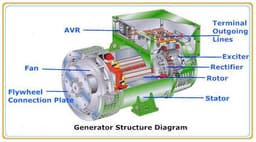
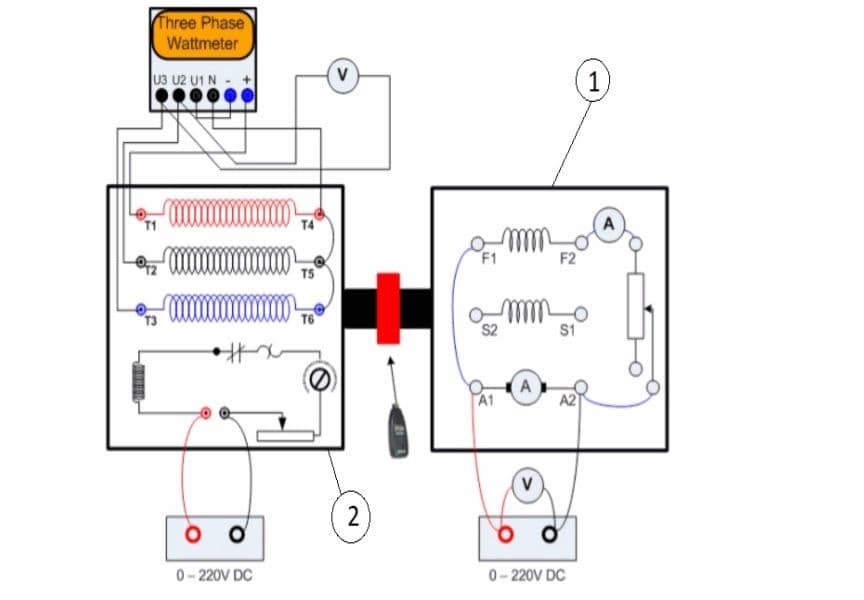
3 ph. Synchronous Generators
Quiz by Ali alomran
Customize this quiz to suit your class
Instantly translate to 100+ languages
Tag the questions with any skills you have. Your dashboard will track each student's mastery of each skill.
Give this quiz to my class
 A solution is a mixture in which one or more substances are uniformly distributed in another substance. Solutions can be mixtures of liquids, solids, or gases. For example, plasma, the liquid part of blood, is a very complex solution. It is composed of many types of ions and large molecules, as well as gases, that are dissolved in water. A solute (SAHL-YOOT) is a substance dissolved in the solvent. The particles that compose a solute may be ions, atoms, or molecules. The solvent is the substance in which the solute is dissolved. For example, when sugar, a solute, and water, a solvent, are mixed, a solution of sugar water results. Though the sugar dissolves in the water, neither the sugar molecules nor the water molecules are altered chemically. If the water is boiled away, the sugar molecules remain and are unchanged. Solutions can be composed of various proportions of a given solute in a given solvent. Thus, solutions can vary in concentra- tion. The concentration of a solution is the amount of solute dis- solved in a fixed amount of the solution. For example, a 2 percent saltwater solution contains 2 g of salt dissolved in enough water to make 100 mL of solution. The more solute dissolved, the greater is the concentration of the solution. A saturated solution is one in which no more solute can dissolve. Aqueous (AY-kwee-uhs) solutions—solutions in which water is the solvent—are universally important to living things. Marine microorganisms spend their lives immersed in the sea, an aqueous solution. Most nutrients that plants need are in aqueous solutions in moist soil. Body cells exist in an aqueous solution of intercellu- lar fluid and are themselves filled with fluid; in fact, most chemical reactions that occur in the body occur in aqueous solutions. Copyright © by Holt, Rinehart and Winston. All rights reserved. Liquid water Solid water Ice (solid water) is less dense than liquid water because of the structure of ice crystals. The water molecules in ice are bonded to each other in a way that creates large amounts of open space between the molecules, relative to liquid water. FIGURE 2-12 solvent from the Latin solvere, meaning “to loosen” Word Roots and Origins CHEMISTRY OF LIFE 43 ACIDS AND BASES One of the most important aspects of a living system is the degree of its acidity or alkalinity. What do we mean when we use the terms acid and base? Ionization of Water As water molecules move about, they bump into one another. Some of these collisions are strong enough to result in a chemical change: one water molecule loses a proton (a hydrogen nucleus), and the other gains this proton. This reaction really occurs in two steps. First, one molecule of water pulls apart another water molecule, or dissociates, into two ions of opposite charge: H2O ∏ H OH The OH ion is known as the hydroxide ion. The free H ion can react with another water molecule, as shown in the equation below. H H2O ∏ H3O The H3O ion is known as the hydronium ion. Acidity or alkalin- ity is a measure of the relative amounts of hydronium ions and hydroxide ions dissolved in a solution. If the number of hydronium ions in a solution equals the number of hydroxide ions, the solution is said to be neutral. Pure water contains equal numbers of hydro- nium ions and hydroxide ions and is therefore a neutral solution. Acids If the number of hydronium ions in a solution is greater than the number of hydroxide ions, the solution is an acid. For example, when hydrogen chloride gas, HCl, is dissolved in water, its mol- ecules dissociate to form hydrogen ions, H, and chloride ions, Cl, as is shown in the equation below. HCl ∏ H Cl These free hydrogen ions combine with water molecules to form hydronium ions, H3O. This aqueous solution contains many more hydronium ions than it does hydroxide ions, making it an acidic solution. Acids tend to have a sour taste; how- ever, never taste a substance to test it for acidity. In concentrated forms, they are highly corrosive to some materials, as you can see in Figure 2-13. Bases If sodium hydroxide, NaOH, a solid, is dissolved in water, it dissociates to form sodium ions, Na, and hydroxide ions, OH, as shown in the equation below. NaOH ∏ Na OH Copyright © by Holt, Rinehart and Winston. All rights reserved. Eco Connection onnection Acid Precipitation Acid precipitation, more commonly called acid rain, describes rain, snow, sleet, or fog that contains high levels of sulfuric and nitric acids. These acids form when sulfur dioxide gas, SO2, and nitrogen oxide gas, NO, react with water in the atmosphere to produce sulfuric acid, H2SO4, and nitric acid, HNO3. Acid precipitation makes soil and bodies of water, such as lakes, more acidic than normal. These high acid levels can harm plant and animal life directly. A high level of acid in a lake may kill mollusks, fish, and amphibians. Even in a lake that does not have a very elevated level of acid, acid precipitation may leach aluminum and magnesium from soils, poisoning water- dwelling species. Reducing fossil-fuel consump- tion, such as occurs in gasoline engines and coal-burning power plants, should reduce high acid levels in precipitation. Sulfur dioxide, SO2, which is produced when fossil fuels are burned, reacts with water in the atmosphere to produce acid precipitation. Acid precipitation, or acid rain, can make lakes and rivers too acidic to support life and can even corrode stone, such as the face of this statue. FIGURE 2-13 44 CHAPTER 2 This solution then contains more hydroxide ions than hydronium ions and is therefore defined as a base. The adjective alkaline refers to bases. Bases have a bitter taste; however, never taste a substance to test for alkalinity. They tend to feel slippery because the OH ions react with the oil on our skin to form a soap. In fact, commercial soap is the product of a reaction between a base and a fat. pH Scientists have developed a scale for comparing the relative con- centrations of hydronium ions and hydroxide ions in a solution. This scale is called the pH scale, and it ranges from 0 to 14, as shown in Figure 2-14. A solution with a pH of 0 is very acidic, a solution with a pH of 7 is neutral, and a solution with a pH of 14 is very basic. A solution’s pH is measured on a logarithmic scale. That is, the change of one pH unit reflects a 10-fold change in the acidity or alkalinity. For example, urine has 10 times the H3O ions at a pH of 6 than water does at a pH of 7. Vinegar, has 1,000 times more H3O ions at a pH of 3 than urine at a pH of 6, and 10,000 times more H3O ions than water at a pH of 7. The pH of a solution can be measured with litmus paper or with some other chemical indicator that changes color at various pH levels. Buffers The control of pH is important for living systems. Enzymes can function only within a very narrow pH range. The control of pH in organisms is often accomplished with buffers. Buffers are chemi- cal substances that neutralize small amounts of either an acid or a base added to a solution. As Figure 2-14 shows, the composition of your internal environment—in terms of acidity and alkalinity— varies greatly. Some of your body fluids, such as stomach acid and urine, are acidic. Others, such as intestinal fluid and blood, areUnit 3 (Chemistry of Water) - EQ3 Properties of Water & pHBell Ringer Quiz 3 (Unit1 Week3) – TEKS 8.6D: pH Scale and ClassificationBiomedical Engineering Flashcard 1 Q: What is biomedical engineering? A: The field that designs medical solutions (devices, implants, machines, medicines) to improve health. Flashcard 2 Q: How many bones does an adult have? A: 206 bones. Flashcard 3 Q: How many bones are humans born with? A: About 270 bones. Flashcard 4 Q: What is a prosthetic? A: An artificial device used to replace a missing body part. Flashcard 5 Q: What must engineers consider when designing prosthetics? A: Connection to the body Communication with the body Life-like movement Flashcard 6 Q: What is internal fixation? A: Hardware attached inside the body directly to the bone to repair it. Flashcard 7 Q: Examples of internal fixation? A: Rods, screws, plates, pins, bone grafts. Flashcard 8 Q: What is external fixation? A: Supports outside the body used to stabilize bones while they heal. Flashcard 9 Q: Examples of external fixation? A: Casts, braces, slings, external screws. Flashcard 10 Q: What is biocompatibility? A: Materials that can safely exist in the body without causing harm or rejection. Circulatory System Flashcard 11 Q: What is the job of the circulatory system? A: Deliver oxygen and nutrients and remove wastes from cells. Flashcard 12 Q: What do arteries do? A: Carry blood away from the heart. Flashcard 13 Q: What do veins do? A: Carry blood back to the heart. Flashcard 14 Q: What do capillaries do? A: Exchange oxygen, nutrients, and waste with tissues. Flashcard 15 Q: What are the 4 main components of blood? A: Plasma Red blood cells White blood cells Platelets Flashcard 16 Q: Name 3 circulatory diseases. A: Arteriosclerosis Hypertension (high blood pressure) Coronary heart disease Flashcard 17 Q: What lifestyle choices increase circulatory disease risk? A: Tobacco use Alcohol use Poor nutrition Physical inactivity Obesity Stem Cells Flashcard 18 Q: What are stem cells? A: Cells that can develop into many different specialized cell types. Flashcard 19 Q: Why is embryonic stem cell research controversial? A: Because it involves destroying embryos, which some believe is destroying human life. pH and Indicators Flashcard 20 Q: What pH number is an acid? A: Below 7. Flashcard 21 Q: What pH number is neutral? A: 7. Flashcard 22 Q: What pH number is a base? A: Above 7. Flashcard 23 Q: Examples of pH indicators? A: Litmus paper Red cabbage indicator Anthocyanins Hydrogels Flashcard 24 Q: What is a hydrogel? A: A material made of polymer chains that can hold large amounts of water. Flashcard 25 Q: Examples of hydrogels? A: Gelatin Collagen Alginate Fireworks Flashcard 26 Q: What are the 4 main parts of fireworks? A: Oxidizer, fuel, binder, metal salt. Flashcard 27 Q: What color does Barium produce? A: Light green. Flashcard 28 Q: What color does Copper produce? A: Blue-green. Flashcard 29 Q: What color does Strontium produce? A: Dark red. Flashcard 30 Q: What color does Potassium produce? A: Light purple. Flashcard 31 Q: What color does Lithium produce? A: Orange-red. Flashcard 32 Q: What effect does Iron produce in fireworks? A: Sparks.Many of water’s biological functions stem from its chemical struc- ture. Recall that in the water molecule, H2O, the hydrogen and oxygen atoms share electrons to form covalent bonds. However, these atoms do not share the electrons equally. The oxygen atom has a greater ability to attract electrons to it because it pulls hydrogen’s electrons towards its nucleus. As a result, as shown in Figure 2-8, the region of the molecule where the oxygen atom is located has a partial negative charge, denoted with a , while the regions of the molecule where each of the two hydrogen atoms are located have partial positive charges, each of which are denoted with a . Thus, even though the total charge on a water molecule is neutral, the charge is unevenly distributed across the water molecule. Because of this uneven distribution of charge, water is called a polar compound. Notice also in Figure 2-8 that the three atoms in a water mole- cule are not arranged in a straight line as you might expect. Rather, the two hydrogen atoms bond with the single oxygen atom at an angle. SECTION 3 OBJECTIVES ● Describe the structure of a water molecule. ● Explain how water’s polar nature affects its ability to dissolve substances. ● Outline the relationship between hydrogen bonding and the different properties of water. ● Identify the roles of solutes and solvents in solutions. ● Differentiate between acids and bases. VOCABULARY polar hydrogen bond cohesion adhesion capillarity solution solute solvent concentration saturated solution aqueous solution hydroxide ion hydronium ion acid base pH scale buffer Copyright © by Holt, Rinehart and Winston. All rights reserved. (a) Electron cloud model (b) Space-filling model H H O The oxygen region of the water molecule is weakly negative, and the hydrogen regions are weakly positive. Notice the different ways to represent water, H2O. You are familiar with the electron cloud model (a). The space- filling model (b) shows the three- dimensional structure of a molecule. FIGURE 2-8 40 CHAPTER 2 Hydrogen bond H H H H H H H H H O O O O O O H H H H H – – – – – – – + + + + + + + + + + + + + + The dotted lines in this figure represent hydrogen bonds. A hydrogen bond is a force of attraction between a hydrogen atom in one molecule and a negatively charged region or atom in a second molecule. FIGURE 2-10 The positive region of a water molecule attracts the negative region of an ionic compound, such as the Cl portion of NaCl. Similarly, the negative region of the water molecule attracts the positive region of the compound—the Na portion of NaCl. As a result, NaCl breaks apart, or dissolves, in water. FIGURE 2-9 CI– Na+ H2O + + – – Solubility of Water The polar nature of water allows it to dissolve polar substances, such as sugars, ionic compounds, and some proteins. Water does not dissolve nonpolar substances, such as oil because a weaker attraction exists between polar and nonpolar molecules than between two polar molecules. Figure 2-9 shows how water dissolves the ionic compound sodium chloride, NaCl. In your body, ions, such as sodium and chloride, are essential to bodily func- tions, such as muscle contraction and transmission of impulses in the nervous system. In fact, dissolved, or dissociated ions, are pre- sent in all of the aqueous solutions found in living things and are important in maintaining normal body functions. HYDROGEN BONDING The polar nature of water also causes water molecules to be attracted to one another. As is shown in Figure 2-10, the positively charged region of one water molecule is attracted to the negatively charged region of another water molecule. This attraction is called a hydrogen bond. A hydrogen bond is the force of attraction between a hydrogen molecule with a partial positive charge and another atom or molecule with a partial or full negative charge. Hydrogen bonds in water exert an attractive force strong enough so that water “clings” to itself and some other substances. Hydrogen bonds form, break, and reform with great frequency. However, at any one time, a great number of water molecules are bonded together. The number of hydrogen bonds that exist depends on the state that water is in. If water is in its solid state all its water molecules are hydrogen bonded and do not break. As water liquifies, more hydrogen bonds are broken than are formed, until an equal number of bonds are formed and broken. Hydrogen bonding accounts for the unique properties of water, some of which we will examine further. These properties include cohesion and adhesion, the ability of water to absorb a relatively large amount of energy as heat, the ability of water to cool surfaces through evaporation, the density of ice, and the ability of water to dissolve many substances.Peas Peas are one of the most important vegetables Zimbabweans can grow for export. They are legumes Legumes fix Nitrogen IMPORTANCE OF PEAS Peas have a lot of health benefits for human consumption. They can be eaten raw or added to a variety of dishes Peas have vitamins and antioxidants. They are good for heart performance. They are good for dealing with high blood pressure. They have a very high protein content VARIETIES Some of the common varieties to grow are Snowbird, Sabre, Serge, Alaska, Greenfeast and Recruit Varieties are also called cultivars FAVOURABLE CLIMATE Peas prefer cold conditions to grow well. Temperatures of 22 degrees or below (starting at 13 degrees Celsius) are the best for peas farming. The best temperature is 22 degrees Celsius. Extremely hot temperatures will lead to lack of growth or hard pods. SOIL REQUIREMENTS Soil should be fertile. The soil should have good drainage. Soil pH must be in the range of 6 to 7.5. The best soil type is sandy loam – clay soils can also cut it The soil should be deep LAND PREPARATION Land preparation includes the following Dig or plough to aerate the soil and improve drainage Harrow to break the clods (big lumps) Make ridges to keep water within the bed level the bed to ensure equal water distribution SOWING AND PLANTING Seeds must be sown about 2 to 3 centimeters into the ground The germination process takes place within at most 1 week. When sowing seeds, the in-row spacing should be 5 – 10 centimeters whereas the inter-row spacing should be 25 centimeters. Management Practices Watering is necessary but does not overdo it – water depending on the state of the pea plants. Generally, peas do not require lots of water. WEEDING - Weeding should be done occasionally as informed by the state of the field. MULCHING – to conserve soil moisture PEST CONTROL – to protect crops from damage DISEASE CONTROL – to protect crops from damage TRELLISING – to support indeterminate varieties PEST, DISEASE AND WEED CONTROL Aphids, beetles, leaf weevils, nematodes, and leaf miners are some of the common pests to look out for. Powdery and Downey mildew, fusarium wilt are some of the common diseases to look out for. As much as you can use chemical methods to deal with pests, diseases and weeds you can still use biological and cultural control methods. Most of the pests and diseases that affect peas can be dealt with by usingcultural methods like weed control. getting rid of affected plants and plant debris can control pest and diseases control.CARBOHYDRATES Carbohydrates are organic compounds composed of carbon, hydrogen, and oxygen in a ratio of about one carbon atom to two hydrogen atoms to one oxygen atom. The number of carbon atoms in a carbohydrate varies. Some carbohydrates serve as a source of energy. Other carbohydrates are used as structural materials. Carbohydrates can exist as monosaccharides, disaccharides, or polysaccharides. Monosaccharides A monomer of a carbohydrate is called a monosaccharide (MAHN-oh-SAK-uh-RIED). A monosaccharide—or simple sugar— contains carbon, hydrogen, and oxygen in a ratio of 1:2:1. The gen- eral formula for a monosaccharide is written as (CH2O)n, where n is any whole number from 3 to 8. For example, a six-carbon mono- saccharide, (CH2O)6, would have the formula C6H12O6. The most common monosaccharides are glucose, fructose, and galactose, as shown in Figure 3-6. Glucose is a main source of energy for cells. Fructose is found in fruits and is the sweetest of the monosaccharides. Galactose is found in milk. Notice in Figure 3-6 that glucose, fructose, and galactose have the same molecular formula, C6H12O6, but differing structures. The different structures determine the slightly different properties of the three compounds. Compounds like these sugars, with a single chemical formula but different structural forms, are called isomers (IE-soh-muhrz). SECTION 2 OBJECTIVES ● Distinguish between monosaccharides, disaccharides, and polysaccharides. ● Explain the relationship between amino acids and protein structure. ● Describe the induced fit model of enzyme action. ● Compare the structure and function of each of the different types of lipids. ● Compare the nucleic acids DNA and RNA. VOCABULARY carbohydrate monosaccharide disaccharide polysaccharide protein amino acid peptide bond polypeptide enzyme substrate active site lipid fatty acid phospholipid wax steroid nucleic acid deoxyribonucleic acid (DNA) ribonucleic acid (RNA) nucleotide C HO H C H OH C OH H C CH2OH H C H OH O Glucose C OH C O H OH C OH H CH2OH C H CH2OH Fructose C H HO C OH H C OH H C CH2OH H C H OH O Galactose Glucose, fructose, and galactose have the same chemical formula, but their structural differences result in different properties among the three compounds. FIGURE 3-6 Copyright © by Holt, Rinehart and Winston. All rights reserved. 56 CHAPTER 3 Disaccharides and Polysaccharides In living things, two monosaccharides can combine in a condensa- tion reaction to form a double sugar, or disaccharide (die-SAK-e-RIED). For example in Figure 3-4, the monosaccharides fructose and glu- cose can combine to form the disaccharide sucrose. A polysaccharide is a complex molecule composed of three or more monosaccharides. Animals store glucose in the form of the polysaccharide glycogen. Glycogen consists of hundreds of glucose molecules strung together in a highly branched chain. Much of the glucose that comes from food is ultimately stored in your liver and muscles as glycogen and is ready to be used for quick energy. Plants store glucose molecules in the form of the polysaccha- ride starch. Starch molecules have two basic forms—highly branched chains that are similar to glycogen and long, coiled, unbranched chains. Plants also make a large polysaccharide called cellulose. Cellulose, which gives strength and rigidity to plant cells, makes up about 50 percent of wood. In a single cellu- lose molecule, thousands of glucose monomers are linked in long, straight chains. These chains tend to form hydrogen bonds with each other. The resulting structure is strong and can be broken down by hydrolysis only under certain conditions. PROTEINS Proteins are organic compounds composed mainly of carbon, hydrogen, oxygen, and nitrogen. Like most of the other biological macromolecules, proteins are formed from the linkage of monomers called amino acids. Hair and horns, as shown in Figure 3-7a, are made mostly of proteins, as are skin, muscles and many biological catalysts (enzymes). Amino Acids There are 20 different amino acids, and all share a basic structure. As Figure 3-7b shows, each amino acid contains a central carbon atom covalently bonded to four other atoms or functional groups. A single hydrogen atom, highlighted in blue in the illustration, bonds at one site. A carboxyl group, —COOH, highlighted in green, bonds at a second site. An amino group, —NH2, highlighted in yel- low, bonds at a third site. A side chain called the R group, high- lighted in red, bonds at the fourth site. The main difference among the different amino acids is in their R groups. The R group can be complex or it can be simple, such as the CH3 group shown in the amino acid alanine in Figure 3-7b. The differences among the amino acid R groups gives different proteins very different shapes. The different shapes allow pro- teins to carry out many different activities in living things. Amino acids are commonly shown in a simplified way such as balls, as shown in Figure 3-7c. (a) Many structures, such as hair and horns are made of proteins. (b) Proteins are made up of amino acids. Amino acids differ only in the type of R group (shown in red) they carry. Polar R groups can dissolve in water, but nonpolar R groups cannot. (c) Amino acids have complex structures, so, in this and other textbooks, they are often simplified into balls. FIGURE 3-7 (b) Alanine (an amino acid) (c) Simplified version of amino acid CH3 H N OH C C H O H (a) Copyright © by Holt, Rinehart and Winston. All rights reserved. BIOCHEMISTRY 57 H H N C C OH H O H CH3 H2O Glycine Alanine H N OH C C H O H H H N C C H O H CH3 N OH C C H O H (a) (b) (a) The peptide bond (shaded blue) that binds amino acids together to form a polypeptide results from a condensation reaction that produces water. (b) Poly- peptides are commonly shown as a string of balls in this textbook and elsewhere. Each ball represents an amino acid. FIGURE 3-8 Substrate Products Enzyme 1 2 3 In the induced fit model of enzyme action, the enzyme can attach only to a substrate (reactant) with a specific shape. The enzyme then changes and reduces the activation energy of the reaction so reactants can become products. The enzyme is unchanged and is available to be used again. 3 2 1 FIGURE 3-9 Dipeptides and Polypeptides Figure 3-8a shows how two amino acids bond to form a dipeptide (die-PEP-TIED). In this condensation reaction, the two amino acids form a covalent bond, called a peptide bond (shaded in blue in Figure 3-8a) and release a water molecule. Amino acids often form very long chains called polypeptides (PAHL-i-PEP-TIEDZ). Proteins are composed of one or more polypep- tides. Some proteins are very large molecules, containing hun- dreds of amino acids. Often, these long proteins are bent and folded upon themselves as a result of interactions—such as hydrogen bonding—between individual amino acids. Protein shape can also be influenced by conditions such as temperature and the type of solvent in which a protein is dissolved. For exam- ple, cooking an egg changes the shape of proteins in the egg white. The firm, opaque result is very different from the initial clear, runny material. Enzymes Enzymes—RNA or protein molecules that act as biological catalysts—are essential for the functioning of any cell. Many enzymes are proteins. Figure 3-9 shows an induced fit model of enzyme action. Enzyme reactions depend on a physical fit between the enzyme molecule and its specific substrate, the reactant being catalyzed. Notice that the enzyme has folds, or an active site, with a shape that allows the substrate to fit into the active site. An enzyme acts only on a specific substrate because only that substrate fits into its active site. The linkage of the enzyme and substrate causes a slight change in the enzyme’s shape. The change in the enzyme’s shape weakens some chemical bonds in the substrate, which is one way that enzymes reduce activation energy, the energy needed to start the reaction. After the reaction, the enzyme releases the products. Like any catalyst, the enzyme itself is unchanged, so it can be used many times. An enzyme may not work if its environment is changed. For example, change in temperature or pH can cause a change in the shape of the enzyme or the substrate. If such a change happens, the reaction that the enzyme would have catalyzed cannot occur. [t comes from the GREEK name "Epilepsia" which means "taking hold of or seizing". - It is a disorder characterized by: recurrent seizures. SEIZURES R ectment transient attacks of: R epresent: R esult from: ASSOCIATED WITH: somatic, psychic, or, autonomic clinical featmes. clinical features of abnormally hyperexcitable cortical neurons. paroxvsmal and excessive electrical neuronal discharges. EEG changes & may be disturbance of consciousness. same causes of convulsions 1. Idiopathic epile~ • It is the commonest cause. no cause can be detected ( 65 % ) • It may be associated with positive family history in some cases. • It starts in the l st & 2nd decades in the form of: -- Grand ma! epilepsy. Petit mal epilepsy. Myoclonic epilepsy. Atonic seizures. 2. Secondary epilepsy A. Local causes in the brain: l. Congenital: 2. Traumatic: cerebral palsy. a cause can be detected cerebral contusion or laceration. 3. Inflammatory: 4. Neoplastic: 5. Degenerative: 6. Vascular: encephalitis, brain tumours. mening1t1s, presenile dementia. brain abscess. stroke (especially hemon-hagic), hypertensive encephalopathy. B. General causes with secondary effects on the brain: I. Toxic: 2. Iatrogenic: 3. Metabolic: 4. Endocrinal: 5. Organ failure: 6. Heart disease: 7. Nutritional: - Alcohol, cocaine, lead. - Lidocaine, INH. - j glucose & ! glucose. - Hypoparathyroidism. - Hepatic failme. - Adam's Stoke's attacks. - Pellagra. - Botulism, tetanus. - Ambilhar, Amphetamine, Aminophylline. - j Ca & ! Ca. - Hype1thyroid crisis. - Renal failure. - Fallot's tetralogy. - j Na & ! Na. - Vitamin B6 deficiency. 8. Physical: 9. HYSTERICAL. - High fevers. - Heat stroke. 136 137 CLINICAL PICTURE 1. GENERALISED SEIZURES " Excessive electrical discharges from cortical neurons in BOTH hemispheres simultaneously " I. II. 1. Grand Mal Epile~: 1. Pre-ictal stage "attacks of tonic-clonic convulsions " (aura) It is a warning sign of a coming attack. It may be: • Somatic: • Psychic: • Autonomic: 2. Ictal stage Myoclonus, Hallucinations. Tachycardia, (seizure) Sudden loss of consciousness: Parasthesias. Sweating. for seconds to minutes. -- Tonic phase (few seconds) o The UL & LL: o o o o The HEAD: The JAWS: CYANOSIS: are extended. is retracted to one side & the eye balls rolled up. are firmly clenched, with biting of the TONGUE. due to impaired respiration. There may be incontinence of urine. Clonic phase (few minutes) o The UL & LL: o The HEAD: 3. Post-ictal stage - It may be: • Somatic: • Psychic: • Autonomic: Drug of choice: contract & relax repeatedly & rapidly. jerks forcibly. (sequelae) Todd's paralysis(< 24 hours, due to neuronal exhaustion). Confusion. Vomiting. Carbamazepine (Tegretol) or Phenytoin (Epanutin) Petit Mal Epilepsy: "attacks of loss of consciousness " " Absence " It starts in childhood & improves at puberty & usually disappears at the age of 20. 2. It is NOT PRECEEDED by aura & NOT FOLLOWED by sequelae. 3. It is usually PRECIPITATED by: hyperventilation 4. It is characterized by: or photic stimulation. sudden loss of consciousness of short duration (few seconds). 5. It may be associated with: • High frequency ( 50 attacks / day). • Falling to the ground without warning. • Jerky movements of the head & UL Drug of choice: (myoclonic petit mal). Valproate (Depakine) or Succinimide (Zarontin) 137 138 Ill. M oclonic Seizures: "attacks of involuntary clonic movements " - It is characterized by: sudden, jerky, shock-like INVOLUNTARY muscle contraction. • The jerks are bilateral contractions, mainly of the shoulders and arms. • However, some patients repmtjerking in the lower limbs, trunk, or head. - It may be of 2 types: - Occurs singly • Simple: • As a pait of: I Drug of choice: IV. Atonic seizures: (no loss of consciousness). - Grand mal epilepsy (aura). - Petit mal epilepsy. Valproate (Depakine) or Clonazepam (Rivotril) I - Transient attacks of brief loss of postural tone, often resulting in falls and injuries. 2. PARTIAL SEIZURES "Excessive electrical discharges from cmtical neurons in a ce1tain area in ONE hemisphere" A. Simple seizures: " No disturbance in consciousness " - The CP depends on the site of the hyperexcitable neurones in the cerebral cortex, whether in: "Motor area or Senso,y areas". 1. Motor fits: • Focal fits: • Motor jacksonian fits: 2. General Sensory fits: • Focal fits: • Sensory jacksonian fits: 3. Special Senso1y fits: • Visual hallucinations: • Auditory hallucinations: • Olfactory hallucinations: B. Complex seizures: - SITE: movement of part of a limb or the whole limb. movement of one side of the body (see before). parasthesia of part of a limb or the whole limb. parasthesia of one side of the body (see before). irritation of the visual sensory area. irritation of the auditory sensory area. initation of the uncus. " disturbance in consciousness " The hyperexcitable neurons are in the Temporal lobe "Temporal lobe epilepsy". - DURATION: The seizure lasts few seconds to few minutes. - The seizure starts with A ura, followed by A bsence, Automatism, Amnesia: 1. 2. 3. 4. A ura: A bsence: Automatism: A mnesia: Olfactory hallucinations, Deja-vu phenomenon, Sensation of fear. Absent patient with staring eyes (with no response to conversation). Involuntary Purposeless acts: motor ( eg, lip smacking, chewing) or verbal. No recalling of the seizure. 138 139 3. PARTIAL SEIZURES ~ GENERALISED SEIZURES " Partial seizures may spread to involve the whole brain .- secondarily generalised seizures " . HY-sterical epilepsY • Usually: • The cause: • Incidence: young neurotic Sj2 . psychological & there is no organic lesion. usually occurs in the presence of people. • It is associated with: • EEG: • It is not associated with: normal. • Missed ttt. • Menses. • Alkalosis. anxiety, palpitaion & hyperventilation. tongue biting or incontinence of urine. • Alcohol use & Drug abuse ( e.g. cocaine ). • S timulation by photons & Hyperventilation. • S leep deprivation & Stress & sudden withdrawal of antiepileptic drngs. INVESTIGATIONS 1. EEG: • It is the most specific test for epilepsy because it records the electrical activity of the brain. • It shows specific pattern: 2. LOCAL INVESTIGATIONS: "Epilepsy waves". "CT & MRI of the brain" • To identify or exclude a LOCAL CAUSE of seizures in the brain. 3. GENERAL INVESTIGATIONS: "Laboratory investigations" • To search for a GENERAL CAUSE of seizures, e.g. blood glucose. 139 140 TREATMENT A. General Measures: 1. 2. Moderation of the patient's physical activity. A void the precipitating factors ( Alcohol, hyperventilation, photic stimulation ...... ). 3. A ketogenic diet is encouraged because it will induce acidosis: - Acidosis is beneficial as it raises the threshold of stimulation of the brain cells. B. Specific Treatment: 2. 1. Treatment of the cause in secondary epilepsy. Anti-epileptic drugs: a) Always sta1t with one drug, then add another drug if there is no response. b) Always stop the drugs ONLY if: • The patient stays free of symptoms for at least 2 years. • The patient has a normal EEG. 3. Side effects of Anti-epileptic drugs: I . Skin rash. 2. 3. Bone marrow depression. Ataxia. Drug 1. Barbiturates (Pbenonobarbitone) 2. Hydantoin (Epanutin) 3. Carbamazepine 4. Clonazepam 5. Valproate 6. Succinamide ANTI-EPILEPTIC DRUGS NEW ANTI-EPILEPTIC DRUGS - These drugs are new dtugs that may be used in resistant seizures. 1. Lamotrigine: 200 - 400 mg/ day. 2. Felbamate: 3. Gabapentin: 400- 800 mg/ day. 600 - 1200 mg/ day. \ " General rules for use ": Dose 100-600 mg I day 100-600 mg / day 200-600 mg I day 2-6 mg I day 500-1500 mg I day 500-1000 mg / day Best indicated - Broad spectrum. - Not for petit mal. - Grand mal. - Motor Jacksonian fits. - Grand mal. - Motor Jacksonian fits. - Complex seizures. - Not for petit ma!. - Myoclonic. - Grand mat. - Broad spectrum. - Petit mat. 140 141 STATUS EPILEPTICUS DEFINITION - A medical emergency: 1. Repeated attacks of generalized convulsions, with lack of recove,y of consciousness, 2. Persistent attack of seizure lasting for at least 30 minutes. OR, - If the convulsions are not stopped rapidly, coma deepens & death may occur due to: heart failure or respiratory failure or brain damage or hyperpyrexia. - The most common causes are: sudden withdrawal of anti-epileptic drugs & stroke. TREATMENT A. General Measures: l. Take care of: " ABC " • Place the patient on the ground, to guard against falling from bed. • Mouth gag & 02 inhalation ( endo-tracheal intubation may be needed). • Record the vital signs regularly. 2. Take a sample of: - Venous blood: for the level of: - A.tierial blood: for the level of: 3. a nti-epileptic drugs, a lcohol. pH, p0 2, pC02, HC0 3. Give cerebral dehydrating measures: e.g. Frusemide, cone. Mannitol, Dexamethazone. B. Specific Treatment: - Phenytoin with diazepam (or clonazepam) immediately: 1. Phenytoin: 2. Diazepam: Clonazepam: seizures recur: 15 mg I Kg slow infusion. 5 mg slowly IV, to be repeated after 5 minutes if seizures recur: maximum dose: 20 mg. OR: 2 mg slowly IV, to be repeated after 5 minutes if maximum dose: 6 mg. - If seizures persist after 20 min. of Phenytoin & diazepam: 3. PHENOBARBITONE: - In resistant cases: 200 mg infusion. 4. GENERAL ANAESTHESIA: may be used.