Loading...


30 Days to Understanding The Bible Review
Quiz by Patricia Jones
Customize this quiz to suit your class
Instantly translate to 100+ languages
Tag the questions with any skills you have. Your dashboard will track each student's mastery of each skill.
Give this quiz to my class
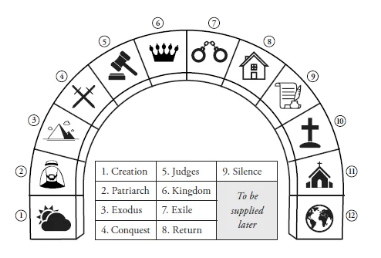
Which figure goes with (1) CREATION?
Abraham
Moses
Adam
Joshua
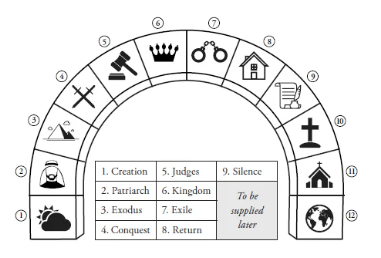
Which ERA goes with ABRAHAM?
4 Conquest
9 Silence
2 Patriarch
5 Judges
Which figure goes with (1) CREATION?

Which ERA goes with ABRAHAM?

Who was the leader of the (3) EXODUS era?
 Yaama I'm Jack Evans and you're watching BTN. Here's what's coming up. We uncover the story behind this famous photo, learn about First Nations seasons and find out the history of Book Week. What is Statehood? Reporter: Tatenda Chibika INTRO: But first, the Prime Minister Anthony Albanese has announced that Australia will join other countries in recognising Palestine as an independent state. So, what does that mean? Tatenda found out. Anthony Albanese, Prime Minister: Australia will recognise the state of Palestine. Australia will recognise the right of the Palestinian people to a state of their own. We will work with the international community to make this right a reality. Tatenda Chibika, Reporter: That's the moment our Prime Minister said Australia would recognise Palestine as an independent state at the upcoming United Nations General assembly next month. It's something other countries, including France and Canada, have said they'll be doing too. So, what does that mean exactly? To be considered an independent state under international law a place needs to have its own land or territories with defined borders, it needs to have people who permanently live there, have a working government and it has to be able to talk and make deals with other countries. Once a place meets all those rules, it can ask to be recognised by other independent states and countries. But a big step in becoming an independent state is being fully recognised by the United Nations. To do that you first need to get approval from at least nine members of the UN's Security Council. That's a group of countries responsible for maintaining international peace and security. But even then, that tick of approval can still be blocked by one of the Security Council's five permanent members Russia, China, the UK, the US and France. If the Security Council approves, the decision then goes to the UN's General Assembly where at least two thirds of the UN's 193 members have to agree to make it official. Yeah, it's a pretty complex process which is why we've only seen a handful of countries recognised by the UN in recent years like South Sudan and Montenegro. Others like Kosovo are only 'partially' recognised which means they have some recognition but not enough to become a full member state at the UN. Right now, Palestine is recognised by more than 140 countries — that's more than two thirds of the UN General Assembly. So, why hasn't it become a UN member state yet? Well, it came pretty close last year when 12 members of the Security Council voted in favour of it. VANESSA FRAZIER, AMBASSADOR OF MALTA, APRIL 2024 UNSC PRESIDENT: I shall now put the draft resolution to the vote. But the US, a close ally to Israel, used its special powers to block Palestine from becoming a member state. VANESSA FRAZIER: Those against? At the time, the U.S said Palestine and Israel needed to come to an agreement on their own first. Throughout the years, there have been attempts to figure out a way for both Palestine and Israel to exist peacefully alongside each other but that hasn't happened yet. And now Israel has said that recognising Palestine as an independent state would be rewarding Hamas the group in charge of Gaza which was responsible for the terror attacks on October 7th, 2023. But the Palestinian Authority which governs parts of the West Bank says Hamas won't have a role in any future state of Palestine which will exist peacefully alongside Israel. Australia, like the US, had previously said that it wanted Israel and Palestine to figure out things by themselves first but because of how the war has been going the Australian government is worried that if it continues to wait, there might not be a Palestinian state to recognise. ANTHONY ALBANESE, PRIME MINISTER: There has been too many lives lost, both Israeli's and Palestinians and the world is saying we need a solution to this conflict, we need to end the cycle of violence and the way to do that is to have a two-state solution. News Quiz Russia's President Vladimir Putin stepped foot on American Soil for the first time in a decade to meet with US President Donald Trump. What state did they meet in? Alabama, Alaska or Arizona?It's Alaska. The two leaders met to discuss a way to end the war in Ukraine but weren't able to make any final agreements. DONALD TRUMP, US PRESIDENT: There were many, many points that we agreed on. Most of them, I would say, a couple of big ones, that we haven't quite got there, but we've made some headway. There's no deal until there's a deal. A lot of people criticised the two world leaders for not including Ukraine's president Volodymyr Zelenskyy in the meeting. But that didn't seem to worry Mr Trump who said the meeting was a success and Mr Putin even invited the US President to meet up again in Russia. DONALD TRUMP: We'll see you again very soon. Thank you very much, Vladimir. VLADIMIR PUTIN, RUSSIAN PRESIDENT: Next time in Moscow. DONALD TRUMP: Oh, that's an interesting one. No, no, no. I'll get a little heat on that one. Last week thousands of people marked the 80th anniversary of VJ Day. What does VJ Day commemorate? The victory of Allied forces in Europe, the surrender of Japan and the end of World War II or the dropping of the first atomic bomb? VJ Day or Victory over Japan day commemorates the surrender of Japan and the end of World War II on the 15th of August 1945. Around the world, and here in Australia, people marked the anniversary with ceremonies remembering those who fought in the war. REPORTER: Who will you be remembering today? VETERAN: Oh, a lot of fellows that I knew that never made it home. Scientists in the UK have created toothpaste that includes which of these ingredients? Hair, eye lashes or fingernails? Yeah, they're all a bit random and gross but the answer is hair. According to scientists from King's College in London, hair could be the key to good oral health because it contains a protein called Keratin which they say when mixed with saliva forms a crystal-like protective coating similar to enamel. And Swifties rejoice because Taylor Swift has announced her 12th Studio album. It's called life of a show what? Is it show pony, show girl or show bag? It's Life of a Showgirl and it'll be released October 3rd. Vincent Lingiari Reporter: Joseph Baronio INTRO: Now to this very famous photograph. It was taken 50 years ago and depicts a really significant moment in Australian history. Joe found out about the story behind it. On the 16th of August 1975, this famous photo was taken. It shows the former Prime Minister Gough Whitlam pouring sand into the hand of Aboriginal leader Vincent Lingiari. A simple gesture that symbolised handing the land at Wave Hill in the Northern Territory back to the Gurindji people. But the journey to get there was far from simple. It started back in the 1960s. At the time, Wave Hill was the biggest cattle station in the world, controlled by British landowner Lord Vestey. The Gurindji people, who had lived on the land for generations, worked for Vestey, but they weren't paid fairly, and conditions were tough. NEWS REPORTER: The station's 100 aboriginal stockmen, with their 100 dependents, are camped in the dry bed of the Victoria River with little shade from 90-degree heat, dust and flies. Eventually, Gurindji leader Vincent Lingiari said it was time to act. VINCENT LINGIARI: I said, "What was it before Lord Vestey born and I was born?" It was blackfella country. So, on August 23rd, 1966, Mr Lingiari and his fellow Aboriginal workers went on strike. It became known as the Wave Hill Walk Off. They moved their camp away from the Wave Hill station to a sacred site called Daguragu on Wattie Creek. They wanted to set up their own cattle station, and said they wouldn't move until their land was returned to them. For years, petitions and negotiations went on between the Gurindji people, the NT Administration, and the Australian Government in Canberra. CLAPPERS: 31. 32. 33. DAVID QUINN, ABSCOL: Well, it's basic justice that their land is recognised. PROTESTORS: Equal rights! As the news spread across the country, thousands of Aussies joined the campaign, including the leader of the Labor Party, Gough Whitlam, who made this promise during his 1972 election campaign. GOUGH WHITLAM: We will legislate to give Aborigines land rights. Not just because their case is beyond argument, but because all of us as Australians are diminished, while the Aborigines are denied their rightful place in this nation. Later that year, Gough Whitlam became Prime Minister. (Song From Little Things Big Things Grow, Song by Kev Carmody and Paul Kelly, 1993) From little things big things grow,from little things big things grow… But it wasn't until 1975, 9 years after the Wave Hill Walk Off started, that he followed through with his promise. Eight years went by, eight long years of waiting'Til one day a tall stranger appeared in the landAnd he came with lawyers and he came with great ceremony GOUGH WHITLAM: I solemnly hand to you these deeds as proof in Australian law that these lands belong to the Gurindji people. And through Vincent's fingers poured a handful of sandFrom little things big things grow 50 years on, and The Wave Hill Walk Off is seen as a pivotal moment in Australia's history. It led to significant legal and social changes for First Nations people, which is something many agree is worth celebrating. First Nations Seasons Reporter: Saskia Mortarotti INTRO: Recently, Melbourne's Lord Mayor suggested ditching the four-season calendar that most of us are familiar with and adopting a six-season Wurundjeri calendar instead saying it gives a better description of what the weather's actually like there. Sas found out more about the different seasonal calendars used by First Nations people. SASKIA MORTAROTTI, REPORTER: Right now, in most of the country, it's pretty cold. COLD GIRL: Think of somewhere warm. What? It's 32 degrees in Darwin in the middle of winter? But ah, yeah. There are some places where it's, well, quite warm. Which makes you wonder whether the weather actually matches the seasons. You see, Australia is pretty big, and we have lots of different weather patterns. Which is something First Nations people have tracked for thousands of years with their own seasonal calendars. KARL WINDA TELFER, CULTURAL CREATIVE KANYANYAPILLA: Why have we got four seasons when you know that don't make any sense here. It doesn't relate to the country here. This is Karl Telfer. He's an artist and storyteller who produced the Kuri Kurru exhibition at the Museum of Discovery in Adelaide that explores the 6 different seasons of the Kaurna Meyunna. SASKIA MORTAROTTI: So, how do you know when you're in one of those six seasons? KARL WINDA TELFER: Well, there are stars that rise. So, you know, there are certain stars, like in Parnatti, for example. There's a star called Parna, and we know what that star is. So, that talks to us about, okay, the time now is going to be cold on the ground. First Nations calendars like the Kaurna one don't just tell us what's happening with the weather; they're also used to track when certain plants and animals are around. KARL WINDA TELFER: It teaches you about what plants you can, you know, what you can eat what you can't and all that what is ready certain times a year and fruit everything, bird shows you the right time to eat the fruit, perfect time, if you try and go get them the next week they're gone. Karl says we can also use these calendars to see how the environment has changed over time. KARL WINDA TELFER: Kudlilla is the season we're in now and Kudlilla that talks about like the rain but we're not having enough rain these days, well, these times. And this is due to climate and the climate changing. There are many different First Nations seasonal calendars around the country. Like Ngan'gi calendar from the Northern Territory which has 13 seasons that follow the life cycle of the native spear grass. Or the Wurundjeri Calendar in Victoria which has 6 seasons. And recently, Melbourne's Lord Mayor, Nicholas Reece, said Melbourne, or Naarm, would be better off adopting the Wurundjeri calendar because it's more in tune to what's happening with the weather. Something many, including Karl, think we should be doing right across the country. KARL WINDA TELFER: I'm talking about the English four seasons. So, this is totally different systems that we're talking about and weather patterns and currents and all sorts of different things, because it's the sea country too. So, my question is, well, why do we have that? If that doesn't work, you know? Quiz How many seasons are there in the Tiwi Island Calendar? 1, 2 or 3? It's 3, although they also have 13 minor seasons. Book Week Reporter: Wren Gillett INTRO: This week, kids across Australia have been dressing up as their favourite characters to celebrate Book Week. Wren finds out why Book Week began 80 years ago and why it's still important today for getting young Aussies into reading. STUDENT: I read an hour every night, maybe even two hours some nights. STUDENT: My favourite book series are the Harry Potter series and the Keeper of the Lost City series. STUDENT: Probably Bad Guys and Weirdo. STUDENT: I like the Amulet, I've been reading that. STUDENT: I love reading Dork Diaries and Exploding Endings. Whether it's Fantasy, mystery, history — whatever you're into. Book week is a time to celebrate, well, books. STUDENT: Me and my friends are dressing up as Inside Out. STUDENT: I was thinking SpongeBob. STUDENT: I'm dressing up as Winnie the Pooh and it's just a fun way to express what kind of books you like. And guess what, book week has actually been a thing for many, many years. WREN GILLETT, REPORTER: Once upon a time, in a land not so far away, literacy lovers noticed a problem. The year was 1945. The second World War had just ended, and kids were mainly reading books from overseas, in particular the UK. Because, at the time, there weren't many Aussie authors writing books for children. WREN GILLETT: So, a group of passionate teachers, librarians, booksellers, publishers, and book-loving volunteers, decided to create what we now know as The Children's Book Council of Australia. Familiar logo, right? Together, they launched book week, all in an effort to get Aussie kids' reading more. And it seemed to work. The 1960s saw a boom in Australian children's books being published. REPORTER: How many books do you read a week? STUDENT: Well, it really depends on the week. If there's exams, I might read only one or two. But if there's no exams and if I've got plenty of time, I might read up to five or six. WREN GILLETT: But today, it's a slightly different story. Studies show that less than one in five eight to 18-year-olds are reading in their free time, and that only one in three actually enjoy reading for fun. WREN GILLETT: Why do you reckon we're seeing this trend? STUDENT: People are getting sucked into screens and they're like spending hours just scrolling through TikTok and stuff, and they're getting so attached to it that they don't feel the need to pick up books and read them. Yeah, there's a lot of different things competing for our attention these days, but many think books are still worth our time. PETER HELLIER, AUSSIE COMEDIAN AND AUTHOR: Books are the exact opposite of boring. And if you think they're boring, I'm sorry, but you're wrong. This is Peter Hellier, he's a pretty famous Aussie comedian, actor, and the author behind these books. And he's just released another one called Detective Galileo, about a trail horse who dreams of solving crimes. PETER HELLIER: He joins the police force and quickly finds out that the horses don't actually solve the crimes, it's the police officers who solve the crime. So he promptly gets thrown out of the force and begins his own detective agency, which I'm reliably told is the only detective agency in the world run by a horse. Peter actually started writing books when he was a kid. PETER HELLIER: I started writing when I was six, seven, eight years old. In fact, I started my own publishing company called Better Books. And I would write these books, and then I would get a parent or one of my parents or teachers to type them up. And I would read them in front of the class. And, you see, each has the logo, the Better Books logo, there it is — the famous Better Books logo. WREN GILLETT: You weren't mucking around. PETER HELLIER: There all on all of them. There we go. There we go. Many, Including Peter, say there's plenty to get from a good book. They help us learn new words and phrases, get a better understanding of the world around us, and strengthen our imaginations. PETER HELLIER: Books can take you absolutely anywhere. They can take you to countries that you never dreamed about going. Countries that exist, countries that don't exist. Reading just makes the world a much bigger place. It's why for the past 80 years, schools around the country have been taking part in book week. STUDENT: Reading is a place where you can have your own world just to yourself. STUDENT: It's like watching a movie inside your head, but you can choose how it goes. STUDENT: Picking up a book is a good idea, maybe you should start with something that you're interested with and then you can start exploring from there. Quiz What is the title of the book that took out this year's Book of the year Award for younger readers? It's Laughter is the Best Endingby Maryam Master. Some other winners included I'm not really here by Gary Loneborough which took out book of the year for older readers and best picture book went to The Truck Cat, by Deborah Frenkel. Sport Australia's men's national basketball team — the Boomers — have won their third Asia Cup in a row, with an epically narrow victory over China. COMMENTATOR: It is Australia who are celebrating! China started strong, leading 25-17 at quarter time. But Aussie Xavier Cooks led a fierce comeback, shooting 30 points and collecting nine rebounds, earning him the title of MVP. And there seriously couldn't have been a tighter finish. Just as the final buzzer went off, China missed a shot that would have won them the game, leaving Australia with a 90-89 victory. COMMENTATOR: An unbelievable finish. The 2025 AFLW season kicked off last week, and so did a new trick. Yeah, 19-year-old Ash Centra from Collingwood, pulled out this move in the warm-up before their season-opener to Carlton, and since then, a lot of people have been trying to do it, with some success, kind of? FOOTY PLAYER: No, I'm not doing it on camera. But despite the epic warmup, Carlton did end up beating Collingwood by 24 points. Now, the moves from these athletes in China weren't quite so graceful but give 'em a break, okay, they're robots. For the first time ever, humanoid robots from all over the world, competed in their very own games, which featured, soccer, boxing, running, and ahh, lots of falling over. Lots. Luckily though, they did bring their own cheer squad. Young Rapper Reporter: Rylie INTRO: Finally, we're going to meet another winner of this year's Heywire competition — which asks young people in regional areas to share their stories. Rylie's going to tell us how music helped to transform his life. Check it out. Mum and I were homeless. We lived at a caravan park, in motels and tents around Warrnambool. It wasn't pretty. I'm First Nations, and I remember feeling like, my own country is failing me right now. So, we camped right along here. I remember pitching a tent right here and this was actually around the same time I started to get into music which was a good way for me to have something to look forward to. I was raised by the SoundCloud era, listening to a lot of trap music. When I was in school, I'd rap along to songs by Juice World, then I started to make my own. My first track was recorded on my phone. It was bad but a lot of fun to make. Some kids in my school heard it and shamed me. That put me off music for the next couple of years, until a friend of mine bought a microphone and encouraged me to give it another go. There was something about that mic and the energy of the crew around me that gave me confidence. It lit a fire in me. Over time, I was able to focus my flow. My songs are about escapism, living the life, being a success. I rap about stuff that takes me to a better place in my head. I'm manifesting my future. My stage name is Hundo Milli, it's short for hundreds of millions. Money's not really the end goal; it's more about having the freedom to dream big. Mum taught me to never stop believing. Even when times were tough, she kept pushing for us to get housing and eventually we did. We're some of the lucky ones. Today, I'm in a Melbourne studio recording my next single. I remember living in my tent dreaming about this very moment and now I'm here, doing what I love. Ain't nothing going to stop me. Closer Well, that's all we've got for you today, but we'll be back before you know it. In the meantime, you can head to our website, there's plenty to see and do. You can also catch Newsbreak every weeknight and there's BTN High for all you highschoolers out there. Have an awesome week and I'll see you next time. Bye. Why and How Managers Plan Importance of planning The planing process Benefits of planning Planning and time management Types of PLans used by managers Long term and short term plans Strageic and tactical plans Operational plans Planning Tools and Techiqunes Forecasting Contrigency planning Scenario planning Benchmaking Use of staff planners Implementing Plans to Achive Results Goal setting Goal management Goal alignment Participation and involvement Planning Def: The process of setting objectives and determining how best to accomplish them Planning at Eaton Corporation “Making the hard decision before events force them upon you, an anticipating the future needs of the market before the demand asset itself Objectives and goals Identifity the specific results or desired outcomes that one intends to achieve Plan Def: A statement of action steps to be taken in order to accomplish the objectives (goals) Steps in the planning process: Define your objectives Determine where you stand vis-a-vis objectives Develpo premises reagrdsing future conditions Analyze alternatives and make a plan Implement the plan and evaluate results What are the benefits of planning Improves focus and flexibility Imporves action orteitation Imporves coordination and control Imporves time management Time Managment Personal time management tips Do say “no” to request that distract you form what you should be doing Dont get bogged down inn details that can be addressed later Do screen telephone calls, emails and meeting request Dont let drop in visitors, text messaging use up your time Do prioritize your important and urgent work Dont become calendar bound by letting other control your schedule Do follow priorities; do most important and urgent work first Some 77% of mangers in one survey said that digital age has increased th number of decisions they have to make 43% said there was less time available to make these decisions Types of plans used by Managers What is teh time horizon Long term vs Short term Long term Look three or more years into teh future Short term plans Typically cover one year or less However: the increasing environmental complexity and dynamism of recent years has severely tested the concept of “long-term” planning Plans are subject to frequent revisions Most executives would likely agree that these complexities adn uncertainties challenge how er actually go about planning and how far ahead we can really plan At the very least we can conclude that there is a lot less permanency to long term plans today and that tey are subject to frequent revision Managment reaeracher Eillot Jaques believes tha people vary in their capability to think with different time horizons Types of Plans used by Managers (3 of 5) Strategic plans Set broad, comprehensive and linger term action directions for teh entire organization or major division Vision Clarifies purpose of the organization and what it hopes to be on the future Typical plans Specify how the organizations resources are used to implement strategy Tactical plans in business often take the form of functional plans Functional plans Incidate how different component within the organiztion will help accompnlish the overall strategy Production plans Finacial plans Facilites Plans Logisitc plans Marketing plans Human Resource Plans Operation plans Describe short-term activities to implement strategic plans Policies: Are standing plans that communicate guidelines for decisions Ex: Policies on office romances: The media is quick to report when a top executive or public figures runs into trouble over an office affair. Are there ant policies on office romances? Employer polices on office raltioshiis vary. One survey find teh following: 24% prohibit relationships among employees in the same department 13% prohibit relationships among employees who have the smae supervisor 80% prohibit relationships between supervisors and subordinates 5% have no restrictions on office romances Procedures: Are rules that describe actions to be taken in specific situations Budgets: are single use plans that commit resources to projects or activities Zero based budgets: allocate resources as if each budget were brand new There is no guarantee that any past funding will be renwer. All propsales, old and new, must compete for available funds at teh start of each new budget cycle Forcasting Attempts to predict the future Qualitaive forecasting uses expert opinions Quantitative forecasting uses mathematical models and statiscal aanylsis of historical data dna surveys Contingency planning Identify alternative course of action to take when things go wrong Anticipate changing conditions Contain trigger points to indicate when to activate plan (or a specific course of action) Scenario planning A long term version of contingency planning Identifying alternative future scenarios Plans made for each future scenario Increases organizations flexibility and preparation for future shocks Benchmarking Use of external and internal comparisons to better evaluate current performance Adopting best practices: things people adn organization do that lead to superior performance Staff Planners Experts who assist in all steps of the planning process They help bring focus and expertise to a wide variety of planning tasks Important: Communication between staff planers landline managers is essential for teh success of teh planning process Goal Setting - Always set SMART goal The solution: Goal Aligment Between Team Leader and Team Member Jonintly plan: Set objectives, set standards, choose actions Individually acy: Perform tasks (member), provide support (leader) Jointly control: Review results, discuss implications, renew cycle x4 Collective effort and commitment Participatroy planning Includes in all planning steps that people who will be affected by the plans adn askedd to help implement them Unloacks motivational potential of goal setting Management by objective (MBO) promotes participation Participation increases understanding and acceptance of plan and commitment to success Participatory planning - Number of people involved in teh decision making process Amazon is intensely focused on what it does. It believes in creating tight single-threaded teams, also known as “2 pizza team.” Data and Decision Making What are some of the important competencies managers must have today? Delegate Marketing and technology Manager must have Technological competency Ability to understand new technologies and to use them to their best advantage Information competency Ability to locate, gather, organize and display information for decision-making and problem solving Analytical competency Ability to evaluate and analyze information to make actual decisions and solve real problems What is the difference between Data and Information Data Raw facts and observation Information Data made useful and meaningful for decision-making Important concepts Big data Exists in huge quantities and is difficult to process without sophisticated mathematical and analytical techniques Data production today Bernard Marr is an internationally best-selling author. He helps organizations improve their business performance, use data more intelligently Data mining The process of analyzing data to produce useful information for decision-makers Management Analytics The systematic evaluation and analysis of data to make informed decision Information drives management Bad Data Refers to information that can be erroneous, misleading, and without general formatting The challenge: Can er use the data that is available in the “Big Data” Needs to be valid Can not trust everything out there Being ethical Look at the trends Data is structured and unstructured Data BIg Data = Structured + Unstructured Information Drive Management decision making What are the characteristics of useful information Easy to access If its credible Accurate Characteristics of useful information: Timely High quality Complete Relevant Understandable What about bad data It's not credible Miss information If it is not structured/ organized Bias based on opinions Confusing If its updated Bad data Refers to information that can be erroneous miss What are some examples of Management information system Business intelligence -BI Information systems to extract and report data in organized ways that are useful to decision-makers Executive dashboards Visually update and display key performance metrics (or Key Performance Indicators -KPIs) and information on a real-time basis Information needs in organization External Environment Information exchanges with the external environment Gather intelligence information Provide public information Information needs within the organizations (internal Enviroement) Information exchange within the organization Facilitate decision making Facilitate problem-solving Managers as information processors Continually gather, share and receive information Now as much electronic as it is face-to-face Always on, always connected How many people telecommute at least once a week 70% of people globally work remotely at least once a week, Work at home after covid 19 our forecast Our best estimate it that 25-30% of the workforce will be working form home multiple days a week by the end of 2021 As of 2023, 12.7% of full time employees work from home, while 28.2% work a hybrid model Managers as problem solvers Problem-solving The process of identifying a discrepancy between actual and desired performance and taking action to resolve it Ishikawa Fishbone diagram To identify the cause of problems Decision A choice among possible alternative courses of action Performance threat Something is wrong or has the potential to go wrong Performance opportunity The situation offers the chance for a better future if the right steps are taken Problem-solving approaches or style - from textbook Problem avoiders Inactive in information gathering and solving problems Problem seekers Proactive in anticipation of problems and opportunities and taking appropriate action to gain an advantage Problem solvers Reactive in gathering information and solving problem Managers - can approach problems in a systematic or intuitive manner Systematic thinking approaches problem in rational, step-by-step and analytical fashion Intuitive thinking approaches problems in a flexible and spontaneous fashion Multidimensional thinking- applies both intuitive and systematic thinking Managers face structured and unstructured problems Structure problems Are ones that are familiar, straight forward, and clear with respect to information needs Program decisions apply solutions that are readily available from past experiences to solve structured problems Know how to solve them Familiar Know what we are dealing with Unstructured problems Are ones that are full of ambiguities and information deficiencies Nonprogrammed decisions apply a specific solution to meet the demands of a unique problem Commonly faced by higher-level management Crisis decision making A crisis involves an unexpected problem that can lead to disaster if not resolved quickly and appropriately Ruled for crisis management Figure out what is going on Remember that speed matters Remember that slow counts, too Respect the danger of the unfamiliar Value the skeptic Be ready to “fight fire with fire” Managers make decisions with various amounts of information Certain environment Offers complete information on possible action alternatives and their consequences Risk environment Lacks complete information but offers probabilities of the likely outcomes for possible action alternatives Uncertain environment Lacks so much information that it is difficult to assign probabilities to the likely outcomes of alternative Ex: Certain and uncertain environments: The worldwide Governance Indicators for over 200 countries, comparing distinct environments (Canada-Brazil) Step 1-Identify and define the problem Focuses on information gathering information processing and deliberation Decision objectives should be established What are some common mistakes in definding problems? Common mistakes in defining problems Defining the problem too broadly or too narrowly Focusing on symptoms instead of causes Choosing the wrong problem to deal with Step 2- Generate and Evaluate Alternative Courses of Action Potential solutions are formulated and more information is gathered, data are analyzed, the advantages and disadvantages of alternative solutions are identified Common mistakes: Abandoning the search for alternatives too quickly Step 3- Decide on a preferred course of Action Two different approaches Behavioural model leads to satisficing decisions Classical model les to optimising decisions Behavioural Model Rationality is bounded because: There are limits our thinks capacity Available information (incomplete) Time constraints Step 4-Implement the decision Involves taking action to make sure the solution decided upon becomes a reality Managers need to have the willingness and ability to implement action plans Problems: Lack of participation error should be avoided Step 5 - Evaluate Results Involves comparing actual and desired results The positive and negative consequences of the chosen course of action should be examined If actual results fall short desire results, the manager returns to earlier steps in the decision-making process At all steps, check ethical reasoning Ask these spotlight questions Utility Does teh decision satisfy all constituents or stakeholders Rights Does the description respect the rights and duties of everyone? Justice Is the decision consistent with the canons of justice Caring Is the decision consistent with my responsibilities to care? Issues in decision-making How do errors happen? Heuristics: are strategies for simplifying decision-making Availability Bias: Bases a decision on recent information or events Representativeness bias: Bases a decision on similarity to other situations Anchoring and Adjustment Bias: Bases a decision on incremental adjustment from a prior decision point Framing error: Tring to solve a problem in the context perceived, positive or negative Confirmation Error: Focusing on information that confirms a decision already made Escalating commitment: Continuing a course of action even though it is not working Creative Decision making Creativity is the generation of a novel idea or unique approach that solves a problem or crafts an opportunity Big C: Creativity occurs when extraordinary things are done by exceptional people Little C: Creativity occurs when average people come up with unique ways to deal with daily events and situations The three types of situational creativity drivers Chapter review What are objectives and goals? The specific results or desired outcomes What are the 5 characteristics of great (SMART) goals? Forecasting - Attempts Qualitative forecasting uses options Quantitative forecasting uses mathematical models and statistical analysis of historical data and surveys Scenarios-Oracle’s crystal ball combines qualitative and quantitative methodsFor the questions below I will provide you with the correct answer - I want you to create 3 false but plausible answers for the other options. What two ancient civilizations are mentioned in the background paragraph? The Inca and the Aztec What is “El Dorado”? El Dorado is commonly associated with the legend of a gold city How many people live in La Rinconada? 50,000 At what elevation is La Rinconada located? 18,000 ft What is the Allusion to Dante meant to convey? That La Rinconada is being compared to hell. What is the only convenience La Rinconada has to offer? Electricity According to this article, what plant is useful for chills or bone pain? Muña How was La Rinconada before the mining began? Sparkling lakes, leaping fish and grasslands What color are the lakes around La Rinconada as a result of themining’s pollution? Orange Why were the mines closed for 200 years? The weight of a glacier collapsed them How many tons of rock have to be mined to produce 1 gold ring? 250 tons What is the Cachoro system? A man who labors 30 days and gets paid on the 31st day in the form of whatever rock he can carry What is the name of the local people? Aymara What happened when the locals of La Rinconada tried to protest the mining? The government sent the military to destroy them1. The following are ingredients in preparing pumping solution, EXCEPT; a. 5 kgs ham leg c. 1 cup saturated salt solution b. one tablespoon sugar d. 2 drops maplein 2. What is the value in grams of 6.4% refined salt if the amount of pork meat is 1 kilogram? a. 64 grams c. 640 grams b. 6.4 kilograms d. 6,400 grams 3. What is the main purpose of curing meat? a. To tenderize it c. To add color to it b. To prevent spoilage d. To increase its weight 4. What is the advantage of using pumping pickle over cover pickle and dry cure mixtures? a. It reduces the curing time. b. It enhances the flavor. c. It controls the concentration of salt. d. All of the above 5. What is the function of phosphate in curing solutions? a. It increases the water-holding capacity of the meat. b. It inhibits the growth of bacteria. c. It prevents oxidation of fat. d. It improves the texture of the meat. 6. What is the function of carrageenan in curing solutions? a. It acts as a thickener. b. It acts as a binder. c. It acts as a stabilizer. d. All of the above 7. In coloring salted eggs, how many teaspoons of vinegar must be added? a. 1 teaspoon b. 2 teaspoons c. 3 teaspoons d. 4 teaspoons 8. The following are factors that must be considered in packaging eggs. a. quality maintenance b. packaging design c. type of transport d. cost 9. In type 3 packaging material for eggs, what type of materials can these be made? a. burlap b. plastic c. paper board d. polystyrene 10. How many hours must be needed to bake the ham in an oven? a. 5 hours b. 3 hours c. 4 hours d. 2 hours 11. What is the ideal temperature of a smoke fish when storing it at home inside a refrigerator? a. 30℃ b. 38 ℃ c. 100 ℃ d. 50 ℃ 12. The following are ingredients for curing meat EXCEPT a. salt b. sugar c. vinegar d. cooking oil 13. What is the maximum period for commercial salted duck eggs? a. 18 days b. 21 days c. 14 days d. 30 days 14. What type of curing method is needed when fatty fish such as herring is being used? a. pickle curing b. dry curing c. cover pickle curing d. Pumping pickle curing 15. In making a pork ham, how many quarts of water must be needed to bring it to a boil? a. 2 quarts b. 3 quarts c. 4 quarts d. 5 quarts 16. In making a homemade skinless pork longganisa, what is the percentage of pork fats and lean meat? a. 20% fats, 80% lean meat b. 30% fats, 70% lean meat c. 40% fats, 60 lean meat d. 50% fats, 50% lean meat 17. It is a systematic procedure of producing a record for reference A. output C. documentation B. production report D. input 18. Anything produced, especially through a process, a product, a yield. A. documentation C. output B. input D. production report 19. It is the process of capturing data or translating information to a recording format. A. documentation C. production report B. reporting D. output 20. What is the value in grams of 6.4% refined salt if the amount of pork meat is 1 kilogram? a. 64 grams c. 640 grams b. 6.4 kilograms d. 6,400 grams 21. What is the difference between pumping pickle and cover pickle? a. Pumping pickle is injected into the meat, while cover pickle is poured over it. b. Pumping pickle is made with vinegar, while cover pickle is made with water. c. Pumping pickle is used for whole cuts of meat, while cover pickle is used for sliced meat. d. Pumping pickle is a dry mixture, while cover pickle is a liquid solution. 22. What is the main ingredient of dry cure mixtures? a. Sugar b. Salt c. Spices d. Phosphate 23. What is the function of vitamin C powder in curing solutions? a. It acts as an antioxidant. b. It enhances the color of the meat. c. It accelerates the curing reaction. d. All of the above 24. What is the ideal temperature for storing cured meat? a. Below 0°C b. Between 0°C and 4°C c. Between 4°C and 10°C d. Above 10°C 25. The following are advantages of packaging shell eggs EXCEPT. a. It protects against micro-organisms such as bacteria b. It prevents the loss of moisture. c. It protects the eggs from possible crushing while being handled, stored, or transported. d. It prolong the shelf life of the eggs. 26. How many pieces of eggs can be filled in a type 2 packaging materials, filler tray? a. 36 b. 12 c. 30 d. 24 27. How many hours must be needed in smoking ham? a. 10 to 19 hours b. 5 to 9 hours c. 15 to 24 hours d. 20 to 29 hours 28. It is a food packaging method that removes all air from a food-filled, plastic film package before sealing it. a. smoking b. drying c. vacuum packing d. weighing 29. Which is NOT TRUE about packaging a smoked fish? a. Sort cooled smoked fish according to size b. Pack or transfer smoked fish in bulk packaging materials by arranging the fish head and tail in any position. c. When the packaging material is nearly full, weigh the whole pack to check the product weight attained. d. Close or seal the packs. 30. The following nutrients can be found in an egg, EXCEPT. a. vitamins b. minerals c. omega 3 d. amino acids The expression 2 + 4 1 + 2 is equal to (A) 0 (B) 1 (C) 2 (D) 4 (E) 5 2. The ones (units) digit of 542 is 2. When 542 is multiplied by 3, the ones (units) digit of the result is (A) 9 (B) 3 (C) 5 (D) 4 (E) 6 3. Some of the 1 × 1 squares in a 3 × 3 grid are shaded, as shown. What is the perimeter of the shaded region? (A) 10 (B) 14 (C) 8 (D) 18 (E) 20 4. If 3x + 4 = x + 2, the value of x is (A) 0 (B) −4 (C) −3 (D) −1 (E) −2 5. Which of the following is equal to 110% of 500? (A) 610 (B) 510 (C) 650 (D) 505 (E) 550 6. Eugene swam on Sunday, Monday and Tuesday. On Monday, he swam for 30 minutes. On Tuesday, he swam for 45 minutes. His average swim time over the three days was 34 minutes. For how many minutes did he swim on Sunday? (A) 20 (B) 25 (C) 27 (D) 32 (E) 37.5 7. For which of the following values of x is x 3 < x2 ? (A) x = 5 3 (B) x = 3 4 (C) x = 1 (D) x = 3 2 (E) x = 2112 years, Janice will be 8 times as old as she was 2 years ago. How old is Janice now? (A) 4 (B) 8 (C) 10 (D) 2 (E) 6 10. In the diagram, pentagon T P SRQ is constructed from equilateral 4 P T Q and square P QRS. The measure of ∠ST R is equal to (A) 10◦ (B) 15◦ (C) 20◦ (D) 30◦ (E) 45◦ Q P R S T Part B: Each correct answer is worth 6. 11. In the diagram, which of the following points is at a different distance from P than the rest of the points? (A) A (B) B (C) C (D) D (E) E y A x 2 2 4 4 6 8 6 8 B C D E P 12. If x = 2 and y = x 2 − 5 and z = y 2 − 5, then z equals (A) −6 (B) −8 (C) 4 (D) 76 (E) −4 13. In the diagram, P QR is a straight line segment. If x + y = 76, what is the value of x? (A) 28 (B) 30 (C) 35 (D) 36 (E) 38 x° x° x° y° y° P Q R 14. The line with equation y = 2x − 6 is reflected in the y-axis. What is the x-intercept of the resulting line? (A) −12 (B) 6 (C) −6 (D) −3 (E) 0 15. Amy bought and then sold 15n avocados, for some positive integer n. She made a profit of $100. (Her profit is the difference between the total amount that she earned by selling the avocados and the total amount that she spent in buying the avocados.) She paid $2 for every 3 avocados. She sold every 5 avocados for $4. What is the value of n? (A) 100 (B) 20 (C) 50 (D) 30 (E) 8 16. If 3x = 5, the value of 3x+2 is (A) 10 (B) 25 (C) 2187 (D) 14 (E) 45Policy for Bloodborne Pathogen Exposure Incident as per OSHA regulation (29 CFR 1910.1030) Purpose: To ensure that ASC staff members are protected against potential exposure to bloodborne pathogens per OSHA regulations (29 CFR 1910.1030). Scope: This policy applies to all ASC staff members who may be exposed to blood or other potentially infectious materials during their duties. Policy: An exposure incident is defined as a specific eye, mouth, other mucous membranes, non-intact skin, or parenteral contact with blood or other potentially infectious materials that results from the performance of an employee's duties. Any spill or accident that results in an exposure incident must be immediately reported to the Infection Control Nurse, first-line leader, or another responsible person. The employer shall make available the hepatitis B vaccine and vaccination series to all employees who have occupational exposure and post-exposure evaluation and follow-up to all employees who have had an exposure incident. The employer shall provide a confidential medical evaluation and follow-up for the exposed employee, which shall include at least the following elements: • Documentation of the route(s) of exposure and the circumstances under which the exposure incident occurred. • Identification and documentation of the source individual, unless the employer can establish that identification is infeasible or prohibited by state or local law. The source individual's blood shall be tested as soon as feasible and after consent is obtained to determine HBV and HIV infectivity. • Collection and testing of blood for HBV and HIV serological status. • If the employee consents to baseline blood collection but does not consent to HIV serologic testing, the sample shall be preserved for at least 90 days. If, within 90 days of the exposure incident, the employee elects to have the baseline sample tested, such testing shall be done as soon as feasible • Post-exposure prophylaxis, when medically indicated, as recommended by the U.S. Public Health Service. • Counseling. • Evaluation of reported illnesses. The employer shall ensure that the healthcare professional evaluating an employee after an exposure incident is provided with the following: A copy of OSHA regulation 1910.1030 A description of the exposed employee's duties as they relate to the exposure incident Documentation of the route(s) of exposure and circumstances under which exposure occurred Results of the source individual's blood testing, if available. All medical records are relevant to the appropriate treatment of the employee, including vaccination status, which is the employer's responsibility to maintain. The employer shall obtain and provide the employee with a copy of the evaluating healthcare professional's written opinion within 15 days of the completion of the evaluation. The healthcare professional's written opinion for Hepatitis B vaccination shall include the following: Whether it is indicated for the employee If the employee has received such a vaccination The healthcare professional's written opinion for post-exposure evaluation and follow-up shall include the following: That the employee has been informed of the results of the evaluation That the employee has been told about any medical conditions resulting from exposure to blood or other potentially infectious materials which require further evaluation or treatment All other findings or diagnoses shall remain confidential and not be included in the written report. An employer must establish and maintain accurate medical records for each employee with occupational exposure. Records should include the employee's Name, hepatitis B vaccination status and dates, results of medical testing and follow-up procedures, healthcare professional's written opinion, and information provided to the healthcare professional. Records must be kept confidential and not disclosed without the employee's written consent, except as required by law. Records must be kept for at least the duration of the employee's employment plus 30 years. Form 7.041 Employee Consent Form for Testing for HBV and HIV Serological Status Following Accidental Exposure I, __________________________, understand that I have been involved in an accidental exposure incident and may be at risk for contracting Hepatitis B Virus (HBV) and Human Immunodeficiency Virus (HIV) under 29 CFR 1910.1030. Therefore, following OSHA standards, I am being offered the opportunity to be tested for these viruses. I understand that the testing will involve a blood sample and that the results will be kept confidential and will only be shared with authorized personnel. I also understand that testing is voluntary and that I have the right to refuse to test. By signing this form, I consent to be tested for HBV and HIV following the accidental exposure incident. Signed: __________________________ Patient's Name: __________________________ Form 7.042 Patient Consent Form for Testing for HBV and HIV Serological Status Following Accidental Exposure I, __________________________, understand that a staff member involved in an accidental exposure incident may be at risk for contracting Hepatitis B Virus (HBV) and Human Immunodeficiency Virus (HIV) following 29 CFR 1910.1030. Therefore, by OSHA standards, the staff member may be offered the opportunity to be tested for these viruses. I also understand that testing of my blood is necessary to determine if I am infected with HBV and HIV. The results will be kept confidential and only shared with authorized personnel. I understand that testing is voluntary and that I have the right to refuse to test. By signing this form, I consent to the staff member being tested for HBV and HIV and to my blood testing following the accidental exposure incident. Signed: __________________________ Form7.043 Refusal of Testing Patient/Employee (Circle One) I,_____________________________________, understand that I have the right to refuse testing for Hepatitis B Virus (HBV) and Human Immunodeficiency Virus (HIV) following an accidental exposure incident per 29 CFR 1910.1030. I understand that if I refuse to test, it may impact my ability to receive appropriate medical treatment and the healthcare facility's power to respond to the exposure incident. Following 29 CFR 1910.1030, The source individual's blood shall be tested as soon as feasible and after consent is obtained to determine HBV and HIV infectivity. The employer shall establish that legally required consent cannot be obtained if permission is not obtained. When the source individual's consent is not required by law, the source individual's blood, if available, shall be tested, and the results documented. Signed: __________________________Q1. A teacher designs a lesson where students compute real-life percentages such as discounts and savings. 👉 A student calculates 15% of 200 to determine savings in a purchase. What is the correct result? A. 20 B. 25 C. 30 D. 35 Q2. In a classroom activity, learners compare numbers to find the highest common factor for grouping materials evenly. 👉 What is the GCF of 24 and 36? A. 6 B. 8 C. 12 D. 18 📘 FRACTIONS, DECIMALS, AND POWERS Q3. A learner converts fractions into percentages for data interpretation. 👉 What is 3/4 expressed as a percentage? A. 50% B. 60% C. 75% D. 80% Q4. A student models exponential growth using repeated multiplication. 👉 What is the value of 252^525? A. 25 B. 30 C. 32 D. 64 📘 ALGEBRA (EQUATIONS AND EXPRESSIONS) Q5. A teacher guides students to solve equations that represent real-life situations. 👉 Solve: 2x+8=202x + 8 = 202x+8=20 A. x = 4 B. x = 6 C. x = 8 D. x = 10 Q6. Students simplify expressions to understand relationships between quantities. 👉 Simplify: 3(x+4)−2x3(x + 4) - 2x3(x+4)−2x A. x + 12 B. x + 4 C. 5x + 4 D. 5x + 12 📘 FUNCTIONS AND GRAPHING Q7. A student analyzes a linear equation to determine its rate of change. 👉 What is the slope of y=3x−5y = 3x - 5y=3x−5? A. -5 B. -3 C. 3 D. 5 Q8. A learner evaluates functions to predict outcomes. 👉 If f(x)=2x+3f(x) = 2x + 3f(x)=2x+3, what is f(4)f(4)f(4)? A. 7 B. 9 C. 11 D. 14 📘 GEOMETRY Q9. Students explore geometric shapes and their properties through visual models. 👉 What is the sum of interior angles of a triangle? A. 90° B. 180° C. 270° D. 360° Q10. A student calculates the area of a classroom table with dimensions 8 cm by 5 cm. 👉 What is the area? A. 26 sq cm B. 30 sq cm C. 40 sq cm D. 48 sq cm 📘 MEASUREMENT AND FIGURES Q11. A learner determines the volume of a cube used in a science experiment. 👉 What is the volume of a cube with side 4 cm? A. 16 cubic cm B. 32 cubic cm C. 48 cubic cm D. 64 cubic cm Q12. Students identify shapes used in design projects. 👉 How many sides does a hexagon have? A. 5 B. 6 C. 7 D. 8 📘 STATISTICS AND PROBABILITY Q13. A teacher helps students interpret data sets using measures of central tendency. 👉 What is the mean of 4, 6, 8, 10, 12? A. 6 B. 8 C. 10 D. 12 Q14. A class experiment involves flipping a fair coin. 👉 What is the probability of getting heads? A. 1/4 B. 1/3 C. 1/2 D. 2/3 📘 WORD PROBLEMS (APPLICATION) Q15. A car travels 180 km in 3 hours during a learning task on speed. 👉 What is its average speed? A. 45 km/h B. 60 km/h C. 75 km/h D. 90 km/h Q16. Students analyze work efficiency in a project. 👉 If 5 workers complete a task in 12 days, how long will 10 workers take? A. 3 days B. 6 days C. 8 days D. 12 days Q17. A student solves a problem involving ratios in a classroom population. 👉 If the ratio of boys to girls is 3:2 and there are 30 students, how many boys are there? A. 12 B. 15 C. 18 D. 20 Q18. A learner determines the duration of a scheduled trip. 👉 A journey starts at 8:30 AM and ends at 11:15 AM. How long is the trip? A. 2 hrs 15 mins B. 2 hrs 30 mins C. 2 hrs 45 mins D. 3 hrs 15 mins Q19. A student computes simple interest for financial literacy. 👉 What is the simple interest on ₱1000 at 5% for 2 years? A. ₱50 B. ₱75 C. ₱100 D. ₱150 Q20. A learner solves a perimeter problem involving a rectangle. 👉 A rectangle has a length of 12 cm and perimeter of 34 cm. What is the width? A. 5 cm B. 7 cm C. 10 cm D. 11 cm ✅ ANSWER KEY (BASED ON YOUR REVIEWER) (All verified from your uploaded file) [ilide.info...002acd4e5a | PDF] QAnswer1C2C3C4C5B6A7C8C9B10C11D12B13B14C15B16B17C18C19C20AThe Revolt of the Northern Earls (1569) Most people in the North remained loyal to the Catholic noble families who controlled the north and their Catholic faith. When Elizabeth came to power, she promoted ‘new men’ (Protestants) from the gentry and the powerful Catholic nobles lost their power and influence. This led them to organise the most serious rebellion of Elizabeth’s reign in 1569. Why did the Northern Earl’s revolt? The Earls had lost their power when Elizabeth became Queen (and wanted it back). They wanted Catholicism restored in England (and felt that ordinary Catholics would support it). Elizabeth was refusing to marry or to name an heir, causing uncertainty about England’s future. Mary Queen of Scots (if freed from prison) could replace Elizabeth and solve all these problems Who were the key players in the Revolt? Earl of Northumberland • A Catholic who had held an important position under Mary I. • He lost a lot of influence under Elizabeth (as she favoured Protestant gentry) • Elizabeth also took the rights to a valuable copper mine found on his lands Earl of Westmorland • From a rich Catholic family in the north Also the Duke of Norfolk’s brother in law Duke of Norfolk • England’s most senior Protestant noble, but he had very close links to old northern Catholic families, & was sympathetic to them & greedy for power. • He hated William Cecil & Robert Dudley, Earl of Leicester (Elizabeth’s favourite) who were Protestant and from the gentry • He planned to marry Mary QS, but later backed down and urged the earls to call off the rebellion. Mary also supported the plan to marry him What role did religion play? (7/10 – but only because it was linked to power) • Most northerners held onto their Catholic beliefs & although Elizabeth didn’t persecute them, they knew that she wanted their religion to gradually die out, so they supported the revolt. • In 1561 Elizabeth hired a strict Protestant as archbishop of Durham to promote Protestantism in the north, but he was unpopular & turned many northerners against the Protestant religion. What role did politics/power play? (9/10 – this was the most important cause of the revolt) • The Northern Earls lost a lot of their power/influence (even jobs/money under Elizabeth) • Northumberland was jealous of new Protestant families being given top jobs in the North • William Cecil & Robert Dudley were not from ancient noble families, but were very close to the Queen, so the northern Earls resented them getting top jobs in her Government • Elizabeth also confiscated large areas of land & the profits from their copper mines • It is possible, that had Elizabeth allowed the Catholic Northern Earls to keep their jobs, money and influence at court, they may have ‘tolerated’ her as a Protestant Queen (greedy/selfish). What role did Mary Queen of Scots and the Succession play? • Elizabeth was refusing to name an heir and it was becoming clear that she would not marry • If Mary Queen of Scots married the Duke of Norfolk, England would have an heir and England would be Catholic again. The country would be stable without people competing for power. • However, some of Elizabeth’s courtiers got worried that it might not work and that it might lead to charges of treason (punishable by death) • So by September 1569, Robert Dudley (Earl of Leicester) decided to tell Elizabeth about the plot. By this time it was much more serious than simply marrying Norfolk to Mary. • Mary QS had secretly asked Spain to send troops to help the rebellion & overthrow Elizabeth Plan for the Revolt of the Northern Earls (1569) • The Earls of Northumberland & Westmorland will raise rebel troops from their lands in the north and take control of Durham. • The rebels will then march south towards London to join with the Duke of Norfolk • 1000s of Spanish troops will land in England to support the rebel forces • The Duke of Norfolk & rebel forces will seize control of Government & overthrow Elizabeth • Mary Queen of Scots is to be freed, ready to marry the Duke of Norfolk Key Events of the Revolt • Once Elizabeth knew of the plot, Norfolk was arrested and sent to the Tower of London • The Northern Earls were worried they would be executed for their involvement and in a desperate attempt to avoid punishment, pushed ahead with the revolt • They raised an army of ordinary Catholics and took control of Durham cathedral • Catholic mass was celebrated across the north for 2 weeks. • They then headed south, to try and free Mary • Mary QSs was moved south to Coventry on the orders of Elizabeth, so she couldn’t escape • The rebellion failed as Spanish troops never arrived • Elizabeth’s friend (Earl of Sussex) had raised an army of 7,000 men to defend her throne. Results: • The rebellion was a serious threat to Elizabeth • She executed 450 rebels in the north • Northumberland was executed in 1572 & his head was put on a spike on the city gate • The Privy Council called for the Duke of Norfolk’s execution too, but Elizabeth released him. • Mary Queen of Scots was kept in prison for the next 14 years. • The failed plot also led the Pope to take action against Elizabeth • In 1570 he excommunicated Elizabeth from the Catholic Church • He also issued a Papal Bull (order) calling on all loyal Catholics to overthrow her hoping it would encourage another rebellion. • In 1571 Elizabeth called parliament to pass an Act making it treason to claim that she was not the rightful Queen and to bring in/print papal bulls in England. The Significance of the Revolt of the Northern Earls • It was the first and most serious rebellion by English Catholics against Elizabeth • Treason laws were made much harsher • It ended the influence of the powerful Catholic Earls in the North • It led to harsher treatment of Catholics, e.g. 1572 Elizabeth sent the Earl of Huntingdon (strict Protestant) to the north to carry out laws against Catholics (and suppress Catholicism). • Although Elizabeth’s brutal revenge on the rebels show how serious a threat it was, most Catholics in the north stayed loyal, but the Pope’s Papal Bull now put their loyalty in doubt There was little support for the revolt among the rest of the Catholic nobility and ordinary people. When faced with a choice between Elizabeth and their religion, most Catholics chose to support the Queen. 1569, was the last time English Catholics tried to remove Elizabeth by force. The future plots against her were always uncovered by Cecil & Walsingham, before they had a chance to get any public support. Despite this, the Northern Revolt & Papal Bull changed Elizabeth’s attitude towards Catholics who were now seen as potential traitors. From 1570, Elizabeth became less tolerant of recusants (people refusing to attend her church) & took increasingly tough measures against Catholics. The Ridolfi, Throckmorton & Babington plots • In the 1870s-80s, there were 3 Catholic plots to assassinate Elizabeth & replace her with Mary. • The plots were supported by France, Spain, the Pope and some Catholic nobles. • They reinforced the form Mary & from Catholics at home and abroad. Also the threat from Spain. The Ridolfi Plot (1571) • Ridolfi was an Italian banker living in England and a spy for the Pope. • He organised a plot to murder Eliz, marry Mary QS to the Duke of Norfolk & make her Queen. • The Pope & King Philip supported the plot & Philip told the Duke of Alba in the Netherlands to prepare 10,000 troops (but to only invade AFTER the English had overthrown Elizabeth). • The plot failed because Sir William Cecil intercepted coded letters & Norfolk was executed. • Mary was kept under closer watch. • Ridolfi was abroad when the plot was discovered and never returned to England. 1574: Catholic Priests and Priest Holes • From 1574 Catholic priests were smuggled into England to keep the religion alive. • They stayed with rich Catholic families, so Catholic families were kept under surveillance. • Catholic homes were raided – to find ‘priest holes’ where Catholic priests were hiding. • Catholic priests who were found could be hung, drawn and quartered (although not all were) • In 1581, Parliament also passed 2 new tougher laws against Catholics: • Recusants would be fined £20 (which would bankrupt most families) • Trying to convert people to Catholicism was now treason (punishable by death) The Throckmorton Plot (1583) • It aimed to assassinate Elizabeth and replace her with Mary. The French Duke of Guise (Mary’s cousin) would invade England with an army, funded by King Philip (Pope also supported it). • An Englishman, Throckmorton carried messages between Mary & Catholic plotters abroad. • Sir Walsingham (Secretary of State) uncovered the plot after his agents found the plans for the plot in Throckmorton’s house. Throckmorton confessed under torture and was executed. Significance: • The plots showed that Mary’s presence in England posed a serious threat • It also showed that France & Spain were a serious threat (& could invade) • Throckmorton’s papers showed a list of Catholic supporters in England, so the threat from English Catholics was also real • 1,000s of Catholics were imprisoned or kept under surveillance/house arrest • In 1585 another Act was passed to make helping Catholic priests punishable by death. • The Bond of Association was signed by the English nobles & gentry & forced them to promise to execute anyone who tried to overthrow the Queen. Weaknesses of the Plots The plots lacked public support & were uncovered by informers & spies before they had the chance to work King Philip was reluctant to destroy his alliance with Elizabeth (France was still a bigger rival) so is support for the plots was half-hearted, he rarely followed through on his promises to help the plotters or send an army The Babington Plot (1586) In 1586, Walsingham used his spy network to PROVE that Mary supported the Babington plot. His evidence persuaded Elizabeth to put Mary on trial & execute her for treason. • This was a plot to murder Elizabeth and put Mary on the throne • France would invade England with 60,000 men and Spain would also send an army • Babington was passing coded letters between Mary & her supporters in England & Europe. • But all of her letters were being intercepted and read by Walsingham. • Walsingham used his spies to follow every stage of the plot & had the letters decoded • One of Mary’s letters approved plans to murder the Queen and free Mary from prison • They also contained the names of 6 Catholics who planned to kill Elizabeth • They were arrested, hung, drawn and quartered for treason. • Mary had been implicated in plots before, but Elizabeth was always reluctant to execute her • But the proof found by Walsingham finally persuaded her to put Mary on trial • In October 1586, Mary was found guilty & was sentenced to death • But Elizabeth still hesitated, and did not sign the death warrant until February 1587. Significance 1) This plot was very significant because by 1585 England was effectively at war with Spain since Elizabeth had sent her army to help the Dutch Protestants fight the Spanish 2) This meant that Elizabeth’ situation was more dangerous than during previous plots. 3) Elizabeth’s government also became more determined to crush Catholicism 4) 1000s of recusants were arrested & 31 priests were executed 5) Mary’s execution removed the Catholic threat at home 6) English Catholics had no one to rally around, & lost hope of overthrowing Elizabeth 7) But Mary’s death increased the threat of a foreign invasion as England was at war with Spain and King Philip had been preparing an attack on England since 1585 8) Mary’s death made Philip even more determined to invade, Mary had left her claim to the English throne to King Philip upon her death Why was Mary Queen of Scots finally executed? 1 • A new Act in 1585 stated that in the event of Elizabeth’s assassination, Mary could be executed as long as she had been proved guilty & Walsingham had provided hard proof. 2 • Another reason was that by 1587, it was clear that Philip was planning to invade England • There were rumours that Spanish ships had landed in Wales & that Mary had escaped. This convinced Elizabeth that Mary had to be executed if she wanted to keep her throne. Walsingham’s Spy Network: • Walsingham (Secretary of State from 1573) had a network of spies all over England & abroad. He had spies in every English town, some were normal people paid to spy on neighbours. • He also had agents and spies in Spain, France, Germany and Italy • He hired mathematicians to crack written codes and people to open/seal letters secretly • He also pressured captured Catholic priests to spy on others for him in return for a pardon. • He used double agents to infiltrate Catholic networks - to help him discover traitors • But he only used torture against Catholic priests caught in England in the most serious cases • But 130 priests and 60 of their supporters were still executed during Elizabeth’s reign. Why did Relations with Spain get worse (1569-1588) • England had tried to stay on good terms with Spain, because Eliz wanted to avoid an expensive war that could lead to her being overthrown (English Catholics could support it) • But by the 1570s, Elizabeth wanted to have an empire of her own. • She also needed to make more money to defend her country and throne (by improving trade) • This religious, political and economic rivalry led to growing tensions between England & Spain Political and Religious Rivalry 1) Land abroad, gave countries wealth/power. By the 1580s, Eliz wanted an empire to rival Spain’s (especially as Spain had supported the Catholic plots against Eliz – even if it was half-hearted) 2) Religion was another cause of conflict. Philip opposed Elizabeth’s religious settlement 1559 3) Luckily for Elizabeth, in the 1550s Spain & France were competing to be the greatest European power and both wanted England as an ally against the other. 4) But from 1567, Spanish ships were sailing to the Netherlands with money for the Alba’s army 5) This alarmed English Protestants and Elizabeth’s Privy Council who put more and more pressure on her to send an army to help the Dutch Protestant rebels (in the Netherlands). Economic (commercial) Rivalry: The New World, privateers and Sir Francis Drake • Under Elizabeth, English merchants wanted to make big profits in the New World (Americas). • However, trading in the New World was difficult because of Spain’s power 1) Spain controlled most of the New World where there were huge profits to be made and anyone who wanted to trade there needed a licence from Spain (which it would not give): 2) But the Americas had valuable crops like tobacco, sugar, and also silver and gold 3) Elizabeth secretly encouraged privateers to trade illegally & raid Spanish ports & ships 4) At first Elizabeth denied responsibility for their actions, which delaye war with Spain Sir Francis Drake: Elizabeth sends Drake to rob Spanish colonies and ships (which infuriates Spain) 1) Spain’s support for the Ridolfi plot (1571) made her more willing to support Drake • In 1572 Eliz hired Drake to sail to the New World & steal £40,000 of Spanish silver • In 1577 she sent Drake back again with a secret mission to rob Spain’s colonies/ships • Drake brought back £400,000 of Spanish treasure & claimed an area of California in Elizabeth’s name (New Albion). He gave a lot of this money to Elizabeth • He boosted England’s finances at a time of growing concern over Spain’s threat • He became famous as the first Englishman to circumnavigate the globe. • Eliz knighted Drake as a reward, which infuriated Philip (as he saw Drake as a pirate) • Drake’s actions & his claim to California made it clear that England did not accept Spain’s domination of the New World. Elizabeth’s Support for the Dutch Rebels led to War with Spain (1585-88) • By the 1580s, tension between England & Spain had reached boiling point • At first, Eliz refused to send her army to help the Dutch rebels, because she wanted to avoid a war with Spain. So she tried to get the Spanish to leave the Netherlands in other INDIRECT ways: 1) By allowing Drake (& other English privateers) to attack and rob Spanish ships and colonies 2) By encouraging others (the French heir/mercenaries) to fight the Spanish in the Netherlands • In the 1570s, Elizabeth promised to marry the heir to the French throne (the Duke of Alencon) so that he would take an army to fight the Spanish in the Netherlands The Spanish Fury (1576) and the Pacification of Ghent (1576) • By 1576, the Spanish Govt in the Netherlands was bankrupt (the war was expensive) • After months without pay, Spain’s soldiers violently robbed Dutch towns in the “Spanish Fury” Spanish troops rebelling and robbing cities in the Netherlands in 1576. This united the Dutch Protestants & Catholics against Spain. They drew up the ‘Pacification of Ghent’ (demanding that): • Spanish troops leave the Netherlands • Spain allows the Dutch to rule themselves • The persecution of Dutch Protestants stops What did Elizabeth do? • Elizabeth sent £100,000 to help the Dutch rebels • In 1577 King Philip’s brother, Don Juan agreed to the rebels demands (but this was a trick) as just 6 months later Philip sent an even bigger army to attack the Dutch. • Elizabeth then hired a mercenary army of 6000 English & Scottish volunteers to help the Dutch. • But her plan backfired because the mercenaries destroyed Dutch Catholic churches, which caused the Catholics to make peace with Spain. • In 1578, her Privy Council urged Eliz to send her official army to help the Dutch, but she refused. The Dutch were disappointed & turned to France for help. The French Duke of Alencon arrived with an army to fight the Spanish, but by 1579 Spain had taken control again. • In 1580 Spain got even stronger after Philip won control of Portugal & its empire. • So Elizabeth gave the Duke of Alencon £70,000 to help him fight the Spanish • In 1582, Alencon took his army the Netherlands but failed to defeat Spain. • Elizabeth’s foreign policy in the Netherlands had failed & she had only managed to annoy Spain 1585: Why did Eliz finally decide to send her army to the Netherlands? (she lost her 2 main allies) • 1584 the Duke of Alencon died (so he could no longer fight the Spanish in the Netherlands) • 1 month later, William of Orange, the leader of the Dutch Protestant rebels was assassinated. • In 1585, Spain signed the Treaty of Joinville with France, agreeing to stamp out Protestantism in France/Europe meaning France & Spain were now allies against Protestantism • Elizabeth now felt she had no choice but to send her official army to the Netherlands • She signed the Treaty of Nonsuch with the Dutch rebels which promised them military help 1585: Robert Dudley’s campaign in the Netherlands was unsuccessful She sent 7,400 man army to the Netherlands led by Dudley. But he accepted the title of ‘Governor General’. Eliz was angry as it suggested that she had deposed King Philip so she told Dudley to resign this position. His army was defeated by the bigger Spanish Army as Eliz had not provided him with enough money to win. In 1587 Dudley resigned and returned to England. At the same time, Eliz had sent Drake to raid Spanish colonies in the New World to disrupt King Philip’s flow of money. Philip was furious and told the Pope he planned to invade England at the end of 1585. Drake singes the King of Spain’s beard 1587 • In 1587 Elizabeth ordered Drake to attack Spain’s most important port Cadiz • He destroyed 30 ships in 3 days – known as the ‘Singeing of the King of Spain’s Beard’ • He also stole lots of wood, meaning the Armada did not have quality barrels for food/water • Drake’s disruption delayed the Armada by a year (& meant that its food rotted in 1588). • This bought England more time to prepare for war. The Spanish Armada (1588) The Plan • By 1588, the Spanish Armada was ready to invade England • It had 130 ships with 8000 sailors & 18,000 soldiers • The Duke of Medina Sidonia would lead the Armada, but he had little experience at sea and didn’t want the job • The Armada would collect Parma’s army from France & sail to England under the protection of the Armada’s warships • Parma would march to London to depose Elizabeth & impose a Catholic government in England. 1) The Armada reached the English Channel The Armada set out in May 1588, but was delayed for a few weeks by bad weather In July the Armada was near England & signal fires were lit to warn Elizabeth English ships set sail to meet the Armada The Armada sailed up the channel in a crescent (half moon) formation, to use the large armed galleons to protect the weaker supply and army ships The English navy carried out a few minor raids, but did not inflict much damage Only 2 Spanish ships were lost (by accident) 2) The English attack the Spanish at Calais (with fire ships) and at Gravelines The Armada sailed up the English channel & anchored at Calais to wait for Parma’s army But Parma’s men didn't reach the coast in time (news had reached them too late) At midnight, the English sent 8 fireships into the Spanish ships causing panic They cut their anchors, broke formation & headed for the open sea (without Parma) The Spanish ships sailed to Gravelines, but bad weather stopped them returning to Calais The English attacked and the battle lasted many hours (5 Spanish ships were sunk) The rest were forced to sail away from France towards Scotland The English ships followed them to make sure they didn’t come back to collect Parma’s army 3) The Armada’s Journey back to Spain around Ireland was a disaster The Spanish called off the attack and returned to Spain around Scotland & Ireland Bad storms sank many ships and wrecked more on the Irish coast Many sailors died from starvation & disease – less than half the men made it back to Spain How did England defeat the Spanish Armada? !) Faster Ships • Years before the battle, England had started building smaller, faster ships (galleons) that could fire canon balls quicker & further than Spanish ships • Spanish ships were huge and slow to change direction. 2) Bad Planning & Communication (Spanish) • Philip’s plan to join with the Duke of Parma’s army in France was risky. • Parma had lots of small ships which took 48 hours to load, man and set sail. • It took too long (a week) for word to reach Parma that Medina was in the English Channel, by which time Medina had set sail to Calais. • Parma was not ready to set sail & the English were already ready to attack (leaving Medina with very little back up when anchored in France). 2) English Tactics were more effective • Spanish ships aimed to come alongside the English ones, jump on board & fight the enemy. But the English ships were faster & kept a safe distance. • They chased the Armada down the Channel, with heavy cannon fire, which forced the Spanish to arrive in France before Parma’s army was ready • As the Armada was waiting, the English sent fireships into the Spanish fleet. • This caused the Armada to panic, cut their anchors & sail away to the north • When the Spanish ships regrouped, the English attacked them in the Battle of Gravelines & the Armada was forced to sail north, chased by faster ships. 5) Bad Weather • Strong winds made it impossible for the Armada to return & pick up Parma’s army and storms wrecked or sunk Spanish ships as they tried to return home along the Scottish-Irish coasts. 2) Spanish Supplies • The Armada was not well supplied with food/weapons. Drake’s attack on Cadiz port in 1587 had destroyed food barrels. Delays in setting sail meant that by the time the English attacked the Armada it had been at sea for 10 weeks and had rotting food. 1000s died from starvation/disease. The consequences of the English victory? • Victory over the Spanish Armada gave Elizabeth a great propaganda victory • A new portrait was made, and a medal was made to commemorate her victory, it said “God blew and they were scattered”. • Elizabeth claimed that God was on the side of Protestantism • This led to a feeling of English pride and encouraged the Dutch rebels to renew their fight against the Spanish • The defeat of the Armada showed the strength of the English navy and gave England the confidence to trade and explore more widely at sea • Although Philip did not give up and continued the war for the rest of Elizabeth’s reign, the defeat had cost Spain dearly, both financially and in terms of its power • The Armada marked the start of a long decline in Spain’s power and fortunes. • English ships were sent on voyages of discovery and set up valuable new trade routes • By the end of Elizabeth’s reign, the navy was also trying to set up a new colony in Virginia • The English victory boosted Elizabeth’s popularity & strengthened the Protestant cause