Loading...


5.3 Connective Tissue Identification Practice
Quiz by Cathy Schopf
Customize this quiz to suit your class
Instantly translate to 100+ languages
Tag the questions with any skills you have. Your dashboard will track each student's mastery of each skill.
Give this quiz to my class
Which is NOT a function of connective tissue?
providing structure
absorbing, secreting, or diffusion
binding body parts together
transporting substances
Which is NOT a general characteristic of connective tissue?
tightly packed cells
most have good blood supplies
divide easily to repair injuries
intercellular material between cells
Which is NOT a function of connective tissue?
Which is NOT a general characteristic of connective tissue?
Which cell type secretes proteins to make fibers?
Which fiber type is stretchy and branched and found in places of the body that are stretched?
Which connective tissue is pictured?
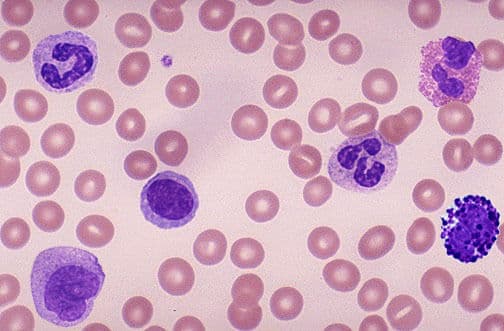
Which connective tissue is pictured?
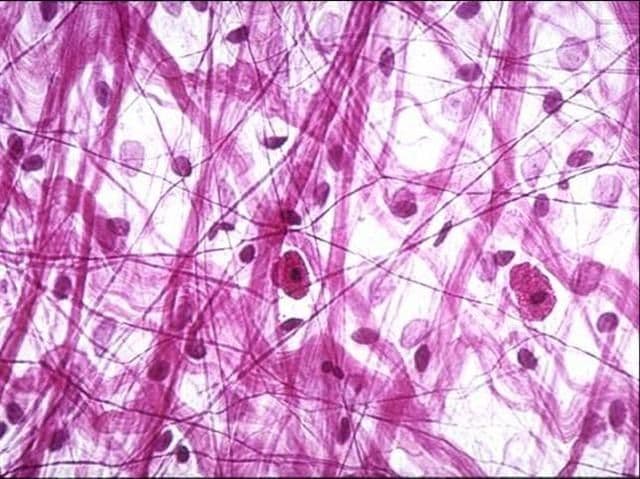
Which connective tissue is pictured?

Which connective tissue is pictured?

Which connective tissue is pictured?
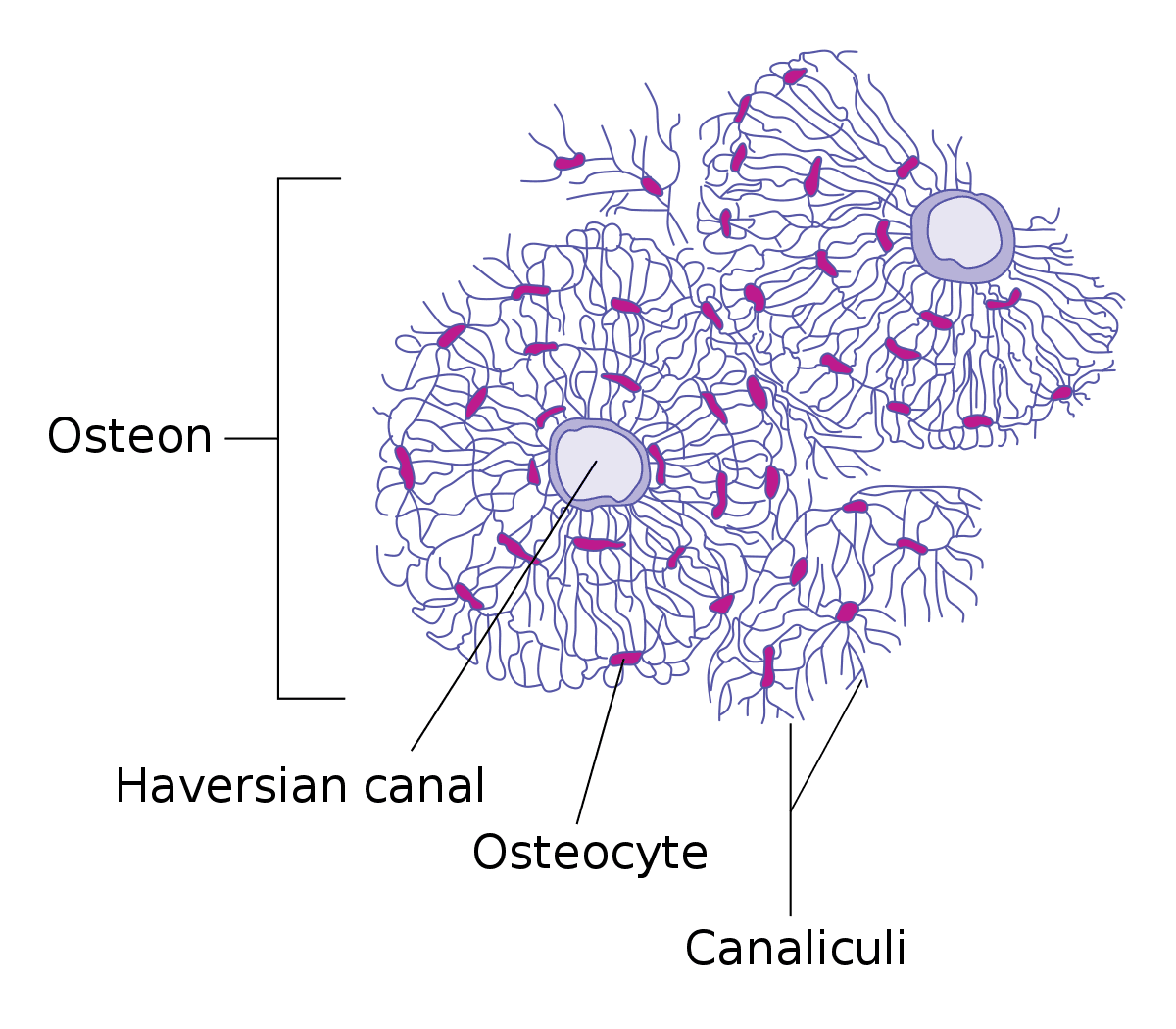
Which connective tissue is pictured?
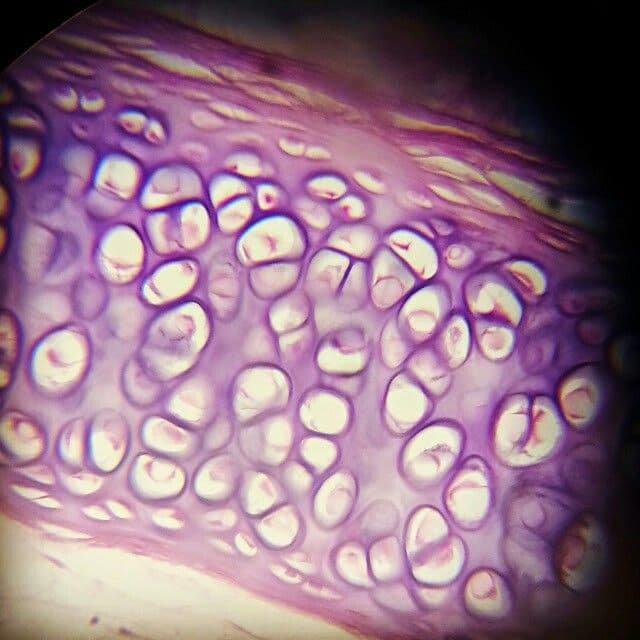 What is a Plant Cell? Plant cells are eukaryotic cells that vary in several fundamental factors from other eukaryotic organisms. Both plant and animal cells contain a nucleus along with similar organelles. One of the distinctive aspects of a plant cell is the presence of a cell wall outside the cell membrane. Plant Cell Structure Just like different organs within the body, plant cell structure includes various components known as cell organelles that perform different functions to sustain itself. These organelles include: Cell Wall It is a rigid layer which is composed of polysaccharides cellulose, pectin and hemicellulose. It is located outside the cell membrane. It also comprises glycoproteins and polymers such as lignin, cutin, or suberin. The primary function of the cell wall is to protect and provide structural support to the cell. The plant cell wall is also involved in protecting the cell against mechanical stress and providing form and structure to the cell. It also filters the molecules passing in and out of it. The formation of the cell wall is guided by microtubules. It consists of three layers, namely, primary, secondary and the middle lamella. The primary cell wall is formed by cellulose laid down by enzymes. Cell membrane It is the semi-permeable membrane that is present within the cell wall. It is composed of a thin layer of protein and fat. The cell membrane plays an important role in regulating the entry and exit of specific substances within the cell. For instance, cell membrane keeps toxins from entering inside, while nutrients and essential minerals are transported across. Nucleus The nucleus is a membrane-bound structure that is present only in eukaryotic cells. The vital function of a nucleus is to store DNA or hereditary information required for cell division, metabolism and growth. 1. Nucleolus: It manufactures cells’ protein-producing structures and ribosomes. 2. Nucleopore: Nuclear membrane is perforated with holes called nucleopore that allow proteins and nucleic acids to pass through. Plastids They are membrane-bound organelles that have their own DNA. They are necessary to store starch and to carry out the process of photosynthesis. It is also used in the synthesis of many molecules, which form the building blocks of the cell. Some of the vital types of plastids and their functions are stated below: Leucoplasts They are found in the non-photosynthetic tissue of plants. They are used for the storage of protein, lipid and starch. Chromoplasts They are heterogeneous, colored plastid which is responsible for pigment synthesis and for storage in photosynthetic eukaryotic organisms. Chromoplasts have red-, orange- and yellow-colored pigments which provide color to all ripe fruits and flowers. Central Vacuole It occupies around 30% of the cell’s volume in a mature plant cell. Tonoplast is a membrane that surrounds the central vacuole. The vital function of the central vacuole apart from storage is to sustain turgor pressure against the cell wall. The central vacuole consists of cell sap. It is a mixture of salts, enzymes and other substances. Golgi Apparatus They are found in all eukaryotic cells, which are involved in distributing synthesized macromolecules to various parts of the cell. Ribosomes They are the smallest membrane-bound organelles which comprise RNA and protein. They are the sites for protein synthesis, hence, also referred to as the protein factories of the cell. Mitochondria They are the double-membraned organelles found in the cytoplasm of all eukaryotic cells. They provide energy by breaking down carbohydrate and sugar molecules, hence they are also referred to as the “Powerhouse of the cell.” Lysosome Lysosomes are called suicidal bags as they hold digestive enzymes in an enclosed membrane. They perform the function of cellular waste disposal by digesting worn-out organelles, food particles and foreign bodies in the cell. In plants, the role of lysosomes is undertaken by the vacuoles. Chloroplasts It is an elongated organelle enclosed by phospholipid membrane. The chloroplast is shaped like a disc and the stroma is the fluid within the chloroplast that comprises a circular DNA. Each chloroplast contains a green colored pigment called chlorophyll required for the process of photosynthesis. The chlorophyll absorbs light energy from the sun and uses it to transform carbon dioxide and water into glucose. Structure of Chloroplast Chloroplasts are found in all higher plants. It is oval or biconvex, found within the mesophyll of the plant cell. The size of the chloroplast usually varies between 4-6 µm in diameter and 1-3 µm in thickness. They are double-membrane organelle with the presence of outer, inner and intermembrane space. There are two distinct regions present inside a chloroplast known as the grana and stroma. • Grana are made up of stacks of disc-shaped structures known as thylakoids or lamellae. The granum of the chloroplast consists of chlorophyll pigments and are the functional units of chloroplasts. • Stroma is the homogenous matrix which contains grana and is similar to the cytoplasm in cells in which all the organelles are embedded. Stroma also contains various enzymes, DNA, ribosomes, and other substances. Stroma lamellae function by connecting the stacks of thylakoid sacs or grana. The chloroplast structure consists of the following parts: Membrane Envelope It comprises inner and outer lipid bilayer membranes. The inner membrane separates the stroma from the intermembrane space. Intermembrane Space The space between inner and outer membranes. Thylakoid System (Lamellae) The system is suspended in the stroma. It is a collection of membranous sacs called thylakoids or lamellae. The green colored pigments called chlorophyll are found in the thylakoid membranes. It is the sight for the process of light-dependent reactions of the photosynthesis process. The thylakoids are arranged in stacks known as grana and each granum contains around 10-20 thylakoids. Stroma It is a colorless, alkaline, aqueous, protein-rich fluid present within the inner membrane of the chloroplast present surrounding the grana. Grana Stack of lamellae in plastids is known as grana. These are the sites of conversion of light energy into chemical energy. Chlorophyll It is a green photosynthetic pigment that helps in the process of photosynthesis. Functions of Chloroplast Following are the important chloroplast functions: • The most important function of the chloroplast is to synthesize food by the process of photosynthesis. • Absorbs light energy and converts it into chemical energy. • Chloroplast has a structure called chlorophyll which functions by trapping the solar energy and is used for the synthesis of food in all green plants. • Produces NADPH and molecular oxygen (O 2 ) by photolysis of water. • Produces ATP – Adenosine triphosphate by the process of photosynthesis. • The carbon dioxide (CO2) obtained from the air is used to generate carbon and sugar during the Calvin Cycle or dark reaction of photosynthesis. Mitochondria “Mitochondria are membrane-bound organelles present in the cytoplasm of all eukaryotic cells, that produce adenosine triphosphate (ATP), the main energy molecule used by the cell.” What are Mitochondria? Popularly known as the “Powerhouse of the cell,” mitochondria (singular: mitochondrion) are a double membrane-bound organelle found in most eukaryotic organisms. They are found inside the cytoplasm and essentially function as the cell’s “digestive system.” They play a major role in breaking down nutrients and generating energy-rich molecules for the cell. Many of the biochemical reactions involved in cellular respiration take place within the mitochondria. The term ‘mitochondrion’ is derived from the Greek words “mitos” and “chondrion” which means “thread” and “granules-like”, respectively. It was first described by a German pathologist named Richard Altmann in the year 1890. Structure of Mitochondria • The mitochondrion is a double-membraned, rod-shaped structure found in both plant and animal cell. • Its size ranges from 0.5 to 1.0 micrometers in diameter. • The structure comprises an outer membrane, an inner membrane, and a gel-like material called the matrix. • The outer membrane and the inner membrane are made of proteins and phospholipid layers separated by the intermembrane space. • The outer membrane covers the surface of the mitochondrion and has a large number of special proteins known as porins. Cristae The inner membrane of mitochondria is rather complex in structure. It has many folds that form a layered structure called cristae, and this helps in increasing the surface area inside the organelle. The cristae and the proteins of the inner membrane aid in the production of ATP molecules. The inner mitochondrial membrane is strictly permeable only to oxygen and ATP molecules. A number of chemical reactions take place within the inner membrane of mitochondria. Mitochondrial Matrix The mitochondrial matrix is a viscous fluid that contains a mixture of enzymes and proteins. It also comprises ribosomes, inorganic ions, mitochondrial DNA, nucleotide cofactors, and organic molecules. The enzymes present in the matrix play an important role in the synthesis of ATP molecules. Functions of Mitochondria The most important function of mitochondria is to produce energy through the process of oxidative phosphorylation. It is also involved in the following process: 1. Regulates the metabolic activity of the cell 2. Promotes the growth of new cells and cell multiplication 3. Helps in detoxifying ammonia in the liver cells 4. Plays an important role in apoptosis or programmed cell death 5. Responsible for building certain parts of the blood and various hormones like testosterone and estrogen 6. Helps in maintaining an adequate concentration of calcium ions within the compartments of the cell 7. It is also involved in various cellular activities like cellular differentiation, cell signaling, cell senescence, controlling the cell cycle and in cell growth. Disorders Associated with Mitochondria Any irregularity in the way mitochondria function can directly affect human health, but often, it is difficult to identify because symptoms differ from person to person. Disorders of the mitochondria can be quite severe; in some cases, they can even cause an organ to fail.Biomedical Engineering Flashcard 1 Q: What is biomedical engineering? A: The field that designs medical solutions (devices, implants, machines, medicines) to improve health. Flashcard 2 Q: How many bones does an adult have? A: 206 bones. Flashcard 3 Q: How many bones are humans born with? A: About 270 bones. Flashcard 4 Q: What is a prosthetic? A: An artificial device used to replace a missing body part. Flashcard 5 Q: What must engineers consider when designing prosthetics? A: Connection to the body Communication with the body Life-like movement Flashcard 6 Q: What is internal fixation? A: Hardware attached inside the body directly to the bone to repair it. Flashcard 7 Q: Examples of internal fixation? A: Rods, screws, plates, pins, bone grafts. Flashcard 8 Q: What is external fixation? A: Supports outside the body used to stabilize bones while they heal. Flashcard 9 Q: Examples of external fixation? A: Casts, braces, slings, external screws. Flashcard 10 Q: What is biocompatibility? A: Materials that can safely exist in the body without causing harm or rejection. Circulatory System Flashcard 11 Q: What is the job of the circulatory system? A: Deliver oxygen and nutrients and remove wastes from cells. Flashcard 12 Q: What do arteries do? A: Carry blood away from the heart. Flashcard 13 Q: What do veins do? A: Carry blood back to the heart. Flashcard 14 Q: What do capillaries do? A: Exchange oxygen, nutrients, and waste with tissues. Flashcard 15 Q: What are the 4 main components of blood? A: Plasma Red blood cells White blood cells Platelets Flashcard 16 Q: Name 3 circulatory diseases. A: Arteriosclerosis Hypertension (high blood pressure) Coronary heart disease Flashcard 17 Q: What lifestyle choices increase circulatory disease risk? A: Tobacco use Alcohol use Poor nutrition Physical inactivity Obesity Stem Cells Flashcard 18 Q: What are stem cells? A: Cells that can develop into many different specialized cell types. Flashcard 19 Q: Why is embryonic stem cell research controversial? A: Because it involves destroying embryos, which some believe is destroying human life. pH and Indicators Flashcard 20 Q: What pH number is an acid? A: Below 7. Flashcard 21 Q: What pH number is neutral? A: 7. Flashcard 22 Q: What pH number is a base? A: Above 7. Flashcard 23 Q: Examples of pH indicators? A: Litmus paper Red cabbage indicator Anthocyanins Hydrogels Flashcard 24 Q: What is a hydrogel? A: A material made of polymer chains that can hold large amounts of water. Flashcard 25 Q: Examples of hydrogels? A: Gelatin Collagen Alginate Fireworks Flashcard 26 Q: What are the 4 main parts of fireworks? A: Oxidizer, fuel, binder, metal salt. Flashcard 27 Q: What color does Barium produce? A: Light green. Flashcard 28 Q: What color does Copper produce? A: Blue-green. Flashcard 29 Q: What color does Strontium produce? A: Dark red. Flashcard 30 Q: What color does Potassium produce? A: Light purple. Flashcard 31 Q: What color does Lithium produce? A: Orange-red. Flashcard 32 Q: What effect does Iron produce in fireworks? A: Sparks.How is personal data collected? There are several ways that an unauthorised person can try and collect your data. These include: •phishing •smishing •vishing •pharming. Phishing Phishing is when a person sends a legitimate looking email to a user. The email contains a link to a website that also looks legitimate. The user is encouraged to click the link and to input personal data into a form on the website. The email could also simply ask the user to reply to the email with their personal data. The user is tricked into giving their personal data to a source that they believe is legitimate. However, both the email and the linked website are from a fake unauthorised source. The personal data that is input is then collected by an unauthorised person. This person can then use this data for criminal acts, for example, to commit fraud or steal the person's identity. Intimidation has become a common feature of phishing emails, threatening the user that they must click the link and rectify a situation immediately, or there will be a further issue. The aim of a phishing attack is to steal the user's personal data. Figure 5.1: Phishing. A real-life example of phishing PayPal have been the subject of several different phishing emails. Users receive an email that looks as though it has been sent from PayPal, as it has the PayPal branding. The email normally warns of an issue such as unexpected activity on their account, or that some kind of verification of their account is required. The user is then asked to click a link to log into their account and resolve the issue. The link takes them to a webpage that looks like the PayPal login page. If the user inputs their login details into this page, they will not be taken to their account. It is often at this stage that the user may realise that the email and webpage are fake. However, they have already given the unauthorised person their PayPal login details. Figure 5.2: An example of a phishing email claiming to be from PayPal. How to recognise phishing There are several guidelines to be aware of regarding emails to avoid being subjected to phishing. These include: •Don't even open an email that is not from a sender that you recognise or a trusted source. •Legitimate companies will never ask you for your personal data using email. Be immediately suspicious of any email that requests your personal data. •Legitimate companies will normally address you by your name. Be suspicious of any email that addresses you as ‘Dear Member' or ‘Dear Customer'. •Legitimate companies will send an email that uses their domain name. If you hover your mouse over the sender's name, it will show the email address that the email is sent from. If this does not look legitimate, for example, does not contain the correct domain name, then it is probably fake. For example, if the sender's email is user@paypal1.com rather than user@paypal.com, this is from an incorrect domain name. •Legitimate companies are protective of their professional reputation and thoroughly check any communications. They will make sure that all information given is grammatically and correctly spelt. Be suspicious of any email that contains bad grammar or spelling mistakes. •A link in an email from a legitimate company will also normally contain the domain name of the company. You can sometimes hover over the link, or right click and inspect the link, to see the address of the URL that is attached. If the URL does not contain the domain name, or also contains typical errors such as spelling mistakes, then be suspicious of this. PRACTICAL ACTIVITY 5.02 Ask a friend or a member of your family if they have ever received an email that they believed was a phishing email. Ask them how they identified it was phishing. Ask them if they know all of the given guidelines for identifying phishing emails. Smishing Smishing (or SMS phishing) is a variant of phishing that uses SMS text messages to lure the user into providing their personal details. The user is sent an SMS text message that either contains a link to a website, in the same way that phishing does, or it will ask the user to call a telephone number to resolve an urgent issue. The same advice can be followed for smishing as given for phishing. The user must question at all times any links that are sent from an unknown or suspicious user. It is advisable that if a user believes the message may be legitimate, to type in the domain name for the legitimate company website into their web browser, rather than following the link in the message. Users should block any numbers that they believe are suspicious to prevent any further risk of smishing from that number. Figure 5.3: Smishing. Vishing Vishing (or voice phishing) has the same aim as phishing, to obtain a user's personal details. The user receives a telephone call that could either be an automated system or could be a real person. An automated voice could speak to the user and advise them that an issue has occurred, such as there has been suspicious activity regarding their bank account. The user may then be asked to call another number, or just to simply press a digit and be directed to another automated system. This system will ask them to provide their bank account details to resolve the issue. The bank account details have then been obtained by the unauthorised user and can be used to commit a crime against the user. The automated system could be replaced by a real person who will try to do the same thing. They will try to convince the user that there has been an issue with an account they have and to provide the log-in details or PIN for the account to verify who they are so the issue can be resolved. The precaution to take for vishing is that no company will ever call you and ask you to provide any log-in details or PIN details over the telephone. They may ask you to provide other personal information, and if you are in doubt that the person on the other end of the phone is legitimate, it is always advisable to put the phone down and call the company back on a legitimate number that you may already know or can obtain. Figure 5.4: Vishing. Pharming Pharming is when an unauthorised user installs malicious code on a person's hard drive or server. The malicious code is designed to redirect a user to a fake website when they type in the address of a legitimate one. The fake website is designed to look like the legitimate one, to trick the user and make sure they are not aware that their request has been redirected. The user will then enter their personal details into the fake website, believing it is the legitimate one, and the unauthorised person will now have their personal data. A common technique used in pharming is called domain name server (DNS) cache poisoning. This technique exploits vulnerabilities in the DNS and diverts the internet traffic intended for a legitimate server toward a fake one instead. The unauthorised user needs to find a way to install the malicious code on the computer. They often hide the malicious code in an email attachment or link. When the user opens the email attachment or clicks the link, the malicious code is downloaded also. Figure 5.5: Pharming. The aim of a pharming attack is also to steal a user's personal data. A real-life example of pharming In 2007 50 different companies all over the world were subject to a pharming attack, these included PayPal, eBay, Barclays bank and American Express. Over a three-day period, hackers managed to infect over 1000 PCs a day with a malicious pharming code. When users who had been infected visited the websites of the different companies, they were redirected to a legitimate-looking version of the site that was designed to steal their personal data. The original email, containing the malicious code, was set up to look like a shocking news story. Users were encouraged to click a link in the email to find out more information. The code was downloaded when the user clicked the link. This was quite a sophisticated attack that required legitimate looking websites to be set up for a large number of companies. It is not known how much money the hackers were able to retrieve as a result. How to prevent pharming All of the guidelines to avoid being subjected to phishing are also relevant for recognising pharming. There are also several other precautions that can be taken to check for pharming attacks. These include: •Have a firewall installed and operational. A firewall monitors incoming and outgoing traffic from your computer. It checks this traffic against set criteria and will flag and stop any traffic that does not meet the criteria. A firewall could detect and block suspicious traffic, such as a malicious code trying to enter your system. •Have an anti-virus program installed that is designed to detect malicious pharming code. You need to scan your computer on a regular basis to check for any malicious code. It is advisable to set up an automatic scan on a daily basis at a time when your computer will normally be switched on. •Be aware when using public Wi-Fi connections. A hacker could look to directly access your computer and install the malicious code if you are connected to a public Wi-Fi connection. It is often advisable to use a VPN when using public Wi-Fi. This will help shield your internet activity and personal details from a hacker, making it more difficult for them to access your computer. Smishing can also be used as a form of pharming. A user is sent a link, that when they click is designed to download malware onto their mobile device. Therefore, it is advisable to have security software installed on your mobile and also scan it regularly to detect any presence of malware.Riferimenti normativi per il settore residenziale: Art 81: Accesso alla rete viaria—>> il cancello deve essere arretrato di almeno 4,5m dal filo esterno del marciapiede Art 82: Passo carrabile—>> larghezza non inferiore a 4,5m e non superiore a 6,5m Art 83:Pendenza Rampa —>> max 16% Art 97: Superficie minima degli ambienti - cucina —>> min 5mq - studio—>> min 7mq - soggiorno—>> min 14 mq - soggiorno spazi di cottura—>> 17 -camera (1posto letto)—>> 8mq - camera (2posti letto)—>> 12mq Superficie alloggio totale —>> non inferiore a 28 mq Art 95: Altezze minime- cucina, soggiorno, camera e studio—>> min 2,70m -locali accessori—>> min 2,40 m (bagno, lavanderie) - locali di servizio—>> min 2,10m (disimpegni, riposti.) - soppalchi—>> min 2,10m - parapetti—>> non inf. a 1,1m (10 cm cordolo) (92) Art 86: Distanze - negli edifici di nuova costruzione la distanza degli edifici dal confine con proprietà di terzi — nei NAF—>> non inf. a 3 m — altri ambiti —>> non inf. a 5m Art 89: Scale (R.E. ) —alzate—>> max 12 consecutive — a chiocciola—>> consentite solo all’interno di un’unità abit. — illuminazione—>> se collegano più di due piani devono . essere areati con lucernario. Dim: 0,3 mq . per ogni piano servito (R.I.: 0,4 mq x piano) — areazione —>> non ci può essere areazione verso i vani scala . ( Lo dice anche il regolamento d’igiene ) (R.I) —>> superficie non inferiore a 1mq per piano servi. — larghezza (R.I.) —>> deve garantire la possibilità di soccorso e . trasporto di persone Art 88: Locali sotterranei —>> non possono MAI essere adibiti ad abitazione Locali seminterrati—>> possono ma devono rispettare determinati . requisiti - l’altezza media deve essere > di 2,7m Art 91: Copertura—>> istallazione di apparati tecnici non deve essere visibile . dalle pubbliche vie Art 98: Bagni —>> ambiente contenente il vaso deve essere disimpegnato . dalla cucina (R.I: disimpegnato dai locali abitabili, esclusione Secondo bagno se è a servizio esclusivo di una camera) (R.I)—>> deve essere dotato di vaso, lavabo, bidet doccia o vasca —>> il lavabo può essere ubicato nell’antibagno Art 100: Areazione —>> riscontro d’aria deve essere garantito su aperture . perpendicolari o contrapposte.(non inf. a 1\10) —>> appartamenti inf. a 60mq possono essere . monoaffaccio ( ma non esposti a nord) Art 125: Raccolta rifiuti (R.E)—>> non meno di 0,18mq per ogni abitante . virtuale —>> non meno di 5 mq —>> altezza minima 2,4m (R.I: 2 m) —>> deve avere un punto di allacciamento d’acqua Regolamento d’igiene —>> dimensione tale da poter contenere 4,5l Di rifiuti per abitante.( in ogni caso > di 2mq) —>> scarichi sifonati dall’acqua di lavaggio —>> accorgimenti che assicurino un’adeguata Difesa antimurina e antinsetti Norma UNI 10750: superficie commerciale (ciò che compriamo) , cioè la somma delle superfici coperte—>> 100% delle superfici calpestatili —>>100% delle superfici su cui poggiano . Le pareti divisorie interne non portanti —>> 50% delle pareti portanti interne perimetrali —>> 25% delle aree non abitabili Superfici scoperte—>> 25% dei balconi e delle terrazze scoperte —>> 35% dei balconi e dei terrazzi coperti (3 lati) —>> 35% dei pati e dei porticati —>> 60% delle verande —>> 15% dei giardini di appartamento —>> 10% dei giardini di ville e villini (Se un muro è al confine con un altro appartamento lo considero dalla mezzeria, se confina con uno spazio comune idem, lo considero tutto invece se da sull’esterno ) Regolamento d’igiene (su esso prevale il Re) : norme che discipilinano degli aspetti della vita quotidiana al fine di tutelare la salute dei fruitori Si occupa di : Rumori , odori , fumi, vapori. Scarichi nel sottosuolo Pulizia e decoro Malattie infettive Igenicità degli ambienti Pareti trasparenti (tenendo conto di telai e infissi)—>> deve avere un area pari a 1\8 (nazionale), 1\10 (Milano ) della superficie di pavimento Profondità di pavimento—>> non deve superare i 2,5m dalla finestra Bagno cieco solo se la superficie lorda di pavimento è inferiore ai 70mq e se è presente una sola camera da letto , oppure se è un secondo bagno (altrimenti finestra > 0,5 apribile). Superficie illuminante—>> superficie totale dell’apertura meno - superficie finale non utile (C): 60 cm - superficie superiore non utile (A) A= va considerato per intero se non ci sono aggetti o se questi sono inferiori a 150 cm. Al contrario ne considero solo un terzo. Es: con aggetto, b+ 1\3a . Se il rapporto illuminante è rispettato la profondità del locale non può essere più di 2,5 volte l’altezza del voltino . Se non è rispettato (inferiore a 1\8) allora deve essere 3,5 volte Alloggi devono essere dotati— per 1\2 perone—>> 1 spazio cottura,1 servizio igienico , 1 ripostiglio — per 3\4 persone—>> 1 cucina indipendente, 1 servizio igienico , 1 ripostiglio — per 4\5 persone —>> 1 cucina indipendente, 2 servizi igienici, 1 ripostiglio (per il secondo servizio è richiesta una superficie minima di 2mq e un lato minimo di 1,2m) Dotazione dei servizi: Cucina—>> pavimenti e pareti con superficie Di materiale impermeabile, liscio, lavabile,resist. —>> soffitto materiale traspirante —>> cappa collegata a ogni punto di cottura (Vedi bagno su) Prevenzione incendi : definisce —dimensionamenti—accessi all’area (locali di intrattenimento e di pubblico Spettacolo —>> larghezza 3,5 —>> h libera 4m —>> raggio di svolta 13m —>> pendenza non sup al 10% —>> resist al carico almeno 20t —profondità locali —>> i locali al chiuso non possono Essere ubicati oltre il secondo piano Interrato (non oltre i 10m) . Questi se Sono tra i 7,5 e i 10 m devono essere Protetti da un’impianto sprinkler e Essere dotati di uscite sicure. — carichi d’incendio — comunicazione (locali di intrattenimento e di pubb. Spettacolo —>> locali possono comunicare con altre Attività purché dotate di filtri a prova di Fumo e di porte REI (ameno 30) (queste Non vanno cont nel comp. delle vie d’uscit) — compartimentazioni — autorimesse — comportamento al fuocoGUIDELINES ON THE ESTABLISHMENT AND IMPLEMENTATION OF THE RESULTS-BASED PERFORMANCE MANAGEMENT SYSTEM IN THE DEPARTMENT OF EDUCATION I. Rationale 1. The Civil Service Commission (CSC), through the issuance of Memorandum Circular (MC) No. 06, series of 2012, sets the guidelines on the establishment and implementation of the Strategic Performance Management System (SPMS) in all government agencies. The SPMS gives emphasis to the strategic alignment of the agency’s thrusts with the day-to-day operation of the units and individual personnel within the organization. It focuses on measures of performance vis-a-vis the targeted milestones, and provides a credible and verifiable basis for assessing the organizational outcomes and the collective performance of the government employees. 2. As a learner-centered institution, the Department of Education (DepEd) is committed to continuously improve itself to better serve the Filipino learners and the community. The adoption of the SPMS in DepEd strengthens the culture of performance and accountability in the agency, with the DepEd’s mandate, vision and mission at its core. 3. There is a need to concretize the linkage between the organizational thrusts and the performance management system. It is important to ensure organizational effectiveness and track individual improvement and efficiency by cascading the institutional accountabilities to the various levels, units and individual personnel, as anchored on the establishment of a rational and factual basis for performance targets and measures. Finally, it is necessary to link the SPMS with other systems relating to human resources and to ensure adherence to the principle of performance-based tenure and incentives. 4. In view of the above, this Order aims to adopt the SPMS as the Results-based Performance Management System (RPMS). II. Scope of Policy 5. This DepEd Order provides for the establishment and implementation of the RPMS in all DepEd schools and offices, covering all officials and employees, school-based and non school-based, in the Department holding regular plantilla positions. It stipulates the specific mechanisms, criteria and processes for the performance target setting, monitoring, evaluation and development planning. IV. Policy Statement 9. The DepEd hereby sets the guidelines on the establishment and implementation of the Results-based Performance Management System (RPMS) in the Department, stipulating the strategies, methods, tools and rewards for assessing the accomplishments vis-a-vis the commitments. This will be used for measuring and rewarding higher levels of performance of the various units and development planning of all personnel in all levels. 10. For non school-based personnel, the RPMS shall provide for an objective and verifiable basis for rating and ranking the performance of units and individual personnel in view of the granting of the Performance-Based Bonus (PBB) starting 2015. 11. For school-based personnel, the RPMS shall be used only as an appraisal tool, which shall be the basis for training and development. The granting of PBB shall be governed by the existing PBB guidelines. 12. The Department shall adopt the RPMS framework shown in Annex B. 13. The DepEd RPMS shall follow the four-stage performance management system cycle as prescribed by the CSC: i. Performance planning and commitment (Phase I); ii. Performance monitoring and coaching (Phase II); iii. Performance review and evaluation (Phase III); and iv. Performance rewarding and development planning (Phase IV). V. Performance Cycle/Process 14. The RPMS shall align the performance targets and accomplishments with the Department’s mandate, vision, mission and strategic goals. It shall ensure 100% results orientation vis-a-vis the planned targets. On the other hand, the ratee’s demonstration of the required competencies shall be monitored for developmental purposes only. 15. The RPMS cycle shall cover performance for one whole year. All school-based personnel shall follow a performance cycle starting in April of the current year and ending in March of the following year; while non school-based personnel shall follow a performance cycle starting in January and ending in December. Annexes C and D illustrate the performance cycles which shall apply to school-based and non school-based personnel, respectively. 16. The performance planning and commitment shall be done prior to the beginning of the performance cycle; while the performance monitoring and coaching shall take place immediately after Phase I, and continue throughout the performance cycle. The performance review and evaluation, as well as the performance rewarding and development planning shall be done at the end of the performance cycle. A. Phase I: Performance Planning and Commitment 17. The performance planning and commitment shall be done prior to the start of the performance cycle where the rater meets with the ratee to discuss and agree on the following: i. Office KRAs, Objectives and Performance Indicators as anchored to the overall organizational outcomes; and ii. Individual KRAs, Objectives and Performance Indicators as anchored to the Office KRAs and Objectives. 18. The Office Performance Commitment and Review Form (OPCRF) shall be accomplished by the head of office to reflect the Office KRAs, Objectives and Performance Indicators. The head of office, in coordination with the Planning Office, shall ensure alignment of the office plans and commitments to the overall organizational outcomes. The OPCRF shall be equivalent to the IPCRF of the head of office. A sample of the filled out OPCRF, including the instructions for accomplishing the form, is shown in Annex E. 19. The Individual Performance Commitment and Review Form (IPCRF) shall be accomplished by the individual personnel to reflect the agreed Individual KRAs, Objectives and Performance Indicators. A sample of the filled out IPCRF, including the instructions for accomplishing the form, is shown in Annex F. 20. Defining the Key Result Areas. The head of office, in coordination with the Planning Office, shall define the office KRAs as anchored on the overall organizational outcomes. The rater and the ratee shall discuss and agree on the break down of the office KRAs into individual KRAs. Three (3) to five (5) KRAs shall be defined for each office and individual employee. KRAs are broad categories of general outputs or outcomes. It is the mandate or function of the office and/or individual employee. The KRA is the reason why an office and/or job exist. It is an area where the office and/or individual employee are expected to focus on. 21. Setting the Objectives. The head of office shall set three (3) objectives per office KRA. The rater and the ratee shall discuss and agree on three (3) objectives per individual KRA. Objectives are specific tasks, which an office and/or employee need to do to achieve their specific KRAs. In objective setting, the SMART criteria, which stands for Specific, Measurable, Attainable, Relevant, Time Bound, shall be applied. The SMART criteria are illustrated in Annex G. 22. Setting the Timeline. The timeline shall define the target date for accomplishing each of the Objectives. The timeline for the office Objectives shall be set by the head of office in coordination with the Planning Office and School Planning Team; while the timeline for the individual Objectives shall be discussed and agreed by the rater and the ratee. 23. Assigning the Weight. Assigning of weights shall be done per KRA. Weights for each office KRA shall be assigned by the head of office in coordination with the Planning Office; while the weights for each of the individual KRAs shall be discussed and agreed upon by the rater and the ratee. 24. Identifying the Performance Indicators. Using a five (5)-point rating scale, the head of office shall identify a performance indicator for each of the office objectives, while the rater and the ratee shall identify and agree on the performance indicator for each of the individual objectives. Performance indicators are exact quantification of objectives expressed through rubrics. They are assessment tools, which gauge whether a performance is positive or negative. In identifying the performance indicator, the operational definition or meaning of each numerical rating shall be indicated under each relevant dimension (i.e., quality, efficiency, or timeliness) per performance target or success indicator. This shall ensure that the rating is objective, impartial and verifiable. Table 1 below discusses the performance measures by which the indicator must satisfy. Table 1. Performance Measures CATEGORY DEFINITION Effectiveness/Quality The extent to which actual performance compares with targeted performance. The degree to which objectives are achieved and the extent to which targeted problems are solved. In management, effectiveness relates to getting the right things done. Efficiency The extent to which time or resources is used for the intended task or purpose. Measures whether targets are accomplished with a minimum amount or quantity of waste, expense, or unnecessary effort. Timeliness Measures whether the deliverable was done on time based on the requirements of the rules and regulations, and/or clients/stakeholders. Time-related performance indicators evaluate such things as project completion deadlines, time management skills and other time-sensitive expectations. Some Performances are only rated on quality and efficiency, some on quality and timeliness, and others on efficiency only. You need not use all three (3) categories. 25. Demonstration of Competencies. During Phase I, the rater shall discuss with the ratee the competencies required of the individual personnel. Competencies are defined as the knowledge, skills and behavior that individuals demonstrate in achieving one’s results. Competencies shall uphold the DepEd’s core values. They represent the way individuals define and live the values. 26. DepEd shall adopt four classes of competencies as follows: i. Core behavioral competencies are competencies, which cut across the organization; ii. Leadership competencies are competencies intended for managerial positions; a. Third level officials b. Chiefs and Assistant Chiefs c. School Heads and Department Heads iii. Staff Core Skills are competencies intended for staff and teaching-related personnel; and iv. Teaching competencies are competencies intended for teachers. The DepEd-required competencies are illustrated in Annex I. 27. The ratee’s demonstration of the required competencies shall be monitored to effectively plan the interventions needed for behavioral and professional development. The assessment in the demonstration of competencies shall not be reflected in the final rating. 28. Reaching Agreement. Once the office and individual KRAs, Objectives and Performance Indicators are clearly defined, the rater and the ratee shall commit and reach an agreement by signing the OPCRF and IPCRF. The signed/approved OPCRF and IPCRF shall be the basis for monitoring and assessment, which shall take place in Phases II and III, respectively. B. Phase II: Performance Monitoring and Coaching 29. The performance monitoring and coaching shall commence after the rater and the ratee commit on the KRAs, Objectives and Performance Indicators, and sign the OPCRF and IPCRF. This shall be done throughout the year. 30. The two (2) main components of Phase II are the following: i. Performance monitoring; and ii. Coaching and feedback. 31. Performance monitoring shall provide key inputs and objective basis for rating. It shall facilitate feedback and provide evidence of performance. Performance monitoring shall be the responsibility of both the rater and the ratee who agree to track and record significant incidents through the use of the Performance Monitoring and Coaching Form (PMCF) shown in Annex J. Significant incidents are actual events and behaviors in which both positive and negative performances are observed and documented. 32. Coaching and feedback shall be a continuous process. Coaching and feedback shall be provided by the rater and/or shall be sought by the ratee to improve work performance and behavior. The rater, as the coach or mentor of the ratee, playing a critical role in the performance monitoring and coaching, shall provide an enabling environment and intervention to improve the office performance and to manage and develop individual potentials. 33. The PMCF shall capture the significant incidents. It shall provide a record of demonstrated behaviors, competencies and performance, and shall be an effective substitute in the absence of quantifiable data. The rater and the ratee shall sign each significant incident recorded in the PMCF to ensure that agreement has been reached. C. Phase III: Performance Review and Evaluation 34. The performance review and evaluation shall be done at the end of the performance cycle to assess the office and individual employee’s performance level based on the commitments and measures as contained in the signed OPCRF and IPCRF. 35. A mid-year review is prescribed to determine the progress in achieving the Objectives. In exceptional cases, and only if the situation warrants, a one-time recalibration of office and individual Objectives shall be allowed during the mid-year review. Exceptional cases shall include instances when high level decisions are taken into effect such as changes in strategic directions, and circumstances beyond the control of the ratee such as natural and/or man-made calamities, including typhoon, earthquake and other fortuitous events. During the mid-year review, the rater shall inform in writing the ratee of the status of performance, in case of an Unsatisfactory or Poor performance. Coaching, feedback and appropriate interventions shall be provided where necessary. 36. The RPMS shall put premium on KRAs towards the realization of organizational vision, mission, strategic priorities and the OPIF logframe. Hence, rating for planned and/or intervening tasks shall always be supported by reports, documents or any output as proofs of actual performance. In the absence of said bases or proofs, a particular task shall not be rated and shall be disregarded. 37. Office and Individual Performance Assessment. The head of office, in coordination with the Planning Office, shall assess the performance of the office vis-a-vis the committed targets at the beginning of the performance cycle. The rater and the ratee shall discuss and agree on the individual assessment based on the actual accomplishments of each of the KRAs and Objectives. The final rating shall be based solely on the accomplishment of the specific objectives as measured by the Performance Indicators. The OPCRF and IPCRF shall be accomplished and completed by the rater and the ratee to: i. Reflect actual accomplishments and results; ii. Rate each of the objectives; iii. Compute for the score per objective; iv. Determine the overall rating for accomplishments; v. Reach an agreement; and vi. Assess the competencies. 38. Initial self-rating shall be encouraged prior to the rater-ratee discussion. 39. Third Level Officials, as heads of offices, shall accomplish the OPCRF for submission to the Planning Office. The individual assessment of Third Level Officials shall be contained in the CESPES Forms for submission to the Career Executive Service Board (CESB). The BHROD and Personnel Division shall be furnished a copy of both forms. 40. Actual Results. The rater and the ratee shall discuss and agree on the actual accomplishments and results based on the performance commitments and measures made at the beginning of the rating period. They shall evaluate each objective whether it has been achieved or not. The significant incidents as reflected in the PMCF shall be considered for the actual results. 41. Rating the Objectives. Based on the actual accomplishments and results, each of the Objectives shall be rated using the rating scale specified below: Table 2. The RPMS Rating Scale NUMERICAL RATING ADJECTIVAL RATING DESCRIPTION OF MEANING OF RATING 5 Outstanding Performance represents an extraordinary level of achievement and commitment in terms of quality and time, technical skills and knowledge, ingenuity, creativity and initiative. Employees at this performance level should have demonstrated exceptional job mastery in all major areas of responsibility. Employee achievement and contributions to the organization are of marked excellence. 4 Very Satisfactory Performance exceeded expectations. All goals, objectives and targets were achieved above the established standards. 3 Satisfactory Performance met expectations in terms of quality of work, efficiency and timeliness. The most critical annual goals were met. 2 Unsatisfactory Performance failed to meet expectations, and/or one or more of the most critical goals were not met. 1 Poor Performance was consistently below expectations, and/or reasonable progress toward critical goals was not made. Significant improvement is needed in one or more important areas. The final assessment shall correspond to the adjectival description of Outstanding, Very Satisfactory, Satisfactory, Unsatisfactory or Poor. The range of adjectival rating is as per attached in Forms A, B, and C. 42. Process for Computing the Score per KRA. i. The rater and ratee shall ensure that each KRA has been assigned weight according to priority. ii. As an option, the rater and ratee may assign weights to objectives which shall be equal to the total weight assigned to a particular KRA. KRA 1 – Weight assigned is 40% Objective 1 is 20% Objective 2 is 10% Objective 3 is 10% iii. The score per KRA shall be computed using the following formula: 43. Plus Factor. The plus factor shall be considered as another KRA. These are value adding accomplishments, which are not covered within the regular duties and responsibilities. The weight on the plus factor shall not exceed the weight of the highest mandated KRA. For teachers, the plus factor shall be limited to work/activities, which contribute to the teaching-learning process. 44. Determining the Overall Rating for Accomplishments. The overall rating/assessment for the accomplishments shall fall within the following adjectival ratings and shall be in three (3) decimal points: Table 3. Adjectival Ratings RANGE ADJECTIVAL RATING 4.500-5.000 Outstanding 3.500-4.499 Very Satisfactory 2.500-3.499 Satisfactory 1.500-2.499 Unsatisfactory below 1.499 Poor 45. Reaching Agreement. Upon determining the overall rating for the actual accomplishments and results, the rater and the ratee shall reach an agreement by signing the OPCRF and IPCRF. The average rating of individual staff members should not go higher than the collective performance assessment of the office. 46. Assessing the Competencies. The rater shall discuss with the ratee the set of competencies observed during the performance cycle. The competencies shall not be reflected in the final rating. Competencies shall be monitored for developmental purposes. In evaluating the individual’s demonstration of competencies, the rating scale in Table 4 shall apply: Table 4. The DepEd Competencies Scale SCALE DEFINITION 5 Role model 4 Consistently demonstrates 3 Most of the time demonstrates 2 Sometimes demonstrates 1 Rarely demonstrates 5 (role model) – all competency indicators 4 (consistently demonstrates) – four competency indicators 3 (most of the time demonstrates) – three competency indicators 2 (sometimes demonstrates) – two competency indicators 1 (rarely demonstrates) – one competency indicator D. Phase IV: Performance Rewarding and Development Planning 47. The results of the performance review and evaluation shall be used in performance rewarding and development planning. This phase shall be done after Phase III. 48. The rater shall discuss and provide qualitative comments, observations and recommendations in the individual employee’s performance commitment, competency assessment and significant incidents which shall be used for training and professional development. These can be written under the strengths and development needs column of the Part IV-Development Plans of the IPCRF. 49. The rater and the ratee shall identify and discuss the individual’s strengths and development needs, and reflect them in the Part IV-Development Plans of the IPCRF. The competencies which the ratee demonstrated consistently and the areas, where the ratee meet or exceed expectations shall be referred to as the ratee’s strengths. The competencies, which the ratee rarely demonstrates and the areas where the ratee has room for improvement and has not met the expectations, shall be identified as the ratee’s development needs. Make a situational SOLO-based questions in the context of school leadership Why and How Managers Plan Importance of planning The planing process Benefits of planning Planning and time management Types of PLans used by managers Long term and short term plans Strageic and tactical plans Operational plans Planning Tools and Techiqunes Forecasting Contrigency planning Scenario planning Benchmaking Use of staff planners Implementing Plans to Achive Results Goal setting Goal management Goal alignment Participation and involvement Planning Def: The process of setting objectives and determining how best to accomplish them Planning at Eaton Corporation “Making the hard decision before events force them upon you, an anticipating the future needs of the market before the demand asset itself Objectives and goals Identifity the specific results or desired outcomes that one intends to achieve Plan Def: A statement of action steps to be taken in order to accomplish the objectives (goals) Steps in the planning process: Define your objectives Determine where you stand vis-a-vis objectives Develpo premises reagrdsing future conditions Analyze alternatives and make a plan Implement the plan and evaluate results What are the benefits of planning Improves focus and flexibility Imporves action orteitation Imporves coordination and control Imporves time management Time Managment Personal time management tips Do say “no” to request that distract you form what you should be doing Dont get bogged down inn details that can be addressed later Do screen telephone calls, emails and meeting request Dont let drop in visitors, text messaging use up your time Do prioritize your important and urgent work Dont become calendar bound by letting other control your schedule Do follow priorities; do most important and urgent work first Some 77% of mangers in one survey said that digital age has increased th number of decisions they have to make 43% said there was less time available to make these decisions Types of plans used by Managers What is teh time horizon Long term vs Short term Long term Look three or more years into teh future Short term plans Typically cover one year or less However: the increasing environmental complexity and dynamism of recent years has severely tested the concept of “long-term” planning Plans are subject to frequent revisions Most executives would likely agree that these complexities adn uncertainties challenge how er actually go about planning and how far ahead we can really plan At the very least we can conclude that there is a lot less permanency to long term plans today and that tey are subject to frequent revision Managment reaeracher Eillot Jaques believes tha people vary in their capability to think with different time horizons Types of Plans used by Managers (3 of 5) Strategic plans Set broad, comprehensive and linger term action directions for teh entire organization or major division Vision Clarifies purpose of the organization and what it hopes to be on the future Typical plans Specify how the organizations resources are used to implement strategy Tactical plans in business often take the form of functional plans Functional plans Incidate how different component within the organiztion will help accompnlish the overall strategy Production plans Finacial plans Facilites Plans Logisitc plans Marketing plans Human Resource Plans Operation plans Describe short-term activities to implement strategic plans Policies: Are standing plans that communicate guidelines for decisions Ex: Policies on office romances: The media is quick to report when a top executive or public figures runs into trouble over an office affair. Are there ant policies on office romances? Employer polices on office raltioshiis vary. One survey find teh following: 24% prohibit relationships among employees in the same department 13% prohibit relationships among employees who have the smae supervisor 80% prohibit relationships between supervisors and subordinates 5% have no restrictions on office romances Procedures: Are rules that describe actions to be taken in specific situations Budgets: are single use plans that commit resources to projects or activities Zero based budgets: allocate resources as if each budget were brand new There is no guarantee that any past funding will be renwer. All propsales, old and new, must compete for available funds at teh start of each new budget cycle Forcasting Attempts to predict the future Qualitaive forecasting uses expert opinions Quantitative forecasting uses mathematical models and statiscal aanylsis of historical data dna surveys Contingency planning Identify alternative course of action to take when things go wrong Anticipate changing conditions Contain trigger points to indicate when to activate plan (or a specific course of action) Scenario planning A long term version of contingency planning Identifying alternative future scenarios Plans made for each future scenario Increases organizations flexibility and preparation for future shocks Benchmarking Use of external and internal comparisons to better evaluate current performance Adopting best practices: things people adn organization do that lead to superior performance Staff Planners Experts who assist in all steps of the planning process They help bring focus and expertise to a wide variety of planning tasks Important: Communication between staff planers landline managers is essential for teh success of teh planning process Goal Setting - Always set SMART goal The solution: Goal Aligment Between Team Leader and Team Member Jonintly plan: Set objectives, set standards, choose actions Individually acy: Perform tasks (member), provide support (leader) Jointly control: Review results, discuss implications, renew cycle x4 Collective effort and commitment Participatroy planning Includes in all planning steps that people who will be affected by the plans adn askedd to help implement them Unloacks motivational potential of goal setting Management by objective (MBO) promotes participation Participation increases understanding and acceptance of plan and commitment to success Participatory planning - Number of people involved in teh decision making process Amazon is intensely focused on what it does. It believes in creating tight single-threaded teams, also known as “2 pizza team.” Data and Decision Making What are some of the important competencies managers must have today? Delegate Marketing and technology Manager must have Technological competency Ability to understand new technologies and to use them to their best advantage Information competency Ability to locate, gather, organize and display information for decision-making and problem solving Analytical competency Ability to evaluate and analyze information to make actual decisions and solve real problems What is the difference between Data and Information Data Raw facts and observation Information Data made useful and meaningful for decision-making Important concepts Big data Exists in huge quantities and is difficult to process without sophisticated mathematical and analytical techniques Data production today Bernard Marr is an internationally best-selling author. He helps organizations improve their business performance, use data more intelligently Data mining The process of analyzing data to produce useful information for decision-makers Management Analytics The systematic evaluation and analysis of data to make informed decision Information drives management Bad Data Refers to information that can be erroneous, misleading, and without general formatting The challenge: Can er use the data that is available in the “Big Data” Needs to be valid Can not trust everything out there Being ethical Look at the trends Data is structured and unstructured Data BIg Data = Structured + Unstructured Information Drive Management decision making What are the characteristics of useful information Easy to access If its credible Accurate Characteristics of useful information: Timely High quality Complete Relevant Understandable What about bad data It's not credible Miss information If it is not structured/ organized Bias based on opinions Confusing If its updated Bad data Refers to information that can be erroneous miss What are some examples of Management information system Business intelligence -BI Information systems to extract and report data in organized ways that are useful to decision-makers Executive dashboards Visually update and display key performance metrics (or Key Performance Indicators -KPIs) and information on a real-time basis Information needs in organization External Environment Information exchanges with the external environment Gather intelligence information Provide public information Information needs within the organizations (internal Enviroement) Information exchange within the organization Facilitate decision making Facilitate problem-solving Managers as information processors Continually gather, share and receive information Now as much electronic as it is face-to-face Always on, always connected How many people telecommute at least once a week 70% of people globally work remotely at least once a week, Work at home after covid 19 our forecast Our best estimate it that 25-30% of the workforce will be working form home multiple days a week by the end of 2021 As of 2023, 12.7% of full time employees work from home, while 28.2% work a hybrid model Managers as problem solvers Problem-solving The process of identifying a discrepancy between actual and desired performance and taking action to resolve it Ishikawa Fishbone diagram To identify the cause of problems Decision A choice among possible alternative courses of action Performance threat Something is wrong or has the potential to go wrong Performance opportunity The situation offers the chance for a better future if the right steps are taken Problem-solving approaches or style - from textbook Problem avoiders Inactive in information gathering and solving problems Problem seekers Proactive in anticipation of problems and opportunities and taking appropriate action to gain an advantage Problem solvers Reactive in gathering information and solving problem Managers - can approach problems in a systematic or intuitive manner Systematic thinking approaches problem in rational, step-by-step and analytical fashion Intuitive thinking approaches problems in a flexible and spontaneous fashion Multidimensional thinking- applies both intuitive and systematic thinking Managers face structured and unstructured problems Structure problems Are ones that are familiar, straight forward, and clear with respect to information needs Program decisions apply solutions that are readily available from past experiences to solve structured problems Know how to solve them Familiar Know what we are dealing with Unstructured problems Are ones that are full of ambiguities and information deficiencies Nonprogrammed decisions apply a specific solution to meet the demands of a unique problem Commonly faced by higher-level management Crisis decision making A crisis involves an unexpected problem that can lead to disaster if not resolved quickly and appropriately Ruled for crisis management Figure out what is going on Remember that speed matters Remember that slow counts, too Respect the danger of the unfamiliar Value the skeptic Be ready to “fight fire with fire” Managers make decisions with various amounts of information Certain environment Offers complete information on possible action alternatives and their consequences Risk environment Lacks complete information but offers probabilities of the likely outcomes for possible action alternatives Uncertain environment Lacks so much information that it is difficult to assign probabilities to the likely outcomes of alternative Ex: Certain and uncertain environments: The worldwide Governance Indicators for over 200 countries, comparing distinct environments (Canada-Brazil) Step 1-Identify and define the problem Focuses on information gathering information processing and deliberation Decision objectives should be established What are some common mistakes in definding problems? Common mistakes in defining problems Defining the problem too broadly or too narrowly Focusing on symptoms instead of causes Choosing the wrong problem to deal with Step 2- Generate and Evaluate Alternative Courses of Action Potential solutions are formulated and more information is gathered, data are analyzed, the advantages and disadvantages of alternative solutions are identified Common mistakes: Abandoning the search for alternatives too quickly Step 3- Decide on a preferred course of Action Two different approaches Behavioural model leads to satisficing decisions Classical model les to optimising decisions Behavioural Model Rationality is bounded because: There are limits our thinks capacity Available information (incomplete) Time constraints Step 4-Implement the decision Involves taking action to make sure the solution decided upon becomes a reality Managers need to have the willingness and ability to implement action plans Problems: Lack of participation error should be avoided Step 5 - Evaluate Results Involves comparing actual and desired results The positive and negative consequences of the chosen course of action should be examined If actual results fall short desire results, the manager returns to earlier steps in the decision-making process At all steps, check ethical reasoning Ask these spotlight questions Utility Does teh decision satisfy all constituents or stakeholders Rights Does the description respect the rights and duties of everyone? Justice Is the decision consistent with the canons of justice Caring Is the decision consistent with my responsibilities to care? Issues in decision-making How do errors happen? Heuristics: are strategies for simplifying decision-making Availability Bias: Bases a decision on recent information or events Representativeness bias: Bases a decision on similarity to other situations Anchoring and Adjustment Bias: Bases a decision on incremental adjustment from a prior decision point Framing error: Tring to solve a problem in the context perceived, positive or negative Confirmation Error: Focusing on information that confirms a decision already made Escalating commitment: Continuing a course of action even though it is not working Creative Decision making Creativity is the generation of a novel idea or unique approach that solves a problem or crafts an opportunity Big C: Creativity occurs when extraordinary things are done by exceptional people Little C: Creativity occurs when average people come up with unique ways to deal with daily events and situations The three types of situational creativity drivers Chapter review What are objectives and goals? The specific results or desired outcomes What are the 5 characteristics of great (SMART) goals? Forecasting - Attempts Qualitative forecasting uses options Quantitative forecasting uses mathematical models and statistical analysis of historical data and surveys Scenarios-Oracle’s crystal ball combines qualitative and quantitative methodsUnderstanding the Connection Diagram of Fire Detection and Alarm System (Four Stations) Assessment 1. What are the key components of a fire detection and alarm system? a. Only smoke detectors b. Heat detectors and manual call points c. Control panels and power supply units d. Alarm sounders and batteries 2. Why is the synchronized response of alarm activation at all stations essential in a fire detection and alarm system? a. To confuse occupants b. For individual station evacuation c. Quick evacuation and response to emergencies d. Delay emergency response 3. How are the stations wired to the control panel in the connection diagram? a. Through a single circuit b. Via a complex network of cables c. Through a series of circuits d. Wirelessly 4. What happens if a detector at any station is triggered by smoke or heat in the connection diagram? a. It activates the alarm sounders at one station b. It sends a signal to the control panel for deactivation c. It triggers the alarm sounders at all four stations d. It has no effect on the system 5. In the wiring configuration, what role does a series circuit play in the system? a. Activates the alarm at one station only b. Triggers the alarm at all stations c. Prevents alarms from sounding d. Bypasses the control panel 6. Why are parallel circuits used in the fire detection and alarm system? a. To save on wiring costs b. To independently connect each station to the control panel c. To limit the number of alarm sounders d. To increase the chance of false alarms 7. What is critical for ensuring the proper functioning of the fire detection and alarm system? a. Irregular testing b. Absence of testing c. Regular testing and maintenance d. Testing only alarms 8. What does regular testing and maintenance help identify in the system? a. Issues with batteries and control panels b. The presence of smoke or heat in the environment c. The need for new detectors d. Alarm sounder malfunctions 9. Why is the connection diagram important in maintaining system integrity? a. To confuse users during emergencies b. To ensure the system malfunctions c. To maintain the system's integrity d. To allow unauthorized access 10. What is the ultimate goal of understanding the connection diagram of a fire detection and alarm system? a. Increase the chances of disastrous consequences b. Confuse occupants in case of emergencies c. Ensure the safety of building occupants d. Promptly initiate false alarms 1. SA node sends an impulse causing the atria to contract 2. Blood moves from the right atrium into the right ventricle past the tricuspid valve 3. Blood moves from the left atrium into the left ventricle past the mitral or bicuspid valve 4. Impulse pauses at AV node to allow for maximum blood to be squeezed into the ventricles 5. Impulse travels to the AV bundle (or bundle of His) and down the bundle branches 6. Impulse travels out Purkinje fibers causing the apex to contract 7. The apex contraction increases the blood pressure in the ventricles causing the Mitral and Tricuspid (AV) valves to close. 8. Atria repolarize and begin to fill 9. Purkinje fibers cause the ventricle walls and papillary muscles to depolarize (contract) 10. Papillary muscles hold the AV valves shut (keep them from prolapsing) through the chordae tendineae connection 11. The aortic and pulmonary semilunar valves open when the pressure is higher in the ventricles than in the major arteries 12. Blood moves from right ventricle to pulmonary trunk/arteries past the pulmonary semilunar valve 13. Blood moves from left ventricle to aorta past the aortic semilunar valve 14. Blood pathway is arteries to arterioles, to capillaries (or capillary bed), to venules, veins and vena cava back to the right atrium 15. The ventricles start to repolarize (relax) which decreases the pressure in the ventricles 16. When the pressure is lower in the ventricles than in the major arteries, blood moves back toward heart shutting semilunar valves 17. When the aortic valve closes, the openings to the coronary arteries are exposed 18. Back pressure in the aorta pushes blood out the left and right coronary arteries supplying the heart with oxygenated blood 19. The AV valves open and blood moves from the atria into the ventricles when the ventricular pressure falls below atrial pressure. 20. The process starts again when the SA node fires causing the atria to contract.