demonstrate that light travels in a straight line until it strikes an object or travels through one medium to another and demonstrate that light can be reflected such as the use of mirrors or other shiny surfaces and refracted such as the appearance of an object when observed through water
Track each student's skills and progress in your Mastery dashboards
Give this quiz to my class
Q 1/13
Score 0
Which of these best demonstrates the reflection of light?
60
Looking at a lightbulb that is glowing
Looking at an image formed on a silver spoon
Looking through the glass of a large window
Looking at a star on a clear night
Q 2/13
Score 0
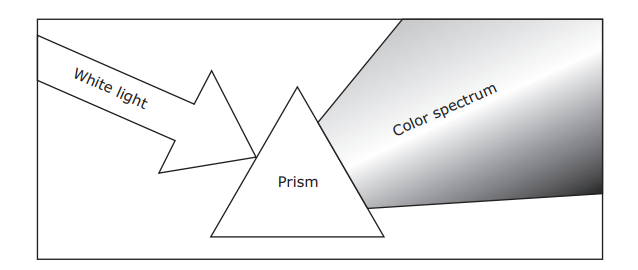
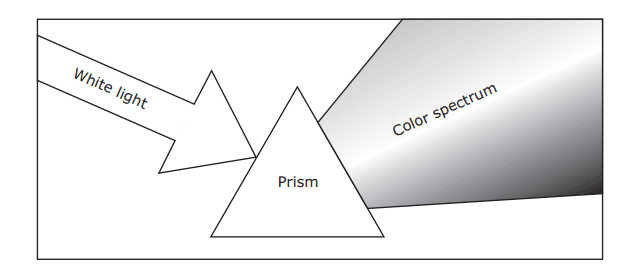
When light travels through air into a prism, it bends and separates into many colors. In which other situation does light bend?
60
When light moves through air into water
When light passes through outer space
When light hits a wall
When light hits a mirror
13 questions
Q.
Which of these best demonstrates the reflection of light?
1
60 sec
5.6.C: Force, Motion and Energy
Q.
When light travels through air into a prism, it bends and separates into many colors. In which other situation does light bend?
2
60 sec
5.6.C: Force, Motion and Energy
Q.
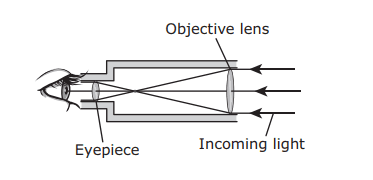
Scientists use telescopes to make distant objects appear closer. Some parts of a telescope are shown below. Which of the following best describes how the objective lens of this telescope helps a scientist observe the moon?
3
60 sec
5.6.C: Force, Motion and Energy
Q.
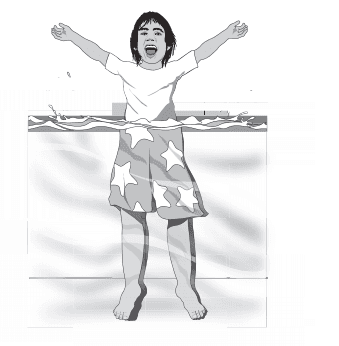
The picture below shows a child standing in a swimming pool. Why does the lower part of the child appear so much different in size from the upper part?
4
60 sec
5.6.C: Force, Motion and Energy
Q.
Some students paint the inside of several boxes. They paint each box a different color. They observe that the inside of the box painted white looks brighter than the others. What is the most likely reason this box looks brighter?
5
60 sec
5.6.C: Force, Motion and Energy
Q.
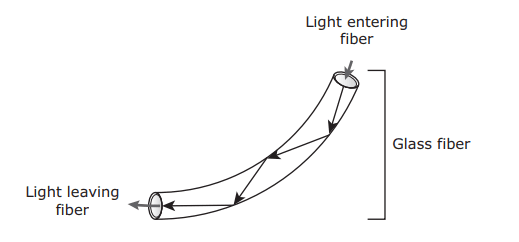
The model shows a special glass fiber that is thinner than some metal wires. When light enters one end of the fiber, it moves through the fiber as shown. After the light leaves the fiber, it travels —
6
60 sec
5.6.C: Force, Motion and Energy
Q.
A student looks into a mirror and sees an image of an object. Which diagram shows an X where the object is most likely located?
7
60 sec
5.6.C: Force, Motion and Energy
Q.
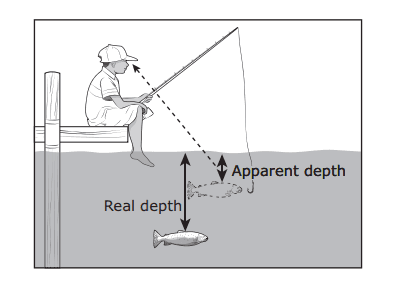
The diagram below shows a fish being viewed from above the water. The fish appears to be closer to the surface than it really is. What causes this difference?
8
60 sec
5.6.C: Force, Motion and Energy
Q.
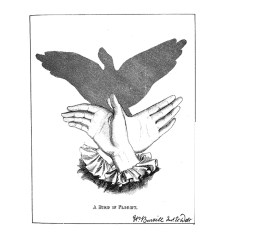
In 1859, Henry Bursill published a book of hand shadows. The picture below shows one of these hand shadows. Which property of light makes it possible to produce hand shadows?
9
60 sec
5.6.C: Force, Motion and Energy
Q.
Lasers produce a beam of light that can be focused on a small area. A teacher uses two mirrors to shine a beam of light from a laser onto a box. Which diagram shows how the teacher should position the two mirrors?
10
60 sec
5.6.C: Force, Motion and Energy
Q.
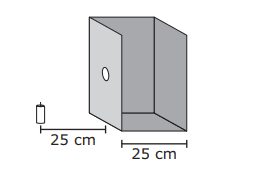
A teacher takes the top and a side off a box. She cuts a hole in another side and puts a candle outside the box, as shown below. When the teacher lights the candle in a dark room, some of the candlelight shines through the hole. Which diagram best shows how the light appears on the opposite wall of the box?
11
60 sec
5.6.C: Force, Motion and Energy
Q.
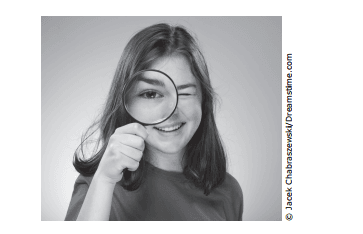
This photograph shows a girl using a lab instrument during an investigation on light. A teacher asks the other students in the class to look carefully at the girl’s eye and give reasons for its appearance. Which table correctly identifies the reasons for the appearance of the girl’s eye through the lab instrument?
12
60 sec
5.6.C: Force, Motion and Energy
Q.
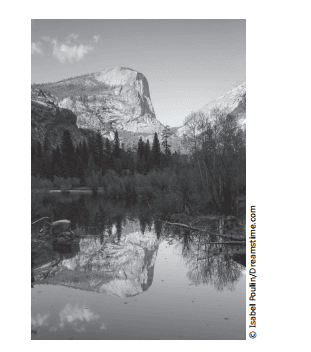
The picture shows an area of Yosemite National Park. Which statement about light is supported by this picture?