identify colonial grievances listed in the Declaration of Independence and explain how those grievances were addressed in the U.S. Constitution and the Bill of Rights
Track each student's skills and progress in your Mastery dashboards
Give this quiz to my class
Q 1/5
Score 0
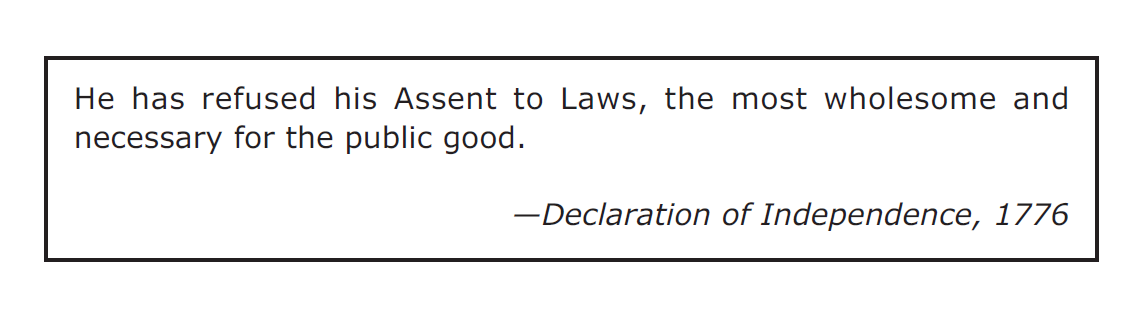
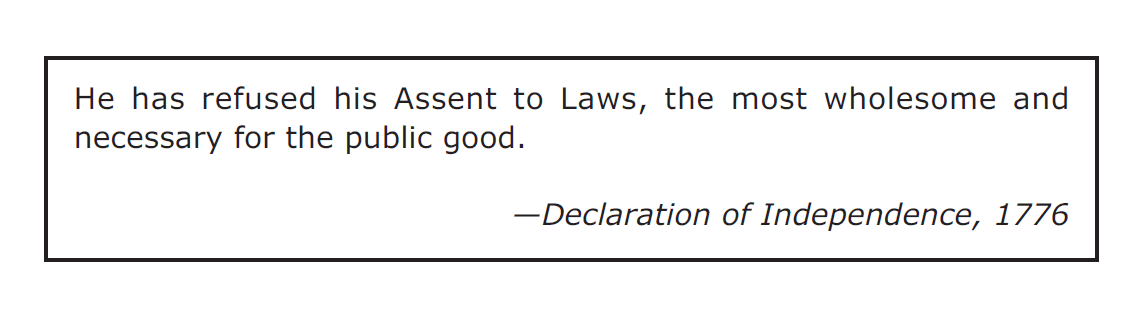
Which provision of the U.S. Constitution reflects this grievance?
30
The commerce clause allows Congress to regulate trade among the states.
The president can appoint justices with the advice and consent of the Senate.
Congress can override a presidential veto with a two-thirds majority vote in both houses.
Congress has the power to establish federal courts.
Q 2/5
Score 0
Which excerpt from the Declaration of Independence best explains why colonists were unhappy about their lack of representation in the British parliament?
30
“He has refused to pass other Laws for the accommodation of large districts of people.”
“He has refused his Assent to Laws, the most wholesome and necessary for the public good.”
“For transporting us beyond Seas to be tried for pretended offences.”
“For imposing Taxes on us without our Consent.”
5 questions
Q.
Which provision of the U.S. Constitution reflects this grievance?
1
30 sec
8.15.C: Social Studies - Government
Q.
Which excerpt from the Declaration of Independence best explains why colonists were unhappy about their lack of representation in the British parliament?
2
30 sec
8.15.C: Social Studies - Government
Q.
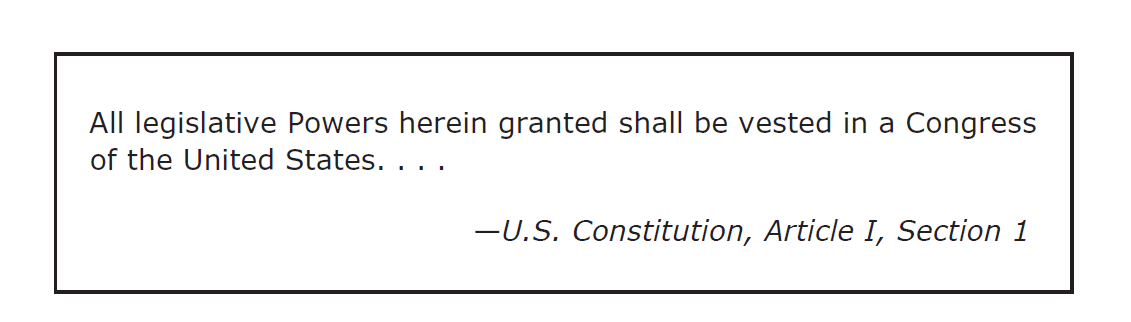
This provision is a response to which grievance from the Declaration of Independence?
3
30 sec
8.15.C: Social Studies - Government
Q.
Which of these is a grievance from the Declaration of Independence?
4
30 sec
8.15.C: Social Studies - Government
Q.
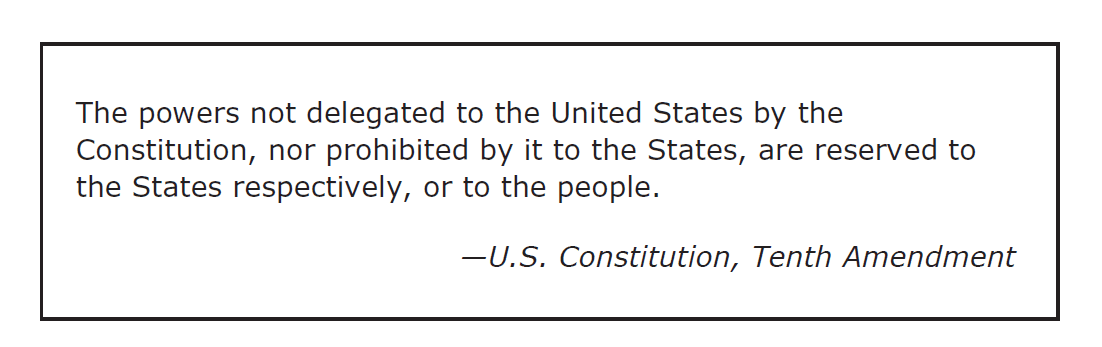
Conflicting interpretations of this amendment played a major role in the —