Loading...


9.2 Plant Breeding
Quiz by Savita Umale
Customize this quiz to suit your class
Instantly translate to 100+ languages
Tag the questions with any skills you have. Your dashboard will track each student's mastery of each skill.
Give this quiz to my class
1
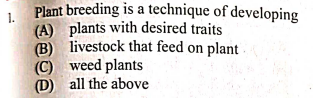
A
D
C
B
2
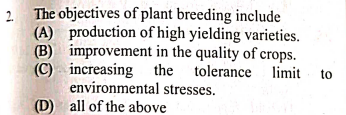
A
D
C
B
1
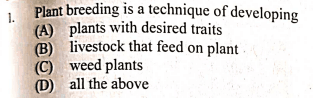
2
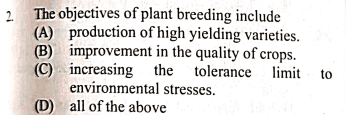
3
4
5
6
7
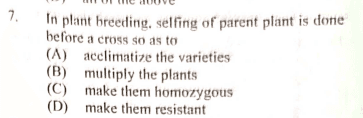
8
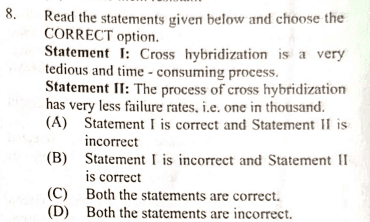
9
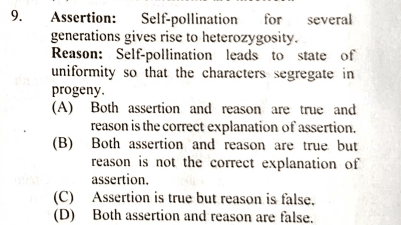
10
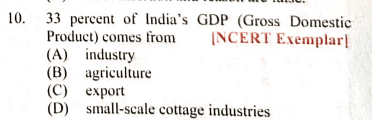
11
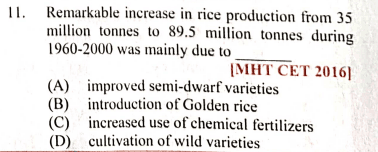
12
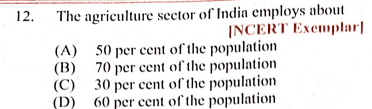
13
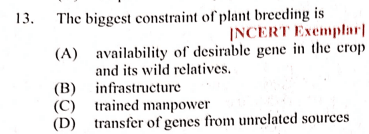
14
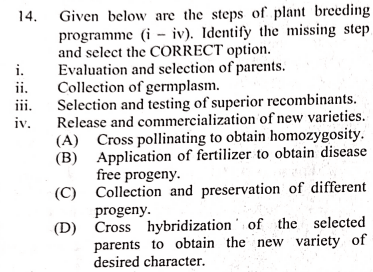
15
16
17
18

19
20
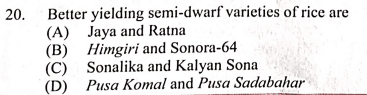
21

22
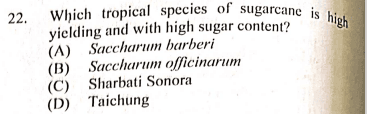
23
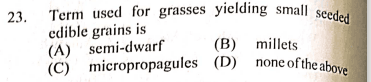
24
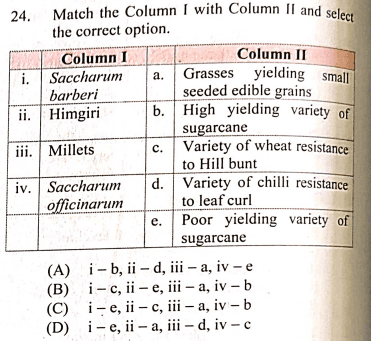
25
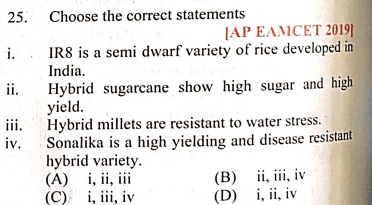
26
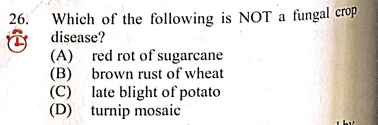
27
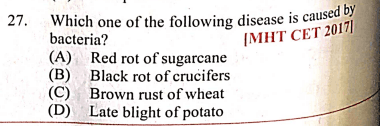
28
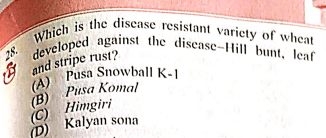
29

30
31
32
33
34
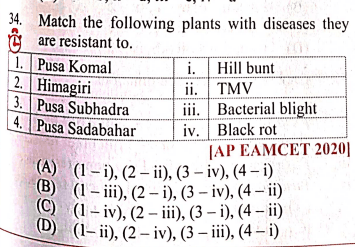
35
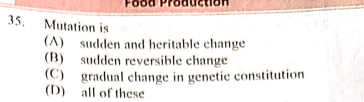
36
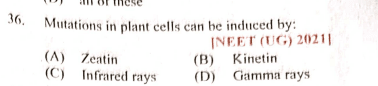
37
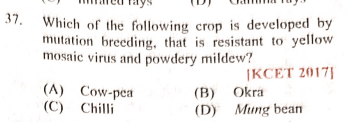
38
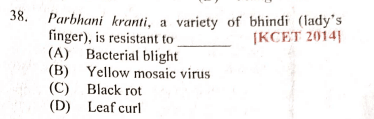
39
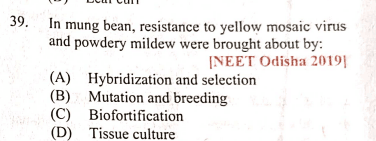
40
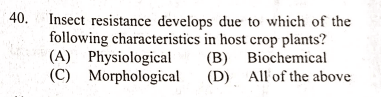
41
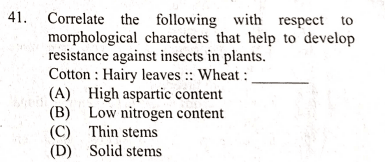
42
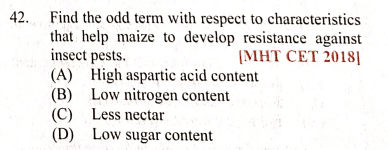
43
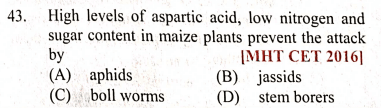
44
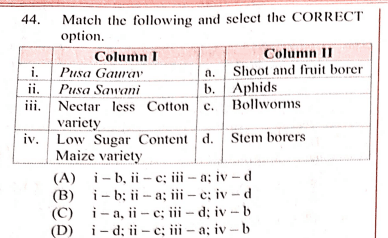
45

46

47
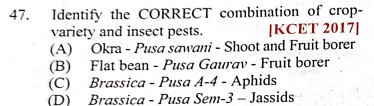
48
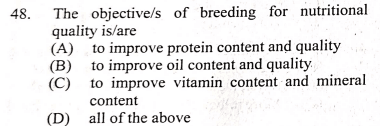
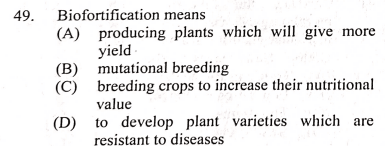
49
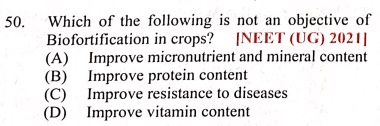
50
 Select all the numbers that can be used as a common denominator to rewrite the fractions __ 2 6 and __ 1 2 . A 3 D 12 B 6 E 16 C 8 2 Aaron ran __ 5 8 mile to his friend’s house. Then he ran another __ 1 4 mile to the park. 1 1 8 1 8 1 8 1 8 1 8 1 8 1 8 1 8 1 8 1 8 1 8 1 8 1 4 Which equation shows how many miles Aaron ran? A __ 5 8 – __ 1 4 = __ 2 8 C __ 5 8 + __ 1 4 = __ 7 8 B __ 5 8 – __ 1 4 = __ 3 8 D __ 5 8 + __ 1 4 = __ 8 8 3 Select all the expressions that can be used to find the sum of __ 6 8 and ___9 12. A ___ 36 48 + ___ 36 48 D ___ 18 20 + ___ 17 20 B ___ 24 36 + ___ 27 36 E ___ 18 24 + ___ 18 24 C ___ 14 16 + ___ 13 16 4 Write a pair of equivalent fractions for __ 3 4 and __ 2 5 using a common denominator of 20. __ 3 4 = __ 2 5 = 5 Katie spent __ 4 5 hour painting and __ 1 2 hour drawing. ? 1 1 2 1 5 1 5 1 5 1 5 How much more time in hours did she spend painting than drawing? 6 Dave is planting a garden. He plants cucumbers in ___2 12 of his garden and tomatoes in __ 2 3 of his garden. What fraction of his garden does Dave plant with cucumbers and tomatoes? 7 Of the students in Maria’s class, __ 2 5 have dogs and __ 1 3 have cats. No students have both a dog and a cat. What fraction represents how many more students in Maria’s class have dogs? 52 © Houghton Mifflin Harcourt Publishing Company Module 6 • Form A Name Module Test DO NOT EDIT--Changes must be made through "File info" CorrectionKey=NL-C 9 Mr. Gonzales used __ 3 4 quart of broth and __ 1 2 quart of milk to make soup. How many quarts of liquid did he use? Part A Complete the fraction model to represent the problem. 1 1 2 1 4 1 4 1 4 Part B Write an equation to show how many quarts of liquid Mr. Gonzales used to make soup. 10 A bowl of cereal contains __ 2 3 cup of oats and __ 2 8 cup of raisins. Write a numerical expression using equivalent fractions with a common denominator of 24 to model how many more cups of oats than raisins there are in the bowl. 11 Jessica read __ 1 6 of her book on Thursday, __ 2 9 of her book on Friday, and __ 1 2 of her book on Saturday. Part A Write a numerical expression using equivalent fractions to model how much of her book she has read so far. Part B What fraction of her book has Jessica read?Lesson 2: USES OF SOIL PRETEST Color the pictures that show how we can use soil. SOMETHING TO READ Soil is very useful to us. We can use it in many ways. Let us find out the different uses of soil one by one. Uses of soil a. Sand is used in making our houses. It is also used in making hollow blocks. OBJECTIVES: - Enumerates things that we can with soil - Demonstrates ways for making play things out of soil SCIENCE 2 – MODULE 7 SEIBO COLLEGE 9 b. Soil is made up of minerals, nutrients, water and air that support growing plants. It also keeps the plant’s roots on the ground. c. Animals like earthworm and ants lives in the soil. They create tunnels in it to allow air and water to pass through it. d. Clay soil is used in making pots and vases. We can play with it. We can make different objects that we can use to play with. e. When we are at the shore of the beach, we can play with sand and build sand castles. SOMETHING TO DO ACTIVITY 1 Creating Things I Like Objective: In this activity, children will learn that they can create things out of clay. What you need: SCIENCE 2 – MODULE 7 SEIBO COLLEGE 10 2 bars of clay (any color) 1 pc. 1/8 illustration board or any hard board What to do: 1. Using the bars of clay, create things that you like then place them on the illustration board. 2. Show your work to your facilitator. Observation: 1. Is it easy for you to create things that you like out of clay? __________________________________________________ 2. What is the texture of the clay? ________________________ 3. Did you have fun dong this activity? _____________________ Conclusion: I therefore conclude that _1Choose the correct answer: 1.The...........of plant absorb water and nutrients from the soil. (Dakahlla 2023) a.roots b.stems c.leaves d.flowers 2. Humans and other animals need to eat to get a.oxygen gas. b.energy. c.carbon dioxide gas. d.soil. 3. Plants make their food by a process known as (Alex.2023) a.respiration. b. absorption. c.photosynthesis. d.digestion. 4..........and.........are from the plant needs that help it make photosynthesis(Cairo 2023)process. a.Oxygen-water b. Sunlight-carbon dioxide c.Water-earthworms d. Nutrients-oxygen 5. Plants and humans are similar in some of their basic needs to survive suchas........... a. sunlight and rocks. b. water and air. c. carbon dioxide and soil. d. soil and water. 6. Plants take..........from the air to make its food. (Alex.2024) a.water b. oxygen gas c. carbon dioxide gas d.sugar 7.All the following are plant basic needs to make its own food,except a.water. b.air. c.sunlight. d.rocks. 8.Which of the following sentences is wrong? a. Plants need sunlight to grow. b. Plant roots absorb water from the soil. c. Plants make their own food by respiration process. d. Plants make their own food in their leaves. 9.Water and nutrients are carried from the roots to the leaves through the (Cairo 2024) a.stem. b.soil. c.fruits. d.flowers. 10. In photosynthesis process, plant produces..to get energy. a. oxygen gas b.sugar c.carbon dioxide d.water 18Commas Directions: Correct the sentences by adding commas where needed. 1. After the sound of the bell we realized it was a false alarm. 2. Mr. Yoshino the head of the department resigned yesterday. 3. The gentleman with the black umbrella who is an ambassador to the United States said hello to us as we were entering the hotel. 4. Even though we won the game the players unfortunately did not play their best. 5. Heather walked quickly up to the door and knocked hoping that someone would answer. Author’s Purpose 6. An author writes a story about a boy who saves his town from a flood by using his quick thinking. The author includes exciting descriptions of the boy's bravery. What is the author’s most likely purpose for writing this story? A. To inform readers about the dangers of floods B. To entertain readers with a heroic tale C. To explain how to prevent floods D. To persuade readers to prepare for emergencies 7. Which of the following is an example of an author writing to persuade? A. A science textbook chapter explaining the water cycle B. A commercial encouraging people to adopt shelter pets C. A short story about a girl who finds a magical necklace D. A recipe for making chocolate chip cookies 8. Read the following sentence: "Studies show that students who read for 20 minutes a day score higher on tests. Reading is one of the best habits you can develop for success in school and life." What is the author’s purpose in this passage? A. To entertain readers with a fun story B. To persuade readers to read more often C. To inform readers about how books are written D. To explain how to find books to read 9. An author writes a how-to guide titled 10 Easy Steps to Plant a Garden. What is the author’s primary purpose? A. To persuade readers to grow their own vegetables B. To inform readers how to plant a garden C. To entertain readers with funny garden tips 10. Read the excerpt: "Long ago, in a village surrounded by mountains, the people discovered a secret about their water well. Every full moon, the well water turned to gold for just one night. But no one knew why. This mystery brought travelers from far and wide, hoping to uncover the truth." What is the author’s purpose in this excerpt? A. To persuade readers to visit the village B. To inform readers about a historical event C. To entertain readers with a mysterious tale D. To explain the science behind the water Main Idea When I stepped out into the bright sunlight from the darkness of the movie house, I had only two things on my mind: Paul Newman and a ride home. I was wishing I looked like Paul Newman--- he looks tough and I don't--- but I guess my own looks aren't so bad. I have light-brown, almost-red hair and greenish-gray eyes. I wish they were more gray because I hate most guys that have green eyes, but I have to be content with what I have. My hair is longer than a lot of boys wear theirs, squared off in back and long at the front and sides, but I am a greaser and most of my neighborhood rarely bothers to get a haircut. Besides, I look better with long hair. 11. What is the main idea? The narrator likes movies. The narrator wishes he was Paul Newman. The narrator is content with his appearance. The narrator looks better with long hair. 12. The narrator believes. . . looks are important. he should get a haircut. green eyes are bad. that he has red hair. Once there were four girls who shared a pair of pants. The girls were all different sizes and shapes, and yet the pants fit each of them. You may think this is a suburban myth. But I know it's true, because I am one of them, one of the sisters of the Traveling Pants. We discovered their magic last summer, purely by accident. The four of us were splitting up for the first time in our lives. Carmen had gotten them from a secondhand place without even bothering to try them on. She was going to throw them away, but by chance, Tibby spotted them. First Tibby tried them; then me, Lena; then Bridget; then Carmen. By the time Carmen pulled them on, we knew something extraordinary was happening. If the same pants fit and I mean really fit the four of us, they aren't ordinary. They don't belong completely to the world of things you can see and touch. My sister, Effie, claims I don't believe in magic, and maybe I didn't then. But after the first summer of the Traveling Pants, I do. 13. What is the main idea? Four friends were connected through a special pair of pants. A pair of pants called the Traveling Pants. Carmen finding a pair of pants from a second-hand shop. The girls believing in magic. 14. The narrator included that the pants fit all of them to emphasize how the girls become friends. the girls are different sizes. why the pants are special. where the pants came from. If you are interested in stories with happy endings, you would be better off reading some other book. In this book, not only is there no happy ending, there is no happy beginning and very few happy things in the middle. This is because not very many happy things happened in the lives of the three Baudelaire youngsters. Violet, Klaus, and Sunny Baudelaire were intelligent children, and they were charming, and resourceful, and had pleasant facial features, but they were extremely unlucky, and most everything that happened to them was rife with misfortune, misery, and despair. I'm sorry to tell you this, but that is how the story goes. 15. What is the main idea? description about the story to come. A warning about the story and its sad content. A declaration about the Baudelaire family. A beginning for the end of the story. 16. The narrator believes the reader does not like sad stories. likes stories with happy endings. can’t enjoy the story. will find the story unhappy. 17. Read the following sentence: Of course you can exaggerate your story, but what you say must be based on truth. Which word means the same as exaggerate? repeat reveal overstate increase 18. What is the meaning of the word inaugurated, used in the following sentence: Less than two months after Abraham Lincoln was inaugurated President in 1861, he encountered one of the most difficult tasks ever experienced by a United States leader: civil war. elected by a vote brought into office identified by name viewed as an authority 19. What does the phrase “practice your presentation so much that you could do it in your sleep” suggest in the following sentence: The best advice is to practice your presentation so much that you could do it in your sleep. get plenty of sleep the night before giving a presentation give their presentations in front of a small audience first take advice from their teachers on how to write a presentation memorize their presentations before they give them 20. Read the following sentence: The Phoenix Mars Lander is a NASA spacecraft that landed on the Red Planet in May 2009 to study the history of water and potential for life on the planet. What is another word for potential? existence situation possibility qualification 1. What is intraspecific competition? a. A relationship between predator and prey b. Competition between individuals of the same species for limited resources c. Interaction between two different species in an ecosystem d. A form of predation where herbivores consume plants 2. How does interspecific competition affect ecosystems? a. It leads to an increase in biodiversity b. It causes one species to always become extinct c. It can change population sizes and species distribution d. It has no effect on ecosystems 3. Which of the following is an example of true predation? a. A cow grazing on grass b. A lion hunting a zebra c. A bee pollinating flowers d. A bird building a nest 4. What role do parasitoids play in ecosystems? a. They are primary producers b. They help control pest populations c. They are a type of prey d. They compete with herbivores for plants 5. Which of the following best describes a predator? a. An organism that is hunted and consumed b. An organism that feeds on plants c. An organism that hunts and consumes another organism d. An organism that lays eggs inside a host 6. How does grazing affect plant communities? a. It allows a single plant species to dominate b. It helps maintain diverse ecosystems c. It eliminates all plant life d. It has no impact on plant communities 7. What is the main difference between intraspecific and interspecific competition? a. Intraspecific involves different species; interspecific involves the same species b. Intraspecific involves the same species; interspecific involves different species c. Intraspecific competition is always beneficial; interspecific is not d. Intraspecific competition occurs only in aquatic environments 8. What is a common consequence of predation in ecosystems? a. Increase in prey population b. Overpopulation of predators c. Regulation of prey populations d. Extinction of all predators 9. Which interaction involves herbivores consuming plants? a. True predation b. Intraspecific competition c. Grazing d. Parasitism 10. How can interspecific competition influence natural selection? a. It does not influence natural selection b. It leads to cooperation among all species c. It can drive adaptation and evolutionary change d. It eliminates the need for adaptation BIOMOLECULES CARBOHYDRATES Carbohydrates CARBOHYDRATES THE MOST ABUNDANT ORGANIC MOLECULES IN NATURE HYDRATE DE CARBON i.e. HYDRATE OF CARBON or Cn(H2O)n Main source of ENERGY Provide some STRUCTUR PRECURSORs of many organic compounds – FATS, AMINO ACIDS STORAGE FORM of ENERGY (Glycogen Animals) (Starch Plants) 3 CARBOHYDRATES SIMPLE MONOSACCHARIDE – GLUCOSE, FRUCTOSE, GALACTOSE DISACCHARIDE – MALTOSE, SUCROSE, LACTOSE COMPLEX POLYSACCHARIDE – STARCH, GLYCOGEN, CELLULOSE, lmnbh 4 MONOSACCHARIDES BASED ON No OF C ATOMS BASED ON FNCTIONAL GROUP TRIOSES (C3H6O3) –GLYCERALDEHYDE, ALDOSE-GLECEALDEHY, DIHYDROXYACETONE GLUCOSE TETROSE (C4H8O4) – ERYTHROSE, THREOSE PENTOSE (C5H10O5) – RIBULOSE, ARABINOSE HEXOSES (C6H12O6) – GLUCOSE, KETOSE – DIHYDROXYACETONE, FRUCTOSE, FRUCTOSE GALACTOSE HEPTOSES (C7H14O7) – GLUCOHEPTOSE SO ON……… 5 SOME STRUCTURE OF MONOSACCHARIDE GLYCERALDEHYDE DIHYDROXYACETONE ERYTHROSE RIBULOSE GLUCOSE FRUCTOSE GALACTOSE 6 DISACCHARIDES : 2 MONOSACCHARIDE UNITS ( SIMILAR OR DISSIMILAR ) CRYSTALLINE, WATER SOLUBLE, SWEET IN TASTE MALTOSE : MALT SUGAR , SUCROSE : CANE SUGAR LACTOSE : MILK SUGAR DISACCHARIDES 7 POLYSACCHARIDES ALMOST INSOLUBLE NOT SWEET IDEAL STORAGE AND STRUCTURAL COMPONENTS STARCH, GLYCOGEN, CELLULOSE PEPTIDOGLYCAN, HYALURONIC ACID, AGAR, CHITIN POLYSACCHARIDES 8 STRUCTURAL POLYSACCHARIDES CELLULOSE MOST ABUNDANT ORGANIC SUBSTANCE IN PLANT KINGDOM PREDOMINANT CONSTITUENT OF PLANT CELL WALL TOTALLY ABSENT IN ANIMALS CHITIN FOUND IN INSECTS ,PROVIDE STRENTH AND ELASTICITY 9 THANK YOU……… 10Title (Slide 0): "Digging Deeper: The Truth About Tillage" Subtitle: How turning the soil affects plants, microbes, and the planet Slide 1: What Is Tillage? Tilling the soil means digging, turning, and loosening it using tools or machines. It's a common farming practice to prepare the land before planting. Slide 2: Why Do Farmers Till? Tillage is usually done before planting to: • Soften and aerate the soil • Mix in nutrients • Remove weeds • Bury crop residues for decomposition and fertility Slide 3: Tools Used for Tillage Farmers use tools like: • Ploughs: Cut deep into the soil • Harrows: Break up clumps and smooth the surface Slide 4: Ploughs vs. Harrows • Ploughs: Used first, go deep, lift and flip soil • Harrows: Used after ploughs, work on the surface to break clumps and level the soil Slide 5: Types of Tillage Systems From most to least soil disturbance: • Conventional Tillage: Deep ploughing • Minimum Tillage: Light disturbance • Conservation Tillage: Only disturb seed zone, keep residues on top • Zero Tillage (No-Till): Plant directly into undisturbed soil Slide 6: Problem 1 – Soil Erosion Tillage removes protective cover, exposing soil to wind and rain. Result: topsoil—the most fertile layer—is easily washed or blown away. Slide 7: Problem 2 – Disruption of Soil Life Soil is a living ecosystem! • Worms, fungi, and bacteria help aerate soil and release nutrients • Tillage destroys their habitat, reducing fertility and soil health Slide 8: Problem 3 – Loss of Soil Structure Healthy soil has pores for air, water, and roots. Tillage breaks the sponge-like structure, and soil compacts over time—like flattening it into a pancake. Hard soil = poor plant growth. Slide 9: Problem 4 – Decreased Organic Matter Microbes "eat" organic matter through aerobic respiration (using O₂ and releasing CO₂). Tillage adds oxygen, microbes speed up, and burn through the soil’s “pantry” of organic matter—leaving it empty and poor. Slide 10: Problem 5 – Greenhouse Gas Emissions Faster decomposition = more CO₂ released. Tillage boosts microbial activity, which increases carbon dioxide emissions—contributing to climate change. ✅ Conclusion (Slide 11): 🌱 Tillage: A Double-Edged Tool Tillage can help prepare the soil and control weeds—but it comes at a cost. Over time, repeated tilling can strip away organic matter, destroy soil life, and release greenhouse gases. It's like spending all your savings for quick results—and being left with nothing for the future. The smarter path? Use reduced or no-till methods that protect soil health, keep carbon in the ground, and support long-term farming success.Place the following in order from most broad to most specific. kingdom, phylum, class, order, family, genus, species 1 30 sec Q.Sort the correct characteristics into the correct Kingdoms. This is a sorting question 2 30 sec Q.Largest group in taxonomy kingdom 3 30 sec Q.A wolf's scientific name is Canis lupus. What is it's genus? Canis lupus taxonomy wolf 4 30 sec Q.What kingdom of organisms live in wet places, are single celled and have nuclei? Protista Animalia Plantae Fungi 5 30 sec Q.What type of fungi is this? (The tree is dead) saprophytic parasitic symbiotic kingdom 6 30 sec Q.How does this protist move? with a flagella with pseudopods with cell membrane with cilia 7 30 sec Q.How does this protist move? with cilia with pseudopods with nuclei with flagella 8 30 sec Q.Match the correct term to the description. This is a linking question 9 30 sec Q.How does this protist move? with pseudopods with cilia with flagella with nuclei 10 30 sec Q.How does this protist eat? with chloroplasts with pseudopods with cilia with cell membrane 11 30 sec Q.What is the name of this protist? paramecium 12 30 sec Q.What is the name of this protist? amoeba 13 30 sec Q.What is the name of this protist? euglena 14 30 sec Q.What type of fungi feed on other organisms and harm the hosts? parasitic symbiotic saprophytic pseudopods 15 30 sec Q.Match the following terms. This is a linking question 16 30 sec Q.Mycellium are a mass of hyphae. True False 17 30 sec Q.What are the long fibrous strands that allow the fungi to collect food and water called? hyphae fruiting body spores mycellium 18 30 sec Q.When a plant or fungi grows toward light we call that response_______. phototropism 19 30 sec Q.Gravitropism refers to how plants respond to gravity light touch temperature 20 30 sec Q.Fungi can reproduce with spores and hyphae spores only asexually only sexually only 21 30 sec Q.The variable the scientist changes independent 22 30 sec Q.Sort the correct descriptions into the correct boxes. This is a sorting question 23 30 sec Back to top