Loading...


AB PSY: MASTER THE BASICS-KEY TERMS PART 1
Quiz by Mashpotato
Tag the questions with any skills you have. Your dashboard will track each student's mastery of each skill.
Which of the following best describes the function of an afferent neuron?
Which of the following best describes the function of efferent neurons?
A patient presents with a severe anxiety disorder characterized by uncontrollable muscle tremors and heightened startle responses. Which of the following neuronal pathways is primarily responsible for transmitting the signals that directly lead to these observable motor symptoms?
A patient diagnosed with a panic disorder experiences episodes characterized by intense fear, hyperventilation, and a racing heart. Following a panic attack, the patient often reports feeling exhausted, with a noticeable slowing of their heart rate and a return to normal breathing. Which division of the autonomic nervous system is primarily responsible for the recovery and calming phase observed after the panic attack?
A combat veteran diagnosed with Post-Traumatic Stress Disorder (PTSD) frequently experiences flashbacks accompanied by a sudden surge of adrenaline, increased heart rate, rapid shallow breathing, and muscle tension. These physiological responses are primarily mediated by the activation of which division of the autonomic nervous system?
Process of determining whether the particular problem afflicting the individual meets all criteria for a psychological disorder
the systematic evaluation and measurement of psychological, biological, and social factors in an individual presenting with a possible psychological disorder.
study of the distribution of diseases, disorders, or health-related behaviors in a given population.
proportion of actual, active cases of a disorder in a given population at a given point in time.
Everyone who experienced depression at any point in time throughout the entire year.
estimate number of people who have had a particular disorder at any time in their lives.
number of new cases occur over a given period of time.
manifestation of disease that the physicians receive.
subjective representation of the complaints of the patient.
In the DSM-IV multi-axial system, what type of information was typically recorded on Axis I?
In the DSM-IV multi-axial system, which of the following categories of disorders was typically recorded on Axis II?
In the DSM-IV multi-axial system, what type of information was typically recorded on Axis IV?
In the DSM-IV multi-axial system, what type of information was typically recorded on Axis III?
In the DSM-IV multi-axial system, what information was assessed and recorded on Axis V?
long molecules of DNA at various locations on chromosomes, within cell nucleus.
the chain-like structures within a cell nucleus that contain the genes.
What does the term phenotype refer to?
Which of the following best defines genotype?
What is the term for common variations in DNA sequence that occur in more than 1% of the population and may or may not affect health or traits?
What is the term for a trait that is influenced by the combined effect of multiple genes rather than a single gene?
What do you call an internal trait, like memory or brain activity, that is passed down in families and linked to a disorder, even if it's not seen on the outside?
Statistical analysis of family, twin, and adoption studies; if the disorder can be inherited and how much is attributable to genetics
study that focuses on finding specific genes and how they interact with each other and with the environment to affect traits or diseases.
biological analysis of individual DNA samples; biological processes genes affect to produce symptoms of the disorder.
examine behavioral pattern or emotional trait in the context of the family.
the first person in a family who is diagnosed with a disorder and is used as the starting point in a genetic study?
identify adoptees who have a particular behavioral pattern or psychological disorder and attempt to locate first-degree relatives who were raised in different family settings
the type of study that compares identical and fraternal twins to find out how much traits are influenced by genes versus environment?
the study of how environmental factors can change how genes work without changing the DNA sequence?
study of the nervous system, especially the brain to understand behavior, emotions, and cognitive processes.
High: Schizophrenia Low: Parkinson’s
High: Mania Low: Depression
High: Mania Low: Depression, Anxiety, Eating Disorders
High: Stress, Sleep Disorders Low: Fatigue
High: Psychosis, Neuron Death Low: Huntington’s Disease
High: Low: Eating Disorders
High: Relaxation Low: Anxiety/OCD
a tiny fluid-filled space between the axon endings of one neuron and the dendrites or cell body of another neuron.
effectively increase the activity of the neurotransmitters (Excitatory).
decrease or block neurotransmitter (Inhibitory).
produces effects opposite to those produced by the neurotransmitters.
neurotransmitter is released, quickly broken down and brought back to the synaptic cleft.
chemical messengers of the body.
memory; most abundant in the brain and plays a key role in thinking, learning, and memory.
calming; most common inhibitory neurotransmitter in the brain and regulates mood, irritability, sleep, seizures
mood; regulates mood, sleep patterns, sexuality, appetite, and pain
pleasure; body reward system, pleasures, achieving heightened arousal and learning
fight-or-flight; responsible for fight-or-flight response.
concentration; alertness,arousal, decision-making, attention, and focus.
euphoria; natural pain reliever, reduces pain.
learning; regulates heart rate, blood pressure and gut motility, role in muscle contraction, memory, motivation, sexual desire, sleep, and learning.
lower and more ancient part of the brain; essential for autonomic functioning such as breathing, heartbeat, etc.
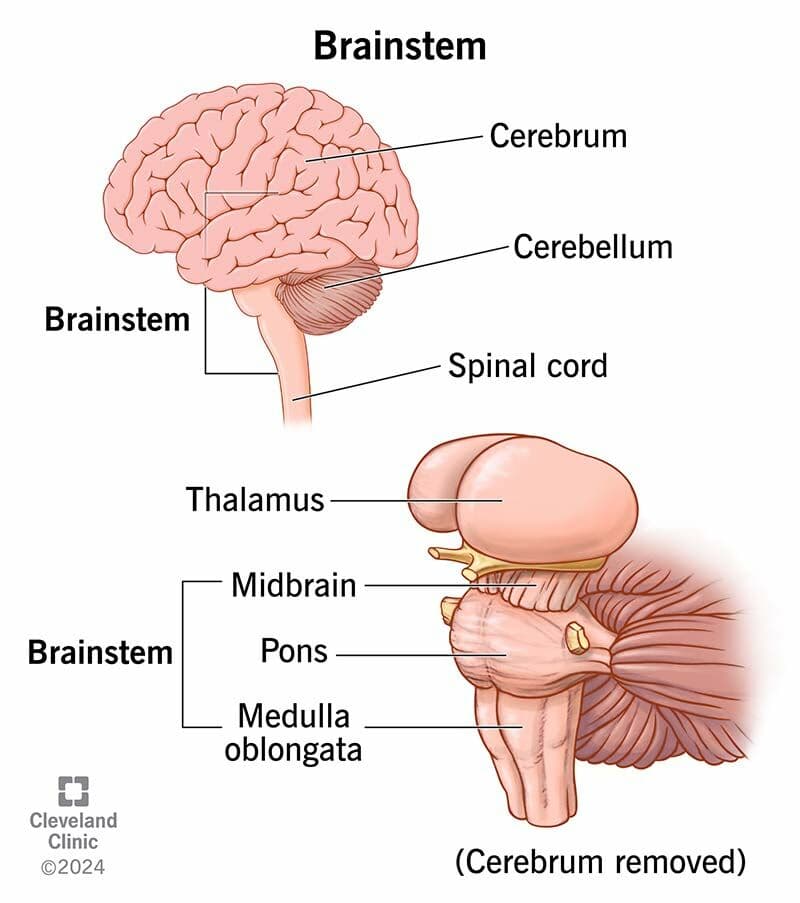
contains the medulla, pons, and cerebellum; regulates many autonomic activities.
controls motor coordination, abnormalities associated with autism.
coordinates movements with sensory input and contains parts of reticular activating system (contributes to sleep, arousal and tension).
Major relay station for messages from parts of the body, important sensations of pain.
What part of the brain controls body functions like hunger, thirst, temperature, and hormones?
group of brain structures that controls emotions, motivation, and memory; Attention, Emotion, “fight or flight”.
part of the brain is mainly responsible for processing strong emotions like fear and anger.
shrinks when a person have depression. It regulates emotional experiences and expressions and, to some extent, our ability to learn and to control impulses and responsible for forming new memories and helping with learning.
base of the forebrain, includes caudate nucleus. Damage involved changing our posture or twitching or shaking. Related to Parkinson’s Disease. It also helps control smooth, coordinated movement and habits like walking or writing.
provides us with our distinctly human qualities, allowing us to look to the future and plan, to reason, and to create.
side of the brain is mostly responsible for creativity, emotions, recognizing faces, and understanding visual-spatial tasks.
side of the brain is mostly responsible for language, logic, math, and controlling the right side of the body.
area responsible for higher cognitive functions.
What do you call the system in the body that controls your response to stress by releasing hormones like cortisol?
What part of the nervous system controls voluntary movements of your muscles, like walking or writing?
What part of the nervous system controls automatic body functions like heartbeat, digestion, and breathing?
the body system that uses glands to send messages through hormones to control growth, mood, and metabolism.
master gland; the small gland in the brain that controls other glands and releases hormones for growth, stress, and reproduction.
What gland in the neck releases hormones that control your body’s metabolism, energy, and growth?
What small glands behind the thyroid help control the level of calcium in your blood and bones?
What glands sit on top of the kidneys and release hormones that help the body respond to stress, like adrenaline and cortisol?
What organ is part of the endocrine system and controls blood sugar by releasing insulin and glucagon?
What male gland produces sperm and the hormone testosterone?
What female glands produce eggs and release hormones like estrogen and progesterone?
What part of the brain connects the left and right hemispheres and allows them to share information?
What part of the brain is responsible for thinking, planning, problem-solving, and controlling emotions and behavior?
What part of the brain helps you understand language, hear sounds, and remember things?
What part of the brain is mainly responsible for processing what you see?
What part of the brain helps you feel touch, pain, temperature, and understand space and body position?
What part of the brain helps control alertness, attention, and waking up from sleep?
What part of the brain receives and processes messages about touch, pain, temperature, and body position?
What part of the brain controls voluntary muscle movements like walking, writing, or raising your hand?
process of learning in which an individual acquires responses by observing and imitating others.
persons susceptible to depression developinaccurate/unhelpful core beliefs about themselves, others, and the world as a result of their learning histories; Depressed people consistently think in illogical ways and keep arriving at self-defeating conclusions.
depressed people make cognitive errors in thinking negatively about themselves, immediate world, and their future.
an enduring negative cognitive system about some aspects of life.
people feel personally responsible for every bad happenings.
the pattern of thinking where a person constantly sees themselves as unworthy, a failure, or not good enough.
people tend to overestimate the extent to which their opinions, beliefs, preferences, values, and habits are normal and typical of the others (“Everyone shares the same opinion as me,”).
What do you call the tendency to take credit for success but blame outside factors for failure?
seeing only of the extremes of things, never the middle.
“either I ace this test or fail,”.
making generalizations about a negative aspect.
"bagsak ako sa physics, hindi na ko makaka-graduate ng college,”
- tendency for individuals to relate external events to themselves, even when there is no basis for making this connection-
- egocentric thinking, everything is about him
“kasalanan ko kung bakit umiyak yung bata”
- evident when depressed individuals emphasize the negative rather than the positive aspects of a situation.
- only accepts negative thoughts.
- no logical reasoning.
- interpreting a situation when there is no factual evidence- /passed, “chamba”, /negative.
“kasalanan ko kasi”
- focuses on the negative
- detail is taken out of context and believed whilst everything else in the context is ignored
- /almost good feedback except for one /focused on that single feedback
- portraying one’s identity on the basis of imperfections and mistakes made in the past and allowing them to define one’s true identity
- /bullied for being dark-skinned.
“I am ugly.”
- downplaying the significance of an event or emotion
- common strategy in dealing with feelings of guilt
“Parang nakakarami ka na ah,”
“Luh parang tanga, sampung bote pa lang”
- effects of one’s behaviors are magnified- /may konting mantsa sa damit.
“Iniisip siguro nila hindi ako naglalaba,”
What theory explains the body's three-stage response (alarm, resistance, exhaustion) to long-term stress?
stress is a two-way process, it involves a production of stressors and the response of an individual subjected to these stressors.
an individual tends to ask questions like, “What does this stressor and/or situation mean?”, and “How can it influence me?”
- Understanding the stressor
- involves those feelings related to dealing with the stressor or the stress it produces .
- Deals with the stressor.
- Starts to assess internal and external resources available to solve the problem.
Positive: “I can do it if I do my best,”
Negative: “I cannot do it.”
no memories of his own illness.
filling in memory gaps with imaginary experiences.
cannot identify or recognize time, places, and persons.
unfamiliar perceived as familiar.
familiar perceived as unfamiliar.
increased memory.
false or perverted memory.
loss of memory.
inability to retrieve information that was acquired before (remote memory loss).
inability to transfer new information from the short-term store to long-term store (recent memory loss).
What type of amnesia involves forgetting a person’s entire life history, including their identity?
What type of amnesia involves forgetting a specific period of time, often related to a traumatic event?
What type of amnesia involves remembering only parts of a traumatic event, but forgetting the rest?
What type of amnesia involves forgetting memories related only to a specific event or situation, often traumatic?
What type of amnesia involves sudden, temporary memory loss affecting both past memories and the ability to form new ones?
Which type of memory stores facts and events that can be clearly stated or described?
Which type of memory helps you remember how to do tasks like riding a bike or typing, even without thinking about it?
Which type of declarative memory stores general knowledge, facts, and meanings of words?
Which type of memory involves recalling personal experiences or events from your life?
inability to recall information that one realizes one knows.