Loading...

Customize this quiz to suit your class
Instantly translate to 100+ languages
Track each student's skills and progress in your Mastery dashboards
Give this quiz to my class
If I have 4 red balls and 3 green balls, how many balls do I have total?
7
Fill in the blank.
2 + _ = 9
7
If I have 4 red balls and 3 green balls, how many balls do I have total?
Fill in the blank.
2 + _ = 9
I have 5 pieces of candy, my friend gives me 5 more. How many pieces do I have now?
Olivia picks out 2 shirts at the store. Her mom finds 3 more she also wants to buy. how many shirts did Olivia and her mom have together?
Fill in the blank.
9 + 0 = __
What is the missing number in the number bond?
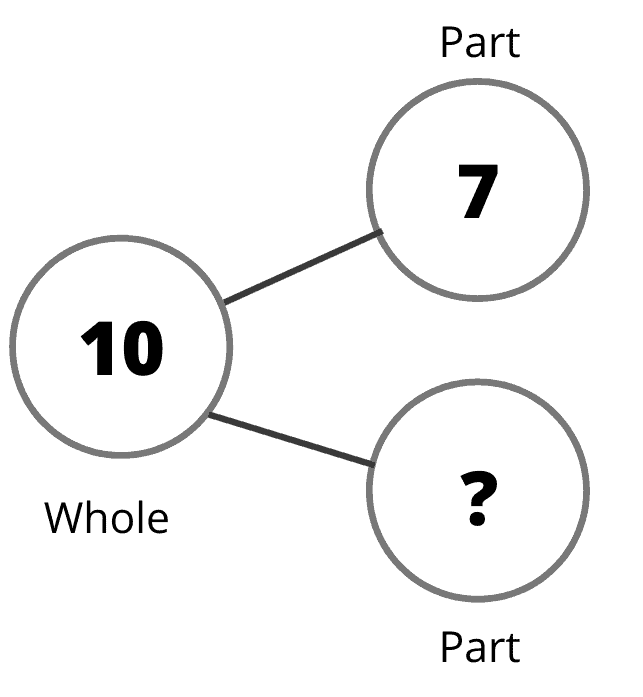
There are 6 boys in a class and 3 girls. How many total students are there?
Susie needs 10 balloons. She already has 4 balloons. How many more balloons does she need?
How many ways can you add two numbers to make the number 8?
How much is 1 ten and 8 ones?
Mary brought candies for her friends- Angela and Lucy. She brought 10 candies and gave 5 to Angela. How many candies should she give to Lucy?
Place the following numbers in order from greatest, to least.
16, 19, 17, 18
 Mutlak değer Tam sayılarda işlemlerGeometrik KavramlarIt's all about additionCreate a vocabulary quiz for 10th grade EFL students at CEFR B1 level. For example: adequate means: 1. sufficient 2. more and more 3. not enough. Use all the vocabulary below and provide accompanying definitions per the example to create this vocabulary quiz. The vocabulary quiz must contain at least 226 questions including the following vocabulary: addition advance advanced advertising among other things analysis appear approach as at least average be responsible for something be responsible for doing something before besides can challenge chance change characteristic claim come after come first come last common complicated concern conditions conduct consequence considerable cope critic current decrease delayed deliberately demonstrate design destruction development disagreement disaster discovery dislike do doubt drop educate efficient emphasis enjoyable essay essentially even if even though event exactly except that exist extraordinary feature feedback figure financial finding findings flexible flood flu focus on somebody or something focus frequent fresh frighten from gain generate guidance hopefully ideal illness illustrate image in terms of something in actual fact in connection with something in that case in the meantime initial instruction intelligence interest introduce invest investigate just about just about keep on doing something kind of knowledge lack landscape likely limited little look at something low material mean means measure mention miss misunderstand more or less must naturally nature necessarily nevertheless not at all not only notice objective occasional official on the one hand on the other hand once others otherwise out of date participate particular past perform personality personally planet planning plant point of view policy pollution popular population prevent priority private probable produce profession professor proof proposed protest provided (that) psychology public purpose quality question question questionnaire react reasonable recommend recycle regard region regular relevant reliable rely on/upon sb/sth request research result review revise risk run out of rural salary sample seldom sense set up sth or set sth up significant skilled slight specialist specific still structure study supposed surface take advantage of sth thanks to somebody or something theory throw away throw out something throw something away throw out transport trash treatment unfortunately unhealthy unique united universe unknown unlike unlikely urban vary view visible vision volume whom wildlife within worthwhile would additional analyze analyst appearance on average change characterize complicate concerned concerning concerned with something consequently cope with something criticize criticism currently deliberate demonstration designer developing developed educated educator efficiency efficiently emphasize enjoyment existence existing figure out something finance flexibility frequency hopeful illustration initially intelligent interested in something investor investment investigation investigator limitation meaning occasionally old-fashioned participant participation particularly performance planned pollute prevention producer professional psychological psychologist publicly reaction reasonably recommendation regardless regarding regional relevance researcher resulting revision sensible set out something set something out significantly significance skillful slightly specialize specifically specify theoretical transportation unfortunate unity unite universal variation viewer7.012 Employee Health The Center provides a safe working environment for all employees through a collaborative effort with them and the organization’s infection control program to identify infectious conditions that may put staff, patients and visitors at risk. Health evaluations, immunity testing for measles, mumps rubella and chickenpox, tuberculosis screening and immunity testing for hepatitis B and if not immune either signs declination form or accepts 3 dose vaccine series. (Rrefer to the Employee and Occupational Health Section policy Chapter 3.21) It is the center’s policy to monitor Health Care Associated Infections (HAI) in patients and personnel working in the Center as part of its ongoing program in Infection Prevention and Control. Staff should be encouraged to stay home when they have signs and symptoms of an infectious disease. If a staff develops signs and symptoms while at work, the person of other personnel and patients who may have been exposed to a staff member with a communicable disease should be taken into consideration. Patients and personnel can be told that they were exposed to a certain disease without disclosing the index case’s identity. In addition we work together to provide an annual influenza vaccination program that includes all staff who have patient contact, and licensed independent practitioners. Environmental Rounds - Environmental rounds are performed daily by assigned staff members, ie. “safety officer”. Feedback on opportunities for improvement is given to the Infection Control Coordinator and QAPI committee and then reported to the board Education – Employee education includes: General information about infections Techniques for prevention, surveillance, investigation and control Review of policies and procedures related to infection control: (See attachment B, policy and procedure reference list) Employee health practices; refer to Administration 3.16 Orientation and Training Offer of Hepatitis B vaccination & post exposure evaluations Annual TB skin testing Provides access to influenza vaccinations. Educates staff and licensed independent practitioners about influenza vaccination; non-vaccine infection control measures (such as the use of Droplet Precautions); and diagnosis, transmission, and potential impact of influenza. Annually evaluates vaccination participation and non-participation in the influenza immunization program and reports to Department of Health. People of Southeast Asia By the late 20th century, Southeast Asia’s population (including Indonesia and the Philippines) was approaching a half billion, or about one-twelfth of the world’s total. This population, however, was unevenly distributed within the region. By far the nation with the largest population was Indonesia, with about two-fifths of the regional total; in contrast, Brunei’s population was only a tiny fraction of that. Nearly half of the regional population was accounted for by the mainland states, with Vietnam and Thailand being the most populous. Settlement patterns Southeast Asia is predominantly rural: three-fourths of the people live in nonurban areas. Moreover, population is heavily clustered in fertile river valleys and especially in delta areas, such as those of the Mekong and Irrawaddy rivers. Historical, cultural, and environmental influences also have affected the settlement patterns. Java and other core areas such as the Bangkok (Thailand), Hanoi, and Manila metropolitan areas contain high population densities. While the rate of urbanization in Southeast Asia is relatively low compared with those of other developing regions, it is increasing rapidly. Singapore is unique in that it is essentially totally urban. In addition, the Philippines has a much higher than average level of urbanization, in part because of its Spanish and American colonial history. The largest cities—Jakarta (Indonesia), Bangkok, and Manila—are among the world’s most populous. The growth of cities of all sizes is being fueled primarily by natural increase, but rural-urban migration also is a significant contributor. Rural dwellers continue to be attracted by the promise of employment and other opportunities, but for many migrants the informal (undocumented) economic sector in these large cities is the only hope for some form of employment. Settlement patterns in rural areas tend to be associated with agricultural practices. Shifting cultivation is still common in some parts of the region (notably the remote interior areas of Myanmar, Vietnam, and the island of Borneo), although the amount of land so utilized is gradually shrinking. The village is the unit of settlement and often functions collectively, and typically it is moved from time to time. By contrast, wet-rice cultivation, the dominant form of agriculture in Southeast Asia, is sedentary and results in relatively large rural agglomerations with well-developed village life and customs. Dry and upland farming often produces scattered homesteads. Population resettlement to provide agricultural employment and access to land is important in some Southeast Asian countries, notably Indonesia, Malaysia, and Vietnam. By far the largest program has been conducted in Indonesia, where more than four million people have been voluntarily resettled from Java and Bali to the less populated islands. Despite considerable success, the program has been plagued by such problems as improper site selection, environmental deterioration, migrant adjustment, land conflicts, and inadequate financing. A program in Malaysia also has been quite successful, in part because it has set much smaller resettlement targets and has been better funded. Vietnamese development policy also has utilized the resettlement of people in an effort to revitalize areas outside the major population centres.The Pleiades, also known as the Seven Sisters, is a famous star cluster located in the constellation of Taurus. It is made up of a group of seven bright stars that are visible to the naked eye in the night sky. The stars in the Pleiades cluster are relatively young, being only about 100 million years old, which is young in astronomical terms. The Pleiades cluster has been observed and admired by cultures all around the world for thousands of years. In Greek mythology, the Pleiades were seven sisters who were pursued by the hunter Orion. To protect them, Zeus transformed them into stars, forming the star cluster we see today. Different cultures have their own stories and legends associated with the Pleiades, making it a fascinating object of study for astronomers and a source of inspiration for artists and storytellers. The Pleiades cluster is often used as a test of eyesight, as people are challenged to count how many stars they can see with the naked eye. Most people can see six or seven stars, but those with particularly sharp vision may be able to see more. The Pleiades is also a popular target for amateur astronomers with telescopes, as the cluster reveals even more stars and details when viewed through a telescope. In addition to being a beautiful sight in the night sky, the Pleiades cluster also serves a practical purpose for astronomers. By studying the stars in the Pleiades, scientists can learn more about how stars form and evolve, as well as gain insights into the structure and composition of the Milky Way galaxy. The Pleiades cluster continues to be an important object of study for astronomers, both amateur and professional, and its beauty and significance will continue to capture the imaginations of people for generations to come. Matariki is the Maori name for the Pleiades star cluster. The Pleiades is a group of stars that can be seen in the night sky, and Matariki is a special time of year when the star cluster is visible in the sky. In Maori culture, Matariki is seen as the beginning of the Maori New Year, and it is a time to celebrate and give thanks for the past year and look forward to the year ahead. So basically, Matariki is related to the Pleiades because it is a special time of year when those stars are visible in the sky and it has cultural significance for the Maori people. The Pleiades star cluster is known by different names in various cultures around the world. Here are some of the names by which the Pleiades are referred to in different countries: 1. Maori culture in New Zealand and Polynesia: Matariki 2. Greek mythology: The Seven Sisters 3. Japan: Subaru 4. Native American tribes: The Dancers or The Little Eyes 5. Inca civilization: Collca 6. Ancient Persia: Parvin 7. India: Krittika 8. Aboriginal Australians: The Seven Sisters or Djulpan These different names reflect the diverse cultural significance and interpretations of the Pleiades cluster in various societies throughout history.