Loading...

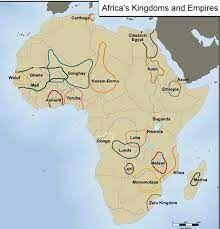
Ancient African Civilizations
Quiz by Richele Banks
Customize this quiz to suit your class
Instantly translate to 100+ languages
Tag the questions with any skills you have. Your dashboard will track each student's mastery of each skill.
Give this quiz to my class
The first of the great African Kingdoms
Axum
Mali
Ghana
Ghana made money from mainly trading
The first of the great African Kingdoms
Ghana made money from mainly trading
North Africa made money from mainly trading
Mansa Musa was
Most people in Ghana were
Two of the main goods that allowed African civilizations to prosper during the reigns of Ghana, Mali, and Songhai were gold and
The longest river in West Africa; used as a trading highway in early times
A West African empire that conquered Mali and controlled trade
Put these great African kingdoms in order of rule.
A monotheistic system of beliefs and practices based on the Old Testament and the teachings of Jesus as embodied in the New Testament and emphasizing the role of Jesus as savior.
A city in West Africa which was an important trade and cultural center of the Mali Empire
West-African storytellers who served as keepers of tradition and history
"Great Stone House"
Largest African trading kingdom during its time
African story teller
Muslim merchant
A chariot is a 2-wheeled vehicle drawn by
People that travel from place to place to find food and pasture
A person who follows the religion of Islam is a(n)
A continent is a large continuous expanse of
Jewelry was important in ancient Africa because it
Put these words in alphabetical order.
Founded in the highlands of northern Ethiopia, adopted Christianity, built an empire that included most of Ethiopia as well as Yemen in southern Arabia.
A caravan is a group of _____ traveling together
Timbuktu is a trading city that became a center of wealth and learning in
The world's largest desert in northern Africa
The north____ region of Africa was home to some of the most powerful kingdoms and trading states in ancient times.
Mali is located in ___ Africa.
Ghana is located in ____ Africa.
Songhai is located along the ____ River.
Africa is a
Major trade route that traded for gold and salt; camels played a huge role in the trading
Much of Mali's riches came from _____ local trade.
Group the following terms into things, kingdoms, and groups of people:
 West African Ancient Civilizations1. Settlements Importance of Rivers Fertile Land: The soil near rivers was great for farming, thanks to regular flooding that added nutrients. Trade and Travel: Rivers made moving things and people easy, which helped trade and communication. Protection: Rivers could act as natural barriers, making it harder for enemies to attack. Food: Rivers were full of fish and other food, adding to what people could eat. Energy: People used the river's flow to power machines, for example, grinding grain. Cleanliness: Rivers were used to wash away waste, keeping settlements cleaner. Culture: Rivers often had spiritual importance, and ceremonies and stories revolved around them. Common Geographic Features of Ancient Civilizations Mesopotamia: the Tigris and Euphrates Rivers in central Iraq Indus River Valley: the river runs in the northwestern part of India Nile River Valley: the major river of Egypt Yellow River Valley: a major river flowing through the southern part of China Rivers provided water, food, transportation, and shaped the way of life and development of these ancient civilizations. Impact of Mountains on Settlements Mountains served as barriers to early settlement due to the lack of technology to cross them. The Himalayan Mountains isolated much of India and China during their early development. Impact of Deserts on Migration Deserts posed significant challenges to people who wanted to migrate due to their harsh and unforgiving conditions. Notable deserts include the Empty Quarter in Saudi Arabia and the Sahara Desert in Africa. Changes in Migration and Cultural Blending Advancements in transportation technology post-Industrial Revolution increased cultural blending. Transportation advancements enabled global migration. Before, cultures were isolated, focusing on beliefs and local adaptations. The Industrial Revolution transformed migration and cultural blending. 2. How Humans Modify and Adapt to Their Environment Ways Humans Modify Their Environment Mining: Removing the earth's surface for precious metals. Irrigation: Diverting water for farming. Transportation: Moving goods with trains, cars, airplanes, and boats. Mining Strip mining removes large layers of the earth. Can impact the environment by removing plants and polluting water sources. Irrigation Diverting water for farming and urban development. Transportation Moving goods using trains, cars, airplanes, and boats. Human Adaptation to the Environment Adjusting to environmental conditions by changing behavior. Examples: Wearing specific clothing, using specific building materials. Human Modification of the Environment Changing the earth to meet human needs by physically altering the environment. Examples: Dams, canals, roads, bridges. Impact of Weather and Geological Events on Humans Events like earthquakes, hurricanes, and cold weather affect human settlements. Examples: Building earthquake-resistant buildings, creating levees, using ice for tourism. 3. Understanding Culture Introduction to Culture Culture refers to the way of life of a group of people who live in a particular place. It includes traditions, beliefs, values, and the way they do things. Cultural Characteristics Religious traditions Language Family values Laws Cultural characteristics make each culture unique. Cultural Representations Art Architecture Music Literature Cultural representations express a culture's creativity and show their beliefs and history to the world. Government and Culture Types of government reflect cultural beliefs and traditions. Examples: democratic republic, communist state. The way a country is governed tells a lot about its culture. Economic Systems and Cultures Economic systems reflect cultural values. Examples: bartering, modern economies (e.g., United States, China). How people earn and spend money also reflects their culture. Spread of Cultural Ideas Trade: Spreading ideas through interactions during trade. Travel: Visitors bringing new ideas. War: Conquering armies imposing beliefs. Cultural ideas spread through trade, travel, and war. Multicultural Societies Blending of multiple cultural and ethnic groups. Common in advanced societies with immigration. Multicultural societies create something new by bringing together different cultures. Cultural Adaptation Cultures can change and adapt by taking new ideas and blending them with their own traditions. Example: 'Tex-Mex' food, which blends Mexican and Texan traditions.Contact with the Americas In 1001, Viking sailors led by Leif Erikson reached the eastern tip of North America. Archaeologists have found evidence of the Viking settlement of Vinland in present-day Newfoundland, Canada. The Vikings did not stay in Vinland long and no one is sure why they left. However, Viking stories describe fierce battles with Skraelings, the Viking name for the Inuit. Evidence suggests that Asians continued to cross the Bering Sea into North America after the last ice age ended. Some scholars believe that ancient seafarers from Polynesia may have traveled to the Americas using their knowledge of the stars and winds. Modern Polynesians have sailed canoes thousands of miles in this way. Still others think that fishing boats from China and Japan blew off course and landed on the western coast of North or South America. Perhaps such voyages occurred. If so, they were long forgotten. Before 1492, the peoples of Asia and Europe had no knowledge of the Americas and their remarkable civilizations. The Voyages of Columbus Portuguese sailors had pioneered new routes around Africa toward Asia in the late 1400s. Spain, too, wanted a share of the riches. King Ferdinand and Queen Isabella hoped to keep their rival, Portugal, from controlling trade with India, China, and Japan. They agreed to finance a voyage of exploration by Christopher Columbus. Columbus, an Italian sea captain, planned to reach the East Indies by sailing west across the Atlantic. Finding a sea route straight to Asia would give the Spanish direct access to the silks, spices, and precious metals of Asia. The spice trade was a major cause for European exploration and a reason the Spanish rulers supported Columbus’s voyage. They also wanted wealth from any source. “Get gold,” King Ferdinand said to Columbus. “Humanely if possible, but at all hazards—get gold.” Crossing the Atlantic In August 1492, Columbus set out with three ships and about 90 sailors. As captain, he commanded the largest vessel, the Santa María. The other ships were the Niña and the Pinta. After a brief stop at the Canary Islands, the little fleet continued west into unknown seas. Fair winds sped them along, but a month passed without the sight of land. Some sailors began to grumble. They had never been away from land for so long and feared being lost at sea. Still, Columbus sailed on. On October 7, sailors saw flocks of birds flying southwest. Columbus changed course to follow the birds. A few days later, crew members spotted tree branches and flowers floating in the water. At 2 a.m. on October 12, the lookout on the Pinta spotted white cliffs shining in the moonlight. “Tierra! Tierra!” he shouted. “Land! Land!” At dawn, Columbus rowed ashore and planted the banner of Spain. He was convinced that he had reached the East Indies in Asia. He called the people he found there “Indians.” In fact, he had reached islands off the coasts of North America and South America in the Caribbean Sea. These islands later became known as the West Indies. For three months, Columbus explored the West Indies. To his delight, he found signs of gold on the islands. Eager to report his success, he returned to Spain. Columbus Claims Lands for Spain In Spain, Columbus presented Queen Isabella and King Ferdinand with gifts of pink pearls and brilliantly colored parrots. Columbus brought with him many things that Europeans had never seen before: tobacco, pineapples, and hammocks used for sleeping. Columbus also described the “Indians” he had met, the Taino (ty noh). The Taino, he promised, could easily be converted to Christianity and could also be used as slaves. The Spanish monarchs were impressed. They gave Columbus the title Admiral of the Ocean Sea. They also agreed to finance future voyages. The promise of great wealth, and the chance to spread Christianity, gave them a reason to explore further. Columbus made three more voyages across the Atlantic. In 1493, he founded the first Spanish colony in the Americas, Santo Domingo, on an island he called Hispaniola (present-day Haiti and the Dominican Republic). A colony is an area settled and ruled by the government of a distant land. Columbus also explored present-day Cuba and Jamaica. He sailed along the coasts of Central America and northern South America. He claimed all of these lands for Queen Isabella of Spain. Columbus proved to be a better explorer than governor. During his third expedition, settlers on Hispaniola complained of his harsh rule. Queen Isabella appointed an investigator, who sent Columbus back to Spain in chains. In the end, the queen pardoned Columbus, but he never regained the honors he had won earlier. He died in 1506, still convinced that he had reached Asia. The Impact of Columbus’s Voyages Columbus has long been honored as the bold sea captain who “discovered America.” Today, we recognize that American Indians had discovered and settled these lands long before 1492. We also recognize that Columbus and the Europeans who followed him treated the ancient inhabitants of the Americas brutally. Still, Columbus’s voyages did change history. They marked the beginning of lasting contact among the peoples of Europe, Africa, and the Americas. For a great many American Indians, contact had tragic results. Columbus and those who followed were convinced that European culture was superior to that of the Indians. The Spanish claimed Taino lands and forced the Taino to work in gold mines, on ranches, or in Spanish households. Many Taino died from harsh conditions or European diseases. The Taino population was wiped out. Still, the voyages of Columbus signaled a turning point for the Americas. A turning point is a moment in history that marks a decisive change. Curious Europeans saw the new lands as a place where they could settle, trade, and grow rich. Spanish Exploration Continues After the voyages of Columbus, the Spanish explored and settled other Caribbean islands that Columbus had found. They sought gold, land for crops, people to enslave, and converts to Christianity for the Spanish crown. By 1511, they had conquered Puerto Rico, Jamaica, and Cuba. They also explored the eastern coasts of North America and South America in search of a western route to Asia. In 1513, Vasco Núñez de Balboa (bal boh uh) crossed the Isthmus of Panama. American Indians had told him that a large body of water lay to the west. With a party of Spanish soldiers and Indians, Balboa reached the Pacific Ocean and claimed the ocean for Spain. The Spanish had no idea how wide the Pacific was until a sea captain named Ferdinand Magellan (muh jel un) sailed across it. The expedition—made up of five ships and about 250 crew members—left Spain in 1519. Fifteen months later, it cut through the stormy southern tip of South America by way of what is now known as the Strait of Magellan and entered the Pacific Ocean. Crossing the vast Pacific, the sailors ran out of food: Primary Source “We remained 3 months and 20 days without taking in provisions or other refreshments and ate only old biscuit reduced to powder, full of grubs and stinking from the dirt which rats had made on it. We drank water that was yellow and stinking.” —Antonio Pigafetta, The Diary of Antonio Pigafetta Magellan himself was killed in a battle with the local people of the Philippine Islands off the coast of Asia. In 1522, only one ship and 18 sailors returned to Spain. They were the first people to circumnavigate, or sail completely around, the world. In doing so, they had found an all-water western route to Asia. Europeans became aware of the true size of the Earth. How Did the Columbian Exchange Affect the Rest of the World? The encounter between the peoples of the Eastern and Western Hemispheres sparked a global exchange of goods and ideas. Because it started with the voyages of Columbus, this transfer is known as the Columbian Exchange. The Columbian Exchange refers to a biological and cultural exchange of animals, plants, human populations, diseases, food, government, technology, the arts, and languages. The exchange went in both directions. Europeans learned much from American Indians. At the same time, Europeans contributed in many ways to the culture of the Americas. This exchange also brought about many modifications, or changes, to the physical environment of the Americas, with both positive and negative results. Changing Environments Europeans introduced domestic animals such as chickens from Europe and Africa. European pigs, cattle, and horses often escaped into the wild and multiplied rapidly. Forests and grasslands were converted to pastures. As horses spread through what would become the United States, Indians learned to ride them and used them to carry heavy loads. Plants from Europe and Africa changed the way American Indians lived. The first bananas came from the Canary Islands. By 1520, one Spaniard reported that banana trees had spread “so greatly that it is marvelous to see the great abundance of them.” Oranges, lemons, and figs were also new to the Americas. In North America, explorers also brought such plants as bluegrass, the daisy, and the dandelion. These plants spread quickly in American soil and modified American grasslands. Tragically, Europeans also brought new diseases, such as smallpox and influenza. American Indians had no resistance to these diseases. Historians estimate that within 75 years, diseases from Europe had killed almost 90 percent of the people in the Caribbean Islands and in Mexico. American Indian Influences on Europe, Africa and Asia American Indians introduced Europeans to valuable food crops such as corn, potatoes, sweet potatoes, beans, tomatoes, manioc, squash, peanuts, pineapples, and blueberries. Today, almost half the world’s food crops come from plants that were first grown in the Americas. Europeans carried the new foods with them as they sailed around the world. Everywhere, people’s diets changed and populations increased. In South Asia, people used American hot peppers and chilies to spice stews. Chinese peasants began growing corn and sweet potatoes. Italians made sauces from tomatoes. People in West Africa grew manioc and corn. European settlers often adopted American Indian skills. In the North, Indians showed Europeans how to use snowshoes and trap beavers and other fur-bearing animals. European explorers learned how to paddle Indian canoes. Some leaders studied American Indian political structures. In the 1700s, Benjamin Franklin admired the Iroquois League and urged American colonists to unite in a similar way. Positive and Negative Consequences Through the Columbian Exchange, Europeans and American Indians modified their environments and gained new resources and skills. At the same time, warfare and disease killed many on both sides. Europeans viewed expansion positively. They gained great wealth, explored trade routes, and spread Christianity. Yet their farming, mining, and diseases took a toll on the physical environment and left many American Indians dead. Despite these negatives, the Columbian Exchange shaped the modern world, including what would become the United States.ANCIENT AFRICA CIVILIZATIONHonduras is a Central American nation bordered by Nicaragua, Guatemala, and El Salvador. The Caribbean Sea forms its northern coastline. The Pacific Ocean borders a small southern strip of land. Almanaque Nombre oficial: República de Honduras Área total: 112.090 km2 Población: 9.038.741 Ciudad capital: Tegucigalpa Moneda: lempira Lenguas: español, dialectos amerindios Early History Explorer Christopher Columbus came to Honduras in 1502 on his fourth trip to the New World. As was the case in North America, Honduras, in Central America, had been home to many native indigenous groups including the Sumu and Lenca. Some estimates suggest an indigenous population of up to 2,000,000 before the Europeans arrived. Among these indigenous groups were the Maya. Their civilization spread from the Yucatán area of Mexico to Honduras’ ancient city of Copán. Spain’s conquest of Honduras began in 1525, but it was not easy. It took until 1539 to fully conquer it. There were conflicts with the native population, who were forced into labor. Many died from disease and abuse. Others were enslaved and sent to the Caribbean islands. In addition, there were pirate attacks and in-fighting among the Spaniards. Phawat/Shutterstock Gold and silver deposits were discovered in Honduras in the 1530s, attracting more settlers. By the mid-16th century, mining was an important industry, mainly in the towns of Gracias and Comayagua. More native labor was needed, taking its toll on the dwindling indigenous population. As a solution, enslaved Africans were introduced in the 1540s. This was well before 1619, when enslaved Africans first arrived in Jamestown in the American colonies. The 17th century was filled with conflicts, primarily between the Spanish and the British. Britain wanted to establish colonies on the Caribbean coast of Honduras. They eventually seized the coast with help from the native Sambo and Miskito peoples. However, Spain later regained control. Independence In the early 1800s in Honduras, resentment toward Spain grew. One reason was that Honduras was subject to more taxes to help pay for conflicts that were happening between Spain and France. Other Spanish colonies were also increasingly resentful toward Spain. In 1776 in North America, the 13 colonies banded together to declare their independence from Britain. Similarly, Honduras joined other Central American provinces. Together, they declared independence from Spain on September 15, 1821. Honduras briefly became a part of Mexico, but in 1823, it became independent from Mexico. It then joined the United Provinces of Central America. This included other former Spanish colonies: Costa Rica, El Salvador, Guatemala, and Nicaragua. But the federation did not last, partially due to divisions in political beliefs. In 1838, Honduras declared its independence from the federation. By the early 1900s, the United States had economic interests in Honduras. American fruit corporations like the Standard Fruit Company and United Fruit Company began investing in Honduras to export bananas. To protect American investments, the United States became more involved in Honduras’ political affairs. When Nicaragua appeared to threaten the stability in Honduras, US President Taft sent forces to Honduras to protect American interests. The Great Depression caused economic havoc in the United States and elsewhere. In Honduras, this meant economic problems and political turmoil. During this time, General Tiburcio Carías Andino was elected president, in 1932. He worked to strengthen the military and pay off Honduran debt. Yet he also worked to gather and maintain his own power. He changed the constitution so that he could extend his term in office as president until 1949. His advanced age and pressure from the United States forced him to allow free elections in 1948. General Francisco Morazán In 1823, Honduras joined the United Provinces of Central America. In 1830, Tegucigalpa-born General José Francisco Morazán was elected president of the federation. He remained president until just before the federation disbanded in 1840. aalezk/Shutterstock Morazán favored liberal policies and the reduced power of the church. Morazán was a self-educated man. He recognized the importance of education and the need for schools in Honduras. He believed that girls and boys should have an equal opportunity for education. During his presidency, he tried to make improvements in education. He opened schools that were free to attend. In addition to improving education, he established a system of trial by jury. It was based on the Livingston Code, created in Louisiana. This was a set of reforms to the system of legal punishment. Today, Honduras celebrates the Day of the Honduran Soldier on October 3, Morazán’s birthday. This holiday honors Morazán for his fight for democracy, liberalism, and the nation. Modern Honduras The last half of the 20th century was a political rollercoaster. There were various coups (government takeovers), conflicts, and changing leaders. Starting in 1963, Honduras was primarily led by military governments. This continued for almost 20 years. In 1969, Honduras fought a four-day war with El Salvador. The conflict was over immigration and the shared border. Though the war was brief, the two nations didn’t sign a peace treaty until 1980. With the election of president Roberto Suazo Córdova in 1981, Honduras returned to a civilian government. In the 1980s Honduras was tangled in conflicts of Nicaragua and El Salvador, partly because of the United States. Nicaraguan Contras, who wanted to overthrow the Sandinista government in Nicaragua, were using US-approved bases in Honduras. The United States was also running training camps in Honduras for Salvadoran forces facing their own civil war. This sparked anti-American protests and a desire to reduce the US presence in Honduras. Over the next few decades, Honduras continued to experience political instability. In 2009, President Manuel Zelaya was removed from power by a military coup. People were upset because he called for a referendum to change the constitution. The international community condemned this coup. As a result, Honduras cut diplomatic ties with several countries. In 2010, the United States recognized President Porfirio Lobo Sosa as a democratically elected leader. He was followed by Juan Orlando Hernández in 2014. However, protests in 2015 called for his resignation over claims of campaign fraud. In 2017, Orlando Hernández was re-elected in a disputed election.Early Ancient African Societies QuizAn Ancient African Society: Egypt 1. What does the name Mlungisi mean? A. The Helper B. The Fixer C. The Brave One D. The Giver → B 2. What kind of person is Mlungisi? A. Rebellious and lazy B. Always fixing problems and helping others C. A mysterious, quiet boy D. A selfish older cousin → B 3. What does the name Velile mean? A. One Who Builds B. The Beloved One C. He Who Popped Out of Nowhere D. He Who Carries Others → C 4. How does Velile behave according to Trevor? A. He is very responsible and hardworking B. He often vanishes and suddenly reappears C. He is a caring father figure D. He is always around to help the family → B 5. Patricia’s name means: A. She Who Gives Back B. She Who Demands More C. The Fighter D. The Lost One → A 6. What did Patricia do as a child in Soweto? A. She went to school and stayed away from others B. She took care of abandoned children and fed them C. She ran away from home frequently D. She helped her father manage a shop → B 7. Where did Patricia find the money to buy food for the children? A. From her allowance B. From selling her toys C. From collecting bottles from shebeens D. From stealing it → C 8. What is a shebeen in this context? A. A school for orphans B. A place for young kids to play C. An informal bar where men would drink D. A shelter for street children → C 9. How old was Patricia when she started helping other children? A. 4 or 5 B. 6 or 7 C. 10 or 11 D. Teenager → B 10. Why did Trevor’s mother choose the name “Trevor”? A. It was the name of her favorite Bible character B. It was her father’s name C. It had no meaning, and she wanted him to be free D. It was a popular name in her family → C 11. What does it mean that Trevor's name had “no precedent” in South Africa? A. It was illegal to use B. It had no cultural or family history C. It came from ancient African myths D. It was a translation of a Zulu name → B 12. What is the deeper reason behind Patricia giving Trevor a name with no meaning? A. She didn’t like traditional names B. She didn’t know what the name meant C. She wanted him to escape fate and create his own identity D. She thought names were unimportant → C 13. According to Trevor, what kind of effect do traditional Xhosa names usually have? A. They are just for decoration B. They are often meaningless C. They tend to become self-fulfilling D. They reflect colonial history → C 14. What literary device is mainly used in the idea of names becoming destiny? A. Hyperbole B. Irony C. Symbolism D. Pun → C 15. Trevor’s mother wanted him to be: A. Bound to cultural tradition B. Free to be anyone he wanted C. A preacher D. Another fixer like Mlungisi → B ★ True or False Questions (判断题)(共10题) 16. Trevor’s cousin Mlungisi was known for always creating trouble. → False 17. Velile’s name and personality are both connected to sudden appearances and disappearances. → True 18. Patricia started caring for others when she was already an adult. → False 19. Shebeens were places where children gathered to play and eat. → False 20. Patricia used money she earned at a job to feed other children. → False (她用换瓶子的钱) 21. Trevor’s name has no Biblical or cultural background. → True 22. Patricia believed that names could shape a person’s life. → True 23. Trevor’s mother gave him a name with no meaning because she didn’t care about names. → False 24. Xhosa names often carry strong cultural or symbolic meanings. → True 25. Trevor’s mother gave him a name with no meaning so that he could be free from expectations. → True