Loading...


Angle Properties
Quiz by Alycia Hamill
Customize this quiz to suit your class
Instantly translate to 100+ languages
Tag the questions with any skills you have. Your dashboard will track each student's mastery of each skill.
Give this quiz to my class
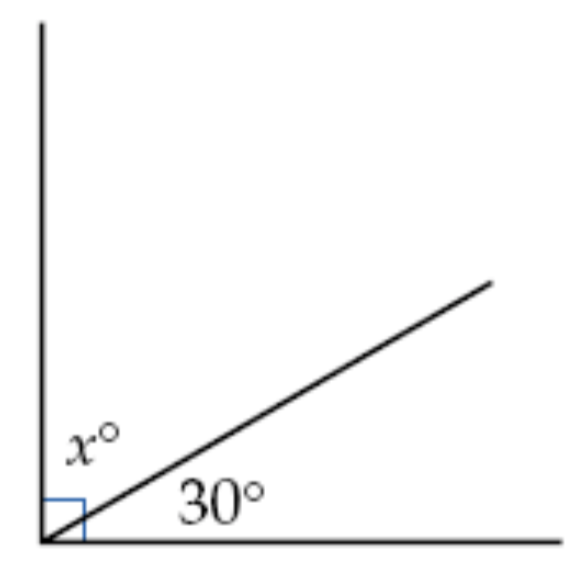
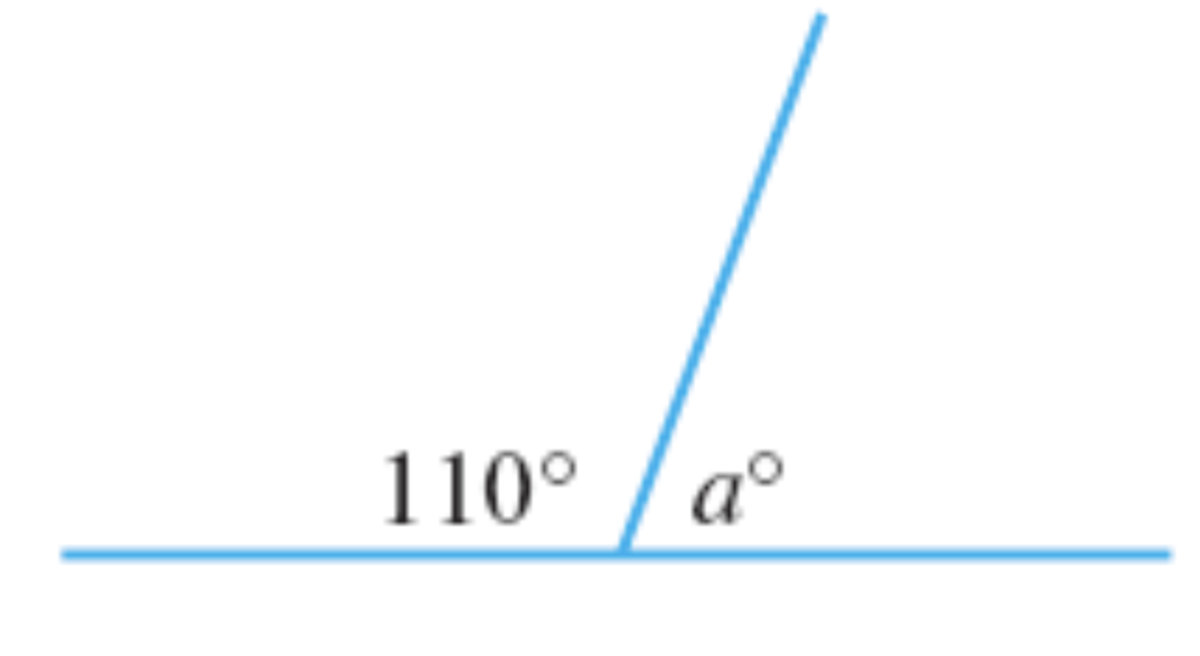
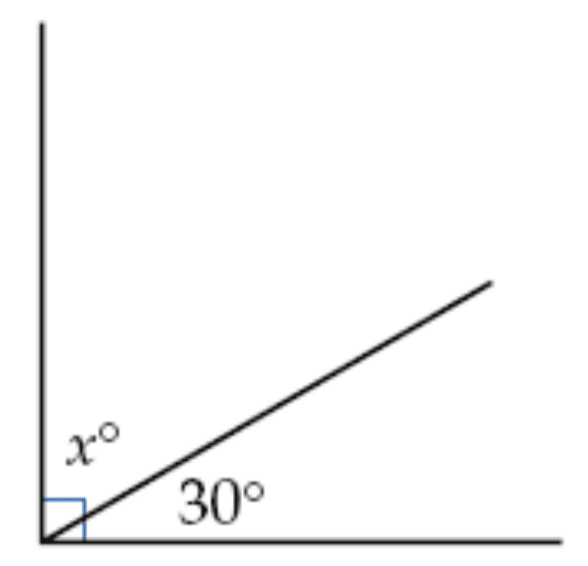
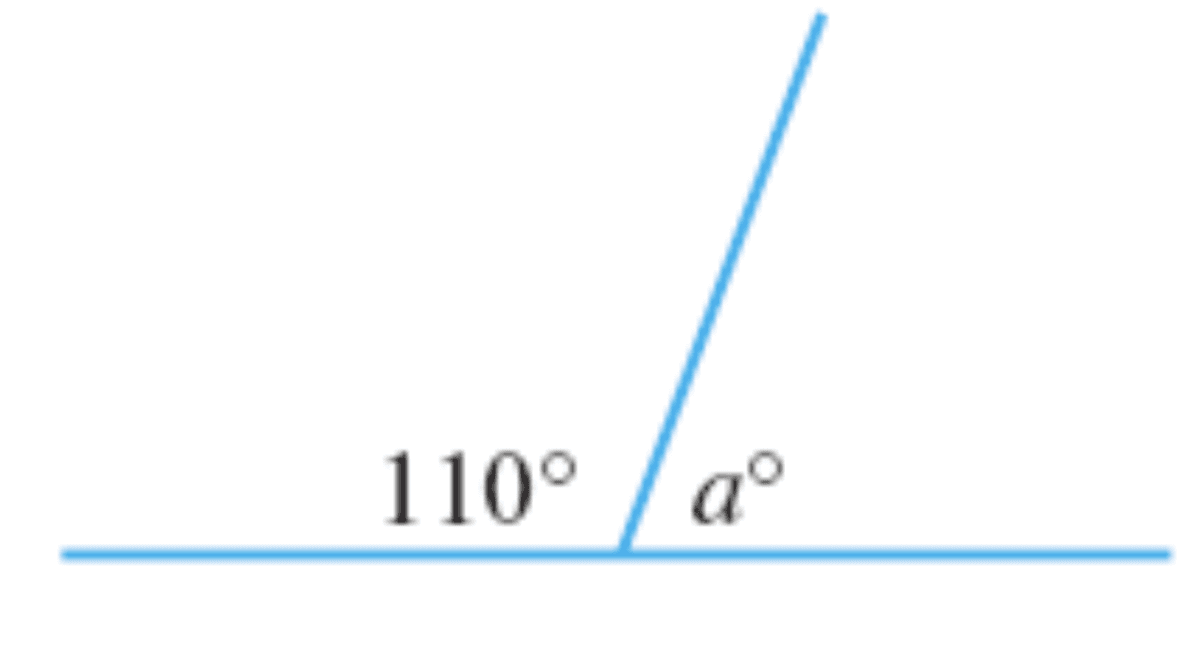
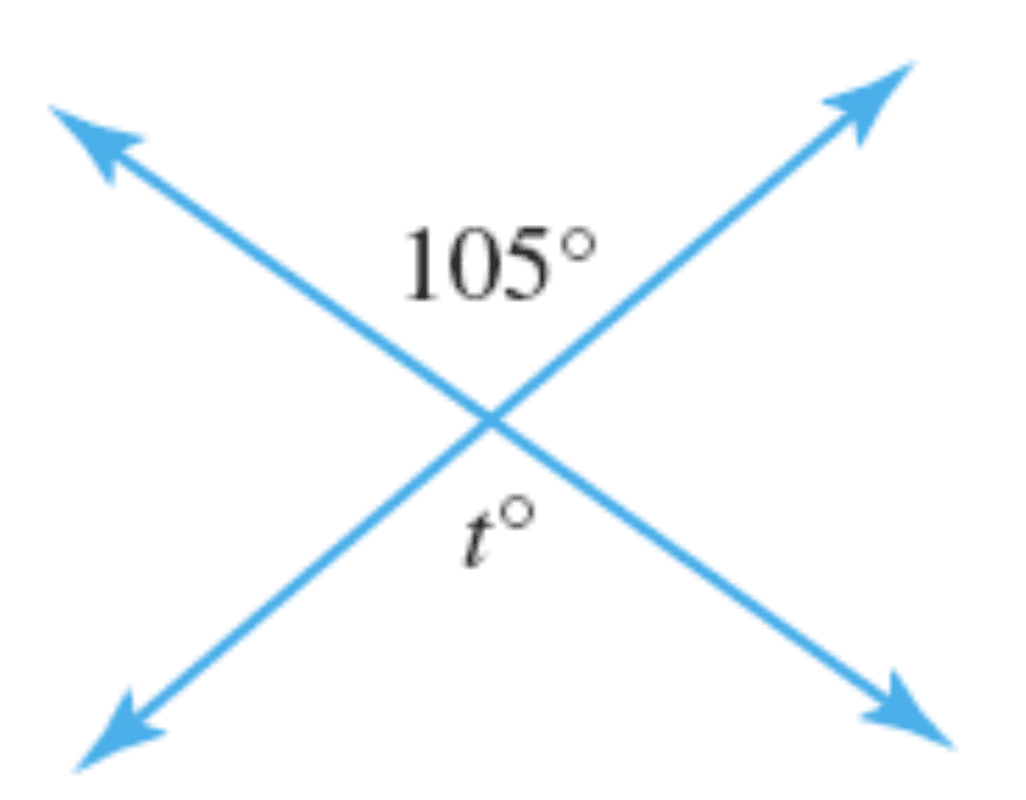
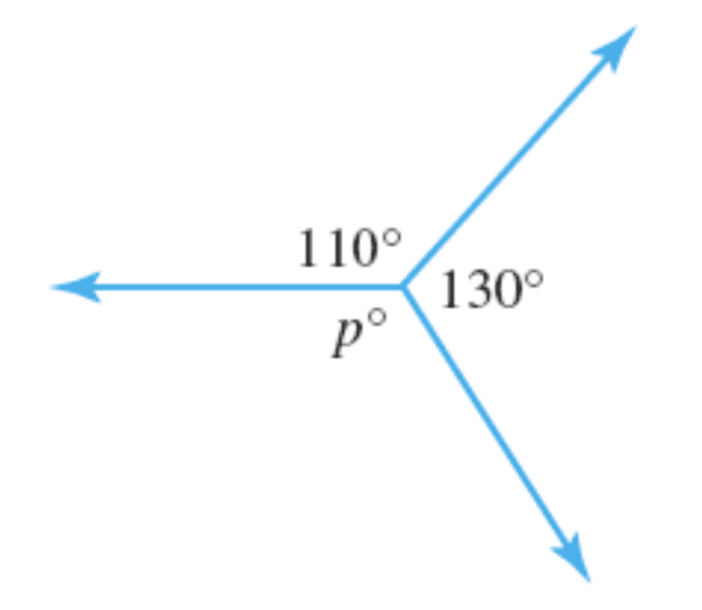
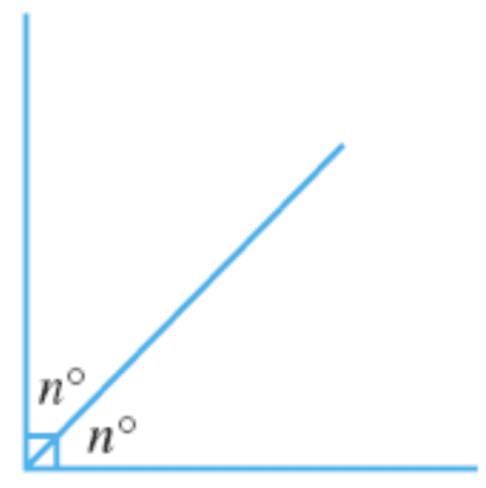
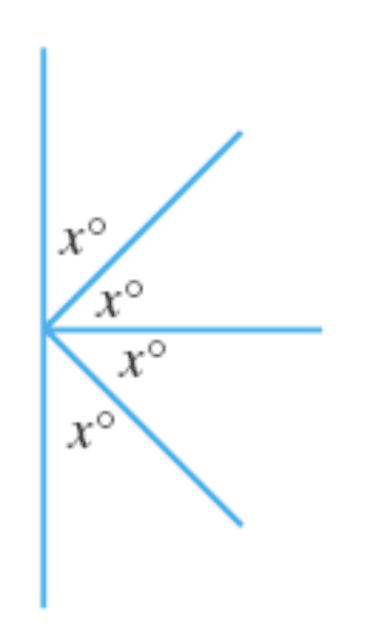
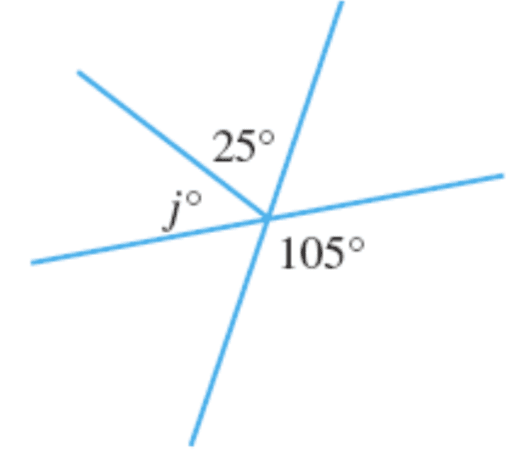
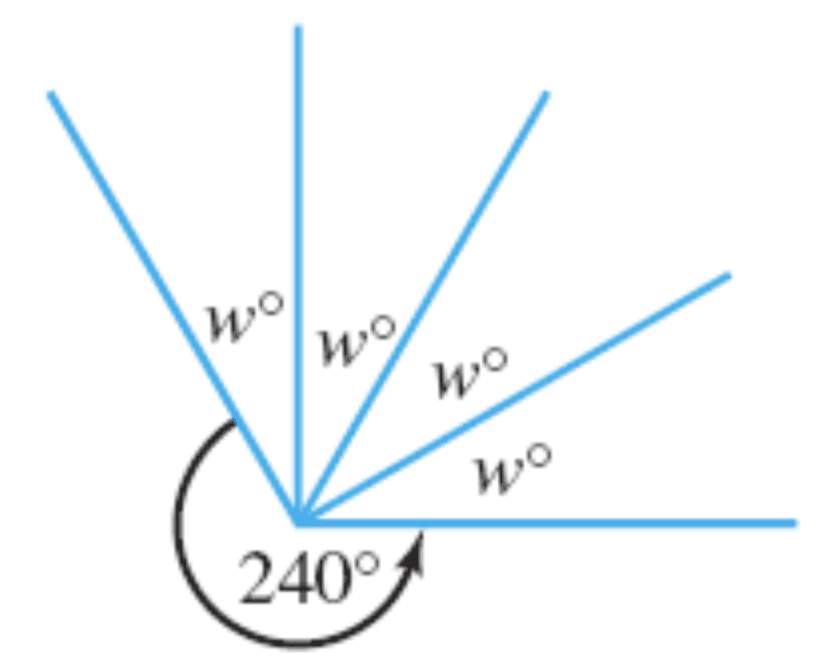
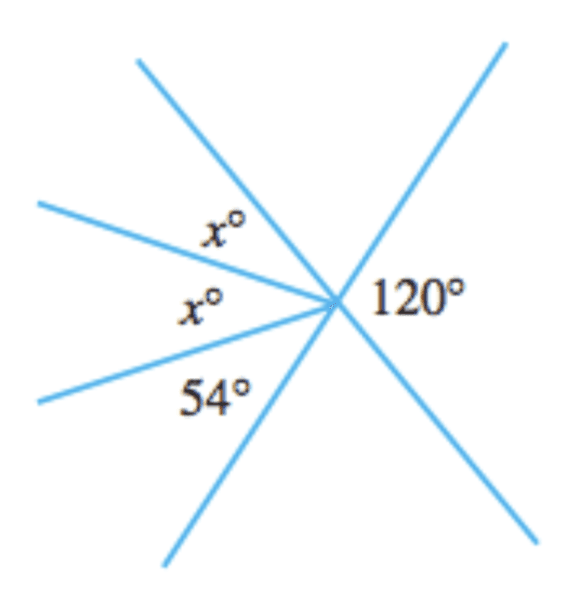
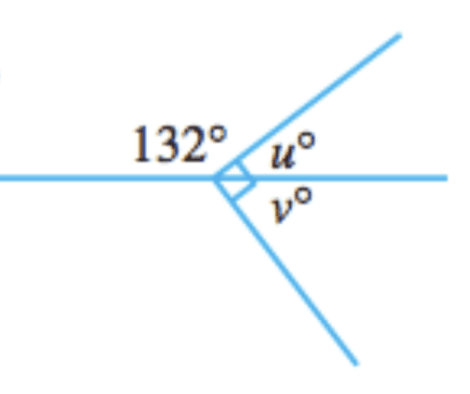 Angle Properties of Lines and Polygons AssessmentAssessment-Angle propertiesProve theorems about angles by using the angle Addition Postulate. 2. Prove theorems about angles by using properties and theorems of angle congruenceMany of water’s biological functions stem from its chemical struc- ture. Recall that in the water molecule, H2O, the hydrogen and oxygen atoms share electrons to form covalent bonds. However, these atoms do not share the electrons equally. The oxygen atom has a greater ability to attract electrons to it because it pulls hydrogen’s electrons towards its nucleus. As a result, as shown in Figure 2-8, the region of the molecule where the oxygen atom is located has a partial negative charge, denoted with a , while the regions of the molecule where each of the two hydrogen atoms are located have partial positive charges, each of which are denoted with a . Thus, even though the total charge on a water molecule is neutral, the charge is unevenly distributed across the water molecule. Because of this uneven distribution of charge, water is called a polar compound. Notice also in Figure 2-8 that the three atoms in a water mole- cule are not arranged in a straight line as you might expect. Rather, the two hydrogen atoms bond with the single oxygen atom at an angle. SECTION 3 OBJECTIVES ● Describe the structure of a water molecule. ● Explain how water’s polar nature affects its ability to dissolve substances. ● Outline the relationship between hydrogen bonding and the different properties of water. ● Identify the roles of solutes and solvents in solutions. ● Differentiate between acids and bases. VOCABULARY polar hydrogen bond cohesion adhesion capillarity solution solute solvent concentration saturated solution aqueous solution hydroxide ion hydronium ion acid base pH scale buffer Copyright © by Holt, Rinehart and Winston. All rights reserved. (a) Electron cloud model (b) Space-filling model H H O The oxygen region of the water molecule is weakly negative, and the hydrogen regions are weakly positive. Notice the different ways to represent water, H2O. You are familiar with the electron cloud model (a). The space- filling model (b) shows the three- dimensional structure of a molecule. FIGURE 2-8 40 CHAPTER 2 Hydrogen bond H H H H H H H H H O O O O O O H H H H H – – – – – – – + + + + + + + + + + + + + + The dotted lines in this figure represent hydrogen bonds. A hydrogen bond is a force of attraction between a hydrogen atom in one molecule and a negatively charged region or atom in a second molecule. FIGURE 2-10 The positive region of a water molecule attracts the negative region of an ionic compound, such as the Cl portion of NaCl. Similarly, the negative region of the water molecule attracts the positive region of the compound—the Na portion of NaCl. As a result, NaCl breaks apart, or dissolves, in water. FIGURE 2-9 CI– Na+ H2O + + – – Solubility of Water The polar nature of water allows it to dissolve polar substances, such as sugars, ionic compounds, and some proteins. Water does not dissolve nonpolar substances, such as oil because a weaker attraction exists between polar and nonpolar molecules than between two polar molecules. Figure 2-9 shows how water dissolves the ionic compound sodium chloride, NaCl. In your body, ions, such as sodium and chloride, are essential to bodily func- tions, such as muscle contraction and transmission of impulses in the nervous system. In fact, dissolved, or dissociated ions, are pre- sent in all of the aqueous solutions found in living things and are important in maintaining normal body functions. HYDROGEN BONDING The polar nature of water also causes water molecules to be attracted to one another. As is shown in Figure 2-10, the positively charged region of one water molecule is attracted to the negatively charged region of another water molecule. This attraction is called a hydrogen bond. A hydrogen bond is the force of attraction between a hydrogen molecule with a partial positive charge and another atom or molecule with a partial or full negative charge. Hydrogen bonds in water exert an attractive force strong enough so that water “clings” to itself and some other substances. Hydrogen bonds form, break, and reform with great frequency. However, at any one time, a great number of water molecules are bonded together. The number of hydrogen bonds that exist depends on the state that water is in. If water is in its solid state all its water molecules are hydrogen bonded and do not break. As water liquifies, more hydrogen bonds are broken than are formed, until an equal number of bonds are formed and broken. Hydrogen bonding accounts for the unique properties of water, some of which we will examine further. These properties include cohesion and adhesion, the ability of water to absorb a relatively large amount of energy as heat, the ability of water to cool surfaces through evaporation, the density of ice, and the ability of water to dissolve many substances.Organic Nomenclature. What are aliphatic compounds or aliphatic hydrocarbons? An aliphatic compound or aliphatic hydrocarbon is an organic compound containing hydrogen and carbon atoms that are usually linked together in chains that are straight. The term Aliphatic has been derived from the Greek word “Aleiphar” which translates to “fat”. It is used to describe hydrocarbons that are obtained by the chemical degradation of oils or fats. What are aliphatic compounds or aliphatic hydrocarbons? The simplest organic compounds are those composed of only two elements: carbon and hydrogen. These compounds are called hydrocarbons. Hydrocarbons are separated into two types: aliphatic hydrocarbons and aromatic hydrocarbons. Aliphatic hydrocarbons are hydrocarbons based on chains of C atoms. There are three types of aliphatic hydrocarbons: Alkanes are aliphatic hydrocarbons with only single covalent bonds. Alkenes are hydrocarbons that contain at least one C–C double bond, and alkynes are hydrocarbons that contain a C–C triple bond. Occasionally, we find an aliphatic hydrocarbon with a ring of C atoms; these hydrocarbons are called cycloalkanes (or cycloalkenes or cycloalkynes). The simplest alkanes have their C atoms bonded in a straight chain; these are called normal alkanes. They are named according to the number of C atoms in the chain. The smallest alkane is methane: molecule is three dimensional, with the H atoms in the positions of the four corners of a tetrahedron. The diagrams representing alkanes are called structural formulas because they show the structure of the molecule. As molecules get larger, structural formulas become more and more complex. One way around this is to use a condensed structural formula, which lists the formula of each C atom in the backbone of the Molecule. The condensed formulas show hydrogen atoms right next to the carbon atoms to which they are attached, as illustrated for butane: The ultimate condensed formula is a line-angle formula (or line drawing) , in which carbon atoms are implied at the corners and ends of lines, and each carbon atom is understood to be attached to enough hydrogen atoms to give each carbon atom four bonds. For example, we can represent pentane (CH3CH2CH2CH2CH3) and isopentane [(CH3)2CHCH2CH3] as follows: Unsaturated Hydocarbons: Alkenes and Alkynes Alkenes Organic compounds that contain one or more double or triple bonds between carbon atoms are described as unsaturated. Unsaturated hydrocarbons have less than the maximum number of H atoms possible. Unsaturated hydrocarbon molecules that contain one or more double bonds are called alkenes. Carbon atoms linked by a double bond are bound together by two bonds, one σ bond and one π bond. Double and triple bonds give rise to a different geometry around the carbon atom that participates in them, leading to important differences in molecular shape and properties. The differing geometries are responsible for the different properties of unsaturated versus saturated fats. Naming Alkenes and Alkynes Alkenes and alkynes are named in a similar fashion. The biggest difference is that when identifying the longest carbon chain, it must contain the C–C double or triple bond. Furthermore, when numbering the main chain, the double or triple bond gets the lowest possible number. This means that there may be longer or higher-numbered substituents than may be allowed if the molecule were an alkane. For example, this molecule is 2,4-dimethyl-3-heptene (note the number and the hyphens that indicate the position of the double bond). Unsaturated Hydocarbons: Alkenes and Alkynes Unsaturated Hydocarbons: Alkenes and Alkynes Alkynes Hydrocarbon molecules with one or more triple bonds are called alkynes; they make up another series of unsaturated hydrocarbons. Two carbon atoms joined by a triple bond are bound together by one σ bond and two π bonds. The sp-hybridized carbons involved in the triple bond have bond angles of 180°, giving these types of bonds a linear, rod-like shape. The simplest member of the alkyne series is ethyne, C2H2, commonly called acetylene. The Lewis structure for ethyne, a linear molecule, is: Properties of Unsaturated Hydocarbons: Alkenes and Alkynes Ethylene (the common industrial name for ethene) is a basic raw material in the production of polyethylene and other important compounds. Over 135 million tons of ethylene were produced worldwide in 2010 for use in the polymer, petrochemical, and plastic industries. Ethylene is produced industrially in a process called cracking, in which the long hydrocarbon chains in a petroleum mixture are broken into smaller molecules. Halogens can also react with alkenes and alkynes, but the reaction is different. In these cases, the halogen reacts with the C–C double or triple bond and inserts itself onto each C atom involved in the multiple bonds. This reaction is called an addition reaction. One example is Properties of Unsaturated Hydocarbons: Alkenes and Alkynes Hydrogen can also be added across a multiple bond; this reaction is called a hydrogenation reaction. In this case, however, the reaction conditions may not be mild; high pressures of H2 gas may be necessary. A platinum or palladium catalyst is usually employed to get the reaction to proceed at a reasonable pace: CH2=CH2+H2→metalcatalystCH3CH3 CH2=CH2+H2→metalcatalystCH3CH3. Quick check- Angles and properties of shapes8.G.A.5 Properties of AnglesPlace value, number notation, fractions, decimals, percentages, average, simpl interest, ratio, proportion, factors, multiples, properties of 2D and 3D shapes, area of shapes, addition and subtraction of fractions, angles, perfect squares, cost and selling price, equivalent fractuions, circle, addition of decimals, perimeter of shapes, mean, median, mode, algebra, increment, discount, multiplication of decimals, positive and negative integers, order of fractions, area of circle, time interval and difference, odd and even numbers, pythagoras theorem, average speed, distance and time, probability, roman numerals