Loading...

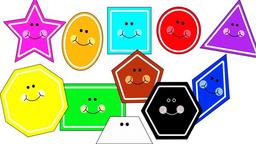
Angles, Sides, and Shapes
Quiz by Renensia Smith
Customize this quiz to suit your class
Instantly translate to 100+ languages
Tag the questions with any skills you have. Your dashboard will track each student's mastery of each skill.
Give this quiz to my class
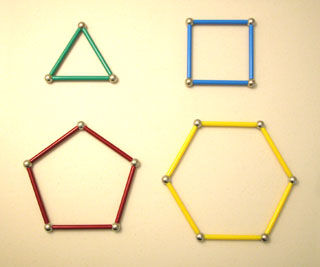
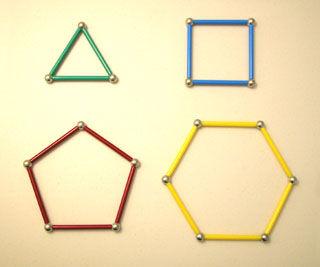
 Q1. A teacher designs a lesson where students compute real-life percentages such as discounts and savings. 👉 A student calculates 15% of 200 to determine savings in a purchase. What is the correct result? A. 20 B. 25 C. 30 D. 35 Q2. In a classroom activity, learners compare numbers to find the highest common factor for grouping materials evenly. 👉 What is the GCF of 24 and 36? A. 6 B. 8 C. 12 D. 18 📘 FRACTIONS, DECIMALS, AND POWERS Q3. A learner converts fractions into percentages for data interpretation. 👉 What is 3/4 expressed as a percentage? A. 50% B. 60% C. 75% D. 80% Q4. A student models exponential growth using repeated multiplication. 👉 What is the value of 252^525? A. 25 B. 30 C. 32 D. 64 📘 ALGEBRA (EQUATIONS AND EXPRESSIONS) Q5. A teacher guides students to solve equations that represent real-life situations. 👉 Solve: 2x+8=202x + 8 = 202x+8=20 A. x = 4 B. x = 6 C. x = 8 D. x = 10 Q6. Students simplify expressions to understand relationships between quantities. 👉 Simplify: 3(x+4)−2x3(x + 4) - 2x3(x+4)−2x A. x + 12 B. x + 4 C. 5x + 4 D. 5x + 12 📘 FUNCTIONS AND GRAPHING Q7. A student analyzes a linear equation to determine its rate of change. 👉 What is the slope of y=3x−5y = 3x - 5y=3x−5? A. -5 B. -3 C. 3 D. 5 Q8. A learner evaluates functions to predict outcomes. 👉 If f(x)=2x+3f(x) = 2x + 3f(x)=2x+3, what is f(4)f(4)f(4)? A. 7 B. 9 C. 11 D. 14 📘 GEOMETRY Q9. Students explore geometric shapes and their properties through visual models. 👉 What is the sum of interior angles of a triangle? A. 90° B. 180° C. 270° D. 360° Q10. A student calculates the area of a classroom table with dimensions 8 cm by 5 cm. 👉 What is the area? A. 26 sq cm B. 30 sq cm C. 40 sq cm D. 48 sq cm 📘 MEASUREMENT AND FIGURES Q11. A learner determines the volume of a cube used in a science experiment. 👉 What is the volume of a cube with side 4 cm? A. 16 cubic cm B. 32 cubic cm C. 48 cubic cm D. 64 cubic cm Q12. Students identify shapes used in design projects. 👉 How many sides does a hexagon have? A. 5 B. 6 C. 7 D. 8 📘 STATISTICS AND PROBABILITY Q13. A teacher helps students interpret data sets using measures of central tendency. 👉 What is the mean of 4, 6, 8, 10, 12? A. 6 B. 8 C. 10 D. 12 Q14. A class experiment involves flipping a fair coin. 👉 What is the probability of getting heads? A. 1/4 B. 1/3 C. 1/2 D. 2/3 📘 WORD PROBLEMS (APPLICATION) Q15. A car travels 180 km in 3 hours during a learning task on speed. 👉 What is its average speed? A. 45 km/h B. 60 km/h C. 75 km/h D. 90 km/h Q16. Students analyze work efficiency in a project. 👉 If 5 workers complete a task in 12 days, how long will 10 workers take? A. 3 days B. 6 days C. 8 days D. 12 days Q17. A student solves a problem involving ratios in a classroom population. 👉 If the ratio of boys to girls is 3:2 and there are 30 students, how many boys are there? A. 12 B. 15 C. 18 D. 20 Q18. A learner determines the duration of a scheduled trip. 👉 A journey starts at 8:30 AM and ends at 11:15 AM. How long is the trip? A. 2 hrs 15 mins B. 2 hrs 30 mins C. 2 hrs 45 mins D. 3 hrs 15 mins Q19. A student computes simple interest for financial literacy. 👉 What is the simple interest on ₱1000 at 5% for 2 years? A. ₱50 B. ₱75 C. ₱100 D. ₱150 Q20. A learner solves a perimeter problem involving a rectangle. 👉 A rectangle has a length of 12 cm and perimeter of 34 cm. What is the width? A. 5 cm B. 7 cm C. 10 cm D. 11 cm ✅ ANSWER KEY (BASED ON YOUR REVIEWER) (All verified from your uploaded file) [ilide.info...002acd4e5a | PDF] QAnswer1C2C3C4C5B6A7C8C9B10C11D12B13B14C15B16B17C18C19C20AANIMAL SKELETONS The bones in your body make up your skeleton. You have 206 bones. Bones give your body shape and support. They keep the soft parts inside you safe. Bones come in many shapes and sizes. Your arms and legs are long bones. Your pelvis and shoulder blades are flat bones. The bones in your wrists, hands, ankles, and feet are small. This is what your skeleton looks like. Look at the many kinds of bones in your body. Other animals have skeletons, too. Each animal's skeleton is different. Some are short, some are tall, some are light, and some are strong. Look at this skeleton. How is it different from your skeleton? Do you know what it is? CLUE: This animal flies. It's an eagle. Its bones are hollow and light. Wing feathers attach to the wing bones. Look at this skeleton. How is it different from your skeleton? Do you know what it is? CLUE: This animal hops. It's a frog. It has long back legs for hopping. 10 Its back legs are longer than its body. Look at this skeleton. How is it different from your skeleton? Do you know what it is? CLUE: This animal swims. It's a blue whale. It has no leg bones. Its arms are flippers. Whales are supported by the water. If a whale lived on land, its skeleton would have to be much stronger. Look at this skeleton. How is it different from your skeleton? Do you know what it is? CLUE: This animal runs well. It's a horse. It has long legs for running. A horse has a large rib cage to keep its large lungs safe. It needs large lungs to take in lots of air when it runs. Look at this skeleton. How is it different from your skeleton? Do you know what it is? CLUE: This animal slithers. It's a snake. It has no arms or legs. Its skeleton is one long backbone with ribs. Look at these skulls, or head bones. These are the skulls of the animals in this book. Look at how their shapes and parts are different. Each animal's skeleton is perfect for the way it lives. It has the right kind of skeleton for the support it needs. It has the right kind of skeleton for the way it moves. And so do you.Angles, sides, and Triangles, Oh My!Types of triangle by sides and anglesKnow that a regular polygon has sides that are the same length and angles that are the same size5.1.4 Congruent Sides and AnglesQuiz 1 - Triangle Sides and AnglesRotations In a doubles game, the players have to take turns hitting the ball with their partner. After each shot, a player has to move out so that the partner can get into the best position for the next shot. It is very important that both players establish an effective rotation pattern and alternative rotation patterns. 1. Circular Rotations (Figure 16.1) Each player moves in a circular way behind the partner after each shot and should be ready to move up and hit. Both players move the same way and two left-handed or right-handed aggressive players can use this movement. 125 16.1 circular rotations 2. Up and Down Rotations (Figure 16.2) Each player moves toward table in a diagonal way to return a shot then back up the same way. One left-handed and one right-handed pair use this rotation. 16.2 up and down rotations 3. T-Rotations (Figure 16.3) The front person moves sideways and the back person moves back and forth. Mostly pairs of one fast style player (front) and one loop style player (back), or one close-table offensive player (front) and one slice style player (back) use this rotation. 16.3 “T” rotations 4. Triangle Rotations (Figure 16.4) Each player using this rotation pattern moves to sides to return shot, then step back to the middle for the next shot in a triangle way. It is used often to return angles shots to sides and it is similar to the circular rotation. 126 16.4 triangle rotations Teamwork and Strategies 1. Establish a good rotation and movement patterns. 2. Create chances for your partner when returning a shot or serve. 3. Cover your partner's weaknesses. 4. Attack the weaker opponent. 5. Hit to the opponent who just finished the shot and is moving away. 6. Use your best serves and shots in games to ensure your best play and reduce mistakes. 7. Change serves and shots to keep opponents guessing what the next motion will be. 8. Change speed, power, lines and placement of the shots and serves to avoid opponents adapting to them. 9. Combine spin and flat serves to force opponent make more mistakes. 10. Attack opponents’ weaknesses. 11. Avoid the strength of opponent. For example, hit to the backhand if opponent is strong at forehand, or use more short chop shots if opponent is very aggressive. 12. Hit to the openings, weak side, and an opponent's body.