Loading...
Loading...
Loading...
Loading...


Animal in our life
Quiz by อรัญ ยังสมัน
Customize this quiz to suit your class
Instantly translate to 100+ languages
Tag the questions with any skills you have. Your dashboard will track each student's mastery of each skill.
Give this quiz to my class
Thisis ........
It eat ........
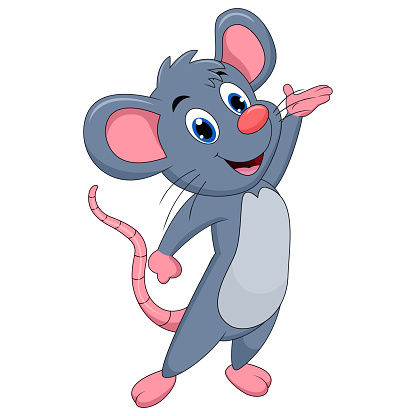
Mouse , Cheese
Dog , Bone
Rabbit , Carrot
Cat , Fish
I eat bamboo.
I am black and white.
I am quite lazy
I live in China.
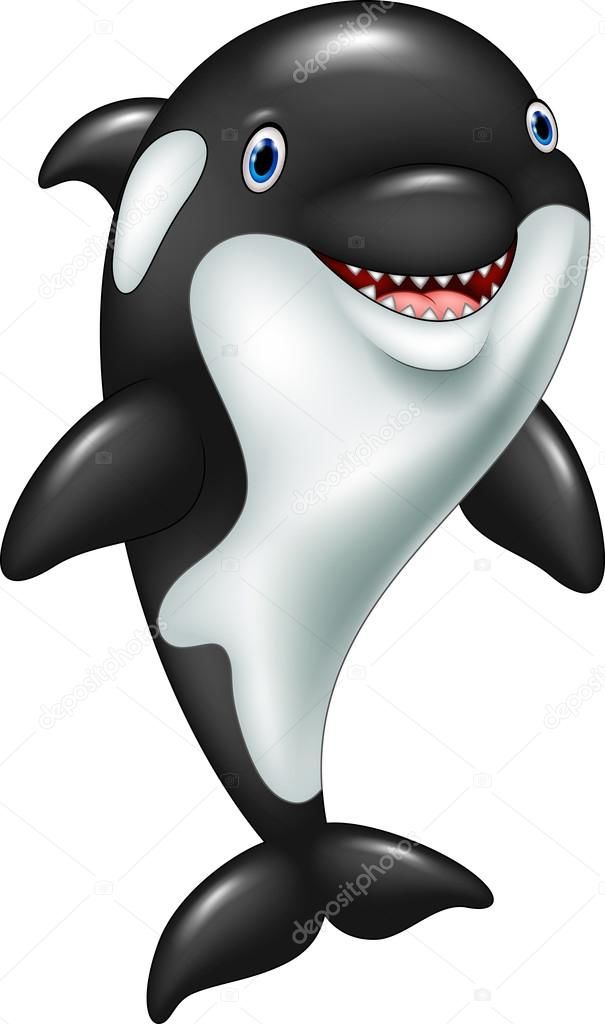
Thisis ........
It eat ........

I eat bamboo.
I am black and white.
I am quite lazy
I live in China.
I am small and colorful.
I have got big wings.
I live in gardens.
What am I?

 The Philippine Flag Our country is officially identified through our flag. The Philippine flag has three colors: white, blue, and red. White signifies purity; blue means hope and peace; and red denotes bravery. The three stars symbolize the three big groups of islands of our country-the Luzon, Visayas, and Mindanao. The eight rays of the sun signify the eight provinces that first revolted against the Spaniards. These are Bulacan, Pampanga, Tarlac, Nueva Ecija, Laguna, Batangas, Manila, and Cavite. We respect our flag to show that we respect our country. We should not treat it like an ordinary cloth because it symbolizes our country. An old flag should be burned and not be used as a rag. Title: National Hero Body text: Dr. Jose Rizal was from a middle-class family from Calamba, Laguna. He is regarded as a genius who fought the Spaniards through his writings, especially the novels "Noli Me Tangere" and "El Filibusterismo." The two novels exposed the anomalies and wrongdoings of the Spanish government against the Filipino people. He wrote the poem "Mi Ultimo Adios" the eve before his execution in Bagumbayan (now known as Rizal Park). National Fruit A mango is sour when it is green, but very sweet when it is ripe. This heart-shaped fruit symbolizes the kindness of the Filipinos. It has a big tree that bears fruits abundantly during summer. National Animal A carabao is a model of hard work and industry. It is the best companion of farmers in the field. It is black and looks like a tamaraw. A carabao is a very strong animal in terms of work. It symbolizes the Filipinos as hardworking and patient. National Bird The Philippine eagle, also known as haribon, stands over 5 feet (1.6 m) tall. It has a large, sharp, and aggressive beak and has powerful talons. Philippine eagles are excellent hunters, and live in tropical rainforests. These eagles lay just one or two eggs each year. National Tree The narra is a hardy tree that grows big and is found mainly in the Bicol Region, Mindanao, and Cagayan Valley forests. Most of the desks and tables in schools are made of narra. It signifies the strong personality of Filipinos in facing trials in life. National Flower The sampaguita has white, star-shaped petals with a sweet fragrance. It is made into garlands, which are given to visitors and special persons on occasions. It signifies purity and among Filipino women. National Fish Bangus or milkfish is our national fish. It grows in ponds or freshwater and tastes delicious. Its white, shiny scales signify our beautiful country. National Dance Cariñosa is a dance of love using a handkerchief and a fan. It symbolizes the true love expressed by Filipinos. National House A nipa hut is a small but beautiful house made from bamboo and sawali or cogon leaves. Filipinos used this kind of house during the olden times. At present, there are still people using this as a dwelling place, but most of the time, they use it as a rest place or cottage. National Costume Barong Tagalog is the national costume for Filipino men. It is made from pineapple fiber or other native materials. Filipinos wear this on special occasions such as formal events or weddings. Baro at Saya is the national dress for Filipino women. Most of them are made from jusi or pineapple fiber and other native materials. This dress shows the gracefulness of Filipino women. National Leaf Our national leaf is a palm tree. It is wide and narrow like an open fan. Farmers use this to protect their crops from the harsh sunlight and rain. It grows like a tree with thorns in its body. National Language Our national language is Filipino, which is based in Tagalog. Through the efforts of former President Manuel L. Quezon (known as the "Father of the National Language"), Filipino was widely disseminated and is now used in all parts of the country. With this, Filipinos in different cultures and native tongues can still communicate with each other. National Food Lechon (litson) is an important dish served at many occasions, especially on fiestas. Lechon is a suckling pig, slowly roasted over live coals to make it crispy and tasty. National Footwear Bakya is the national footwear of the Philippines. It was most popular from the 1950s to the 1970s before the introduction of rubber slippers. There are several colors and designs of bakya that suit the taste of most Filipinos. Valuing Our National Symbols Symbols represent a country and its people. We have to respect and value these symbols because they tell something about our country and of who we are as Filipinos. Here are some ways of valuing our national symbols: When singing the national anthem, stand straight and place your right hand on your left chest. Remove your cap or close your umbrella. Ask the people walking to stop while the flag is being raised. Tell other children to stop chatting while singing the national anthem. Most importantly, sing the national anthem wholeheartedly. Retirement of a Flag: A worn-out flag should be disposed of respectfully. It should be burned in a dignified ceremony, not thrown away or used for other purposes. Help in saving and conserving our forests. They serve as habitat of our national bird and other animals. You may also help organizations that promote reforestation, clean and green programs, and tree planting activities. Do not pick flowers when visiting parks. Instead, help in keeping these places clean and beautiful. Avoid throwing thrash in their surroundings. Patronize products that are made here in our country and made by Filipinos. Tell your family and friends to buy products of the Philippines especially those of which are our national symbol. Aside from patronizing our own products, let us use and love our national language. It is good to learn foreign languages, but do not forget to use our own language correctly and proudly.Rent a Llama When Marcos slept, he dreamed. He dreamed of Ecuador. He dreamed of riding among sheep and llamas. When Marcos woke, he worried. Life was so different in America. Would it ever feel like home? Marcos's mother worried, too. She wanted him to be happy. "Marcos, today is your class trip to a ranch," she said one morning. Marcos said, "We used to live on a ranch, Mamá." "An American ranch will be different," she said. "Yes, just like everything else here," Marcos sighed. When Marcos got to school, he saw students excited about the trip. Mr. Perkins chose seat partners for the bus ride. Marcos sat with a boy named Ben. "Have you ever been to a ranch?" asked Ben. "Only in Ecuador," Marcos replied. "I go to this ranch every week to care for Mabel," said Ben. Marcos asked, "Who is Mabel?" "You'll see," said Ben. Soon they arrived at the ranch. The class met Ms. Vega, the owner. "Hello, everyone," said Ms. Vega. "And hi there, Ben," she added. Everyone looked at Ben. How did Ms. Vega know him? "Ben takes care of Mabel, one of our cows," said Ms. Vega. "I am in City to Farm," Ben explained. "It is a club where grownups help city kids learn about farms," he added. Ben continued, "I want to learn about cows, but I live in an apartment." "I can't keep a cow there," he joked. The class laughed. Ben added, "Ms. Vega rents Mabel to me for free, and I care for her." "Let's meet Mabel," said Ms. Vega. Ben led the class into a large barn with many stalls. When Marcos looked around, he got a surprise. In the second stall was a llama. Marcos spoke softly to the animal in Spanish. The llama stretched its long neck toward Marcos as if it understood. Marcos stroked its fur. Ms. Vega watched Marcos. "Do you like Ilamas?" she asked. Marcos nodded. "Sí. I mean, yes," he replied shyly. "My grandfather had llamas in Ecuador," he added. "Расо сame from Ecuador, too," said Ms. Vega. She smiled and asked, "Would you like to help care for him?" "Like Ben takes care of Mabel?" Marcos asked. Ms. Vega said, "Exactly." Marcos's heart sang. Ranches were different herebut llamas were the same!Astonishing Animals Our planet is full of weird and wonderful creatures. Meet three of them – animals with surprising bodies, habits and abilities. The animal that can’t be true When in 1798 zoologists in Britain first saw the skin of an Australian platypus and a drawing of the animal, they were sure it was a hoax. A creature like that could not exist. Why not? First, it has fur, like cats or dogs, but also a flat bill like a duck, and a big thick tail like a beaver. Secondly, it lays eggs and looks after them like a bird, but when the young come out of the eggs, the mother feeds them with her milk. On top of everything, the platypus has a poisonous sting – like a snake! It cannot kill a human, but it’s very painful. Champion Runner You probably know the cheetah is the fastest runner among animals. It can run up to 100 kilometres per hour. But after some 200 metres, it needs to lie down and rest. The pronghorn, which lives in the prairies of North America, can run a few kilometres at ninety kilometres per hour, and fifteen kilometres at sixty-five kilometres per hour. Its whole body – heart, lungs, legs – is a perfect machine for long-distance running. But why? It doesn’t need to run this fast now, but 18,000 years ago there were cheetahs in America. The pronghorn probably evolved to escape them. This beautiful animal is not well-known in Europe, but in America it is a symbol of the prairie life. You can see it in the emblem of the province of Alberta, Canada. Aliens in the ocean An octopus has no fixed shape or colour. In danger, it will change both. It can become like its surroundings and difficult to see. Or it can look like a dangerous animal, such as a sea snake, and scare an attacker away. Octopuses are also intelligent. Their brains are large in proportion to their body size. They can use tools and solve problems: for example, open bottles to get food, or use clever strategies to escape from an aquarium. It seems they are unhappy in a zoo or lab. But they are so different from humans that it is difficult for us to understand their intelligence. In fact, it is a bit like meeting intelligent aliens.The film begins as a journey to film the largest animal on the planet, the blue whale. But during the journey the filmmakers (journalist Craig Leeson and environmental activist Tanya Streeter) make the shocking discovery of a huge, thick layer of plastic floating in the middle of the Indian Ocean. This prompts them to travel around the world to look at other areas that have been affected. In total, they visited 20 locations around the world during the four years it took them to make the film. The documentary premiered in 2016, and is now on streaming services such as Netflix.It’s very clear that a lot of research went into the film. There are beautiful shots of the seas and marine life. These are contrasted with scenes of polluted cities and dumps full of plastic rubbish. We see how marine species are being killed by all the plastic we are dumping in the ocean. The message about our use of plastic is painfully obvious. But the film doesn’t only present the negative side. In the second half, the filmmakers look at what we can do to reverse the tide of plastic flowing around the world. They present short-term and long-term solutions. These include avoiding plastic containers and ‘single-use’ plastic products as much as possible. Reuse your plastic bags and recycle as much as you can. The filmmakers also stress the need for governments to work more on recycling programmers, and look at how technology is developing that can convert plastic into fuel We make a staggering amount of plastic. In terms of plastic bags alone, we use five hundred billion worldwide annually. Over 300 million tons of plastic are produced every year, and at least 8 million of those are dumped into the oceans. The results are disastrous, but it isn’t too late to change. Once you’ve seen A Plastic Ocean, you’ll realize the time is now and we all have a role to play. One of the phenomena which had peculiarly attracted my attention was the structure of the human frame1, and, indeed, any animal endued with2 life. Whence3, I often asked myself, did the principle of life proceed? It was a bold question, and one which has ever been considered as a mystery; yet with how 5 many things are we upon the brink of4 becoming acquainted, if cowardice or carelessness did not restrain our inquiries. I revolved5 these circumstances in my mind, and determined thenceforth to apply myself more particularly to those branches of natural philosophy which relate to physiology. Unless I had been animated by an almost supernatural enthusiasm, my application to this study 10 would have been irksome, and almost intolerable. To examine the causes of life, we must first have recourse to death. I became acquainted with the science of anatomy: but this was not sufficient; I must also observe the natural decay and corruption of the human body. In my education my father had taken the greatest precautions that my mind should be impressed with no supernatural horrors. 15 I do not ever remember to have trembled at a tale of superstition, or to have feared the apparition of a spirit. Darkness had no effect upon my fancy; and a churchyard was to me merely the receptacle of bodies deprived of life, which, from being the seat of beauty and strength, had become food for the worm. Now I was led to examine the cause and progress of this decay, and forced to spend 20 days and nights in vaults and charnel-houses6. My attention was fixed upon every object the most insupportable to the delicacy of the human feelings. I saw how the fine form of man was degraded and wasted; I beheld the corruption of death succeed to the blooming cheek of life; I saw how the worm inherited the wonders of the eye and brain. I paused, examining and analysing all the minutiae 25 of causation, as exemplified in the change from life to death, and death to life, until from the midst of this darkness a sudden light broke in upon me – a light so brilliant and wondrous, yet so simple, that while I became dizzy with the immensity of the prospect which it illustrated, I was surprised that among so many men of genius who had directed their inquiries towards the same science, 30 that I alone should be reserved to discover so astonishing a secret. Remember, I am not recording the vision of a madman. The sun does not more certainly shine in the heavens, than that which I now affirm is true. Some miracle might have produced it, yet the stages of the discovery were distinct and probable. After days and nights of incredible labour and fatigue, I succeeded in 35 discovering the cause of generation and life; nay7, more I became myself capable of bestowing8 animation upon lifeless matter. The astonishment which I had at first experienced on this discovery soon gave place to delight and rapture. After so much time spent in painful labour, to arrive at once at the summit of my desires was the most gratifying 40 consummation of my toils9. But this discovery was so great and overwhelming10 that all the steps by which I had been progressively led to it were obliterated, and I beheld only the result. What had been the study and desire of the wisest men since the creation of the world was now within my grasp. Not that, like a magic scene, it all opened upon me at once: the information I had obtained was of a 45 nature rather to direct my endeavours11 so soon as I should point them towards the object of my search, than to exhibit that object already accomplished. I was like the Arabian who had been buried with the dead, and found a passage to life, aided only by one glimmering, and seemingly ineffectual12, light.A solution is a mixture in which one or more substances are uniformly distributed in another substance. Solutions can be mixtures of liquids, solids, or gases. For example, plasma, the liquid part of blood, is a very complex solution. It is composed of many types of ions and large molecules, as well as gases, that are dissolved in water. A solute (SAHL-YOOT) is a substance dissolved in the solvent. The particles that compose a solute may be ions, atoms, or molecules. The solvent is the substance in which the solute is dissolved. For example, when sugar, a solute, and water, a solvent, are mixed, a solution of sugar water results. Though the sugar dissolves in the water, neither the sugar molecules nor the water molecules are altered chemically. If the water is boiled away, the sugar molecules remain and are unchanged. Solutions can be composed of various proportions of a given solute in a given solvent. Thus, solutions can vary in concentra- tion. The concentration of a solution is the amount of solute dis- solved in a fixed amount of the solution. For example, a 2 percent saltwater solution contains 2 g of salt dissolved in enough water to make 100 mL of solution. The more solute dissolved, the greater is the concentration of the solution. A saturated solution is one in which no more solute can dissolve. Aqueous (AY-kwee-uhs) solutions—solutions in which water is the solvent—are universally important to living things. Marine microorganisms spend their lives immersed in the sea, an aqueous solution. Most nutrients that plants need are in aqueous solutions in moist soil. Body cells exist in an aqueous solution of intercellu- lar fluid and are themselves filled with fluid; in fact, most chemical reactions that occur in the body occur in aqueous solutions. Copyright © by Holt, Rinehart and Winston. All rights reserved. Liquid water Solid water Ice (solid water) is less dense than liquid water because of the structure of ice crystals. The water molecules in ice are bonded to each other in a way that creates large amounts of open space between the molecules, relative to liquid water. FIGURE 2-12 solvent from the Latin solvere, meaning “to loosen” Word Roots and Origins CHEMISTRY OF LIFE 43 ACIDS AND BASES One of the most important aspects of a living system is the degree of its acidity or alkalinity. What do we mean when we use the terms acid and base? Ionization of Water As water molecules move about, they bump into one another. Some of these collisions are strong enough to result in a chemical change: one water molecule loses a proton (a hydrogen nucleus), and the other gains this proton. This reaction really occurs in two steps. First, one molecule of water pulls apart another water molecule, or dissociates, into two ions of opposite charge: H2O ∏ H OH The OH ion is known as the hydroxide ion. The free H ion can react with another water molecule, as shown in the equation below. H H2O ∏ H3O The H3O ion is known as the hydronium ion. Acidity or alkalin- ity is a measure of the relative amounts of hydronium ions and hydroxide ions dissolved in a solution. If the number of hydronium ions in a solution equals the number of hydroxide ions, the solution is said to be neutral. Pure water contains equal numbers of hydro- nium ions and hydroxide ions and is therefore a neutral solution. Acids If the number of hydronium ions in a solution is greater than the number of hydroxide ions, the solution is an acid. For example, when hydrogen chloride gas, HCl, is dissolved in water, its mol- ecules dissociate to form hydrogen ions, H, and chloride ions, Cl, as is shown in the equation below. HCl ∏ H Cl These free hydrogen ions combine with water molecules to form hydronium ions, H3O. This aqueous solution contains many more hydronium ions than it does hydroxide ions, making it an acidic solution. Acids tend to have a sour taste; how- ever, never taste a substance to test it for acidity. In concentrated forms, they are highly corrosive to some materials, as you can see in Figure 2-13. Bases If sodium hydroxide, NaOH, a solid, is dissolved in water, it dissociates to form sodium ions, Na, and hydroxide ions, OH, as shown in the equation below. NaOH ∏ Na OH Copyright © by Holt, Rinehart and Winston. All rights reserved. Eco Connection onnection Acid Precipitation Acid precipitation, more commonly called acid rain, describes rain, snow, sleet, or fog that contains high levels of sulfuric and nitric acids. These acids form when sulfur dioxide gas, SO2, and nitrogen oxide gas, NO, react with water in the atmosphere to produce sulfuric acid, H2SO4, and nitric acid, HNO3. Acid precipitation makes soil and bodies of water, such as lakes, more acidic than normal. These high acid levels can harm plant and animal life directly. A high level of acid in a lake may kill mollusks, fish, and amphibians. Even in a lake that does not have a very elevated level of acid, acid precipitation may leach aluminum and magnesium from soils, poisoning water- dwelling species. Reducing fossil-fuel consump- tion, such as occurs in gasoline engines and coal-burning power plants, should reduce high acid levels in precipitation. Sulfur dioxide, SO2, which is produced when fossil fuels are burned, reacts with water in the atmosphere to produce acid precipitation. Acid precipitation, or acid rain, can make lakes and rivers too acidic to support life and can even corrode stone, such as the face of this statue. FIGURE 2-13 44 CHAPTER 2 This solution then contains more hydroxide ions than hydronium ions and is therefore defined as a base. The adjective alkaline refers to bases. Bases have a bitter taste; however, never taste a substance to test for alkalinity. They tend to feel slippery because the OH ions react with the oil on our skin to form a soap. In fact, commercial soap is the product of a reaction between a base and a fat. pH Scientists have developed a scale for comparing the relative con- centrations of hydronium ions and hydroxide ions in a solution. This scale is called the pH scale, and it ranges from 0 to 14, as shown in Figure 2-14. A solution with a pH of 0 is very acidic, a solution with a pH of 7 is neutral, and a solution with a pH of 14 is very basic. A solution’s pH is measured on a logarithmic scale. That is, the change of one pH unit reflects a 10-fold change in the acidity or alkalinity. For example, urine has 10 times the H3O ions at a pH of 6 than water does at a pH of 7. Vinegar, has 1,000 times more H3O ions at a pH of 3 than urine at a pH of 6, and 10,000 times more H3O ions than water at a pH of 7. The pH of a solution can be measured with litmus paper or with some other chemical indicator that changes color at various pH levels. Buffers The control of pH is important for living systems. Enzymes can function only within a very narrow pH range. The control of pH in organisms is often accomplished with buffers. Buffers are chemi- cal substances that neutralize small amounts of either an acid or a base added to a solution. As Figure 2-14 shows, the composition of your internal environment—in terms of acidity and alkalinity— varies greatly. Some of your body fluids, such as stomach acid and urine, are acidic. Others, such as intestinal fluid and blood, areGr''ade 3 Questions based on this chapter: English Alexander was a king of the ancient Greek kingdom of Macedonia. By the age of thirty, he had created one of the largest empires in the world, stretching from Greece to northwestern India. When Alexander was young, a trader brought a horse which was difficult to mount. Let us read about how Alexander tames the horse. One day King Philip bought a fine horse. He was a strong animal and the king paid a high price for him. But he was wild and no man could mount him, or do anything at all with him. This horse is really wild. It cannot be tamed by the royal men. Many have tried and failed. We tried everything possible, your Majesty. We tried to whip him but that only made him worse. Glossary wild rough/harsh mount a horse to climb onto the back of a horse to tame to control whip to beat using a long rope King Philip asked his men to take the horse away. It is a pity to send such a fine horse away. I think the men do not know how to tame him. I can try taming this beautiful horse. Perhaps you can do better than them. But be careful, my son. You are still very young to mount this violent animal. Alexander wanted to (mount/feed/tame/ ride) the horse. If you would give me the order, I will try. I am sure I can manage this horse better than anyone else. Antonym(s) worse x better young x old fail x succeed If I fail, I will pay you the price of the horse, Father. The courtiers told Alexander that it might be dangerous for a young boy to try taming the wild horse. They laughed at him. Alexander went near the horse and turned his head towards the sun. He had noticed that the horse was afraid of his own shadow. I will name you Bucephalus. Stay calm and I will do no harm. The horse was afraid of his own (body/courtiers/King Philip/shadow). English He then spoke gently to the horse. Bucephalus means 'ox-head'— head of an ox, in Ancient Greek. When he had quietened him a little, he made a quick spring and leapt upon the horse's back. I thought the little prince would be killed by this dangerous animal. What a miracle! The horse has recognized the young prince as his master. Alexander let the horse run. When Bucephalus had become tired of running, Alexander reined him in and rode back to the place where his father was standing. Glossary noticed (here) to see afraid scared/frightened calm quiet gently softly quietened to become calmer and less noisy a miracle a wonder/unusual event to rein to check or guide a horse Look at the young prince! He is mounted well! But the horse is still wild! Antonym(s); laughed x cried afraid x brave. English When he reached the place where his father was standing, he leapt to the ground. His father ran and kissed him. Dear Father! I shall add My son! Macedonia is a small kingdom more territories and bring for you. You must seek a larger kingdom glory to our kingdom. that will be worthy of you. Fascinating Fact(s) Alexandria Bucephalus was a city founded by Alexander in memory of his loyal horse Bucephalus. During Alexander's invasion of India, he had fought against the Indian King, Porus, near the river Hydaspes (modern day river Jhelum, Pakistan). His horse Bucephalus died there and he honoured his horse by naming the city after it. Antonym(s) worthy x unworthy proud x ashamed You have carried me across countries and stood bravely beside me as I fought to win the numerous fierce battles. You have saved my life many times. I am truly proud of you, Bucephalus. (Mesopotamia/Minneapolis/ Macedonia/Minnesota) was a small kingdom for Alexander to rule. Glossary numerous many fierce strong and violent Alexander and Bucephalus were said to be always together, for when one of them was seen, the other was sure to be not far away. Bucephalus would never allow anyone to mount him, but his master. Alexander became the most famous king and warrior, and for that reason, he is called 'Alexander the Great!. The outdoor recreation industry represents a new economy. The leaders of this economy will need to have a deep understanding of our local natural resources and integrate the components of innovation, health, and wellness into a vision for what comes next. Everyone wins when you do the right things for the environment, the community, and the venture. We want to offer the young generation a chance to be part of the foundation we are building for adventure tourism in the emirates and the region. Adventure Tourism Is the Fastest-Growing Global Niche. What does this mean? It means that there’s plenty of room for young experts to enter the field. It’s not just the "guides" that the adventure tourism industry needs. It’s everything that goes with it, from adventure tourism accommodations to trip planners, event managers, marketing and finance directors, advertising, public relations, and communications. We want to highlight that adventure tourism requires more than just guides, and various careers within adventure tourism play a big role in attracting high-value customers, supporting local economies, and encouraging sustainable practices. The continued growth of this sector creates net positive impacts not only for tourism, but also for destination economies, their people, and their environment. 1) Understanding Tourism Tourism is one of the world’s fastest-growing industries and a major foreign exchange and employment generation for many countries. It is one of the most remarkable economic and social phenomena. 2) Understanding Adventure Tourism Adventure tourism is defined as the movement of the people from one to another place outside their comfort zone for exploration or travel to remote areas, exotic and possibly hostile areas. Adventure tourism is a type of tourism in which tourists engage in adventure activities such as trekking, climbing, rafting, scuba diving, or the likes. Adventure tourism gains much of its excitement by allowing the tourist to step outside their comfort zone. This may be from experiencing culture shock or through the performance of acts that required some degree of risk whether real or perceived. It is also about connecting with a new culture or a new landscape and being physically active at the same time. It is not only about being risky or pushing your boundaries. In fact, it is especially important to know and respect your limits while you are in an unfamiliar area. Adventure travel is a leisure activity that takes place in an unusual, exotic, remote, or wilderness destination. It tends to be associated with high levels of activity by the participant, most of it outdoors. Adventure tourists expect to experience various levels of risk, excitement, and tranquillity and be personally tested. In particular, they are explorers of unspoiled, exotic parts of the planet and also seek personal challenges. The main factor distinguishing adventure tourism from all other forms of tourism is the planning and preparation involved. 3) Definitions of Adventure Tourism Adventure tourism is a new concept in the tourism industry. The tourism industry adopted adventure tourism, but there is not any specific definition of adventure tourism. Most commentators concur that adventure tourism is a niche sector of the tourism industry, but there are many other niche sectors in tourism that have the same characteristics that overlap with adventure tourism such as ecotourism, activity tourism, or adventure travel. One of them can confuse. Adventure tourism is a complicated and ambiguous topic. Some important definitions of adventure tourism are as following: A) According to the Adventure Travel Trade Association (ATTA): “adventure tourism is a tourist activity that includes physical activity, cultural exchange, or activities in nature.” B) According to Muller and Cleaver: “Adventure tourism is characterized by its ability to provide the tourist with relatively high levels of sensory stimulation, usually achieved by including physically challenging experiential components with the tourist experience.” C) The Canadian Tourism Commission in 1995 defines adventure tourism as: “an outdoor leisure activity that takes place in an unusual, exotic, remote or wilderness destination, involves some form of unconventional means of transportation, and tends to be associated with low or high levels of activity.” D) According to Sung et al: “adventure tourism is the sum of the phenomena and relationships arising from the interactions of adventure touristic activities with the natural environment away from the participant’s usual place of residence area and containing elements of risk in which the outcome is influenced by the participation, setting, and the organizer of the tourist’s experience.” E) According to UNWTO: ” adventure tourism can be domestic or international, and like all travel, it must include an overnight stay, but not last longer than one year.” 4) Types of Adventure Tourism Adventure tourism has grown exponentially all over the world in recent years with tourists visiting destinations previously undiscovered. This allows for new destinations to market themselves as truly unique, appealing to those travellers looking for a rare, incomparable experience. Adventure tourism includes various activities like caving, hiking, sailing, trekking, etc. Adventure tourism is categorized into two categories: • Hard Adventure • Soft Adventure Hard Adventure Hard adventure refers to activities with high levels of risk, requiring intense commitment and advanced skills. Hard tourism includes the activities like climbing mountains/rock/ice, trekking, caving, etc. Hard adventure activities are highly risked in nature. Professional guides and advanced levels of skills are required to perform these activities. Many tourists died during climbing mountains, caving every day. Soft Adventure Soft adventure refers to activities with a perceived risk but low levels of risk, requiring minimal commitment and beginner skills; experienced guides lead most of these activities. Soft tourism includes the activities like backpacking, camping, hiking, kayaking, etc. Soft adventure activities are low-risk in nature. Professional guides lead these activities. Soft adventure is a popular category in adventure tourism as it caters to a wider audience. 5) Adventure Tourism Activities Adventure travellers are early adopters by nature, meaning they are generally more willing to try new destinations, activities, and travel products. Popular activities change rapidly, and it seems there is a new twist on an existing sport every year. Some activities have low risk and some have high. Adventure tourism activities are classified into two types: • Hard Adventure Activities • Soft Adventure Activities Hard Adventure Activities Hard adventure activities are highly risky and dangerous in nature. These activities are as the following: • Caving • Mountain Climbing • Rock Climbing • Ice Climbing • Trekking • Sky Diving Soft Adventure Activities These activities are less dangerous and risk as compared to hard adventure activities. These activities are mostly lead by professional guides. An example of these activities are: • Backpacking • Bird watching • Camping • Canoeing • Eco-tourism • Fishing • Hiking • Horseback riding • Hunting • Kayaking/sea/whitewater • Orienteering • Safaris • Scuba Diving • Snorkeling • Skiing • Snowboarding • Surfing Adventure tourism activities sit well with the environment because the natural world provides us with the resources for many of the activities that provide risk, challenge, sensory stimulus, novelty, discovery, and so on. 6) Characteristics and Features of Adventure Tourism The threefold combination of activity, nature, and culture marks adventure travel as an all-around challenge. Some unique characteristics and features of adventure tourism are as the following: • Physical activity, like involving physical exertion or psychomotor skills • Contact with nature, activities bringing contact with the natural world in general, or with specific wildlife • Contact with different cultures, i.e. people, faith, lifestyles • Journeys for example vehicle, animal, or human power • Uncertain outcomes • Danger and risk • Challenges • Anticipated rewards • Novelty • Stimulation and excitement • Exploration and discovery • Contrasting emotions 7) Adventure Tourism Supplier A tourism supply chain is the system of people, products, activities, and materials that get a product or service from its raw state through production and distribution to the consumer. As with any sector, volume discounts drive the mass price point, so major retailers primarily market select trips that sell in high volume. The supply chain for these mass tourism products is often very simple, comprising only transportation and accommodation elements. The adventure tourism supply chain is more complex. Niche products often require specializes in knowledge and operations. Adventure tourism’s supply chain linkages go very deep, and this is one of the key reasons that adventure tourism delivers greater benefits at the local level. Supply chains vary from destination to destination. Without a proper supply chain, the tourism sector cannot survive. Tourism suppliers are the backbone of the tourism industry. Adventure tourism suppliers work at a different, different level like as domestic as well international level. 8) Adventure Tourism Importance and Benefits Adventure tourism is one of the fastest-growing sectors of the tourism sector, attracting high-value customers, supporting local economies, and encouraging sustainable practices. The continued growth of this sector creates net positive impacts not only for tourism, but also for destination economies, their people, and their environment. Some importance and benefits of adventure tourism are: A) Employment Generation Adventure tourism generates jobs. Adventure tourism generates directs jobs to accommodation, transportation sector, and travel agencies or tour operators. Adventure tourism also provides indirect jobs to tourism suppliers. Adventure tourism plays an important role in the generation of employment in the economy. B) Foreign Exchange Adventure tourism attracts foreign tourists on a large scale, as a result, it helps in foreign exchange generation. When tourists travel to another country, they spend a large amount of money on accommodation, transportation, and shopping. Adventure tourism generates foreign exchange and supports the economy of the host country. C) Economy Development Adventure tourism helps in the development of the host country’s economy. Adventure tourism activities directly support the economy in various forms. The more tourists, the more economic growth. D) Support Local Communities Adventure tourism helps in the development of infrastructure and supports local communities. Adventure tourism activities directly contributed to the local economy of the communities and increase local people's living standards. E) Conservation of Natural Resources Adventure tourism activities are nature-based activities. Leaders in the adventure tourism industry are dedicated to making this tourism segment as sustainable as possible. They help in the conservation of natural resources as well as culture. F) Creating Business Opportunities Adventure tourism activities create new business opportunities. Several companies specialize in helping emerging adventure tourism operators market their products. Each new adventure tourism activity creates a new business opportunity. G) Local and Foreign Investment Adventure tourism creates business opportunities; as a result, it attracts local as well as international investors. Investors invest their money in accommodation, transportation, and travel trade organization. Adventure tourism plays an important role in the economy of the host country.