Loading...


Animals Can Do
Quiz by dafna zaid
Customize this quiz to suit your class
Instantly translate to 100+ languages
Tag the questions with any skills you have. Your dashboard will track each student's mastery of each skill.
Give this quiz to my class

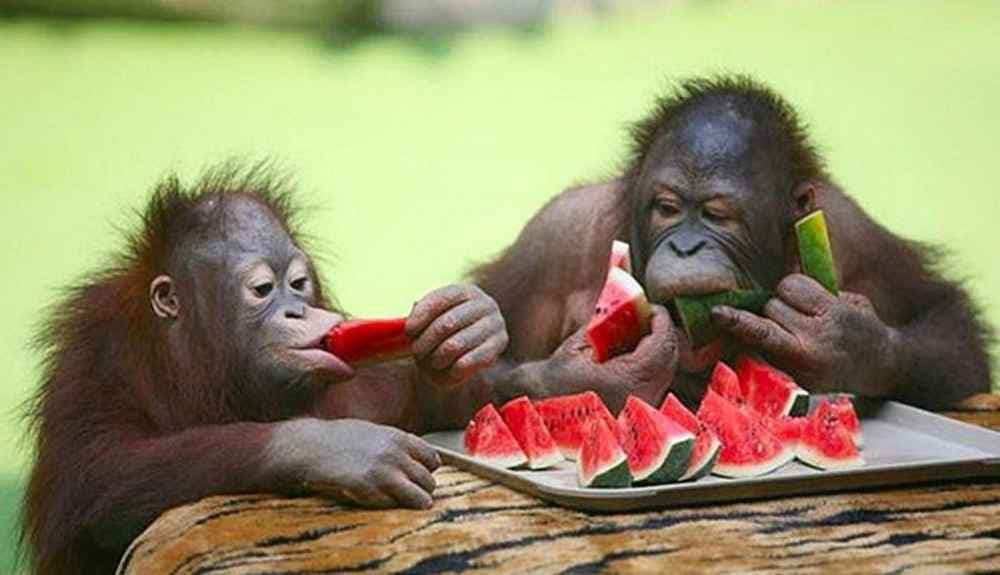


 • There are two groups of animals which are important in agriculture. • The groups are domestic and wild animals. 1. Domestic animals • These are animals which are trained to live with people in their homes. • Some examples includes : Uses of domestic animals • Source of food, for example milk, eggs and meat. • For cultural purposes, for example paying lobola. • Some are used for transport and labour. • Domestic animals can also be a source of income. 2 . Wild animals • These are animals which are found in game reserves and in the forests • They are also called game animals. • Examples of wild animals are: Uses of wild animals • Some of the wild animals give us meat, hides and ivory. • Wild animals attract visitors from other countries, so the country gets money. Wednesday 06 September 2023 Exercise: Domestic animals 1. What is a domestic animal? [2] 2. What is a wild animal? [2] 3. Name any 4 domestic animals that you know. [4] 4. State any 2 uses of domestic animals. [2] 5. Name any 3 wild animals that you know. [3] 6. Give 2 uses of wild ani mals. [2] 7. Wild animals can also be called animals. [1] • Animals, like human beings need good food to help them to grow and reproduce. • The main sources of food for animals include stock feeds, pastures, veld grass, crop remains and cereal grains. • These foods contain the most needed essential nutrients. Nutrient Function carbohydrates Gives energy Fats Give energy and warmth Proteins Helps in growth and repair of body parts Minerals Help in the formation of bones and teeth Vitamins Help develop good sight, improve fertility and help animals fight diseases Water Transports food in the body, cools the body and remove waste from the body. • Livestock are domesticated animals that are kept for food, use or for sale. • Small livestock has many uses. • They are a good source of food. • They also give us manure to use in gardens. • We get clothes and medicine as well from small livestock • Examples of small livestock are rabbits, sheep, goats and all form of poultry Poultry • All animals that are kept by farmers which have wings and feathers and lay eggs are called poultry. • They are a good source of white meat, eggs and manure. • They are also a source of income when we well them and their products. • Poultry includes chicken, guinea fowl, ducks, turkey, pigeons and quail birds. Rabbits • Rabbits have 3 known uses which are: They are kept for meat Kept for pelts. (pelt is animal skin used to make blankets, hats and jackets) They are used at agricultural shows • Rabbits are cheap to buy, easy to keep and feed. • They take about 4 months to mature. • Rabbits are fed using green vegetables and rabbit pellets. Wednesday 20 September 2023 Small livestock 1. Give 3 examples of small livestock. [3] 2. State 3 things that are provided by small livestock. [3] 3. What are the 2 uses of rabbits? [2] 4. Pelts are used to make _________________ [1] 5. State any 4 examples poultry. [4] 6. Rabbits take ___________ months to mature. [1] 7. What is poultry? • Apiculture is the keeping of bees in order for them to produce honey for sale. • Apiculture is very important because: (i) Provides honey - a valuable nutritional food (ii) Provides bees wax - which has many uses in industry Uses of wax For making candles Polish furniture Make crayons Prevent tools from rusting (iii) Honey bees are excellent pollinating agents, thus increasing agricultural yields. BEE COLONY Inhabitants of the bee colony and their roles • A honey bee colony typically consists of three kinds of adult bees: workers, drones and the queen 1. Workers • Workers are the smallest and constitute the majority of bees occupying the colony. • They do not lay eggs. • Workers have specialized structures, such as brood food glands, scent glands, wax glands, and pollen baskets. • these allow them to perform all the labors of the hive. Roles of the worker bees they forage for nectar, pollen, water, and plant sap. They clean and polish the cells. feed the brood. care for the queen. remove debris. handle incoming nectar. build beeswax combs. guard the entrance. 2. Drones • Drones (male bees) are the largest bees in the colony. • They are generally present only during late spring and summer. • The drone’s head is much larger than that of either the queen or worker. • Drones have no stinger, pollen baskets, or wax glands. • Their main function is to mate with the queen. 3 . Queen • Each colony has only one queen. • The queen is the largest of the bees in a bee colony. • The Queen Bee plays a vital role in the hive because she is the only female with fully developed ovaries. • She produces both fertilized and unfertilized eggs. • Queens lay the greatest number of eggs in the spring and early summer. • The queen also produce chemical scents that help regulate the unity of the colony. 1. What is apiculture? [2] 2. Give 3 reasons why apiculture is important in Zimbabwe. [3] 3. Name the 3 inhabitants of the bee colony. [3] 4. Briefly explain the roles of each inhabitant named in number 3. • Apart from using hand tools, farmers also use some farm implements and machinery to carry out their field work. • Machines help farmers do their work more easily and quickly. • The most common implements used by farmers to grow, harvest and transport their produces are: mouldboard plough Cultivator Scotch cart Harrow Planter Maize sheller combine harvesters Boom sprayers Disc harrow Spike toothed harrow KNAPSACK SPRAYER • Farming is a business. • Communal farmers grow crops and keep animal mainly for their own use. • If there is any extra they sell to get money. • Commercial farmers grow crops and keep animals for sale. • Crops and animals produced are called farm produce. • There are places were farmers have to sell their produce. • Farmers can take their produce to local markets. • A market is a place where buying and selling occurs. • Some of the local markets includes: A shopping centre A school A nearest bus stop A local village A school Local Grain Marketing Board depot (GMB) Types of farm produce Beef Fruits Mutton Eggs Vegetables Pork Milk Chicken Cereals/grains beansHibernation No Food in Winter. Some animals can’t find food in the winter. Some of these animals hibernate What Is Hibernating? Hibernating is like a deep sleep. This sleep can last for weeks. Animals breathe slowly when they hibernate. Their hearts beat slower. They do not eat. How Do They Stay Alive? Hibernating animals eat lots of food before winter. The food stays in their bodies as fat. Animals live off this fat while they sleep. They also need a safe place to sleep. They need to be safe from the cold. They need to be safe from hungry animals. Hibernating Animals Snakes and frogs hibernate. Turtles and mice hibernate. Squirrels and bats hibernate. Bears hibernate. Raccoons and skunks hibernate, too. All the hibernating animals wake up in the spring.Weathering describes the breaking down or dissolving of rocks and minerals on the surface of the Earth. Water, ice, acids, salts, plants, animals, and changes in temperature are all agents of weathering. Once a rock has been broken down, a process called erosion transports the bits of rock and mineral away. No rock on Earth is hard enough to resist the forces of weathering and erosion. Together, these processes carved landmarks such as the Grand Canyon, in the U.S. state of Arizona. This massive canyon is 446 kilometers (277 miles) long, as much as 29 kilometers (18 miles) wide, and 1,600 meters (1 mile) deep. Weathering and erosion constantly change the rocky landscape of Earth. Weathering wears away exposed surfaces over time. The length of exposure often contributes to how vulnerable a rock is to weathering. Rocks, such as lavas, that are quickly buried beneath other rocks are less vulnerable to weathering and erosion than rocks that are exposed to agents such as wind and water, As it smoothes rough, sharp rock surfaces, weathering is often the first step in the production of soils. Tiny bits of weathered minerals mix with plants, animal remains, fungi, bacteria, and other organisms. A single type of weathered rock often produces infertile soil, while weathered materials from a collection of rocks is richer in mineral diversity and contributes to more fertile soil. Soils types associated with a mixture of weathered rock include glacial till, loess, and alluvial sediments. Weathering is often divided into the processes of mechanical weathering and chemical weathering. Biological weathering, in whichliving or once-living organisms contribute to weathering, can be a part of both processes. Mechanical Weathering Mechanical weathering, also called physical weathering and disaggregation, causes rocks to crumble. Water, in either liquid or solid form, is often a key agent of mechanical weathering. For instance, liquid water can seep into cracks and crevices in rock. If temperatures drop low enough, the water will freeze. When water freezes, it expands. The ice then works as a wedge. It slowly widens the cracks and splits the rock. When ice melts, liquid water performs the act of erosion by carrying away the tiny rock fragments lost in the split. This specific process (the freeze-thaw cycle) is called frost weathering or cryofracturing. Figure 4.3 Frost Wedging Temperature changes can also contribute to mechanical weathering in a process called thermal stress. Changes in temperature cause rock to expand (with heat) and contract (with cold). As this happens over and over again. the structure of the rock weakens. Over time, it crumbles. Rocky desert landscapes are particularly vulnerable to thermal stress. The outer layer of desert rocks undergo repeated stress as the temperature changes from day Eventually, Lo outer night. layersflake off in thin sheets, a process called exfoliation. Exfoliation contributes to the formation of bornhardts, one of the most dramatic features in landscapes formed by weathering and erosion. Bornhardts are tall, domed, isolated rocks often found areas. in tropical Sugarloaf Mountain, an iconic landmark in Rio de Janeiro, Brazil, is bornhardt. a Salt also works to weather rock in a process called haloclasty. Saltwater sometimes gets into the cracks and pores of rock. If the saltwater evaporates, salt crystals are left behind. As the crystals grow, they put pressure on the rock, slowly breaking it apart. Plants and animals can be agents of mechanical weathering. The seed of a tree may sprout in soil that has collected in a cracked rock. As the roots grow, they widen the cracks, eventually breaking the rock into pieces. Over time, trees can break apart even large rocks. Even small plants, such as mosses, can enlarge tiny cracks as they grow. Animals that tunnel underground, such as moles and prairie dogs, also work to break apart rock and soil. Other animals dig and trample rock aboveground, causing rock to slowly crumble. Chemical Weathering Chemical weathering changes the molecular structure of rocks and soil.For instance, carbon dioxide from the air or soil sometimes combines with water in a process called carbonation. This produces a weak acid, called carbonic acid, that can dissolve rock. Carbonic acid is especially effective at dissolving limestone. When carbonic acid seeps through limestone underground, it can open up huge cracks or hollow out vast networks of caves. Carlsbad Caverns National Park, in the U.S. state of New Mexico, includes more than 119 limestone caves created by weathering and erosion. The largest is called the Big Room.. With an area of about 33,210 square meters (357,469 square feet), the Big Room is the size of six football fields. Another type of chemical weathering works on rocks that contain iron. These rocks turn to rust in a process called oxidation. Rust is a compound created by the interaction of oxygen and iron in the presence of water. As rust expands, it weakens rock and helps break it apart. Another familiar form of chemical weathering is hydrolysis. In the process of hydrolysis, a new solution (a mixture of two or more substances) is formed as chemicals in rock interact with water. In many rocks, for example, sodium minerals interact with water to form a saltwater solution. Hydration and hydrolysis contribute to flared slopes, another dramatic example of a landscape formed by weathering and erosion. Flared slopes are sometimes nicknamed "wave rocks." Their c-shape is largely concave rock formations a result of subsurface weathering, in which hydration and hydrolysis wear away rocks beneath the landscape's surfaceWeathering and People Weathering is a natural process, but human activities can speed it up. For example, certain kinds of air pollution increase the rate of weathering Burning coal, natural and petroleum releases chemicals such as nitrogen oxide and gas, sulfur dioxide into the atmosphere. When these chemicals combine with sunlight and moisture, they change into acids. They then fall back to Earth as acid rain. Acid rain rapidly weathers limestone, marble, and other kinds of stone. The effects of acid rain can often be seen on gravestones, making names and other inscriptions impossible to read. Acid rain has also damaged many historic buildings and monuments. For example, at 71 meters (233 feet) tall, the Leshan Giant Buddha at Mount Emei, China is the world's largest statue of the Buddha. It was carved 1,300 years ago and sat unharmed for centuries. An innovative drainage system mitigates the natural process of erosion But in recent years, acid rain has turned the statue's nose black and made some of its hair crumble and fall.Amazing Antarctica The Seventh Continent. Give a globe a spin. On it you can easily find six continents. Now look at the bottom of the globe. There you will find continent number seven: Antarctica. People did not find Antarctica until about two hundred years ago. Since then, we have learned a lot about this amazing place. Antarctica is the coldest continent. It is also the continent with the strongest winds. Less rain and snow fall in Antarctica than in any other continent. Freezing Antarctica Water covers most of Earth. Almost all of it is salt water. Most of the fresh water on Earth is frozen in the ice in Antarctica. Snow does not melt during the cold summers there. The ice builds up over many years. Life on and Around Antarctica The freezing weather in Antarctica makes it a dangerous place to live. Most plants and animals can be found near the coasts or in the sea. There are no trees, but there are other plants, such as moss. Penguins and seals are some of the larger animals in the icy waters of Antarctica. A Playground for Scientists People have taken steps to make sure that scientists can study in Antarctica. Many countries send scientists to study in Antarctica. Some work there all year, even during the cold winter. Others work only in summer. Many kinds of scientists come to Antarctica. They study animals, ice, and many other things. Many kinds of scientists come to Antarctica. They study animals, ice, and many other things. Thousands of visitors also come to learn about Antarctica each year. Conclusion. People do not know a lot about Antarctica. The cold, ice, wind, and rough seas make it a difficult place to visit. However, people around the world know how important it is to protect and study Antarctica.Flake off in thin sheets, a process called exfoliation. Exfoliation contributes to the formation of bornhardts, one of the most dramatic features in landscapes formed by weathering and erosion. Bornhardts are tall, domed, isolated rocks often found areas. in tropical Sugarloaf Mountain, an iconic landmark in Rio de Janeiro, Brazil, is bornhardt. a Salt also works to weather rock in a process called haloclasty. Saltwater sometimes gets into the cracks and pores of rock. If the saltwater evaporates, salt crystals are left behind. As the crystals grow, they put pressure on the rock, slowly breaking it apart. Plants and animals can be agents of mechanical weathering. The seed of a tree may sprout in soil that has collected in a cracked rock. As the roots grow, they widen the cracks, eventually breaking the rock into pieces. Over time, trees can break apart even large rocks. Even small plants, such as mosses, can enlarge tiny cracks as they grow. Animals that tunnel underground, such as moles and prairie dogs, also work to break apart rock and soil. Other animals dig and trample rock aboveground, causing rock to slowly crumble. Chemical Weathering Chemical weathering changes the molecular structure of rocks and soil.Nature Stinks! Stinky Nature. If you've ever smelled a skunk, you know it is not a nice odor. In fact, it's terrible! Did you know that both plants and animals can smell bad? Stinky plants smell bad to get helpful insects to come near. Stinky animals often smell bad to keep enemies away. Smelling bad helps both plants and animals stay alive. Stinky Furry Animals Skunks are well-known smelly animals. When enemies get close, skunks lift their tail and spray a stinky liquid. Striped polecats are cousins of skunks. They stink even worse! Lesser anteaters are at least four times as stinky as a skunk! They shoot a smelly liquid at their enemies. Opossums pretend to be dead if an enemy is near. They stay still and let out stinky green slime. Wolverines make a smelly liquid to keep other animals away from their home. They also pee on food they don't eat right away. The smell may help them find the food later. It may also keep other animals from eating it. Male musk oxen fight each other for females. Males use their stinky pee to tell other males to keep away. The pee sticks to their long belly hair and makes them smell terrible. Stinky Birds. The stinkbird mainly eats leaves. Food goes to its crop (the area under its throat) before the stomach. Tiny living things there break down the leaves. This way of eating makes the stinkbird smell terrible. Vultures eat animals that are dead and often rotten. When vultures are in danger, they throw up! The stuff they throw up is very smelly. Stinky Bugs. A type of beetle sprays a hot, stinky liquid from the back of its body. The spray can kill many enemies and burn people. Millipedes (MILL-ih-peedz) can't move fast. If an enemy bothers them, they curl up and give off a stinky liquid. Some millipedes can even shoot the smelly stuff! Other Stinky Animals. The common musk turtle has another namestinkpot! It smells bad when other animals disturb it. A stinky yellow liquid comes out of the back of its body. Musk turtle A female mink frog can lay 500 to 4,000 eggs at once. 14 A musk turtle can live forty to sixty years. Mink frog The mink frog also uses smell to stay safe from enemies. It smells like rotten onions. Good and Stinky. Being stinky helps many plants and animals stay alive. For plants, the bad smell brings helpful insects. For animals, the bad smell may keep enemies away or help in other ways. Stinky steam, spray, throw-up, slime, and pee all help living things stay alive.2.2 Study Guide [ 2.2 Sequence Assessment 1/21 and 1/22] Ecosystems and Ecological Relationships Invasive Species ● An invasive species is a plant, animal, or organism that is not native to a specific area and causes harm to the environment or human health. Why are they harmful? Invasive species often outcompete native species for food, water, and space. They can spread quickly because they lack natural predators in the new environment. What is their impact on the ecosystem? Invasive species can reduce biodiversity by pushing native species to extinction or by changing the habitat in which native species live. Biodiversity and Its Importance to Ecosystems Biodiversity refers to the variety of life in a specific area, including different species of plants, animals, and microorganisms, and the ecosystems they form. ● Stability: Biodiversity makes ecosystems more resilient to changes such as climate change, diseases, and natural disasters. ● Food chains and webs: A greater variety of species means more sources of food for different animals, helping maintain a balanced food web. For example, a forest with many species of plants and animals can recover from a drought more easily than a forest with fewer species. Predator-Prey Relationships In a predator-prey relationship, one organism (the predator) hunts and eats another organism (the prey). The predator benefits by getting food, while the prey loses its life.The population sizes of predators and prey are often linked. If there are more prey, the predator population may grow, but if too many predators eat the prey, the predator population will decrease. This relationship can be shown in the graph below. ● For example: Lions hunt zebras for food. When there are many zebras, lions have more food and their population can grow. However, if too many lions eat the zebras, the zebra population can decrease. Predator-prey relationships help keep animal populations balanced, preventing one species from becoming too numerous and harming the environment. Ecological Relationships There are several types of relationships between organisms in an ecosystem. These include commensalism, parasitism, and mutualism. Commensalism In commensalism, one organism benefits from the relationship while the other is neither helped nor harmed. An example would be Barnacles and Whales. Barnacles attach to the skin of whales. The barnacles get access to nutrient-rich water while the whale swims, but the whale is not affected by their presence. Parasitism In parasitism, one organism (the parasite) benefits at the expense of the other organism (the host), which is harmed. For example, fleas live on dogs and feed on their blood. The fleas benefit, but the dog may suffer from itching, infections, or even anemia. Another example are tapeworms and humans. Tapeworms live in the intestines of humans and absorb nutrients, leaving the human host malnourished. Mutualism In mutualism, both organisms benefit from the relationship. An example would be bees and flowers: Bees collect nectar from flowers to make honey, while helping the flowers by transferring pollen, which helps them reproduce.John wants to build a house next to a forest. In the forest, there are lots of trees, flowers and animals. There is a lake too.John takes his axe and goes to the forest. He talks to a tree. “I need wood to build my house,” he says. So, the tree gives John some wood.John’s friends visit him and they like his house. John and his friends go to the forest and cut down more and more and more trees, to build more and more houses.Soon there are not more trees. There aren’t any flowers. There are not any animals. The lake is dirty. The people are sad and thirsty.John goes to the forest.” What happened?” John asks the tree.“You cut down the trees in the forest. Now the animals do not have food to eat or a place to live. The lake is dirty so there aren’t any fishes”, says the tree.“What can I do?” asks John.“Plant trees and clean the lake” says the tree.John and his friends plant trees and they clean the lake. Now the trees are tall and have leaves.There are flowers. The animals are back in the forest. There are fishes in the lake. The forest is cool again. Everyone is happy.