Loading...


Animals that live in the jungle
Quiz by Vanessa Elizabet Yañez Huaytaya
Customize this quiz to suit your class
Instantly translate to 100+ languages
Tag the questions with any skills you have. Your dashboard will track each student's mastery of each skill.
Give this quiz to my class
Listen, look and choose the correct picture.
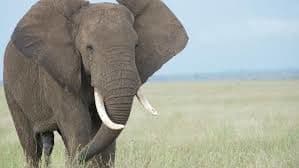
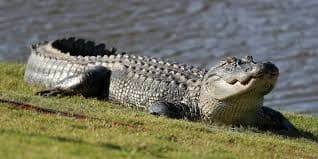
Listen, look and choose the correct picture.


Listen, look and choose the correct picture.
Listen, look and choose the correct picture.
Listen, look and choose the correct picture.
Listen, look and choose the correct picture.
Listen, look and choose the correct picture.
Listen, look and choose the correct picture.
Tell me the animals that live in or visit Lake eyre in australia Teacher: Today we will review animals that live in cold places. Where is this? Student: That is the Arctic. It is at the top of the world. Teacher: What animals live there? Student: The polar bear, sea lion, and Arctic fox lives there. They like cold weather. Teacher: Where is this? Student: That is Antarctica. It is at the bottom of the world. Teacher: What animals live there? Student: Penguins, seals, and killer whales live there. They like to eat fish.Define what a habitat is. Identify and describe the three main types of habitats: terrestrial, aquatic, and aerial. Give examples of plants and animals that live in each type of habitat. Understand the basic adaptations of organisms to their habitats.How does a nomad child go to class every day, though? A new idea is the travelling school, a big ger which goes where the herders go in the warmer months. These are the months when nomad parents really need their children's help. Mongolia is developing. There are more jobs now, and new towns. The travelling school allows Mongolian nomads to keep their traditional lifestyle, but learn about the modern world, too. The nomads hope their children can be part of both. Most people nowadays live in cities and towns crowded with people in towering skyscrapers or blocks of flats and heavy traffic on the streets. There are schools, shopping centres, cinemas, theatres and restaurants. The life of a Mongolian nomad couldn't be more different. B A family's nearest neighbours are kilometres away and the only building is the ger, their traditional tent. But it is thanks to their animals that these nomads manage to survive. Their horses carry them and their equipment over long distances. Their cows, yaks, goats and sheep give them food, wool and leather. The herder goes where the animals go, moving to find new grass. It's a hard life. The nomads' skin is dark and tough from the sun and wind, and their eyes are narrow to protect them from the harsh winter. If it gets too cold, there isn't enough to eat and they lose many animals. Nomads are proud to be herders and proud to live more freely than city people. They want their children to have an easier life, however, and try to send them to school. 1 .Sand soil • Has course/ large particles • they are larger than those of clay • Loses water quickly • Has less organic matter • Has good aeration • Allows good root penetration • Leaching of nutrients is more in sand soil. • Does not stick when wet 2. Clay soil • Has very fine particles which are closely packed • The soil is sticky when wet and can be moulded into any shape • It holds more water than sand and loam • It has poor drainage • It cracks when dry • It has poor aeration • It does not allow good root penetration 2 .Loam soil • Is a mixture of sand and clay particles • It half clay half sand • It can be easily moulded into a shape but easily crumbles • Holds water for a longer time than sand • It sticks on the hands when wet • It has good drainage • It has good aeration • It allows good root penetration • Loam is the best soil Soil Fertility • When soil has enough plant nutrients it is fertile • Soil fertility is the presence of nutrients in the soil • A farmer can add nutrients to the soil to make it fertile • This is done by applying fertilizers and compost. • A fertiliser is a substance that is added to the soil to increase fertility • Nutrients found in the soil include Nitrogen, Phosphorus and Potassium ( NPK ) • They are called major nutrients or macro nutrients because they are needed in large quantities Minor nutrients • Minor nutrients are needed in smaller quantities • Minor nutrients are also called micro nutrients or trace elements • Examples of minor nutrients are boron, iron, zinc, manganese, magnesium and molybdenum Soil erosion • Is the washing away of top soil by agents such as Water Wind Animals Humans 1. Water: • Water washes away soil when it rains. • Loose soil is washed away into dams and rivers. • Steep slopes also lead to soil erosion. • Ploughing 2 . Wind • The blowing away of soil by wind causes soil erosion. • When people cut down trees wind erosion easily takes place. • Type of soil also leads to wind erosion. Which soil type is easily eroded by wind? 3 . Animals • Animal cause soil erosion by overgrazing. • Overgrazing is when animals eat plant or vegetation leaving the ground surface bare. • Animals walking on the same pathway for a long time make the soil loose. • Animals that live underground also burrow loosening the soil. • This makes soil break easily and get washed away. WATER WATER CONSERVATION Water • Water is important in agriculture • It is used to: Clean farm tools Mould bricks Wash milking equipment Cool machines Provide homes(habitat) for fish Give animals drinking and bathing water Sources of Water Natural sources 1. Natural rains: • rain water from the clouds is a primary source of water. • It is used to water crops such as maize, millet, sorghum and so on during the rainy season. • Rain water that collects into the rivers and dams is used by animals and people for drinking. 2 . Rivers : • Rivers are some of the major sources of water for different activities such as fishing, boat cruising and irrigation. 3 . Streams : • A stream is a small river. • Streams supply water for irrigating garden crops especially in rural areas. • They are also a source of water for animals to drink and bath. Sources of Water 4 . Springs : • Springs are usually found on hilly areas. • They result from pressure of underground streams. • The pressure forces water underground to form a channel to the surface of the soil and flow above the ground. Sources of Water Man made sources Man discovered that water for agriculture was not enough during the rain and cool dry seasons. They decided to make structures which would harvest or collect and store water for future use. 1.Protected well: • Wells are dug in the ground by hand. • They are often lined with bricks and concrete so that they do not cave in. • Protected wells are covered, therefore are safe to drink from. 2 . borehole : • They are deep holes made by drilling machines. • Drilling can be done up to 70 metres deep. • Water is pumped using an electric pump or hand pump. Sources of Water 3 . Dams : • A dam is a large wall or barrier built to hold water to save it for future use. 4 . Weir : • A weir is made by construction a cement brick wall or concrete wall across a river to trap water and eroded soil. • water flows over the wall when the river is inflood. 5 .Water tank : • Is a temporary manmade water source. • Water from a water tank is usually harvested from roof tops or it works along a borehole or protected well as temporary storage. • Water is pumped from the borehole or protected well into the water tank. 6 . reservoir : • A large natural or manmade lake used as a source of water. PLANTS Uses of plants • Fibre for making clothes • Oil for cooking, making paint and chemicals • Sugar for tea • Wood for timber • Refreshing drinks and alcohol • Food for people and animals • Protect the soil from erosion • Plants supply us with fresh oxygen for breathing. • Some plant parts are used as medicine.A symbiosis (SIM-bie-OH-sis) is a close, long-term relationship between two organisms. Three examples of symbiotic relation- ships include: parasitism, mutualism, and commensalism. Parasitism (PAR-uh-SIET-IZ-UHM) is a relationship in which one indi- vidual is harmed while the other individual benefits. Mutualism (MYOO-choo-uhl-IZ-uhm) is a relationship in which both organisms derive some benefit. In commensalism (kuh-MEN-suhl-IZ-uhm), one organism benefits, but the other organism is neither helped nor harmed. Parasitism Parasitism is similar to predation in that one organism, called the host, is harmed and the other organism, called the parasite, benefits. However, unlike many forms of predation, parasitism usually does not result in the immediate death of the host. Generally, the parasite feeds on the host for a long time rather than kills it. Parasites such as aphids, lice, leeches, fleas, ticks, and mosquitoes that remain on the outside of their host are called ectoparasites. Parasites that live inside the host’s body are called endoparasites. Familiar endoparasites are heart- worms, disease-causing protists, and tapeworms, such as the one shown in Figure 20-5. Natural selection favors adaptations that allow a parasite to exploit its host efficiently. Parasites are usually specialized anatomically and physiologically for a par- asitic lifestyle. Parasites can have a strong negative impact on the health and reproduction of the host. Consequently, hosts have evolved a variety of defenses against parasites. Skin is an important defense that prevents most parasites from entering the body. Tears, saliva, and mucus defend openings through which parasites could pass, such as the eyes, mouth, and nose. Finally, the cells of the immune system may attack para- sites that get past these defenses. parasite from the Latin word parasitus, meaning “one who eats at the table of another” Word Roots and Origins Tapeworms are endoparasites that can grow to 20 m or greater in length. Tapeworms are so specialized for a parasitic lifestyle that they do not have a digestive system. They live in the host’s small intestine and absorb nutrients directly through their skin. Tapeworms reproduce by producing egg-filled chambers, which are released in their host’s feces to be unknowingly picked up by a future host. FIGURE 20-5 Copyright © by Holt, Rinehart and Winston. All rights reserved. 404 CHAPTER 20 Mutualism Mutualism is a relationship in which two species derive some benefit from each other. Some mutualistic relation- ships are so close that neither species can survive without the other. An example of mutualism, shown in Figure 20-6, involves ants and some species of Acacia plants. The ants nest inside the acacia’s large thorns and receive food from the acacia. In turn, the ants protect the acacia from herbi- vores and cut back competing vegetation. Pollination is one of the most important mutualistic rela- tionships on Earth. Animals such as bees, butterflies, flies, beetles, bats, and birds that carry pollen between flowering plants are called pollinators. A flower is a lure for pollina- tors, which are attracted by the flower’s color, pattern, shape, or scent. The plant usually provides food—in the form of nectar or pollen—for its pollinators. As a pollinator feeds in a flower, it picks up a load of pollen, which it may then carry to other flowers of the same species. Commensalism Commensalism is an interaction in which one species benefits and the other species is not affected. Species that scavenge for leftover food items are often considered commensal species. However, a relationship that appears to be commensalism may simply be mutu- alism in which the mutual benefits are not apparent. An example of a commensal relationship is the relationship between cattle egrets and Cape buffaloes in Tanzania. The birds feed on small animals such as insects and lizards that are forced out of their hiding places by the movement of the buffaloes through the grass. Occasionally, the cattle egrets also feed on ectoparasites from the hide of the buffaloes, but the buffaloes gen- erally do not benefit from the presence of the egrets.• There are two groups of animals which are important in agriculture. • The groups are domestic and wild animals. 1. Domestic animals • These are animals which are trained to live with people in their homes. • Some examples includes : Uses of domestic animals • Source of food, for example milk, eggs and meat. • For cultural purposes, for example paying lobola. • Some are used for transport and labour. • Domestic animals can also be a source of income. 2 . Wild animals • These are animals which are found in game reserves and in the forests • They are also called game animals. • Examples of wild animals are: Uses of wild animals • Some of the wild animals give us meat, hides and ivory. • Wild animals attract visitors from other countries, so the country gets money. Wednesday 06 September 2023 Exercise: Domestic animals 1. What is a domestic animal? [2] 2. What is a wild animal? [2] 3. Name any 4 domestic animals that you know. [4] 4. State any 2 uses of domestic animals. [2] 5. Name any 3 wild animals that you know. [3] 6. Give 2 uses of wild ani mals. [2] 7. Wild animals can also be called animals. [1] • Animals, like human beings need good food to help them to grow and reproduce. • The main sources of food for animals include stock feeds, pastures, veld grass, crop remains and cereal grains. • These foods contain the most needed essential nutrients. Nutrient Function carbohydrates Gives energy Fats Give energy and warmth Proteins Helps in growth and repair of body parts Minerals Help in the formation of bones and teeth Vitamins Help develop good sight, improve fertility and help animals fight diseases Water Transports food in the body, cools the body and remove waste from the body. • Livestock are domesticated animals that are kept for food, use or for sale. • Small livestock has many uses. • They are a good source of food. • They also give us manure to use in gardens. • We get clothes and medicine as well from small livestock • Examples of small livestock are rabbits, sheep, goats and all form of poultry Poultry • All animals that are kept by farmers which have wings and feathers and lay eggs are called poultry. • They are a good source of white meat, eggs and manure. • They are also a source of income when we well them and their products. • Poultry includes chicken, guinea fowl, ducks, turkey, pigeons and quail birds. Rabbits • Rabbits have 3 known uses which are: They are kept for meat Kept for pelts. (pelt is animal skin used to make blankets, hats and jackets) They are used at agricultural shows • Rabbits are cheap to buy, easy to keep and feed. • They take about 4 months to mature. • Rabbits are fed using green vegetables and rabbit pellets. Wednesday 20 September 2023 Small livestock 1. Give 3 examples of small livestock. [3] 2. State 3 things that are provided by small livestock. [3] 3. What are the 2 uses of rabbits? [2] 4. Pelts are used to make _________________ [1] 5. State any 4 examples poultry. [4] 6. Rabbits take ___________ months to mature. [1] 7. What is poultry? • Apiculture is the keeping of bees in order for them to produce honey for sale. • Apiculture is very important because: (i) Provides honey - a valuable nutritional food (ii) Provides bees wax - which has many uses in industry Uses of wax For making candles Polish furniture Make crayons Prevent tools from rusting (iii) Honey bees are excellent pollinating agents, thus increasing agricultural yields. BEE COLONY Inhabitants of the bee colony and their roles • A honey bee colony typically consists of three kinds of adult bees: workers, drones and the queen 1. Workers • Workers are the smallest and constitute the majority of bees occupying the colony. • They do not lay eggs. • Workers have specialized structures, such as brood food glands, scent glands, wax glands, and pollen baskets. • these allow them to perform all the labors of the hive. Roles of the worker bees they forage for nectar, pollen, water, and plant sap. They clean and polish the cells. feed the brood. care for the queen. remove debris. handle incoming nectar. build beeswax combs. guard the entrance. 2. Drones • Drones (male bees) are the largest bees in the colony. • They are generally present only during late spring and summer. • The drone’s head is much larger than that of either the queen or worker. • Drones have no stinger, pollen baskets, or wax glands. • Their main function is to mate with the queen. 3 . Queen • Each colony has only one queen. • The queen is the largest of the bees in a bee colony. • The Queen Bee plays a vital role in the hive because she is the only female with fully developed ovaries. • She produces both fertilized and unfertilized eggs. • Queens lay the greatest number of eggs in the spring and early summer. • The queen also produce chemical scents that help regulate the unity of the colony. 1. What is apiculture? [2] 2. Give 3 reasons why apiculture is important in Zimbabwe. [3] 3. Name the 3 inhabitants of the bee colony. [3] 4. Briefly explain the roles of each inhabitant named in number 3. • Apart from using hand tools, farmers also use some farm implements and machinery to carry out their field work. • Machines help farmers do their work more easily and quickly. • The most common implements used by farmers to grow, harvest and transport their produces are: mouldboard plough Cultivator Scotch cart Harrow Planter Maize sheller combine harvesters Boom sprayers Disc harrow Spike toothed harrow KNAPSACK SPRAYER • Farming is a business. • Communal farmers grow crops and keep animal mainly for their own use. • If there is any extra they sell to get money. • Commercial farmers grow crops and keep animals for sale. • Crops and animals produced are called farm produce. • There are places were farmers have to sell their produce. • Farmers can take their produce to local markets. • A market is a place where buying and selling occurs. • Some of the local markets includes: A shopping centre A school A nearest bus stop A local village A school Local Grain Marketing Board depot (GMB) Types of farm produce Beef Fruits Mutton Eggs Vegetables Pork Milk Chicken Cereals/grains beansOcean Animals Many kinds of animals live in the ocean. They are part of the ocean community. Let's meet some of these ocean animals. Most of the ones in this book are mammals, fish, or reptiles. I am a dolphin. I have a sleek body and a strong tail to swim fast. I live in a group called a pod, and I like to eat fish. I whistle to talk to other dolphins. I am a walrus, and I have ivory tusks. I use them to dig for clams and to protect myself. I live on ice and in cold water. My thick layer of fat keeps me warm. I am a hammerhead shark, and my head has a very funny shape. My eyes and nostrils are at the ends of lobes. I like to eat fish. I am a California sea lion. I am smart, noisy, and playful. I bark like a dog, and I am covered by short fur. I eat squid, octopus, and fish. I am an octopus. I have a soft body and no skeleton. I have eight arms with suckers. I shoot black ink from my body to hide and escape from danger. I can also change the color of my skin. I am a great white shark. I am a large and fierce shark. I have very sharp teeth that are shaped like triangles. I eat seals, dolphins, and fish. I am a manta ray. I have fins that look like wings. I am related to stingrays, but I do not sting. I am a sea horse, but I am not a horse. I am a fish. I change color to hide. Shrimp are my favorite food. Male sea horses, not females, carry eggs until they hatch. I am a leatherback turtle, the biggest turtle in the world. I lay eggs on land. Jellyfish are my favorite food. I am covered with leathery skin instead of a shell. I am a blue whale. I am the largest mammal ever to live. I make deep sounds that move through water. I eat tiny animals called krill. The ocean is home to all these animals. Many of them are endangered. They all suffer because of pollution and hunting. Keeping our oceans clean will help keep these animals alive.