Loading...


Applied Forces (SC.6.P.13.3)
Quiz by A. Barrios
Customize this quiz to suit your class
Instantly translate to 100+ languages
Tag the questions with any skills you have. Your dashboard will track each student's mastery of each skill.
Give this quiz to my class
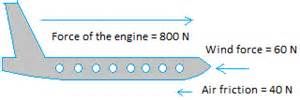

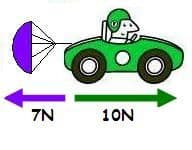 6.7A identify and explain how forces act on objects, including gravity, friction, magnetism, applied forces, and normal forces, using real world applicationsForce and motion, standard measurement, speed analysis, applied forces, magnetism, light energy, sound energy, heat energyWhat is Electric Force? Electric force is just one of many types of forces in the world of physics. Forces are how and why things move, and can be explained by Newton's Laws of Motion. On the smallest scale, electric force is the resulting interaction between two charged particles. These charges can be either positive or negative. Larger objects can be charged by having an abundance of either of these particles, and therefore can create an electric force on a larger scale. Electric force is the reason why hair will sometimes stand up on its own and is also why we have electricity, allowing us to live in the modern world with lights and technology. Even out in nature electric force is present, as electric force causes lightning to strike. Electric force is fundamental to our everyday way of living. Reviewing Newton's Laws of Motion Newton's Laws of motion are the basic principles or ground rules that are applied all across physics. They describe how objects move and can be used to describe the interaction of charges. They are the following: An object in motion will stay in motion unless an external force is applied The force exerted on an object is equal to the mass times the acceleration of the object. ( ) Every force has an equal and opposite force Newton's laws explain how and why charged particles move. Since there is a force involved (e.g. electric force), particles will move around, which is explained by the first law. The second law describes how acceleration of charges can be calculated once the electric force is known. The third law explains how attractive and repulsive forces between charged objects are equal and opposite. Electric Force Examples and Types of Charge As previously mentioned, there are only two types of charges; positive and negative. Two like charges will repel (or move away from) each other, and two opposite charges will attract (or move towards) each other. In other words, two positive or two negative charges will repel, while a positive and a negative charge will attract. Opposite charges will attract while like charges will repel. Attraction versus Repelling Forces Notice how the forces acting upon each other are equal and opposite, as Newton's third law states. Both charges are exerting forces onto each other. Charges in Atoms An atom is made up of three types of particles; protons, neutrons, and electrons. Protons have a positive charge, neutrons have no charge, and electrons have a negative charge. There are no positive or negative charges smaller than protons and electrons. Objects on a larger scale result in an overall positive or negative charged due to an uneven distribution of protons to electrons. An atom consisting of more protons than electrons would be considered positive, and an atom with more electrons than protons would be considered negative. Protons are held close to the nucleus and are tightly bound to an atom, so it's difficult for protons to escape an atom. Electrons, on the other hand, are much further away from the nucleus of an atom. This makes it much easier for them to be removed from an atom. Electrons can leave or join atoms, making them positive or negative depending on the amount of protons. Similarly, for the bigger picture, overall materials and objects with more electrons than protons would be considered negative, and vice versa. Electric Force Examples Hair standing up: When hair is brushed, the hairbrush can strip electrons from hair strands, resulting in the hair being positively charged. This addition of electrons to the hairbrush in turn makes the hairbrush negatively charged. Since the hair is now positively charged, and like forces repel, hair strands will move away from each other, resulting in the hair standing up. Current electricity: All of our everyday technology is powered through current electricity, which is the consistent flow of electrons through conductive materials. This flow is caused by the electric force, as the electrons flow from a negative source to a positive source. Lightning: During a storm, it is common for an abundance of electrons to build up on the bottom of a cloud, making that part of the cloud negatively charged. Positive charges in the ground start to gather on the surface or even on tall objects such as trees as they are attracted towards the negatively charged undersides of clouds. Lightning strikes as a result of these charges becoming extremely built up. Lightning is caused by electric force Lightning Electric Force Equation: Coulomb's Law The magnitude of the electric force, or the amount of force in which objects repel or attract, depends on the distance between the two charged objects and the amount of charge each object carries. The electric force is stronger the closer together the two charges are, and weaker as the two charges move apart. Electric force is also stronger with more charge, and weaker with less charge. This effect on electric force is predictable, and is known as Coulomb's Law. It can be calculated using a mathematical equation, and the resulting magnitude of electric force is measured in Newtons. Coulomb's Law Electric force can be calculated using the following equation known as Coulomb's Law: In this equation, F is the electric force measured in newtons, K is a constant known as the electrostatic constant, and are charges one and two measured in coulombs, and is the radial distance in meters between the two charges. Since the distance is squared and on the denominator, the electric force drops off exponentially as charges move away from each other. This means that the Electric force is inversely proportional to distance. As charges move away from each other, the electric force between them gets smaller and smaller, until the force is negligible. The amount of charges are in the numerator of this equation, making the magnitude of the force larger with more charge. This means that the force is directly proportional to the amount of charge. When the charges are smaller, the amount of force will be smaller. When there is a lot of charge, the force will be much greater. When calculating the electric force using Coulomb's law, the resulting answer only gives the magnitude of the force and not the direction. In order to know the direction, you must know the types of charges. Once again, like forces repel, and unlike forces attract. It helps to draw a visual representation, or a free-body diagram, of the charges and forces acting upon them in order to understand the resulting force direction. Electric Field versus Electric Force An electric field is a direct result of an electric force. Its pure definition is electric force per unit charge, and can be thought of as a mapping of the force vectors. An electric field is present anytime there is an electric force. Therefore, when there are two or more charged particles, there is a surrounding electric field. The direction of the electric field is the direction a positive charge would flow if it were placed within the field. The electric field moves out from a positive charge and goes into a negative charge. Particles with unlike charges move towards each other, and their corresponding electric field lines move out from the positive charge and into the negative charge. The strength of the force at any given point can be seen through the spacing of the electric field lines. The electric force is strongest where the electric field lines are closest together, and weaker as these lines move apart. Like Coulomb's law expresses, electric field lines show how the electric force is strongest with a minimum distance between the two charges. Unlike charges will result in a repelling force, and the resulting electric field is a visual representation of this effect. Electric fields of two positive charges have the electric field moving out away from both of them. As with two negative charges, the field lines move in towards each negative. Lesson Summary An electric force is created when there are two or more charged particles or objects. These charges can be either positive or negative. Like charges will attract (move towards each other) while unlike charges will repel (move away from each other). As Newton's third law suggests, the forces acting upon each other are both equal and opposite. Electrons and protons within an atom are the two smallest types of charges there are. Electrons carry a negative charge while protons carry a positive charge. Electrons can be easily removed or added to atoms, making the overall charge positive or negative. Objects with more electrons than protons are negatively charged. Electric force is strengthened with increased charge and a shorter distance between the charges. This effect is known as Coulomb's law and can be calculated with the Coulomb's law equation. The magnitude of the force is measured in Newtons, and the direction can be determined by knowing whether the charges are attracting or repelling each other. An electric field is present wherever there is an electric force. The direction of this electric field is the direction a positive charge would flow if it where to be dropped in the field, which is from the positive to the negative.When it was his turn to speak, Adam Malik, Presidium Minister for Political Affairs and Minister for Foreign Affairs of Indonesia, recalled that about a year before, in Bangkok, at the conclusion of the peace talks between Indonesia and Malaysia, he had explored the idea of an organization such as ASEAN with his Malaysian and Thai counterparts. One of the “angry young men” in his country’s struggle for independence two decades earlier, Adam Malik was then 50 years old and one of a Presidium of five led by then General Soeharto that was steering Indonesia from the verge of economic and political chaos. He was the Presidium’s point man in Indonesia’s efforts to mend fences with its neighbors in the wake of an unfortunate policy of confrontation. During the past year, he said, the Ministers had all worked together toward the realization of the ASEAN idea, “making haste slowly, in order to build a new association for regional cooperation.” Adam Malik went on to describe Indonesia’s vision of a Southeast Asia developing into “a region which can stand on its own feet, strong enough to defend itself against any negative influence from outside the region.” Such a vision, he stressed, was not wishful thinking, if the countries of the region effectively cooperated with each other, considering their combined natural resources and manpower. He referred to differences of outlook among the member countries, but those differences, he said, would be overcome through a maximum of goodwill and understanding, faith and realism. Hard work, patience and perseverance, he added, would also be necessary. The countries of Southeast Asia should also be willing to take responsibility for whatever happens to them, according to Tun Abdul Razak, the Deputy Prime Minister of Malaysia, who spoke next. In his speech, he conjured a vision of an ASEAN that would include all the countries of Southeast Asia. Tun Abdul Razak was then concurrently his country’s Minister of Defence and Minister of National Development. It was a time when national survival was the overriding thrust of Malaysia’s relations with other nations and so as Minister of Defence, he was in charge of his country’s foreign affairs. He stressed that the countries of the region should recognize that unless they assumed their common responsibility to shape their own destiny and to prevent external intervention and interference, Southeast Asia would remain fraught with danger and tension. And unless they took decisive and collective action to prevent the eruption of intra-regional conflicts, the nations of Southeast Asia would remain susceptible to manipulation, one against another. “We the nations and peoples of Southeast Asia,” Tun Abdul Razak said, “must get together and form by ourselves a new perspective and a new framework for our region. It is important that individually and jointly we should create a deep awareness that we cannot survive for long as independent but isolated peoples unless we also think and act together and unless we prove by deeds that we belong to a family of Southeast Asian nations bound together by ties of friendship and goodwill and imbued with our own ideals and aspirations and determined to shape our own destiny”. He added that, “with the establishment of ASEAN, we have taken a firm and a bold step on that road”. For his part, S. Rajaratnam, a former Minister of Culture of multi-cultural Singapore who, at that time, served as its first Foreign Minister, noted that two decades of nationalist fervor had not fulfilled the expectations of the people of Southeast Asia for better living standards. If ASEAN would succeed, he said, then its members would have to marry national thinking with regional thinking. “We must now think at two levels,” Rajaratnam said. “We must think not only of our national interests but posit them against regional interests: that is a new way of thinking about our problems. And these are two different things and sometimes they can conflict. Secondly, we must also accept the fact, if we are really serious about it, that regional existence means painful adjustments to those practices and thinking in our respective countries. We must make these painful and difficult adjustments. If we are not going to do that, then regionalism remains a utopia.” S. Rajaratnam expressed the fear, however, that ASEAN would be misunderstood. “We are not against anything”, he said, “not against anybody”. And here he used a term that would have an ominous ring even today: balkanization. In Southeast Asia, as in Europe and any part of the world, he said, outside powers had a vested interest in the balkanization of the region. “We want to ensure,” he said, “a stable Southeast Asia, not a balkanized Southeast Asia. And those countries who are interested, genuinely interested, in the stability of Southeast Asia, the prosperity of Southeast Asia, and better economic and social conditions, will welcome small countries getting together to pool their collective resources and their collective wisdom to contribute to the peace of the world.” The goal of ASEAN, then, is to create, not to destroy. This, the Foreign Minister of Thailand, Thanat Khoman, stressed when it was his turn to speak. At a time when the Vietnam conflict was raging and American forces seemed forever entrenched in Indochina, he had foreseen their eventual withdrawal from the area and had accordingly applied himself to adjusting Thailand’s foreign policy to a reality that would only become apparent more than half a decade later. He must have had that in mind when, on that occasion, he said that the countries of Southeast Asia had no choice but to adjust to the exigencies of the time, to move toward closer cooperation and even integration. Elaborating on ASEAN objectives, he spoke of “building a new society that will be responsive to the needs of our time and efficiently equipped to bring about, for the enjoyment and the material as well as spiritual advancement of our peoples, conditions of stability and progress. Particularly what millions of men and women in our part of the world want is to erase the old and obsolete concept of domination and subjection of the past and replace it with the new spirit of give and take, of equality and partnership. More than anything else, they want to be master of their own house and to enjoy the inherent right to decide their own destiny …” While the nations of Southeast Asia prevent attempts to deprive them of their freedom and sovereignty, he said, they must first free themselves from the material impediments of ignorance, disease and hunger. Each of these nations cannot accomplish that alone, but by joining together and cooperating with those who have the same aspirations, these objectives become easier to attain. Then Thanat Khoman concluded: “What we have decided today is only a small beginning of what we hope will be a long and continuous sequence of accomplishments of which we ourselves, those who will join us later and the generations to come, can be proud. Let it be for Southeast Asia, a potentially rich region, rich in history, in spiritual as well as material resources and indeed for the whole ancient continent of Asia, the light of happiness and well-being that will shine over the uncounted millions of our struggling peoples.” The Foreign Minister of Thailand closed the inaugural session of the Association of Southeast Asian Nations by presenting each of his colleagues with a memento. Inscribed on the memento presented to the Foreign Minister of Indonesia, was the citation, “In recognition of services rendered by His Excellency Adam Malik to the ASEAN organization, the name of which was suggested by him.” And that was how ASEAN was conceived, given a name, and born. It had been barely 14 months since Thanat Khoman brought up the ASEAN idea in his conversations with his Malaysian and Indonesian colleagues. In about three more weeks, Indonesia would fully restore diplomatic relations with Malaysia, and soon after that with Singapore. That was by no means the end to intra-ASEAN disputes, for soon the Philippines and Malaysia would have a falling out on the issue of sovereignty over Sabah. Many disputes between ASEAN countries persist to this day. But all Member Countries are deeply committed to resolving their differences through peaceful means and in the spirit of mutual accommodation. Every dispute would have its proper season but it would not be allowed to get in the way of the task at hand. And at that time, the essential task was to lay the framework of regional dialogue and cooperation. The two-page Bangkok Declaration not only contains the rationale for the establishment of ASEAN and its specific objectives. It represents the organization’s modus operandi of building on small steps, voluntary, and informal arrangements towards more binding and institutionalized agreements. All the founding member states and the newer members have stood fast to the spirit of the Bangkok Declaration. Over the years, ASEAN has progressively entered into several formal and legally-binding instruments, such as the 1976 Treaty of Amity and Cooperation in Southeast Asia and the 1995 Treaty on the Southeast Asia Nuclear Weapon-Free Zone. Against the backdrop of conflict in the then Indochina, the Founding Fathers had the foresight of building a community of and for all Southeast Asian states. Thus the Bangkok Declaration promulgated that “the Association is open for participation to all States in the Southeast Asian region subscribing to the aforementioned aims, principles and purposes.” ASEAN’s inclusive outlook has paved the way for community-building not only in Southeast Asia, but also in the broader Asia Pacific region where several other inter-governmental organizations now co-exist. The original ASEAN logo presented five brown sheaves of rice stalks, one for each founding member. Beneath the sheaves is the legend “ASEAN” in blue. These are set on a field of yellow encircled by a blue border. Brown stands for strength and stability, yellow for prosperity and blue for the spirit of cordiality in which ASEAN affairs are conducted. When ASEAN celebrated its 30th Anniversary in 1997, the sheaves on the logo had increased to ten – representing all ten countries of Southeast Asia and reflecting the colors of the flags of all of them. In a very real sense, ASEAN and Southeast Asia would then be one and the same, just as the Founding Fathers had envisioned. This article is based on the first chapter of ASEAN at 30, a publication of the Association of Southeast Asian Nations in commemoration of its 30th Anniversary on 8 August 1997, written by Jamil Maidan Flores and Jun Abad.Force, push and pull, applied force, gravitational force, muscular force, magnetic force, frictional force## Fill in the Blank Fill in the blank with the correct words: 1. Work is the use of _____________ to move an object. _____________ 2. Only the part of the applied force that acts in the same _____________ as motion does work. _____________ 3. Work transfers _____________ from one form to another. _____________ 4. The unit of work is the _____________ (J). _____________ 5. The formula for work is _____________ . _____________ [Word Bank]: force, direction, energy, joule, $W = F \times d$ ## Multiple Choice Questions Choose the correct answer from the choices for each question: 1. Which statement best describes when work is done on an object? * A. A force acts on the object while it moves in the same direction as the force. * B. A force acts on the object while it does not move. * C. The object moves but no force is applied. * D. A force acts opposite to the motion and the object does not move. 2. If a force of 10 N moves an object 3 m in the same direction as the force, how much work is done? * A. 3 J * B. 10 J * C. 30 J * D. 13 J 3. Which unit correctly measures work? * A. Newton (N) * B. Meter (m) * C. Joule (J) * D. Watt (W) 4. If a force acts perpendicular to the motion of an object, how much work does that component do? * A. Maximum work * B. Zero work * C. Negative work * D. Equal to force times distance 5. Using the example from the passage, the work done lifting a 30 N dog 2 m is: * A. 15 J * B. 60 J * C. 32 J * D. 90 J ## Open-Ended Questions Answer the following questions in complete sentences: 1. Explain in your own words why only the component of force in the direction of motion does work. 2. A student pushes a box with a 25 N horizontal force and the box moves 4 m horizontally. Calculate the work done and show your steps using the formula from the passage. 3. Describe one real-life example (not in the passage) where work transfers energy from one form to another. Identify the force, the distance, and the energy transfer.Investigate the relationship between the amount of force applied and the mass of the object to the amount of change in the object’s motion; Short Quiz in Science 8 investigate the relationship between the amount of force applied