Loading...


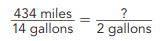
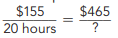
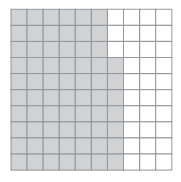
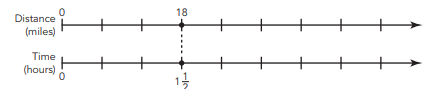
Are you ready for the ratios test? Costantino
Quiz by Melissa Costantino-Poruben
Customize this quiz to suit your class
Instantly translate to 100+ languages
Tag the questions with any skills you have. Your dashboard will track each student's mastery of each skill.
Give this quiz to my class



 The following days are a jumble of gunfire, digging, gobbled food, soldiers running in and out of the forest in small groups, distant explosions, stray shells, bandaged heads and unexpected lulls. On the very first day, before dawn, I am ordered into one of the newly dug trenches. I huddle there, squeezing my magic buttons and singing songs to the dog. When the fighting stops, the dog disappears, but a new companion takes his place. A strange little soldier crawls along the trench toward me. ‘Private Sasha!’ he cries. ‘I’ve been looking for you all day long!’ He’s old, like a grandfather, a dedushka. He has a black patch over one eye, a tape measure around his neck and a row of pins threaded into his sleeve. Hanging from his belt is the most enormous pair of scissors I have ever seen and I wonder if he uses them as a weapon. He doesn’t tell me his name, so in my head he becomes Dedushka. Dedushka squats, cups his hand to his ear, peers over the top of the trench and smiles. ‘It’s safe to be upright . . . for now.’ He helps me to my feet, dusts me off and commands me to stand as tall and straight as I can. Then he measures me. Everything from head to toe – even my toes! He writes numbers in a little notebook, strings his tape measure back around his neck, salutes and hurries away. It’s all very strange, and I wonder if Dedushka has been bumped on the head during the battle and is now a little bit muddled. I should have given him a hug before he left. I chase after him but stop when I’m hit by a shovelful of flying dirt. Sleepy Bear is digging a cave! ‘Are you going to hibernate?’ I ask. Sleepy Bear chuckles. ‘No, although that would be wonderful! I could do with a lo-o-o-ong sleep.’ He sighs and closes his eyes. He doesn’t open them again and I realise that he has gone to sleep. Standing up! I shake his arm, and he opens his eyes and keeps talking. ‘No, I’m not hibernating. I’m digging a little nook where I can sleep and eat. I’ll hang up my raincape as a door that can open and close so it feels just like a real home . . . except for the lice . . . and the bad smells . . . and the bombs that make the walls shake and crumble.’ He points further along the trench to where other soldiers are digging. ‘We’re all making little houses in the ground.’ ‘Like rabbits and moles,’ I say. Sleepy Bear chuckles. ‘Yes! And soldiers who need to hide from German bullets and bombs.’ He stops digging to roll a cigarette. ‘Should I be making a house?’ I ask. ‘I want to hide from German bullets and bombs, too.’ Sleepy Bear flops to the ground, lights his cigarette, closes his eyes and takes a deep puff. I wait for him to answer, but, instead, he begins to snore! I poke him in the side. He snorts and he murmurs, ‘I think someone has already built you a house, Sasha. Keep going along this beautiful village street and you are sure to find it.’ He falls asleep once more. I kiss his dusty cheek and whisper, ‘Thank you, Sleepy Bear.’ A little way along, I see Cook in a cloud of smoke. He has lit a fire, right here in the middle of the trench, and is stirring a cauldron full of kasha. He squats as he stirs. ‘What are you doing?’ I ask. ‘Cooking supper, of course!’ he cries. ‘But why are you doing it here?’ Cook points his spoon at the ground above the trenches. ‘Because if I do it up there, my pot will be filled with holes from German bullets and all of the kasha will leak out onto the ground. It’s bad enough that our supplies can’t get through German lines and there’s nothing to cook but buckwheat for kasha. But if we lost the kasha, too . . .’ ‘Hungry soldiers,’ I say. Cook nods. ‘And grumpy!’ ‘Like Boris!’ I gasp. ‘Even worse,’ warns Cook. I picture the kasha pot full of bullet holes. And then I realise that if the kasha pot were full of holes, then Cook would be, too. I wrap my arms around Cook’s neck and say, ‘I think this is a very good place for cooking our supper.’ I kiss his smoky cheek and run along. At the end of the trench, I find the biggest hole of all. It’s wide and deep and as busy as a beehive in a blossom tree. Above, a group of soldiers is rolling logs into place for a roof, while below, typewriters rattle and pencils scratch and papers flutter and voices crackle out of five different radios. Their words tangle together to tell a strange wartime fairy tale about German guns and a loving father called Stalin and a Red Army regiment that is lost in the deep, dark forest and a wicked beast called Hitler and a delivery of vegetables that was hit by a bomb and blown into a million tiny pieces too small even to make soup. In the middle of it all, wrestling with a rumpled map, his rifle still slung over his shoulder, is Major Scruff. ‘Major Scruff!’ I run and jump into his arms. ‘Is this our new home?’ ‘Yes, Sasha. I suppose it is.’ ‘Is it safe from German bullets and bombs?’ I ask. He stares at me. ‘Were you scared in the trenches today, Sasha?’ ‘No,’ I reply. ‘I had magic buttons and a dog and some songs to sing. Were you scared in the forest, Major Scruff?’ ‘Yes,’ he says. ‘Poor Major Scruff!’ I press my hand against his cheek. The dark, rough stubble is grubby with grit and his eyelids are taking a long time to open after every blink. ‘You need a shave and a nap!’ I scold. He chuckles. ‘I am too tired to shave and too busy to nap.’ I scrunch my nose while I consider his problem. ‘I know!’ I cry. ‘You nap and I will shave your whiskers. That will be two jobs tumbled into one!’ And so that’s what we do. Major Scruff slumps into a chair and snoozes while I lather his face with soapy water and shave his whiskers. The soap suds travel from his face, up into his hair and down the front of his uniform, and I have to shave his jaw and chin three times because I keep missing bits, but I finally get it all done. I am just wiping his cheeks dry when the dog appears. He licks my hand, then stretches up and licks soap suds from Major Scruff’s ear. Major Scruff wakes with a start. He feels his newly shaved face and cries, ‘Wonderful, Sasha! I feel smooth, clean, rested and ready for action.’ He ruffles my hair. ‘We must do this again tomorrow. Although next time, you might wake me with a gentle shake of the shoulder instead of licking my ear.’Earth's History. All the processes that have been discussed require long periods of time to create a noticeable change on Earth's surface. You can just imagine how long it would take to create an oceanS as vast as the Pacific Ocean if the ocean floor moves only at about 10 cm/year. It is then important to know the history of Earth to learn the complexities of its past and be able to use it to understand the present. Just like learning the history of a country that requires one to read a lot of books, learning the history of Earth involves studying a lot of rocks. Rocks, especially sedimentary rocks, contain a lot of information about Earth's past. It holds the key to most of the geologic processes that happened on Earth and the key to uncovering how life on Earth evolved. But these discoveries are worthless if there is no time perspective. Thus, one of the most important contributions of geologists to mankind is the geologic time scale, which holds a history that is exceedingly long.The geologic time scale divides the history of Earth into different blocks of time by using relative dating. Since geologists use rocks to understand Earth's history, dating does not give accurate numerical dates, it only tells that an event preceded the relative dating places these rocks in their proper sequence of formation. But relative other. This method is still widely used today, alongside a more accurate method called absolute dating, which uses radioactive elements. With relative and absolute dating. geologists can trace the history of Earth. Relative Dating. Relative dating requires one to know the basic principles such as law of super-position, principle of original horizontality, principle of cross-cutting relationships, and unconformities.Law of Superposition The law of superposition is the most basic principle in relative dating. It states that in an undeformed sequence of sedimentary rock, the layers found at the top are the youngest rocks and the layers at the bottom are the oldest. It may seem too obvious, but this principle has only been clearly stated in 1669 by the Danish anatomist, geologist, and priest, Nicolaus Steno. Principle of Original Horizontality Along with the law of superposition, Steno stated that an undeformed sequence is the one where the layers are still in a horizontal position. This follows the principle of original horizontality, which states that sediments are deposited horizontally. Principle of Cross-Cutting Relationships The principle of cross-cutting relationships determines which events occurred first depending on which rocks are affected. The geologic layer that cuts another is younger than the layer it cuts across.Unconformities Rock layers that have not been interrupted are considered conformable. These sites represent spans of geologic time. But there is no place on Earth that has a complete conformable stratum since external and internal processes have always interrupted the deposition of the sediments. These breaks in the record of the rock strata are called unconformities. Using unconformities, geologic events are determined. There are three basic types of unconformities angular unconformity, disconformity, and nonconformity. Angular unconformity is characterized by having tilted or folded sedimentary rocks below younger, horizontal layers of rock. Disconformity is determined where there are missing parallel rock layers. Erosion takes place and removes the younger top layers and then deposition would once again happen. Nonconformity is characterized by an igneous or metamorphic rock found below a sedimentary rock. Figure 3-13. Three basic types of unconformities Using these principles for relative dating, one can determine the order of events However, relative dating does not give a time element as to when they happened. Absolute Dating For a much more accurate method of determining the history of Earth, geologists make use of absolute dating. This method uses unstable elements to determine the exact age of rocks. Isotopes are elements that have the same number of protons but different number of neutrons. Most isotopes are stable but some may be unstable. This is because the forces that bind the protons and neutrons in the nucleus of the isotope are not strong enough to hold them together, resulting in a radioactive decay, The unstable isotopes are called radioactive isotopes or parent isotopes. When these parent isotopes undergo radioactive decay, new isotopes, known as daughter products, are formed. The time it takes for one-half of the nuclei in the sample to decay is called half-life. This amount of time is fixed for each kind of radioactive isotope no matter what physical conditions it is subjected to. The ratio of parent daughter isotope determines how many half-lives have passed. If it is 1:1, then one half-life has passed; if it is 1:3, then two half-lives have passed; and if 1:7, then three half-lives have passed, and so on. Therefore, using the concept of half-life and parent-daughter ratio, geologists can determine the exact age of the sample. This method is called radiometric dating. It uses five radioactive isotopes to determine the age of rocks. For dating rocks that are about a million years old, rubidium-87, thorium-232, and the two isotopes of uranium (U-238 and U-235) are used. The fifth radioactive isotope is potassium-40, which has a half-life of 1.3 billion years. With these radioactive elements, determining the accurate age of rocks becomes easier. For dating events that are more recent, radiocarbon dating is used. This method uses carbon-14. Carbon-14 has a half-life of 5730 years and can be used to date back events up to 75000 years. All organisms contain a small amount of carbon-14, which is proportional with the amount of carbon-12. When an organism dies, the carbon-14 decays and is no longer replaced. The amount of carbon-14 left in the sample is then compared to the amounts of carbon-12 present, and radiocarbon dates can then be determined. This method has been particularly useful for anthropologists, archeologists, historians, and geologists for events that are much more recent.Fossils Aside from rocks, geologists also use the remains of living organisms in understanding Earth's history. Some fossils are formed from parts of an organism (body fossil), while some provide signs or clues as to which life-forms were present at that time (Frace fossils). Fossils contain a lot of information about the past the kind of organisms that have lived, the environment where organisms lived, and the evolution organisms underwent as their environment changed. However, not all organisms turned into fossils, therefore, scientists cannot learn everything about the past using fossils alone. There are also fossils that are used to determine the age of a rock. These are index fossils and these are only found in rocks of a particular age. The organisms that turned into index fossils have a relatively short life-spanning from a few million years to a few hundred million years. Index fossils are also found in most of the common rocks around the world, which makes them easier to identify.The methods used for dating the age of rocks are also used for fossils. Absolute dating is more commonly used since it can give exact numerical dates for the age, but relative dating can also be used to determine which fossils are older.Introduction to Free Fall A free-falling object is an object that is falling under the sole influence of gravity. Any object that is being acted upon only by the force of gravity is said to be in a state of free fall. There are two important motion characteristics that are true of free-falling objects: • Free-falling objects do not encounter air resistance. • All free-falling objects (on Earth) accelerate downwards at a rate of 9.8 m/s/s (often approximated as 10 m/s/s for back-of-the-envelope calculations) Because free-falling objects are accelerating downwards at a rate of 9.8 m/s/s, a ticker tape trace or dot diagram of its motion would depict an acceleration. The dot diagram at the right depicts the acceleration of a free-falling object. The position of the object at regular time intervals - say, every 0.1 second - is shown. The fact that the distance that the object travels every interval of time is increasing is a sure sign that the ball is speeding up as it falls downward. Recall from an earlier lesson, that if an object travels downward and speeds up, then its acceleration is downward. Free-fall acceleration is often witnessed in a physics classroom by means of an ever-popular strobe light demonstration. The room is darkened and a jug full of water is connected by a tube to a medicine dropper. The dropper drips water and the strobe illuminate the falling droplets at a regular rate - say once every 0.2 seconds. Instead of seeing a stream of water free-falling from the medicine dropper, several consecutive drops with increasing separation distance are seen. The pattern of drops resembles the dot diagram shown in the graphic at the right. The Acceleration of Gravity It was learned in the previous part of this lesson that a free-falling object is an object that is falling under the sole influence of gravity. A free-falling object has an acceleration of 9.8 m/s/s, downward (on Earth). This numerical value for the acceleration of a free-falling object is such an important value that it is given a special name. It is known as the acceleration of gravity - the acceleration for any object moving under the sole influence of gravity. A matter of fact, this quantity known as the acceleration of gravity is such an important quantity that physicists have a special symbol to denote it - the symbol g. The numerical value for the acceleration of gravity is most accurately known as 9.8 m/s2. There are slight variations in this numerical value (to the second decimal place) that are dependent primarily upon on altitude. We will occasionally use the approximated value of 10 m/s2 in order to reduce the complexity of the many mathematical tasks that we will perform with this number. By so doing, we will be able to better focus on the conceptual nature of physics without too much of a sacrifice in numerical accuracy. g = 9.8 m/s2, downward Look It Up! Even on the surface of the Earth, there are local variations in the value of the acceleration of gravity (g). These variations are due to latitude, altitude and the local geological structure of the region. Recall from an earlier lesson that acceleration is the rate at which an object changes its velocity. It is the ratio of velocity change to time between any two points in an object's path. To accelerate at 9.8 m/s2 means to change the velocity by 9.8 m/s each second. If the velocity and time for a free-falling object being dropped from a position of rest were tabulated, then one would note the following pattern. Time (s) Velocity (m/s) 0 0 1 - 9.8 2 - 19.6 3 - 29.4 4 - 39.2 5 - 49.0 . Observe that the velocity-time data above reveal that the object's velocity is changing by 9.8 m/s each consecutive second. That is, the free-falling object has an acceleration of approximately 9.8 m/s2. Another way to represent this acceleration of 9.8 m/s2 is to add numbers to our dot diagram that we saw earlier in this lesson. The velocity of the ball is seen to increase as depicted in the diagram at the right. (NOTE: The diagram is not drawn to scale - in two seconds, the object would drop considerably further than the distance from shoulder to toes.) Representing Free Fall by Graphs • Early in Lesson 1 it was mentioned that there are a variety of means of describing the motion of objects. One such means of describing the motion of objects is through the use of graphs - position versus time and velocity vs. time graphs. In this part of Lesson 5, the motion of a free-falling motion will be represented using these two basic types of graphs. Representing Free Fall by Position-Time Graphs A position versus time graph for a free-falling object is shown below. Observe that the line on the graph curves. As learned earlier, a curved line on a position versus time graph signifies an accelerated motion. Since a free-falling object is undergoing an acceleration (g = 9.8 m/s/s), it would be expected that its position-time graph would be curved. A further look at the position-time graph reveals that the object starts with a small velocity (slow) and finishes with a large velocity (fast). Since the slope of any position vs. time graph is the velocity of the object (as learned in Lesson 3), the small initial slope indicates a small initial velocity and the large final slope indicates a large final velocity. Finally, the negative slope of the line indicates a negative (i.e., downward) velocity. Representing Free Fall by Velocity-Time Graphs A velocity versus time graph for a free-falling object is shown below. Observe that the line on the graph is a straight, diagonal line. As learned earlier, a diagonal line on a velocity versus time graph signifies an accelerated motion. Since a free-falling object is undergoing an acceleration (g = 9,8 m/s/s, downward), it would be expected that its velocity-time graph would be diagonal. A further look at the velocity-time graph reveals that the object starts with a zero velocity (as read from the graph) and finishes with a large, negative velocity; that is, the object is moving in the negative direction and speeding up. An object that is moving in the negative direction and speeding up is said to have a negative acceleration (if necessary, review the vector nature of acceleration). Since the slope of any velocity versus time graph is the acceleration of the object (as learned in Lesson 4), the constant, negative slope indicates a constant, negative acceleration. This analysis of the slope on the graph is consistent with the motion of a free-falling object - an object moving with a constant acceleration of 9.8 m/s/s in the downward direction. The Kinematic Equations The goal of this first unit has been to investigate the variety of means by which the motion of objects can be described. The variety of representations that we have investigated includes verbal representations, pictorial representations, numerical representations, and graphical representations (position-time graphs and velocity-time graphs). In Lesson 6, we will investigate the use of equations to describe and represent the motion of objects. These equations are known as kinematic equations. There are a variety of quantities associated with the motion of objects - displacement (and distance), velocity (and speed), acceleration, and time. Knowledge of each of these quantities provides descriptive information about an object's motion. For example, if a car is known to move with a constant velocity of 22.0 m/s, North for 12.0 seconds for a northward displacement of 264 meters, then the motion of the car is fully described. And if a second car is known to accelerate from a rest position with an eastward acceleration of 3.0 m/s2 for a time of 8.0 seconds, providing a final velocity of 24 m/s, East and an eastward displacement of 96 meters, then the motion of this car is fully described. These two statements provide a complete description of the motion of an object. However, such completeness is not always known. It is often the case that only a few parameters of an object's motion are known, while the rest are unknown. For example as you approach the stoplight, you might know that your car has a velocity of 22 m/s, East and is capable of a skidding acceleration of 8.0 m/s2, West. However you do not know the displacement that your car would experience if you were to slam on your brakes and skid to a stop; and you do not know the time required to skid to a stop. In such an instance as this, the unknown parameters can be determined using physics principles and mathematical equations (the kinematic equations). The BIG 4 The kinematic equations are a set of four equations that can be utilized to predict unknown information about an object's motion if other information is known. The equations can be utilized for any motion that can be described as being either a constant velocity motion (an acceleration of 0 m/s/s) or a constant acceleration motion. They can never be used over any time period during which the acceleration is changing. Each of the kinematic equations include four variables. If the values of three of the four variables are known, then the value of the fourth variable can be calculated. In this manner, the kinematic equations provide a useful means of predicting information about an object's motion if other information is known. For example, if the acceleration value and the initial and final velocity values of a skidding car is known, then the displacement of the car and the time can be predicted using the kinematic equations. Lesson 6 of this unit will focus upon the use of the kinematic equations to predict the numerical values of unknown quantities for an object's motion. The four kinematic equations that describe an object's motion are: There are a variety of symbols used in the above equations. Each symbol has its own specific meaning. The symbol d stands for the displacement of the object. The symbol t stands for the time for which the object moved. The symbol a stands for the acceleration of the object. And the symbol v stands for the velocity of the object; a subscript of i after the v (as in vi) indicates that the velocity value is the initial velocity value and a subscript of f (as in vf) indicates that the velocity value is the final velocity value. Each of these four equations appropriately describes the mathematical relationship between the parameters of an object's motion. As such, they can be used to predict unknown information about an object's motion if other information is known. In the next part of Lesson 6 we will investigate the process of doing this. Kinematic Equations and Problem-Solving The four kinematic equations that describe the mathematical relationship between the parameters that describe an object's motion were introduced in the previous part of Lesson 6. The four kinematic equations are: In the above equations, the symbol d stands for the displacement of the object. The symbol t stands for the time for which the object moved. The symbol a stand for the acceleration of the object. And the symbol v stands for the instantaneous velocity of the object; a subscript of i after the v (as in vi) indicates that the velocity value is the initial velocity value and a subscript of f (as in vf) indicates that the velocity value is the final velocity value. Problem-Solving Strategy In this part of Lesson 6 we will investigate the process of using the equations to determine unknown information about an object's motion. The process involves the use of a problem-solving strategy that will be used throughout the course. The strategy involves the following steps: 1. Construct an informative diagram of the physical situation. 2. Identify and list the given information in variable form. 3. Identify and list the unknown information in variable form. 4. Identify and list the equation that will be used to determine unknown information from known information. 5. Substitute known values into the equation and use appropriate algebraic steps to solve for the unknown information. 6. Check your answer to ensure that it is reasonable and mathematically correct. The use of this problem-solving strategy in the solution of the following problem is modeled in Examples A and B below. Example Problem A . Ima Hurryin is approaching a stoplight moving with a velocity of +30.0 m/s. The light turns yellow, and Ima applies the brakes and skids to a stop. If Ima's acceleration is -8.00 m/s2, then determine the displacement of the car during the skidding process. (Note that the direction of the velocity and the acceleration vectors are denoted by a + and a - sign.) The solution to this problem begins by the construction of an informative diagram of the physical situation. This is shown below. The second step involves the identification and listing of known information in variable form. Note that the vf value can be inferred to be 0 m/s since Ima's car comes to a stop. The initial velocity (vi) of the car is +30.0 m/s since this is the velocity at the beginning of the motion (the skidding motion). And the acceleration (a) of the car is given as - 8.00 m/s2. (Always pay careful attention to the + and - signs for the given quantities.) The next step of the strategy involves the listing of the unknown (or desired) information in variable form. In this case, the problem requests information about the displacement of the car. So d is the unknown quantity. The results of the first three steps are shown in the table below. Diagram: Given: Find: vi = +30.0 m/s vf = 0 m/s a = - 8.00 m/s2 d = ?? The next step of the strategy involves identifying a kinematic equation that would allow you to determine the unknown quantity. There are four kinematic equations to choose from. In general, you will always choose the equation that contains the three known and the one unknown variable. In this specific case, the three known variables and the one unknown variable are vf, vi, a, and d. Thus, you will look for an equation that has these four variables listed in it. An inspection of the four equations above reveals that the equation on the top right contains all four variables. vf2 = vi2 + 2 • a • d Once the equation is identified and written down, the next step of the strategy involves substituting known values into the equation and using proper algebraic steps to solve for the unknown information. This step is shown below. (0 m/s)2 = (30.0 m/s)2 + 2 • (-8.00 m/s2) • d 0 m2/s2 = 900 m2/s2 + (-16.0 m/s2) • d (16.0 m/s2) • d = 900 m2/s2 - 0 m2/s2 (16.0 m/s2)*d = 900 m2/s2 d = (900 m2/s2)/ (16.0 m/s2) d = (900 m2/s2)/ (16.0 m/s2) d = 56.3 m The solution above reveals that the car will skid a distance of 56.3 meters. (Note that this value is rounded to the third digit.) The last step of the problem-solving strategy involves checking the answer to assure that it is both reasonable and accurate. The value seems reasonable enough. It takes a car a considerable distance to skid from 30.0 m/s (approximately 65 mi/hr) to a stop. The calculated distance is approximately one-half a football field, making this a very reasonable skidding distance. Checking for accuracy involves substituting the calculated value back into the equation for displacement and insuring that the left side of the equation is equal to the right side of the equation. Indeed it is! Example Problem B Ben Rushin is waiting at a stoplight. When it finally turns green, Ben accelerated from rest at a rate of a 6.00 m/s2 for a time of 4.10 seconds. Determine the displacement of Ben's car during this time period. Once more, the solution to this problem begins by the construction of an informative diagram of the physical situation. This is shown below. The second step of the strategy involves the identification and listing of known information in variable form. Note that the vi value can be inferred to be 0 m/s since Ben's car is initially at rest. The acceleration (a) of the car is 6.00 m/s2. And the time (t) is given as 4.10 s. The next step of the strategy involves the listing of the unknown (or desired) information in variable form. In this case, the problem requests information about the displacement of the car. So d is the unknown information. The results of the first three steps are shown in the table below. Diagram: Given: Find: vi = 0 m/s t = 4.10 s a = 6.00 m/s2 d = ?? The next step of the strategy involves identifying a kinematic equation that would allow you to determine the unknown quantity. There are four kinematic equations to choose from. Again, you will always search for an equation that contains the three known variables and the one unknown variable. In this specific case, the three known variables and the one unknown variable are t, vi, a, and d. An inspection of the four equations above reveals that the equation on the top left contains all four variables. d = vi • t + ½ • a • t2 Once the equation is identified and written down, the next step of the strategy involves substituting known values into the equation and using proper algebraic steps to solve for the unknown information. This step is shown below. d = (0 m/s) • (4.1 s) + ½ • (6.00 m/s2) • (4.10 s)2 d = (0 m) + ½ • (6.00 m/s2) • (16.81 s2) d = 0 m + 50.43 m d = 50.4 m The solution above reveals that the car will travel a distance of 50.4 meters. (Note that this value is rounded to the third digit.) The last step of the problem-solving strategy involves checking the answer to assure that it is both reasonable and accurate. The value seems reasonable enough. A car with an acceleration of 6.00 m/s/s will reach a speed of approximately 24 m/s (approximately 50 mi/hr) in 4.10 s. The distance over which such a car would be displaced during this time period would be approximately one-half a football field, making this a very reasonable distance. Checking for accuracy involves substituting the calculated value back into the equation for displacement and insuring that the left side of the equation is equal to the right side of the equation. Indeed, it is! The two example problems above illustrate how the kinematic equations can be combined with a simple problem-solving strategy to predict unknown motion parameters for a moving object. Provided that three motion parameters are known, any of the remaining values can be determined. In the next part of Lesson 6, we will see how this strategy can be applied to free fall situations. Or if interested, you can try some practice problems and check your answer against the given solutions. Kinematic Equations and Free Fall As mentioned in Lesson 5, a free-falling object is an object that is falling under the sole influence of gravity. That is to say that any object that is moving and being acted upon only be the force of gravity is said to be "in a state of free fall." Such an object will experience a downward acceleration of 9.8 m/s/s. Whether the object is falling downward or rising upward towards its peak, if it is under the sole influence of gravity, then its acceleration value is 9.8 m/s/s. Like any moving object, the motion of an object in free fall can be described by four kinematic equations. The kinematic equations that describe any object's motion are: The symbols in the above equation have a specific meaning: the symbol d stands for the displacement; the symbol t stands for the time; the symbol a stands for the acceleration of the object; the symbol vi stands for the initial velocity value; and the symbol vf stands for the final velocity. Applying Free Fall Concepts to Problem-Solving There are a few conceptual characteristics of free fall motion that will be of value when using the equations to analyze free fall motion. These concepts are described as follows: • An object in free fall experiences an acceleration of -9.8 m/s/s. (The - sign indicates a downward acceleration.) Whether explicitly stated or not, the value of the acceleration in the kinematic equations is -9.8 m/s/s for any freely falling object. • If an object is merely dropped (as opposed to being thrown) from an elevated height, then the initial velocity of the object is 0 m/s. • If an object is projected upwards in a perfectly vertical direction, then it will slow down as it rises upward. The instant at which it reaches the peak of its trajectory, its velocity is 0 m/s. This value can be used as one of the motion parameters in the kinematic equations; for example, the final velocity (vf) after traveling to the peak would be assigned a value of 0 m/s. • If an object is projected upwards in a perfectly vertical direction, then the velocity at which it is projected is equal in magnitude and opposite in sign to the velocity that it has when it returns to the same height. That is, a ball projected vertically with an upward velocity of +30 m/s will have a downward velocity of -30 m/s when it returns to the same height. These four principles and the four kinematic equations can be combined to solve problems involving the motion of free-falling objects. The two examples below illustrate application of free fall principles to kinematic problem-solving. In each example, the problem solving strategy that was introduced earlier in this lesson will be utilized. Example Problem A Luke Autbeloe drops a pile of roof shingles from the top of a roof located 8.52 meters above the ground. Determine the time required for the shingles to reach the ground. The solution to this problem begins by the construction of an informative diagram of the physical situation. This is shown below. The second step involves the identification and listing of known information in variable form. You might note that in the statement of the problem, there is only one piece of numerical information explicitly stated: 8.52 meters. The displacement (d) of the shingles is -8.52 m. (The - sign indicates that the displacement is downward). The remaining information must be extracted from the problem statement based upon your understanding of the above principles. For example, the vi value can be inferred to be 0 m/s since the shingles are dropped (released from rest; see note above). And the acceleration (a) of the shingles can be inferred to be -9.8 m/s2 since the shingles are free-falling (see note above). (Always pay careful attention to the + and - signs for the given quantities.) The next step of the solution involves the listing of the unknown (or desired) information in variable form. In this case, the problem requests information about the time of fall. So t is the unknown quantity. The results of the first three steps are shown in the table below. Diagram: Given: Find: vi = 0.0 m/s d = -8.52 m a = - 9.8 m/s2 t = ?? The next step involves identifying a kinematic equation that allows you to determine the unknown quantity. There are four kinematic equations to choose from. In general, you will always choose the equation that contains the three known and the one unknown variable. In this specific case, the three known variables and the one unknown variable are d, vi, a, and t. Thus, you will look for an equation that has these four variables listed in it. An inspection of the four equations above reveals that the equation on the top left contains all four variables. d = vi • t + ½ • a • t2 Once the equation is identified and written down, the next step involves substituting known values into the equation and using proper algebraic steps to solve for the unknown information. This step is shown below. -8.52 m = (0 m/s) • (t) + ½ • (-9.8 m/s2) • (t)2 -8.52 m = (0 m) *(t) + (-4.9 m/s2) • (t)2 -8.52 m = (-4.9 m/s2) • (t)2 (-8.52 m)/(-4.9 m/s2) = t2 1.739 s2 = t2 t = 1.32 s The solution above reveals that the shingles will fall for a time of 1.32 seconds before hitting the ground. (Note that this value is rounded to the third digit.) The last step of the problem-solving strategy involves checking the answer to assure that it is both reasonable and accurate. The value seems reasonable enough. The shingles are falling a distance of approximately 10 yards (1 meter is pretty close to 1 yard); it seems that an answer between 1 and 2 seconds would be highly reasonable. The calculated time easily falls within this range of reasonability. Checking for accuracy involves substituting the calculated value back into the equation for time and insuring that the left side of the equation is equal to the right side of the equation. Indeed it is! Example Problem B Rex Things throws his mother's crystal vase vertically upwards with an initial velocity of 26.2 m/s. Determine the height to which the vase will rise above its initial height. Once more, the solution to this problem begins by the construction of an informative diagram of the physical situation. This is shown below. The second step involves the identification and listing of known information in variable form. You might note that in the statement of the problem, there is only one piece of numerical information explicitly stated: 26.2 m/s. The initial velocity (vi) of the vase is +26.2 m/s. (The + sign indicates that the initial velocity is an upwards velocity). The remaining information must be extracted from the problem statement based upon your understanding of the above principles. Note that the vf value can be inferred to be 0 m/s since the final state of the vase is the peak of its trajectory (see note above). The acceleration (a) of the vase is -9.8 m/s2 (see note above). The next step involves the listing of the unknown (or desired) information in variable form. In this case, the problem requests information about the displacement of the vase (the height to which it rises above its starting height). So d is the unknown information. The results of the first three steps are shown in the table below. Diagram: Given: Find: vi = 26.2 m/s vf = 0 m/s a = -9.8 m/s2 d = ?? The next step involves identifying a kinematic equation that would allow you to determine the unknown quantity. There are four kinematic equations to choose from. Again, you will always search for an equation that contains the three known variables and the one unknown variable. In this specific case, the three known variables and the one unknown variable are vi, vf, a, and d. An inspection of the four equations above reveals that the equation on the top right contains all four variables. vf2 = vi2 + 2 • a • d Once the equation is identified and written down, the next step involves substituting known values into the equation and using proper algebraic steps to solve for the unknown information. This step is shown below. (0 m/s)2 = (26.2 m/s)2 + 2 •(-9.8m/s2) •d 0 m2/s2 = 686.44 m2/s2 + (-19.6 m/s2) •d (-19.6 m/s2) • d = 0 m2/s2 -686.44 m2/s2 (-19.6 m/s2) • d = -686.44 m2/s2 d = (-686.44 m2/s2)/ (-19.6 m/s2) d = 35.0 m The solution above reveals that the vase will travel upwards for a displacement of 35.0 meters before reaching its peak. (Note that this value is rounded to the third digit.) The last step of the problem-solving strategy involves checking the answer to assure that it is both reasonable and accurate. The value seems reasonable enough. The vase is thrown with a speed of approximately 50 mi/hr (merely approximate 1 m/s to be equivalent to 2 mi/hr). Such a throw will never make it further than one football field in height (approximately 100 m), yet will surely make it past the 10-yard line (approximately 10 meters). The calculated answer certainly falls within this range of reasonability. Checking for accuracy involves substituting the calculated value back into the equation for displacement and insuring that the left side of the equation is equal to the right side of the equation. Indeed, it is! Kinematic equations provide a useful means of determining the value of an unknown motion parameter if three motion parameters are known. In the case of a free-fall motion, the acceleration is often known. And in many cases, another motion parameter can be inferred through a solid knowledge of some basic kinematic principles.Are you ready for the Kitchen?!Are you ready for the Unit 4 Test?Ancient Rome - Are you ready for the quiz?Emma: Hi Jack! Hi Sophie! Are you ready for the picnic? Jack: Yes! I brought cookies and juice. Sophie: And I brought sandwiches. They smell delicious! Emma: Wow! This is like a feast! Jack: I’m really fond of sandwiches. Can I have one? Sophie: Of course, but don’t snatch it, Jack! Jack (laughs): Okay, okay! I’ll wait. Emma: Hey, do you remember the story about the Tortoise and the Hare? Sophie: Yes! The slow tortoise won the race. That was remarkable. Jack: I didn’t believe he could win, but he did! Emma: That story teaches good lessons. Sophie: Like "Don’t give up" and "Don’t be too proud." Jack: I like stories like that. Do you know any more? Emma: Let’s eat and tell more stories together! All: Yay! Let’s start the picnic!Hi, Sam. Are you ready for the spelling test on Monday? Yes, I am ready. Would you like to practice spelling words on the computer? I have a spelling game. Yes, that sounds like fun! How do I play? You can use the keyboard to write the words. You can use the mouse to click. Wow, this game is great! Yes, it's a good computer game. We will do well on this Monday's test.