Loading...

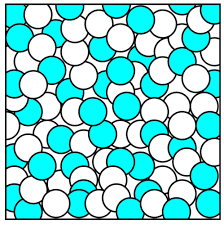
Arrangement of particles / States of Matter
Quiz by Miss
Customize this quiz to suit your class
Instantly translate to 100+ languages
Tag the questions with any skills you have. Your dashboard will track each student's mastery of each skill.
Give this quiz to my class
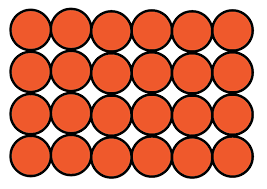
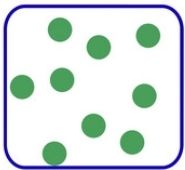
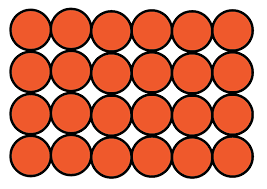

 Science 7 Q1 L3 States of Matter, Particle Arrangement and Phase ChangeIons Ions are charged substances that have formed through the gain or loss of electrons. Cations form from the loss of electrons and have a positive charge while anions form through the gain of electrons and have a negative charge. Cation Formation Cations are the positive ions formed by the loss of one or more electrons. The most commonly formed cations of the representative elements are those that involve the loss of all of the valence electrons. Consider the alkali metal sodium (Na) . It has one valence electron in the n=3 energy level. Upon losing that electron, the sodiu ion now has an octet of electrons from the second energy level and a charge of 1+ . The electron arrangement of the sodium ion is now the same as that of the noble gas neon. Consider a similar process with magnesium and aluminum. In this case, the magnesium atom loses its two valence electrons in order to achieve the same arrangement as the noble gas neon and a charge of 2+ . The aluminum atom loses its three valence electrons to have the same electron arrangement as neon and a charge of 3+ . For representative elements under typical conditions, three electrons is usually the maximum number that will be los. Representative elements will not lose electrons beyond their valence because they would have to "break" the octet of the previous energy level which provides stability to the ion. Anions Anions are the negative ions formed from the gain of one or more electrons. When nonmetal atoms gain elections, they often do so until their outermost principal energy level achieves an octet. For fluorine, which has an electron arrangement of (2, 7), it only needs to gain one electron to have the same electron arrangement as neon. Forming an octet (eight electrons in the outer shell) provides stability to the atom. Fluorine will gain one electron and have a charge of 1− . The electron arrangement of the fluoride ion (2, 8) will also change to reflect the gain of an electron. Oxygen has an electron arrangement of (2, 6) and needs to gain two electrons to fill the n=2 energy level and achieve an octet of electrons in the outermost shell. The oxide ion will have a charge of 2− as a result of gaining two electrons. Under typical conditions, three electrons is the maximum that will be gained in the formation of anions. Subatomic Particles in an Ion Since ions form from the gain or loss of electrons, we can also look at the number of subatomic particles (protons, neutrons, and electrons) found in an ion. Remember that the number of protons determines the identity of the element and will not change in a chemical process. Example 2.5.1 How many protons, neutrons, and electrons in a single oxide (O2−) ion? Solution Oxygen has the atomic number 8 so both the atom and the ion will have 8 protons. The average atomic mass of oxygen is 16. Therefore, there will be 8 neutrons (atomic mass−atomic number=neutrons) . A neutral oxygen atom would have 8 electrons. However, the anion has gained two electrons so O2− has 10 electrons. We can also use information about the subatomic particles to determine the identity of an ion. Example 2.5.2 An ion with a 2+ charge has 18 electrons. Determine the identity of the ion. Solution If an ion has a 2+ charge then it must have lost electrons to form the cation. If the ion has 18 electrons and the atom lost 2 to form the ion, then the neutral atom contained 20 electrons. Since it was neutral, it must also have had 20 protons. Therefore the element is calcium. Polyatomic Ions A polyatomic ion is an ion composed of two or more atoms that have a charge as a group (poly = many). The ammonium ion (see figure below) consists of one nitrogen atom and four hydrogen atoms. Together, they comprise a single ion with a 1+ charge and a formula of NH+4 . The hydroxide ion (see figure below) contains one hydrogen atom and one oxygen atom with an overall charge of 1− . The carbonate ion (see figure below) consists of one carbon atom and three oxygen atoms and carries an overall charge of 2− . The formula of the carbonate ion is CO2−3 . The atoms of a polyatomic ion are tightly bonded together and so the entire ion behaves as a single unit. The figures below show several examples. Soult Screenshot 2-2-1.png Figure 2.5.1 : The ammonium ion (NH+4) is a nitrogen atom (blue) bonded to four hydrogen atoms (white). Soult Screenshot 2-2-2.png Figure 2.5.2 : The hydroxide ion (OH−) is an oxygen atom (red) bonded to a hydrogen atom. Soult Screenshot 2-2-3.png Figure 2.5.3 : The carbonate ion (CO2−3) is a carbon atom (black) bonded to three oxygen atoms. The table below lists a number of polyatomic ions by name and by structure. The heading for each column indicates the charge on the polyatomic ions in that group. Note that the vast majority of the ions listed are anions - there are very few polyatomic cations. 1− 2− 3− 1+ Table 2.5.1 : Common Polyatomic Ions acetate, CH3COO− carbonate, CO2−3 arsenate, AsO3−3 ammonium, NH+4 bromate, BrO−3 chromate, CrO2−4 phosphite, PO3−3 chlorate, ClO−3 dichromate, Cr2O2−7 phosphate, PO3−4 chlorite, ClO−2 hydrogen phosphate, HPO2−4 cyanide, CN− oxalate, C2O2−4 dihydrogen phosphate, H2PO−4 peroxide, O2−2 hydrogen carbonate, HCO−3 silicate, SiO2−3 hydrogen sulfate, HSO−4 sulfate, SO2−4 hydrogen sulfide, HS− sulfite, SO2−3 hydroxide, OH− hypochlorite, ClO− nitrate, NO−3 nitrite, NO−2 perchlorate, ClO−4 permanganate, MnO−4 The vast majority of polyatomic ions are anions, many of which end in -ate or -ite. Notice that in some cases such as nitrate (NO−3) and nitrite (NO−2) , there are multiple anions that consist of the same two elements. In these cases, the difference between the ions is the number of oxygen atoms present, while the overall charge is the same. As a class, these are called oxyanions. When there are two oxyanions for a particular element, the one with the greater number of oxygen atoms gets the -ate suffix, while the one with the fewer number of oxygen atoms gets the -ite suffix. The four oxyanions of chlorine are shown below, which also includes the use of the prefixes hypo- and per-. ClO− , hypochlorite ClO−2 , chlorite ClO−3 , chlorate ClO−4 , perchlorate Not your usual ion Soult Screenshot 2-2-4.png "Drink you milk. It's good for your bones." We're told this from early childhood, and with good reason. Milk contains a good supply of calcium, part of the structure of bone. However, there are two other ionic components of hydroxyapatite, the mineral component. Phosphate ion and hydroxide ion make up the remainder of the inorganic material in bone. News You Can Use Bone is a very complex structure. It is composed of protein (mainly collagen), hydroxyapatite (a calcium-phosphate-hydroxide mixture), some other minerals, and contains 10 - 20% water. The calcium/phosphate ratios are not stoichiometric, but vary somewhat from one portion of bone to the next. Bones are very strong but will break under enough stress. Regular exercise and proper nutrition help to increase bone strength. Watch a video about bone structure at http://www.youtube.com/watch?v=d9owEvYdouk Nitrate is an anion with a complex bonding structure. Major sources for this ion in drinking water are runoff from fertilizer, septic tank leakage, sewage, and natural deposits. High concentrations of nitrates represent a significant health hazard, especially to infants. The nitrate in the body is converted to nitrite, which then binds to hemoglobin. This binding decreases the ability of hemoglobin to transport oxygen, thus depriving the cells of the O2 needed for proper functioning. Cyanide production is widespread throughout nature. Forest fires will produce significant amounts of cyanide. Many plants contain cyanide, and it is produced by a number of bacteria, algae, and fungi. Cyanide is used industrially in metal finishing, iron and steel mills, and in organic synthesis processes. This material is also an important component for the refining of precious metals. Formation of a complex between cyanide and gold allows extraction of this metal from a mixture.Standard 7.PS1.3 -Develop a model to explain how changes to a system can be explained by changes in temperature and/or pressure and the effect of those changes on particle motion and/or spatial arrangement. Arrangement of Electrons in the AtomIllumination arrangement of opencast and underground working.GSE HS Science - SPS1c Interpret The Arrangement Of The Periodic Table To Explain Element PropertiesStatistics Branch of science that deals with the collection, organization, analysis, interpretation, and presentation of data. Purpose of statistics is to make an inference about a population by examining a sample. Collection of Data Refers to the process of gathering information. Primary source: questionnaires, interviews. Secondary source: journals, books. Presentation of Data Organization and arrangement of data in tabular form (tables), graphical representation (graphs). Analysis of Data Application and interpretation using statistical tools to derive meaning. Inspection of Data Descriptive Statistics: Involves describing the basic features of the data in a study. Provides simple summaries about the sample and measures. Inferential Statistics: Makes judgments and reaches conclusions about populations based on samples. Population vs Sample Population: entirety Sample: only part of population Fundamental or Descriptive Statistics: Measures Of Central Tendency: Mean (average) Median (middle value) Mode (most frequent) Measures Of Dispersion/Variability: Range (difference between highest & lowest) Variance & standard deviation Measures Of Position: Quartiles & percentiles Measures Of Relationship Between Variables: Correlation coefficient Types Of Data: Primary Data – original source. Secondary Data – derived from primary. Major Characteristics Of Data Sources: Primary Source – direct from respondent; more accurate; costly; time-consuming. Secondary Source – characteristic notAntagonist A character or force in a work of literature that, Bathos The use of insincere or overdone sentimentalityby opposing the protagonist produces tension or conflict Antithesis A rhetorical opposition or contrast of ideas by means of a grammatical arrangement of words, clauses, or sentences Aphorism A short, pithy statement of generally accepted truth or sentiment Apollonian In contrast to Dionysian, it refers to the most noble, godlike qualities of human nature and behavior Apostrophe A rhetorical device in which a speaker addresses a person or personified thing not present Archetype An abstract or ideal conception of a type: a perfectly typical example; an original model or form Assonance The repetition of two or more vowel sounds in a group of words or lines in poetry and prose Ballad A simple narrative verse that tells a story that is sung or recited A poet; in olden times, a performer who told heroic stories to musical accompaniment