Loading...


Atom ,Pure Substances, Electronic Configuration Quiz
Quiz by Saskia Stewart
Customize this quiz to suit your class
Instantly translate to 100+ languages
Tag the questions with any skills you have. Your dashboard will track each student's mastery of each skill.
Give this quiz to my class
Which subatomic particle has a charge of zero?
neutron
electron
proton
liquid
Look at the diagram above and state which subatomic particles make up the mass of of an atom
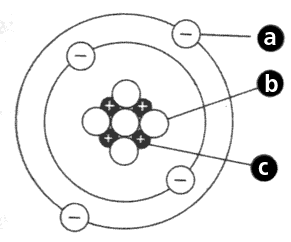
protons and neutrons
neutrons only
electrons and protons
electrons and neutrons
Which subatomic particle has a charge of zero?
Look at the diagram above and state which subatomic particles make up the mass of of an atom
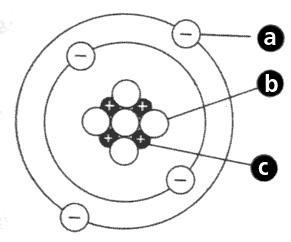
The arrangement of electrons in energy shells is called
Elements and Compounds are two type of pure substances. True or False
Which element is shown by the following symbol?
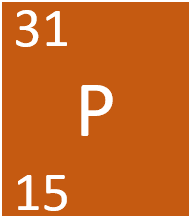
An atom has a mass number of 40 and the atomic number is 20.How many neutrons are in the atom.Which elment is present?
Using the structure above ,which group and period does the atom belongs to?
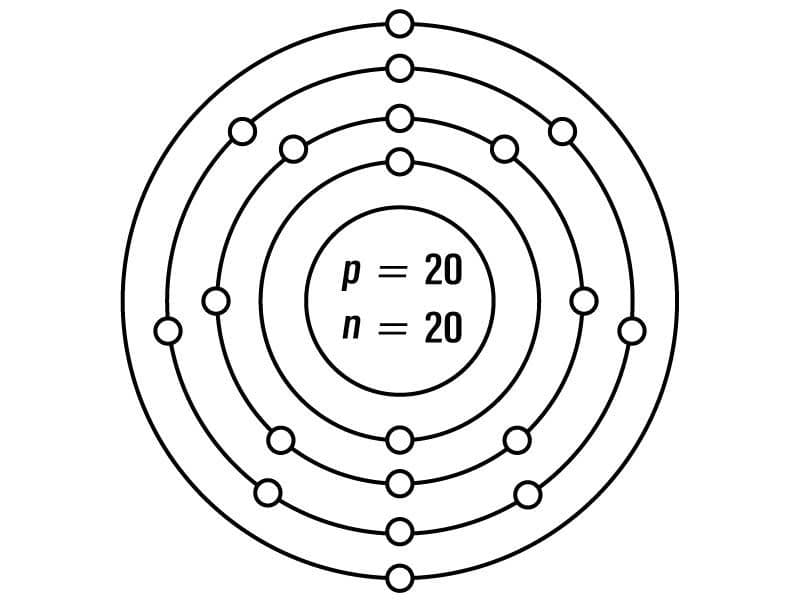
What does the atomic number of an element represent?
The nucleus of an atom contains 12 protons and 13 neutrons. What is the mass of the atom?
How many neutrons does a sodium atom have?
The second energy shell can hold a maximum of electrons of
The electronic configuration of an atom can tell you the period an dgroup numbers of an element .True or False
Use the picture above and write the electronic configuration for the atom above.
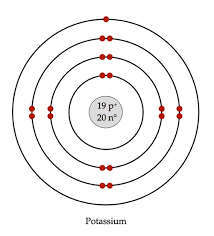
In a neutral atom, the number of electrons and the number of protons are the same. True or False
Using the picture above, determine which group and period potassium belongs to
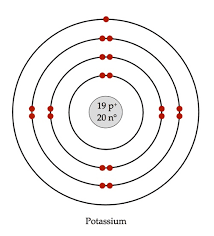
If the number of protons is 13 and the number of neutrons is 14.What is the number of electrons ?
What is the mass number for an atom that has a number of protons is 13 and the number of neutrons 14.
NEW-SC.8.P.8.5-1. Students will identify the difference between an element and a compound. 2. Students will describe how elements combine in a multitude of ways to produce compounds that make up all living and nonliving things. 3. Students will identify the difference between homogeneous and heterogeneous mixtures. 4. Students will differentiate among pure substances, mixtures, and solutions. 5. Students will recognize that elements are grouped in the periodic table according to similarities of their properties. 6. Students will explain that atoms are the smallest unit of an element and are composed of subatomic particles; electrons, protons, neutrons. 7. Relate the scientific theory of atoms using models. 8. Students know the parts of an atom, their location, and their charge. 9. Students know all matter is composed of atoms. 10. Students will explain why theories may be modified but are rarely discardedCovalent Molecules and Compounds Just as an atom is the simplest unit that has the fundamental chemical properties of an element, a molecule is the simplest unit that has the fundamental chemical properties of a covalent compound. Some pure elements exist as covalent molecules. Hydrogen, nitrogen, oxygen, and the halogens occur naturally as the diatomic (“two atoms”) molecules H2, N2, O2, F2, Cl2, Br2, and I2 (part (a) in Figure 3.1.1). Similarly, a few pure elements exist as polyatomic (“many atoms”) molecules, such as elemental phosphorus and sulfur, which occur as P4 and S8 (part (b) in Figure 3.1.1). Each covalent compound is represented by a molecular formula, which gives the atomic symbol for each component element, in a prescribed order, accompanied by a subscript indicating the number of atoms of that element in the molecule. The subscript is written only if the number of atoms is greater than 1. For example, water, with two hydrogen atoms and one oxygen atom per molecule, is written as H2O. Similarly, carbon dioxide, which contains one carbon atom and two oxygen atoms in each molecule, is written as CO2. Covalent compounds that predominantly contain carbon and hydrogen are called organic compounds. The convention for representing the formulas of organic compounds is to write carbon first, followed by hydrogen and then any other elements in alphabetical order (e.g., CH4O is methyl alcohol, a fuel). Compounds that consist primarily of elements other than carbon and hydrogen are called inorganic compounds; they include both covalent and ionic compounds. In inorganic compounds, the component elements are listed beginning with the one farthest to the left in the periodic table, as in CO2 or SF6. Those in the same group are listed beginning with the lower element and working up, as in ClF. By convention, however, when an inorganic compound contains both hydrogen and an element from groups 13–15, hydrogen is usually listed last in the formula. Examples are ammonia (NH3) and silane (SiH4). Compounds such as water, whose compositions were established long before this convention was adopted, are always written with hydrogen first: Water is always written as H2O, not OH2. The conventions for inorganic acids, such as hydrochloric acid (HCl) and sulfuric acid (H2SO4), are described elswhere. Note! For organic compounds: write C first, then H, and then the other elements in alphabetical order. For molecular inorganic compounds: start with the element at far left in the periodic table; list elements in same group beginning with the lower element and working up. Write the molecular formula of each compound. a. The phosphorus-sulfur compound that is responsible for the ignition of so-called strike anywhere matches has 4 phosphorus atoms and 3 sulfur atoms per molecule. b. Ethyl alcohol, the alcohol of alcoholic beverages, has 1 oxygen atom, 2 carbon atoms, and 6 hydrogen atoms per molecule. c. Freon-11, once widely used in automobile air conditioners and implicated in damage to the ozone layer, has 1 carbon atom, 3 chlorine atoms, and 1 fluorine atom per molecule. Solution: a. • A The molecule has 4 phosphorus atoms and 3 sulfur atoms. Because the compound does not contain mostly carbon and hydrogen, it is inorganic. • B Phosphorus is in group 15, and sulfur is in group 16. Because phosphorus is to the left of sulfur, it is written first. • C Writing the number of each kind of atom as a right-hand subscript gives P4S3 as the molecular formula. b. • A Ethyl alcohol contains predominantly carbon and hydrogen, so it is an organic compound. • B The formula for an organic compound is written with the number of carbon atoms first, the number of hydrogen atoms next, and the other atoms in alphabetical order: CHO. • C Adding subscripts gives the molecular formula C2H6O. c. • A Freon-11 contains carbon, chlorine, and fluorine. It can be viewed as either an inorganic compound or an organic compound (in which fluorine has replaced hydrogen). The formula for Freon-11 can therefore be written using either of the two conventions. • B According to the convention for inorganic compounds, carbon is written first because it is farther left in the periodic table. Fluorine and chlorine are in the same group, so they are listed beginning with the lower element and working up: CClF. Adding subscripts gives the molecular formula CCl3F. • C We obtain the same formula for Freon-11 using the convention for organic compounds. The number of carbon atoms is written first, followed by the number of hydrogen atoms (zero) and then the other elements in alphabetical order, also giving CCl3F. Write the molecular formula for each compound. a. Nitrous oxide, also called “laughing gas,” has 2 nitrogen atoms and 1 oxygen atom per molecule. Nitrous oxide is used as a mild anesthetic for minor surgery and as the propellant in cans of whipped cream. b. Sucrose, also known as cane sugar, has 12 carbon atoms, 11 oxygen atoms, and 22 hydrogen atoms. c. Sulfur hexafluoride, a gas used to pressurize “unpressurized” tennis balls and as a coolant in nuclear reactors, has 6 fluorine atoms and 1 sulfur atom per molecule. Answer: a. N2O b. C12H22O11 c. SF6. Ionic Compounds The substances described in the preceding discussion are composed of molecules that are electrically neutral; that is, the number of positively-charged protons in the nucleus is equal to the number of negatively-charged electrons. In contrast, ions are atoms or assemblies of atoms that have a net electrical charge. Ions that contain fewer electrons than protons have a net positive charge and are called cations. Conversely, ions that contain more electrons than protons have a net negative charge and are called anions. Ionic compounds contain both cations and anions in a ratio that results in no net electrical charge. Note! Ionic compounds contain both cations and anions in a ratio that results in zero electrical charge.An ionic compound that contains only two elements, one present as a cation and one as an anion, is called a binary ionic compound. One example is MgCl2, a coagulant used in the preparation of tofu from soybeans. For binary ionic compounds, the subscripts in the empirical formula can also be obtained by crossing charges: use the absolute value of the charge on one ion as the subscript for the other ion. This method is shown schematically as follows: Crossing charges. One method for obtaining subscripts in the empirical formula is by crossing charges. When crossing charges, it is sometimes necessary to reduce the subscripts to their simplest ratio to write the empirical formula. Consider, for example, the compound formed by Mg2+ and O2−. Using the absolute values of the charges on the ions as subscripts gives the formula Mg2O2:Polyatomic Ions Polyatomic ions are groups of atoms that bear net electrical charges, although the atoms in a polyatomic ion are held together by the same covalent bonds that hold atoms together in molecules. Just as there are many more kinds of molecules than simple elements, there are many more kinds of polyatomic ions than monatomic ions. Two examples of polyatomic cations are the ammonium (NH4+) and the methylammonium (CH3NH3+) ions. P. The method used to predict the empirical formulas for ionic compounds that contain monatomic ions can also be used for compounds that contain polyatomic ions. The overall charge on the cations must balance the overall charge on the anions in the formula unit. Thus, K+ and NO3− ions combine in a 1:1 ratio to form KNO3 (potassium nitrate or saltpeter), a major ingredient in black gunpowder. Similarly, Ca2+ and SO42− form CaSO4 (calcium sulfate), which combines with varying amounts of water to form gypsum and plaster of Paris. The polyatomic ions NH4+ and NO3− form NH4NO3 (ammonium nitrate), a widely used fertilizer and, in the wrong hands, an explosive. One example of a compound in which the ions have charges of different magnitudes is calcium phosphate, which is composed of Ca2+ and PO43− ions; it is a major component of bones. The compound is electrically neutral because the ions combine in a ratio of three Ca2+ ions [3(+2) = +6] for every two ions [2(−3) = −6], giving an empirical formula of Ca3(PO4)2; the parentheses around PO4 in the empirical formula indicate that it is a polyatomic ion. Writing the formula for calcium phosphate as Ca3P2O8 gives the correct number of each atom in the formula unit, but it obscures the fact that the compound contains readily identifiable PO43− ions.Summary • There are two fundamentally different kinds of chemical bonds (covalent and ionic) that cause substances to have very different properties. • The composition of a compound is represented by an empirical or molecular formula, each consisting of at least one formula unit.Contributors The atoms in chemical compounds are held together by attractive electrostatic interactions known as chemical bonds. Ionic compounds contain positively and negatively charged ions in a ratio that results in an overall charge of zero. The ions are held together in a regular spatial arrangement by electrostatic forces. Most covalent compounds consist of molecules, groups of atoms in which one or more pairs of electrons are shared by at least two atoms to form a covalent bond. The atoms in molecules are held together by the electrostatic attraction between the positively charged nuclei of the bonded atoms and the negatively charged electrons shared by the nuclei. The molecular formula of a covalent compound gives the types and numbers of atoms present. Compounds that contain predominantly carbon and hydrogen are called organic compounds, whereas compounds that consist primarily of elements other than carbon and hydrogen are inorganic compounds. Diatomic molecules contain two atoms, and polyatomic molecules contain more than two. A structural formula indicates the composition and approximate structure and shape of a molecule. Single bonds, double bonds, and triple bonds are covalent bonds in which one, two, and three pairs of electrons, respectively, are shared between two bonded atoms. Atoms or groups of atoms that possess a net electrical charge are called ions; they can have either a positive charge (cations) or a negative charge (anions). Ions can consist of one atom (monatomic ions) or several (polyatomic ions). The charges on monatomic ions of most main group elements can be predicted from the location of the element in the periodic table. Ionic compounds usually form hard crystalline solids with high melting points. Covalent molecular compounds, in contrast, consist of discrete molecules held together by weak intermolecular forces and can be gases, liquids, or solids at room temperature and pressure. An empirical formula gives the relative numbers of atoms of the elements in a compound, reduced to the lowest whole numbers. The formula unit is the absolute grouping represented by the empirical formula of a compound, either ionic or covalent. Empirical formulas are particularly useful for describing the composition of ionic compounds, which do not contain readily identifiable molecules. Some ionic compounds occur as hydrates, which contain specific ratios of loosely bound water molecules called waters of hydration. Atom, Compound Element Matter Molecule Pure substance Chromatography Distillation Filtration Heterogeneous mixture Homogeneous mixture mixtureWhat is Electric Force? Electric force is just one of many types of forces in the world of physics. Forces are how and why things move, and can be explained by Newton's Laws of Motion. On the smallest scale, electric force is the resulting interaction between two charged particles. These charges can be either positive or negative. Larger objects can be charged by having an abundance of either of these particles, and therefore can create an electric force on a larger scale. Electric force is the reason why hair will sometimes stand up on its own and is also why we have electricity, allowing us to live in the modern world with lights and technology. Even out in nature electric force is present, as electric force causes lightning to strike. Electric force is fundamental to our everyday way of living. Reviewing Newton's Laws of Motion Newton's Laws of motion are the basic principles or ground rules that are applied all across physics. They describe how objects move and can be used to describe the interaction of charges. They are the following: An object in motion will stay in motion unless an external force is applied The force exerted on an object is equal to the mass times the acceleration of the object. ( ) Every force has an equal and opposite force Newton's laws explain how and why charged particles move. Since there is a force involved (e.g. electric force), particles will move around, which is explained by the first law. The second law describes how acceleration of charges can be calculated once the electric force is known. The third law explains how attractive and repulsive forces between charged objects are equal and opposite. Electric Force Examples and Types of Charge As previously mentioned, there are only two types of charges; positive and negative. Two like charges will repel (or move away from) each other, and two opposite charges will attract (or move towards) each other. In other words, two positive or two negative charges will repel, while a positive and a negative charge will attract. Opposite charges will attract while like charges will repel. Attraction versus Repelling Forces Notice how the forces acting upon each other are equal and opposite, as Newton's third law states. Both charges are exerting forces onto each other. Charges in Atoms An atom is made up of three types of particles; protons, neutrons, and electrons. Protons have a positive charge, neutrons have no charge, and electrons have a negative charge. There are no positive or negative charges smaller than protons and electrons. Objects on a larger scale result in an overall positive or negative charged due to an uneven distribution of protons to electrons. An atom consisting of more protons than electrons would be considered positive, and an atom with more electrons than protons would be considered negative. Protons are held close to the nucleus and are tightly bound to an atom, so it's difficult for protons to escape an atom. Electrons, on the other hand, are much further away from the nucleus of an atom. This makes it much easier for them to be removed from an atom. Electrons can leave or join atoms, making them positive or negative depending on the amount of protons. Similarly, for the bigger picture, overall materials and objects with more electrons than protons would be considered negative, and vice versa. Electric Force Examples Hair standing up: When hair is brushed, the hairbrush can strip electrons from hair strands, resulting in the hair being positively charged. This addition of electrons to the hairbrush in turn makes the hairbrush negatively charged. Since the hair is now positively charged, and like forces repel, hair strands will move away from each other, resulting in the hair standing up. Current electricity: All of our everyday technology is powered through current electricity, which is the consistent flow of electrons through conductive materials. This flow is caused by the electric force, as the electrons flow from a negative source to a positive source. Lightning: During a storm, it is common for an abundance of electrons to build up on the bottom of a cloud, making that part of the cloud negatively charged. Positive charges in the ground start to gather on the surface or even on tall objects such as trees as they are attracted towards the negatively charged undersides of clouds. Lightning strikes as a result of these charges becoming extremely built up. Lightning is caused by electric force Lightning Electric Force Equation: Coulomb's Law The magnitude of the electric force, or the amount of force in which objects repel or attract, depends on the distance between the two charged objects and the amount of charge each object carries. The electric force is stronger the closer together the two charges are, and weaker as the two charges move apart. Electric force is also stronger with more charge, and weaker with less charge. This effect on electric force is predictable, and is known as Coulomb's Law. It can be calculated using a mathematical equation, and the resulting magnitude of electric force is measured in Newtons. Coulomb's Law Electric force can be calculated using the following equation known as Coulomb's Law: In this equation, F is the electric force measured in newtons, K is a constant known as the electrostatic constant, and are charges one and two measured in coulombs, and is the radial distance in meters between the two charges. Since the distance is squared and on the denominator, the electric force drops off exponentially as charges move away from each other. This means that the Electric force is inversely proportional to distance. As charges move away from each other, the electric force between them gets smaller and smaller, until the force is negligible. The amount of charges are in the numerator of this equation, making the magnitude of the force larger with more charge. This means that the force is directly proportional to the amount of charge. When the charges are smaller, the amount of force will be smaller. When there is a lot of charge, the force will be much greater. When calculating the electric force using Coulomb's law, the resulting answer only gives the magnitude of the force and not the direction. In order to know the direction, you must know the types of charges. Once again, like forces repel, and unlike forces attract. It helps to draw a visual representation, or a free-body diagram, of the charges and forces acting upon them in order to understand the resulting force direction. Electric Field versus Electric Force An electric field is a direct result of an electric force. Its pure definition is electric force per unit charge, and can be thought of as a mapping of the force vectors. An electric field is present anytime there is an electric force. Therefore, when there are two or more charged particles, there is a surrounding electric field. The direction of the electric field is the direction a positive charge would flow if it were placed within the field. The electric field moves out from a positive charge and goes into a negative charge. Particles with unlike charges move towards each other, and their corresponding electric field lines move out from the positive charge and into the negative charge. The strength of the force at any given point can be seen through the spacing of the electric field lines. The electric force is strongest where the electric field lines are closest together, and weaker as these lines move apart. Like Coulomb's law expresses, electric field lines show how the electric force is strongest with a minimum distance between the two charges. Unlike charges will result in a repelling force, and the resulting electric field is a visual representation of this effect. Electric fields of two positive charges have the electric field moving out away from both of them. As with two negative charges, the field lines move in towards each negative. Lesson Summary An electric force is created when there are two or more charged particles or objects. These charges can be either positive or negative. Like charges will attract (move towards each other) while unlike charges will repel (move away from each other). As Newton's third law suggests, the forces acting upon each other are both equal and opposite. Electrons and protons within an atom are the two smallest types of charges there are. Electrons carry a negative charge while protons carry a positive charge. Electrons can be easily removed or added to atoms, making the overall charge positive or negative. Objects with more electrons than protons are negatively charged. Electric force is strengthened with increased charge and a shorter distance between the charges. This effect is known as Coulomb's law and can be calculated with the Coulomb's law equation. The magnitude of the force is measured in Newtons, and the direction can be determined by knowing whether the charges are attracting or repelling each other. An electric field is present wherever there is an electric force. The direction of this electric field is the direction a positive charge would flow if it where to be dropped in the field, which is from the positive to the negative.Make mcq quiz with 4 option in which one is correct -'10 Basis of Material Science • .....;;;";;;"~~;;,,;;,,,,;.;.,,;;,,,;,,;.;,.,------------ 6. Temporary materials: Some materials are meant to be placed in the oral cavity for a short period of time for different reasons. • Temporary crowns: While a permanent crown is prepared in the dental laboratory, the patient must wait for few days before it can be fabricated and cemented into place. Does patient experience any problems during this time period? If the tooth is vital (the pulp is alive), the patient is likely to experience pain and sensitivity while eating and drinking, also it looks unesthetic. What can be done to solve this problem? A temporary crown is placed before the patient leaves the clinic. It is constructed and luted in the same appointment in which the crown preparation is done. Temporary crowns are not very strong or esthetic but they serve adequately till the permanent crown is ready to be cemented. • Temporary restorations: Sometimes it is difficult to decide immediately the best line of treatment for a particular tooth. The exact condition of the pulp may not be obvious to the dentist from the patient's symptoms. A dentist removes all or part of the decay and then places a temporary restoration to have time to observe the behaviour of the pulp or to give the pilip time to heal before deciding the further treatment required. Classification based on Location of Fabrication 4,9 Materials can be classified based on the location of fabrication into: • Direct restorative materials. • Indirect restorative materials Direct restorative materials: They include those materials which are used to restore cavity preparations directly in the oral cavity (Box 1.5). Box 1.5: Examples of direct restorative materials Amalgam, composites, glass ionomer and other materials, which set by chemical reactions in the mouth. Indirect restorative materials: It includes those restorations which must be fabricated outside the mouth, indirectly on a cast/ model/ die, because their processing condition would harm oral tissues. Materials used in the construction of such prosthesis are called indirect restorative materials (Box 1.6). Box 1.6: Examples of indirect restorative materials Gold inlays, crowns of metal, ceramic and polymers, which are processed at elevated temperatures. Some indirect composite restorations can be processed under specific wavelength of light, e.g. Ceramage. Classification based on Longevity of Use 1. Permanent restorations: These restorations are not planned to be replaced for a particular time period. Though they are referred to as permanent, actually they are not, e.g. fillings, crowns, bridges and dentures do not last forever (Fig. 1.5). 2. Temporary restorations: These restorations are planned to be replaced in a short period of time, such as few days to weeks. For ~ Permanent C/) c c -.2 0 c- :;::; Cll co Interim ~ Q; 0 .8ll::1iJ C/) o~ Cll a:: c:=:J Temporary Time period Fig. 1.5: Diagram depicting the time period of use of a restoration. (Arrow in permanent restoration depicts that such restorations are not planned to be replaced for a long period of time.) Introducton to Dental Materials Dental materials Box 1.7: Characteristics of metals 1. High thermal and electrical conductivity 2. Ductility (pure metals are very soft and they can be bent without breaking) 3. Opacity (they do not transmit light) 4. Luster (they have a surface that strongly reflects light and appears bright and shiny) 5. They tend to dissolve to some extent in water or other aqueous solutions, producing cations. 6. All metals are white (actually gray) except for gold, which is yellow, and copper, which is reddish. 7. All metals are solid at room temperature except mercury, which is liquid at room temperature and is used with silver alloys as amalgam. 8. All metals have high melting temperatures because of high strength of the metallic bond that holds the atoms together. 3. Polymers 4. Composites Composites are mixtures of two or more of the first three classes in which the different components remain distinct from one another in the final structure. A common example is composite resin. Fig. 1.7a: Three-dimensional structure of iron (metal) Metals Metals are the oldest of the three classes of materials that have been used as dental materials. Metals are characterized by metallic bonds (Box 1.7) which will be discussed in the next chapter. Metals solidify with their atoms in a regular or crystalline arrangement (see Chapter 2), often in the form of a cube (Fig. 1.7a). example, temporary fillings done in a tooth during root canal treatment, which have to be replaced within 2-4 days during subsequent visits. They are used to protect the tooth and provide function till the final restoration is done. 3. Interim restoration: At times, dental treatment requires "long-term" definite temporary restorations or "interim" restorations. For examle, a 7-year-old child, met with trauma and fractured one of his central incisors. A large composite build- up may serve his immediate requirement until the root formation is completed and a permanent crown is placed. 5 Classification based on the Chemical Nature of the Material These are the atoms that make up a material and the way they are bonded together determine the properties of that materiaLS Weak bonds make for weak materials and vice versa (Table 1.4). Materials can be classified into different categories based on their primary atomic bonds (Fig. 1.6): 1. Metals 2. Ceramics Fig. 1.6: Classification of dental materials based on chemical nature 12 Basis of Material Science Box 1.9: Benefits of ceramics in dentistry 1. Many ceramic oxides are used as pigmenting agents. These oxides produce good range of colors. Due to this characteristic, we are able to match almost any tooth color with good esthetic results. 2. They are inert, i.e. not chemically reactive. This quality provides ceramics with good bio- compatibility. 3. Ceramic materials are translucent, like natural teeth. This translucency gives the ceramic crown a more natural appearance than any other dental material. Fig. 1.7b: Internal arrangement of tetrahedral structure of ceramic (silica) four large oxygen atoms surround smaller silicon atom Ceramics A ceramic is a compound formed by the union of a metallic and a non-metallic element (Box 1.8). Most of these materials are oxides, formed by the union of oxygen with metals such as silicon, aluminum, calcium and magnesium (Fig.1.7b). Ceramics may be simple or complex. Examples of simple ceramics are alumina and silica. Examples of complex ceramics are feldspar (potassium aluminum silicate) and kaolin (hydrated aluminum silicate). Ceramics may be crystalline or non- crystalline (i.e. amorphous). Porcelain is a specific type of ceramic used extensively in dentistry (Box 1.9). Box 1.8: Characteristics of ceramics 1. High melting points. 2. Brittleness, which means they cannot be bent or deformed (no sliding) to any extent without actually cracking and breaking. 3. They are poor conductor of heat and electricity. 4. They are chemically inert. 5. They have excellent esthetic result in terms of matching natural teeth. Fig. 1.8: Stucture of synthetic polymer Polymers They are the latest addition (early to mid- 1900s) to dental materials. Most of the polymers are nowadays synthesized by humans. Polymers are giant, long-chain organic molecules (Fig. 1.8). Polymers are characterized by covalent bonds within each molecule, giving them tremendous strength in a single direction. Try to break a nylon rope by pulling it! They are poor conductors of heat and electri- city. Most polymers have a structure containing thousands of carbon atoms linked together like beads on a string. Others, such as silicone polymers are formed with silicon-oxygen bonds. Introducton to Dental Materials Table 1.4: Characteristics of different materials 13 Characteristics Bond Properties Crystal structure Metals Metallic bonding High strength and hardness, high electrical and thermal conductivity BCC, FCC, or HCP unit cells Ceramics Ionic or covalent bonding, or both High hardness and stiffness, electrically insulating, refractory, and chemically inert Crystalline or amorphous Polymers Covalent bonding Low sensitivity, high electrical resistivity, and low thermal conductivity, strength and stiffness vary widely Amorphous and crystalline Composites Composites are combinations of any of the basic ceramic, metallic and polymeric materials (Box 1.10). Each material that makes up composites is called a phase. Their properties tend to be somewhere between those of their basic constituents and are used to enhance their performance, longevity and handling chracterstics. Box 1.10: Types of composites in dentistry 1. Ceramic - metallic composite: Tungsten carbide bur. 2. Metal - polymer composite: Die materials in dental laboratory. 3. Ceramic - polymer composite: Enamel, dentin, bone and restorative composites. A composite is a kind of "combination" of materials, which compliment each other. The properties lacking in one material are compensated by those of the other material. For example, restorative composite has two phases, namely resin and fillers. Teeth and bones are examples of natural composites. Enamel is a composite of hydroxyapatite (which is a ceramic material) and protein (which is a polymer). EVALUATION OF DENTAL MATERIALS Most manufacturers of dental materials maintain a quality assurance programme (As per international standard like ADA specifications) and materials are thoroughly tested before being released into the market for dental practitioner (Fig. 1.9). Laboratory Evaluations Most ADA/ ANSI specifications involve laboratory tests. The tests performed as per these specifications are useful but they all are performed in vitro, (carried out in the laboratory away from the clinical conditions) which have a lot of limitations in clinical practice.lO Clinical Notes 1. For example, most of the direct restorative materials are tested for their compressive strength but ultimately the material is subjected to a combination of compressive, tensile and shear stresses, which may decide the final success or failure of the material under masticatory load. 2. Similarly upper dentures mostly fracture along the midline because of bending. Hence a bending or transverse strength ~B-a-s-is-o-f-M-a-t-e-ria-I-S~c-ie-n-c-e-------------- ---------. test is far more meaningful for denture base materials than a compression test. Clinical Trials The majority of new materials are subjected to extensive clinical trials normally in co-operation with a dental college or hospital departments prior to their release. CONCLUSION As the number of available materials is going up, it is important that the dentist remains more aware about new products so that their judgement about the selection of material remains successful. Materials which have not been thoroughly evaluated should be avoided, specially with clinical dentistry falling under Consumer Protection Act (CPA). I Research and development I iI Manufacturer/analysis Ideal requirements for clinical use: Thermal, optical, mechanical, chemical, biological Available materials and their properties are evaluated Launch of new I product Choice and selection of material by the dentist Critical assessment based on clinical performance I I H feedback to IATOMAtom Cells organ,Atom Basics