Describe the roles of DNA, ribonucleic acid (RNA), and environmental factors in cell differentiation.
Track each student's skills and progress in your Mastery dashboards
Give this quiz to my class
Q 1/6
Score 0
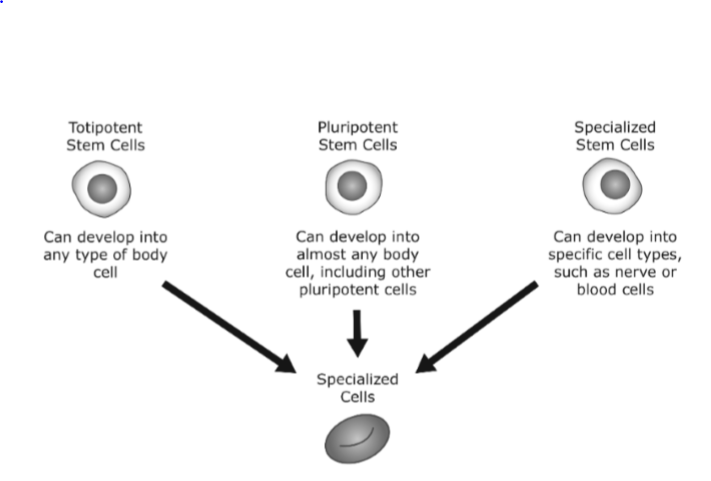
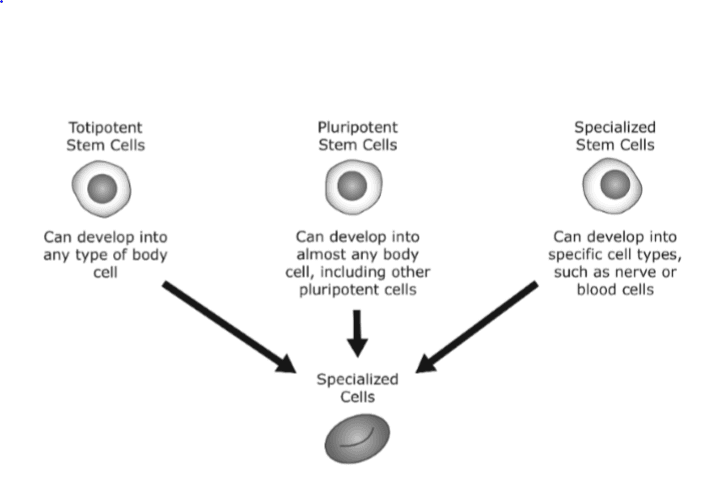
The diagram shows how specialized body cells can develop. Which of the following best explains why cells that contain the same genetic material do not develop into the same types of cells?
45
because internal or external stimuli can trigger the activation of specific genes in the DNA of cells
because random mutations RNA is converted to transfer RNA when cell differentiation begins
because chemical signals that are released during the cell cycle can result in the linking of similar genes
because random mutations can occur in the DNA of cells during early embryonic development
Q 2/6
Score 0
What is the role of mRNA in expressing specialized structures?
30
making energy available for cellular activities
providing information to form proteins
creating bonds to form biomolecules
producing sugar that assist with replication
6 questions
Q.
The diagram shows how specialized body cells can develop. Which of the following best explains why cells that contain the same genetic material do not develop into the same types of cells?
1
45 sec
BIOL.5b
Q.
What is the role of mRNA in expressing specialized structures?
2
30 sec
BIOL.5b
Q.
From a single fertilized ovum, undergoing a series of rapid cell divisions, a human infant develops. The embryonic cells become specialized for a variety of functions. Which of these statements best describe how different cell types develop?
3
30 sec
BIOL.5b
Q.
As a fertilized egg divides, the cells differentiate because they--
4
30 sec
BIOL.5b
Q.
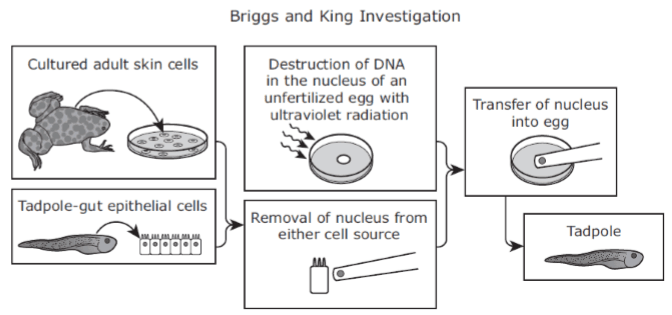
Researchers Robert Briggs and Thomas King used ultraviolet radiation to destroy the nuclear DNA of frog eggs. Nuclei from adult skin cells and from tadpole-gut epithelial cells were cultured and then injected into eggs that had their nuclei destroyed. The results were tadpoles. Which conclusion is supported by the data from this investigation?
5
30 sec
BIOL.5b
Q.
Cell differentiation is critical during embryonic development. The process of cell differentiation results in the production of many types of cells, including germ, somatic, and stem cells. Cell differentiation is most directly is most directly regulated by__