Loading...


Banned Books
Quiz by Laura Riley
Customize this quiz to suit your class
Instantly translate to 100+ languages
Tag the questions with any skills you have. Your dashboard will track each student's mastery of each skill.
Give this quiz to my class
Which graphic novel by Raina Telgemeier has been banned and challenged for including a same-sex couple?
Ghosts by Raina Telgemeier
Guts by Raina Telgemeier
Smile by Raina Telgemeier
Drama by Raina Telgemeier
What book about a teenage girl who grapples with racism, police brutality, and activism has been banned and challenged for "profanity, violence, and because it was thought to promote an anti-police message and indoctrination of a social agenda"?
The Hate U Give by Angie Thomas
Fish in a Tree by Lynda Mullaly Hunt
Romeo and Juliet by William Shakespeare
To Kill a Mockingbird by Harper Lee
Which graphic novel by Raina Telgemeier has been banned and challenged for including a same-sex couple?
What book about a teenage girl who grapples with racism, police brutality, and activism has been banned and challenged for "profanity, violence, and because it was thought to promote an anti-police message and indoctrination of a social agenda"?
What piece of Holocaust literature came under fire in 2022 for "swear words and violence"?
What book by George Orwell was banned because it contained "pro-communist beliefs" and "images of pigs"?
What book about a transgender girl was banned for containing LGBTQIA+ content?
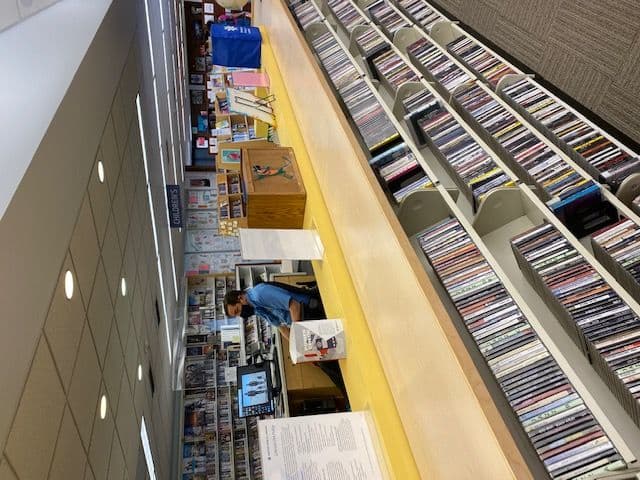
Go to the the area where music is stored for the next quiz!
 Read banned booksBanned Book Quiz 1Debate: Plastic should be banned completelyshould junk food be banned in high school?How To Promote On Reddit Without Getting Banned- 8 Proven WaysCryptocurrency regulations in Africa vary significantly across the continent, reflecting different approaches by governments to balance innovation with consumer protection and financial stability. Here's an overview of the regulatory landscape in several key African countries: 1. Nigeria Central Bank Ban: In February 2021, the Central Bank of Nigeria (CBN) banned financial institutions from providing services to crypto exchanges, effectively restricting crypto transactions through traditional banking channels. eNaira: Despite the restrictive stance on cryptocurrencies, Nigeria launched its central bank digital currency (CBDC), the eNaira, in October 2021, aiming to enhance financial inclusion and support the digital economy. 2. South Africa Regulatory Framework: The Financial Sector Conduct Authority (FSCA) has proposed a regulatory framework to classify cryptocurrencies as financial products. This will subject crypto service providers to regulations similar to those governing other financial services. AML/CFT Compliance: Crypto exchanges are required to comply with Anti-Money Laundering (AML) and Combating the Financing of Terrorism (CFT) regulations. 3. Kenya Regulatory Caution: The Central Bank of Kenya (CBK) has issued warnings about the risks associated with cryptocurrencies but has not imposed an outright ban. Cryptocurrencies are not considered legal tender. Innovation Support: Kenya is known for its innovative financial services sector, including mobile money, which creates a fertile ground for crypto and blockchain adoption despite the cautious regulatory stance. 4. Ghana Regulatory Research: The Bank of Ghana is conducting research into cryptocurrencies and blockchain technology, with a focus on understanding the potential benefits and risks. Sandbox Initiative: Ghana has introduced a regulatory sandbox to encourage innovation in fintech, including blockchain and cryptocurrencies. 5. Uganda Regulatory Oversight: The Bank of Uganda has warned the public about the risks of cryptocurrencies but has not imposed a ban. There is ongoing discussion about developing a regulatory framework. Blockchain Adoption: Uganda is exploring the use of blockchain technology in various sectors, including agriculture and healthcare. 6. Zimbabwe Ban and Reconsideration: The Reserve Bank of Zimbabwe (RBZ) initially banned banks from processing crypto transactions but has since been exploring ways to regulate the industry. Blockchain Task Force: The government has established a blockchain and digital assets task force to study the implications and potential uses of the technology. 7. Tanzania Government Support: In 2021, the Tanzanian government indicated support for adopting blockchain and cryptocurrency technologies, with the central bank working on creating a regulatory framework. Presidential Endorsement: President Samia Suluhu Hassan called on the central bank to prepare for the adoption of cryptocurrencies. Regional Initiatives and Trends Cross-Border Collaboration: Some African countries are exploring regional cooperation to harmonize crypto regulations and promote cross-border fintech solutions. Fintech Hubs: Countries like Nigeria, South Africa, and Kenya are becoming fintech hubs, attracting startups and investment in the blockchain and crypto space. Education and Awareness: Efforts are being made to educate the public and policymakers about cryptocurrencies and blockchain technology to promote informed decision-making. Challenges and Considerations Regulatory Uncertainty: The lack of clear and consistent regulations across the continent poses challenges for businesses and investors. Risk Management: Balancing innovation with risk management, particularly concerning AML/CFT compliance, is a key concern for regulators. Infrastructure and Accessibility: Limited internet access and technological infrastructure can hinder widespread adoption and effective regulation. The regulatory landscape for cryptocurrencies in Africa is dynamic and evolving, with a mix of cautious approaches and supportive measures aimed at harnessing the benefits of blockchain technology while managing associated risks.Can you make me a 40 question quiz from the following information? he story of coffee has all the elements of a bestselling novel, such as chance happenings, luck, political intrigue, the high seas and great wealth. With research, you will find many stories and dates when this happened and dates when that happened. Often these stories and dates will conflict with each other. Whatever the history, coffee has become one of the most important trading commodities in the world. Being second only to oil and being one of the most popular beverages, behind tea, beer and of course, water. Coffee growing is a very labour-intensive operation and it provides important trading income for many nations and people throughout the world. The most famous story about the origin of coffee is the story of Kaldi a goat herder from Ethiopia. It is said he noticed that his goats became very active after eating the red berries of a certain plant. He tried a few himself and noticed the stimulating effect of the berries. It is then said that monks started drinking a beverage made from the berries to help stay awake for the prayers; this would have been around 1000 AD. Over the next few hundred years the Arab world started to use the berries as a beverage and coffee was born. In those early years, coffee was mostly confined to the Muslim world with the export of coffee plants and seeds banned. But coffee could not be hidden forever so eventually coffee was introduced to Constantinople and coffee houses were opened in 1475. European traders then brought coffee back to Europe by approximately 1600. At first, coffee was met with a hostile reaction, with some Christians calling it the ‘Devil’s Drink’ and asking Pope Vincent III to ban the beverage. He tried coffee and liked it so much that he is claimed to have said “This beverage is so delicious that it would be a sin to let only misbelievers drink it! Let’s defeat Satan by blessing this beverage, which contains nothing objectionable to a Christian!” Coffee shops sprung up in every city and became an important social and networking place to meet. This tradition continues today with the French word for coffee being ‘Café’. Coffee is said to have changed the social fabric of society by providing a popular non-alcoholic alternative to beer and wine. For the first time in recorded history people were not drunk all the time. Coffee today is grown and enjoyed worldwide and is one of the few crops that small farmers in third-world countries can profitably export. The coffee plant is a tree that is pruned to grow to a height of approximately three metres. This makes cultivating the beans easier as most of the beans are handpicked. The plant has white flowers similar to jasmine that grow in clusters and set to become red cherry-like fruit; beneath the red skin are two pips which are the coffee beans. Because the berries ripen at varying times the fruit must be handpicked to select only those beans ripe for harvest. This requires the picker to pick from the same plant many times and is very labour intensive. This is why coffee is grown in developing countries where labour is cheaper and foreign income is needed. Coffee plants grow best in a mountain tropical climate between the Tropic of Capricorn and the Tropic of Cancer. This mountainous land is another reason why machine picking is very difficult and hand picking is preferred. There are two main species of coffee grown today: Coffee Arabica. Coffee Robusta. Robusta grows at lower altitudes and produces a larger crop than Arabica; therefore, it is cheaper to produce Arabica is the most popular and generally considered to give superior flavour. Most Robusta is grown in Asia and Africa. About 75% of coffee grown is Arabica and 25% Robusta. Robusta is more often used as a blend with Arabica rather than a standalone coffee; used as a filler coffee in the production of instant or to add extra caffeine to an Arabica coffee for the European markets. Robusta is higher in caffeine than Arabica, but the flavour is not as palatable as the more popular Arabica bean. Coffee is produced in about 60 countries throughout the world but production is dominated by three countries producing approximately half the crop: Brazil, Vietnam and Colombia.Dred Scott was born enslaved in Virginia in 1799. In 1833, he was purchased by Dr. John Emerson, an army surgeon, living in Missouri. At the time, the U.S. was divided into free states (where slavery was outlawed) and slave states (where slavery was allowed). The Missouri Compromise of 1820 made Missouri a slave state. But it also outlawed slavery in any territory north of it. In 1833, Dr. Emerson was assigned to a fort in Illinois, and later, a fort in the Wisconsin Territory. He took Dred Scott with him. They lived in these areas for years. Even though slavery was outlawed in both places, Emerson never freed Scott. Eventually, Scott was sent back to Missouri to live with Emerson’s wife, Eliza Sanford*. After the doctor died in 1843, Scott tried to buy his freedom. Sanford refused. With the support of his church, abolitionists, and friends, Scott sued to get it. His case ended up going all the way to the Supreme Court. The Arguments Scott sued using two Missouri laws. One said any person held in wrongful enslavement could sue for their freedom. The other stated any person taken to a free territory was automatically free, and could not be re-enslaved. Sanford argued that the Missouri laws applied only to someone moving to free areas by choice. Dr. Emerson was ordered by the army to move to his posts. Sanford also said that military authority was greater than the states’. And since they lived on military bases, Emerson did not have to follow state or territory laws. The Decision In a 7–2 decision, the Court ruled that Dred Scott was not free. Chief Justice Roger Taney stated that all people of African descent, free or enslaved, were not U.S. citizens. They did not have rights, like the power to vote or sue in court, so Scott’s case was invalid. But Taney did not stop there. He added that, because enslaved people were property, the Fifth Amendment protected the rights of enslavers. The Fifth Amendment says the government can’t take someone’s property without going through the courts or paying for it. Laws that banned slavery, like the Missouri Compromise, were unconstitutional. No level of government, Taney said, state or federal, could outlaw slavery.