Loading...


beginning sounds and blends quiz
Quiz by Laurie hammerton
Customize this quiz to suit your class
Instantly translate to 100+ languages
Tag the questions with any skills you have. Your dashboard will track each student's mastery of each skill.
Give this quiz to my class
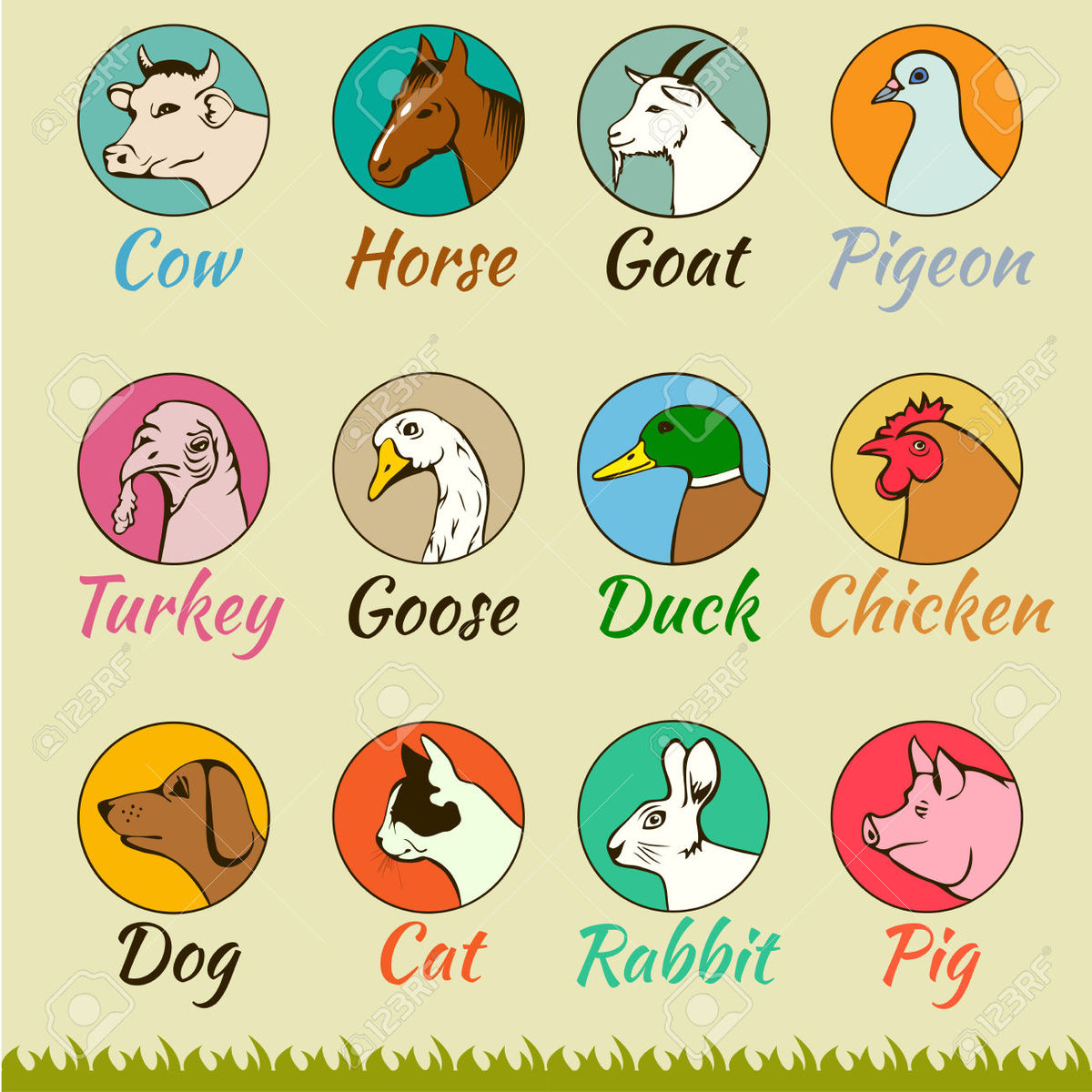
 Can you create an evaluation using this information PHONETICS VS. PHONOLOGY Whereas phonetics is the study of sounds that occur in language, phonology is the study of how these sounds are organized and how they function in language. It uses the classifications of sounds derived from phonetics to describe and analyze how sounds occur in speech. STRUCTURALIST PHONEMICS STRUCTURALIST PHONEMICS As linguists began to study sounds in fine detail, they recognized increasingly complex aspects of phonetic organization. For example, the sound /p/ appears in different varieties in English. STRUCTURALIST PHONEMICS One of the varieties of /p/ is indicated by [ph]. This sound is produced with an accompanying puff of air called aspiration, as in the words “pill,” and “peace.” Another sound, indicated by [p•], is produced when there is little or no aspiration; this sound occurs in a word like “spill.” A third major variety for the /p/ sound is the unreleased [p– ], which may occur at the end of a word like “stop.” To deal with these variations for the /p/ sound, the structuralists suggested the existence of an abstract unit which they termed a phoneme. STRUCTURALIST PHONEMICS A phoneme was defined by the structuralists as an abstract phonological unit that represents a class of real sounds, termed the allophones of a phoneme. The phoneme /p/ in English, then, is represented by the allophones [ph], [p•], and [p– ]. STRUCTURALISTS: MINIMAL PAIRS How do we know what these abstract units of sound called phonemes are? In order to find the phonemes of a language, the structuralists developed the concept of the minimal pair, defined as any two words that: a) Contain the same number of segments b) Differ in meaning c) Exhibit only one phonetic difference. STRUCTURALISTS: MINIMAL PAIRS In practical terms, phonemes distinguish meanings; and a phoneme can also be defined as the smallest meaning-distinguishing unit of sound. For instance, the words “pin” /pɪn/ and “bin” /bɪn/ mean different things, and the only one difference in these words occurs in the initial sounds. STRUCTURALISTS: MINIMAL PAIRS By using the concept of a minimal pair, we can determine that the three variations of the /p/ sound do not represent three phonemes. Certainly, it is possible to pronounce the word cap with either an aspirated [ph ] or unreleased [p– ]; however, the two forms [kæph ] and [kæp– ] are not a minimal pair, even though they involve different sounds, because they are identical in meaning. STRUCTURALISTS: FREE VARIATION The two forms [kæph ] and [kæp– ] are, therefore, said to exhibit free variation: that is, the pronunciation may vary without signifying a change in meaning. In other words, we may conclude that the unreleased [p– ] and the aspirated [ph ] are not representations of different phonemes in English; they are, in fact, allophones of one phoneme, /p/. STRUCTURALISTS: COMPLEMENTARY DISTRIBUTION When phonemes have more than one allophone in a language, the allophones are said to be in complementary distribution. Complementary distribution means that the allophones of a phoneme occur in different phonetic environments (that is, with different sounds surrounding them). TRANSFORMATIONAL- GENERATIVE PHONOLOGY TRANSFORMATIONAL-GENERATIVE PHONOLOGY Transformational-generative phonology is a relatively recent development in linguistic theory. Chomsky launched Transformational-Generative Grammar in 1957, but the earliest studies within this framework were largely concerned with syntax. A decade later, the first comprehensive transformational-generative treatment of English phonology appeared: Chomsky and Halle’s The Sound Pattern of English (1968). TRANSFORMATIONAL-GENERATIVE PHONOLOGY Transformational-generative phonologists strongly oppose the structuralists’ phonemic level. They replace this level by a series of rules that directly relate underlying representations to observed phonetic representations. The central mechanisms in transformational-generative phonology, then, are underlying representations and phonological rules. PHONOLOGICAL RULES A rule is an operational statement in which some linguistic entity is modified, resulting in a new linguistic entity. Rules may add elements, remove elements, or change elements. By using phonological rules, linguists attempt to demonstrate that there is order in linguistic phenomena and that linguistic patterns are systematic. PHONOLOGICAL DERIVATION A phonological derivation is an operation that begins with an underlying representation and, through the application of a set of specific rules, yields the actual sound the speaker produces. The representation of a phonological rule has the following general appearance. /A/ → [B] / C “A” changes to “B” under condition “C” PHONOLOGICAL RULE – EXAMPLE In most Southern dialects, the word ten is pronounced like the word tin. This is not an isolated fact, for den is pronounced like din and Ben is pronounced like bin, and so on. This very general fact can be represented by the phonological rule: /ɛ/ → [I] / ___ [n] den /dɛn/ → /dIn/ Ben /bɛn/ → /bIn/ ten /tɛn/ → /tIn/ /ɛ/ → [I] / ___ [n] - high - low - tense + front + high - tense + front + sonorant + anterior + coronal - continuant NOTATIONAL DEVICES IN PHONOLOGICAL RULES The statement of phonological rules can be complex, and linguists have developed several notational devices for writing them. Often, the following symbols will be necessary for stating the conditions under which rules apply: # indicates a word boundary + indicates an intraword boundary $ indicates a syllable boundary UNDERLYING REPRESENTATIONS AND RELATED ISSUES The transformational-generative description of phonology relates underlying representations to phonetic representations by rules. This can be represented in a simple example: In English, there are certain pairs of words like sign / signature, and malign / malignant that exhibit a regular alternation in their phonetic representations: [g] is present in the second member of the pairs but absent in the first member. UNDERLYING REPRESENTATIONS AND RELATED ISSUES To explain the relatedness of words such as sign / signature, we could claim that the underlying representation of the segment in all such pairs is /g/ and that a rule operates to delete /g/ before syllable-final nasals. Thus, the rule “/g/ is deleted before syllable-final nasal” would appear formally as: + voice - anterior →∅ ____ [+ nasal] $ - coronal UNDERLYING REPRESENTATIONS AND RELATED ISSUES On the left-hand side of the arrow, we place the features needed to uniquely specify /g/ among the consonants; that is, no other consonant has the features [+ voice], [- anterior], and [- coronal]. The symbols → mean that the sound /g/ changes to nothing or more properly “/g/ is deleted.” The horizontal line following the slash mark refers to the position of /g/ - namely, before a segment that is [+nasal]. Finally, this [+nasal] segment occurs before a syllable boundary, as indicated by $. A less formal way of writing this rule would be: /g/ → / _ [+nasal] $ Notice that this rule also helps describe such alternations as phlegm/phlegmatic and paradigm/paradigmatic. Application Activity: Think of other words in which this rule can be applied. Write the sound segments to prove /g/ is deleted. Another example is the process through which the prefix meaning “not” is added to words. This prefix alternates among the forms /Im/, /In/, and /Iŋ/, depending on the point of articulation of the initial segment of the following word. -If the segment begins in the extreme front part of the mouth (labials), the form is /Im/, as in improper. -If the segment begins in the extreme back part of the mouth (velars), the form is /Iŋ/, as in incomplete. -If the segment begins in the mid-region of the mouth (all other sounds), the form is /In/, as in indecent. *Exceptions:Words beginning with /r/ or /l/. Analyze the Word “in + complete,” for example. /n/ → [ŋ] / __ [k] - continuant - continuant - continuant + sonorant → + sonorant - sonorant + anterior - anterior - strident + coronal - coronal - coronal + tense THE VELAR SOFTENING RULE Still another example of alternation in English is found in pairs of words like “electric / electricity,” in which the segments /k/ and /s/ alternate. /k/ changes to [s] only before non- low, front vowels. THE VELAR SOFTENING RULE /k/ → [s] / __ - continuant + continuant - strident → - sonorant V - anterior + anterior - low - coronal + coronal - backTo the Lakota, and other indigenous people on North America's Great Plains, the bison was an essential part of their culture ( expressed in the quote on the previous page). The bison provided meat for nutrition, a hide for clothing and shelter, bones for tools, and fat for soap. The bison was also central to their religious beliefs. So, when European settlers hunted the bison nearly to extinction, Lakota culture suffered. Culture is central to a society and the identity of its people, as well as its continued existence. Therefore, geographers study culture as a way to understand similarities and differences among societies across the world, and in some cases, to help preserve these societies. Analyzing Culture All of a group's learned behaviors, actions, beliefs, and objects are a part of culture. It is a visible force seen in a group's actions, possessions, and influence on the landscape. For example, in a large city you can see people working in offices, factories, and stores, and living in high-rise apartments or suburban homes. You might observe them attending movies, concerts, or sporting events. Culture is also an invisible force guiding people through shared belief systems, customs, and traditions. Culture is learned, in that it develops through experiences, and not merely transmitted through genetics. For example, many people in the United States have developed a strong sense of competitiveness in school and business, and believe that hard work is a key to success. These types of elements, visible and invisible, are cultural traits. A series of interrelated traits make up a cultural complex, such as the process of steps and acceptable behaviors related to greeting a person in different cultures. A single cultural artifact, such as an automobile, may represent many different values, beliefs, behaviors and traditions and be representative of a cultural complex. Since culture is learned there are many ways that one generation passes its culture to the next. Children and adults learn traits three ways: • imitation, as when learning a language by repeating sounds or behaviors from a person or television • informal instruction, as when a parent reminds a child to say "please" • formal instruction, as when students learn history in school 132 HUMAN GEOGRAPHY: AP" EDITION CULTURAL COMPLEX OF THE AUTOMOBILE The automobile provides much more than just transportation, as it reflects many values that are central to American culture. Origins of Culture The area in which a unique culture or a specific trait develops is a culture hearth. Classical Greece was a culture hearth for democracy more than 2,000 years ago. New York City was a culture hearth for rap music in the 1970s. Geographers study how cultures develop in hearths and diffuse-or spread-to other places. Geographers also study taboos, behaviors heavily discouraged by a culture. For example, many cultures have taboos against eating certain foods, such as pork or insects. What is considered taboo changes over time. In the United States, marriages between Protestants and Catholics were once taboo, but they are not widely opposed now. Traditional, Folk, and Indigenous Cultures With the beginning of the Industrial Revolution in the late 18th century, modern transportation and communication connected people as never before and led to extensive cultural mixing, especially as cities have grown. The world prior to this time was very different; however, remnants of the past are still evident in our modern cultures. Traditional, folk, and indigenous cultures share some important characteristics and are often grouped together, but they do have some subtle differences. Traditional Culture Recently, the meanings of traditional, folk, and indigenous culture have begun to merge, causing geographers to debate when each should be used. Increasingly, the term traditional culture is used to encompass all three cultural designations. All three types share the function of passing down long-held beliefs, values, and practices and are generally resistant to rapid changes in their culture. Folk Culture The beliefs and practices of small, homogenous groups of people, often living in rural areas that are relatively isolated and slow to change, are known as folk cultures. Like all cultures, they demonstrate the diverse ways that people have adapted to a physical environment. For example, people around the world learned to make shelters out of available resources, whether 3.1: INTRODUCTION TO CULTURE 133 it was snow or mud bricks or wood. However, people used similar resources such as wood differently. In Scandinavia, people used trees to build cabins. In the American Midwest, people processed trees into boards, built a frame, and attached the boards to it. Many traits of folk culture continue today. Corn was first grown in Mexico around 10,000 years ago, and it is still grown there today. While many elements of folk culture exist side by side with modern culture, there are people whose societies have changed little, if at all, from long ago. These people practice traditional cultures, those which have not been affected by modern technology or influences. They often live in remote regions, such as some small tribes in the Amazon rainforest, and have scant knowledge of the outside world. As the lines continue blurring between cultural designations, the Amish of Pennsylvania are often referenced as both folk and traditional culture. Indigenous Culture When members of an ethnic group reside in their ancestral lands, and typically possess unique cultural traits, such as speaking their own exclusive language, they are considered an indigenous culture. Some indigenous peoples have been displaced from their native lands, but still practice their indigenous culture. Native Americans in the United States, such as the Navajo, have kept indigenous cultural practices. First Nations of Canada, such as the Inuit, have also retained their indigenous culture. Globalization and Popular Culture As a result of the Industrial Revolution, improvements in transportation and communication have shortened the time required for movement, trade, or other forms of interaction between two places. This development, known as space-time compression (see Topics 1.4 and 3.6), has accelerated culture change around the world. In 1817, a freight shipment from Cincinnati needed 52 days to reach New York City. By 1850, because of canals and railroads, it took half that long. And by 1852, it took only 7 days. Today, an airplane flight takes only a few hours, and digital information takes seconds or less. Similar change has occurred on the global scale. People travel freely across the world in a matter of hours, and communication has advanced to a point where people share information instantaneously across the globe. The increased global interaction has had a profound impact on cultures, from spreading English across the world to instant sharing of news, events and music. Globalization specifically refers to the increased integration of the world economy since the 1970s. The process of intensified interaction among peoples, governments, and companies of different countries around the globe has had profound impacts on culture. The culture of the United States is intertwined with globalization. Through the influence of its corporations, Hollywood movies, and government, the United States exerts widespread influence in other countries. But other countries also shape American culture. For example, in 2019, the National Basketball Association included players from 38 countries or territories. When cultural traits- such as clothing, music, movies, and types of 134 HUMAN GEOGRAPHY: AP. EDITION businesses-spread quickly over a large area and are adopted by various groups, they become part of popular culture. Elements of popular culture often begin in urban areas and diffuse quickly through globalization processes such as the media and Internet. These elements can quickly be adopted worldwide, making them part of global culture. People around the world follow European soccer, Indian Bollywood movies, and Japanese animation known as anime. With people in many nations wearing similar clothes, listening to similar music, and eating similar food, popular cultural traits often promote uniformity in beliefs, values, and the cultural landscape across many places The cultural landscape, also known as the built environment (see Topic 3.2), is the modification of the environment by a group and is a visible reflection of that group's cultural beliefs and values. Traditional Culture to Popular Culture Popular culture emphasizes trying what is new rather than preserving what is traditional. Many people, especially older generations or those who follow a folk culture, openly resist the adoption of popular cultural traits. They do this by preserving traditional languages, religions, values, and foods. While older generations often resist the adoption of popular culture, they seldom are successful in keeping their traditional cultures from changing, especially among the young people of their society. One clash between popular and traditional culture is occurring in Brazil. As the population expands to the interior of the rain forest, many indigenous cultures, like the Yanamamo tribe, have more contact with outside groups. Remaining isolated by the forest is becoming increasingly difficult as many young people from the indigenous cultures become exposed to popular culture and begin to integrate into the larger Brazilian society. As the young people leave their communities, they are more likely to accept popular culture at the expense of their indigenous cultural heritage, which threatens the very existence of their folk culture. Traditional culture typically exhibits horizontal diversity, meaning each traditional culture has its own customs and language that makes it distinct from other culture groups. Yet, people people within each group are usually homogeneous, or very similar to each other. By contrast, popular culture typically exhibits vertical diversity, meaning that modern urban societies are usually heterogeneous, or exhibiting differences, within the society and usually contain numerous multiethnic neighborhoods. However, on a global scale popular cultures are relatively similar with the same type of malls, shops, fast food, and clothing. Urban global culture centers are not identical, yet, global cities often do not have as much horizontal diversity across space as folk cultures. 3.1: INTRODUCTION TO CULTURE 135 COMPARING TRADITIONAL AND POPULAR CULTURE Trait Traditional Culture Popular or Global Culture Society • Rural and isolated location • Urban and connected location • Homogeneous and • Diverse and multiethnic indigenous population population • Most people speak an • Many people speak a global indigenous or ethnic local language such as English or language Arabic • Horizontal diversity • Vertical diversity Social • Emphasis on community and • Emphasis on individualism and Structure conformity making choices • Families live close to each • Dispersed families other • Weakly defined gender roles • Well-defined gender roles Diffusion • Relatively slow and limited • Relatively rapid and extensive • Primarily through relocation • Often hierarchical • Oral traditions and stories • Social media and mass media Buildings and • Materials produced locally, • Materials produced in distant Housing such as stone or grass factories, such as steel or glass • Built by community or owner • Built by a business • Similar style for community • Variety of architectural styles • Different between cultures • Similar between cities • Traditional architecture • Postmodern / contemporary architecture Food • Locally produced • Often imported • Choices limited by tradition • Wide range of choice • Prepared by the family or • Purchased in restaurants community Spatial Focus • Local and regional • National and global Artifacts, Mentifacts, and Sociofacts Whether a cultural attribute is considered traditional, folk, indigenous, or popular in nature, it is valuable to differentiate between elements of culture that can be seen and those that can not. There are artifacts that comprise the material culture, which consists of tangible things, or those that can be experienced by the senses. Art, clothing, food, music, sports, and housing types are all tangible elements of culture. Another element of the study of artifacts is understanding the techniques to use or build a specific artifact. Artifacts can be unique to a particular culture, or can be shared. For example, people of all cultures need to communicate through language, yet there are many groups that possess languages unique to their culture. The ability to read, write and understand the English language is an artifact of importance for much of popular global culture. 136 HUMAN GEOGRAPHY: AP" EDITION Mentifacts comprise a group's nonmaterial culture and consist ofintangible concepts, or those not having a physical presence. Beliefs, values, practices, and aesthetics (pleasing in appearance) determine what a cultural group views as acceptable and desirable. Mentifacts can also be unique or shared. People of many cultures possess an belief in one or many deities, and often the deities are unique to that culture. The belief in a god is a mentifact-the religious building or symbols are artifacts. Cultural groups also possess sociofacts, which are the ways people organize their society and relate to one another. Taken altogether, people tend to see the whole of their culture as greater than the sum of its individual parts. Sociofacts are embodied through families, governments, sports teams, religious organizations, education systems, and other social constructs. As with artifacts and mentifacts, sociofacts may also be unique or similar to other societies. Families are the foundations of most societies, yet what constitutes the structure of a family may vary widely between cultural groups. For example, Western cultures tend to view the nuclear family, consisting of the parents and their children as the basic family unit. By contrast, in many Western African cultures the norm is the extended family, consisting of several generations and other family members such as cousins living under one roof.Sure! Here's a solid list of **AP English Literature vocabulary**—terms that often come up in class, essays, and the AP exam. I'll break it down into categories to make it easier to study. --- ### 📚 **Literary Devices & Techniques** 1. **Alliteration** – Repetition of initial consonant sounds 2. **Allusion** – A reference to another text, event, or figure 3. **Anaphora** – Repetition of a word or phrase at the beginning of successive clauses 4. **Antithesis** – Contrast of ideas in a balanced or parallel construction 5. **Apostrophe** – Addressing someone absent, dead, or nonhuman as if present and able to respond 6. **Assonance** – Repetition of vowel sounds within nearby words 7. **Asyndeton** – Omission of conjunctions between parts of a sentence 8. **Consonance** – Repetition of consonant sounds, often at the end of words 9. **Diction** – Word choice (formal, informal, colloquial, etc.) 10. **Enjambment** – Continuation of a sentence without pause beyond the end of a line in poetry --- ### 🧠 **Figurative Language** 1. **Hyperbole** – Extreme exaggeration 2. **Imagery** – Descriptive language that appeals to the senses 3. **Irony** - *Verbal*: Saying the opposite of what’s meant - *Situational*: When the outcome is the opposite of what's expected - *Dramatic*: Audience knows something characters don’t 4. **Metaphor** – A direct comparison without using "like" or "as" 5. **Metonymy** – Substituting the name of one thing with something closely related (e.g. "The crown" for royalty) 6. **Synecdoche** – A part representing the whole (e.g. "All hands on deck") 7. **Personification** – Giving human traits to nonhuman things 8. **Simile** – A comparison using "like" or "as" 9. **Symbol** – An object, character, or color that represents something beyond itself --- ### ✍️ **Poetic & Rhetorical Terms** 1. **Caesura** – A pause in a line of poetry, often marked by punctuation 2. **Couplet** – Two lines of poetry that usually rhyme 3. **Iambic Pentameter** – A line with five iambs (unstressed-stressed syllables) 4. **Blank Verse** – Unrhymed iambic pentameter 5. **Free Verse** – Poetry with no fixed meter or rhyme 6. **Elegy** – A mournful poem, often for the dead 7. **Ode** – A lyric poem expressing emotion, often in honor of something 8. **Sonnet** – A 14-line poem with a specific rhyme scheme (Shakespearean or Petrarchan) --- ### 📖 **Narrative & Structure Terms** 1. **Tone** – The author's attitude toward the subject 2. **Mood** – The feeling or atmosphere the reader experiences 3. **Theme** – The central idea or message in a work 4. **Motif** – A recurring element that has symbolic significance 5. **Foil** – A character who contrasts with another character to highlight traits 6. **Foreshadowing** – Clues or hints about what will happen later 7. **Juxtaposition** – Placing two elements side by side to present a contrast 8. **Point of View** – Perspective from which the story is told (1st, 2nd, 3rd person) 9. **Stream of Consciousness** – Narrative style that mimics thoughts and feelings 10. **Frame Narrative** – A story within a story --- Want me to make flashcards, a quiz, or a PDF study guide with these? Or need help using them in a literary analysis essay?She went by the name of Belisa Crepusculario, not because she had been baptized with that name or given it by her mother, but because she herself had searched until she found the poetry of "beauty" and "twilight" and cloaked herself in it. She made her living selling words. She journeyed through the country from the high cold mountains to the burning coasts, stopping at fairs and in markets where she set up four poles covered by a canvas awning under which she took refuge from the sun and rain to minister to her customers. She did not have to peddle her merchandise because from having wandered far and near, everyone knew who she was. Some people waited for her from one year to the next, and when she appeared in the village with her bundle beneath her arm, they would form a line in front of her stall. Her prices were fair. For five centavos she delivered verses from memory, for seven she improved the quality of dreams, for nine she wrote love letters, for twelve she invented insults for irreconcilable enemies. She also sold stories, not fantasies but long, true stories she recited at one telling, never skipping a word. This is how she carried news from one town to another. People paid her to add a line or two: our son was born, so-and-so died, our children got married, the crops burned in the field. Wherever she went a small crowd gathered around to listen as she began to speak, and that was how they learned about each others' doings, about distant relatives, about what was going on in the civil war. To anyone who paid her fifty centavos in trade, she gave the gift of a secret word to drive away melancholy. It was not the same word for everyone, naturally, because that would have been collective dece it. Each person received his or her own word, with the assurance that no one else would use it that way in this universe or the Beyond. Belisa Crepusculario had been born into a family so poor they did not even have names to give their children. She came into the world and grew up in an inhospitable land where some years the rains became avalanches of water that bore everything away before them and others when not a drop fell from the sky and the sun swelled to fill the horizon and the world became a desert. Until she was twelve, Belisa had no occupation or virtue other than having withstood hunger and the exhaustion of centuries. During one interminable drought, it fell to her to bury four younger brothers and sisters, when she realized that her turn was next, she decided to set out across the 2 plains in the direction of the sea, in hopes that she might trick death along the way. The land was eroded, split with deep cracks, strewn with rocks, fossils of trees and thorny bushes, and skeletons of animals bleached by the sun. From time to time she ran into families who, like her, were heading south, following the mirage of water. Some had begun the march carrying their belongings on their back or in small carts, but they could barely move their own bones, and after a while they had to abandon their possessions. They dragged themselves along painfully, their skin turned to lizard hide and their eyes burned by the reverberating glare. Belisa greeted them with a wave as she passed, but she did not stop, because she had no strength to waste in acts of compassion. Many people fell by the wayside, but she was so stubborn that she survived to cross through that hell and at long last reach the first trickles of water, fine, almost invisible threads that fed spindly vegetation and farther down widened into small streams and marshes. Belisa Crepusculario saved her life and in the process accidentally discovered writing. In a village near the coast, the wind blew a page of newspaper at her feet. She picked up the brittle yellow paper and stood a long while looking at it, unable to determine its purpose, until curiosity overcame her shyness. She walked over to a man who was washing his horse in the muddy pool where she had quenched her thirst. "What is this?" she asked. "The sports page of the newspaper," the man replied, concealing his surprise at her ignorance. The answer astounded the girl, but she did not want to seem rude, so she merely inquired about the significance of the fly tracks scattered across the page. "Those are words, child. Here it says that Fulgencio Barba knocked out El Negro Tiznao in the third round." That was the day Belisa Crepusculario found out that words make their way in the world without a master, and that anyone with a little cleverness can appropriate them and do business with them. She made a quick assessment of her situation and concluded that aside from becoming a prostitute or working as a servant in the kitchens of the rich there were few occupations she was qualified for. It seemed to her that selling words would be an honorable alternative. From that moment on, she worked at that profession, and was never tempted by any other. At the beginning, she offered her merchandise unaware that words could be written outside of newspapers. When she learned otherwise, she calculated the infinite possibilities of her trade and with her savings paid a priest twenty pesos to teach her to read and write, with her three 3 remaining coins she bought a dictionary. She poured over it from A to Z and then threw it into the sea, because it was not her intention to defraud her customers with packaged words. One August morning several years later, Belisa Crepusculario was sitting in her tent in the middle of a plaza, surrounded by the uproar of market day, selling legal arguments to an old man who had been trying for sixteen years to get his pension. Suddenly she heard yelling and thudding hoofbeats. She looked up from her writing and saw, first, a cloud of dust, and then a band of horsemen come galloping into the plaza. They were the Colonel's men, sent under orders of El Mulato, a giant known throughout the land for the speed of his knife and his loyalty to his chief. Both the Colonel and El Mulato had spent their lives fighting in the civil war, and their names were ineradicably linked to devastation and calamity. The rebels swept into town like a stampeding herd, wrapped in noise, bathed in sweat, and leaving a hurricane of fear in their trail. Chickens took wing, dogs ran for their lives, women and children scurried out of sight, until the only living soul left in the market was Belisa Crepusculario. She had never seen El Mulato and was surprised to see him walking toward her. "I'm looking for you," he shouted, pointing his coiled whip at her, even before the words were out, two men rushed her -- knocking over her canopy and shattering her inkwell -- bound her hand and foot, and threw her like a sea bag across the rump of El Mulato's mount. Then they thundered off toward the hills. Hours later, just as Belisa Crepusculario was near death, her heart ground to sand by the pounding of the horse, they stopped, and four strong hands set her down. She tried to stand on her feet and hold her head high, but her strength failed her and she slumped to the ground, sinking into a confused dream. She awakened several hours later to the murmur of night in the camp, but before she had time to sort out the sounds, she opened her eyes and found herself staring into the impatient glare of El Mulato, kneeling beside her. "Well, woman, at last you've come to," he said. To speed her to her senses, he tipped his canteen and offered her a sip of liquor laced with gunpowder. She demanded to know the reason for such rough treatment, and El Mulato explained that the Colonel needed her services. He allowed her to splash water on her face, and then led her to the far end of the camp where the most feared man in all the land was lazing in a hammock strung between two trees. She could not see his face, because he lay in the deceptive shadow of the leaves and the indelible shadow of all his years as a bandit, but she imagined from the way his 4 gigantic aide addressed him with such humility that he must have a very menacing expression. She was surprised by the Colonel's voice, as soft and well-modulated as a professor's. "Are you the woman who sells words?" he asked. "At your service," she stammered, peering into the dark and trying to see him better. The Colonel stood up, and turned straight toward her. She saw dark skin and the eyes of a ferocious puma, and she knew immediately that she was standing before the loneliest man in the world. "I want to be President," he announced. The Colonel was weary of riding across that godforsaken land, waging useless wars and suffering defeats that no subterfuge could transform into victories. For years he had been sleeping in the open air, bitten by mosquitoes, eating iguanas and snake soup, but those minor inconveniences were not why he wanted to change his destiny. What truly troubled him was the terror he saw in people's eyes. He longed to ride into a town beneath a triumphal arch with bright flags and flowers everywhere, he wanted to be cheered, and be given newly laid eggs and freshly baked bread. Men fled at the sight of him, children trembled, and women miscarried from fright, he had had enough, and so he had decided to become President. El Mulato had suggested that they ride to the capital, gallop up to the Palace, and take over the government, the way they had taken so many other things without anyone's permission. The Colonel, however, did not want to be just another tyrant, there had been enough of those before him and, besides, if he did that, he would never win people's hearts. It was his aspiration to win the popular vote in the December elections. "To do that, I have to talk like a candidate. Can you sell me the words for a speech?" the Colonel asked Belisa Crepusculario. She had accepted many assignments, but none like this. She did not dare refuse, fearing that El Mulato would shoot her between the eyes, or worse still, that the Colonel would burst into tears. There was more to it than that, however, she felt the urge to help him because she felt a throbbing warmth beneath her skin, a powerful desire to touch that man, to fondle him, to clasp him in her arms. All night and a good part of the following day, Belisa Crepusculario searched her repertory for words adequate for a presidential speech, closely watched by El Mulato, who could not take his eyes from her firm wanderer's legs and virginal breasts. She discarded harsh, cold words, words 5 that were too flowery, words worn from abuse, words that offered improbable promises, untruthful and confusing words, until all she had left were words sure to touch the minds of men and women's intuition. Calling upon the knowledge she had purchased from the priest for twenty pesos, she wrote the speech on a sheet of paper and then signaled El Mulato to untie the rope that bound her ankles to a tree. He led her once more to the Colonel, and again she felt the throbbing anxiety that had seized her when she first saw him. She handed him the paper and waited while he looked at it, holding it gingerly between thumbs and fingertips. "What the shit does this say," he asked finally. "Don't you know how to read?" "War's what I know," he replied. She read the speech aloud. She read it three times, so her client could engrave it on his memory. When she finished, she saw the emotion in the faces of the soldiers who had gathered round to listen, and saw that the Colonel's eyes glittered with enthusiasm, convinced that with those words the presidential chair would be his. "If after they've heard it three times, the boys are still standing there with their mouths hanging open, it must mean the thing's damn good, Colonel" was El Mulato's approval. "All right, woman. How much do I owe you?" the leader asked. "One peso, Colonel." "That's not much," he said, opening the pouch he wore at his belt, heavy with proceeds from the last foray. "The peso entitles you to a bonus. I'm going to give you two secret words," said Belisa Crepusculario. "What for?" She explained that for every fifty centavos a client paid, she gave him the gift of a word for his exclusive use. The Colonel shrugged. He had no interest at all in her offer, but he did not want to be impolite to someone who had served him so well. She walked slowly to the leather stool where he was sitting, and bent down to give him her gift. The man smelled the scent of a mountain cat issuing from the woman, a fiery heat radiating from her hips, he heard the terrible whisper of her hair, and a breath of sweetmint murmured into his ear the two secret words that were his alone. "They are yours, Colonel," she said as she stepped back. "You may use them as much as you 6 please." El Mulato accompanied Belisa to the roadside, his eyes as entreating as a stray dog's, but when he reached out to touch her, he was stopped by an avalanche of words he had never heard before; believing them to be an irrevocable curse, the flame of his desire was extinguished. During the months of September, October, and November the Colonel delivered his speech so many times that had it not been crafted from glowing and durable words it would have turned to ash as he spoke. He travelled up and down and across the country, riding into cities with a triumphal air, stopping in even the most forgotten villages where only the dump heap betrayed a human presence, to convince his fellow citizens to vote for him. While he spoke from a platform erected in the middle of the plaza, El Mulato and his men handed out sweets and painted his name on all the walls in gold frost. No one paid the least attention to those advertising ploys; they were dazzled by the clarity of the Colonel's proposals and the poetic lucidity of his arguments, infected by his powerful wish to right the wrongs of history, happy for the first time in their lives. When the Candidate had finished his speech, his soldiers would fire their pistols into the air and set off firecrackers, and when finally they rode off, they left behind a wake of hope that lingered for days on the air, like the splendid memory of a comet's tail. Soon the Colonel was the favorite. No one had ever witnessed such a phenomenon: a man who surfaced from the civil war, covered with scars and speaking like a professor, a man whose fame spread to every corner of the land and captured the nation's heart. The press focused their attention on him. Newspapermen came from far away to interview him and repeat his phrases, and the number of his followers and enemies continued to grow. "We're doing great, Colonel," said El Mulato, after twelve successful weeks of campaigning. But the Candidate did not hear. He was repeating his secret words, as he did more and more obsessively. He said them when he was mellow with nostalgia; he murmured them in his sleep; he carried them with him on horseback; he thought them before delivering his famous speech; and he caught himself savoring them in his leisure time. And every time he thought of those two words, he thought of Belisa Crepusculario, and his senses were inflamed with the memory of her feral scent, her fiery heat, the whisper of her hair, and her sweetmint breath in his ear, until he began to go around like a sleepwalker, and his men realized that he might die before he ever sat in the presidential chair. "What's got hold of you, Colonel," El Mulato asked so often that finally one day his chief broke 7 down and told him the source of his befuddlement: those two words that were buried like two daggers in his gut. "Tell me what they are and maybe they'll lose their magic," his faithful aide suggested. "I can't tell them, they're for me alone," the Colonel replied. Saddened by watching his chief decline like a man with a death sentence on his head, El Mulato slung his rifle over his shoulder and set out to find Belisa Crepusculario. He followed her trail through all that vast country, until he found her in a village in the far south, sitting under her tent reciting her rosary of news. He planted himself, spraddle-legged, before her, weapon in hand. "You! You're coming with me," he ordered. She had been waiting. She picked up her inkwell, folded the canvas of her small stall, arranged her shawl around her shoulders, and without a word took her place behind El Mulato's saddle. They did not exchange so much as a word in all the trip; El Mulato's desire for her had turned into rage, and only his fear of her tongue prevented his cutting her to shreds with his whip. Nor was he inclined to tell her that the Colonel was in a fog, and that a spell whispered into his ear had done what years of battle had not been able to do. Three days later they arrived at the encampment, and immediately, in view of all the troops, El Mulato led his prisoner before the Candidate. "I brought this witch here so you can give her back her words, Colonel," El Mulato said, pointing the barrel of his rifle at the woman's head. "And then she can give you back your manhood." The Colonel and Belisa Crepusculario stared at each other, measuring one another from a distance. The men knew then that their leader would never undo the witchcraft of those accursed words, because the whole world could see the voracious-puma eyes soften as the woman walked to him and took his hand in hers. Copyright © 1989 by Isabel Allende From The Stories of Eva Luna, Translated by Margaret Sayers PedenHi, I'm John Green, this is Crash Course U.S. History, and today, we're going to talk about slavery, which is not funny. 0:06 Yeah, so we put a lei on the eagle to try and cheer you up, but let's face it, this is going to be depressing. 0:10 With slavery, every time you think, like, "Aw, it couldn't have been that bad," it turns out to have been much worse. 0:14 Mr. Green, Mr. Green! But what about – 0:15 Yeah, Me from the Past, I'm going to stop you right there, because you're going to embarrass yourself. Slavery was hugely important to America. 0:20 I mean, it led to a civil war and it also lasted what, at least in U.S. history, counts as a long-ass time, from 1619 to 1865. 0:29 And yes, I know there's a 1200-year-old church in your neighborhood in Denmark, but we're not talking about Denmark! 0:35 But slavery is most important because we still struggle with its legacy. 0:38 So, yes, today's episode will probably not be funny, but it will be important. 0:42 [Theme Music] North & South economic ties 0:51 So the slave-based economy in the South is sometimes characterized as having been separate from the Market Revolution, but that's not really the case. 0:57 Without southern cotton, the North wouldn't have been able to industrialize, at least not as quickly, because cotton textiles were one of the first industrially products. 1:04 And the most important commodity in world trade by the nineteenth century, and 3/4 of the world's cotton came from the American South. 1:11 And speaking of cotton, why has no one mentioned to me that my collar has been half popped this entire episode, like I'm trying to recreate the Flying Nun's hat. 1:18 And although there were increasingly fewer slaves in the North as northern states outlawed slavery, cotton shipments overseas made northern merchants rich. 1:26 Northern bankers financed the purchase of land for plantations. 1:29 Northern insurance companies insured slaves who were, after all, considered property, and very valuable property. 1:35 And in addition to turning cotton into cloth for sale overseas, northern manufacturers sold cloth back to the South, where it was used to clothe the very slaves who had cultivated it. 1:45 But certainly the most prominent effects of the slave-based economy were seen in the South. Slave-based agriculture in the South 1:49 The profitability of slaved-based agriculture, especially King Cotton, meant that the South would remain largely agricultural and rural. 1:56 Slave states were home to a few cities, like St. Louis and Baltimore, but with the exception of New Orleans, 2:00 almost all southern urbanization took place in the upper South, further away from the large cotton plantations. 2:06 And slave-based agriculture was so profitable that it siphoned money away from other economic endeavors. 2:11 Like, there was very little industry in the South. 2:13 It produced only 10% of the nation's manufactured goods. 2:16 And, as most of the capital was being plowed into the purchase of slaves, there was very little room for technological innovation, like, for instance, railroads. 2:23 This lack of industry and railroads would eventually make the South suck at the Civil War, thankfully. 2:27 In short, slavery dominated the South, shaping it both economically and culturally, and slavery wasn't a minor aspect of American society. Popular attitudes concerning slavery 2:35 By 1860, there were four million slaves in the U.S., and in the South, they made up one third of the total population. 2:42 Although in the popular imagination, most plantations were these sprawling affairs with hundreds of slaves, 2:47 in reality, the majority of slaveholders owned five or fewer slaves. 2:51 And, of course, most white people in the South owned no slaves at all, though, if they could afford to, they would sometimes rent slaves to help with their work. 2:57 These were the so-called yeoman farmers who lived self-sufficiently, raised their own food, and purchased very little in the Market Economy. 3:04 They worked the poorest land and, as a result, were mostly pretty poor themselves. 3:08 But even they largely supported slavery, partly, perhaps, for aspirational reasons, and partly because the racism inherent to the system gave even the poorest whites legal and social status. 3:18 And southern intellectuals worked hard to encourage these ideas of white solidarity and to make the case for slavery. 3:23 Many of the founders, a bunch of whom you'll remember, held slaves, saw slavery as a necessary evil. 3:29 Jefferson once wrote, quote, "As it is, we have the wolf by the ear, and we can neither hold him, nor safely let him go. 3:37 Justice is on one scale, and self-preservation in the other." 3:41 The belief that justice and self-preservation couldn't sit on the same side of the scale was really opposed to the American idea, 3:47 and, in the end, it would make the Civil War inevitable. 3:50 But as slavery became more entrenched in these ideas of liberty and political equality were embraced by more people, 3:55 some southerners began to make the case that slavery wasn't just a necessary evil. 3:59 They argued, for instance, that slaves benefited from slavery. 4:03 Because, you know, because their masters fed them and clothed them and took care of them in their old age. 4:07 You still hear this argument today, astonishingly. 4:09 In fact, you'll probably see asshats in the comments saying that in the comments. 4:12 I will remind you, it's not cursing if you are referring to an actual ass. 4:15 This paternalism allowed masters to see themselves as benevolent and to contrast their family-oriented slavery with the cold, mercenary Capitalism of the free-labor North. 4:26 So yeah, in the face of rising criticism of slavery, some southerners began to argue that the institution was actually good for the social order. 4:33 One of the best-known proponents of this view was John C. Calhoun, who, in 1837, said this in a speech on the Senate floor: 4:40 "I hold that, in the present state of civilization, 4:43 where two races of different origin and distinguished by color and other physical differences as well as intellectual, are brought together, 4:51 the relation now existing in the slave-holding states between the two is, instead of an evil, a good. A positive good." 4:59 Now, of course, John C. Calhoun was a fringe politician, and nobody took his views particularly seriously. 5:04 Stan: Well, he was Secretary of State from 1844 to 1845. 5:07 John: Well, I mean, who really cares about the Secretary of State, Stan? 5:10 Danica: Eh, he was also Secretary of War from 1817 to 1825. 5:13 John: All right, but we don't even have a Secretary of War anymore, so... 5:16 Meredith: And he was Vice President from 1825 to 1832. 5:19 John: Oh my god, were we insane?! 5:21 We were, of course, but we justified the insanity with Biblical passages and with the examples of the Greeks and Romans, 5:28 and with outright racism, arguing that black people were inherently inferior to whites. 5:33 And that not to keep them in slavery would upset the natural order of things. 5:37 A worldview popularized millennia ago by my nemesis, Aristotle. God, I hate Aristotle. 5:42 You know what defenders of Aristotle always say? 5:44 "He was the first person to identify dolphins." 5:47 Well, ok, dolphin identifier. 5:50 Yes, that is what he should be remembered for, but he's a terrible philosopher! Lives & experiences of enslaved people 5:53 Here's the truth about slavery: 5:55 It was coerced labor that relied upon intimidation and brutality and dehumanization. 6:00 And this wasn't just a cultural system, it was a legal one. 6:03 I mean, Louisiana law proclaimed that a slave "owes his master... a respect without bounds, and an absolute obedience." 6:09 The signal feature of slaves' lives was work. 6:12 I mean, conditions and tasks varied, but all slaves labored, usually from sunup to sundown, and almost always without any pay. 6:20 Most slaves worked in agriculture on plantations, and conditions were different, depending on which crops are grown. 6:25 Like, slaves on the rice plantations of South Carolina had terrible working conditions, 6:29 but they labored under the task system, which meant that once they had completed their allotted daily work, they would have time to do other things. 6:36 But lest you imagine this is like how we have work and leisure time, bear in mind that they were owned and treated as property. 6:42 On cotton plantations, most slaves worked in gangs, usually under the control of an overseer, or another slave who was called a "driver." 6:49 This was back-breaking work done in the southern sun and humidity, and so it's not surprising that whippings – or the threat of them – were often necessary to get slaves to work. 6:58 It's easy enough to talk about the brutality of slave discipline, but it can be difficult to internalize it. 7:03 Like, you look at these pictures, but because you've seen them over and over again, they don't have the power they once might have. 7:09 The pictures can tell a story about cruelty, but they don't necessarily communicate how arbitrary it all was. 7:14 As, for example, in this story, told by a woman who was a slave as a young girl: 7:18 "[The] overseer... went to my father one morning and said, "Bob, I'm gonna whip you this morning." 7:22 Daddy said, "I ain't done nothing," and he said, "I know it, I'm going to whip you to keep you from doing nothing," 7:28 and he hit him with that cowhide – you know it would cut the blood out of you with every lick if they hit you hard." 7:33 That brutality – the whippings, the brandings, the rape – was real, and it was intentional, because, in order for slavery to function, slaves had to be dehumanized. 7:43 This enabled slaveholders to rationalize what they were doing, and it was hoped to reduce slaves to the animal property that is implied by the term "chattel slavery." 7:51 So the idea was that slaveholders wouldn't think of their slaves as human, and slaves wouldn't think of themselves as human. 7:57 But it didn't work. Let's go to the Thought Bubble. 7:59 Slaves' resistance to their dehumanization took many forms, but the primary way was by forming families. Family, love, & religion of enslaved people 8:05 Family was a refuge for slaves and a source of dignity that masters recognized and sought to stifle. 8:10 A paternalistic slave owner named Bennet H. Barrow wrote in his rules for the Highland Plantation: 8:15 "No rule that I have stated is of more importance than that relating to Negroes marrying outside of the plantation... It creates a feeling of independence." 8:23 Most slaves did marry, usually for life, and, when possible, slaves grew up in two-parent households. 8:28 Single-parent households were common, though, as a result of one parent being sold. 8:32 In the upper South, where the economy was shifting from tobacco to different, less labor-intensive cash crops, the sale of slaves was common. 8:40 Perhaps one-third of slave marriages in states like Virginia were broken up by sale. 8:45 Religion was also an important part of life in slavery. 8:47 While masters wanted their slaves to learn the parts of the Bible that talked about being happy in bondage, 8:52 slave worship tended to focus on the stories of Exodus, where Moses brought the slaves out of bondage, 8:57 or Biblical heroes, who overcame great odds, like Daniel and David. 9:01 And, although most slaves were forbidden to learn to read and write, many did anyway. And some became preachers. 9:07 Slave preachers were often very charismatic leaders, and they roused the suspicion of slave owners, and not without reason. 9:13 Two of the most important slave uprisings in the South were led by preachers. 9:16 Thanks, Thought Bubble. 9:17 Oh, it's time for the Mystery Document? Mystery Document 9:19 We're doing two set pieces in a row? All right. [buzzing noise] [music] 9:24 The rules here are simple. 9:26 I wanted to re-shoot that, but Stan said no. 9:29 I guess the author of the Mystery Document. 9:30 If I am wrong, I get shocked with the shock pen. 9:33 "Since I have been in the Queen's dominions I have been well contented, yes well contented for sure, man is as God intended he should be. 9:40 That is, all are born free and equal. 9:43 This is a wholesome law, not like the southern laws which puts man made in the image of God on level with brutes. 9:49 O, what will become of the people, and where will they stand in the day of judgment. 9:53 Would that the 5th verse of the 3rd chapter of Malachi were written as with a bar of iron, 9:59 and the point of a diamond upon every oppressor's heart that they might repent of this evil, and let the oppressed go free..." 10:06 All right, it's definitely a preacher, because only preachers have read Malachi. 10:10 Probably African American, probably not someone from the South. 10:13 I'm going to guess that it is Richard Allen, the founder of the African Methodist Episcopal Church? 10:18 [buzzing noise] DAAAH, DANG IT! 10:19 It's Joseph Taper, and Stan just pointed out to me that I should have known it was Joseph Taper because it starts out, 10:24 "Since I have been in the Queen's dominions..." 10:27 He was in Canada. He escaped slavery to Canada. The Queen's dominions! 10:31 All right, Canadians, I blame you for this, although, thank you for abolishing slavery decades before we did. 10:36 [electric sounds] AHHH! How people resisted & escaped slavery 10:37 So, the Mystery Document shows one of the primary ways that slaves resisted their oppression: by running away. 10:42 Although some slaves like Joseph Taper escaped for good by running away to northern free states, 10:47 or even to Canada, where they wouldn't have to worry about fugitive slave laws, even more slaves ran away temporarily, hiding out in the woods or the swamps, and eventually returning. 10:55 No one knows exactly how many slaves escaped to freedom, but the best estimate is that a thousand or so a year made the journey northward. 11:01 Most fugitive slaves were young men, but the most famous runaway has been hanging out behind me all day long: Harriet Tubman. 11:07 Harriet Tubman escaped to Philadelphia at the age of 29, and over the course of her life, she made about 20 trips back to Maryland to help friends and relatives make the journey north on the Underground Railroad. 11:17 But a more dramatic form of resistance to slavery was actual, armed rebellion, which was attempted. 11:22 Now, individuals sometimes took matters into their own hands and beat or even killed their white overseers or masters. 11:27 Like Bob, the guy who received the arbitrary beating, responded to it by killing his overseer with a hoe. 11:33 But that said, large-scale slave uprisings were relatively rare. 11:36 The four most famous ones all took place in a 35-year period at the beginning of the 19th century. Slave rebellions 11:41 Gabriel's Rebellion in 1800 – which we've talked about before – was discovered before he was able to carry out his plot. 11:45 Then, in 1811, a group of slaves upriver from New Orleans seized cane, knives, and guns, and marched on the city before militia stopped them. 11:52 And in 1822, Denmark Vesey, a former slave who had purchased his freedom, may have organized a plot to destroy Charleston, South Carolina. 11:59 I say "may have" because the evidence against him is disputed and comes from a trial that was not fair. 12:05 But regardless, the end result of that trial was that he was executed, as were 34 slaves. Nat Turner's Rebellion 12:09 But the most successful slave rebellion, at least in the sense that they actually killed some people, was Nat Turner's in August 1831. 12:15 Turner was a preacher, and with a group of about 80 slaves, he marched from farm to farm in South Hampton County, Virginia, 12:21 killing the inhabitants, most of whom were women and children, because the men were attending a religious revival meeting in North Carolina. 12:27 Turner and 17 other rebels were captured and executed, but not before they struck terror into the hearts of whites all across the American South. 12:34 Virginia's response was to make slavery worse, passing even harsher laws that forbade slaves from preaching, and prohibited teaching them to read. 12:42 Other slave states followed Virginia's lead and, by the 1830s, slavery had grown, if anything, more harsh. 12:47 So, this shows that large-scaled armed resistance was – Django Unchained aside – not just suicidal, but also a threat to loved ones and, really, to all slaves. How enslaved people resisted their oppression & why it matters 12:55 But, it is hugely important to emphasize that slaves did resist their oppression. 12:59 Sometimes this meant taking up arms, but usually it meant more subtle forms of resistance, 13:03 like intentional work slowdowns or sabotaging equipment, or pretending not to understand instructions. 13:08 And, most importantly, in the face of systematic legal and cultural degradation, they re-affirmed their humanity through family and through faith. 13:16 Why is this so important? 13:17 Because too often in America, we still talk about slaves as if they failed to rise up, 13:21 when, in fact, rising up would not have made life better for them or for their families. 13:26 The truth is, sometimes carving out an identity as a human being in a social order that is constantly seeking to dehumanize you, is the most powerful form of resistance. 13:34 Refusing to become the chattel that their masters believed them to be is what made slavery untenable and the Civil War inevitable, so make no mistake, slaves fought back. 13:45 And in the end, they won. I'll see you next week. Credits 13:48 Crash Course is produced and directed by Stan Muller. 13:50 The script supervisor is Meredith Danko. 13:52 Our associate producer is Danica Johnson. 13:54 The show is written by my high school history teacher Raoul Meyer and myself. 13:57 And our graphics team is Thought Cafe. 13:58 Every week, there's a new caption to the Libertage, but today's episode was so sad that we couldn't fit a Libertage in... 14:04 UNTIL NOW! [Libertage Rock Music] 14:08 Suggest Libertage caption in comments, where you can also ask questions about today's video that will be answered by our team of historians. 14:13 Thanks for watching Crash Course, and as we say in my home town, don't forget to be abolitionist.THE FIDE LAWS OF CHESS. Introduction FIDE Laws of Chess cover over-the-board play. The Laws of Chess have two parts: 1. Basic Rules of Play and 2. Competitive Rules of Play. The English text is the authentic version of the Laws of Chess (which were adopted at the 93rd FIDE Congress at Chennai, India) coming into force on 1 January 2023. Preface. The Laws of Chess cannot cover all possible situations that may arise during a game, nor can they regulate all administrative questions. Where cases are not precisely regulated by an Article of the Laws, it should be possible to reach a correct decision by studying analogous situations which are regulated in the Laws. The Laws assume that arbiters have the necessary competence, sound judgement and absolute objectivity. Too detailed a rule might deprive the arbiter of his/her freedom of judgement and thus prevent him/her from finding a solution to a problem dictated by fairness, logic and special factors. FIDE appeals to all chess players and federations to accept this view. A necessary condition for a game to be rated by FIDE is that it shall be played according to the FIDE Laws of Chess. It is recommended that competitive games not rated by FIDE be played according to the FIDE Laws of Chess. Member federations may ask FIDE to give a ruling on matters relating to the Laws of Chess. BASIC RULES OF PLAY. Article 1: The Nature and Objectives of the Game of Chess 1.1 1.2 1.3 1.4 The game of chess is played between two opponents who move their pieces on a square board called a ‘chessboard’. The player with the light-coloured pieces (White) makes the first move, then the players move alternately, with the player with the dark-coloured pieces (Black) making the next move. A player is said to ‘have the move’ when his/her opponent’s move has been ‘made’. The objective of each player is to place the opponent’s king ‘under attack’ in such a way that the opponent has no legal move. 1.4.1 The player who achieves this goal is said to have ‘checkmated’ the opponent’s king and to have won the game. Leaving one’s own king under attack, exposing one’s own king to attack and also ’capturing’ the opponent’s king is not allowed. 1.4.2 The opponent whose king has been checkmated has lost the game. 1.5 If the position is such that neither player can possibly checkmate the opponent’s king, the game is drawn (see Article 5.2.2). Article 2: The Initial Position of the Pieces on the Chessboard 2.1 2.2 The chessboard is composed of an 8 x 8 grid of 64 equal squares alternately light (the ‘white’ squares) and dark (the ‘black’ squares). The chessboard is placed between the players in such a way that the near corner square to the right of the player is white. At the beginning of the game White has 16 light-coloured pieces (the ‘white’ pieces); Black has 16 dark-coloured pieces (the ‘black’ pieces). These pieces are as follows: A white king usually indicated by the symbol K A white queen Two white rooks Two white bishops Two white knights Eight white pawns A black king A black queen Two black rooks Two black bishops Two black knights Eight black pawns usually indicated by the symbol Q usually indicated by the symbol R usually indicated by the symbol B usually indicated by the symbol N usually indicated by the symbol usually indicated by the symbol K usually indicated by the symbol Q usually indicated by the symbol R usually indicated by the symbol B usually indicated by the symbol N usually indicated by the symbol Staunton Pieces p Q K B N R 9 2.3 The initial position of the pieces on the chessboard is as follows: 2.4 The eight vertical columns of squares are called ‘files’. The eight horizontal rows of squares are called ‘ranks’. A straight line of squares of the same colour, running from one edge of the board to an adjacent edge, is called a ‘diagonal’. Article 3: The Moves of the Pieces 3.1 It is not permitted to move a piece to a square occupied by a piece of the same colour. 3.1.1 If a piece moves to a square occupied by an opponent’s piece the latter is captured and removed from the chessboard as part of the same move. 3.1.2 A piece is said to attack an opponent’s piece if the piece could make a capture on that square according to Articles 3.2 to 3.8. 3.1.3 A piece is considered to attack a square even if this piece is constrained from moving to that square because it would then leave or place the king of its own colour under attack. 3.2 The bishop may move to any square along a diagonal on which it stands. 3.3 The rook may move to any square along the file or the rank on which it stands. 3.4 The queen may move to any square along the file, the rank or a diagonal on which it stands. 3.5 3.6 3.7 When making these moves, the bishop, rook or queen may not move over any intervening pieces. The knight may move to one of the squares nearest to that on which it stands but not on the same rank, file or diagonal. 3.7 When making these moves, the bishop, rook or queen may not move over any intervening pieces. The knight may move to one of the squares nearest to that on which it stands but not on the same rank, file or diagonal. The pawn: 3.7.1 The pawn may move forward to the square immediately in front of it on the same file, provided that this square is unoccupied, or 3.7.2 on its first move the pawn may move as in 3.7.1 or alternatively it may advance two squares along the same file, provided that both squares are unoccupied, or 3.7.3 the pawn may move to a square occupied by an opponent’s piece diagonally in front of it on an adjacent file, capturing that piece. 3.7.3.1 A pawn occupying a square on the same rank as and on an adjacent file to an opponent’s pawn which has just advanced two squares in one move from its original square may capture this opponent’s pawn as though the latter had been moved only one square. 3.7.3.2 This capture is only legal on the move following this advance and is called an ‘en passant’ capture. 3.7.3.3 When a player, having the move, plays a pawn to the rank furthest from its starting position, he/she must exchange that pawn as part of the same move for a new queen, rook, bishop or knight of the same colour on the intended square of arrival. This is called the square of ‘promotion’. 3.7.3.4 The player's choice is not restricted to pieces that have been captured previously. 3.7.3.5 This exchange of a pawn for another piece is called promotion, and the effect of the new piece is immediate. 3.8 There are two different ways of moving the king: 3.8.1 by moving to an adjoining square. 3.8.2 by ‘castling’. This is a move of the king and either rook of the same colour along the player’s first rank, counting as a single move of the king and executed as follows: the king is transferred from its original square two squares towards the rook on its original square, then that rook is transferred to the square the king has just crossed. 3.8.2.1 The right to castle has been lost: 3.8.2.1.1 If the king has already moved, or 3.8.2.1.2 With a rook that has already moved. 3.8.2.2 Castling is prevented temporarily: 3.8.2.2.1 if the square on which the king stands, or the square which it must cross, or the square which it is to occupy, is attacked by one or more of the opponent's pieces, or 3.8.2.2.2 if there is any piece between the king and the rook with which castling is to be effected. 3.9 The king in check: 3.9.1 The king is said to be 'in check' if it is attacked by one or more of the opponent's pieces, even if such pieces are constrained from moving to the square occupied by the king because they would then leave or place their own king in check. 3.9.2 No piece can be moved that will either expose the king of the same colour to check or leave that king in check. 3.10 Legal and illegal moves; illegal positions: 3.10.1 A move is legal when all the relevant requirements of Articles 3.1 – 3.9 have been fulfilled. 3.10.2 A move is illegal when it fails to meet the relevant requirements of Articles 3.1 –3.9. 3.10.3 A position is illegal when it cannot have been reached by any series of legal moves. Article 4: The Act of Moving the Pieces 4.1 4.2 Each move must be played with one hand only. Adjusting the pieces or other physical contact with a piece: 4.2.1 Only the player having the move may adjust one or more pieces on their squares, provided that he/she first expresses his/her intention (for example by saying “j’adoube” or “I adjust”). 4.2.2 Any other physical contact with a piece, except for clearly accidental contact, shall be considered to be intent. 4.3 Except as provided in Article 4.2.1, if the player having the move touches on the chessboard, with the intention of moving or capturing: 4.3.1 one or more of his/her own pieces, he/she must move the first piece touched that can be moved. 4.3.2 one or more of his/her opponent’s pieces, he/she must capture the first piece touched that can be captured. 4.3.3 one or more pieces of each colour, he/she must capture the first touched opponent’s piece with his/her first touched piece or, if this is illegal, move or capture the first piece touched that can be moved or captured. If it is unclear whether the player’s own piece or his/her opponent’s was touched first, the player’s own piece shall be considered to have been touched before his/her opponent’s. 4.4 If a player having the move: 4.4.1 touches his/her king and a rook he/she must castle on that side if it is legal to do so 4.4.2 deliberately touches a rook and then his/her king he/she is not allowed to castle on that side on that move and the situation shall be governed by Article 4.3.1. 4.4.3 intending to castle, touches the king and then a rook, but castling with this rook is illegal, the player must make another legal move with his/her king (which may include castling with the other rook). If the king has no legal move, the player is free to make any legal move. 4.4.4 promotes a pawn, the choice of the piece is finalised when the piece has touched the square of promotion. 4.5 4.6 If none of the pieces touched in accordance with Article 4.3 or Article 4.4 can be moved or captured, the player may make any legal move. The act of promotion may be performed in various ways: 4.6.1 the pawn does not have to be placed on the square of arrival. 4.6.2 removing the pawn and putting the new piece on the square of promotion may occur in any order. 4.6.3 If an opponent’s piece stands on the square of promotion, it must be captured. 4.7 When, as a legal move or part of a legal move, a piece has been released on a square, it cannot be moved to another square on this move. The move is considered to have been made in the case of: 4.7.1 A capture, when the captured piece has been removed from the chessboard and the player, having placed his/her own piece on its new square, has released this capturing piece from his/her hand. 4.7.2 Castling, when the player's hand has released the rook on the square previously crossed by the king. When the player has released the king from his/her hand, the move is not yet made, but the player no longer has the right to make any move other than castling on that side, if this is legal. If castling on this side is illegal, the player must make another legal move with his/her king (which may include castling with the other rook). If the king has no legal move, the player is free to make any legal move. 4.7.3 Promotion, when the player's hand has released the new piece on the square of promotion and the pawn has been removed from the board. 4.8 4.9 A player forfeits his/her right to claim against his/her opponent’s violation of Articles 4.1 – 4.7 once the player touches a piece with the intention of moving or capturing it. 4.8. A player forfeits his/her right to claim against his/her opponent’s violation of Articles 4.1 – 4.7 .4.9. If a player is unable to move the pieces, an assistant, who shall be acceptable to the arbiter, may be provided by the player to perform this operation. Article 5: The Completion of the Game 5.1.1 The game is won by the player who has checkmated his/her opponent’s king. This immediately ends the game, provided that the move producing the checkmate position was in accordance with Article 3 and Articles 4.2 – 4.7. 5.1.2 The game is lost by the player who declares he/she resigns (this immediately ends the game), unless the position is such that the opponent cannot checkmate the player’s king by any possible series of legal moves. In this case the result of the game is a draw. 5.2.1 The game is drawn when the player to move has no legal move and his/her king is not in check. The game is said to end in ‘stalemate’. This immediately ends the game, provided that the move producing the stalemate position was in accordance with Article 3 and Articles 4.2 – 4.7. 5.2.2 The game is drawn when a position has arisen in which neither player can checkmate the opponent’s king with any series of legal moves. The game is said to end in a ‘dead position’. This immediately ends the game, provided that the move producing the position was in accordance with Article 3 and Articles 4.2 – 4.7. 5.2.3 The game is drawn upon agreement between the two players during the game, provided both players have made at least one move. This immediately ends the game. COMPETITIVE RULES OF PLAY Article 6: The Chessclock 6.1 ‘Chessclock’ means a clock with two time displays, connected to each other in such a way that only one of them can run at a time. ‘Clock’ in the Laws of Chess means one of the two time displays. Each time display has a ‘flag’. ‘Flag-fall’ means the expiration of the allotted time for a player. 6.2 Handling the chessclock: 6.2.1 During the game each player, having made his/her move on the chessboard, shall pause his/her own clock and start his/her opponent’s clock (that is to say, he/she shall press his/her clock). This “completes” the move. A move is also completed if: 6.2.1.1 6.2.1.2 the move ends the game (see Articles 5.1.1, 5.2.1, 5.2.2, 9.2.1, 9.6.1 and 9.6.2), or the player has made his/her next move, when his/her previous move was not completed. 6.2.2 A player must be allowed to pause his/her clock after making his/her move, even after the opponent has made his/her next move. The time between making the move on the chessboard and pressing the clock is regarded as part of the time allotted to the player. 6.2.3 A player must press his/her clock with the same hand with which he/she made his/her move. It is forbidden for a player to keep his/her finger on the clock or to ‘hover’ over it. 6.2.4 The players must handle the chessclock properly. It is forbidden to press it forcibly, to pick it up, to press the clock before moving or to knock it over. Improper clock handling shall be penalised in accordance with Article 12.9. 6.2.5 6.2.6 Only the player whose clock is running is allowed to adjust the pieces. If a player is unable to use the clock, an assistant, who must be acceptable to the arbiter, may be provided by the player to perform this operation. His/Her clock shall be adjusted by the arbiter in an equitable way. This adjustment of the clock shall not apply to the clock of a player with a disability. 6.3 Allotted time: 6.3.1 When using a chessclock, each player must complete a minimum number of moves or all moves in an allotted period of time including any additional amount of time added with each move. All these must be specified in advance. 6.3.2 The time saved by a player during one period is added to his/her time available for the next period, where applicable. In the time-delay mode both players receive an allotted ‘main thinking time’. Each player also receives a ‘fixed extra time’ with every move. The countdown of the main thinking time only commences after the fixed extra time has expired. Provided the player presses his/her clock before the expiration of the fixed extra time, the main thinking time does not change, irrespective of the proportion of the fixed extra time used. 6.4 Immediately after a flag falls, the requirements of Article 6.3.1 must be checked. 6.5 Before the start of the game the arbiter shall decide where the chessclock is placed. 6.6 At the time determined for the start of the game White’s clock is started.6.7. Default time: 6.7.1 The regulations of an event shall specify a default time in advance. If the default time is not specified, then it is zero. Any player who arrives at the chessboard after the default time shall lose the game unless the arbiter decides otherwise. 6.7.2 If the regulations of an event specify that the default time is not zero and if neither player is present initially, White shall lose all the time that elapses until he/she arrives, unless the regulations of an event specify, or the arbiter decides otherwise. 6.8 A flag is considered to have fallen when the arbiter observes the fact or when either player has made a valid claim to that effect. 6.9 Except where one of Articles 5.1.1, 5.1.2, 5.2.1, 5.2.2, 5.2.3 applies, if a player does not complete the prescribed number of moves in the allotted time, the game is lost by that player. However, the game is drawn if the position is such that the opponent cannot checkmate the player’s king by any possible series of legal moves. 6.10 Chessclock setting: 6.10.1 Every indication given by the chessclock is considered to be conclusive in the absence of any evident defect. A chessclock with an evident defect shall be replaced by the arbiter, who shall use his/her best judgement when determining the times to be shown on the replacement chessclock. 6.10.2 If during a game it is found that the setting of either or both clocks is incorrect, either player or the arbiter shall pause the chessclock immediately. The arbiter shall install the correct setting and adjust the times and move-counter, if necessary he/she shall use his/her best judgement when determining the clock settings. 6.11.1 If the game needs to be interrupted, the arbiter shall pause the chessclock. 6.11.2 A player may pause the chessclock only in order to seek the arbiter’s assistance, for example when promotion has taken place and the piece required is not available. 6.11.3 The arbiter shall decide when the game restarts. 6.11.4 If a player pauses the chessclock in order to seek the arbiter’s assistance, the arbiter shall determine whether the player had any valid reason for doing so. If the player has no valid reason for pausing the chessclock, the player shall be penalised in accordance with Article 12.9. 6.12.1 Screens, monitors, or demonstration boards showing the current position on the chessboard, the moves and the number of moves made/completed, and clocks which also show the number of moves, are allowed in the playing hall. 6.12.2 The player may not make a claim relying only on information shown in this manner.Once upon a time in the bustling city of Stratonia, there lived a young and ambitious individual named Alex Turner. Alex had always been fascinated by the world of business and entrepreneurship. From a young age, Alex exhibited a keen sense of innovation and a natural ability to identify opportunities. One day, as Alex was walking through the vibrant streets of Stratonia, an idea struck like lightning. It was an opportunity that seemed too good to pass up – a chance to start a small business that could make a big impact. Excitement bubbled within Alex as the vision of entrepreneurship took shape. Eager to set a solid foundation for the business, Alex began drafting a mission statement. This document outlined the purpose of the venture, emphasizing the values and goals that would guide every decision. In the spirit of business ethics, Alex was committed to conducting operations in a morally sound manner, considering the impact on employees, customers, and the community. With the mission statement in hand, Alex set out to turn the entrepreneurial dream into reality. A code of ethics was established, reflecting a commitment to honesty, integrity, and fairness. This code served as a compass, ensuring that the business upheld the highest moral standards in every interaction. As the small business started gaining traction, innovation became a cornerstone of its success. Alex encouraged a culture of creativity, where employees were empowered to think outside the box and contribute fresh ideas. This commitment to innovation not only kept the business ahead of the competition but also fostered an environment where everyone felt valued and engaged. However, as the business expanded, challenges arose. Alex faced decisions that tested the principles outlined in the code of ethics. It was during these moments that the true character of the entrepreneur shone through. Alex remained steadfast in upholding the values that had been set from the beginning, even when faced with tempting shortcuts that could compromise integrity. The journey of entrepreneurship in Stratonia proved to be a rollercoaster of highs and lows. Yet, through unwavering commitment to the mission statement, a dedication to business ethics, and a passion for innovation, Alex Turner built a small business into an enduring success. The story of Alex and their venture became a beacon for aspiring entrepreneurs, a testament to the transformative power of ethical entrepreneurship and the pursuit of opportunities, no matter how small.What Is Rhythm in Music? Rhythm is the pattern of sound, silence, and emphasis in a song. In music theory, rhythm refers to the recurrence of notes and rests (silences) in time. When a series of notes and rests repeats, it forms a rhythmic pattern. In addition to indicating when notes are played, musical rhythm also stipulates how long they are played and with what intensity. This creates different note durations and different types of accents.Why Is Rhythm Important in Music? Rhythm functions as the propulsive engine of a piece of music, and it gives a composition structure. Most musical ensembles contain a rhythm section responsible for providing the rhythmic backbone for the entire group. Drums, percussion, bass, guitar, piano, and synthesizer may all be considered rhythm instruments, depending on the context. However, all members of a music group bear responsibility for their own rhythmic performances and play the musical beats and rhythmic patterns indicated by the piece's composer.7 Elements of Rhythm in Music Several core elements comprise the fundamentals of musical rhythm. 1. Time signature: A musical time signature indicates the number of beats per measure. It also indicates how long these beats last. In a time signature with a 4 on the bottom (such as 2/4, 3/4, 4/4, 5/4, etc.), a beat corresponds with a quarter note. So in a 4/4 time (also known as "common time"), each beat is the length of a quarter note, and every four beats form a full measure. In 5/4 time, every five beats form a full measure. In a time signature with an 8 on the bottom (such as 3/8, 6/8, or 9/8), a beat corresponds with an eighth note. 2. Meter: Standard Western music theory divides time signatures into three types of musical meter: duple meter (where beats appear in groups of two), triple meter (where beats appear in groups of three), and quadruple meter (where beats appear in groups of four). Meter is not tied to note values; for instance, a triple meter could involve three half notes, three quarter notes, three eighth notes, three sixteenth notes, or three notes of any duration. Musicians and composers regularly mix duple and triple meter in their work; Igor Stravinsky's "The Rite of Spring" is a textbook example of such a technique. 3. Tempo: Tempo is the speed at which a piece of music is played. There are three primary ways that tempo is communicated to players: beats per minute, Italian terminology, and modern language. Beats per minute (or BPM) indicates the number of beats in one minute. Certain Italian words like largo, andante, allegro, and presto convey tempo change by describing the speed of the music. Finally, some composers indicate tempo with casual English words such as “fast,” “slow,” “lazy,” “relaxed,” and “moderate.” 4. Strong beats and weak beats: Rhythm combines strong beats and weak beats. Strong beats include the first beat of each measure (the downbeat), as well as other heavily accented beats. Both popular music and classical music combine strong beats and weak beats to create memorable rhythmic patterns. 5. Syncopation: Syncopated rhythms are those that do not align with the downbeats of individual measures. A syncopated beat will put its emphasis on traditional weak beats, such as the second eighth note in a measure of 4/4. Complex rhythms tend to include syncopation. While these rhythms may be more difficult for a beginning musician to pick up, they tend to sound more striking than non-syncopated rhythmic patterns. 6. Accents: Accents refer to special emphases on certain beats. To understand accents, think of a piece of poetry. A poetic meter, such as iambic pentameter, may dictate a specific mixture of stressed syllables and unstressed syllables. Musical accents are no different. Different rhythms may share a time signature and tempo, but they stand out from one another by accenting different notes and beats. 7. Polyrhythms: To achieve a particularly ambitious sense of rhythm, an ensemble may employ polyrhythm, which layers one type of rhythm on top of another. For instance, a salsa percussion ensemble may feature congas and bongos playing 4/4 time, while the timbales concurrently play a pattern in 3/8. This creates a dense rhythmic stew and, when properly executed, it can yield incredibly danceable rhythm patterns. Polyrhythms originated in African drumming, and they’ve spread to all sorts of genres worldwide, from Afro-Caribbean to Indian to progressive rock, jazz, and contemporary classical.