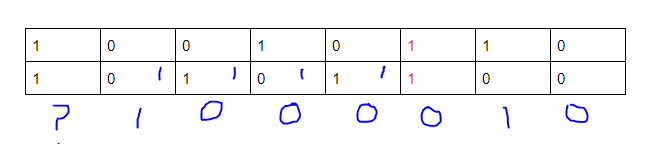
Be able to add together up to three binary numbers. Be able to apply a binary shift to a binary number.
Describe situations where binary shifts can be used.
Track each student's skills and progress in your Mastery dashboards
Give this quiz to my class
Q 1/12
Score 0
What does it mean to apply a binary shift?
30
To multiply or divide a number
To subtract from a number
To add to a number
To move a number in memory
Q 2/12
Score 0
Which direction should the binary digits move if the number is multiplied?
30
Up
Right
Down
Left
12 questions
Q.
What does it mean to apply a binary shift?
1
30 sec
3.3.4
Q.
Which direction should the binary digits move if the number is multiplied?
2
30 sec
3.3.4
Q.
Which direction should the binary digits move if the number is divided?
3
30 sec
3.3.4
Q.
Once the existing digits are shifted left in a binary multiplication, what should fill those spaces?
4
30 sec
3.3.4
Q.
How many digits must a number shift to get a multiplication or division of 2?
5
30 sec
3.3.4
Q.
How many digits must a number shift to get a multiplication or division of 4?
6
30 sec
3.3.4
Q.
How many digits must a number shift to get a multiplication or division of 16?
7
30 sec
3.3.4
Q.
What would binary number 010011 be after a shift of 2 (left) is applied to it?
8
60 sec
3.3.4
Q.
What term describes not having enough bits to store a newly calculated binary number?
9
60 sec
3.3.4
Q.
What happens when you need to add 1 + 1 together in binary addition?
10
60 sec
3.3.4
Q.
What will happen at the end of this addition?
11
60 sec
3.3.4
Q.
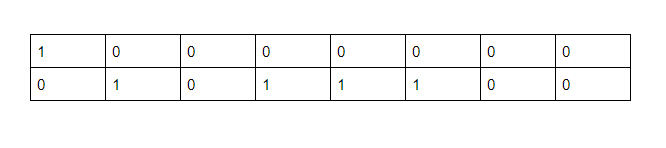
What is the result of the following numbers being added together?