Tag the questions with any skills you have. Your dashboard will track each student's mastery of each skill.
Give this quiz to my class
Q 1/117
Score 0
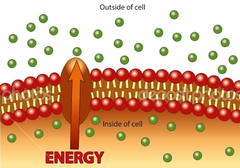
Energy-requiring process that moves material across a cell membrane against a concentration difference
30
active transport
Q 2/117
Score 0
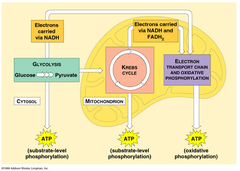
the process by which cells use oxygen to obtain usable energy from an energy source
30
aerobic cellular respiration
117 questions
Q.
Energy-requiring process that moves material across a cell membrane against a concentration difference
1
30 sec
Q.
the process by which cells use oxygen to obtain usable energy from an energy source
2
30 sec
Q.
the process by which cells obtain energy from an energy source without using oxygen
3
30 sec
Q.
A difference in the concentration of a substance across a distance.
4
30 sec
Q.
A system of membranes that is found in a cell's cytoplasm and that assists in the production, processing, and transport of proteins and in the production of lipids.
5
30 sec
Q.
A change from one form of energy to another
6
30 sec
Q.
A system of membranes that modifies and packages proteins for export by the cell
7
30 sec
Q.
A tendency to maintain a balanced or constant internal state; the regulation of any aspect of body chemistry, such as blood glucose, around a particular level
8
30 sec
Q.
An organelle containing digestive enzymes
9
30 sec
Q.
messenger RNA; type of RNA that carries instructions from DNA in the nucleus to the ribosome
10
30 sec
Q.
Found inside the nucleus and produces ribosomes
11
30 sec
Q.
A selectively-permeable phospholipid bilayer forming the boundary of the cells
12
30 sec
Q.
group of plant organelles that are used for storage of starches, lipids, or pigments
13
30 sec
Q.
combining parts into a whole
14
30 sec
Q.
A component of nucleic acid that carries hereditary information in DNA in cells. Chemically, it is a pyrimidine base.
15
30 sec
Q.
A virus that infects bacteria
16
30 sec
Q.
Outer protein coat of a virus
17
30 sec
Q.
varicella zoster virus
18
30 sec
Q.
a virus whose genome consists of DNA
19
30 sec
Q.
Molecules responsible for heredity and variation of organisms.
20
30 sec
Q.
inflammatory skin disease caused by herpes virus characterized by small blisters in clusters
21
30 sec
Q.
An organism on which a parasite lives.
22
30 sec
Q.
Acquired immunodeficiency syndrome (AIDS) is caused by HIV, which damages the cells in the body's immune system so that the body is unable to fight infection or certain cancers.
23
30 sec
Q.
maintain the body's defense against foreign and infectious material
24
30 sec
Q.
a viral reproductive cycle in which the viral DNA is added to the host cell's DNA and is copied along with the host cell's DNA
25
30 sec
Q.
a viral reproductive cycle in which copies of a virus are made within a host cell, which then bursts open, releasing new viruses
26
30 sec
Q.
protein particles that cause disease
27
30 sec
Q.
An RNA virus that reproduces by transcribing its RNA into DNA and then inserting the DNA into a cellular chromosome; an important class of cancer-causing viruses.
28
30 sec
Q.
a lymphocyte that identifies pathogens and distinguishes one pathogen from another
29
30 sec
Q.
the formation of biological viruses during the infection process in the target host cells
30
30 sec
Q.
A tiny, nonliving particle that invades and then reproduces inside a living cell.
31
30 sec
Q.
Phase of mitosis in which the chromosomes separate and move to opposite ends of the cell
32
30 sec
Q.
mild, not cancerous
33
30 sec
Q.
series of events that cells go through as they grow and divide
34
30 sec
Q.
structure in an animal cell that helps to organize cell division
35
30 sec
Q.
Area where the chromatids of a chromosome are attached
36
30 sec
Q.
one of two identical "sister" parts of a duplicated chromosome
37
30 sec
Q.
a threadlike structure of nucleic acids and protein found in the nucleus of most living cells, carrying genetic information in the form of genes.
38
30 sec
Q.
The cells that are produced as a result of mitosis. These cells are identical to each other, and also to the original parent cell.
39
30 sec
Q.
(genetics) an organism or cell having two sets of chromosomes or twice the haploid number
40
30 sec
Q.
the process of making a copy of DNA
41
30 sec
Q.
first stage in interphase, during which cellular growth and development takes place
42
30 sec
Q.
third stage of interphase during which organelle replication and protein synthesis takes place
43
30 sec
Q.
Cell grows, performs its normal functions, and prepares for division; consists of G1, S, and G2 phases
help pull apart the cell during replication and are made up of micrtubules
53
30 sec
Q.
(genetics) the organic process whereby the DNA sequence in a gene is copied into mRNA
54
30 sec
Q.
mass of rapidly dividing cells that can damage surrounding tissue
55
30 sec
Q.
The base that pairs with Thymine in DNA
56
30 sec
Q.
Building blocks of protein
57
30 sec
Q.
The base that pairs with Guanine with DNA
58
30 sec
Q.
Shape of DNA
59
30 sec
Q.
collection of codons of mRNA, each of which directs the incorporation of a particular amino acid into a protein during protein synthesis
60
30 sec
Q.
The base that pairs with Cytosine in DNA
61
30 sec
Q.
similarity resulting from common ancestry
62
30 sec
Q.
weak attraction between a hydrogen atom and another atom
63
30 sec
Q.
A molecule found in DNA and RNA that encodes genetic information in cells.
64
30 sec
Q.
A building block of DNA, consisting of a five-carbon sugar covalently bonded to a nitrogenous base and a phosphate group.
65
30 sec
Q.
a natural mineral containing chemical compounds often used in fertilizers
66
30 sec
Q.
Different forms of a gene
67
30 sec
Q.
During translation, the type of amino acid that is added to the growing polypeptide or protein depends on the
68
30 sec
Q.
Process by which mRNA is decoded and a protein is produced
69
30 sec
Q.
transfer RNA; type of RNA that carries amino acids to the ribosome
70
30 sec
Q.
group of three bases on a tRNA molecule that are complementary to an mRNA codon
71
30 sec
Q.
the order of nitrogenous bases on a chain of DNA
72
30 sec
Q.
Sequence of 3 consecutive base nucleotides
73
30 sec
Q.
a sequence of three nucleotides eg. ATC, that codes for a particular amino acid
74
30 sec
Q.
specialized cell involved in sexual reproduction
75
30 sec
Q.
Process in which homologous chromosomes exchange portions of their chromatids during meiosis.
76
30 sec
Q.
A cross between individuals that have different alleles for the same gene
77
30 sec
Q.
A characteristic in which an allele that expresses its phenotype even in the presence of a recessive allele
78
30 sec
Q.
An organism or cell having only one complete set of chromosomes.
79
30 sec
Q.
A chart that shows all the possible combinations of alleles that can result from a genetic cross
80
30 sec
Q.
Diagram that shows the evolutionary relationships among a group of organisms
81
30 sec
Q.
a tree diagram, especially one showing taxonomic relationships.
82
30 sec
Q.
behavior that is inherited genetically
83
30 sec
Q.
stopping, controlling
84
30 sec
Q.
group or level of organization into which organisms are classified
85
30 sec
Q.
how often a particular gene occurs in the population
86
30 sec
Q.
number of deaths from a disease in relation to the population in a given time
87
30 sec
Q.
A process in which individuals that have certain inherited traits tend to survive and reproduce at higher rates than other individuals because of those traits.
88
30 sec
Q.
Domain of unicellular prokaryotes that have cell walls that do not contain peptidoglycan
89
30 sec
Q.
Classification system useful for storing and finding information about living things
90
30 sec
Q.
The hierarchical system used for grouping and naming species of living organisms.
91
30 sec
Q.
Domain, Kingdom, Phylum, Class, Order, Family, Genus, Species
92
30 sec
Q.
a system for naming and grouping similar organisms together
93
30 sec
Q.
The molecules of life that include: carbohydrates, lipids, proteins and nucleic acids.
94
30 sec
Q.
compound made up of carbon, hydrogen, and oxygen atoms; major source of energy for the human body
95
30 sec
Q.
A chemical reaction in which two molecules covalently bond to each other with the removal of a water molecule.
96
30 sec
Q.
sugar used in DNA to make up the "backbone"
97
30 sec
Q.
Building Blocks of Lipids
98
30 sec
Q.
Energy-rich organic compounds, such as fats, oils, and waxes, that are made of carbon, hydrogen, and oxygen.
99
30 sec
Q.
A long molecule consisting of many similar or identical monomers linked together.
100
30 sec
Q.
Process that releases energy by breaking down glucose and other food molecules in the presence of oxygen
101
30 sec
Q.
A type of protein that speeds up a chemical reaction in a living thing
102
30 sec
Q.
reactant of an enzyme-catalyzed reaction
103
30 sec
Q.
Pairs of cells that surround stomata and control their opening and closing.
104
30 sec
Q.
A loosely arranged photosynthetic cell located between the bundle sheath and the leaf surface.
105
30 sec
Q.
opening
106
30 sec
Q.
vascular tissue that carries water upward from the roots to every part of a plant
107
30 sec
Q.
consists of stems and leaves
108
30 sec
Q.
A relationship between two organisms in which one organism benefits and the other is unaffected
109
30 sec
Q.
A relationship between two organisms of different species where one benefits and the other is harmed
110
30 sec
Q.
An interaction in which one organism kills another for food.
111
30 sec
Q.
symbiotic relationship in which both species benefit from the relationship
112
30 sec
Q.
an animal that feeds on dead organic material, especially plant detritus.
113
30 sec
Q.
process of converting nitrogen gas into nitrogen compounds that plants can absorb and use