


Biology-CARESS
Quiz by JM
Feel free to use or edit a copy
includes Teacher and Student dashboards
Measure skillsfrom any curriculum
Tag the questions with any skills you have. Your dashboard will track each student's mastery of each skill.
- edit the questions
- save a copy for later
- start a class game
- automatically assign follow-up activities based on students’ scores
- assign as homework
- share a link with colleagues
- print as a bubble sheet
- Q 1/10Score 0
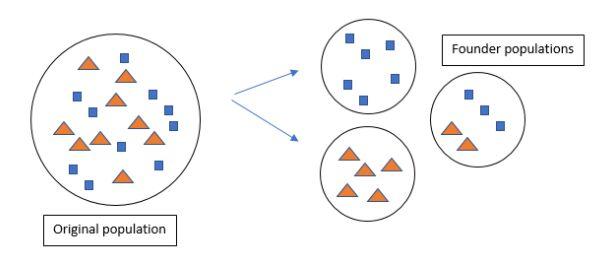
It refers to chance events that cause allele frequencies to fluctuate unpredictably
29Natural selection
Genetic Drift
Mutation
Gene Flow

- Q1
It refers to chance events that cause allele frequencies to fluctuate unpredictably
Natural selection
Genetic Drift
Mutation
Gene Flow
20s - Q2
Tonicity refers to the ability of the surrounding solution to cause cells to lose or gain water. This mainly depends on the concentration of solutes outside the cell with respect to the concentration of solutes inside the cell. Which of the following shows concentration of solutes is relatively equal to those of the outside environment?
B. Isotonic
C. Hypotonic
D. Supertonic
A. Hypertonic
20s - Q3
Which of the following are the properties of life?
I. Organization
II. Reproduction
III. Growth and Development
IV. Response to Stimulus
V. Metabolism
VI. Regulation
VII. Evolutionary Adaptation
VIII. Evolution
IX. Mutation
A. I, II, III, V, VIII, IX
C. II, III, IV, V, VI, VII
D. I, II, III, IV, V, VI, VII
B. I, II, III, IV, VI, VIII, IX
20s - Q4
Deoxyribonucleic Acid (DNA) is double-stranded structure molecule that carries the genetic information of the organism. It is made of monomer, nucleic acid. Each nucleotide is composed of three parts: a five-carbon sugar in the center with one end linked to a phosphate group and the other end linked to a nitrogenous base, a molecule containing nitrogen and carbon. The nitrogenous bases are: adenine (A), thymine (T), cytosine (C), and guanine (G). What is the correct pairing of the nitrogenous bases?
I. A-T, C-G
II. T-A, G-C
III. A-U, C-G
IV. U-A, G-C
D. I only
B. II and III
A. I and II
C. III and IV
20s - Q5
Heredity is the transmission of traits from one generation to the next. The study of heredity, and genetics, started when the monk Gregor Mendel deduced the basic principles of genetics while studying garden peas. Which concepts are more closely-related to each other?
I. Segregation
II. Wild-type
III. Incomplete Dominance
IV. Pleiotropy
V. Codominance
VI. Mutants
A. I and V
B. II and VI
C. III and IV
D. I and III
20s - Q6
Muscle tissues are the most abundant in nearly all animals. It’s made of long cells called muscle fibers, each having contractile proteins. Muscle tissues can be classified as follows:
I. Skeletal
II. Cardiac
III. Smooth
A. I and II
B. I and III
C. II and III
D. I, II, III
20s - Q7
What tissue type is known to store excess energy in the form of fat?
D. Cartilage
B. Bone
A. Adipose tissue
C. Blood
20s - Q8
The following terminologies are used to describe animal tissues. Which one doesn’t belong to the group?
D. Stratified
B. Cuboidal
C. Columnar
A. Squamous
30s - Q9
The leaves attach to the stem through points known as?
D. Terminal bud
A. Node
C. Apical bud
B. Internode
15s - Q10
Cells which help open or close the stomata of plants are referred to as?
C. Door cells
B. Guard cells
A. Soldier cells
D. Window cells
10s

