placeholder image to represent content

BM Unit 3: Animal Adaptations

Quiz by Margaret Barron

Our brand new solo games combine with your quiz, on the same screen

Correct quiz answers unlock more play!

New Quizalize solo game modes
11 questions
Show answers
  • Q1
    Choose the sentence from the passage that best states the main idea.
    Question Image
    They also have physical features that improve their chances of survival.
    Sometimes, the way they act or behave give them an advantage.
    All animals have special features that help them stay alive, or survive.
    120s
  • Q2
    Choose the sentence from the passage that best states the main idea.
    Question Image
    Almost everything about an animal's body is a physical adaptation.
    The Milwaukee Zoo has an Animal Adaptations Lab.
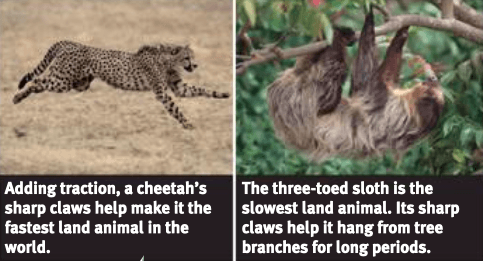
    On a recent tour there, students learned that webbed feet, sharp claws, whiskers, large beaks, and long tails are adaptations found in many animals.
    Th slab doesn't stop there.
    120s
  • Q3
    Choose the sentence from the passage that best states the main idea.
    Question Image
    Sharks are found in every ocean of the world, far and wide.
    However, most sharks are carnivores.
    They differ in how they look and live, and in what they eat.
    There are more than 400 species, or kinds, of sharks.
    120s
  • Q4
    Choose the sentence from the passage that best states the main idea.
    Question Image
    This aids in an animal's survival.
    Each helps suit the animal to its environment.
    Body coverings serve many different functions.
    120s
  • Q5
    Choose the sentence from the passage that best states the main idea.
    Question Image
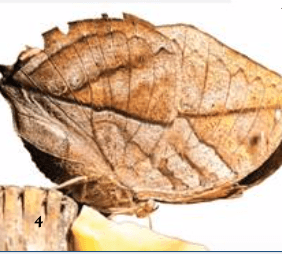
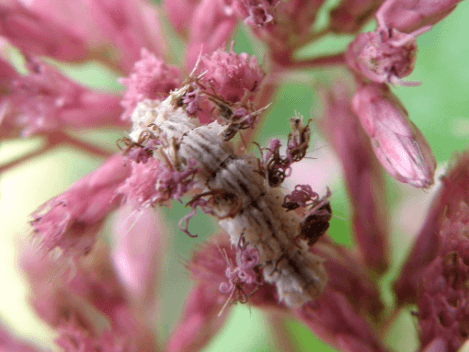
    Caterpillars have several forms of self -defense.
    Some attach chewed bits of flowers to itself, so it seems like part of a flower.
    Some curl up in leaves to hide.
    A brownish caterpillar looks like a sleeve.
    120s
  • Q6
    Choose one detail from the passage that supports that feathers are unique adaptations.
    Question Image
    Leopards' spots help keep them blend in with leaves.
    Scales protect iguanas from attackers.
    Amphibians have smooth, wet skin that help them survive in and out of the water.
    Down feathers keep birds warm by trapping air.
    120s
  • Q7
    Choose one detail from the passage that supports that reptiles's scales help them survive.
    Question Image
    Down feathers keep birds warm by trapping air.
    Scales protect iguanas from attackers.
    Amphibians have smooth, wet skin that help them survive in and out of the water.
    Leopards' spots help keep them blend in with leaves.
    120s
  • Q8
    Choose one detail from the passage that supports that mammals's fur help them survive.
    Down feathers keep birds warm by trapping air.
    Scales protect iguanas from attackers.
    Amphibians have smooth, wet skin that help them survive in and out of the water.
    The undercoat is the layer against the animal's skin.
    120s
  • Q9
    What is the name of a body covering?
    Question Image
    mammals
    Arctic Circle
    undercoat
    grasslands
    120s
  • Q10
    The first syllable of "FEATHERS" has the same vowel sound as the —
    Question Image
    'E' in EYESPOT
    'E' in KEEPS
    'E' in PEACOCK
    'E' in PREDATOR
    120s
  • Q11
    The last syllable of "FEATHER" is pronounced like —
    Question Image
    OR in MORE
    UR in FUR
    EAR in HEARING
    AIR in AIR
    120s

Teachers give this quiz to your class