Loading...


Brand Training: Pre/ Post Assessment
Quiz by BR Learning
Customize this quiz to suit your class
Instantly translate to 100+ languages
Tag the questions with any skills you have. Your dashboard will track each student's mastery of each skill.
Give this quiz to my class
Only maximum 3 Pink Spoon can be given to customer in order to try Baskin-Robbins ice cream.
Baskin-Robbins ice cream are all Halal from JAKIM.
Only maximum 3 Pink Spoon can be given to customer in order to try Baskin-Robbins ice cream.
Baskin-Robbins ice cream are all Halal from JAKIM.
Which or the following is NOT the example of Imminent Health Risk (IHR)?
It is ACCEPTABLE for crew to put personal belongings at service area.
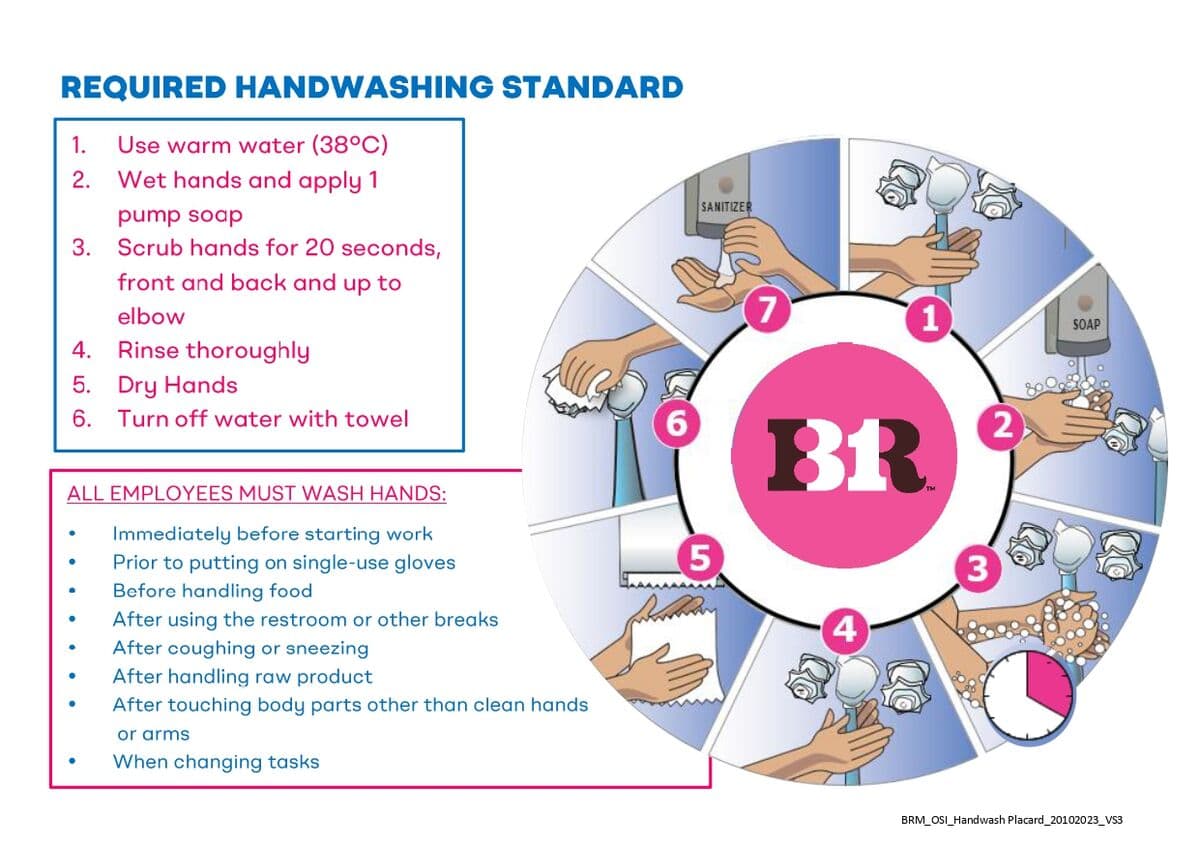
Indicate how many seconds for crew to wash their hand before serve the customer?
Indicate each of the compartment for 3 compartment sink

Tick the correct common allergen in Baskin-Robbins Malaysia.
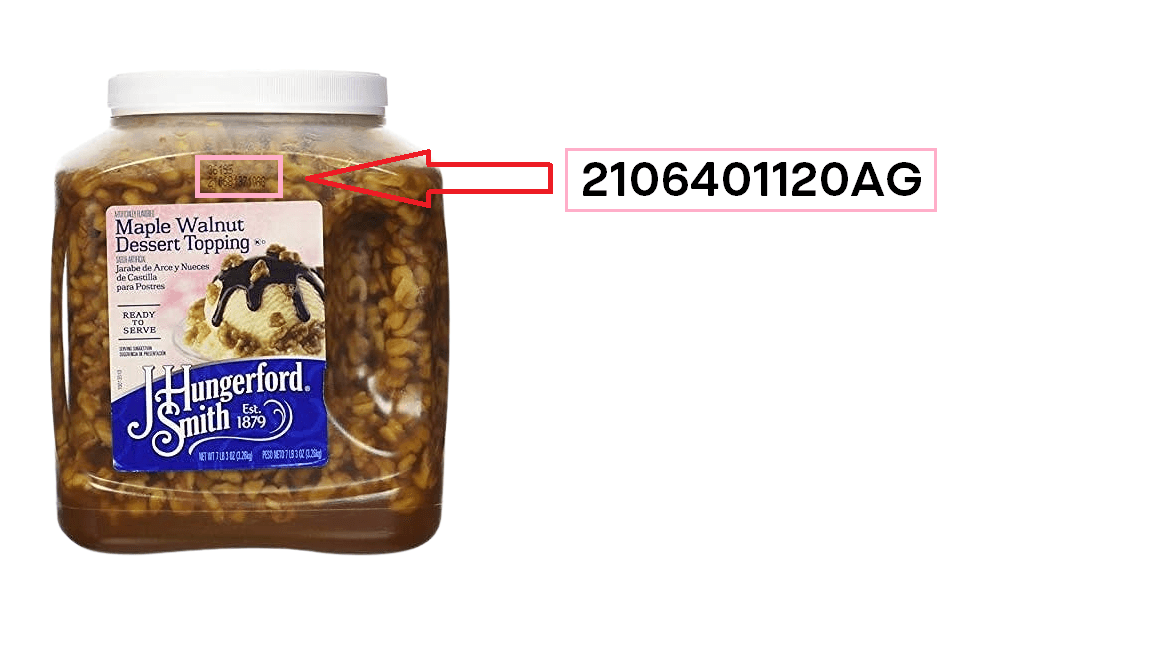
State the correct expiry date based on Julian Date for this product. (Assume the product shelf life is within 1 year)
In order to get ribbon length for cake tying, we can count the number of Baskin-Robbins logo.
Which of the following is the example of Brand promotion?
 History of policing Pre-confederation Mostly informal policing by community residents First police officers Quebec city, mid 17th century Upper Canada, early 19th century Mandate Police conflicts between ethinc groups and employes/labours Maintain moral standards (drunkenness, alcoholism) Apprehend criminals Provincal Police Force Response to disorder resulting form gold strikes in 19th century Replaced by RCMP during 20th century Currently, Ontario,Quebec and parts of Newfoundland have their own provincal police force History of RCMP North-Wesr Mounted Police Founded in 1873 Maintain law and order Ensure orderly settlement in prairies Many problems: desertion, resignation and improper conduct Replaced by Royal Canadain Mounted Police Police Today About 70,000 police officers across Canada 199 police officers per 100,000 population Lower than Scotland (337), England(244), U.S (238) NUmber increased over past decade NUmber of female officers increased 1 out of 5 officers is a women Contemporary Policing Structure of policing Four levels Federal, Provincial, municipal, and First nations Also public transportation police (railway, airport, and transit) Some municipalities have own forces E.g, Peel, Toronoto Others use provincial force detachments or RCMP detachments Royal Candanin Mounted Police Governed by Royal Canadian Mounted Pollcei Act (1985) Broad Range of policing activities, including federal policing and international peacekeppiong Contract Policing Provincial, territorial and municipal level Concerns about local oversight and accountability In but not of communities-difficult to ensure that RCMp detachments are responsive to communities Provincial Police Three forces Ontario Provincial Police Surete du Quebec (SQ) Royal Newfoundland Constabulary (RNC) Other provinces contractually use the RCMP Responsibilities Police rural areas and areas outside municipalities Enforce provincial laws and Criminal Code Regional Police Amalgamated Forces E.g Peel region police and Halton Regional Police Force Provide Police Services to over Half of Ontarians Advantages Cheaper, more servies Disadvantages To centralized, not in touch with community Municipal Police Responsibilites Enforce Criminal Code, Provincal Statues, municipal by laws, some federal statues (e.g drugs) Largest number of officers of any level My be contracted to RCMP or Provincal force Costs are paid by the municipality First Nations Type of policing is negotiated by First Nations Commnity Autonomous reserve based First Nations Officers from RCMP or OPP Responsibilites Enforce Criminal Code, federal and provicanl statues, band bylaws Accountability Reserve based police commission or band council Private Security Services Two main types 1. Private Security Firms 2. Company based, in house security officers No more legal authority than ordinary citizens But can arrest and detain people who commit crimes on private property In Canada, Private security officers outnumber police officer by four to one Parapolice Extension of activities Lack of systems of oversight like transitional police Police Work POlicing The activities of any indivual or organization acting legally on behalf of public or private organizations or persons to maintain security or social order Pluralization of Policing The sharing between public and private security Legislative Framework Carry out tasks within a number of legislative frameworks, define role, powers/responsibilites Canadian charter of rights and freedoms- most impactful on power/actvites of police Provincial and municipal legislation - Status such as motor vehicle administration acts, highway traffic acts, liquor acts and provincial/musincpal police acts Democracy Governance Categories of Policing Recruitment and Training of police officers Police recruitment Recruiting Visible Minorites and Aboriginal People Special initvates and programs for youth, women and visible minorities PEACE (Police Ethnic and Cultureal Exchange) OPPBound (particpate in variety of activate with officer) Toronto POlice recruitment of Somali Officers Edmonton police uniforms that include a hijab Police Training Residential/non-residential academies, centralized and decentralized Physical and academic instruction, socilization into the police occupation Operational field traiing Hands-on application of principles learned in the academy Mentoship form senior officer Working Personality of Police officers Challenges of Police Work Work Enviroment Long hours and shift work Exposure to stressors, especially in high demand environments PTSD and burnout Work Organiztion Harassment of female officers Cumbersome of system of internal redress Summary A number of misconceptions arounds police work, including th emotion that most police work involves crime control A variety of influences on the roles and activities of the police Four levels of policing: federal, provincial, mnicipal and First Nations, each with different responsibilities vivo Brand Training QuizUSAGE/APPLICATION OF MULTIMEDIA RESOURCES Here’s how multimedia is used across different fields: • Creative industries – Multimedia allows creative professionals to express themselves in innovative ways and reach wider audiences through engaging and immersive content. Examples: graphic design, filmmaking, interactive storytelling, talk shows, podcast • Commercial uses – Multimedia helps business reach their target audience more effectively, build brand awareness, and drive sales. Examples: online advertising, product demonstrations, corporate presentation • Entertainment and fine arts – Multimedia pushes the boundaries of creative expression, allowing artists to explore new forms of art and reach broader audiences. Examples: video games, virtual reality art, musical performances • Educational technology – Multimedia helps educators create dynamic and engaging learning environments, making it easier for students to understand and retain information. Examples: online courses, educational games, virtual field trips • Social work – Multimedia empowers social workers to reach wider audiences, connect with clients more effectively, and advocate for social change. Examples: social media advocacy, client communication, training materials • Language communication – Multimedia makes language learning more engaging and accessible, helping people communicate effectively across language barriers and cultural differences. Examples: language learning apps, interactive language games, multilingual content creation • Journalism – Multimedia journalism allows journalists to present information in a more engaging and informative way, enhancing the storytelling experience and reaching wider audiences. Examples: interactive news article, video journalism, virtual reality journalism In conclusion, multimedia has become an integral part of various industries, enabling, creative expression, effective communication, and engaging experiences for audience worldwide. Archipelago Brand AwarenessRichard Bland College (RBC), Virginia’s selective, two-year, residential, liberal arts transfer institution, was born through innovation. In 1959, years before the Virginia Community College system was imagined, Frank Ernst – a Gateway region native, entrepreneur, and retired executive of Hopewell’s Allied Chemical Plant – proposed the creation of an institution grounded in the liberal arts tradition with opportunities for specialized training in in-demand fields such as engineering to the State Council of Higher Education. After discussions with Virginia Tech and the University of Virginia, Ernst found a willing partner in the College of William & Mary, the second-oldest university in the United States, who founded Richard Bland College in 1960. RBC has since offered multiple certificates and university-parallel two-year degrees. The College was named for the Virginia statesman and champion of public rights, Richard Bland. Son and grandson of successful planters, Richard Bland was educated at The College of William and Mary. From 1742 until his death in 1776, he represented the area in which the College is now located, first in the House of Burgesses, and later, with the adoption of a state constitution, in the House of Delegates. He also served as a delegate from Virginia in both the First and Second Continental Congresses. It seems fitting, therefore, that an institution of higher learning located in an area served for so many years by this distinguished Virginia patriot and scholar, should derive its name from one whom Jefferson described “as the most learned and logical man of those who took prominent lead in public affairs.” Before the Civil War, the property on which the College is now located was a plantation owned by the Gurley family. It became an important part of the Union-occupied territory during the 1864-1865 Siege of Petersburg. The present campus was the scene of two battles during that campaign. Shortly after the turn of the century, Hatcher Seward established a dairy and cattle farm on the former Gurley property and constructed two farmhouses. Today they serve as the President’s residence and the Hospitality House. In the early 1900s, the still-beautiful grove of pecan trees was planted. The farm was used as a work camp for about twenty conscientious objectors during World War I. The Commonwealth of Virginia authorized Central State Hospital to purchase the land in 1932 for use as the Petersburg Training School and Hospital for African-American Youth. That institution was moved in 1959, and the land, still owned by the Commonwealth, became the location for the establishment of Richard Bland College of The College of William and Mary. Under the guidance of Colonel (Ret.) James M. Carson, the former hospital and training facility was transformed into Richard Bland College, and classes were held beginning in 1961. In the late 1960s, Ernst Hall (named for a local business leader influential in the establishment of the college) was added to the original campus. In addition, a Student Center Library building and a gymnasium also were constructed in the early 1970s. Colonel Carson retired as the founding President of the College in 1973. From 1973 through 1975, Dr. Cornelius Laban, Professor of Biology, Emeritus, served as the Acting President of Richard Bland College. In 1975, Dr. Clarence Maze succeeded Colonel Carson as Richard Bland College’s second President. During his tenure, Richard Bland College expanded its academic programs, added an Asian water garden that was designed by Dr. Maze and expanded international programs and travel. In recognition of his service to the College, the renovated administration building was named Maze Hall upon his retirement in 1996. In 1996, Dr. James B. McNeer succeeded Dr. Clarence Maze as Richard Bland College’s third President. Dr. McNeer introduced a residential life program and oversaw the addition of the Residential Village in 2008. The Residential Village was comprised of two dormitories, Freedom Hall and Patriot Hall, which housed 250 students. A new Science and Technology Building was added in 2010, and in recognition of his service to the College, this building was named James B. McNeer Hall. Dr. McNeer retired in 2012. In 2012, Dr. Debbie L. Sydow succeeded Dr. James McNeer as Richard Bland College’s fourth president. Dr. Sydow expanded the reach, range and diversity of students attending Richard Bland College. She oversaw a physical campus transformation through extensive building renovation and new construction, creation of a Business Innovation Park, and conservation of the iconic pecan grove and water garden. President Sydow reinstituted intercollegiate athletics in 2013 and has since hailed three NJCAA national championship teams. She supported the Foundation’s emergence as a vibrant, entrepreneurial organization led by a Board of Directors composed largely of alumni, and she secured the largest private gift in College history to launch the W&M Promise Scholars program. By effectively leveraging partnerships, President Sydow boosted work-based learning and expanded academic and career pathways for students.Brand Identity COACH Brand equity, cobranding, marcas, logos, sloganBrand Management