C1.1 Enzymes & metabolism - revision quiz
Quiz by L
Feel free to use or edit a copy
includes Teacher and Student dashboards
Measure skillsfrom any curriculum
Tag the questions with any skills you have. Your dashboard will track each student's mastery of each skill.
- edit the questions
- save a copy for later
- start a class game
- automatically assign follow-up activities based on students’ scores
- assign as homework
- share a link with colleagues
- print as a bubble sheet
- Q1
Which is the best explanation of the effect of increasing the substrate concentration on the rate of an enzyme-controlled reaction?
It causes the enzyme molecules to react more quickly with the substrate.
It causes the substrate molecules to move more and increases the rate.
It causes the solution to be more concentrated, increasing the rate.
It causes more substrate molecules to collide with enzyme molecules, increasing the rate.
60s - Q2
What would be the effect of gradually increasing the pH of a solution from pH6.0 to pH8.0 on the rate of a reaction catalyzed by an enzyme which has an optimum pH of 7.2 ?
The rate would stay the same.
The rate would increase and then decrease.
The rate would increase, then stay the same.
The rate would decease and then increase.
60s - Q3
Which phrase best describes enzyme substrate specificity?
Enzymes only have one active site.
Enzymes and substrates both have a specific active site.
Enzymes only react with one specific substrate at a time.
A specific enzyme has an active site which only one substrate can bind to.
60s - Q4
When bound to the active site, what effect do lactase enzymes have on the bonds holding glucose to galactose in the disaccharide lactose molecules?
They are broken.
They are weakened.
Nothing happens to them.
They are strengthened.
60s - Q5
What is the name of the site on an enzyme where a substrate binds to the enzyme?
Substrate site
Lock site
Allosteric site
Active site
60s - Q6
What might cause the denaturation of enzymes?
Increase in temperature above the optimum of the enzyme.
Increase in enzyme concentration.
Decrease in substrate concentration.
Decrease in pH to the optimum of the enzyme.
60s - Q7
Which of the following best describes the role of molecular motion in enzyme catalysis?
Collision happens when substrate and protein molecules react with one another
Collision happens when the active site and enzyme molecules react with one another
Reactions happen when substrate and enzyme molecules collide with one another
Reactions happen when the active site and enzyme molecules collide with one another
60s - Q8
What is the general term that sums up 'chains and cycles of enzyme-catalyzed reactions'?
Catabolic pathways
Metabolic pathways
Allosteric pathways
End-product inhibition
60s - Q9
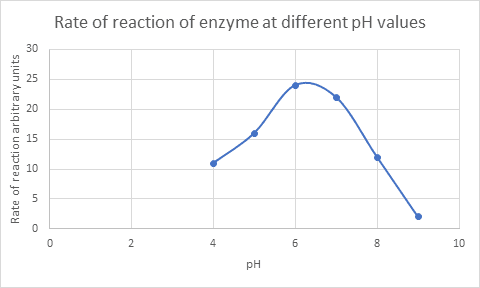
The graph shows the rate of activity of yeast catalase against different pH values. Estimate the optimum pH for the activity of this enzyme.
6.3
6.8
6.0
7.0
60s - Q10
The graph shows the data from an investigation of the rate of activity of yeast catalase against different pH values. Which of the following variables must be controlled to give accurate data?
I Enzyme concentration
II Temperature
III pH
IV Volume of enzyme and substrate solution.
I only.
I, II, IV only.
All of the above.
I, II only.
60s - Q11
What is the reason for the lower rate of activity of bacterial amylase with starch at a temperature of 400C than the rate at 300C optimum temperature?
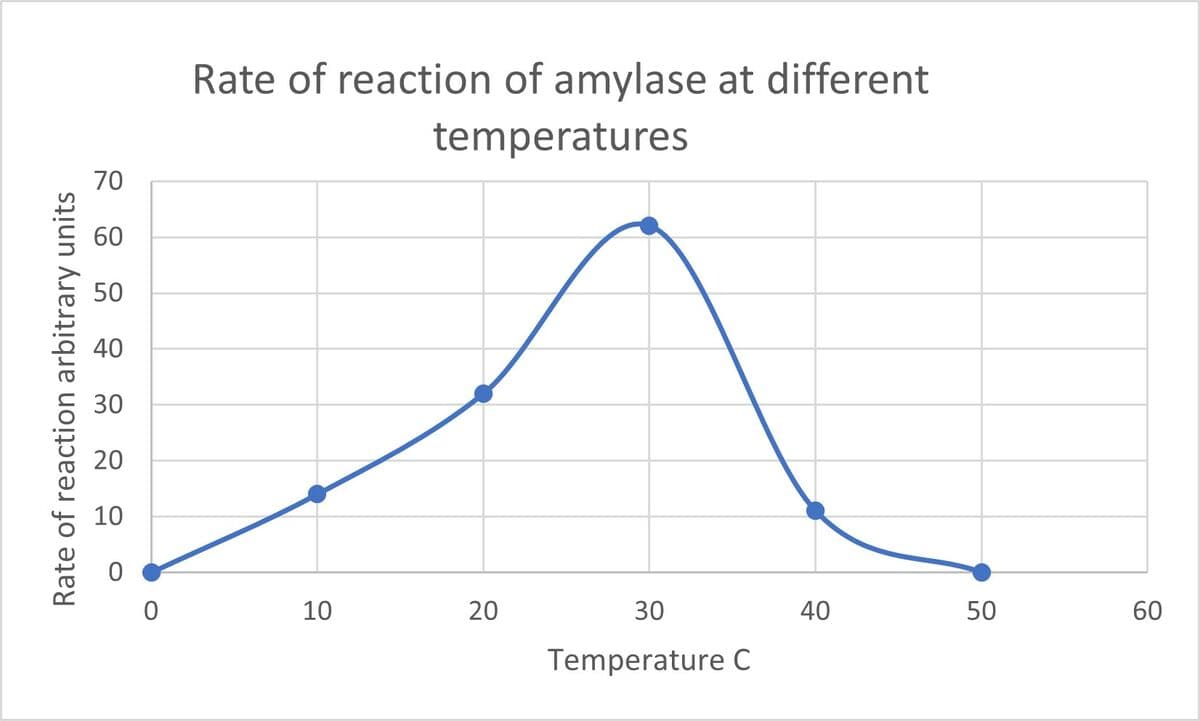
Amylase is partially denatured at 400C.
The starch molecules have less energy with which to react.
The starch is denatured at 400C
Amylase is fully denatured at 400C.
60s - Q12
What is the reason that the rate of an enzyme-controlled reaction increases with substrate concentration until it reaches a maximum value and then remains constant?
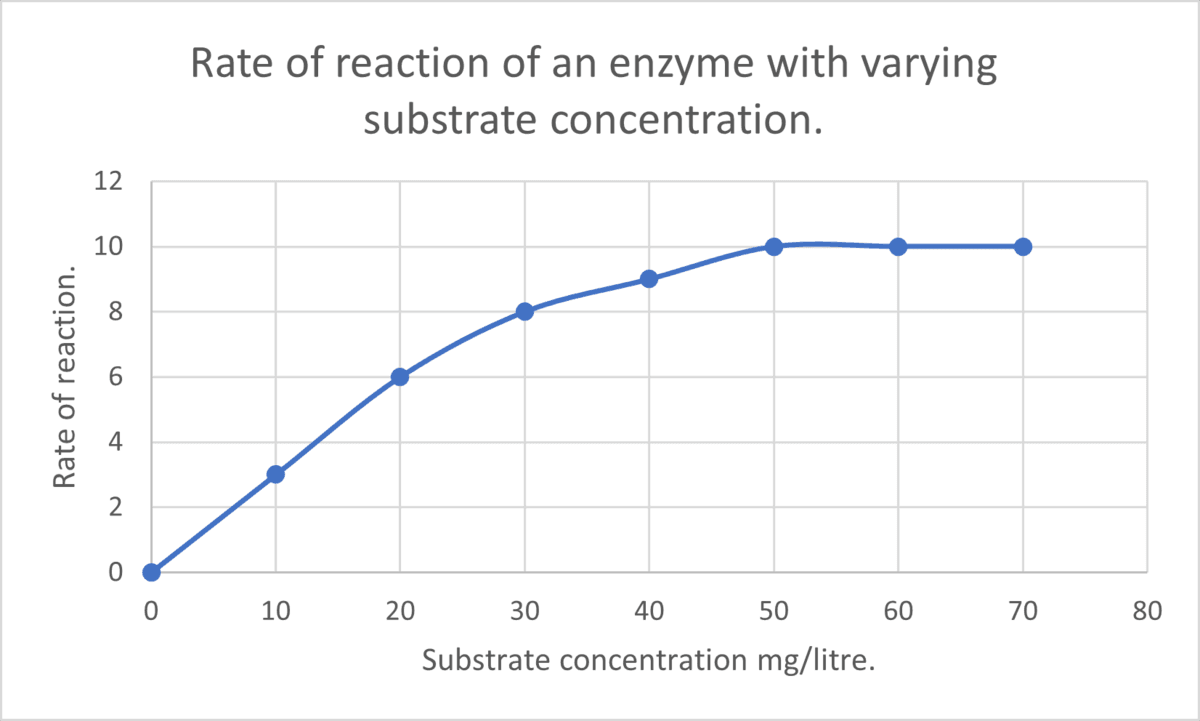
The active sites of the enzyme are fully occupied.
The reaction is completed.
The enzyme is denatured.
The enzyme is inhibited.
60s - Q13
How do enzymes lower the activation energy of the reaction that they catalyse?
By forming an enzyme substrate complex that aligns or distorts the substrate molecules.
By forming an enzyme substrate complex
By forming an enzyme substrate complex that gives energy to the molecules.
By the substrate fitting into the active site.
60s - Q14
Which of the following are benefits of the control of metabolic pathways by enzymes?
More energy is released from the reaction.
They catalyze the reactions in the pathways and increase energy release
Enzymes can be denatured to stop pathway reactions.
The reactions in the pathways happen at a faster rate.
60s - Q15
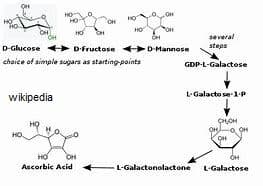
The diagram shows the production of Vitamin C from glucose in plants.
Which of the following statements are correct in regard to this process?
It is digestion.
It requires different enzymes for each reaction.
It is a cycle.
Humans can carry out the same reactions.
60s