Tag the questions with any skills you have. Your dashboard will track each student's mastery of each skill.
Give this quiz to my class
Q 1/47
Score 0
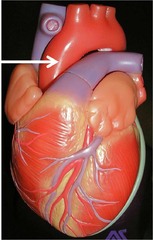
See image
30
aorta
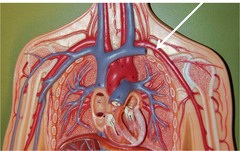
Q 2/47
Score 0
attached to the heart and carry blood away from the heart (pulmonary and aorta)
30
arteries
47 questions
Q.
See image
1
30 sec
Q.
attached to the heart and carry blood away from the heart (pulmonary and aorta)
2
30 sec
Q.
smaller and narrower branches of the arteries reducing the speed at which the blood enters the tissue area
3
30 sec
Q.
receive blood entering the heart and feed it to the ventricles
4
30 sec
Q.
narrowest and thinnest blood vessels which saturate all living tissues. This is where gaseous exchange takes place
5
30 sec
Q.
a complete heartbeat and the pathway taken by the blood as a consequence
6
30 sec
Q.
Stroke volume X Heart rate
7
30 sec
Q.
atrium (upper) and ventricles (lower)
8
30 sec
Q.
smooth muscle in vessel narrows and contracts reducing the volume of blood which can pass through. forces blood to divert to active areas.
9
30 sec
Q.
branch off from the left side of the heart at the root of the aorta, deliver oxygenated blood to the hearts muscular wall
10
30 sec
Q.
collect deoxygenated blood from the hearts muscular walls and return this to the pulmonary artery where its delivered back to the lungs for oxygenation.
11
30 sec
Q.
enters the right atrium via the inferior and superior vena cava passes through the one way valve and into the right ventricle. Blood is ejected to the lungs via the pulmonary artery.
12
30 sec
Q.
The relaxing filling phase of the heartbeat
13
30 sec
Q.
vessel walls stretching due to increased heart rate and blood pressure
14
30 sec
Q.
diet, smoking, stress, genetic factors.
15
30 sec
Q.
made from protein capable of transporting for molecules of oxygen
16
30 sec
Q.
sustained and elevated blood pressure
17
30 sec
Q.
See image
18
30 sec
Q.
See image
19
30 sec
Q.
See image
20
30 sec
Q.
220 - Age
21
30 sec
Q.
See image
22
30 sec
Q.
Systolic 120 Diastolic 80
23
30 sec
Q.
enters the atrium via the pulmonary vein, passes through the one-way valve and into the left ventricle into the aorta for transportation to the bodies tissues.
24
30 sec
Q.
contains electrolytes hormones and fats
25
30 sec
Q.
Systolic 120-139 Diastolic 80-89
26
30 sec
Q.
pump deoxygenated blood from tissue to lungs
27
30 sec
Q.
See image
28
30 sec
Q.
See image
29
30 sec
Q.
transportation of blood between the heart and lungs
30
30 sec
Q.
See image
31
30 sec
Q.
produced in the marrow of the bone responsible for transportation of oxygen. contain haemoglobin
32
30 sec
Q.
Average 60-80BPM
33
30 sec
Q.
See image
34
30 sec
Q.
See image
35
30 sec
Q.
wall that divides the chambers of the heart.
36
30 sec
Q.
Systolic 140-159 Diastolic 90-99
37
30 sec
Q.
Systolic >160 Diastolic >100
38
30 sec
Q.
volume of blood ejected from the heart with each beat
39
30 sec
Q.
See image
40
30 sec
Q.
transportation of blood between the tissues of the body and the heart
41
30 sec
Q.
The beating pumping phase of the heartbeat
42
30 sec
Q.
carry blood into the heart (vena cava and pulmonary vein)
43
30 sec
Q.
process where one way valves return blood back to the heart by the action of the skeletal muscles. muscle tissue surrounding the external walls push blood against gravity towards the heart.
44
30 sec
Q.
distribute to the lungs and body
45
30 sec
Q.
measure of efficiency of the cardiovascular system