Loading...


Cell Bio Week 9
Quiz by Haniya Hopson
Tag the questions with any skills you have. Your dashboard will track each student's mastery of each skill.
Why do you suppose it is much easier to add tubulin dimers to existing microtubules than to start a new microtubule from scratch?
What is the term for the property of sudden conversion of a microtubule from growth to shrinkage, and vice versa? Choose one:
Anticancer drugs like paclitaxel and colchicine are used to kill certain kinds of tumor cells because these drugs are not toxic to rapidly dividing normal cells.
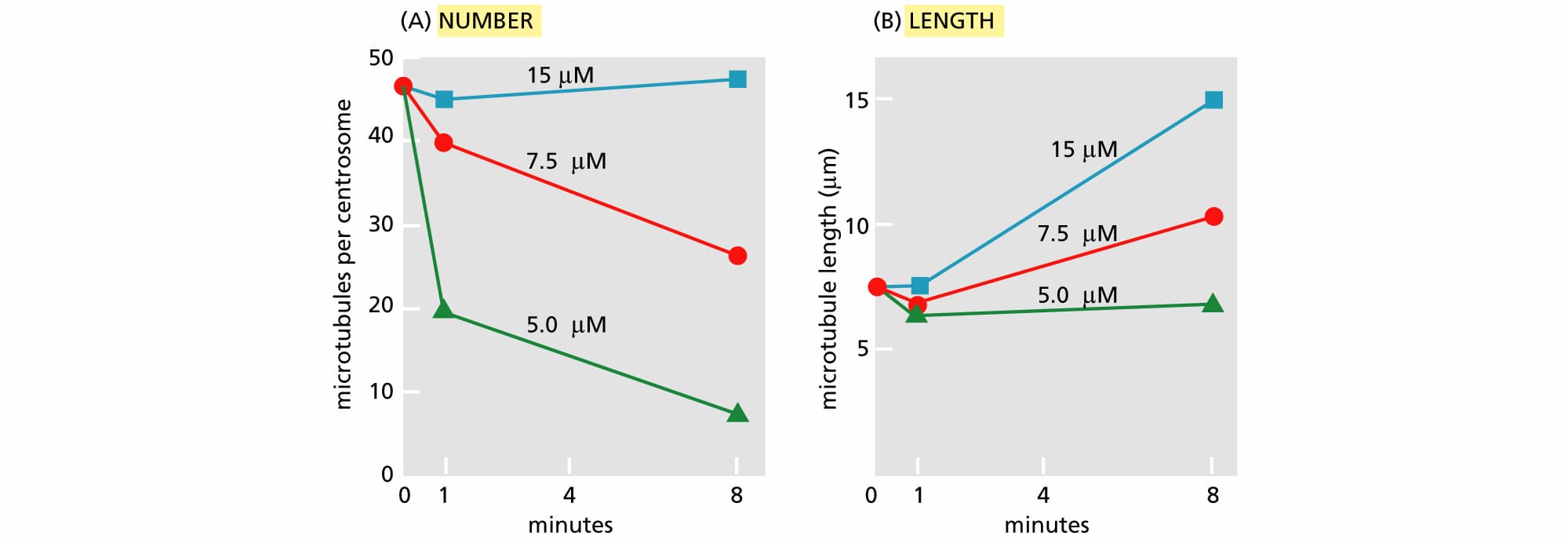
In the presence of centrosomes, the critical concentration for microtubule growth is 4 μM. In a classic analysis of microtubule dynamics, microtubules were grown from centrosomes at a tubulin concentration of 25 μM. The centrosomes were then diluted into lower concentrations of tubulin, and the number and length of microtubules were plotted as a function of time (see the figure).This experiment revealed that when diluted to 7.5 μM tubulin, the number of microtubules attached to each centrosome decreased with time, and the average length of the remaining microtubules increased. At neither 15 μM nor 5 μM did both these changes occur.Which one of the following interpretations best accounts for the decrease in microtubule number and the increase in microtubule length upon dilution to 7.5 μM tubulin?
GTP hydrolysis and whether GTP or GDP is bound to tubulin is an important mechanism to control the dynamic instability of microtubules. Certain aspects of dynamic instability can be viewed using GFP-EB1. Which process(es) is it useful for visualizing and why?
How would the microtubule dynamics change after adding a non-hydrolyzable analog of GTP to the cells?
When cells enter mitosis, their existing array of cytoplasmic microtubules must be rapidly broken down and replaced with the mitotic spindle, which pulls the chromosomes into the daughter cells. The enzyme katanin, named after Japanese samurai swords, is activated during the onset of mitosis. Katanin extracts tubulin subunits from the wall of cellular microtubules, weakening its structure and promoting breakage. What do you suppose is the usual fate of the microtubule fragments created by katanin?
Mice that are homozygous for a knockout of the gene for the kinesin motor protein KIF1B die at birth. Heterozygous knockouts (one copy deleted) survive but suffer from a progressive muscle weakness similar to human neuropathies. Humans with Charcot–Marie–Tooth disease type 2A have a mutation in one copy of the gene for KIF1B that prevents the protein from binding to ATP. The heterozygous mice and the human patients have very similar progressive neuropathies.How do you suppose that the loss of one copy of a gene for a kinesin motor can have such profound effects on nerve function?
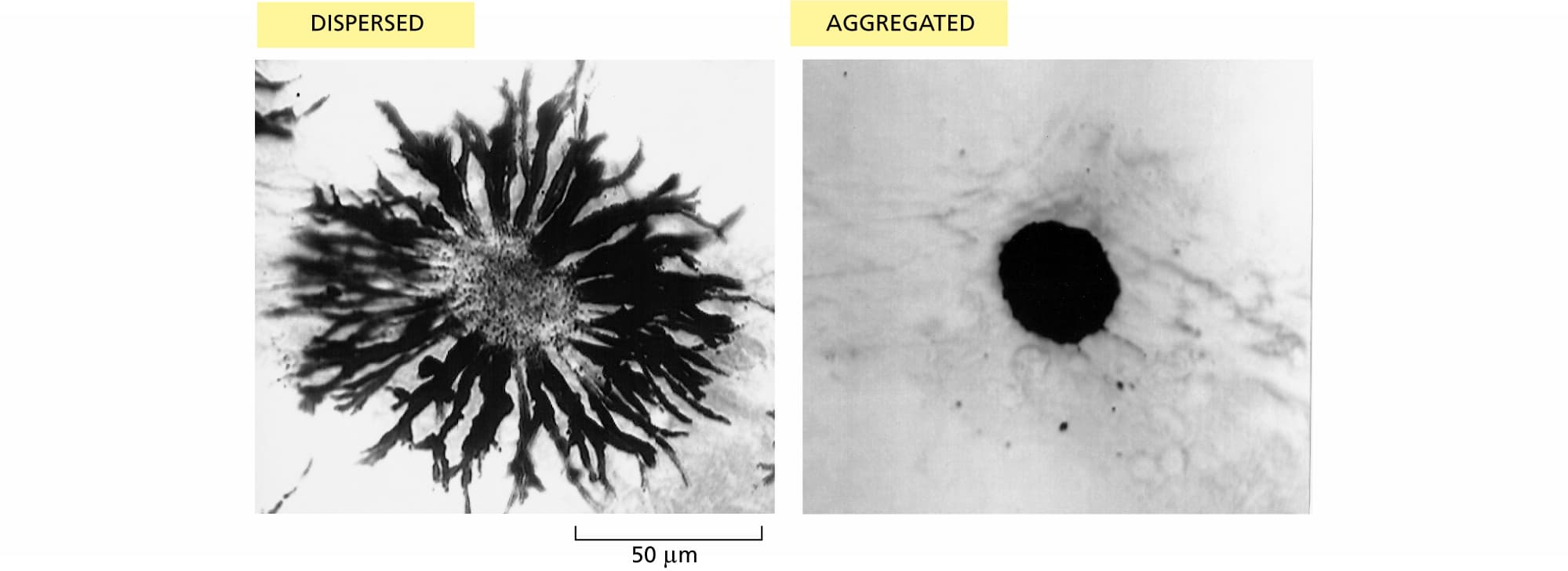
Fish melanocytes provide a dramatic example of the ability of a cell to regulate the activity of motor proteins to cause a change in the position on its membrane-enclosed organelles. These giant cells contain large membrane-enclosed organelles, termed pigment granules, that can aggregate in the center of the cell or disperse by moving along an extensive network of microtubules that are anchored at the centrosome (see the figure).Which one of the following statements correctly describes the role of motor proteins in the movements of the pigment granules?
Which of the following defects have been found in individuals with one of a set of disorders known as ciliopathies?
I Defects in intraflagellar transport (IFT)
II Defects in the primary cilium
III Defects in the basal body
IV Defects in myosin motor proteins
Communication among cytoskeletal elements coordinates whole-cell polarization and locomotion.
What is the term for the collection of protein filaments in the cytoplasm of a eukaryotic cell that gives the cell its shape and the capacity for directed movement?
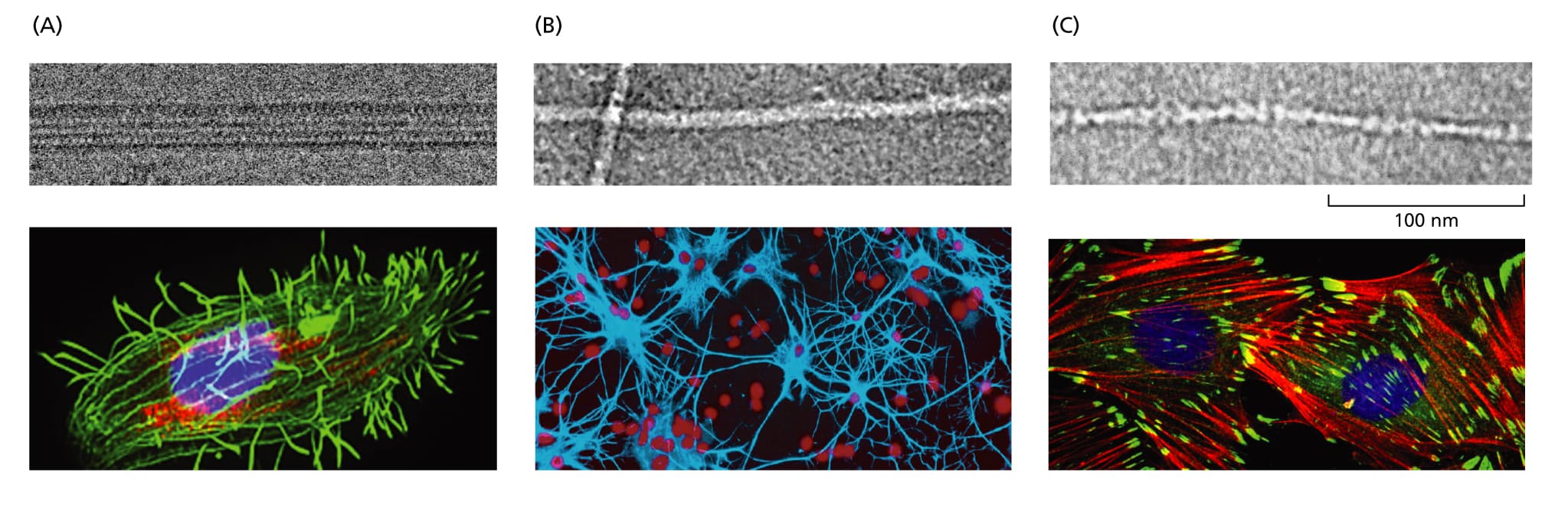
Which of the paired electron micrographs and fluorescence micrographs in the figure correspond, respectively, to actin filaments, microtubules, and intermediate filaments?
Actin filaments are responsible for large-scale cellular polarity, enabling cells to tell the difference between top and bottom, or front and back.
What is the term for the linear chain of protein subunits joined end-to-end, which associates laterally with other such chains to form a microtubule?
Which of the following statements correctly describe a role of an accessory protein in the regulation of cytoskeletal filaments?
I Accessory proteins regulate the synthesis of the filament subunits.
II Accessory proteins change the kinetics of filament assembly and disassembly.
III Accessory proteins link filaments to other cell structures such as organelles and the plasma membrane.
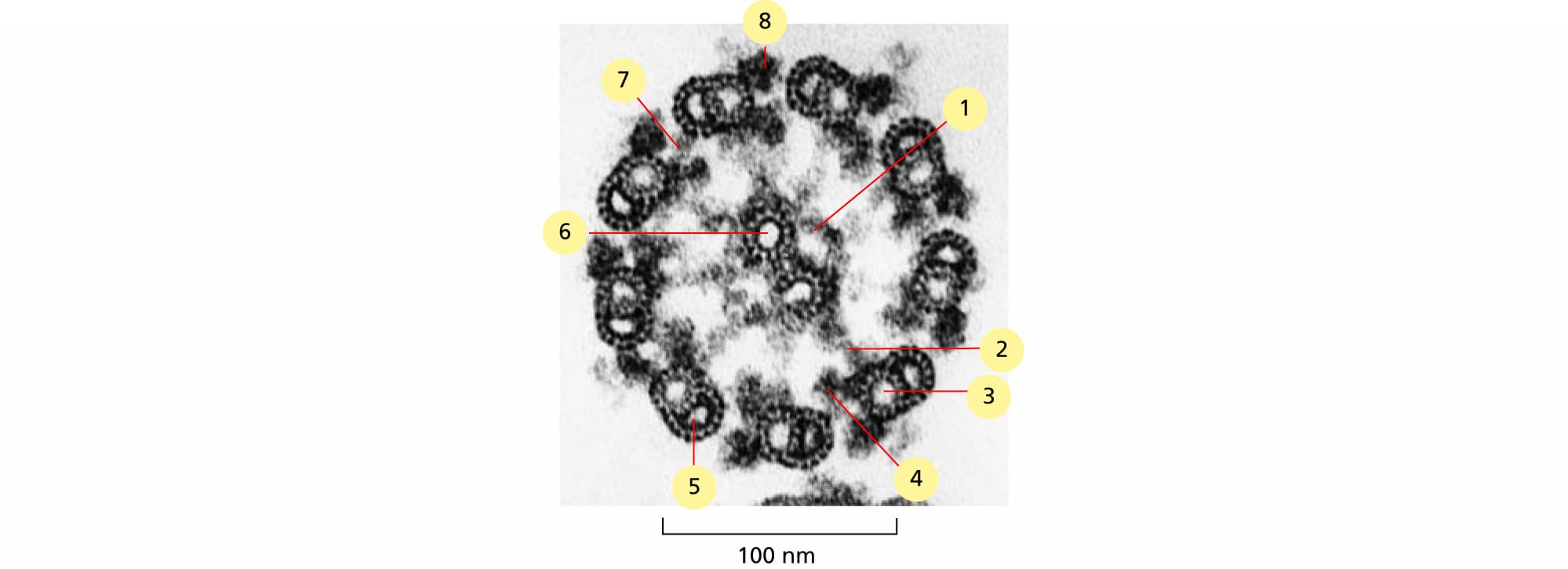
What is the term for the bundle of microtubules and associated proteins that forms the core of a cilium or flagellum in a eukaryotic cell and is responsible for their movements?
Basal bodies firmly root nonmotile primary cilia, but not motile cilia, to the cell surface.
What is the term for the structure indicated by line 8 in the electron micrograph of a cross section through a flagellum of Chlamydomonas reinhardtii?
Which one of the following statements about kinesins and dyneins and their roles in the behavior of intracellular membranes is correct?
A useful technique for studying a microtubule motor is to attach the motor proteins by their tails to a glass slide and then to allow microtubules to settle onto them. In the light microscope, the microtubules can be seen to move over the surface of the slide as the heads of the motors propel them. In the figure, white arrows mark the movement of a microtubule with a gold bead (yellow circle) attached via antibodies to the minus end of a microtubule; black arrows mark the movement of a microtubule without an attached gold bead.In the experiment shown in the figure, is the motor protein on the slide a plus-end or minus-end directed motor? Is the microtubule end indicated by the black arrow in the figure likely to be a plus end or a minus end?

What is the term for the centrally located organelle of animal cells that is the primary microtubule-organizing center (MTOC) and acts as the spindle pole during mitosis?
Dynamic instability causes microtubules either to grow or to shrink rapidly (see the figure). Consider an individual microtubule in a solution of tubulin subunits that is in its shrinking phase.What would happen if the solution contained an analog of GTP that could not be hydrolyzed?
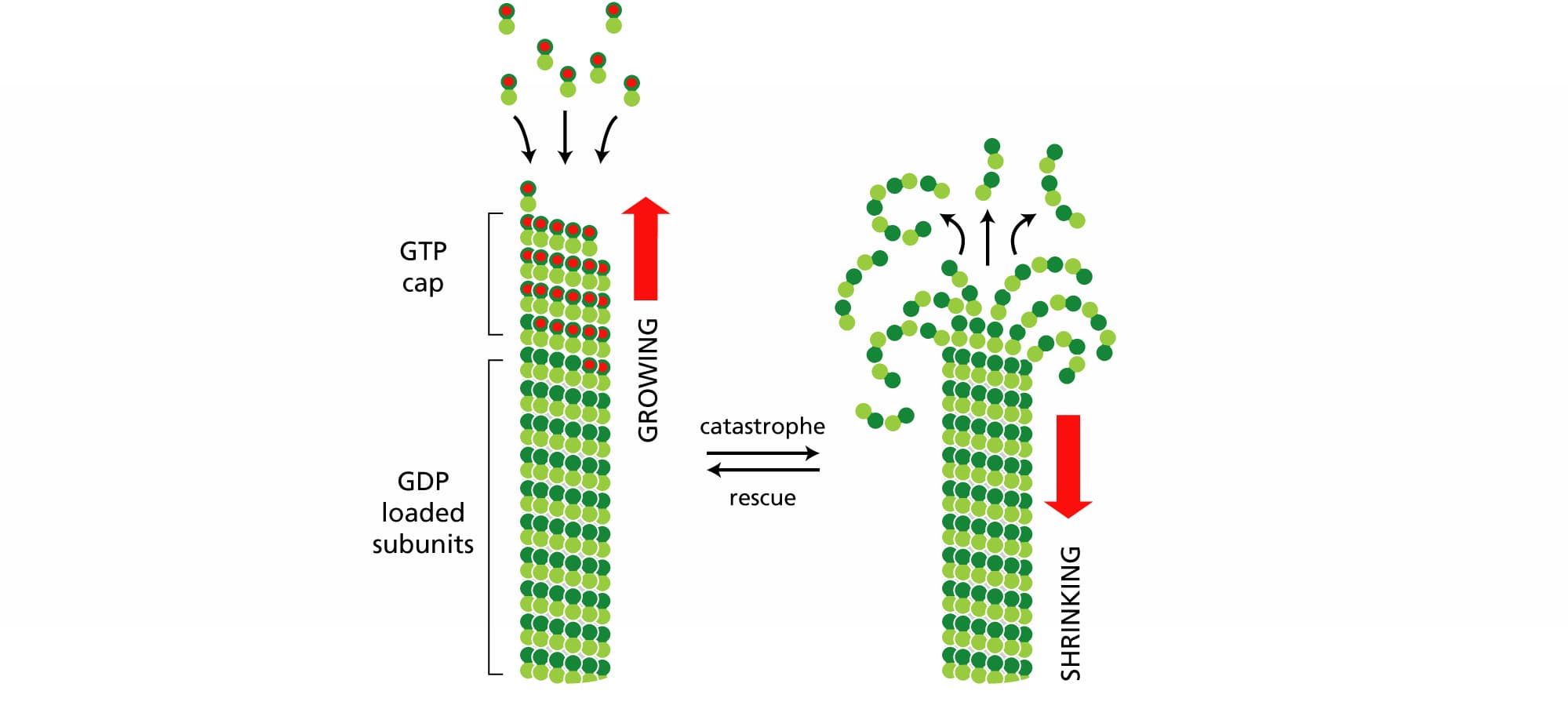
Dynamic instability causes microtubules either to grow or to shrink rapidly (see the figure). Consider an individual microtubule in a solution of tubulin subunits that is in its shrinking phase.What would happen if GDP, but no GTP, were present in the solution?
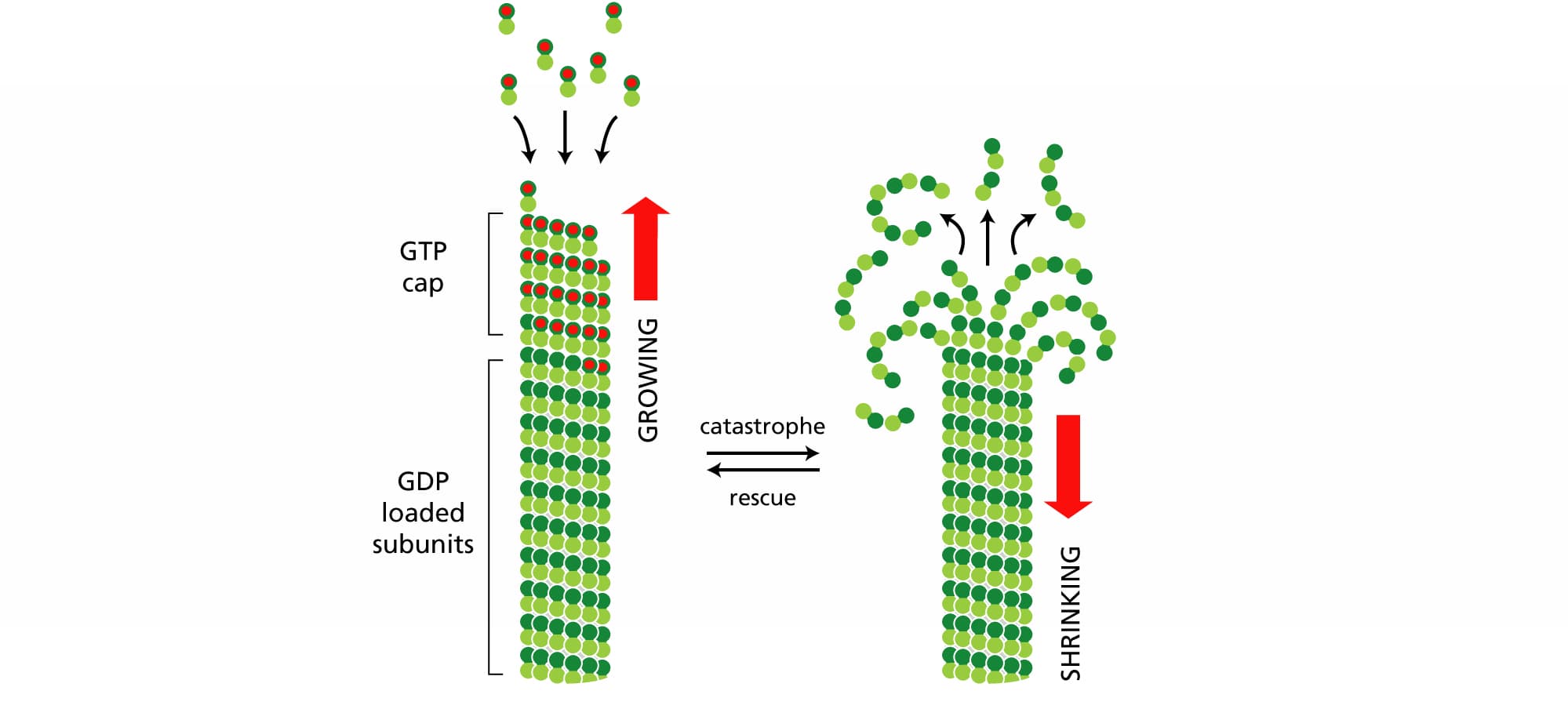
The orientation of the αβ-tubulin dimer in a microtubule was determined in several ways. GTP-coated fluorescent beads, for example, were found to bind exclusively at the plus ends of microtubules.How does this observation define the orientation of the αβ-tubulin dimer in the microtubule? Which tubulin subunit, α or β, is at which end?
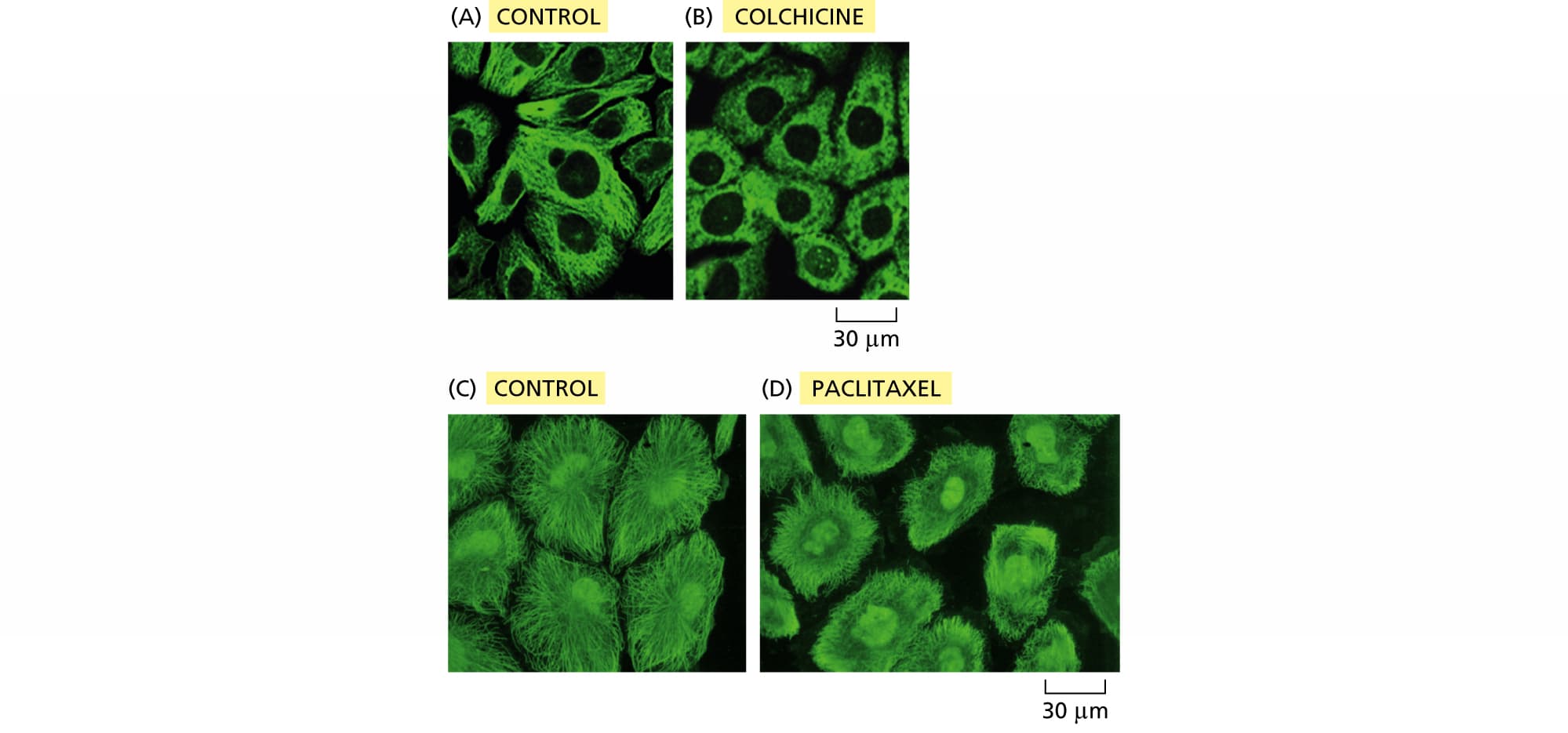
Colchicine, an alkaloid from autumn crocus, and paclitaxel, extracted from the bark of yew trees, are drugs that have opposite effects on microtubules. Colchicine causes most microtubules to dissociate (see the figure Parts A and B). In contrast, paclitaxel binds tightly to microtubules and promotes their growth (Parts C and D). Colchicine and paclitaxel are equally toxic to dividing cells, and both are used as anticancer drugs.Which one of the following statements describes why one or both drugs are toxic to dividing cells?