Loading...


Changes to the Earth
Quiz by Kari Mayo
Customize this quiz to suit your class
Instantly translate to 100+ languages
Tag the questions with any skills you have. Your dashboard will track each student's mastery of each skill.
Give this quiz to my class
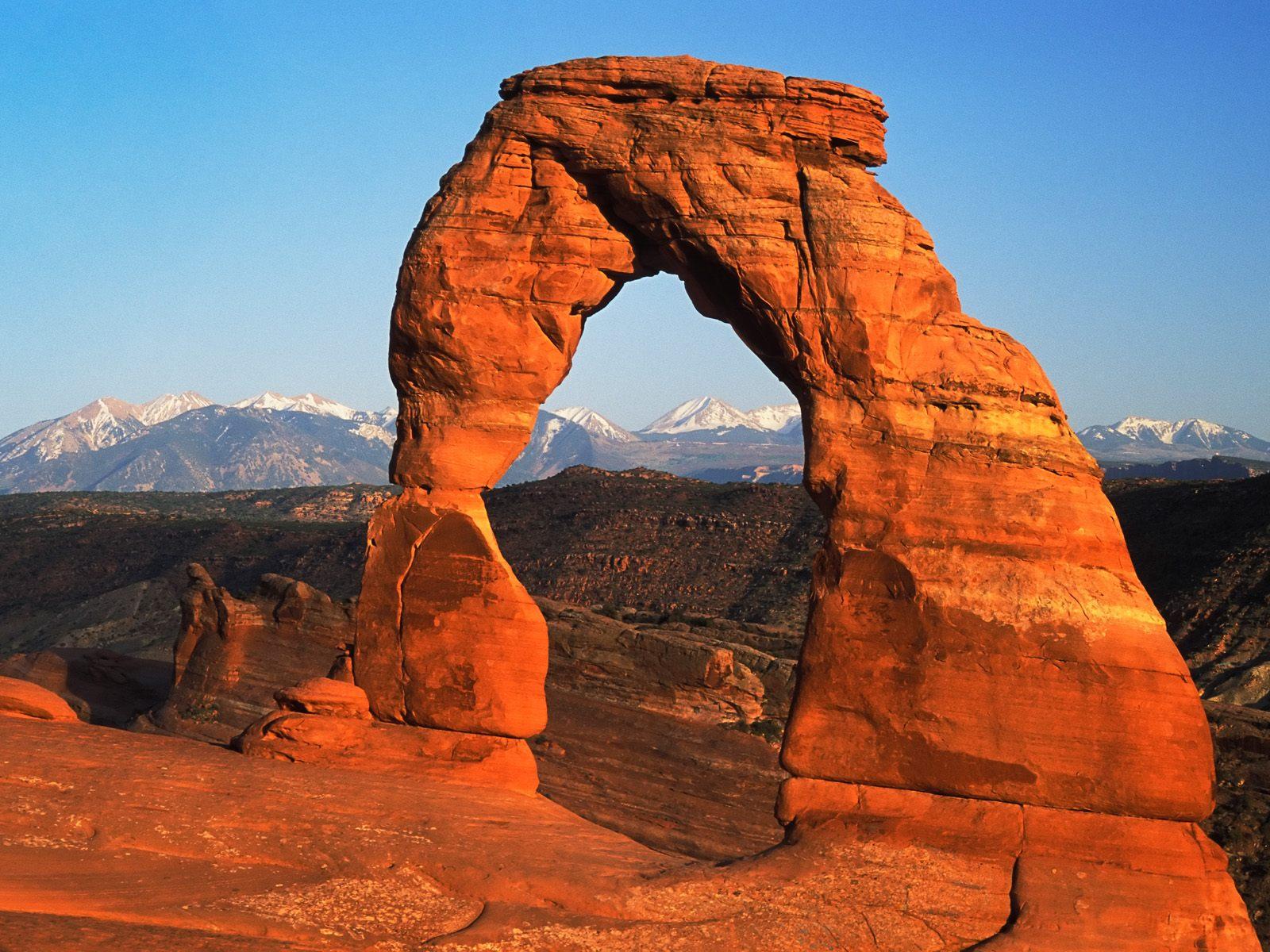
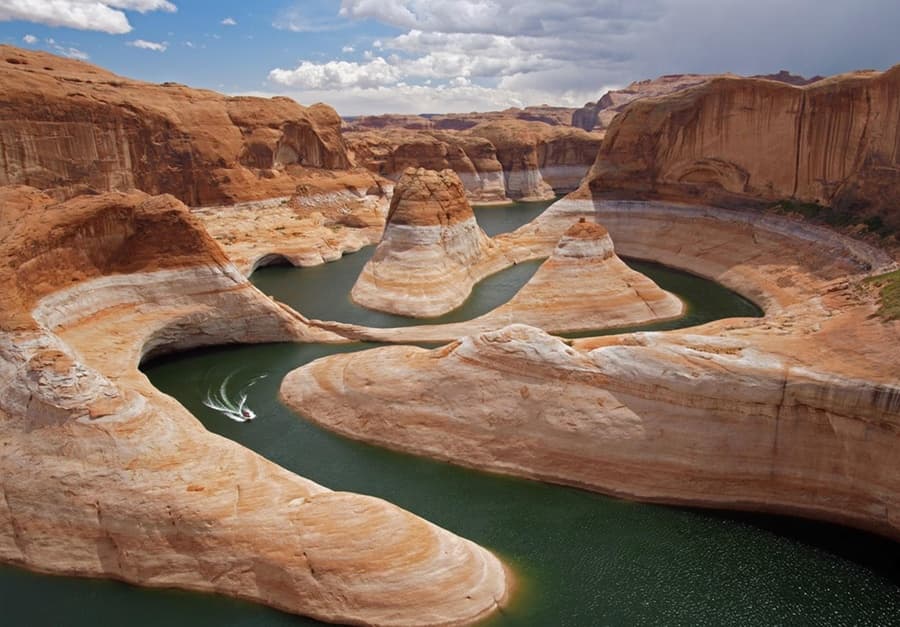 Changes To The Earth DA ReviewChanges to the Earth's SurfaceMake a test, with answers best on the following: Conduct an investigation to provide evidence that living things are made of cells; either one cell or many different numbers and types of cells. Supporting Content LS1.A: Structure and Function • All living things are made up of cells, which is the smallest unit that can be said to be alive. An organism may consist of one single cell (unicellular) or many different numbers and types of cells (multicellular). (MS-LS-1.1) Further Explanation: Emphasis is on developing evidence that living things are made of cells, distinguishing between living and non-living things, and understanding that living things may be made of one cell or many and varied cells. In multicellular organisms, the body is a system of multiple interacting subsystems. These subsystems are groups of cells that work together to form tissues and organs that are specialized for particular body functions. (MS-LS-1.3) Further Explanation: Emphasis is on the conceptual understanding that cells form tissues and tissues form organs specialized for particular body functions. Examples could include the interaction of subsystems within a system and the normal functioning of those systems. Organisms reproduce, either sexually or asexually, and transfer their genetic information to their offspring. (MS-LS-1.4) • Living things share certain characteristics. (These include response to environment, reproduction, energy use, growth and development, life cycles, made of cells, etc.) (MS-LS1.4) Further Explanation: Examples should include both biotic and abiotic items, and should be defended using accepted characteristics of life. Plants, algae (including phytoplankton), and many microorganisms use the energy from light to make sugars (food) from carbon dioxide from the atmosphere and water through the process of photosynthesis, which also releases oxygen. These sugars can be used immediately or stored for growth or later use. (MS-LS-1.5) Further Explanation: Emphasis is on tracing movement of matter and flow of energy. Supporting Content LS1.C: Organization for Matter and Energy Flow in Organisms • Within individual organisms, food moves through a series of chemical reactions (cellular respiration) in which it is broken down and rearranged to form new molecules, to support growth, or to release energy. (MS-LS-1.6) Further Explanation: Emphasis is on describing that molecules are broken apart and put back together and that in this process, energy is released and on understanding that the elements in the products are the same as the elements in the reactants. Organisms, and populations of organisms, are dependent on their environmental interactions both with other living things and with nonliving factors. (MS-LS-2.1) • In any ecosystem, organisms and populations with similar requirements for food, water, oxygen, or other resources may compete with each other for limited resources, access to which consequently constrains their growth and reproduction. (MS-LS-2.1) • Growth of organisms and population increases are limited by access to resources. (MS-LS-2.1) Further Explanation: Emphasis is on cause and effect relationships between resources and growth of individual organisms and the numbers of organisms in ecosystems during periods of abundant and scarce resources. Similarly, predatory interactions may reduce the number of organisms or eliminate whole populations of organisms. Mutually beneficial interactions, in contrast, may become so interdependent that each organism requires the other for survival. Although the species involved in these competitive, predatory, and mutually beneficial interactions vary across ecosystems, the patterns of interactions of organisms with their environments, both living and nonliving, are shared. (MS-LS-2.2) Further Explanation: Emphasis is on predicting consistent patterns of interactions in different ecosystems in terms of the relationships among and between organisms and abiotic components of ecosystems. Examples of types of interactions could include competitive, predatory, and mutually beneficial. Food webs are models that demonstrate how matter and energy is transferred between producers, consumers, and decomposers as the three groups interact within an ecosystem. Transfers of matter into and out of the physical environment occur at every level. Decomposers recycle nutrients from dead plant or animal matter back to the soil in terrestrial environments or to the water in aquatic environments. The atoms that make up the organisms in an ecosystem are cycled repeatedly between the living and nonliving parts of the ecosystem. (MS-LS-2.3) Further Explanation: Emphasis is on describing the conservation of matter and flow of energy into and out of various ecosystems, and on defining the boundaries of the system. Ecosystems are dynamic in nature; their characteristics can vary over time. Disruptions to any physical or biological component of an ecosystem can lead to shifts in all its populations. (MSLS-2.5) Further Explanation: Emphasis is on recognizing patterns in data and making warranted inferences about changes in populations, and on evaluating empirical evidence supporting arguments about changes to ecosystems. Biodiversity describes the variety of species found in Earth’s terrestrial and oceanic ecosystems. The completeness or integrity of an ecosystem’s biodiversity is often used as a measure of its health. (MS-LS-2.6) Supporting Content LS4.D: Biodiversity • Changes in biodiversity can influence humans’ resources, such as food, energy, and medicines, as well as ecosystem services that humans rely on—for example, water purification and recycling. (MS-LS-2.6) Supporting Content ETS1.B: Developing Possible Solutions • There are systematic processes for evaluating solutions with respect to how well they meet the criteria and constraints of a problem. (MS-LS-2.6) Further Explanation: Examples of ecosystem services could include water purification, nutrient recycling, and prevention of soil erosion. Examples of design solution constraints could include scientific, economic, and social considerations. Genes are located in the chromosomes of cells, with each chromosome pair containing two variants of each of many distinct genes. Each distinct gene chiefly controls the production of specific proteins, which in turn affects the traits of the individual. Structural changes to genes (mutations) can result in changes to proteins, which can affect the structures and functions of the organism and thereby change traits. (MS-LS-3.1) Supporting Content LS3.B: Variation of Traits • In addition to variations that arise from sexual reproduction, genetic information can be altered because of mutations. Though rare, mutations may result in significant changes to the structure and function of proteins. Changes can be beneficial, harmful, or neutral to the organism. (MS-LS-3.1) Further Explanation: Emphasis is on conceptual understanding that changes in genetic material may result in making different proteins. Organisms reproduce, either sexually or asexually, and transfer their genetic information to their offspring. (MS-LS-3.2) Supporting Content LS3.A: Inheritance of Traits • Variations of inherited traits between parent and offspring arise from genetic differences that result from the subset of chromosomes (and therefore genes) inherited. (MS-LS-3.2) Supporting Content LS3.B: Variation of Traits • In sexually reproducing organisms, each parent contributes half of the genes acquired (at random) by the offspring. Individuals have two of each chromosome and hence two alleles of each gene, one acquired from each parent. These versions may be identical or may differ from each other. (MS-LS-3.2) Further Explanation: Emphasis is on using models such as simple Punnett squares and pedigrees, diagrams, and simulations to describe the cause and effect relationship of gene transmission from parent(s) to offspring and resulting genetic variation. The collection of fossils and their placement in chronological order is known as the fossil record and documents the change of many life forms throughout the history of the Earth. Anatomical similarities and differences between various organisms living today and between living and once living organisms in the fossil record enable the classification of living things. (MS-LS-4.1, MS-LS-4.2) Further Explanation: Emphasis is on finding patterns of changes in the level of complexity of anatomical structures in organisms and the chronological order of fossil appearance in the rock layers. The collection of fossils and their placement in chronological order is known as the fossil record and documents the change of many life forms throughout the history of the Earth. Anatomical similarities and differences between various organisms living today and between living and once living organisms in the fossil record enable the classification of living things. (MS-LS-4.1, MS-LS-4.2) Further Explanation: Emphasis is on explanations of the relationships among organisms in terms of similarity or differences of the gross appearance of anatomical structures. Scientific genus and species level names indicate a degree of relationship. (MS-LS-4.3) Further Explanation: Emphasis is on inferring general patterns of relatedness among structures of different organisms by comparing diagrams, pictures, specimens, or fossils. Natural selection leads to the predominance of certain traits in a population, and the suppression of others. (MS-LS-4.4) Further Explanation: Emphasis is on using concepts of natural selection, including overproduction of offspring, passage of time, variation in a population, selection of favorable traits, and heritability of traits. In artificial selection, humans have the capacity to influence certain characteristics of organisms by selective breeding. One can choose desired parental traits determined by genes, which are then passed to offspring. (MS-LS-4.5) Further Explanation: Emphasis is on identifying and communicating information from reliable sources about the influence of humans on genetic outcomes in artificial selection (such as genetic modification, animal husbandry, gene therapy), and on the influence these technologies have on society as well as the technologies leading to these scientific discoveries. Adaptation by natural selection acting over generations is one important process by which species change over time in response to changes in environmental conditions. Traits that support successful survival and reproduction in the new environment become more common; those that do not become less common. Thus, the distribution of traits in a population changes. (MS-LS-4.6) Further Explanation: Emphasis is on using mathematical models, probability statements, and proportional reasoning to support explanations of trends in changes to populations over time. Examples could include Peppered Moth population changes before and after the industrial revolution. There are slow changes to the surface of Earth that can take millions of years. Weathering is the breaking up of rock. Plant roots grow in the cracks of rocks. The roots can break the rocks into pieces. Water and ice can also break rocks into pieces. Erosion happens when soil, sand, and small bits of a rock are removed. Rain, snow, and wind cause erosion. People and animals can erode rock and dirt on a mountain when they walk on it. Crosscutting Concepts > Toolbox Stability and Change Tell how erosion is different from on earthquake. Tell how e it is r similar. " Deposition happens when wind and water , and small bits of rock in new place. Rivers drop most of these materials at deltas. These are places where ow i cean.Introduction to Free Fall A free-falling object is an object that is falling under the sole influence of gravity. Any object that is being acted upon only by the force of gravity is said to be in a state of free fall. There are two important motion characteristics that are true of free-falling objects: • Free-falling objects do not encounter air resistance. • All free-falling objects (on Earth) accelerate downwards at a rate of 9.8 m/s/s (often approximated as 10 m/s/s for back-of-the-envelope calculations) Because free-falling objects are accelerating downwards at a rate of 9.8 m/s/s, a ticker tape trace or dot diagram of its motion would depict an acceleration. The dot diagram at the right depicts the acceleration of a free-falling object. The position of the object at regular time intervals - say, every 0.1 second - is shown. The fact that the distance that the object travels every interval of time is increasing is a sure sign that the ball is speeding up as it falls downward. Recall from an earlier lesson, that if an object travels downward and speeds up, then its acceleration is downward. Free-fall acceleration is often witnessed in a physics classroom by means of an ever-popular strobe light demonstration. The room is darkened and a jug full of water is connected by a tube to a medicine dropper. The dropper drips water and the strobe illuminate the falling droplets at a regular rate - say once every 0.2 seconds. Instead of seeing a stream of water free-falling from the medicine dropper, several consecutive drops with increasing separation distance are seen. The pattern of drops resembles the dot diagram shown in the graphic at the right. The Acceleration of Gravity It was learned in the previous part of this lesson that a free-falling object is an object that is falling under the sole influence of gravity. A free-falling object has an acceleration of 9.8 m/s/s, downward (on Earth). This numerical value for the acceleration of a free-falling object is such an important value that it is given a special name. It is known as the acceleration of gravity - the acceleration for any object moving under the sole influence of gravity. A matter of fact, this quantity known as the acceleration of gravity is such an important quantity that physicists have a special symbol to denote it - the symbol g. The numerical value for the acceleration of gravity is most accurately known as 9.8 m/s2. There are slight variations in this numerical value (to the second decimal place) that are dependent primarily upon on altitude. We will occasionally use the approximated value of 10 m/s2 in order to reduce the complexity of the many mathematical tasks that we will perform with this number. By so doing, we will be able to better focus on the conceptual nature of physics without too much of a sacrifice in numerical accuracy. g = 9.8 m/s2, downward Look It Up! Even on the surface of the Earth, there are local variations in the value of the acceleration of gravity (g). These variations are due to latitude, altitude and the local geological structure of the region. Recall from an earlier lesson that acceleration is the rate at which an object changes its velocity. It is the ratio of velocity change to time between any two points in an object's path. To accelerate at 9.8 m/s2 means to change the velocity by 9.8 m/s each second. If the velocity and time for a free-falling object being dropped from a position of rest were tabulated, then one would note the following pattern. Time (s) Velocity (m/s) 0 0 1 - 9.8 2 - 19.6 3 - 29.4 4 - 39.2 5 - 49.0 . Observe that the velocity-time data above reveal that the object's velocity is changing by 9.8 m/s each consecutive second. That is, the free-falling object has an acceleration of approximately 9.8 m/s2. Another way to represent this acceleration of 9.8 m/s2 is to add numbers to our dot diagram that we saw earlier in this lesson. The velocity of the ball is seen to increase as depicted in the diagram at the right. (NOTE: The diagram is not drawn to scale - in two seconds, the object would drop considerably further than the distance from shoulder to toes.) Representing Free Fall by Graphs • Early in Lesson 1 it was mentioned that there are a variety of means of describing the motion of objects. One such means of describing the motion of objects is through the use of graphs - position versus time and velocity vs. time graphs. In this part of Lesson 5, the motion of a free-falling motion will be represented using these two basic types of graphs. Representing Free Fall by Position-Time Graphs A position versus time graph for a free-falling object is shown below. Observe that the line on the graph curves. As learned earlier, a curved line on a position versus time graph signifies an accelerated motion. Since a free-falling object is undergoing an acceleration (g = 9.8 m/s/s), it would be expected that its position-time graph would be curved. A further look at the position-time graph reveals that the object starts with a small velocity (slow) and finishes with a large velocity (fast). Since the slope of any position vs. time graph is the velocity of the object (as learned in Lesson 3), the small initial slope indicates a small initial velocity and the large final slope indicates a large final velocity. Finally, the negative slope of the line indicates a negative (i.e., downward) velocity. Representing Free Fall by Velocity-Time Graphs A velocity versus time graph for a free-falling object is shown below. Observe that the line on the graph is a straight, diagonal line. As learned earlier, a diagonal line on a velocity versus time graph signifies an accelerated motion. Since a free-falling object is undergoing an acceleration (g = 9,8 m/s/s, downward), it would be expected that its velocity-time graph would be diagonal. A further look at the velocity-time graph reveals that the object starts with a zero velocity (as read from the graph) and finishes with a large, negative velocity; that is, the object is moving in the negative direction and speeding up. An object that is moving in the negative direction and speeding up is said to have a negative acceleration (if necessary, review the vector nature of acceleration). Since the slope of any velocity versus time graph is the acceleration of the object (as learned in Lesson 4), the constant, negative slope indicates a constant, negative acceleration. This analysis of the slope on the graph is consistent with the motion of a free-falling object - an object moving with a constant acceleration of 9.8 m/s/s in the downward direction. The Kinematic Equations The goal of this first unit has been to investigate the variety of means by which the motion of objects can be described. The variety of representations that we have investigated includes verbal representations, pictorial representations, numerical representations, and graphical representations (position-time graphs and velocity-time graphs). In Lesson 6, we will investigate the use of equations to describe and represent the motion of objects. These equations are known as kinematic equations. There are a variety of quantities associated with the motion of objects - displacement (and distance), velocity (and speed), acceleration, and time. Knowledge of each of these quantities provides descriptive information about an object's motion. For example, if a car is known to move with a constant velocity of 22.0 m/s, North for 12.0 seconds for a northward displacement of 264 meters, then the motion of the car is fully described. And if a second car is known to accelerate from a rest position with an eastward acceleration of 3.0 m/s2 for a time of 8.0 seconds, providing a final velocity of 24 m/s, East and an eastward displacement of 96 meters, then the motion of this car is fully described. These two statements provide a complete description of the motion of an object. However, such completeness is not always known. It is often the case that only a few parameters of an object's motion are known, while the rest are unknown. For example as you approach the stoplight, you might know that your car has a velocity of 22 m/s, East and is capable of a skidding acceleration of 8.0 m/s2, West. However you do not know the displacement that your car would experience if you were to slam on your brakes and skid to a stop; and you do not know the time required to skid to a stop. In such an instance as this, the unknown parameters can be determined using physics principles and mathematical equations (the kinematic equations). The BIG 4 The kinematic equations are a set of four equations that can be utilized to predict unknown information about an object's motion if other information is known. The equations can be utilized for any motion that can be described as being either a constant velocity motion (an acceleration of 0 m/s/s) or a constant acceleration motion. They can never be used over any time period during which the acceleration is changing. Each of the kinematic equations include four variables. If the values of three of the four variables are known, then the value of the fourth variable can be calculated. In this manner, the kinematic equations provide a useful means of predicting information about an object's motion if other information is known. For example, if the acceleration value and the initial and final velocity values of a skidding car is known, then the displacement of the car and the time can be predicted using the kinematic equations. Lesson 6 of this unit will focus upon the use of the kinematic equations to predict the numerical values of unknown quantities for an object's motion. The four kinematic equations that describe an object's motion are: There are a variety of symbols used in the above equations. Each symbol has its own specific meaning. The symbol d stands for the displacement of the object. The symbol t stands for the time for which the object moved. The symbol a stands for the acceleration of the object. And the symbol v stands for the velocity of the object; a subscript of i after the v (as in vi) indicates that the velocity value is the initial velocity value and a subscript of f (as in vf) indicates that the velocity value is the final velocity value. Each of these four equations appropriately describes the mathematical relationship between the parameters of an object's motion. As such, they can be used to predict unknown information about an object's motion if other information is known. In the next part of Lesson 6 we will investigate the process of doing this. Kinematic Equations and Problem-Solving The four kinematic equations that describe the mathematical relationship between the parameters that describe an object's motion were introduced in the previous part of Lesson 6. The four kinematic equations are: In the above equations, the symbol d stands for the displacement of the object. The symbol t stands for the time for which the object moved. The symbol a stand for the acceleration of the object. And the symbol v stands for the instantaneous velocity of the object; a subscript of i after the v (as in vi) indicates that the velocity value is the initial velocity value and a subscript of f (as in vf) indicates that the velocity value is the final velocity value. Problem-Solving Strategy In this part of Lesson 6 we will investigate the process of using the equations to determine unknown information about an object's motion. The process involves the use of a problem-solving strategy that will be used throughout the course. The strategy involves the following steps: 1. Construct an informative diagram of the physical situation. 2. Identify and list the given information in variable form. 3. Identify and list the unknown information in variable form. 4. Identify and list the equation that will be used to determine unknown information from known information. 5. Substitute known values into the equation and use appropriate algebraic steps to solve for the unknown information. 6. Check your answer to ensure that it is reasonable and mathematically correct. The use of this problem-solving strategy in the solution of the following problem is modeled in Examples A and B below. Example Problem A . Ima Hurryin is approaching a stoplight moving with a velocity of +30.0 m/s. The light turns yellow, and Ima applies the brakes and skids to a stop. If Ima's acceleration is -8.00 m/s2, then determine the displacement of the car during the skidding process. (Note that the direction of the velocity and the acceleration vectors are denoted by a + and a - sign.) The solution to this problem begins by the construction of an informative diagram of the physical situation. This is shown below. The second step involves the identification and listing of known information in variable form. Note that the vf value can be inferred to be 0 m/s since Ima's car comes to a stop. The initial velocity (vi) of the car is +30.0 m/s since this is the velocity at the beginning of the motion (the skidding motion). And the acceleration (a) of the car is given as - 8.00 m/s2. (Always pay careful attention to the + and - signs for the given quantities.) The next step of the strategy involves the listing of the unknown (or desired) information in variable form. In this case, the problem requests information about the displacement of the car. So d is the unknown quantity. The results of the first three steps are shown in the table below. Diagram: Given: Find: vi = +30.0 m/s vf = 0 m/s a = - 8.00 m/s2 d = ?? The next step of the strategy involves identifying a kinematic equation that would allow you to determine the unknown quantity. There are four kinematic equations to choose from. In general, you will always choose the equation that contains the three known and the one unknown variable. In this specific case, the three known variables and the one unknown variable are vf, vi, a, and d. Thus, you will look for an equation that has these four variables listed in it. An inspection of the four equations above reveals that the equation on the top right contains all four variables. vf2 = vi2 + 2 • a • d Once the equation is identified and written down, the next step of the strategy involves substituting known values into the equation and using proper algebraic steps to solve for the unknown information. This step is shown below. (0 m/s)2 = (30.0 m/s)2 + 2 • (-8.00 m/s2) • d 0 m2/s2 = 900 m2/s2 + (-16.0 m/s2) • d (16.0 m/s2) • d = 900 m2/s2 - 0 m2/s2 (16.0 m/s2)*d = 900 m2/s2 d = (900 m2/s2)/ (16.0 m/s2) d = (900 m2/s2)/ (16.0 m/s2) d = 56.3 m The solution above reveals that the car will skid a distance of 56.3 meters. (Note that this value is rounded to the third digit.) The last step of the problem-solving strategy involves checking the answer to assure that it is both reasonable and accurate. The value seems reasonable enough. It takes a car a considerable distance to skid from 30.0 m/s (approximately 65 mi/hr) to a stop. The calculated distance is approximately one-half a football field, making this a very reasonable skidding distance. Checking for accuracy involves substituting the calculated value back into the equation for displacement and insuring that the left side of the equation is equal to the right side of the equation. Indeed it is! Example Problem B Ben Rushin is waiting at a stoplight. When it finally turns green, Ben accelerated from rest at a rate of a 6.00 m/s2 for a time of 4.10 seconds. Determine the displacement of Ben's car during this time period. Once more, the solution to this problem begins by the construction of an informative diagram of the physical situation. This is shown below. The second step of the strategy involves the identification and listing of known information in variable form. Note that the vi value can be inferred to be 0 m/s since Ben's car is initially at rest. The acceleration (a) of the car is 6.00 m/s2. And the time (t) is given as 4.10 s. The next step of the strategy involves the listing of the unknown (or desired) information in variable form. In this case, the problem requests information about the displacement of the car. So d is the unknown information. The results of the first three steps are shown in the table below. Diagram: Given: Find: vi = 0 m/s t = 4.10 s a = 6.00 m/s2 d = ?? The next step of the strategy involves identifying a kinematic equation that would allow you to determine the unknown quantity. There are four kinematic equations to choose from. Again, you will always search for an equation that contains the three known variables and the one unknown variable. In this specific case, the three known variables and the one unknown variable are t, vi, a, and d. An inspection of the four equations above reveals that the equation on the top left contains all four variables. d = vi • t + ½ • a • t2 Once the equation is identified and written down, the next step of the strategy involves substituting known values into the equation and using proper algebraic steps to solve for the unknown information. This step is shown below. d = (0 m/s) • (4.1 s) + ½ • (6.00 m/s2) • (4.10 s)2 d = (0 m) + ½ • (6.00 m/s2) • (16.81 s2) d = 0 m + 50.43 m d = 50.4 m The solution above reveals that the car will travel a distance of 50.4 meters. (Note that this value is rounded to the third digit.) The last step of the problem-solving strategy involves checking the answer to assure that it is both reasonable and accurate. The value seems reasonable enough. A car with an acceleration of 6.00 m/s/s will reach a speed of approximately 24 m/s (approximately 50 mi/hr) in 4.10 s. The distance over which such a car would be displaced during this time period would be approximately one-half a football field, making this a very reasonable distance. Checking for accuracy involves substituting the calculated value back into the equation for displacement and insuring that the left side of the equation is equal to the right side of the equation. Indeed, it is! The two example problems above illustrate how the kinematic equations can be combined with a simple problem-solving strategy to predict unknown motion parameters for a moving object. Provided that three motion parameters are known, any of the remaining values can be determined. In the next part of Lesson 6, we will see how this strategy can be applied to free fall situations. Or if interested, you can try some practice problems and check your answer against the given solutions. Kinematic Equations and Free Fall As mentioned in Lesson 5, a free-falling object is an object that is falling under the sole influence of gravity. That is to say that any object that is moving and being acted upon only be the force of gravity is said to be "in a state of free fall." Such an object will experience a downward acceleration of 9.8 m/s/s. Whether the object is falling downward or rising upward towards its peak, if it is under the sole influence of gravity, then its acceleration value is 9.8 m/s/s. Like any moving object, the motion of an object in free fall can be described by four kinematic equations. The kinematic equations that describe any object's motion are: The symbols in the above equation have a specific meaning: the symbol d stands for the displacement; the symbol t stands for the time; the symbol a stands for the acceleration of the object; the symbol vi stands for the initial velocity value; and the symbol vf stands for the final velocity. Applying Free Fall Concepts to Problem-Solving There are a few conceptual characteristics of free fall motion that will be of value when using the equations to analyze free fall motion. These concepts are described as follows: • An object in free fall experiences an acceleration of -9.8 m/s/s. (The - sign indicates a downward acceleration.) Whether explicitly stated or not, the value of the acceleration in the kinematic equations is -9.8 m/s/s for any freely falling object. • If an object is merely dropped (as opposed to being thrown) from an elevated height, then the initial velocity of the object is 0 m/s. • If an object is projected upwards in a perfectly vertical direction, then it will slow down as it rises upward. The instant at which it reaches the peak of its trajectory, its velocity is 0 m/s. This value can be used as one of the motion parameters in the kinematic equations; for example, the final velocity (vf) after traveling to the peak would be assigned a value of 0 m/s. • If an object is projected upwards in a perfectly vertical direction, then the velocity at which it is projected is equal in magnitude and opposite in sign to the velocity that it has when it returns to the same height. That is, a ball projected vertically with an upward velocity of +30 m/s will have a downward velocity of -30 m/s when it returns to the same height. These four principles and the four kinematic equations can be combined to solve problems involving the motion of free-falling objects. The two examples below illustrate application of free fall principles to kinematic problem-solving. In each example, the problem solving strategy that was introduced earlier in this lesson will be utilized. Example Problem A Luke Autbeloe drops a pile of roof shingles from the top of a roof located 8.52 meters above the ground. Determine the time required for the shingles to reach the ground. The solution to this problem begins by the construction of an informative diagram of the physical situation. This is shown below. The second step involves the identification and listing of known information in variable form. You might note that in the statement of the problem, there is only one piece of numerical information explicitly stated: 8.52 meters. The displacement (d) of the shingles is -8.52 m. (The - sign indicates that the displacement is downward). The remaining information must be extracted from the problem statement based upon your understanding of the above principles. For example, the vi value can be inferred to be 0 m/s since the shingles are dropped (released from rest; see note above). And the acceleration (a) of the shingles can be inferred to be -9.8 m/s2 since the shingles are free-falling (see note above). (Always pay careful attention to the + and - signs for the given quantities.) The next step of the solution involves the listing of the unknown (or desired) information in variable form. In this case, the problem requests information about the time of fall. So t is the unknown quantity. The results of the first three steps are shown in the table below. Diagram: Given: Find: vi = 0.0 m/s d = -8.52 m a = - 9.8 m/s2 t = ?? The next step involves identifying a kinematic equation that allows you to determine the unknown quantity. There are four kinematic equations to choose from. In general, you will always choose the equation that contains the three known and the one unknown variable. In this specific case, the three known variables and the one unknown variable are d, vi, a, and t. Thus, you will look for an equation that has these four variables listed in it. An inspection of the four equations above reveals that the equation on the top left contains all four variables. d = vi • t + ½ • a • t2 Once the equation is identified and written down, the next step involves substituting known values into the equation and using proper algebraic steps to solve for the unknown information. This step is shown below. -8.52 m = (0 m/s) • (t) + ½ • (-9.8 m/s2) • (t)2 -8.52 m = (0 m) *(t) + (-4.9 m/s2) • (t)2 -8.52 m = (-4.9 m/s2) • (t)2 (-8.52 m)/(-4.9 m/s2) = t2 1.739 s2 = t2 t = 1.32 s The solution above reveals that the shingles will fall for a time of 1.32 seconds before hitting the ground. (Note that this value is rounded to the third digit.) The last step of the problem-solving strategy involves checking the answer to assure that it is both reasonable and accurate. The value seems reasonable enough. The shingles are falling a distance of approximately 10 yards (1 meter is pretty close to 1 yard); it seems that an answer between 1 and 2 seconds would be highly reasonable. The calculated time easily falls within this range of reasonability. Checking for accuracy involves substituting the calculated value back into the equation for time and insuring that the left side of the equation is equal to the right side of the equation. Indeed it is! Example Problem B Rex Things throws his mother's crystal vase vertically upwards with an initial velocity of 26.2 m/s. Determine the height to which the vase will rise above its initial height. Once more, the solution to this problem begins by the construction of an informative diagram of the physical situation. This is shown below. The second step involves the identification and listing of known information in variable form. You might note that in the statement of the problem, there is only one piece of numerical information explicitly stated: 26.2 m/s. The initial velocity (vi) of the vase is +26.2 m/s. (The + sign indicates that the initial velocity is an upwards velocity). The remaining information must be extracted from the problem statement based upon your understanding of the above principles. Note that the vf value can be inferred to be 0 m/s since the final state of the vase is the peak of its trajectory (see note above). The acceleration (a) of the vase is -9.8 m/s2 (see note above). The next step involves the listing of the unknown (or desired) information in variable form. In this case, the problem requests information about the displacement of the vase (the height to which it rises above its starting height). So d is the unknown information. The results of the first three steps are shown in the table below. Diagram: Given: Find: vi = 26.2 m/s vf = 0 m/s a = -9.8 m/s2 d = ?? The next step involves identifying a kinematic equation that would allow you to determine the unknown quantity. There are four kinematic equations to choose from. Again, you will always search for an equation that contains the three known variables and the one unknown variable. In this specific case, the three known variables and the one unknown variable are vi, vf, a, and d. An inspection of the four equations above reveals that the equation on the top right contains all four variables. vf2 = vi2 + 2 • a • d Once the equation is identified and written down, the next step involves substituting known values into the equation and using proper algebraic steps to solve for the unknown information. This step is shown below. (0 m/s)2 = (26.2 m/s)2 + 2 •(-9.8m/s2) •d 0 m2/s2 = 686.44 m2/s2 + (-19.6 m/s2) •d (-19.6 m/s2) • d = 0 m2/s2 -686.44 m2/s2 (-19.6 m/s2) • d = -686.44 m2/s2 d = (-686.44 m2/s2)/ (-19.6 m/s2) d = 35.0 m The solution above reveals that the vase will travel upwards for a displacement of 35.0 meters before reaching its peak. (Note that this value is rounded to the third digit.) The last step of the problem-solving strategy involves checking the answer to assure that it is both reasonable and accurate. The value seems reasonable enough. The vase is thrown with a speed of approximately 50 mi/hr (merely approximate 1 m/s to be equivalent to 2 mi/hr). Such a throw will never make it further than one football field in height (approximately 100 m), yet will surely make it past the 10-yard line (approximately 10 meters). The calculated answer certainly falls within this range of reasonability. Checking for accuracy involves substituting the calculated value back into the equation for displacement and insuring that the left side of the equation is equal to the right side of the equation. Indeed, it is! Kinematic equations provide a useful means of determining the value of an unknown motion parameter if three motion parameters are known. In the case of a free-fall motion, the acceleration is often known. And in many cases, another motion parameter can be inferred through a solid knowledge of some basic kinematic principles.Weathering describes the breaking down or dissolving of rocks and minerals on the surface of the Earth. Water, ice, acids, salts, plants, animals, and changes in temperature are all agents of weathering. Once a rock has been broken down, a process called erosion transports the bits of rock and mineral away. No rock on Earth is hard enough to resist the forces of weathering and erosion. Together, these processes carved landmarks such as the Grand Canyon, in the U.S. state of Arizona. This massive canyon is 446 kilometers (277 miles) long, as much as 29 kilometers (18 miles) wide, and 1,600 meters (1 mile) deep. Weathering and erosion constantly change the rocky landscape of Earth. Weathering wears away exposed surfaces over time. The length of exposure often contributes to how vulnerable a rock is to weathering. Rocks, such as lavas, that are quickly buried beneath other rocks are less vulnerable to weathering and erosion than rocks that are exposed to agents such as wind and water, As it smoothes rough, sharp rock surfaces, weathering is often the first step in the production of soils. Tiny bits of weathered minerals mix with plants, animal remains, fungi, bacteria, and other organisms. A single type of weathered rock often produces infertile soil, while weathered materials from a collection of rocks is richer in mineral diversity and contributes to more fertile soil. Soils types associated with a mixture of weathered rock include glacial till, loess, and alluvial sediments. Weathering is often divided into the processes of mechanical weathering and chemical weathering. Biological weathering, in whichliving or once-living organisms contribute to weathering, can be a part of both processes. Mechanical Weathering Mechanical weathering, also called physical weathering and disaggregation, causes rocks to crumble. Water, in either liquid or solid form, is often a key agent of mechanical weathering. For instance, liquid water can seep into cracks and crevices in rock. If temperatures drop low enough, the water will freeze. When water freezes, it expands. The ice then works as a wedge. It slowly widens the cracks and splits the rock. When ice melts, liquid water performs the act of erosion by carrying away the tiny rock fragments lost in the split. This specific process (the freeze-thaw cycle) is called frost weathering or cryofracturing. Figure 4.3 Frost Wedging Temperature changes can also contribute to mechanical weathering in a process called thermal stress. Changes in temperature cause rock to expand (with heat) and contract (with cold). As this happens over and over again. the structure of the rock weakens. Over time, it crumbles. Rocky desert landscapes are particularly vulnerable to thermal stress. The outer layer of desert rocks undergo repeated stress as the temperature changes from day Eventually, Lo outer night. layersflake off in thin sheets, a process called exfoliation. Exfoliation contributes to the formation of bornhardts, one of the most dramatic features in landscapes formed by weathering and erosion. Bornhardts are tall, domed, isolated rocks often found areas. in tropical Sugarloaf Mountain, an iconic landmark in Rio de Janeiro, Brazil, is bornhardt. a Salt also works to weather rock in a process called haloclasty. Saltwater sometimes gets into the cracks and pores of rock. If the saltwater evaporates, salt crystals are left behind. As the crystals grow, they put pressure on the rock, slowly breaking it apart. Plants and animals can be agents of mechanical weathering. The seed of a tree may sprout in soil that has collected in a cracked rock. As the roots grow, they widen the cracks, eventually breaking the rock into pieces. Over time, trees can break apart even large rocks. Even small plants, such as mosses, can enlarge tiny cracks as they grow. Animals that tunnel underground, such as moles and prairie dogs, also work to break apart rock and soil. Other animals dig and trample rock aboveground, causing rock to slowly crumble. Chemical Weathering Chemical weathering changes the molecular structure of rocks and soil.For instance, carbon dioxide from the air or soil sometimes combines with water in a process called carbonation. This produces a weak acid, called carbonic acid, that can dissolve rock. Carbonic acid is especially effective at dissolving limestone. When carbonic acid seeps through limestone underground, it can open up huge cracks or hollow out vast networks of caves. Carlsbad Caverns National Park, in the U.S. state of New Mexico, includes more than 119 limestone caves created by weathering and erosion. The largest is called the Big Room.. With an area of about 33,210 square meters (357,469 square feet), the Big Room is the size of six football fields. Another type of chemical weathering works on rocks that contain iron. These rocks turn to rust in a process called oxidation. Rust is a compound created by the interaction of oxygen and iron in the presence of water. As rust expands, it weakens rock and helps break it apart. Another familiar form of chemical weathering is hydrolysis. In the process of hydrolysis, a new solution (a mixture of two or more substances) is formed as chemicals in rock interact with water. In many rocks, for example, sodium minerals interact with water to form a saltwater solution. Hydration and hydrolysis contribute to flared slopes, another dramatic example of a landscape formed by weathering and erosion. Flared slopes are sometimes nicknamed "wave rocks." Their c-shape is largely concave rock formations a result of subsurface weathering, in which hydration and hydrolysis wear away rocks beneath the landscape's surfaceWeathering and People Weathering is a natural process, but human activities can speed it up. For example, certain kinds of air pollution increase the rate of weathering Burning coal, natural and petroleum releases chemicals such as nitrogen oxide and gas, sulfur dioxide into the atmosphere. When these chemicals combine with sunlight and moisture, they change into acids. They then fall back to Earth as acid rain. Acid rain rapidly weathers limestone, marble, and other kinds of stone. The effects of acid rain can often be seen on gravestones, making names and other inscriptions impossible to read. Acid rain has also damaged many historic buildings and monuments. For example, at 71 meters (233 feet) tall, the Leshan Giant Buddha at Mount Emei, China is the world's largest statue of the Buddha. It was carved 1,300 years ago and sat unharmed for centuries. An innovative drainage system mitigates the natural process of erosion But in recent years, acid rain has turned the statue's nose black and made some of its hair crumble and fall.Cohesion and Adhesion Water molecules stick to each other as a result of hydrogen bond- ing. An attractive force that holds molecules of a single substance together is known as cohesion. Cohesion due to hydrogen bonding between water molecules contributes to the upward movement of water from plant roots to their leaves. Related to cohesion is the surface tension of water. The cohe- sive forces in water resulting from hydrogen bonds cause the mol- ecules at the surface of water to be pulled downward into the liquid. As a result, water acts as if it has a thin “skin” on its sur- face. You can observe water’s surface tension by slightly overfill- ing a drinking glass with water. The water will appear to bulge above the rim of the glass. Surface tension also enables small crea- tures such as spiders and water-striders to run on water without breaking the surface. Adhesion is the attractive force between two particles of differ- ent substances, such as water molecules and glass molecules. A related property is capillarity (KAP-uh-LER-i-tee), which is the attrac- tion between molecules that results in the rise of the surface of a liquid when in contact with a solid. Together, the forces of adhe- sion, cohesion, and capillarity help water rise through narrow tubes against the force of gravity. Figure 2-11 shows cohesion and adhesion in the water-conducting tubes in the stem of a flower. Temperature Moderation Water has a high heat capacity, which means that water can absorb or release relatively large amounts of energy in the form of heat with only a slight change in temperature. This property of water is related to hydrogen bonding. Energy must be absorbed to break hydrogen bonds, and energy is released as heat when hydrogen bonds form. The energy that water initially absorbs breaks hydro- gen bonds between molecules. Only after these hydrogen bonds are broken does the energy begin to increase the motion of the water molecules, which raises the temperature of the water. When the temperature of water drops, hydrogen bonds reform, which releases a large amount of energy in the form of heat. Therefore, during a hot summer day, water can absorb a large quantity of energy from the sun and can cool the air without a large increase in the water’s temperature. At night, the gradually cooling water warms the air. In this way, the Earth’s oceans stabilize global temperatures enough to allow life to exist. Water’s high heat capac- ity also allows organisms to keep cells at an even temperature despite temperature changes in the environment. As a liquid evaporates, the surface of the liquid that remains behind cools down. A relatively large amount of energy is absorbed by water during evaporation, which significantly cools the surface of the remaining liquid. Evaporative cooling prevents organisms that live on land from overheating. For example, the evaporation of sweat from a person’s skin releases body heat and prevents over- heating on a hot day or during strenuous activity. Adhesion Cohesion Hydrogen bonds Cohesion, adhesion, and capillarity contribute to the upward movement of water from the roots of plants. FIGURE 2–11 www.scilinks.org Topic: Hydrogen Bonding Keyword: HM60777 mb06se_cols03.qxd 5/18/07 10:47 AM Page 41 42 CHAPTER 2 Density of Ice Unlike most solids, which are denser than their liquids, solid water is less dense than liquid water. This property is due to the shape of the water molecule and hydrogen bonding. The angle between the hydrogen atoms is quite wide. So, when water forms solid ice, the angles in the molecules cause ice crystals to have large amounts of open space, as shown in Figure 2-12. This open space lattice structure causes ice to have a low density. Because ice floats on water, bodies of water such as ponds and lakes freeze from the top down and not the bottom up. Ice insulates the water below from the cold air, which allows fish and other aquatic crea- tures to survive under the icy surface.Contact with the Americas In 1001, Viking sailors led by Leif Erikson reached the eastern tip of North America. Archaeologists have found evidence of the Viking settlement of Vinland in present-day Newfoundland, Canada. The Vikings did not stay in Vinland long and no one is sure why they left. However, Viking stories describe fierce battles with Skraelings, the Viking name for the Inuit. Evidence suggests that Asians continued to cross the Bering Sea into North America after the last ice age ended. Some scholars believe that ancient seafarers from Polynesia may have traveled to the Americas using their knowledge of the stars and winds. Modern Polynesians have sailed canoes thousands of miles in this way. Still others think that fishing boats from China and Japan blew off course and landed on the western coast of North or South America. Perhaps such voyages occurred. If so, they were long forgotten. Before 1492, the peoples of Asia and Europe had no knowledge of the Americas and their remarkable civilizations. The Voyages of Columbus Portuguese sailors had pioneered new routes around Africa toward Asia in the late 1400s. Spain, too, wanted a share of the riches. King Ferdinand and Queen Isabella hoped to keep their rival, Portugal, from controlling trade with India, China, and Japan. They agreed to finance a voyage of exploration by Christopher Columbus. Columbus, an Italian sea captain, planned to reach the East Indies by sailing west across the Atlantic. Finding a sea route straight to Asia would give the Spanish direct access to the silks, spices, and precious metals of Asia. The spice trade was a major cause for European exploration and a reason the Spanish rulers supported Columbus’s voyage. They also wanted wealth from any source. “Get gold,” King Ferdinand said to Columbus. “Humanely if possible, but at all hazards—get gold.” Crossing the Atlantic In August 1492, Columbus set out with three ships and about 90 sailors. As captain, he commanded the largest vessel, the Santa María. The other ships were the Niña and the Pinta. After a brief stop at the Canary Islands, the little fleet continued west into unknown seas. Fair winds sped them along, but a month passed without the sight of land. Some sailors began to grumble. They had never been away from land for so long and feared being lost at sea. Still, Columbus sailed on. On October 7, sailors saw flocks of birds flying southwest. Columbus changed course to follow the birds. A few days later, crew members spotted tree branches and flowers floating in the water. At 2 a.m. on October 12, the lookout on the Pinta spotted white cliffs shining in the moonlight. “Tierra! Tierra!” he shouted. “Land! Land!” At dawn, Columbus rowed ashore and planted the banner of Spain. He was convinced that he had reached the East Indies in Asia. He called the people he found there “Indians.” In fact, he had reached islands off the coasts of North America and South America in the Caribbean Sea. These islands later became known as the West Indies. For three months, Columbus explored the West Indies. To his delight, he found signs of gold on the islands. Eager to report his success, he returned to Spain. Columbus Claims Lands for Spain In Spain, Columbus presented Queen Isabella and King Ferdinand with gifts of pink pearls and brilliantly colored parrots. Columbus brought with him many things that Europeans had never seen before: tobacco, pineapples, and hammocks used for sleeping. Columbus also described the “Indians” he had met, the Taino (ty noh). The Taino, he promised, could easily be converted to Christianity and could also be used as slaves. The Spanish monarchs were impressed. They gave Columbus the title Admiral of the Ocean Sea. They also agreed to finance future voyages. The promise of great wealth, and the chance to spread Christianity, gave them a reason to explore further. Columbus made three more voyages across the Atlantic. In 1493, he founded the first Spanish colony in the Americas, Santo Domingo, on an island he called Hispaniola (present-day Haiti and the Dominican Republic). A colony is an area settled and ruled by the government of a distant land. Columbus also explored present-day Cuba and Jamaica. He sailed along the coasts of Central America and northern South America. He claimed all of these lands for Queen Isabella of Spain. Columbus proved to be a better explorer than governor. During his third expedition, settlers on Hispaniola complained of his harsh rule. Queen Isabella appointed an investigator, who sent Columbus back to Spain in chains. In the end, the queen pardoned Columbus, but he never regained the honors he had won earlier. He died in 1506, still convinced that he had reached Asia. The Impact of Columbus’s Voyages Columbus has long been honored as the bold sea captain who “discovered America.” Today, we recognize that American Indians had discovered and settled these lands long before 1492. We also recognize that Columbus and the Europeans who followed him treated the ancient inhabitants of the Americas brutally. Still, Columbus’s voyages did change history. They marked the beginning of lasting contact among the peoples of Europe, Africa, and the Americas. For a great many American Indians, contact had tragic results. Columbus and those who followed were convinced that European culture was superior to that of the Indians. The Spanish claimed Taino lands and forced the Taino to work in gold mines, on ranches, or in Spanish households. Many Taino died from harsh conditions or European diseases. The Taino population was wiped out. Still, the voyages of Columbus signaled a turning point for the Americas. A turning point is a moment in history that marks a decisive change. Curious Europeans saw the new lands as a place where they could settle, trade, and grow rich. Spanish Exploration Continues After the voyages of Columbus, the Spanish explored and settled other Caribbean islands that Columbus had found. They sought gold, land for crops, people to enslave, and converts to Christianity for the Spanish crown. By 1511, they had conquered Puerto Rico, Jamaica, and Cuba. They also explored the eastern coasts of North America and South America in search of a western route to Asia. In 1513, Vasco Núñez de Balboa (bal boh uh) crossed the Isthmus of Panama. American Indians had told him that a large body of water lay to the west. With a party of Spanish soldiers and Indians, Balboa reached the Pacific Ocean and claimed the ocean for Spain. The Spanish had no idea how wide the Pacific was until a sea captain named Ferdinand Magellan (muh jel un) sailed across it. The expedition—made up of five ships and about 250 crew members—left Spain in 1519. Fifteen months later, it cut through the stormy southern tip of South America by way of what is now known as the Strait of Magellan and entered the Pacific Ocean. Crossing the vast Pacific, the sailors ran out of food: Primary Source “We remained 3 months and 20 days without taking in provisions or other refreshments and ate only old biscuit reduced to powder, full of grubs and stinking from the dirt which rats had made on it. We drank water that was yellow and stinking.” —Antonio Pigafetta, The Diary of Antonio Pigafetta Magellan himself was killed in a battle with the local people of the Philippine Islands off the coast of Asia. In 1522, only one ship and 18 sailors returned to Spain. They were the first people to circumnavigate, or sail completely around, the world. In doing so, they had found an all-water western route to Asia. Europeans became aware of the true size of the Earth. How Did the Columbian Exchange Affect the Rest of the World? The encounter between the peoples of the Eastern and Western Hemispheres sparked a global exchange of goods and ideas. Because it started with the voyages of Columbus, this transfer is known as the Columbian Exchange. The Columbian Exchange refers to a biological and cultural exchange of animals, plants, human populations, diseases, food, government, technology, the arts, and languages. The exchange went in both directions. Europeans learned much from American Indians. At the same time, Europeans contributed in many ways to the culture of the Americas. This exchange also brought about many modifications, or changes, to the physical environment of the Americas, with both positive and negative results. Changing Environments Europeans introduced domestic animals such as chickens from Europe and Africa. European pigs, cattle, and horses often escaped into the wild and multiplied rapidly. Forests and grasslands were converted to pastures. As horses spread through what would become the United States, Indians learned to ride them and used them to carry heavy loads. Plants from Europe and Africa changed the way American Indians lived. The first bananas came from the Canary Islands. By 1520, one Spaniard reported that banana trees had spread “so greatly that it is marvelous to see the great abundance of them.” Oranges, lemons, and figs were also new to the Americas. In North America, explorers also brought such plants as bluegrass, the daisy, and the dandelion. These plants spread quickly in American soil and modified American grasslands. Tragically, Europeans also brought new diseases, such as smallpox and influenza. American Indians had no resistance to these diseases. Historians estimate that within 75 years, diseases from Europe had killed almost 90 percent of the people in the Caribbean Islands and in Mexico. American Indian Influences on Europe, Africa and Asia American Indians introduced Europeans to valuable food crops such as corn, potatoes, sweet potatoes, beans, tomatoes, manioc, squash, peanuts, pineapples, and blueberries. Today, almost half the world’s food crops come from plants that were first grown in the Americas. Europeans carried the new foods with them as they sailed around the world. Everywhere, people’s diets changed and populations increased. In South Asia, people used American hot peppers and chilies to spice stews. Chinese peasants began growing corn and sweet potatoes. Italians made sauces from tomatoes. People in West Africa grew manioc and corn. European settlers often adopted American Indian skills. In the North, Indians showed Europeans how to use snowshoes and trap beavers and other fur-bearing animals. European explorers learned how to paddle Indian canoes. Some leaders studied American Indian political structures. In the 1700s, Benjamin Franklin admired the Iroquois League and urged American colonists to unite in a similar way. Positive and Negative Consequences Through the Columbian Exchange, Europeans and American Indians modified their environments and gained new resources and skills. At the same time, warfare and disease killed many on both sides. Europeans viewed expansion positively. They gained great wealth, explored trade routes, and spread Christianity. Yet their farming, mining, and diseases took a toll on the physical environment and left many American Indians dead. Despite these negatives, the Columbian Exchange shaped the modern world, including what would become the United States.