Loading...


Chapter -2 Project Cycle
Quiz by thirupathi pachaiyappan
Customize this quiz to suit your class
Instantly translate to 100+ languages
Tag the questions with any skills you have. Your dashboard will track each student's mastery of each skill.
Give this quiz to my class
Order it as per the AI Project cycle?
Do order as per 4 W's Canvas:
Order it as per the AI Project cycle?
Do order as per 4 W's Canvas:
Give Link which is Proper matching:
Can you match it?
Match it:
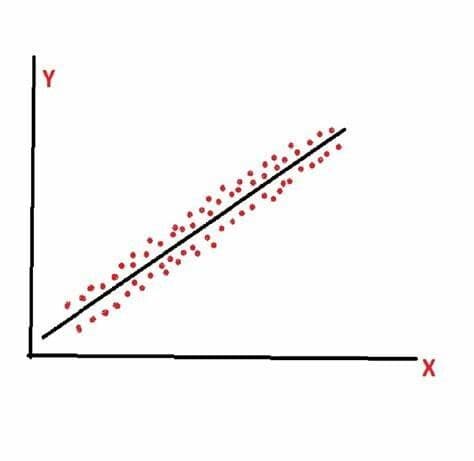
Which model is this?
which is Evaluation Parameters?
Which is Activation Function in Neural Network?
Make Group:
Make perfect Group:
Chapter 1- Revisiting AI project Cycle Revisiting AI Project Cycle Ethical Framework for AI - Chapter 1CHAPTER VII CHAPTER 7. WORKING WITH PEERS AND FOR THE DEVELOPMENT OF AN ICT PROJECT FOR SOCIAL CHANGE.Project CharterChapter 7 Study Guide Answers What does the Bill of Rights do? The Bill of Rights lists our basic rights. Who is the person mainly responsible for the Bill of Rights? James Madison is the person mainly responsible for the Bill of Rights. The Bill of Rights is part of which document? The Bill of Rights is part of the United States Constitution. Whose job is it to protect our rights listed in the bill of rights? It is the job of the federal courts (judicial branch) to protect our rights. What are the five rights listed in the first amendment? Freedom of speech: includes symbolic speech; does not include speech that could endanger the public safety. Religion: Right to believe whatever you want, but you can’t do whatever you want in the name of religion (can’t break the law). Press: The free flow of information and ideas; can’t print lies or information that could be helpful to an enemy in wartime. Assembly: Use public property for meetings and demonstrations (i.e. parades, protests, political rallies). Must be done legally and peaceably. Right to petition: Means you can appeal to the government if you’re unhappy about something or some policy. Give one example of speech NOT protected under the first amendment. An example of speech not protected under the first amendment would be crying “fire” in a crowded movie theater (anything that could potentially endanger the public safety). What does the second amendment give us the right to? The second amendment gives us the right to bear arms. What does the third amendment state we are not legally obligated to do? Under the third amendment, we are not obligated to quarter (or house) soldiers in our homes. What does the fourth amendment protect us from? The fourth amendment protects us from unreasonable search and seizure. What is needed in order to search or seize property? A warrant is needed, which must be issued by a judge, in order to search and seize property. What five rights are we guaranteed under the Fifth Amendment? Right to a grand jury: determines whether or not the government has enough evidence to bring someone to trial. Double jeopardy: Once a person has been found not guilty, he cannot be tried again for the same crime. Self incrimination: A person has the right to remain silent; he does not have to testify against himself. Due process: The government must follow a clear set of rules (a process) as it carries out the law and takes your life, liberty, or property. Just compensation: If the government has to take someone’s land, they will offer a fair price. What is the right stated in the “Miranda Warning”? The main right stated in the “Miranda Warning” is the right to remain silent. What are the four rights stated under the sixth amendment? Right to a speedy and public trial, and an impartial jury. Right to a jury of people that live in the defendant’s area (jury of your peers). To hear and question all witnesses Right to an attorney As stated in the seventh amendment, we have the right to which type of trial depending on how much money a person is being sued for? What can a judge NOT do? Under the seventh amendment, we have the right to a jury trial depending on how much money is at stake in a civil trial. A judge cannot overturn a decision made by a jury. What are the four things that are prohibited under the eighth amendment? The four things that are prohibited (or not allowed) under the eighth amendment are: excessive fines, excessive bail, cruel and unusual punishments, and poor prison conditions. Under the ninth amendment, rights not listed in the Bill of Rights belong to whom? According to the ninth amendment, rights not listed in the Bill of Rights belong to the people. The tenth amendment states that powers not given to the national government are reserved for whom? According to the tenth amendment, powers not specifically given to the national government are reserved for the people and the states. What is meant by the term “double jeopardy”? The term “double Jeopardy” refers to a person being retried for a crime in which he has already been acquitted, or found “not guilty”. What does it mean to be indicted by a grand jury? To be indicted by a grand jury means that a person will be going to trial and will retain all of the rights listed in the fifth, sixth, seventh, and eighth amendments.A symbiosis (SIM-bie-OH-sis) is a close, long-term relationship between two organisms. Three examples of symbiotic relation- ships include: parasitism, mutualism, and commensalism. Parasitism (PAR-uh-SIET-IZ-UHM) is a relationship in which one indi- vidual is harmed while the other individual benefits. Mutualism (MYOO-choo-uhl-IZ-uhm) is a relationship in which both organisms derive some benefit. In commensalism (kuh-MEN-suhl-IZ-uhm), one organism benefits, but the other organism is neither helped nor harmed. Parasitism Parasitism is similar to predation in that one organism, called the host, is harmed and the other organism, called the parasite, benefits. However, unlike many forms of predation, parasitism usually does not result in the immediate death of the host. Generally, the parasite feeds on the host for a long time rather than kills it. Parasites such as aphids, lice, leeches, fleas, ticks, and mosquitoes that remain on the outside of their host are called ectoparasites. Parasites that live inside the host’s body are called endoparasites. Familiar endoparasites are heart- worms, disease-causing protists, and tapeworms, such as the one shown in Figure 20-5. Natural selection favors adaptations that allow a parasite to exploit its host efficiently. Parasites are usually specialized anatomically and physiologically for a par- asitic lifestyle. Parasites can have a strong negative impact on the health and reproduction of the host. Consequently, hosts have evolved a variety of defenses against parasites. Skin is an important defense that prevents most parasites from entering the body. Tears, saliva, and mucus defend openings through which parasites could pass, such as the eyes, mouth, and nose. Finally, the cells of the immune system may attack para- sites that get past these defenses. parasite from the Latin word parasitus, meaning “one who eats at the table of another” Word Roots and Origins Tapeworms are endoparasites that can grow to 20 m or greater in length. Tapeworms are so specialized for a parasitic lifestyle that they do not have a digestive system. They live in the host’s small intestine and absorb nutrients directly through their skin. Tapeworms reproduce by producing egg-filled chambers, which are released in their host’s feces to be unknowingly picked up by a future host. FIGURE 20-5 Copyright © by Holt, Rinehart and Winston. All rights reserved. 404 CHAPTER 20 Mutualism Mutualism is a relationship in which two species derive some benefit from each other. Some mutualistic relation- ships are so close that neither species can survive without the other. An example of mutualism, shown in Figure 20-6, involves ants and some species of Acacia plants. The ants nest inside the acacia’s large thorns and receive food from the acacia. In turn, the ants protect the acacia from herbi- vores and cut back competing vegetation. Pollination is one of the most important mutualistic rela- tionships on Earth. Animals such as bees, butterflies, flies, beetles, bats, and birds that carry pollen between flowering plants are called pollinators. A flower is a lure for pollina- tors, which are attracted by the flower’s color, pattern, shape, or scent. The plant usually provides food—in the form of nectar or pollen—for its pollinators. As a pollinator feeds in a flower, it picks up a load of pollen, which it may then carry to other flowers of the same species. Commensalism Commensalism is an interaction in which one species benefits and the other species is not affected. Species that scavenge for leftover food items are often considered commensal species. However, a relationship that appears to be commensalism may simply be mutu- alism in which the mutual benefits are not apparent. An example of a commensal relationship is the relationship between cattle egrets and Cape buffaloes in Tanzania. The birds feed on small animals such as insects and lizards that are forced out of their hiding places by the movement of the buffaloes through the grass. Occasionally, the cattle egrets also feed on ectoparasites from the hide of the buffaloes, but the buffaloes gen- erally do not benefit from the presence of the egrets.Chapter Chapter 6 History Test