Tag the questions with any skills you have. Your dashboard will track each student's mastery of each skill.
Give this quiz to my class
Q 1/75
Score 0
The structural and functional unit of all living things is the ________.
30
organelle
element
cell
cytoplasm
Q 2/75
Score 0
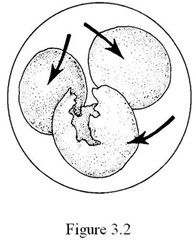
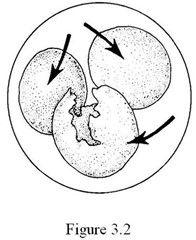
The cell shown in Figure 3.2 has been placed into a(n) ________ solution.
30
equilibrium
hypotonic
hypertonic
isotonic
75 questions
Q.
The structural and functional unit of all living things is the ________.
1
30 sec
Q.
The cell shown in Figure 3.2 has been placed into a(n) ________ solution.
2
30 sec
Q.
The two steps of protein synthesis, in the correct order, are ________ and ________.
3
30 sec
Q.
The DNA segment that carries information for building one protein or polypeptide chain is called a(n) ________.
4
30 sec
Q.
What process results in the exact duplication of DNA?
5
30 sec
Q.
The period of the cell cycle when the cell grows and performs its metabolic activities is ________.
6
30 sec
Q.
In cell division, the term that refers to division of the cytoplasm is ________.
7
30 sec
Q.
The nucleotides of DNA join in a complementary way in which adenine pairs with ________ while cytosine pairs with ________.
8
30 sec
Q.
What is required for filtration to occur?
9
30 sec
Q.
What separates the intracellular fluid from the extracellular fluid?
10
30 sec
Q.
The passive process that involves the movement of water through aquaporins is ________.
11
30 sec
Q.
Place the following steps of protein synthesis and export from the cell in the proper order.
1. The protein folds into its functional shape.
2. The transport vesicle travels to the Golgi apparatus for further processing.
3. The protein is packaged in a transport vesicle.
4. The protein is synthesized on the ribosome as it migrates through the rough ER.
12
30 sec
Q.
The membrane connections that prevent the leaking of fluid between cells are called _____________________.
13
30 sec
Q.
The organelle responsible for making the majority of ATP in a cell is the ________.
14
30 sec
Q.
The phospholipid tails are ________, which make the plasma membrane impermeable to water.
15
30 sec
Q.
_________________, a type of cell junction, anchor adjacent cells together and prevent cells from being pulled apart.
16
30 sec
Q.
The specialized cellular compartments within the cytosol of the cell are collectively called ________.
17
30 sec
Q.
Cellular material located outside the nucleus yet inside the plasma membrane is the ________.
18
30 sec
Q.
During what stage do the centrioles separate and move toward opposite sides of the cell?
19
30 sec
Q.
During what stage do the chromosomes align at the center of the spindle?
20
30 sec
Q.
During what stage do nucleoli appear in each daughter cell?
21
30 sec
Q.
During what stage do the chromosomes separate and move to opposite ends of the cell?
22
30 sec
Q.
Chromosomes stop moving at the completion of what phase?
23
30 sec
Q.
During what stage does the spindle break down and disappear?
24
30 sec
Q.
During what stage does the nuclear envelope and nucleoli break down and disappear?
25
30 sec
Q.
During what stage does the cleavage furrow squeeze the cell into two parts?
26
30 sec
Q.
During what stage does DNA replication occur?
27
30 sec
Q.
During what stage is cytokinesis completed?
28
30 sec
Q.
Receptor-mediated endocytosis is the main cellular mechanism for taking up specific target molecules.
29
30 sec
Q.
Phagocytosis is also known as “cell eating,” and pinocytosis refers to “cell drinking.”
30
30 sec
Q.
Enzymes, some hormones, cholesterol, and iron are taken into the cell by phagocytosis.
31
30 sec
Q.
The reason active transport requires energy is because substances are being moved down the concentration gradient.
32
30 sec
Q.
The sodium-potassium pump requires energy to pump Na+ ions across the cell membrane out of the cell.
33
30 sec
Q.
Which of the following is a type of active process in which the cell engulfs extracellular substances by phagocytosis or pinocytosis?
34
30 sec
Q.
Which of the following is a type of active transport in which sodium and potassium are pumped across a membrane using ATP?
35
30 sec
Q.
Which of the following is a type of passive process in which water is moved through aquaporins?
36
30 sec
Q.
Which of the following is a type of passive process in which molecules move across the plasma membrane down a concentration gradient?
37
30 sec
Q.
Which of the following are cellular extensions that move substances along the cell surface?
38
30 sec
Q.
What organelle is the site of protein synthesis?
39
30 sec
Q.
What organelle packages substances for release from cell?
40
30 sec
Q.
What organelle is the site of intracellular digestion?
41
30 sec
Q.
What organelle is the site of ATP synthesis?
42
30 sec
Q.
What organelle is the genetic control center of the cell?
43
30 sec
Q.
What cell structure is an internal framework composed of a network of protein structures?
44
30 sec
Q.
What are cylindrical structures made of tubulin proteins?
45
30 sec
Q.
What organelle synthesizes cholesterol and fat?
46
30 sec
Q.
What cell structures increase surface area of plasma membrane for absorption?
47
30 sec
Q.
If the sequence of nitrogenous bases in one strand of DNA is GTA-GCA, the sequence of bases on its complementary DNA strand would be ________.
48
30 sec
Q.
During transcription, which base pairs with adenine of DNA in the newly formed molecule of RNA?
49
30 sec
Q.
DNA replication takes place during ________.
50
30 sec
Q.
Which of the following represents a segment of RNA?
51
30 sec
Q.
A cancer drug interferes with the development of mitotic spindle fibers during cell division. Which phase is directly affected?
52
30 sec
Q.
Looking into a microscope, you notice cells swimming, propelled by a long tail. What cell structure must these cells have in order to be mobile?
53
30 sec
Q.
The process of transcription ________.
54
30 sec
Q.
The correct order of phases of the mitosis is ________.
55
30 sec
Q.
The molecule that carries an amino acid to the ribosome for incorporation into a protein is ________.
56
30 sec
Q.
The portion of the cell's life cycle that does NOT involve cell division is known as _____________.
57
30 sec
Q.
A cell is isotonic to the surrounding 4% dextrose solution. If the cell is moved to a 6% dextrose solution, then predict what will happen to the cell.
58
30 sec
Q.
Which of the following processes require the use of protein carrier molecules?
59
30 sec
Q.
Which of the following substances must travel across a membrane via facilitated diffusion?
60
30 sec
Q.
A solution that contains fewer solutes than the cell is ________ to the cell.
61
30 sec
Q.
What are two types of endocytosis?
62
30 sec
Q.
What is required for diffusion to occur?
63
30 sec
Q.
What assists the movement of substances by facilitated diffusion?
64
30 sec
Q.
What is required for osmosis to occur?
65
30 sec
Q.
Passive processes that move substances across membranes ________.
66
30 sec
Q.
By what endocytosis process do some white blood cells engulf bacteria?
67
30 sec
Q.
The organelle that contains enzymes produced by ribosomes and packaged by the Golgi apparatus is the ________.
68
30 sec
Q.
The preparation of secretory vesicles for export from the cell is the responsibility of the ________.
69
30 sec
Q.
Which of the following is NOT considered a cytoplasmic organelle?
70
30 sec
Q.
The three major components of the cytoplasm are the ________.
71
30 sec
Q.
Nutrients and ions can pass directly from cell to cell through special membrane junctions known as ________.
72
30 sec
Q.
Which of the following is NOT a structural component of the nucleus?
73
30 sec
Q.
What are the three basic parts or regions of a cell?
74
30 sec
Q.
Which of the following statements is NOT part of the cell theory?