Loading...


Chapter 4 - Chemistry the Central Science
Quiz by Andre McBean
Tag the questions with any skills you have. Your dashboard will track each student's mastery of each skill.
A solution is a ______________ mixture of two or more substances. The substance present in the greatest quantity is usually called the ____________, and the other substances are called solutes; they are said to be dissolved in the ______________.
Most of the water we encounter in daily life is electrically conducting. Pure water, however, is a very poor conductor of electricity. The conductivity of bathwater originates from the substances dissolved in the water, not from the water itself.
A solution of pure water allows the flow of a current.
A solution containing no ions are incapable of sending an electrical charge. Electrical charges are generated by the flow of electrons being transferred between ions. Therefore, a molecule such as glucose that does not ionize will not generate an electrical charge even if it is dissolved in water. You would need a substance such as NaCl which is an ionizing compound for that to happen since there are readily flowing electrons between Na+ and Cl- ions within the solution. What is the name of this kind of aqueous solution which contain flowing electrons?
If an aqueous solution containing ions is called an electrolyte. Then what is a solution containing glucose called?
Molecular compounds form electrolytes frequently.
Label the following image:

What is an aqueous solution?
What is the difference between ionic compound dissolving in water and molecular compounds dissolving in water?
Solvation is the process of water molecules and its minor electrical charge as the solvent surrounding the solute ions thus separating them.
____________ electrolytes are those solutes that exist in solution completely or nearly completely as ions. Essentially all water-soluble ionic compounds (such as NaCl) and a few molecular compounds (such as HCl) are ___________ electrolytes.
_____________ electrolytes are those solutes that exist in solution mostly in the form of neutral molecules with only a small fraction in the form of ions.
Which of the following groups of substances contain only strong electrolytes?
We have learned in this chapter that many ionic solids dissolve in water as strong electrolytes; that is, as separated ions in solution. Which statement is most correct about this process?
“Hard” water contains calcium and magnesium _______. These ________ can react with soap to form a white solid that forms around baths, showers and basins. This is an example of a chemical reaction between two soluble materials to form an insoluble product (precipitate). Scum, as it is called, is harmless, though unsightly, and there are many cleaning products designed to remove it.
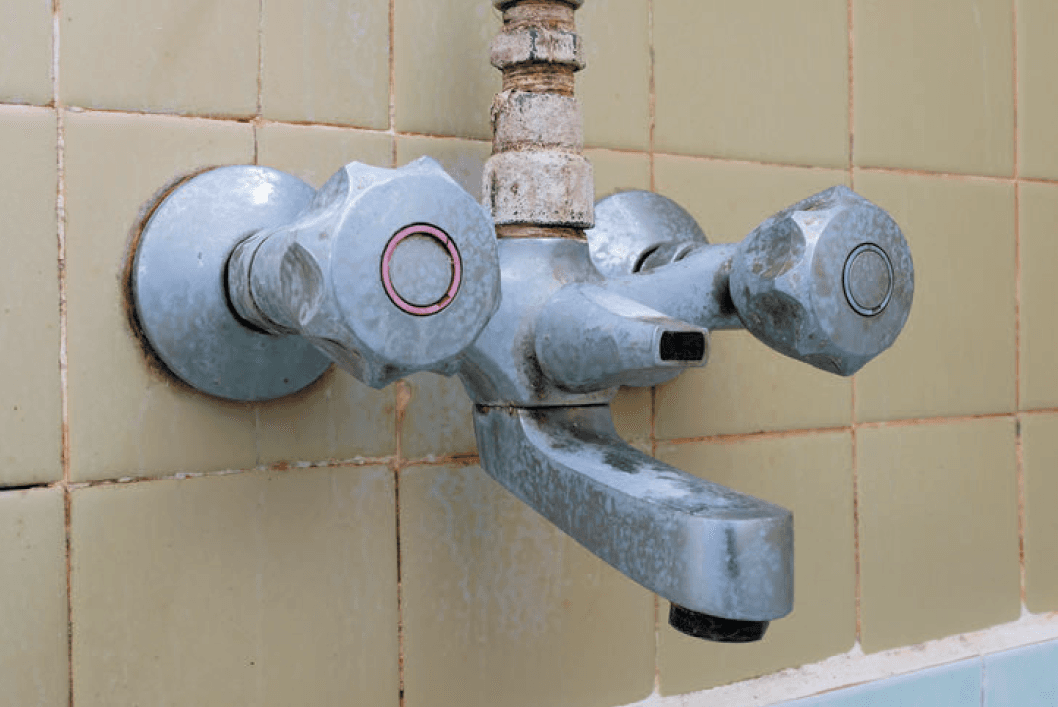
A __________ is an insoluble solid formed by a reaction in solution.

There is a threshold for what is considered to be a soluble versus insoluble. What is that threshold.
A table of solubility is required to determine if a precipitate will form. There is no one pattern that easily allows a person to learn which compounds will form an insoluble precipitate or not. But there are some important ones including that all group 1 and ammonia (NH4+) related ionic compounds are soluble. Another pattern is that Sulfur (S2-), carbonate (CO32-), phosphate (PO43-) and hydroxide (OH-) are otherwise insoluble if the first rule isn't applicable. Another one is that silver, mercury and lead are almost always solids.
Classify these ionic compounds as soluble or insoluble in water.
Arrange the following in the most appropriate order of determining solubility if a table is unavailable:
Identify the following:
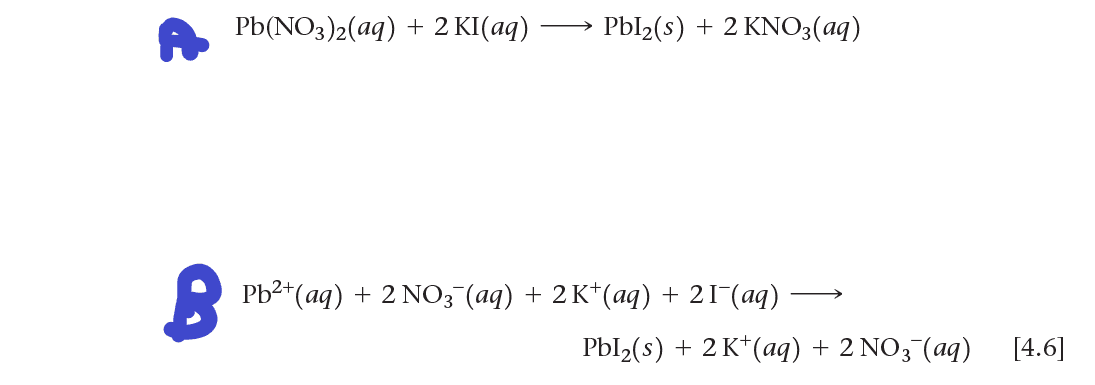
Identify the following:
If every ion in a complete ionic equation is a spectator, a reaction still occurs.
Will there be a reaction that occurs between Calcium Chloride and Sodium Carbonate?
Write down the complete ionic equation for the precipitation reaction that occurs when aqueous solutions of calcium chloride and sodium carbonate are mixed. Then, arrange the following in baskets of spectator ions or the net ionic equation.
____________ are substances that ionize in aqueous solution to form hydrogen ions H+ (aq).
Because a hydrogen atom consists of a proton and an electron, H+ is simply a _________. Thus, acids are often called __________ donors.
Acids that contain only one hydrogen.
Acids that contain 2 hydrogen ions per formula.
Although H2SO4 is a strong electrolyte, only the first ionization is complete. Thus, aqueous solutions of sulfuric acid contain a mixture of H+(aq), HSO4 -(aq), and SO4 2-(aq).
____________ are substances that accept (react with) H+ ions. Bases produce hydroxide ions 1OH-2 when they dissolve in water.
Only compounds that contain hydroxide ions (OH-) can be bases since bases neutralize acids (H+) using the hydroxide ions to turn the Hydrogen ions into water H+ + OH-.
The most common strong bases are a combination of hydroxide ions with group 1 or elements from group 2.
Which of the following is not a strong acid?
Strong electrolytes that are acids are called?
Rank the following acids from strongest to weakest.

Classify these dissolved substances as a strong electrolyte, weak electrolyte, or nonelectrolyte: CaCl2, HNO3, C2H5OH (ethanol), HCOOH (formic acid), KOH.
When a solution of an acid and a solution of a base are mixed, a _______________ reaction occurs.
The products of the reaction have a lot of the characteristic properties of either the acidic solution or the basic solution.
A salt is any non-water compound that is formed from the reaction between an acid and a base.
Which is the correct net ionic equation for the reaction of aqueous ammonia with nitric acid?
Sulfuric acid is a monoprotic acid.
HCl is a weak acid.
Methanol is a base.
Corrosion is one of the most common examples of this type of reaction. The corrosion can go so deep as to erode infrastructure and cause massive bridge collapses. What are these types of reactions?
Corrosion is the conversion of a metal into a metal compound, by a reaction between the metal and some substance in its environment. When a metal corrodes, each metal atom loses one or more electrons to form a cation, which can combine with an anion to form an ionic compound.
When an atom, ion, or molecule becomes more positively charged (that is, when it loses electrons), we say that it has been _____________.
Loss of electrons by a substance is called __________.
Oxidizes means to lose electrons
When an atom, ion, or molecule becomes more negatively charged (gains electrons), we say that it is ____________.
The molecular oxygen in the following formula represents which of the following:

Match the following:
Match the following based on their rules of oxidative state (oxidation numbers):
Determine the oxidation number of sulfur in: (a) H2S.
Determine the oxidation number of sulfur in: (b) S8.
Determine the oxidation number of sulfur in: (c) SCl2.
Determine the oxidation number of sulfur in: (d) Na2SO3.
Determine the oxidation number of sulfur in: (e) SO42-.
Identify which ion is being oxidized and which is being reduced:

Whenever one substance is oxidized, another substance must be reduced.
Different metals vary in the ease with which they are oxidized. Zn is oxidized by aqueous solutions of Cu2+, for example, but Ag is not. Zn, therefore, loses electrons more readily than Ag; that is, Zn is easier to oxidize than Ag. A list of metals arranged in order of decreasing ease of oxidation is known as _____________ series.
Metals that react most quickly are referred to as:
Metals that react the least readily are referred to as:
Only metals above hydrogen in the activity series are able to react with acids to form H2.
Will an aqueous solution of iron (II) chloride oxidize magnesium metal?
If a metal is above another metal on the reactivity series, which one can be oxidized.
Which of these metals is the easiest to oxidize?
Which metal is being reduced or oxidized in a redox reaction?
Does the solid need to be above or below on the reactivity series for there to be a reaction?
Which combination of metal and metal ion do you expect to undergo a redox reaction?
Scientists use the term _____________ to designate the amount of solute dissolved in a given quantity of solvent or quantity of solution.
__________________expresses the concentration of a solution as the number of moles of solute in a liter of solution.
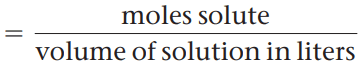
A 1.00 molar solution (written 1.00 M) contains _____ mol of solute in every liter of solution.
Calculate the molarity of a solution made by dissolving 23.4 g of sodium sulfate (Na2SO4) in enough water to form 125 mL of solution.
What is the molarity of a solution that is made by dissolving 3.68 g of sucrose (C12H22O11) in sufficient water to form 275.0 mL of solution?
How many grams of Na2SO4 are required to make 0.350 L of 0.500 M Na2SO4?
How many grams of Na2SO4 are there in 15 mL of 0.50 M Na2SO4?
How many milliliters of 0.50 M Na2SO4 solution are needed to provide 0.038 mol of this salt?
When solvent is added to a solution, the number of moles of solute remains unchanged.
What is always the molarity denominator for a solution that is said to be concentrated/concentrate?
Since the number of moles does not change in the _________, the equation to find the number of moles after the ________ is M1 x V1 = M2 x V2
Arrange the following series of operations needed to solve the following problem: How many grams of Ca(OH)2 are needed to neutralize 25.0 mL of 0.100 M HNO3?
How many milligrams of sodium sulfide are needed to completely react with 25.00 mL of a 0.0100 M aqueous solution of cadmium nitrate, to form a precipitate of CdS(s)?
What is the name of the technique used to try and figure out just how much solute is in a solution?
What is the name of the material which specifically uses a known concentration to try and figure out just how much solute is in another solution/material?
The point at which there is a balanced molar concentration/stochiometric balance of solutes in solution?
An ____________ is a dye that changes color when the acid-base reaction passes the equivalence point. For example, the dye phenolphthalein is colorless in acidic solution but pink in basic solution.
One commercial method used to peel potatoes is to soak them in a NaOH solution for a short time and then remove the potatoes and spray off the peel. The NaOH concentration is normally 3 to 6 M, and the solution must be analyzed periodically. In one such analysis, 45.7 mL of 0.500 M H2SO4 is required to neutralize 20.0 mL of NaOH solution. What is the concentration of the NaOH solution?
What is the molarity of an HCl solution if 27.3 mL of it neutralizes 134.5 mL of 0.0165 M Ba(OH)2?
How many grams of chloride ion are in a sample of the water if 20.2 mL of 0.100 M Ag + is needed to react with all the chloride in the sample? Hint: Use decimal system not scientific notation.

A mysterious white powder is found at a crime scene. A simple chemical analysis concludes that the powder is a mixture of sugar and morphine (C17H19NO3), a weak base similar to ammonia. The crime lab takes 10.00 mg of the mysterious white powder, dissolves it in 100.00 mL water, and titrates it to the equivalence point with 2.84 mL of a standard 0.0100 M HCl solution. What is the percentage of morphine in the white powder?