Loading...

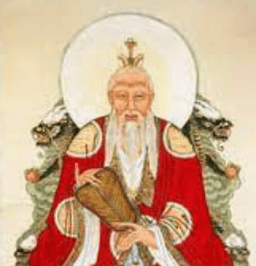
China's 3 Philosophies
Quiz by Jen Wegis
Customize this quiz to suit your class
Instantly translate to 100+ languages
Tag the questions with any skills you have. Your dashboard will track each student's mastery of each skill.
Give this quiz to my class
 In a single domesticated grain seed, one might see the bud of great civilizations. The birth of agriculture was a turning point in humans' social development, as stable food supplies enabled people to transcend the constraints of food gained by hunting and gathering. After that, people were able to settle down and experience population booms. As one of the major areas around the globe where agriculture originated, China has contributed to the world's domesticated rice, millet, buckwheat and soybeans. Archaeological studies have unveiled that the planting of rice originated around 10,000 years ago in the lower reaches of the Yangtze River, leading to the eventual replacement there of hunting and gathering practices dating back 5,000 to 6,000 years. "It marked the formation of a rice-based agricultural society in the area," said Zhao Zhijun, an archaeologist at the Chinese Academy of Social Sciences. Archaeological studies of the origins of rice-based agriculture are an important part of a national project tracing the origins of Chinese civilization itself. President Xi Jinping has greatly valued the project. At a group study session of the Political Bureau of the Communist Party of China Central Committee on May 27, 2022, Xi, who is also general secretary of the CPC Central Committee, emphasized the significance of the project and the role that archaeological studies play in better understanding Chinese civilization. The project to trace the origins of Chinese civilization, in addition to finding signs of human activity more than 1 million years ago, has also proved that China's history includes 10,000 years of culture and more than 5,000 years of civilization. The project has provided clear knowledge of the origins and formation of Chinese civilization, the history of its development, the process of the formation and development of its pluralistic and integrated pattern, and the characteristics of the civilization and why it was formed in such a way, he added. This was not the first time that Xi emphasized the importance of the origin-tracing project. Since the 18th National Congress of the CPC in 2012, Xi has toured more than 100 historical and cultural locations and issued many instructions related to archaeology and the origin-tracing project. During the 23rd group study session of the Political Bureau of the CPC Central Committee in 2020, Xi called for giving more attention to archaeological research and letting historical facts speak for themselves. "This will provide strong support for our efforts to carry forward the best of traditional Chinese culture and increase our cultural confidence," said Xi. The origin-tracing project has been carried out since 2002. Its ongoing fifth phase, which started in 2020, involves the participation of more than 500 researchers from 29 institutes across the country. It primarily centers on several ancient capital sites, including the Liangzhu site in Hangzhou, Zhejiang province, the Taosi site in Xiangfen county, Shanxi province, the Shimao site in Shenmu, Shaanxi province, and the Erlitou site in Luoyang, Henan province, from 3,500 to 5,500 years ago, as well as other settlements mainly along the basins of the Yellow, Yangtze and Liaohe rivers. The project has also expanded to a wider geographic and chronological framework to decode how Chinese civilization emerged and how its diverse elements formed a unity. Excavation of the Liangzhu site, which is over 5,000 years old and is one of the major sites covered in the origin-tracing project, has yielded an inner city covering 3 million square meters and an outer city of 6.3 million sq m, making it the world's largest capital at the time. It also had a giant water control system, which contributed to the formation of a rice-based agricultural society. By calculating the earthwork volume, archaeologists found that building the entire ancient city, the water control system and Mojiaoshan — a 10-meter-tall man-made terrace in the center of the city — required 10,000 people working daily for seven-and-a-half years. The discoveries show that Liangzhu had a kingship able to organize people for large-scale public construction, and its social differentiation, emergence of the city concept and existence of a kingship prove that it became a civilized society, said Wang Wei, a veteran archaeologist at the Chinese Academy of Social Sciences. Significant topic Wang said that tracing the origins of a civilization is a significant topic in the research of human history. Over the years, the Chinese project has provided China's answer to how to define civilizations. In 2022, Xi commended the efforts and stressed that the project has made creative contributions to the research on tracing the origins of the world's civilizations. Wang said: "International academia has proposed three indispensable elements for a civilized society based on features of Mesopotamian and Egyptian civilizations: written characters, metallurgy and the city concept. But we can find that some of the three elements were absent in many ancient civilizations. For example, the Mayan civilization had no metallurgy, while the Incan civilization didn't have written characters." Western scholars believe that Chinese civilization began with the Yinxu Ruins in Anyang, Henan province, a capital of the late Shang Dynasty (c.16th century-11th century BC), based on the discovery of inscribed oracle bones from that time. However, Chinese archaeologists don't agree. With continued archaeological research, international academia now believes that places around the world can propose criteria for civilization based on their own ancient social development. China's archaeological studies have shaped the nation's criteria in defining a civilization: the development of productivity, an increase in population, the appearance of cities, social differentiation and the emergence of kingship and state. "These criteria are suitable for identifying other civilizations as well," said Wang. "Civilizations have in common the appearance of kingship and state. They are only different in the ways of imposing kingship and the forms of state." In China, kingship and state "were shown by exquisite jade and bronze ritual artifacts, grand palaces and magnificent mausoleums imitating aboveground palaces", he added. "In Mesopotamia and ancient Egypt, they were demonstrated through superb stone temples, pyramids and large-scale tombs." Multidisciplinary subject President Xi said in 2020 that archaeologists should work closely with researchers from other fields to make an interpretive analysis of material remains. Zhang Chi, a professor of archaeology at Peking University, said that since material remains are often the research focus of archaeological studies, these should not only be observed with the eyes, but also studied using scientific and technological tools. Therefore, from the perspective of research methods, archaeology is by nature a multidisciplinary subject, Zhang added.Yaama I'm Jack Evans and you're watching BTN. Here's what's coming up. We uncover the story behind this famous photo, learn about First Nations seasons and find out the history of Book Week. What is Statehood? Reporter: Tatenda Chibika INTRO: But first, the Prime Minister Anthony Albanese has announced that Australia will join other countries in recognising Palestine as an independent state. So, what does that mean? Tatenda found out. Anthony Albanese, Prime Minister: Australia will recognise the state of Palestine. Australia will recognise the right of the Palestinian people to a state of their own. We will work with the international community to make this right a reality. Tatenda Chibika, Reporter: That's the moment our Prime Minister said Australia would recognise Palestine as an independent state at the upcoming United Nations General assembly next month. It's something other countries, including France and Canada, have said they'll be doing too. So, what does that mean exactly? To be considered an independent state under international law a place needs to have its own land or territories with defined borders, it needs to have people who permanently live there, have a working government and it has to be able to talk and make deals with other countries. Once a place meets all those rules, it can ask to be recognised by other independent states and countries. But a big step in becoming an independent state is being fully recognised by the United Nations. To do that you first need to get approval from at least nine members of the UN's Security Council. That's a group of countries responsible for maintaining international peace and security. But even then, that tick of approval can still be blocked by one of the Security Council's five permanent members Russia, China, the UK, the US and France. If the Security Council approves, the decision then goes to the UN's General Assembly where at least two thirds of the UN's 193 members have to agree to make it official. Yeah, it's a pretty complex process which is why we've only seen a handful of countries recognised by the UN in recent years like South Sudan and Montenegro. Others like Kosovo are only 'partially' recognised which means they have some recognition but not enough to become a full member state at the UN. Right now, Palestine is recognised by more than 140 countries — that's more than two thirds of the UN General Assembly. So, why hasn't it become a UN member state yet? Well, it came pretty close last year when 12 members of the Security Council voted in favour of it. VANESSA FRAZIER, AMBASSADOR OF MALTA, APRIL 2024 UNSC PRESIDENT: I shall now put the draft resolution to the vote. But the US, a close ally to Israel, used its special powers to block Palestine from becoming a member state. VANESSA FRAZIER: Those against? At the time, the U.S said Palestine and Israel needed to come to an agreement on their own first. Throughout the years, there have been attempts to figure out a way for both Palestine and Israel to exist peacefully alongside each other but that hasn't happened yet. And now Israel has said that recognising Palestine as an independent state would be rewarding Hamas the group in charge of Gaza which was responsible for the terror attacks on October 7th, 2023. But the Palestinian Authority which governs parts of the West Bank says Hamas won't have a role in any future state of Palestine which will exist peacefully alongside Israel. Australia, like the US, had previously said that it wanted Israel and Palestine to figure out things by themselves first but because of how the war has been going the Australian government is worried that if it continues to wait, there might not be a Palestinian state to recognise. ANTHONY ALBANESE, PRIME MINISTER: There has been too many lives lost, both Israeli's and Palestinians and the world is saying we need a solution to this conflict, we need to end the cycle of violence and the way to do that is to have a two-state solution. News Quiz Russia's President Vladimir Putin stepped foot on American Soil for the first time in a decade to meet with US President Donald Trump. What state did they meet in? Alabama, Alaska or Arizona?It's Alaska. The two leaders met to discuss a way to end the war in Ukraine but weren't able to make any final agreements. DONALD TRUMP, US PRESIDENT: There were many, many points that we agreed on. Most of them, I would say, a couple of big ones, that we haven't quite got there, but we've made some headway. There's no deal until there's a deal. A lot of people criticised the two world leaders for not including Ukraine's president Volodymyr Zelenskyy in the meeting. But that didn't seem to worry Mr Trump who said the meeting was a success and Mr Putin even invited the US President to meet up again in Russia. DONALD TRUMP: We'll see you again very soon. Thank you very much, Vladimir. VLADIMIR PUTIN, RUSSIAN PRESIDENT: Next time in Moscow. DONALD TRUMP: Oh, that's an interesting one. No, no, no. I'll get a little heat on that one. Last week thousands of people marked the 80th anniversary of VJ Day. What does VJ Day commemorate? The victory of Allied forces in Europe, the surrender of Japan and the end of World War II or the dropping of the first atomic bomb? VJ Day or Victory over Japan day commemorates the surrender of Japan and the end of World War II on the 15th of August 1945. Around the world, and here in Australia, people marked the anniversary with ceremonies remembering those who fought in the war. REPORTER: Who will you be remembering today? VETERAN: Oh, a lot of fellows that I knew that never made it home. Scientists in the UK have created toothpaste that includes which of these ingredients? Hair, eye lashes or fingernails? Yeah, they're all a bit random and gross but the answer is hair. According to scientists from King's College in London, hair could be the key to good oral health because it contains a protein called Keratin which they say when mixed with saliva forms a crystal-like protective coating similar to enamel. And Swifties rejoice because Taylor Swift has announced her 12th Studio album. It's called life of a show what? Is it show pony, show girl or show bag? It's Life of a Showgirl and it'll be released October 3rd. Vincent Lingiari Reporter: Joseph Baronio INTRO: Now to this very famous photograph. It was taken 50 years ago and depicts a really significant moment in Australian history. Joe found out about the story behind it. On the 16th of August 1975, this famous photo was taken. It shows the former Prime Minister Gough Whitlam pouring sand into the hand of Aboriginal leader Vincent Lingiari. A simple gesture that symbolised handing the land at Wave Hill in the Northern Territory back to the Gurindji people. But the journey to get there was far from simple. It started back in the 1960s. At the time, Wave Hill was the biggest cattle station in the world, controlled by British landowner Lord Vestey. The Gurindji people, who had lived on the land for generations, worked for Vestey, but they weren't paid fairly, and conditions were tough. NEWS REPORTER: The station's 100 aboriginal stockmen, with their 100 dependents, are camped in the dry bed of the Victoria River with little shade from 90-degree heat, dust and flies. Eventually, Gurindji leader Vincent Lingiari said it was time to act. VINCENT LINGIARI: I said, "What was it before Lord Vestey born and I was born?" It was blackfella country. So, on August 23rd, 1966, Mr Lingiari and his fellow Aboriginal workers went on strike. It became known as the Wave Hill Walk Off. They moved their camp away from the Wave Hill station to a sacred site called Daguragu on Wattie Creek. They wanted to set up their own cattle station, and said they wouldn't move until their land was returned to them. For years, petitions and negotiations went on between the Gurindji people, the NT Administration, and the Australian Government in Canberra. CLAPPERS: 31. 32. 33. DAVID QUINN, ABSCOL: Well, it's basic justice that their land is recognised. PROTESTORS: Equal rights! As the news spread across the country, thousands of Aussies joined the campaign, including the leader of the Labor Party, Gough Whitlam, who made this promise during his 1972 election campaign. GOUGH WHITLAM: We will legislate to give Aborigines land rights. Not just because their case is beyond argument, but because all of us as Australians are diminished, while the Aborigines are denied their rightful place in this nation. Later that year, Gough Whitlam became Prime Minister. (Song From Little Things Big Things Grow, Song by Kev Carmody and Paul Kelly, 1993) From little things big things grow,from little things big things grow… But it wasn't until 1975, 9 years after the Wave Hill Walk Off started, that he followed through with his promise. Eight years went by, eight long years of waiting'Til one day a tall stranger appeared in the landAnd he came with lawyers and he came with great ceremony GOUGH WHITLAM: I solemnly hand to you these deeds as proof in Australian law that these lands belong to the Gurindji people. And through Vincent's fingers poured a handful of sandFrom little things big things grow 50 years on, and The Wave Hill Walk Off is seen as a pivotal moment in Australia's history. It led to significant legal and social changes for First Nations people, which is something many agree is worth celebrating. First Nations Seasons Reporter: Saskia Mortarotti INTRO: Recently, Melbourne's Lord Mayor suggested ditching the four-season calendar that most of us are familiar with and adopting a six-season Wurundjeri calendar instead saying it gives a better description of what the weather's actually like there. Sas found out more about the different seasonal calendars used by First Nations people. SASKIA MORTAROTTI, REPORTER: Right now, in most of the country, it's pretty cold. COLD GIRL: Think of somewhere warm. What? It's 32 degrees in Darwin in the middle of winter? But ah, yeah. There are some places where it's, well, quite warm. Which makes you wonder whether the weather actually matches the seasons. You see, Australia is pretty big, and we have lots of different weather patterns. Which is something First Nations people have tracked for thousands of years with their own seasonal calendars. KARL WINDA TELFER, CULTURAL CREATIVE KANYANYAPILLA: Why have we got four seasons when you know that don't make any sense here. It doesn't relate to the country here. This is Karl Telfer. He's an artist and storyteller who produced the Kuri Kurru exhibition at the Museum of Discovery in Adelaide that explores the 6 different seasons of the Kaurna Meyunna. SASKIA MORTAROTTI: So, how do you know when you're in one of those six seasons? KARL WINDA TELFER: Well, there are stars that rise. So, you know, there are certain stars, like in Parnatti, for example. There's a star called Parna, and we know what that star is. So, that talks to us about, okay, the time now is going to be cold on the ground. First Nations calendars like the Kaurna one don't just tell us what's happening with the weather; they're also used to track when certain plants and animals are around. KARL WINDA TELFER: It teaches you about what plants you can, you know, what you can eat what you can't and all that what is ready certain times a year and fruit everything, bird shows you the right time to eat the fruit, perfect time, if you try and go get them the next week they're gone. Karl says we can also use these calendars to see how the environment has changed over time. KARL WINDA TELFER: Kudlilla is the season we're in now and Kudlilla that talks about like the rain but we're not having enough rain these days, well, these times. And this is due to climate and the climate changing. There are many different First Nations seasonal calendars around the country. Like Ngan'gi calendar from the Northern Territory which has 13 seasons that follow the life cycle of the native spear grass. Or the Wurundjeri Calendar in Victoria which has 6 seasons. And recently, Melbourne's Lord Mayor, Nicholas Reece, said Melbourne, or Naarm, would be better off adopting the Wurundjeri calendar because it's more in tune to what's happening with the weather. Something many, including Karl, think we should be doing right across the country. KARL WINDA TELFER: I'm talking about the English four seasons. So, this is totally different systems that we're talking about and weather patterns and currents and all sorts of different things, because it's the sea country too. So, my question is, well, why do we have that? If that doesn't work, you know? Quiz How many seasons are there in the Tiwi Island Calendar? 1, 2 or 3? It's 3, although they also have 13 minor seasons. Book Week Reporter: Wren Gillett INTRO: This week, kids across Australia have been dressing up as their favourite characters to celebrate Book Week. Wren finds out why Book Week began 80 years ago and why it's still important today for getting young Aussies into reading. STUDENT: I read an hour every night, maybe even two hours some nights. STUDENT: My favourite book series are the Harry Potter series and the Keeper of the Lost City series. STUDENT: Probably Bad Guys and Weirdo. STUDENT: I like the Amulet, I've been reading that. STUDENT: I love reading Dork Diaries and Exploding Endings. Whether it's Fantasy, mystery, history — whatever you're into. Book week is a time to celebrate, well, books. STUDENT: Me and my friends are dressing up as Inside Out. STUDENT: I was thinking SpongeBob. STUDENT: I'm dressing up as Winnie the Pooh and it's just a fun way to express what kind of books you like. And guess what, book week has actually been a thing for many, many years. WREN GILLETT, REPORTER: Once upon a time, in a land not so far away, literacy lovers noticed a problem. The year was 1945. The second World War had just ended, and kids were mainly reading books from overseas, in particular the UK. Because, at the time, there weren't many Aussie authors writing books for children. WREN GILLETT: So, a group of passionate teachers, librarians, booksellers, publishers, and book-loving volunteers, decided to create what we now know as The Children's Book Council of Australia. Familiar logo, right? Together, they launched book week, all in an effort to get Aussie kids' reading more. And it seemed to work. The 1960s saw a boom in Australian children's books being published. REPORTER: How many books do you read a week? STUDENT: Well, it really depends on the week. If there's exams, I might read only one or two. But if there's no exams and if I've got plenty of time, I might read up to five or six. WREN GILLETT: But today, it's a slightly different story. Studies show that less than one in five eight to 18-year-olds are reading in their free time, and that only one in three actually enjoy reading for fun. WREN GILLETT: Why do you reckon we're seeing this trend? STUDENT: People are getting sucked into screens and they're like spending hours just scrolling through TikTok and stuff, and they're getting so attached to it that they don't feel the need to pick up books and read them. Yeah, there's a lot of different things competing for our attention these days, but many think books are still worth our time. PETER HELLIER, AUSSIE COMEDIAN AND AUTHOR: Books are the exact opposite of boring. And if you think they're boring, I'm sorry, but you're wrong. This is Peter Hellier, he's a pretty famous Aussie comedian, actor, and the author behind these books. And he's just released another one called Detective Galileo, about a trail horse who dreams of solving crimes. PETER HELLIER: He joins the police force and quickly finds out that the horses don't actually solve the crimes, it's the police officers who solve the crime. So he promptly gets thrown out of the force and begins his own detective agency, which I'm reliably told is the only detective agency in the world run by a horse. Peter actually started writing books when he was a kid. PETER HELLIER: I started writing when I was six, seven, eight years old. In fact, I started my own publishing company called Better Books. And I would write these books, and then I would get a parent or one of my parents or teachers to type them up. And I would read them in front of the class. And, you see, each has the logo, the Better Books logo, there it is — the famous Better Books logo. WREN GILLETT: You weren't mucking around. PETER HELLIER: There all on all of them. There we go. There we go. Many, Including Peter, say there's plenty to get from a good book. They help us learn new words and phrases, get a better understanding of the world around us, and strengthen our imaginations. PETER HELLIER: Books can take you absolutely anywhere. They can take you to countries that you never dreamed about going. Countries that exist, countries that don't exist. Reading just makes the world a much bigger place. It's why for the past 80 years, schools around the country have been taking part in book week. STUDENT: Reading is a place where you can have your own world just to yourself. STUDENT: It's like watching a movie inside your head, but you can choose how it goes. STUDENT: Picking up a book is a good idea, maybe you should start with something that you're interested with and then you can start exploring from there. Quiz What is the title of the book that took out this year's Book of the year Award for younger readers? It's Laughter is the Best Endingby Maryam Master. Some other winners included I'm not really here by Gary Loneborough which took out book of the year for older readers and best picture book went to The Truck Cat, by Deborah Frenkel. Sport Australia's men's national basketball team — the Boomers — have won their third Asia Cup in a row, with an epically narrow victory over China. COMMENTATOR: It is Australia who are celebrating! China started strong, leading 25-17 at quarter time. But Aussie Xavier Cooks led a fierce comeback, shooting 30 points and collecting nine rebounds, earning him the title of MVP. And there seriously couldn't have been a tighter finish. Just as the final buzzer went off, China missed a shot that would have won them the game, leaving Australia with a 90-89 victory. COMMENTATOR: An unbelievable finish. The 2025 AFLW season kicked off last week, and so did a new trick. Yeah, 19-year-old Ash Centra from Collingwood, pulled out this move in the warm-up before their season-opener to Carlton, and since then, a lot of people have been trying to do it, with some success, kind of? FOOTY PLAYER: No, I'm not doing it on camera. But despite the epic warmup, Carlton did end up beating Collingwood by 24 points. Now, the moves from these athletes in China weren't quite so graceful but give 'em a break, okay, they're robots. For the first time ever, humanoid robots from all over the world, competed in their very own games, which featured, soccer, boxing, running, and ahh, lots of falling over. Lots. Luckily though, they did bring their own cheer squad. Young Rapper Reporter: Rylie INTRO: Finally, we're going to meet another winner of this year's Heywire competition — which asks young people in regional areas to share their stories. Rylie's going to tell us how music helped to transform his life. Check it out. Mum and I were homeless. We lived at a caravan park, in motels and tents around Warrnambool. It wasn't pretty. I'm First Nations, and I remember feeling like, my own country is failing me right now. So, we camped right along here. I remember pitching a tent right here and this was actually around the same time I started to get into music which was a good way for me to have something to look forward to. I was raised by the SoundCloud era, listening to a lot of trap music. When I was in school, I'd rap along to songs by Juice World, then I started to make my own. My first track was recorded on my phone. It was bad but a lot of fun to make. Some kids in my school heard it and shamed me. That put me off music for the next couple of years, until a friend of mine bought a microphone and encouraged me to give it another go. There was something about that mic and the energy of the crew around me that gave me confidence. It lit a fire in me. Over time, I was able to focus my flow. My songs are about escapism, living the life, being a success. I rap about stuff that takes me to a better place in my head. I'm manifesting my future. My stage name is Hundo Milli, it's short for hundreds of millions. Money's not really the end goal; it's more about having the freedom to dream big. Mum taught me to never stop believing. Even when times were tough, she kept pushing for us to get housing and eventually we did. We're some of the lucky ones. Today, I'm in a Melbourne studio recording my next single. I remember living in my tent dreaming about this very moment and now I'm here, doing what I love. Ain't nothing going to stop me. Closer Well, that's all we've got for you today, but we'll be back before you know it. In the meantime, you can head to our website, there's plenty to see and do. You can also catch Newsbreak every weeknight and there's BTN High for all you highschoolers out there. Have an awesome week and I'll see you next time. Bye.1.1945-1949: The immediate years after the Second World War ● At the end of 1945, Mao Zedong had come to see the USA as the greatest threat to his aspirations. a. He understood that East Asians were looking to the USA as the true liberator from Japanese imperialism. b. The USA’s support for the Kuomintang(KMT) and the restoration of U.S. authority in formerly Japanese Manchuria clashed with the CCP’s plans to use the region for its own needs in the impending civil war between the CCP and the GMD. ■ To compound matters, while the KMT was recognised internationally as the official government in China, Mao and the CCP saw the party as a puppet of U.S. imperialism. ● While Mao saw the USA as the greater threat to the CCP’s plans, Soviet actions also frustrated him. a. The USSR provided minimal and incoherent support for the Chinese Communists in Yan’an and Manchuria. b. Stalin also attempted to extract territorial and economic concessions from the Guomindang government in the Friendship and Alliance Treaty China signed in August 1945 under American and Soviet pressure in exchange for Soviet entry into the Second World War against Japan. ● The emerging superpower conflict over Europe and over American intervention in the impending civil war in China led to Mao’s ideological perception of the 8838/01 H1 History Paper 1 Theme II: The Cold War and East Asia (1945-1991) \ Page | 8 USA as an aggressive imperialist power that was hostile towards other countries, especially the USSR and China. ● In 1946, Mao promoted the theory of the intermediate zone, which envisioned a global united front against American imperialism. a. Mao saw the emerging superpower conflict as an American-Soviet contest for the intermediate zones, the capitalist, colonial and semi- colonial countries of West Europe, Africa, and Asia. b. Mao believed that the USSR was the defender of world peace. c. The intermediate zone, which included China, would not be part of the socialist camp. d. Despite the tremendous potential that U.S. aid held for China’s reconstruction, Mao’s ideological worldview and the impending civil war against the Guomindang prevented him from seeking normalised relations with the USA. In 1949, Mao decided to lean towards the side of the USSR despite two decades of unreliable support from them. e. Mao saw the anti-bourgeois campaigns in East Europe as evidence that China should isolate capitalist-bourgeois forces within it.2 f. Stalin had expelled Yugoslavia from the socialist camp as its leader, Tito was seen to have directly challenged Stalin’s authority. ■ Mao thus saw it as imperative to stress close unity to the USSR lest he was seen as a second Josip Broz Tito. At the same time, Mao sought a loose partnership with the USSR because Mao believed that China should preserve a high measure of self- reliance and zili gengsheng (自力更生) (regeneration through one’s own efforts). ● When the People’s Republic of China was formed on 1 October, 1949, relations between China’s and the USSR’s communists had improved substantially. a. However, the Chinese Communist Party (CCP) was also aware that the USSR never treated Chinese interests as a priority. What the CCP failed to fully understand was that Stalin ruled East Europe much like it was his empire and how this would have implications for China. b. In Mao’s first visit to the USSR in December 1949, Stalin was non- committal regarding the interests raised by the Chinese, and treated Mao as an underling as he feared that closer relations with the PRC would cause the USSR to lose privileges gained from the KMT. _________________________ 2 What Mao did not realise at that point was that the anti-bourgeois campaigns in East European countries were part of Stalin’s intentional design to consolidate the power of communists in them. 8838/01 H1 History Paper 1 Theme II: The Cold War and East Asia (1945-1991) \ Page | 9 A note on Sino-American relations 2. Early 1950: The USA’s hands-off policy towards Taiwan begins to change ● By early 1950, the Truman administration had written off Taiwan and believed it was only a matter of time before the island fell to the PLA. ● Two events in early 1950 changed the USA’s position on East Asia. ○ The formation of the USSR-PRC alliance in February 1950 ○ The North Korean invasion of South Korea in June 1950 3. 1950: The Sino-Soviet Friendship, Alliance and Mutual Assistance Treaty ● Signed on 14 February, 1950. 3.1Implications for Sino-Soviet relations ● Stalin saw it as a means to get concessions that he had failed to get from the Kuomintang (KMT) government in 1945. ● For Mao and the newly founded People’s Republic of China (PRC), the alliance would provide security against U.S. imperialism and allow the PRC to get economic aid for reconstruction from the USSR. ● The Chinese realised soon after the 1950 treaty had been signed that the Soviet Union was intent on exploiting the agreement in its own favour. 8838/01 H1 History Paper 1 Theme II: The Cold War and East Asia (1945-1991) \ Page | 10 ● The Sino-Soviet alliance was officially directed against Japanese militarism and its allies, especially the USA. ● The Sino-Soviet alliance comprised three elements: party, military and economic relations. ○ Party: The Chinese Communist Party (CCP) was included in the customs of communist party internationalism, such as regular exchange of party delegations to congresses of the fraternal parties in Stalin’s socialist camp. ■ This move was meant to bring the PRC’s ideological beliefs about communism into greater alignment with the USSR’s. ○ Military: The alliance was supposed to provide the newly formed and weak PRC with a strategic deterrent and military aid against the USA on three fronts: Guomindang-held Taiwan, divided Korea, and Vietnam where France attempted to reestablish its colonial control. ■ Convinced that the USA would aggressively seek ways to undermine the CCP-led PRC through Taiwan, Korea and Vietnam, Mao sought an active defence. ● While in Moscow, Mao unsuccessfully asked Stalin to provide military assistance for the liberation of Taiwan. ● At the beginning of 1950, the PRC delivered large-scale military aid to Hanoi. The PRC was the first country to grant the communist-led Democratic Republic of Vietnam diplomatic recognition on 18 January 1950; Mao persuaded Stalin to do so on 30 January 1950. ● The PRC committed itself to North Korea, where Mao saw the commitment to North Korea both as a defence against U.S. imperialism and as support for a fellow communist country. ○ Economic: During Mao’s first stay in Moscow, Stalin had personally promised the delivery of fifty projects for primary industrialisation. ■ The agreement also led to a series of supplementary ones, such as a US$ 300 million loan that the PRC would repay with a mixture of strategic materials, rubber, agricultural products, goods for daily use and hard currency. ■ Significantly, Stalin used Soviet military and economic aid to extract concessions similar to those he failed to get from the Guomindang government in 1945. ■ The USSR and PRC would disagree on the pace and extent of the PRC’s planned development. ● In the last five weeks of Stalin’s life in early 1953, he attempted to pressure the PRC to reduce the planned 8838/01 H1 History Paper 1 Theme II: The Cold War and East Asia (1945-1991) \ Page | 11 development speed to a mere annual growth of 13-14 percent, and to plan individual projects in detail beforehand. These moves would potentially result in the PRC’s economy growing at a slower rate than initially projected. ● However, after Stalin’s death on 5 March 1953, the PRC’s Zhou Enlai decided to use his visit of condolence to the USSR to press forward negotiations. ○ When talks resumed in 1 April 1953, Beijing pressed for 150 Soviet industrial projects, but Moscow reduced them to 91 on the basis of insufficient data provided by the Chinese. ■ The economic disarray after China’s civil war and the economic pressures that came with the Korean War influenced recovery and reconstruction in the early years of the PRC. ● Despite the PRC being unable to tap into Soviet economic assistance immediately, mutual trade between China and the USSR nevertheless increased 6.5 times from 1950 to 1956. ● Together with the 50 projects promised by Stalin in 1950, the final version of the First FYP for the PRC included 141 Soviet and 68 East European projects in a total of 649 planned. Three thousand Soviet advisers sent to China in subsequent years were directly linked to the First FYP. ● By 1955, over 60 percent of China’s goods exchange was with the USSR. ● Soviet economic assistance to China added up to the largest foreign development venture in the socialist camp ever. ○ The total number of planned projects amounted to between 300 and 360 projects. ○ However, the number of total finished projects ranged between 134 and 150. ● Transfers of knowledge and expertise were important to China’s economic development. ○ A study on Soviet experts counts 1,445 political advisers and 9,313 technical specialists sent to China until their sudden withdrawal in mid-1960. ■ For political reasons, the gradual withdrawal of advisers began after late 1956.Southeast Asia, vast region of Asia situated east of the Indian subcontinent and south of China. It consists of two dissimilar portions: a continental projection (commonly called mainland Southeast Asia) and a string of archipelagoes to the south and east of the mainland (insular Southeast Asia). Extending some 700 miles (1,100 km) southward from the mainland into insular Southeast Asia is the Malay Peninsula; this peninsula structurally is part of the mainland, but it also shares many ecological and cultural affinities with the surrounding islands and thus functions as a bridge between the two regions. Mainland Southeast Asia is divided into the countries of Cambodia, Laos, Myanmar (Burma), Thailand, Vietnam, and the small city-state of Singapore at the southern tip of the Malay Peninsula; Cambodia, Laos, and Vietnam, which occupy the eastern portion of the mainland, often are collectively called the Indochinese Peninsula. Malaysia is both mainland and insular, with a western portion on the Malay Peninsula and an eastern part on the island of Borneo. Except for the small sultanate of Brunei (also on Borneo), the remainder of insular Southeast Asia consists of the archipelagic nations of Indonesia and the Philippines. Southeast Asia stretches some 4,000 miles at its greatest extent (roughly from northwest to southeast) and encompasses some 5,000,000 square miles (13,000,000 square km) of land and sea, of which about 1,736,000 square miles is land. Mount Hkakabo in northern Myanmar on the border with China, at 19,295 feet (5,881 meters), is the highest peak of mainland Southeast Asia. Although the modern nations of the region are sometimes thought of as being small, they are—with the exceptions of Singapore and Brunei—comparatively large. Indonesia, for example, is more than 3,000 miles from west to east (exceeding the west-east extent of the continental United States) and more than 1,000 miles from north to south; the area of Laos is only slightly smaller than that of the United Kingdom; and Myanmar is considerably larger than France. All of Southeast Asia falls within the tropical and subtropical climatic zones, and much of it receives considerable annual precipitation. It is subject to an extensive and regular monsoonal weather system (i.e., one in which the prevailing winds reverse direction every six months) that produces marked wet and dry periods in most of the region. Southeast Asia’s landscape is characterized by three intermingled physical elements: mountain ranges, plains and plateaus, and water in the form of both shallow seas and extensive drainage systems. Of these, the rivers probably have been of the greatest historical and cultural significance, for waterways have decisively shaped forms of settlement and agriculture, determined fundamental political and economic patterns, and helped define the nature of Southeast Asians’ worldview and distinctive cultural syncretism. It also has been of great importance that Southeast Asia, which is the most easily accessible tropical region in the world, lies strategically astride the sea passage between East Asia and the Middle Eastern–Mediterranean world. Within this broad outline, Southeast Asia is perhaps the most diverse region on Earth. The number of large and small ecological niches is more than matched by a staggering variety of economic, social, and cultural niches Southeast Asians have developed for themselves; hundreds of ethnic groups and languages have been identified. Under these circumstances, it often is difficult to keep in mind the region’s underlying unity, and it is understandable that Southeast Asia should so often be treated as a miscellaneous collection of cultures that simply do not quite fit anywhere else. Roofs of the Forbidden City, Beijing, China Britannica Quiz All About Asia Yet from ancient times Southeast Asia has been considered by its neighbors to be a region in its own right and not merely an extension of their own lands. The Chinese called it Nanyang and the Japanese Nan’yō, both names meaning “South Seas,” and South Asians used such terms as Suvarnabhūmi (Sanskrit: “Land of Gold”) to describe the area. Modern scholarship increasingly has yielded evidence of broad commonalities uniting the peoples of the region across time. Studies in historical linguistics, for example, have suggested that the vast majority of Southeast Asian languages—even many of those previously considered to have separate origins—either sprang from common roots or have been long and inseparably intertwined. Despite inevitable variation among societies, common views of gender, family structure, and social hierarchy and mobility may be discerned throughout mainland and insular Southeast Asia, and a broadly common commercial and cultural inheritance has continued to affect the entire region for several millennia. These and other commonalities have yet to produce a conscious or precise Southeast Asian identity, but they have given substance to the idea of Southeast Asia as a definable world region and have provided a framework for the comparative study of its components.hysical features of Southeast Asia The physiography of Southeast Asia has been formed to a large extent by the convergence of three of the Earth’s major crustal units: the Eurasian, Indian-Australian, and Pacific plates. The land has been subjected to a considerable amount of faulting, folding, uplifting, and volcanic activity over geologic time, and much of the region is mountainous. There are marked structural differences between the mainland and insular portions of the region. Mainland Southeast Asia The mainland is characterized by a series of generally north–south-trending mountain ranges separated by a number of major river valleys and their associated deltas. In many ways these ranges resemble ribs in a fan, where the interstices are deep trenches carved by the rivers. Although the mainland as a whole is similar in a structural sense, its various geologic components and the time periods of their orogenic (mountain-building) episodes differ. Much of the region has been affected by the gradual, continuing collision of the Indian subcontinent with the Eurasian Plate over roughly the past 50 million years, an event that—with diminishing intensity from west to east—has been responsible for deforming the land. Nonetheless, mainland Southeast Asia is relatively stable geologically, with no active or recently active volcanoes and, except in the northwest and north, little seismic activity. The ranges fan out southward from the southeastern corner of the Plateau of Tibet, where they are tightly spaced. A major rib of this system extends through the entire western margin of Myanmar (Burma); describing an elongated letter S, it consists of (from north to south) the Pātkai Range, Nāga Hills, Chin Hills, and Arakan Mountains. Farther to the south the same rib emerges from beneath the sea to become the Andaman and Nicobar Islands of India. Another major system extends along a straight north-south axis from eastern Myanmar east of the Salween River through northwestern Thailand to south of the Isthmus of Kra on the Malay Peninsula. It consists of a series of elongated blocks rather than one continuous ridge. The core of these blocks is granite, which has intruded into previously folded and faulted limestone and sandstone. The altitudes of the ranges diminish from above 8,000 feet (2,440 meters) on the Chinese border in the north to below 4,000 feet on the Isthmus of Kra, and the ranges are spread farther apart toward the south. The easternmost major mountain feature on the mainland is the Annamese Cordillera (Chaîne Annamitique) in Laos and Vietnam. In the portion between Laos and Vietnam, the chain forms a nearly straight spine of ranges from northwest to southeast, with a steep face rising from the South China Sea to the east and a more gradual slope to the west. The mountains thin out considerably south of Laos and become asymmetrical in form. The upland zone is characterized by a number of plateau remnants. The rather neat fanlike pattern of the mountain ranges is interrupted occasionally by several old blocks of strata that have been folded, faulted, and deeply dissected. These ancient massifs now form either low platforms or high plateaus. The westernmost of these, the Shan Plateau of eastern Myanmar, measures some 250 miles (400 km) from north to south and 75 miles from east to west and has an average elevation of about 3,000 feet. The largest of these features is the Korat Plateau in eastern Thailand and west-central Laos. This area actually is more of a low platform, which on average is only a few hundred feet above the floodplains of the surrounding rivers. It consists of a string of hills that direct surface drainage eastward to the Mekong River. The hills range in elevation from 500 to 2,000 feet, with the highest altitudes occurring near the southwestern rim. The broad river valleys between the uplands and the even wider deltas at the southernmost points contain most of the mainland’s lowland areas. These regions generally are covered with alluvial sediments that support much of the mainland’s cultivation and, in turn, most of its population centers. The most extensive coastal lowland is the lower Mekong basin, which encompasses most of Cambodia and southern Vietnam. The Cambodian portion is a broad, bowl-shaped area lying just above sea level, with numerous hill outcrops jutting above the landscape; at its center is a large freshwater lake, the Tonle Sap. To the south the river’s vast, flat delta occupies the entire southern tip of Vietnam. Outside the river deltas, the coastal lowlands are little more than narrow strips between the mountains and the sea, except around the southern half of the Malay Peninsula. The Malay Peninsula stretches south for some 900 miles from the head of the Gulf of Thailand (Siam) to Singapore and thus extends the mainland into insular Southeast Asia. The narrowest point, the Isthmus of Kra (about 40 miles wide), also roughly divides the peninsula into two parts: the long linear mountain ranges of the northern part described above give way just south of the isthmus to blocks of short, parallel ranges aligned north-south, so that the southern portion trends to the southeast and becomes much wider. In areas such as the west coast between southern Thailand and northwestern Malaysia, distinctive karst-limestone landscapes have developed. Peaks on the peninsula range from 5,000 to 7,000 feet in elevation.Chapter One: Management Today The challenges of working in the new economy recognize: 1.1 Working Today Talent Talented people- What they know, what they learn and what they can achive The source of organisational performance Develop skills and improve What is intellectual capital The combined brain power and shared knowledge of an organization's employees TO orginzations: Intellectual capital resents a strategic asset as human creativity, insight and decision making can be converted into superior performance To individuals: Intellectual capital is a personal asset, one to be nurtured and continually updated Things evolve, make sure we keep updated Intellectual capital: The package on intellect skills and capabilities that set us apart making us valable to potential employers Maintaining your talent: There is no escaping the fact that your career success will require a lot of initiative, self awareness and continuous learning Technology Tech is in our everyday lives Latest developments Smart phone, smart apparel, smart cars, smart homes We struggle to keep up with social media ana staying connected with messaging, full of email and voicemail What happenings as younger workers advance into management Flexibility Work ethic It is critical to build and maintain a high Tech IQ! What is Tech IQ: The ability to use current technologies at work and in your personal life, combined with the commitment to keep yourself updated as technology continues to evolve Intellectual capi5la is a combination of: Commitment x Competency = Intellectual capital How to make the world a better place Globalisation The worldwide interdependence of resources flows, product markets and business competition Under the influence, government leaders worry and about the competitiveness of nations just as corporate leaders worry about business competitiveness Emerging markets will power global growth over the next 20 years. By 2025 overall global consumption is forecast to reach $62 trillion, twice its 2013 level and fully half of this increase will come from the emerging world Consequence: Going to fast in uses resources, inflation, corporate greed It's cheaper to have things made in different countries (wages are low and going down) Shamrock organization 1 leaf - full time employees- standard career paths 2 leaf - “freelancers” 3 leaf - Part times without benefits (first to lose their jobs when employers face economic difficulties) The rising of emerging markets Now account for 60% of all low and medium technology manufacturing worldwide Total value add in high tech manufacturing from a low 26% in the 1970s to 48% at present China strategy to upgrade its industries and move the manufacturing value ching by prioritising 10 sectors Information technology, robotic, aerospace, maritime equipment, modern railway equipment, alternative energy vehicles, power equipment, agriculture equipment, advanced materials, biopharma and medical products Ethics A code of moral principa;s that sets standards for conduct that is “good” and “right” as well as “bad” and “wrong” Enron company huge corruption even in elections same thing happened with The Mechanism 1.2 - Organizations Organizational Purpose An orgnizations is a collection of people working together to achieve a common purpose Unique social phenomenon that enables its members to perform tasks far beyond the reach of individual accomplishment (synergy) The broad purpose of any orginzation is to provide goods or services of value to customers and clients A clear sense of purpose tied to: Quality of products and services Customer satisfaction Social responsibility Can be an important source of organisational strength and performance advantage All organisations are open systems (Systems that interact with its environment for renewal and growth) Organizations as systems All organizations are open systems that interact with their environment Continual process of obtaining resource inputs-people, information, resources and capital- and transforming them into outputs in the form of finished goods and services for customers One simple way to assess the impact of any organisation is to ask the question: How is the world different because it existed Value Creation: Organisations create value when they use resources well to produce good products and take care of their customers One simple way to assess the impact of any organization is to ask the questions: How is the world different because it existed? The 3 Ps of organizational performance Profit - is the decision economically sound? People - Does the decision treat people with respect and dignity? Planet - Is the decision good for the environment? Productivity: An overall measure of the quantity and quality of work performance with recourse utilisation taken into account Performance effectiveness: An output measure of task or goal accomplishment Performance efficiency: An input measure of the resource costs associated with goal accomplishment. Workplace changes that impact management Focus on valuing human capital Demise of “Command and control” Emphasis on teamwork Pre-eminence of technology New workforce expectations Importance of networking Concern for sustainability 1.3 Managers Importance of human resources and manger People are not ‘costs to be controlled’ High performing organizations treat people as valuable strategic assets Three takeaways 1. Give leaders broad authority 2. Encourage them to think like CEO 3. Challenge strong performers ealy with big opportunities Direct support, supervise and help activate the work efforts of others The people who managers help are the ones whose contributions represent the real work of the organisation Types of managers Line managers are responsible for work activities that directly affect organization’s output Staff managers use technical expertise to advise and support the efforts of line workers Functional managers are responsible for a single area of activity Quality of work life (QWL) An indicator of the overall quality of human experiences in the workplace QWL Indicators Respect Fair pay Safe working conditions Opportunities to learn and use new skills Room to grow and progress in a career Protection of individuals rights The organization as an upside-down pyramid A manager’s job is to support worker’s efforts The best managers are known for helping and supporting Customers at the top served by worker who are supported by managers 1.4 The management Process Managers achieve high performance for their organizations by best utilizing its humans and material resources Management is the process of planning, organizing, leading and controlling the use of resources to accomplish performance goals All managers are responsible for the four functions The functions are carried on continually Characteristics of managerial work Long hours Intense pace Fragmented and varied tasks Many communication media Filled with interpersonal relationships Managerial agendas and networks Agenda setting Develops action priorities for accomplishing goals and plans Networking Process of building and maintaining positive relationships with people who can help advance agendas Social Capital Capacity to attract support and help from others Learning The change in a behaviour that results from experience Lifelong learning The process of continuously learning from daily experiences and opportunities The challenges of working in the new economy recognize: 1.1 Working Today Talent Talented people- What they know, what they learn and what they can achive The source of organisational performance Develop skills and improve What is intellectual capital The combined brain power and shared knowledge of an organization's employees TO orginzations: Intellectual capital resents a strategic asset as human creativity, insight and decision making can be converted into superior performance To individuals: Intellectual capital is a personal asset, one to be nurtured and continually updated Things evolve, make sure we keep updated Intellectual capital: The package on intellect skills and capabilities that set us apart making us valable to potential employers Maintaining your talent: There is no escaping the fact that your career success will require a lot of initiative, self awareness and continuous learning Technology Tech is in our everyday lives Latest developments Smart phone, smart apparel, smart cars, smart homes We struggle to keep up with social media ana staying connected with messaging, full of email and voicemail What happenings as younger workers advance into management Flexibility Work ethic It is critical to build and maintain a high Tech IQ! What is Tech IQ: The ability to use current technologies at work and in your personal life, combined with the commitment to keep yourself updated as technology continues to evolve Intellectual capi5la is a combination of: Commitment x Competency = Intellectual capital How to make the world a better place Globalisation The worldwide interdependence of resources flows, product markets and business competition Under the influence, government leaders worry and about the competitiveness of nations just as corporate leaders worry about business competitiveness Emerging markets will power global growth over the next 20 years. By 2025 overall global consumption is forecast to reach $62 trillion, twice its 2013 level and fully half of this increase will come from the emerging world Consequence: Going to fast in uses resources, inflation, corporate greed It's cheaper to have things made in different countries (wages are low and going down) Shamrock organization 1 leaf - full time employees- standard career paths 2 leaf - “freelancers” 3 leaf - Part times without benefits (first to lose their jobs when employers face economic difficulties) The rising of emerging markets Now account for 60% of all low and medium technology manufacturing worldwide Total value add in high tech manufacturing from a low 26% in the 1970s to 48% at present China strategy to upgrade its industries and move the manufacturing value ching by prioritising 10 sectors Information technology, robotic, aerospace, maritime equipment, modern railway equipment, alternative energy vehicles, power equipment, agriculture equipment, advanced materials, biopharma and medical products Ethics A code of moral principa;s that sets standards for conduct that is “good” and “right” as well as “bad” and “wrong” Enron company huge corruption even in elections same thing happened with The Mechanism 1.2 - Organizations Organizational Purpose An orgnizations is a collection of people working together to achieve a common purpose Unique social phenomenon that enables its members to perform tasks far beyond the reach of individual accomplishment (synergy) The broad purpose of any orginzation is to provide goods or services of value to customers and clients A clear sense of purpose tied to: Quality of products and services Customer satisfaction Social responsibility Can be an important source of organisational strength and performance advantage All organisations are open systems (Systems that interact with its environment for renewal and growth) Organizations as systems All organizations are open systems that interact with their environment Continual process of obtaining resource inputs-people, information, resources and capital- and transforming them into outputs in the form of finished goods and services for customers One simple way to assess the impact of any organisation is to ask the question: How is the world different because it existed Michal Porter - Value Chain Value Creation: Organisations create value when they use resources well to produce good products and take care of their customers One simple way to assess the impact of any organization is to ask the questions: How is the world different because it existed? Triple Bottom Line The 3 Ps of organizational performance Profit - is the decision economically sound? People - Does the decision treat people with respect and dignity? Planet - Is the decision good for the environment? Organizational Performance Productivity: An overall measure of the quantity and quality of work performance with recourse utilisation taken into account Performance effectiveness: An output measure of task or goal accomplishment Performance efficiency: An input measure of the resource costs associated with goal accomplishment. Workplace changes that impact management Focus on valuing human capital Demise of “Command and control” Emphasis on teamwork Pre-eminence of technology New workforce expectations Importance of networking Concern for sustainability 1.3 Managers Importance of human resources and manger People are not ‘costs to be controlled’ High performing organizations treat people as valuable strategic assets Three takeaways 1. Give leaders broad authority 2. Encourage them to think like CEO 3. Challenge strong performers easily with big opportunities Direct support, supervise and help activate the work efforts of others The people who managers help are the ones whose contributions represent the real work of the organisation Levels of management Types of managers Line managers are responsible for work activities that directly affect organization’s output Staff managers use technical expertise to advise and support the efforts of line workers Functional managers are responsible for a single area of activity Quality of work life (QWL) An indicator of the overall quality of human experiences in the workplace QWL Indicators Respect Fair pay Safe working conditions Opportunities to learn and use new skills Room to grow and progress in a career Protection of individuals rights The organization as an upside-down pyramid A manager’s job is to support worker’s efforts The best managers are known for helping and supporting Customers at the top served by worker who are supported by managers 1.4 The management Process Managers achieve high performance for their organizations by best utilizing its humans and material resources Management is the process of planning, organizing, leading and controlling the use of resources to accomplish performance goals All managers are responsible for the four functions The functions are carried on continually Four functions: Planning,organizing, leading and controlling Mintzberg’s 10 Managerial Roles Characteristics of managerial work Long hours Intense pace Fragmented and varied tasks Many communication media Filled with interpersonal relationships Managerial agendas and networks Agenda setting Develops action priorities for accomplishing goals and plans Networking Process of building and maintaining positive relationships with people who can help advance agendas Social Capital Capacity to attract support and help from others Learning The change in a behaviour that results from experience Lifelong learning The process of continuously learning from daily experiences and opportunities Katz’ Essential Managerial Skills Economic integration Population and GDP of ASEAN Countries Population and GDP of ASEAN CountriesThe countries of ASEAN vary widely in population size and income level, yet nonetheless have achieved a high level of economic integration. ASEAN is considered to be one the developing world’s most successful regional economic cooperation zones. Unlike its primary counterparts in the developed world, the European Union (EU) and the United States–Mexico–Canada Agreement (USMCA), ASEAN has followed a more gradual and flexible approach to integration, accommodating the diversity of its member states. ASEAN has prioritized trade liberalization, sustainable development, and attracting foreign investment over deepening political integration or adopting a common currency. ASEAN’s economic integration efforts began with the creation of the ASEAN Free Trade Area (AFTA) in 1992, which successfully reduced tariffs between ASEAN’s first six members (Brunei, Indonesia, Malaysia, the Philippines, Singapore, and Thailand) to 0–5 percent by 2002. Vietnam, Laos, Myanmar, and Cambodia were required to sign the AFTA agreement upon joining ASEAN. Today tariffs between ASEAN countries are close to zero. In 2007 the ASEAN Economic Community Blueprint was signed in Singapore with the goal of achieving four objectives by 2015: (1) create a single market and production base, (2) become a highly competitive economic region, (3) promote equitable economic development within the region, and (4) fully integrate the region into the global economy. The AEC was implemented in 2015, although approximately 20 percent of measures toward achieving a single market remain in progress and have been deferred to a new deadline of 2025. The ASEAN-Japan Comprehensive Economic Partnership (AJCEP) was implemented in 2008, and the ASEAN-China Free Trade Agreement (ACFTA) was implemented in 2010. In 2020 ASEAN joined Australia, China, Japan, New Zealand, and South Korea in signing the Regional Comprehensive Economic Partnership (RCEP), the largest trade agreement in history. Get Unlimited Access Try Britannica Premium for free and discover more. Significant challenges remain for ASEAN’s economic integration, including pervasive nontariff barriers, restrictive investment measures, and vast disparities in GDP per capita. Domestic issues such as political instability and corruption in member states exacerbate these challenges. The COVID-19 pandemic created severe economic disruption in sectors such as industrial production and tourism; nonetheless, ASEAN coordinated a regional response to align economic recovery strategies and maintain open trade routes. Ultimately, ASEAN has demonstrated an exemplary and ongoing commitment to strengthening cooperation and integration and maximizing the region’s economic potential.