Loading...

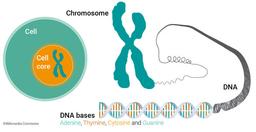
Chromosomes, DNA & Genes
Quiz by Ian Gabriel
Customize this quiz to suit your class
Instantly translate to 100+ languages
Tag the questions with any skills you have. Your dashboard will track each student's mastery of each skill.
Give this quiz to my class
The PASSING of traits from parents to offspring.
Genes
Inheritance
Heredity
Variation
What is another word for inherit?
Give
Passed
Receive
Roll
The PASSING of traits from parents to offspring.
What is another word for inherit?
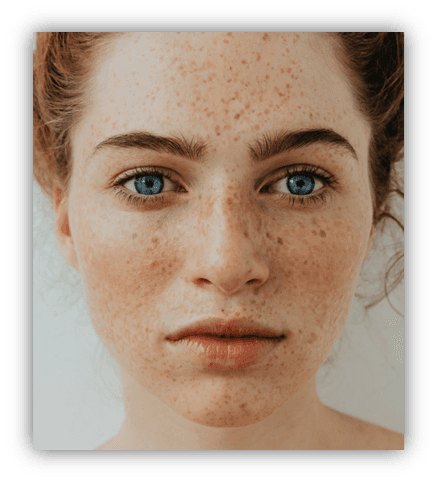
Why do we look different physically?
Some people can't do this.
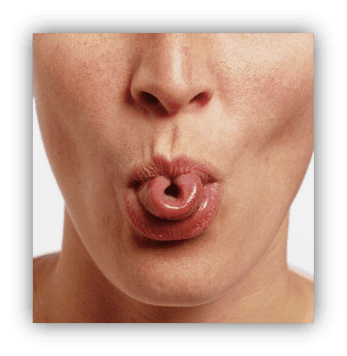
A trait that we can inherit from our parents.
Being able to ride a bike.
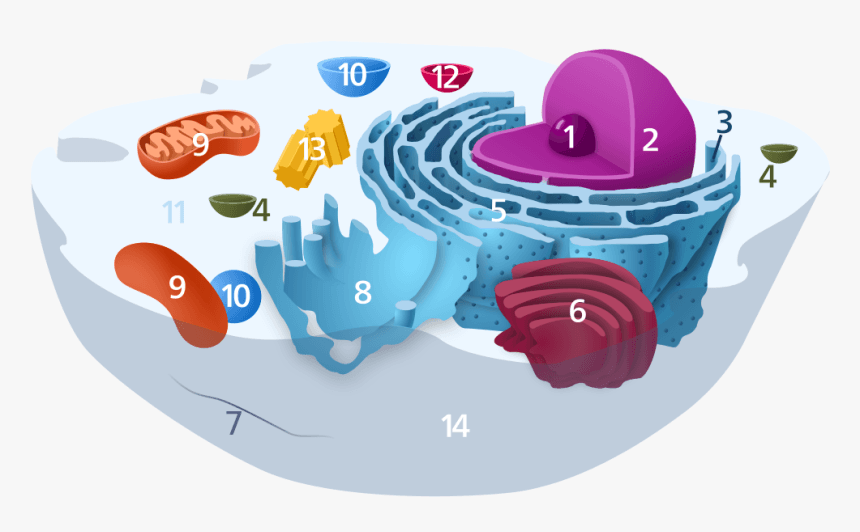
A cell component where we can find chromosomes and DNA.
Chromosome is a long stretch of ................................
Term used when genetic materials inside nucleus DO NOT condense and replicate.
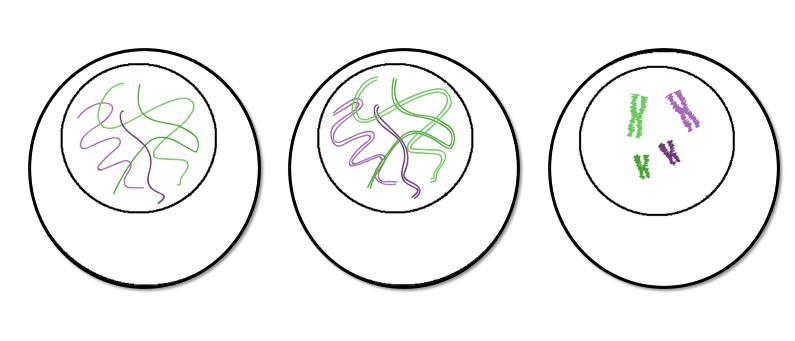
In human, every cell contains how many pairs of chromosomes?
In female, the 23rd pair is called?
In male, the 23rd pair is called?
What is the symbol for diploid number?
Haploid number means?
The following are examples of SOMATIC CELLS, except.
 Chromosomes, DNA and genesDNA, Genes and ChromosomesHeredity: Genes, DNA, & ChromosomesDNA, chromosomes, genes and the genomeAllele variation of a specific gene Artificial Insemination (AI) collecting and preserving semen from sires and using artificial means to introduce it to the dam’s reproductive tract Body Cells make up the organs and tissue of an animal and have chromosomes in pairs, called diploids Clustered Regularly Interspaced Short Palindromic Repeats (CRISPR) gene editing technology Codominance heterozygous individual expresses the phenotype of both alleles simultaneously Complete Dominance heterozygous gene pair is expressed the same as a homozygous dominant gene pair Crossbreeding sire from one breed and a dam from another, with each breed excelling in a certain characteristic to benefit the producer and the offspring Deoxyribonucleic Acid (DNA) stores genetic information and acts as a blueprint for all genetic material in the organism in two strands arranged in a double helix Dominant Alleles represent a dominant phenotype and are expressed as uppercase letters Embryo Transfer eggs are collected from a desirable female, fertilized and then implanted in several other females Expected Progeny Differences (EPDs) measure of the heritability of breeding values and traits Gametes fulfill the purpose of sexual reproduction, passing on half of the genetic code in the form of sperm and ovum and are also called haploids or sex cells Genotype organism's genetic composition, which determines its heredity potential and limitations Grading Up using a purebred sire to breed grade (unregistered or commercial) females Heritability degree to which offspring resemble their parent for a particular trait Heterosis (Hybrid Vigor) ability of crossbred animals to have the best traits from each parent Heterozygosity phenomenon of inheriting a different version of an allele from each biological parent Homozygosity phenomenon of inheriting the same version of an allele from each biological parent Inbreeding breeding of closely related animals with the goal of concentrating traits from a superior individual Incomplete Dominance dominant allele does not completely overcome the recessive Law of Dominance states genes will express themselves with the dominant gene appearing in the phenotype Law of Independent Assortment states unlinked or distantly linked gene pairs separate independently of other genes Law of Segregation states paired genes must segregate equally into gametes in a way so offspring have an equal likelihood of inheriting either factor Locus place on a chromosome where a gene is found Meiosis process of cellular reproduction of gametes and results in four genetically different daughter cells Mitosis process of cellular reproduction of body cells which creates two genetically identical daughter cells Outcrossing breeding highly unrelated individuals within a breed Phenotype all the observable characteristics of an organism resulting from the interaction of its genotype with its environment Polygenic Traits controlled by many gene pairs Punnett Square graphical representation of the possible genotypes of an offspring arising from a particular breeding, using letters to represent the genes Recessive Alleles non-dominant phenotypes which can still affect the appearance of an animal, but not as commonly, and are expressed as lowercase letters Ribonucleic Acid (RNA) replicates genetic information found in DNA to build proteins in processes known as transcription and translation Simply Inherited Traits typically controlled by one gene pairGenes, DNA, and ChromosomeHeredity , DNA , genes , chromsomes MEP 3/3LESSON 3 Characteristics of Living Things Learning Objectives • Describe each characteristic of life • Relate each characteristic of life with how first forms of life evolved What sets living things apart from nonliving things? Organisms are equipped with different characteristics that allow them to grow, adapt, survive, and perpetuate. These include the ability to metabolize, respond to stimuli, interact, and reproduce, among others What are the characteristics of life? Try to look at your surroundings and identify the living things that you see. You have probably identified a lot. Many scientists believe that there are more than 10 million kinds of living things that exist on Earth today. But the question is, how can something be considered living? There are certain characteristics that all living things exhibit: the characteristics of life. Living things are made up of cells. They metabolize, grow and develop, respond to stimulus, adapt to their environment, and reproduce. Living Things Are Made up of Cells All living things are made up of cells. Cells are the basic building blocks of all living things. Each cell contains materials that carry out basic life processes such as respiration. In the 1600s, an argument against the theory of spontaneous generation was made. Italian physician and biologist Francesco Redi disproved the theory that all living things come from nonliving things. Cells have different properties and characteristics. The cell theory describes the properties of all cells. There are three tenets of the cell theory: 1. The cell is the basic unit of life. 2. All living things are composed of one or more cells. 3. All cells arise from preexisting cells. The discovery of the cell is largely attributed to Robert Hooke. Upon examining a piece of cork using a microscope that he built, Hooke observed tiny compartments that he called "cells" (from the Latin word cella, meaning "little room"). Matthias Schleiden suggested that all structural parts of plants are made up of cells. In 1839, Theodore Schwann stated that along with plants, all animals were composed of cells. From these conclusions about plants and animals, advancement on the study of animal parts and functions began. In 1855, Rudolf Virchow included the idea that all cells came from preexisting cells. Some living things are made up of only single cells. Single-celled or unicellular organisms include bacteria, some protists, and some fungi. Even though composed of single cells, these organisms carry out all the functions necessary for life. Most living things such as animals and plants, are multicellular organisms. They are composed of many cells, which are grouped together and perform specific tasks in the body. In different organisms, cells also vary in sizes, shapes, parts, and functions. There are two kinds of organisms according to their cell structure, the prokaryotes and eukaryotes (figure 5-3). Prokaryotes are single-celled organisms that lack a membrane-bound nucleus, mitochondria, and all other organelles. Its name comes from the Greek words pro, which means "before," and karyon, which means "nut or kernel." Eukaryotes are organisms with cells that contain membrane-bound nucleus and other membrane-bound organelles. The nucleus of a eukaryotic cell contains the genetic material (DNA), enclosed by a nuclear envelope. Other membrane-bound organelles are mitochondria, Golgi apparatus, and chloroplast found in photosynthetic organisms such as algae and plants. There are also unicellular eukaryotes known as protozoa. All other eukaryotes are multicellular organisms, such as plants, animals, and fungi. Living Things Metabolize Essential chemical reactions in life can be best described as building up (anabolism) and breaking down (catabolism) processes. In anabolism, the substances needed by organisms to grow, store energy, and repair tissues are synthesized. In contrast in catabolism, some complex substances are broken down, releasing the energy stored in their molecules. This happens in food digestion. This chemical building up and breaking down processes are collectively called metabolism. Metabolism, from the Greek word metabole meaning "change," is the sum total of all the life-sustaining chemical reactions in living things. It allows living things to grow, maintain their structures and functions, and respond to stimuli. Living Things Grow and Develop Growth and development are not new concepts to many. In all living things, growth involves the increase in one's size or height. However, growth is not just an increase in physical structure. It also involves complex changes in an organism. Growth and development occur rapidly from younger stages of life to maturity. In humans, animals, and plants, distinct changes brought by growth and development can be dearly identified. Microorganisms such as bacteria also undergo growth and development until they reach their maximum size and maturity. A life span is the average length of time a aving thing can live. Living things have different life spans. Humans have average life spectancy of 60 to 70 years, while some plants, such as the narra trees, can live for more than 100. Living Things Respond to Stimuli All living things respond to stimuli the environment. This responsiveness Increases survivability. Stimulus (plural: uli) is any signal or change in he environment of an organism that produces a response or reaction from that organism. Responses to stimuli depend on an organism's need. Responding to stimuli also maintains homeostasis in living things. Homeostasis is the internal balance of a body system. This balance is needed for the proper function and regulation of the living thing's body. For example, when a person is in a warmer environment, the body sweats, keeping the body maintain a temperature suited for the normal function of the body. Living Things Interact No living thing can live alone. Interaction among organisms is simultaneously happening on Earth. From the smallest microorganisms to the biggest organism, and from the North Pole to the South Pole of Earth, all are connected in one living system. An ecosystem is formed when a community of organisms interacts with another community and with their environment. Many processes and interactions, such as in a feeding relationship, life cycle, and the exchange of gases between plants and animals, occur in the ecosystem. These are some of the important processes needed to maintain life on Earth. Living Things Reproduce The ability of living things to produce offspring of their kind is called reproduction. Reproduction is not an individual organism's need, rather, it is for the species' perpetuation. In some cases, animals become extinct because of their inability to reproduce their kind. Higher forms of plants and animals reproduce through sexual reproduction. Sexual reproduction involves the union of sex cells or gametes-the egg cell from a female organism and the sperm cell from a male organism. This union gives rise to a new individual with characteristics or traits from both parents. Other simple organisms, such as bacteria and plants, can reproduce asexually. These organisms give rise to a new individual from their body. A bacterial cell divided in two through asexual reproduction gives rise to new bacteria, as shown in figure 5-5. A yeast can form buds that later on become separate individual. Plants grow new plants using their stem, leaf, and roots. Both sexual and asexual reproductions have important functions. In both cases, the genetic material (DNA) is passed on from one generation to the next, ensuring the survival of the species on Earth. 1. Bacteria copy their DNA by starting at any point on the circular chromosomes. 2. The two copies of DNA attach to the inside wall of the bacterial cell. 3. The cell starts to divide, forming a new membrane and cell wall. 4. The bacterial cell splits into two separate cells, each with their own DNA. Living Things Adapt and Evolve All living things can adapt to their environment. This adaptation is necessary for rvival. Adaptation depends on the need of an individual. A polar bear, for example, would not be able to survive in an extremely cold environment without its capacity adapt. Adaptation is any response or reaction toward a stimulus that helps in the survival of an organism. A seed-eating bird will eventually eat a worm when there are seeds to be found. This change in food choice is therefore its adapting mechanism. Prolonged adaptation to certain environments may lead to the gradual evolution of the succeeding generations. Evolution is the gradual change in organisms over a long period in response to changing environment. Living Things Are Organized Life on Earth exhibits organization. The atom is the smallest unit of matter, lowed by molecules, which are combinations of atoms. When these molecules are grouped together, they form a cell. The cell is the basic unit of life. In multicellular organisms, such as plants and animals, cells are grouped as tissues to perform specific Functions. Different tissues can be grouped further and form organs. Organs in animals include the heart, brain, and lungs, among others. The organs form organ systems that makes the function of the body more complex and efficient. Organ systems form the whole organism. All living things exhibit organization, whether they are unicellular or multicellular organisms..