Tag the questions with any skills you have. Your dashboard will track each student's mastery of each skill.
Give this quiz to my class
Q 1/18
Score 0
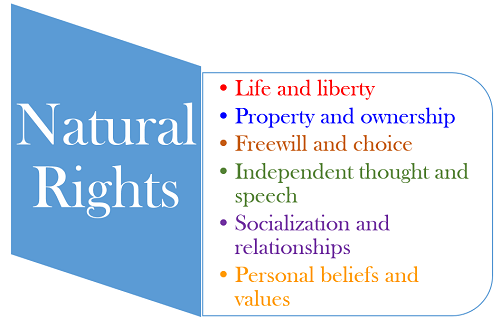
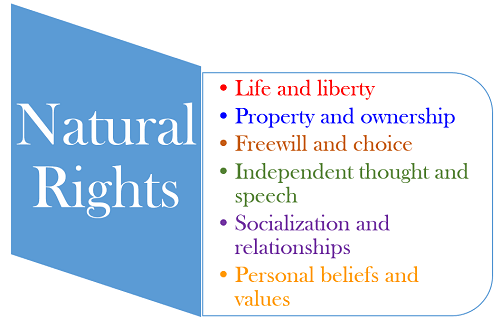
Which Enlightenment thinker believed in a social contract that lead to people having natural rights such as life, libery and property.
45
George Washington
Baron de Montesquieu
John Locke
Thomas Paine
Q 2/18
Score 0
What conclusion about the rule of law is BEST supported by this quote? "That in America the law is king. For as in absolute governments the king is law, so in free countries the law ought to be King: and there ought to be no other." Thomas Paine from Common Sense
60
Freedom and the rule of law cannot exist together.
People in position of power do not have to enact fair laws.
The rule of law is necessary for limited government.
The rule of law leads to tyranny.
18 questions
Q.
Which Enlightenment thinker believed in a social contract that lead to people having natural rights such as life, libery and property.
1
45 sec
Q.
What conclusion about the rule of law is BEST supported by this quote? "That in America the law is king. For as in absolute governments the king is law, so in free countries the law ought to be King: and there ought to be no other." Thomas Paine from Common Sense
2
60 sec
Q.
Which constitutional principle is BEST expressed by these headlines? Headlines: "Army General sentenced to three years for killing civilians." "Former Senator convicted of money laundering." "Local sheriff arrested for drunk driving."
3
60 sec
Q.
How did Thomas Paine's Common Sense influence the colonists' views?
4
45 sec
Q.
How did both the Magna Carta and the English Bill of Rights affect colonists' views on government?
5
45 sec
Q.
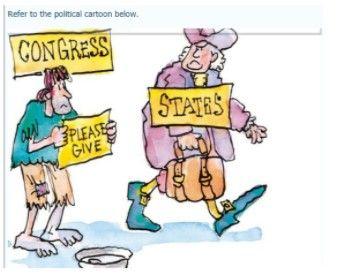
How did the U.S. Constitution address the problem shown in the cartoon? (use the image)
6
45 sec
Q.
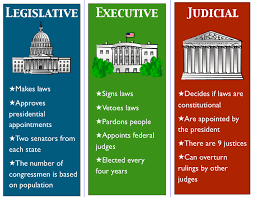
What is the importance of having separation of powers?
7
45 sec
Q.
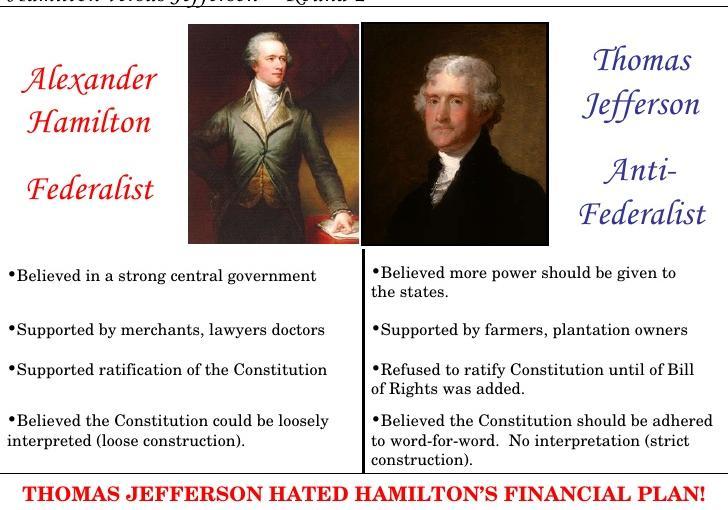
What led to the Anti-Federalists allowing the Constitution to be ratified?
8
45 sec
Q.
Which idea from John Locke influenced our Founding Fathers?
9
45 sec
Q.
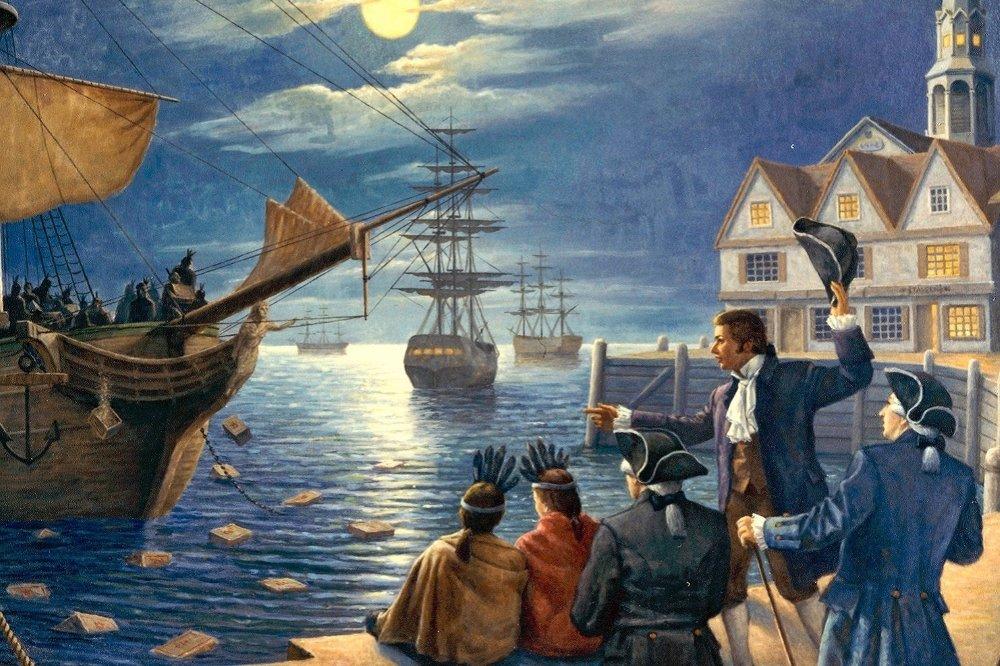
Complete the historical timeline in the correct chronological order, what comes next: 1. Parliament passes the Tea Act 2. The colonists boycott, smuggle and destroy the taxed British goods 3. Parliament passes the Intolerable Acts 4. ?
10
120 sec
Q.
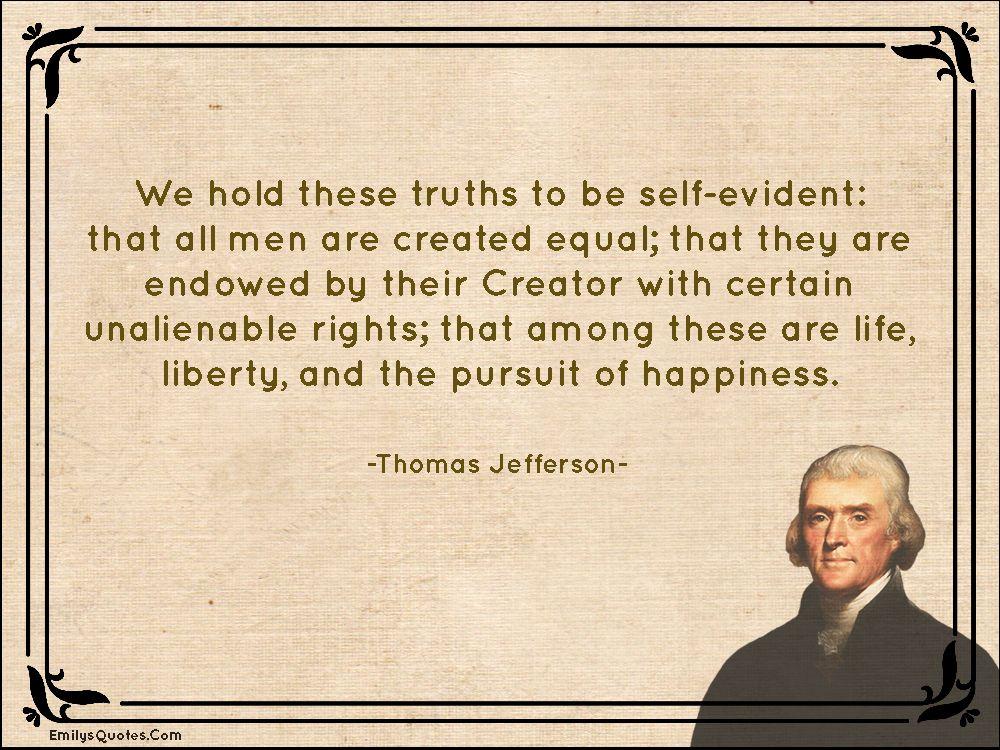
Use the quote above to help answer this question. How does the source of natural rights compare to the source of government power?
11
120 sec
Q.
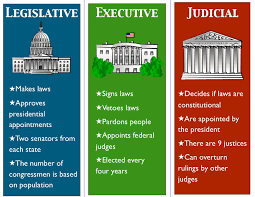
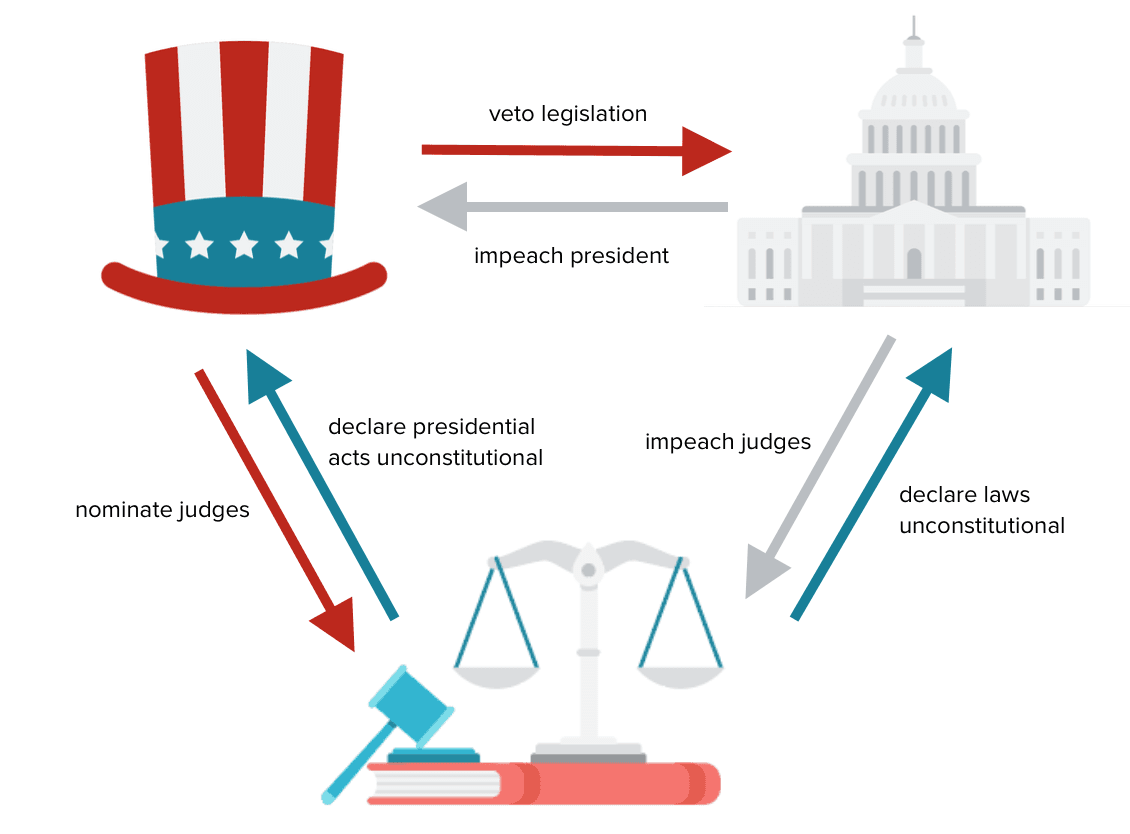
What is the purpose of the constitutional idea of checks and balances shown in the diagram above?
12
120 sec
Q.
During the debates over the ratification of the United States Constitution, Federalists and Anti-Federalists disagreed most strongly over which of the following?
13
120 sec
Q.
The idea of separation of powers can be attributed to which Enlightenment thinker?
14
45 sec
Q.
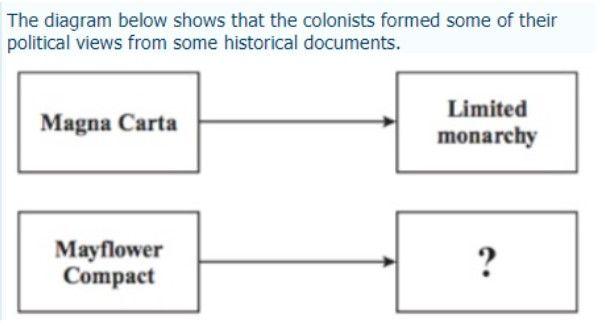
Use the diagram above to answer this question. Which idea completes the diagram?
15
45 sec
Q.
Which of the following BEST explains the purpose of the system of checks and balances?
16
45 sec
Q.
What was the Federalists’ strongest argument, at first, in favor of ratifying the Constitution?
17
120 sec
Q.
Why did the British increase taxation on the American colonies in the 1760’s?