Loading...


Civil War on Sunday Chapter 1-2
Quiz by Brendan Maxwell
Customize this quiz to suit your class
Instantly translate to 100+ languages
Tag the questions with any skills you have. Your dashboard will track each student's mastery of each skill.
Give this quiz to my class
What does the word dreary mean?


What is a field?
a place with water
an open area of land with no woods or buildings
a place with many buildings
a place with lots of trees
What does the word dreary mean?
What is a field?
______ is conflict between nations or groups
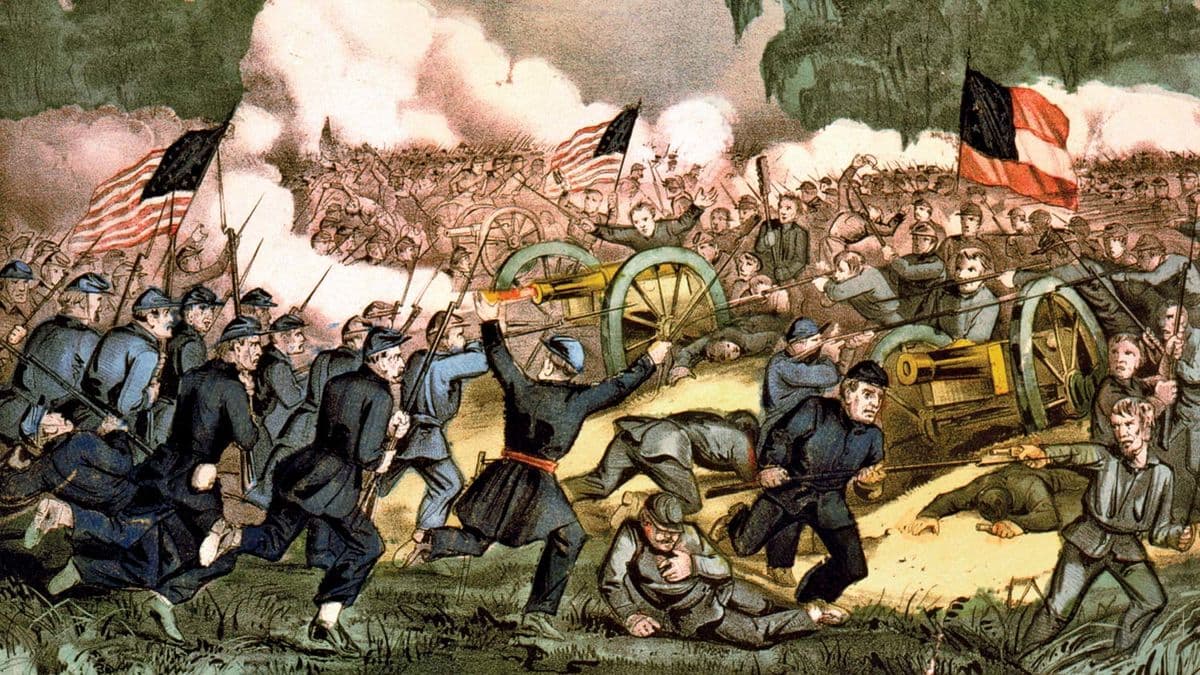
Peaceful = quiet and calm
A soldier is ...

If you are tired or worn out, you are ______.

What was the weather like on Sunday morning?

Why did Annie think the treehouse was back?
In Chapter 1, what did Morgan's note say?
What was the title of the book Annie was holding in chapter 1?
In chapter 1, Jack thinks war is not cool.
What does the word cruel mean?
What soldiers do Annie and Jack see in the field?
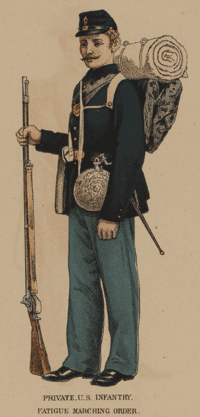
The Union soldiers wear red uniforms.
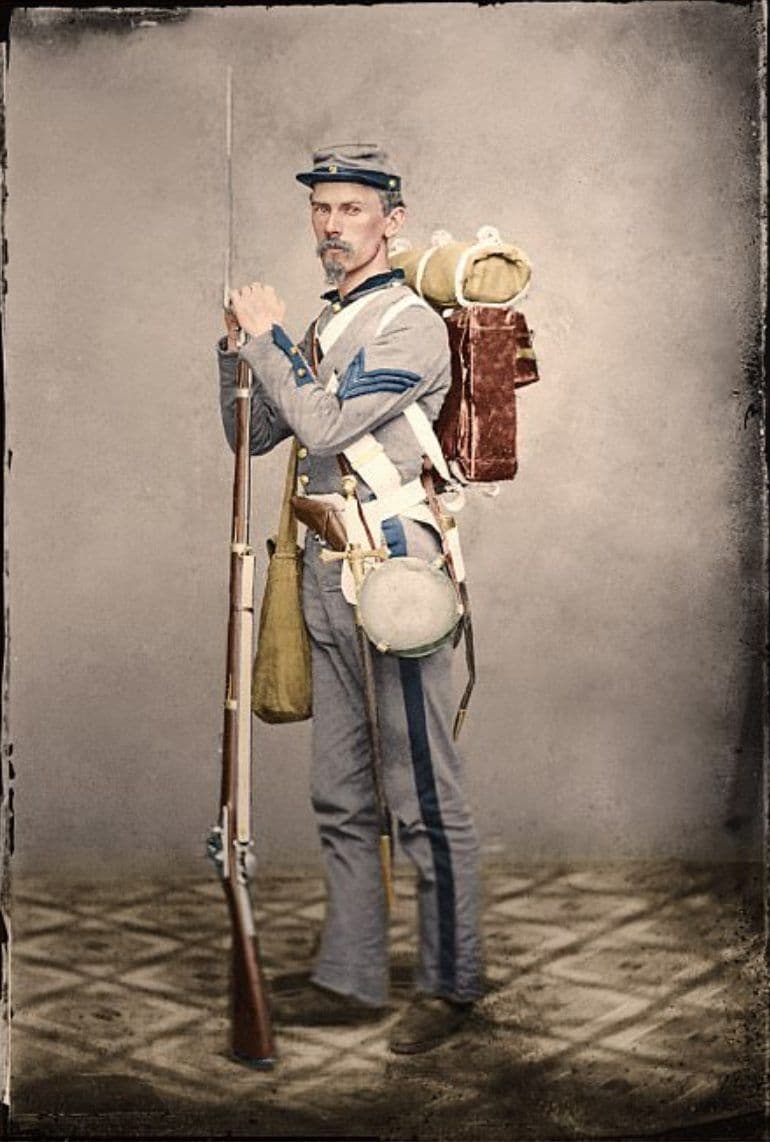
The confederate soldiers wear grey uniforms.
 Civil War on Sunday Chapters 3-6Impact of the Civil War on Texas Economy and Society - Starter QuizThe Impact of the Civil War on South Carolina - Starter QuizThe Impact of the Civil War on South Carolina - Exit QuizCivil War Amendments and Their Impact on South Carolina Assessment1.1945-1949: The immediate years after the Second World War ● At the end of 1945, Mao Zedong had come to see the USA as the greatest threat to his aspirations. a. He understood that East Asians were looking to the USA as the true liberator from Japanese imperialism. b. The USA’s support for the Kuomintang(KMT) and the restoration of U.S. authority in formerly Japanese Manchuria clashed with the CCP’s plans to use the region for its own needs in the impending civil war between the CCP and the GMD. ■ To compound matters, while the KMT was recognised internationally as the official government in China, Mao and the CCP saw the party as a puppet of U.S. imperialism. ● While Mao saw the USA as the greater threat to the CCP’s plans, Soviet actions also frustrated him. a. The USSR provided minimal and incoherent support for the Chinese Communists in Yan’an and Manchuria. b. Stalin also attempted to extract territorial and economic concessions from the Guomindang government in the Friendship and Alliance Treaty China signed in August 1945 under American and Soviet pressure in exchange for Soviet entry into the Second World War against Japan. ● The emerging superpower conflict over Europe and over American intervention in the impending civil war in China led to Mao’s ideological perception of the 8838/01 H1 History Paper 1 Theme II: The Cold War and East Asia (1945-1991) \ Page | 8 USA as an aggressive imperialist power that was hostile towards other countries, especially the USSR and China. ● In 1946, Mao promoted the theory of the intermediate zone, which envisioned a global united front against American imperialism. a. Mao saw the emerging superpower conflict as an American-Soviet contest for the intermediate zones, the capitalist, colonial and semi- colonial countries of West Europe, Africa, and Asia. b. Mao believed that the USSR was the defender of world peace. c. The intermediate zone, which included China, would not be part of the socialist camp. d. Despite the tremendous potential that U.S. aid held for China’s reconstruction, Mao’s ideological worldview and the impending civil war against the Guomindang prevented him from seeking normalised relations with the USA. In 1949, Mao decided to lean towards the side of the USSR despite two decades of unreliable support from them. e. Mao saw the anti-bourgeois campaigns in East Europe as evidence that China should isolate capitalist-bourgeois forces within it.2 f. Stalin had expelled Yugoslavia from the socialist camp as its leader, Tito was seen to have directly challenged Stalin’s authority. ■ Mao thus saw it as imperative to stress close unity to the USSR lest he was seen as a second Josip Broz Tito. At the same time, Mao sought a loose partnership with the USSR because Mao believed that China should preserve a high measure of self- reliance and zili gengsheng (自力更生) (regeneration through one’s own efforts). ● When the People’s Republic of China was formed on 1 October, 1949, relations between China’s and the USSR’s communists had improved substantially. a. However, the Chinese Communist Party (CCP) was also aware that the USSR never treated Chinese interests as a priority. What the CCP failed to fully understand was that Stalin ruled East Europe much like it was his empire and how this would have implications for China. b. In Mao’s first visit to the USSR in December 1949, Stalin was non- committal regarding the interests raised by the Chinese, and treated Mao as an underling as he feared that closer relations with the PRC would cause the USSR to lose privileges gained from the KMT. _________________________ 2 What Mao did not realise at that point was that the anti-bourgeois campaigns in East European countries were part of Stalin’s intentional design to consolidate the power of communists in them. 8838/01 H1 History Paper 1 Theme II: The Cold War and East Asia (1945-1991) \ Page | 9 A note on Sino-American relations 2. Early 1950: The USA’s hands-off policy towards Taiwan begins to change ● By early 1950, the Truman administration had written off Taiwan and believed it was only a matter of time before the island fell to the PLA. ● Two events in early 1950 changed the USA’s position on East Asia. ○ The formation of the USSR-PRC alliance in February 1950 ○ The North Korean invasion of South Korea in June 1950 3. 1950: The Sino-Soviet Friendship, Alliance and Mutual Assistance Treaty ● Signed on 14 February, 1950. 3.1Implications for Sino-Soviet relations ● Stalin saw it as a means to get concessions that he had failed to get from the Kuomintang (KMT) government in 1945. ● For Mao and the newly founded People’s Republic of China (PRC), the alliance would provide security against U.S. imperialism and allow the PRC to get economic aid for reconstruction from the USSR. ● The Chinese realised soon after the 1950 treaty had been signed that the Soviet Union was intent on exploiting the agreement in its own favour. 8838/01 H1 History Paper 1 Theme II: The Cold War and East Asia (1945-1991) \ Page | 10 ● The Sino-Soviet alliance was officially directed against Japanese militarism and its allies, especially the USA. ● The Sino-Soviet alliance comprised three elements: party, military and economic relations. ○ Party: The Chinese Communist Party (CCP) was included in the customs of communist party internationalism, such as regular exchange of party delegations to congresses of the fraternal parties in Stalin’s socialist camp. ■ This move was meant to bring the PRC’s ideological beliefs about communism into greater alignment with the USSR’s. ○ Military: The alliance was supposed to provide the newly formed and weak PRC with a strategic deterrent and military aid against the USA on three fronts: Guomindang-held Taiwan, divided Korea, and Vietnam where France attempted to reestablish its colonial control. ■ Convinced that the USA would aggressively seek ways to undermine the CCP-led PRC through Taiwan, Korea and Vietnam, Mao sought an active defence. ● While in Moscow, Mao unsuccessfully asked Stalin to provide military assistance for the liberation of Taiwan. ● At the beginning of 1950, the PRC delivered large-scale military aid to Hanoi. The PRC was the first country to grant the communist-led Democratic Republic of Vietnam diplomatic recognition on 18 January 1950; Mao persuaded Stalin to do so on 30 January 1950. ● The PRC committed itself to North Korea, where Mao saw the commitment to North Korea both as a defence against U.S. imperialism and as support for a fellow communist country. ○ Economic: During Mao’s first stay in Moscow, Stalin had personally promised the delivery of fifty projects for primary industrialisation. ■ The agreement also led to a series of supplementary ones, such as a US$ 300 million loan that the PRC would repay with a mixture of strategic materials, rubber, agricultural products, goods for daily use and hard currency. ■ Significantly, Stalin used Soviet military and economic aid to extract concessions similar to those he failed to get from the Guomindang government in 1945. ■ The USSR and PRC would disagree on the pace and extent of the PRC’s planned development. ● In the last five weeks of Stalin’s life in early 1953, he attempted to pressure the PRC to reduce the planned 8838/01 H1 History Paper 1 Theme II: The Cold War and East Asia (1945-1991) \ Page | 11 development speed to a mere annual growth of 13-14 percent, and to plan individual projects in detail beforehand. These moves would potentially result in the PRC’s economy growing at a slower rate than initially projected. ● However, after Stalin’s death on 5 March 1953, the PRC’s Zhou Enlai decided to use his visit of condolence to the USSR to press forward negotiations. ○ When talks resumed in 1 April 1953, Beijing pressed for 150 Soviet industrial projects, but Moscow reduced them to 91 on the basis of insufficient data provided by the Chinese. ■ The economic disarray after China’s civil war and the economic pressures that came with the Korean War influenced recovery and reconstruction in the early years of the PRC. ● Despite the PRC being unable to tap into Soviet economic assistance immediately, mutual trade between China and the USSR nevertheless increased 6.5 times from 1950 to 1956. ● Together with the 50 projects promised by Stalin in 1950, the final version of the First FYP for the PRC included 141 Soviet and 68 East European projects in a total of 649 planned. Three thousand Soviet advisers sent to China in subsequent years were directly linked to the First FYP. ● By 1955, over 60 percent of China’s goods exchange was with the USSR. ● Soviet economic assistance to China added up to the largest foreign development venture in the socialist camp ever. ○ The total number of planned projects amounted to between 300 and 360 projects. ○ However, the number of total finished projects ranged between 134 and 150. ● Transfers of knowledge and expertise were important to China’s economic development. ○ A study on Soviet experts counts 1,445 political advisers and 9,313 technical specialists sent to China until their sudden withdrawal in mid-1960. ■ For political reasons, the gradual withdrawal of advisers began after late 1956.Juneteenth is an important holiday in American history. It honors the day in 1865 when enslaved people in Texas found out they were free. This day marked a major milestone on the path to ending slavery throughout the U.S. On June 19, 1865, Major General Gordon Granger of the Union army arrived in Galveston, Texas. He informed the enslaved people of Texas about the Emancipation Proclamation. The Emancipation Proclamation was a speech made by President Abraham Lincoln two years earlier, on January 1, 1863. It stated that enslaved people in many of the southern states were now free. President Lincoln gave this speech during the height of the Civil War. But by the time the Union soldiers made it to Texas, the Civil War had ended. It took over two years for this message to reach the people still enslaved in Texas! More than 250,000 people celebrated their newfound freedom on June 19. Soon after, many of these freed people decided to migrate to northern states to start a new life. But they continued to celebrate Juneteenth year after year and to share this holiday with their community. In 1872, a group of formerly enslaved people raised money to buy 10 acres of land near Houston, Texas. They named this land ‘Emancipation Park’. To this day, many Americans celebrate Juneteenth in this park to remember their history. Texas also holds a special parade to celebrate this day. Thousands of people participate and enjoy learning and celebrating African American culture and history. They fly the Juneteenth flag. The Juneteenth flag has a white star that symbolizes freedom and new hope for African Americans. Juneteenth is a day to remember the triumphs and struggles of African Americans. Even though enslaved people in Texas learned of their freedom on Juneteenth, they still faced violence, discrimination and inequality. That is why Juneteenth celebrations are so important to many Americans. Juneteenth recognizes the hardships of gaining freedom and the importance of remembering Black history in the United States.Slide 1: • Title slide with the presentation topic: "Understanding Context in Film Analysis" Slide 2: • Introduction to the importance of context in film analysis. • Engaging visuals to capture students' attention. • Emphasize that context provides a deeper understanding of a film's meaning. Slide 3: • Definition of Context: • Context refers to the surrounding circumstances or conditions that influence the creation, interpretation, and reception of a film. • Analyzing context helps uncover layers of meaning, societal influences, and enhances critical thinking skills. Slide 4: • Historical Context: • Definition: Historical context refers to the specific time period in which a film was created and/or set. • Importance: Understanding the historical context helps us connect the film to its time period and comprehend the influence of historical events, social norms, and cultural movements. • Example: Analyzing the historical context of "Gone with the Wind" (1939) allows us to appreciate how the film reflects the post-Civil War era in the United States and addresses themes of race, class, and gender. Slide 5: • Social Context: • Definition: Social context refers to the social structures, norms, and values prevalent during the time of a film's creation and/or setting. • Importance: Examining the social context helps us understand how societal attitudes and values shape the film's narrative, characters, and themes. • Example: Analyzing the social context of "The Breakfast Club" (1985) reveals how the film explores the social dynamics and stereotypes within a high school setting, reflecting the cultural climate of the 1980s. Slide 6: • Political Context: • Definition: Political context refers to the political climate and ideologies present during the time of a film's creation and/or setting. • Importance: Understanding the political context helps us uncover political messages, power dynamics, and social commentary within the film. • Example: Examining the political context of "V for Vendetta" (2005) allows us to appreciate how the film critiques totalitarianism and explores themes of government control and individual freedom. Slide 7: • Authorial/Directorial Context: • Definition: Authorial/Directorial context refers to the background, artistic choices, and intentions of the director or filmmaker. • Importance: Analyzing this context helps us understand the director's unique vision, influences, and storytelling techniques, which shape the film's style and thematic focus. • Example: Exploring the authorial/directorial context of "Pulp Fiction" (1994) reveals Quentin Tarantino's nonlinear storytelling, pop culture references, and exploration of morality and violence. Slide 8: • Importance of considering multiple contexts together: • Analyzing multiple contexts together provides a comprehensive understanding of a film's meaning and impact. • Exploring the interplay between historical, social, political, and authorial/directorial contexts deepens our insights and enhances critical analysis skills. Slide 9: • Case studies: • Present two different films as case studies. • Example 1: Analyzing the historical context, social context, and authorial/directorial context of "Black Panther" (2018) provides insights into its exploration of Afrofuturism, cultural identity, and representation. • Example 2: Examining the historical context, political context, and authorial/directorial context of "Citizen Kane" (1941) reveals its commentary on power, media, and the American dream. Slide 10: • Summary slide: • Recap the main points about context in film analysis. • Encourage students to apply these concepts to their own analysis.