Loading...


Class work on STOICHIOMETRY1
Quiz by Philipson Hub
Customize this quiz to suit your class
Instantly translate to 100+ languages
Tag the questions with any skills you have. Your dashboard will track each student's mastery of each skill.
Give this quiz to my class
A molecule contains Carbon, Hydrogen and oxygen. For every carbon atom there are twice as many hydrogen atom but the same number of oxygen atom. What is the formula of the molecule?
C4H8O2
C2H2O2
C2H4O2
C2H4O2
Theobromine is a stimulant found in chocolate and in tea leaves and it is closely related to caffeine, the stimulant found in coffee. What is the formula of Theobromine?
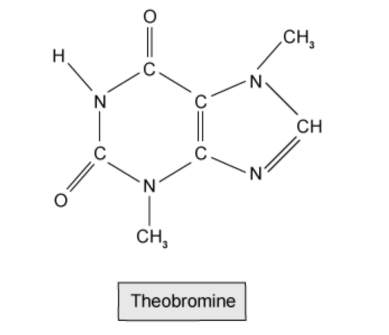
C6H5N4O2
C7H8N3O2
C7H8N4O2
C7H7N4O2
A molecule contains Carbon, Hydrogen and oxygen. For every carbon atom there are twice as many hydrogen atom but the same number of oxygen atom. What is the formula of the molecule?
Theobromine is a stimulant found in chocolate and in tea leaves and it is closely related to caffeine, the stimulant found in coffee. What is the formula of Theobromine?

A compound contains two atoms of oxygen and one atom of calcium. it also contains sufficient number of hydrogen so that the overall charge on the molecule is neutral. What is the molecular formula of the compound?
What is the balanced equation for the reaction between methane and oxygen?
 CLASS WORK ON SENSE ORGANSClass Work 6 questions on graphs. Professional Standards: Being on time is important because it shows you can follow rules like in a job. It helps you learn good habits for your future career. Shape Enhancing Learning Experience: When you arrive on time, you don't miss the start of the lesson. This helps you understand what is being taught and keeps the class running smoothly. Reducing Disruptions: If you are late, it can interrupt the lesson and make it harder for everyone to learn. Being on time helps everyone focus better . Showing Responsibility and Self-Discipline: Being on time shows you can manage your time well. This is a good skill for school and life . Supporting Academic Success: Coming to class on time helps you do better in college. You can join in discussions and finish your work on time . Building a Positive Learning Environment: When everyone is on time, the class is more positive and respectful. This makes learning more enjoyable for everyone. Identifying and Addressing Barriers: Regular attendance helps tutors notice if you have any problems that make you late. They can then help you solve these problems . Promoting Equity and Inclusivity: Being on time ensures everyone has the same chance to learn and succeed. It makes the classroom fair for all students . Conclusion: Being on time is important for learning well and developing good habits. It helps you and your classmates have a better learning experience and prepares you for the future. A BAD CASE OF THE STRIPES By David Shannon Parts(18): Camilla Narrator 1 Narrator 2 Narrator 3 Narrator 4 Mr. Harms Mother Father Dr. Bumble Old Woman Environmental Therapist Dr. Grop Dr. Gourd Dr. Sponge Mr. Mellon Dr. Cricket Dr. Young <><><><><><><><><><><><><><><><><><><><><><><><><><><><><><><><><><><><><><><><><><><><><><><><><> Narrator 1: A BAD CASE OF THE STRIPES By David Shannon Narrator 2: Camilla Cream loved lima beans. But she never ate them. Narrator 3: All of her friends hated lima beans, and she wanted to fit in. Camilla always worried about what other people thought of her. Narrator 4: Today she was fretting even more than usual. It was the very first day of school, and she couldn't decide what to wear. There were so many people to impress! Narrator 1: She tried on forty-two outfits, but none seemed quite right. She put on a pretty red dress and looked in the mirror. Then she screamed. Narrator 2: Her mother ran into the room, and she screamed, too. Mother: "Oh my heavens! You're completely covered with stripes!" Narrator 3: she cried. This was certainly true. Camilla was striped from head to toe. She looked like a rainbow. Narrator 4: Mrs. Cream felt Camilla's forehead. Mother: "Do you feel all right?" Narrator 1: she asked. Camilla: "I feel fine, but just look at me!" Narrator 2: Camilla answered. Mother: "You get back in bed this instant. You're not going to school today." Narrator 3: her mother ordered. Camilla was relieved. She didn't want to miss the first day of school, but she was afraid of what the other kids would say. And she had no idea what to wear with those crazy stripes. Narrator 4: That afternoon, Dr. Bumble came to examine Camilla. Dr. Bumble: "Most extraordinary! I've never seen anything like it! Are you having any coughing, sneezing, runny nose, aches, pains, chills, hot flashes, dizziness, drowsiness, shortness of breath, or uncontrollable twitching?" Narrator 1: he asked. Camilla: "No, I feel fine." Narrator 2: Camilla told him. Dr. Bumble: "Well then, I don't see any reason why she shouldn't go to school tomorrow. Here's some ointment that should help clear up those stripes in a few days. If it doesn't, you know where to reach me." Narrator 3: Dr. Bumble said, turning to Mrs. Cream. And off he went. Narrator 4: The next day was a disaster. Everyone at school laughed at Camilla. They called her "Camilla Crayon" and "Night of the Living Lollipop." Narrator 1: She tried her best to act as if everything were normal, but when the class said the Pledge of Allegiance, her stripes turned red, white, and blue, and she broke out in stars! Narrator 2: The other kids thought this was great. One yelled out, Narrator 3: "Let's see some purple polka dots!" Narrator 4: Sure enough, Camilla turned all purple polka-dotty. Someone else shouted, Narrator 1: "Checkerboard!" Narrator 4: and a pattern of squares covered her skin. Soon everyone was calling out different shapes and colors, and poor Camilla was changing faster than you can change channels on a T.V. Narrator 2: That night, Mr. Harms, the school principal, called. Mr. Harms: "I'm sorry, Mrs. Cream, I'm going to have to ask you to keep Camilla home from school. She's just too much of a distraction, and I've been getting phone calls from the other parents. They're afraid those stripes may be contagious." Narrator 3: he said. Camilla was so embarrassed. She couldn't believe that two days ago everyone liked her. Now, nobody wanted to be in the same room with her. Narrator 1: Her father tried to make her feel better. Father: "Is there anything I can get you, sweetheart?" Narrator 2: he asked. Camilla: "No, thank you," Narrator 3: sighed Camilla. What she really wanted was a nice plate of lima beans, but she had been laughed at enough for one day. Dr. Bumble: "Hmm, well, yes, I see. I think I'd better bring in the Specialists. We'll be right over.” Narrator 4: said Dr. Bumble to Mr. Cream on the phone. About an hour later, Dr. Bumble arrived with four people in long white coats. He introduced them to the Creams. Dr. Bumble: "This is Dr. Grop, Dr. Sponge, Dr. Cricket, and Dr. Young." Narrator 1: Then the Specialists went to work on Camilla. They squeezed and jabbed, tapped and tested. It was very uncomfortable. Dr. Grop: "Well, it's not the mumps." Dr. Sponge: "Or the measles." Dr. Cricket:"Definitely not chicken pox." Dr. Young: "Or sunburn." Narrator 2: replied the Specialists. Specialists:"Try these. Take one of each before bed." Narrator 4: said the specialists. They each handed her a bottle filled with different colored pills. Then they filed out the front door followed by Dr. Bumble. Narrator 1: That night, Camilla took her medicine. It was awful. Narrator 2: When she woke up the next morning, she did feel different, but when she got dressed, her clothes didn't fit right. She looked in the mirror, and there, staring back at her, was a giant, multi-colored pill with a face on it. Narrator 3: Dr. Bumble rushed over as soon as Mrs. Cream called. But this time, instead of the Specialists, he brought the Experts. Narrator 4: Dr. Gourd and Mr. Mellon were the finest scientific minds in the land. Once again, Camilla was poked and prodded, looked at and listened to. Narrator 1: The Experts wrote down lots of numbers. Then they huddled together and whispered. Dr. Gourd finally spoke. Dr. Gourd: "It might be a virus," Narrator 2: he announced with authority. Suddenly, fuzzy little virus balls appeared all over Camilla. Mr. Mellon: "Or possibly some form of bacteria," Narrator 3: said Mr. Mellon. Out popped squiggly little bacteria tails. Dr. Gourd: "Or it could be a fungus," Narrator 4: added Dr. Gourd. Instantly, Camilla was covered with different colored fungus blotches. The experts looked at Camilla, then each other. Experts: "We need to go over these numbers again back at the lab. We’ll call you when we know something," Narrator 1: said the Experts. But the Experts didn't have a clue, much less a cure. Narrator 2: By now, the T.V. news had found out about Camilla. Reporters from every channel were outside her house, telling the story of "The Bizarre Case of the Incredible Changing Kid." Narrator 3: Soon a huge crowd was camped out on the front lawn. Narrator 4: The Creams were swamped with all kinds of remedies from psychologists, allergists, herbalists, nutritionists, psychics, an old medicine man, a guru, and even a veterinarian. Narrator 1: Each so-called cure only added to poor Camilla's strange appearance until it was hard to even recognize her. She sprouted roots and berries and crystals and feathers and a long furry tail. But nothing worked. Narrator 2: One day, a woman who called herself an Environmental Therapist claimed she could cure Camilla. She said, Environmental Therapist: "Close your eyes, breathe deeply, and become one with your room." Camilla: "I wish you hadn't said that," Narrator 3: Camilla groaned. Slowly, she started to melt into the walls of her room. Her bed became her mouth, her nose was a dresser, and two paintings were her eyes. The therapist screamed and ran from the house. Mother: "What are we going to do? It just keeps getting worse and worse!" Narrator 4: cried Mrs. Cream. She began to sob. Narrator 1: At that moment, Mr. Cream heard a quiet little knock at the front door. He opened it, and there stood an old woman who was just as plump and sweet as a strawberry. Old Woman: "Excuse me, but I think I can help." Narrator 2: she said brightly. Narrator 3: She went into Camilla's room and looked around. Old Woman: "My goodness, what we have here is a bad case of the stripes. One of the worst I've ever seen!" Narrator 4: she said with a shake of her head. She pulled a container of small green beans from her bag. She said, Old Woman: "Here. These might do the trick." Mother: "Are those magic beans?" Narrator 1: asked Mrs. Cream. The old woman replied, Old Woman: "Oh my, no, there's no such thing. These are just plain old lima beans. I'll bet you'd like some, wouldn't you?" Narrator 2: she asked Camilla. Camilla wanted a big, heaping plateful of lima beans more than just about anything, but she was still afraid to admit it. She said, Camilla: "Yuck! No one likes lima beans, especially me!" Old Woman: "Oh, dear, I guess I was wrong about you." Narrator 3: said the old woman sadly. She put the beans back in her bag and started toward the door. Narrator 4: Camilla watched the old woman walk away. Those beans would taste so good. And being laughed at for eating them was nothing, compared to what she'd been going through. She finally couldn't stand it. Camilla: "Wait! The truth is...I really love lima beans." Narrator 1: she cried. The old woman smiled, popping a handful of beans into Camilla's mouth, and said, Old Woman: "I thought so." Camilla: "Mmmmmmm," Narrator 2: said Camilla. Suddenly the branches, feathers, and squiggly tails began to disappear.Then the whole room swirled around. When it stopped, there stood Camilla, and everything was back to normal. Camilla: "I'm cured!" Narrator 3: she shouted. The old woman said, Old Woman: "Yes, I knew the real you was in there somewhere." Narrator 4: She patted Camilla on the head and went outside and vanished into the crowd. Narrator 1: Afterward, Camilla wasn't quite the same. Narrator 2: Some of the kids at school said she was weird, but she didn't care a bit. Narrator 3: She ate all the lima beans she wanted, and she never had even a touch of stripes again.Rules for this Class 1. Respect yourself, your classmates and your teacher. Refrain from using inappropriate language. Keep your hands to yourself. Raise your hand to speak. Listen to others and respect what they have to say. 2. Uniforms Must be worn at all times, you will not be allowed to enter class without one. Students will be sent to Jose or Maria to receive a uniform. 3. Seating Sit in the front of the class unless there are no available seats and sit in assigned seats. 4. Cleanliness Always clean up after yourself and return all borrowed items back to their rightful place. 5. Technology Protocols: Do not use the laptop other than for classwork. Use of Headphones and Phones are forbidden. 6. Materials for class Always come to class prepared with a notebook, folder, pens or pencil. 7. Plagiarism Copying other people’s work is forbidden. You must cite Direct Quotes or paraphrase words that aren’t your own. Colleges will suspend you for cheating. 8. Bathroom No Bathroom or Water the first ten minutes and last ten minutes of class. Students must sign the bathroom log before leaving and after they come back. 9. Always be engaged during class time. Participation Classwork Working with others 10. Follow Directions Always listen for directions or read the direction on the smartboard as well as your worksheet for directions. Electrostatics The section of CBSE Class 12 Physics electrostatic potential and capacitance notes mainly deals with the in-depth analysis of electromagnetic phenomena when they are not performing any movements. Additionally, it is divided into ten further sub-topics to study the companion processes of reaching the state. These are - 1. Electric charge In this section of Physics ch 2 Class 12 notes, you get to learn about the basic features of electric charge and its expression in Physics. Along with its basics, the sections help to understand the full potential of charge. Different aspects of Charge included in Class 12 Physics Chapter 2 notes are - Definition Type: Positive and Negative Charge Unit and dimensional formula Point Charge Properties of Charge Comparison of Charge and Mass Methods of Charging Electroscope 2. Coulomb's Law Force is created when charges of opposite signs attract each other, and they repulse if the signs are the same. Coulomb's law tries to define this phenomenon through a mathematical formula, explicitly mentioned in Physics Class 12 notes Chapter 2. Moreover, there is key information about the variation of the constant k and its effect on a medium. Coulomb's law's vector form and the principle of superimposition are also explained in ch 2 Physics Class 12 notes. (Image will be uploaded soon) 3. Electric Field As stated in Class 12 Physics Chapter 2 notes, every positively or negatively charged particle has their respective electric fields. It feels a force at the time of interaction which might be attraction or repulsion. As it arises from electric charge, it is crucial to know about its different parts like - Electric field intensity Relation between electric force and electric field Super imposition of electric field Point charge Continuous charge distributions Properties of Electric Field Lines Motion of Charged Particles in an Electric field Learning more about the electric field from electric potential and capacitance notes Class 12 helps a student to get a grasp of upcoming chapters. 4. Electric Potential Energy When energy helps a charge to move from an electric field, it is known as the Electric Potential Energy. This section of electrostatic chapter Class 12 notes requires a student to study the Electron volt (eV), and the potential energy that an n number of charges can hold. 5. Electric Potential This section of Class 12 Physics Chapter 2 notes focuses on in-depth learning of Electric Potential or Voltage. Basically, it defines the potential movement of energy. 6. Relation between Electric Field and Potential Apart from knowing more about the relationship between the two values, Physics Class 12 Chapter 2 notes also discuss equipotential surfaces. 7. Electric Dipole Essentially, 'Dipoles' are two opposite points of charge represented with q and –q, with their distance between each other being 2a. Electric Dipoles are crucial in your study of Physics Class 12 Chapter 2 notes to learn more about electric fields and their potential. Additionally, Class 12 Physics Chapter 2 notes focus on the influence of electric dipoles on a uniform electric field mainly through Force and Torque, Work, and Potential Energy. In the last part of Electrostatics, further focus is on using the formulas to their fullest potential. It includes subsections of Electric Field, Electric Potential Energy, Electric Potential, and Electric Dipole. In the notes for electrostatic potential and capacitance, you will find proper solutions accompanied by clear and crisp diagrams for better understanding. 8. Gauss's Law Apart from just discussing the Gauss's Law, in Physics Class 12 ch 2 notes there is a thorough explanation of its properties and applications. The Gauss' Law states that net electric flux passing through a hypothetical closed surface is equal to the net electric charge present within the same closed surface. Being a broad part of the whole chapter, you may need to spend a little more time on it. Moving forward, it starts discussing the properties of conductors in relation to Gauss's Law. The Class 12 Physics notes Chapter 2 perfectly defines the journey to Gauss' Law from Coulomb's Law. Here is the Gauss's Law present in the Class 12 Physics ch 2 notes, (image will be uploaded soon) 9. Capacitors There is a dedicated section about Capacitors in the Class 12 Physics Chapter 2 notes elucidating its functions and importance as storage of potential electric energy. After explaining the structure of a capacitor, it points out the different types, parallel plate, spherical and cylindrical. The section of Chapter 2 notes of Physics Class 12 is further divided into subheads like: Properties of an ideal battery Grouping of capacitors Simple circuits (Series and Parallel) Dielectric Van de Graaff generator Combination of drops Charge distribution method Wheatstone Bridge-based circuit Extended Wheatstone Bridge Infinite network of capacitors Redistribution of charge between two capacitors Vedantu prepares the Class 12 Physics Chapter 2 notes with help from subject matter experts. In the PDF, you get a comprehensive idea of the topic along with potential answers to the most asked questions. Furthermore, the detailed explanation on each section and subsections are written in a simple language allows a student to ace their exams with wholesome knowledge. These Physics Chapter 2 Class 12 notes are going to be one of the best supplementary study materials besides a student’s textbooks. Visit the Vedantu website or download the app to get your hands on all important notes! Important Questions A charge of 4 × 10⁻⁸C is uniformly distributed on the surface of a spherical conductor, having a radius of 15 cm. Determine the electric field just outside this sphere at a point that is 15 cm from the centre of this sphere. Determine the capacitance given that the distance between the two plates has been reduced by half and the parallel plate capacitor holds a capacitance of 20 pF (where 1pF = 10-12 F) having air between the two plates. What will be the total capacitance of a combination where three capacitors, each having a capacitance of 20 pF, are connected in series. A square having a side of 10 cm has a 500 µC charge at its centre. Determine the work done to move a charge of 10 µC between two points that are diagonally opposite each other on the square. At an equatorial point, what will be the electrostatic potential because of an electric dipole? Calculate the work done to move a test charge, q, through a length of 1 cm along the equatorial axis of an electric dipole? Polarisation A capacitor has its plates enclosed in a medium that can be filled by insulating substances. A net dipole moment is then induced by an electric field in the dielectric. This event causes the field in an opposite direction. Equipotential Surface An equipotential surface is a type of surface where the potential always has a constant value. If considered as a point charge, the concentric spheres that are centred at a particular area of this charge are basically equipotential surfaces. Advantages of Vedantu's Revision Notes: A Comprehensive Resource for Effective Learning There are several reasons why one may refer to Vedantu's revision notes for studying a subject like Electrostatic Potential and Capacitance. Here are some key points: Comprehensive Coverage: Vedantu's revision notes provide a comprehensive coverage of the entire topic, ensuring that all important concepts and subtopics are included. Concise and Organized: The notes are designed to be concise, focusing on the key points and core ideas. They are organized in a structured manner, making it easy for students to navigate and revise the content. Simplified Explanation: The revision notes offer simplified explanations of complex concepts, making them more accessible and easier to understand. This helps students grasp the material more effectively. Key Formulas and Equations: The notes highlight the key formulas and equations relevant to the topic, ensuring that students have a clear understanding of the mathematical aspects of Electrostatic Potential and Capacitance. Examples and Illustrations: Vedantu's revision notes often include examples and illustrations that help clarify concepts and provide practical applications, enabling students to better relate theory to real-world scenarios. Quick Recap: The revision notes serve as a quick recap of the important points, allowing students to review the material efficiently before exams or assessments. Exam-Oriented Approach: Vedantu's revision notes are designed with an exam-oriented approach, focusing on the topics and concepts that are frequently asked in examinations. This helps students prepare effectively and increase their chances of scoring well. Accessible Anytime: Vedantu's revision notes are easily accessible online, allowing students to study at their convenience and revise the material anytime, anywhere. The advantage of direct method is that the teacher can control the class and fit in a lot of activity into a short class period. This leaves plenty of opportunities for the students to hone their skills, especially new ones. On the other hand, because the class is centered around the teacher, some students may not receive proper feedback, and creativity is limited. Also, the lesser talented athletes often tend to get lost in the shuffle while the great athletes shine. However, there are now a multitude of various teaching strategies that can be employed in addition to that method. Ex: Announcements, Module/Unit introductions, Descriptions/modeling of assignments and learning activities, Written or video lectures, Demonstration videos, Presentations, Discussions moderated by instructors, Interactive tutorials. Indirect Method The Indirect Teaching Style allows students to be involved in their own learning through experience and other peer’s knowledge. Students can use critical thinking to expand their learning capabilities by seeing what others may be doing correct and adjusting this to their own knowledge. The Indirect approach is the opposite of what the direct style suggests, but they are both strictly related, meaning you can’t have one without the other. Direct teaching: The instructor stands in front of the class or group and lectures or advises. Indirect teaching: The instructor assumes a more passive role and guides the student interactions. Movement exploration: Incorporates the use of equipment that involves movement. Movement Exploration The movement exploration class is founded on developing a strong, positive association to physical activity. Classes are aimed at developing movement skills and foundational strength through fun and engaging activities. The activities are age appropriate and include games, challenges, and exploration that positively challenge children’s competency while improving their physical capabilities. Skills such as the ability to climb, hold animal shapes, gymnastic style activities, and the introduction to athletic motor skill competencies are the foundations to youth training. This class provides the introduction to strength training to give children the opportunity to learn the skills required to safely and confidently engage in resistance training. Cooperative Skills Cooperative activities teach students to work together for their group's common good. By participating in these activities, students can learn the skills of listening, discussing, thinking as a group, group decision making, and sacrificing individual wants for the common good. There are two primary objectives guiding the teaching of cooperative activities. First, cooperative activities allow students to apply a variety of fundamental motor skills in a unique setting. Students are typically asked to perform motor skills in a specific way, such as “skip in general space” or “balance on one foot and one elbow.” Cooperative activities ask students to perform different activities such as skip with their hands on the shoulders of someone in front of them, walk with big steps while placing their feet on small spots, or walk across an area blindfolded while someone directs their moves. Due to the uniqueness of such experiences, students often find cooperative activities exciting and motivating. Second, cooperative activities are a wonderful medium for teaching social and emotional learning (SEL). SEL offers students an opportunity to understand and manage their emotions. In addition, such activities offer an opportunity to show empathy for others and develop positive relationships. Cooperative activities demand that all students play a role in completing the task or solving the movement problem. Every student, regardless of ability level, is important and contributes to group goals. 9 traits a PE teacher often needs Here are nine essential traits of an effective PE teacher: 1. Athletic ability Athletic ability is an essential trait for a PE teacher because they're often showing kids how to perform exercises. To demonstrate proper form and encourage the kids to continue their fitness education, it's important they can perform the exercises themselves. Having experience with fitness training can enhance a PE teacher's lesson planning because they're familiar with how each exercise affects a person's body. Athletic ability can also refer to an aptitude for sports and games. PE teachers can instruct students on how to play these games or lead after-school activities involving them, like soccer or basketball. An aptitude for sports and games can help a PE teacher encourage students to participate in the activities during class. If the PE teacher enjoys physical activity, they may make the lessons more enjoyable for the student. 2. Teaching ability A PE teacher is a member of a school faculty, so it's essential they have the teaching ability that allows them to communicate lessons to students. There are various skills involved in teaching, including the technical capabilities associated with each professional's particular field. Learning these skills can help PE teacher plan their lessons effectively and connect with their students, meaning they can encourage students to practice fitness skills in optimal ways for their health. Here are some important teaching skills for PE teachers: Having an engaging classroom presence Real-world learning Project building Lesson planning Technology 3. Interpersonal skills PE coaches are part of faculty teams, so working alongside other teachers is an essential part of their job. They often collaborate with a student's general education teacher to address any behavioral issues that arise. They can also team up with other classes to plan activities for students, like field days and special field trips. Communicating with peers can ensure these interactions remain productive and create opportunities for more fulfilling lessons. Teachers can also model emotional skills for their students by displaying positive social interactions. Interpersonal skills can also help PE teachers interact with students and their families. If a student can make a student feel comfortable expressing their needs and preferences, they can often perform physical exercises or play games to the best of their individual capacities. Understanding how to soothe nerves and support students' emotional needs are important examples of interpersonal skills. When interacting with family members, you may use some of these same techniques to communicate effectively and best uplift students. 4. Written and verbal communication Both verbal and written communication is important for PE teachers because they often communicate with students, families and various personnel on a day-to-day basis. For example, a PE teacher uses their communication skills in a lesson plan to describe any student assignments or expectations accurately. They may also write instructions in a document, then explain them in a classroom lecture. They also use communication skills to share their lesson plans with other PE teachers during conferences or classroom development exercises. Many teachers continue to learn their trade even after working as a teacher for many years. They may share tips with each other or special lessons they've developed if they feel another teacher may benefit from it. Creating a community can help PE teachers continue to expand their teaching methodology and receive feedback on their lessons. 5. Patience and adaptability Working with children can require patience and adaptability because they're encountering many new concepts at the same time and learning how to regulate their emotions. As a result, it's important to treat them with patience and care while they're in your class so they can feel comfortable and feel motivated to complete assignments. As children become teenagers, they may require patience and adaptability to account for their changing bodies and attention spans. Like any job where you perform tasks in real-time, certain circumstances may occur that require you to adapt lesson plans. For example, if the weather turns from sunshine to rain on a day you planned for students to run a mile outside, you may need to adapt the lesson plan so they can practice endurance sports inside a gymnasium instead. 6. Organization PE teachers can use organization skills to improve their lesson planning sessions. For example, they can keep their plans in one place, and determine which parts of a semester or quarter to introduce new concepts. Throughout the year, these objectives may change because of unforeseen setbacks, but organizational skills can help PE teachers control the trajectory of their class curriculum. PE teachers can also use organizational skills to maintain their classroom space. Physical education frequently requires balls, equipment and tools to play games that may be on a lesson plan. They also organize equipment and decide where to store it within their classroom or storage space. 7. Creativity Creativity can help a PE teacher develop fun ways to introduce new material to their students or reinforce previous lessons. They can teach new games or devise interesting ideas to change the rules of a game to help keep students engaged. To find inspiration for their lesson plans, they can turn to personal hobbies or media aspects they enjoy, like movie scenes, songs or dances. A varied lesson plan can foster more engagement among students who prefer action- based learning activities, rather than lectures. 8. Focus Focus is an essential trait of a PE teacher because students often require their full attention during class, especially if they're learning a complicated physical task. You can focus your lesson plans around specific elements of physical education you believe are essential for students of a certain age group or skill level. If students require mentorship, you can also focus on each student's needs to supply them with a steady support system. Focusing on your students can help guide your career purpose. It can give you a core value system that informs your lesson plans and mentorship activities. This passion for your student's well-being can also help you become an advocate for each student in your class. You can also help organize funding for different field trips or establish after-school activities to support their interests. 9. Enthusiasm for teaching sports and fitness Enthusiasm is essential for a PE teacher. Many physical education activities require high energy and may suit someone who enjoys teaching them to others. Being an effective PE teacher also requires an enthusiasm for working with kids and making a positive impact on their lives.Here’s your **edited version** of the activity, now focused on **Shirley Jackson’s *“The Lottery”*** and **past and present participles**, while keeping the fun “Great Grammar Magician” game theme: --- ### 🎩 THE GREAT GRAMMAR MAGICIAN: “THE LOTTERY SPELL!” 🍀 It seems like you already know how **past and present participles** can transform simple verbs into more descriptive and expressive words. Now, it’s time to show your magical grammar powers and help the Great Grammar Magician complete her enchanting performance inspired by *“The Lottery”* by Shirley Jackson! --- ### 🌼 **THE LOTTERY SPELL!** **Directions:** The class will be divided into two groups, and each group will work together to help the Great Grammar Magician finish her magical act! Each group will receive **three magic flags** that can be used as advantages during the game: 🟩 **Green Flag** – Use for a clue about the question. 🟨 **Yellow Flag** – Use to look at the question first and decide whether to answer it or choose another one. 🟦 **Blue Flag** – Use to get another chance to answer the same question. The goal is to earn the **highest points** as a group. The first representative to raise their hand gets to choose a question to answer. There will be **six questions**, representing the **six stones** drawn during the “lottery.” Each stone contains a **Magic Spell Card** with a question your group must answer correctly to earn a point. --- ### 🪄 **MAGIC SPELL QUESTIONS** **1. Remembering** **Question:** Who is the author of *“The Lottery”?* **Expected Answer:** Shirley Jackson. --- **2. Understanding** **Question:** What is *“The Lottery”* mainly about? **Expected Answer:** It’s about a small town that follows a cruel tradition of holding a lottery where one person is chosen to be sacrificed. --- **3. Applying** **Question:** Identify a **past or present participle** used in *“The Lottery.”* Explain its function in the sentence. **Expected Answer:** Example: *“The children assembled first, of course.”* — “assembled” is a **past participle** used to describe what the children did before the lottery began. --- **4. Analyzing** **Question:** How does Shirley Jackson use participles to create suspense or describe actions in the story? **Expected Answer:** Participles like “gathered,” “watching,” or “whispered” make the actions more vivid and help build tension in the story. --- **5. Evaluating** **Question:** Do you think the townspeople’s calm behavior (described with participles like “smiling,” “talking,” “laughing”) makes the story more shocking? Why or why not? **Expected Answer:** (Open-ended) Yes, because the ordinary actions make the violent ending more disturbing / No, because it just shows how normal the ritual is to them. --- **6. Creating** **Question:** Write your own short two-line description using **past or present participles** to show tension or fear in a situation like the one in *“The Lottery.”* **Expected Answer:** (Open-ended) Example: *Shaking hands held the paper tight.* *The crowd waited, holding their breath.* --- ### 🪶 **Tie-Breaker Question** **Question:** If you were in *“The Lottery,”* what would you be doing as the black box was brought out? Use at least one participle in your answer. **Expected Answer:** (Open-ended; checks creativity and grammar) Example: *Standing in silence, I would watch the slips being drawn, my heart pounding.* --- Would you like me to make this version **visually formatted for a classroom printout** (e.g., with bold headers, emojis, and clear section boxes)?