

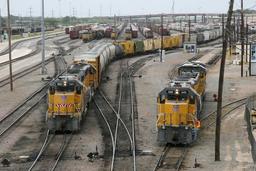
Classification Yards & Railcar Sorting
Quiz by Jill Moreland
Feel free to use or edit a copy
includes Teacher and Student dashboards
Measure skillsfrom any curriculum
Tag the questions with any skills you have. Your dashboard will track each student's mastery of each skill.
- edit the questions
- save a copy for later
- start a class game
- automatically assign follow-up activities based on students’ scores
- assign as homework
- share a link with colleagues
- print as a bubble sheet


- Q1
Classification Yards are locations where:
Train Engineers are sent to learn about the different train classifications.
Railcars are sent to be dismantled for classified parts.
Railcars arriving on inbound trains are uncoupled, sorted by destination and assembled into new outbound trains.
Are not used in the US today.
30s - Q2
A series of turnouts leading to a group of yard track is known as:
Switchbacks
Railroad ladder
S track
Matrix
30s - Q3
Different types of classification methods are used depending on:
Switching costs and material type
Where the items came from
The size of the locomotive on sight
Traffic and available infrastructure
30s - Q4
Railway yards sort railcars into groups based on:
Size
destination
weight
material hauled
30s - Q5
Choose all of the possible methods used to sort railcars:
Users sort answers between categoriesSorting30s - Q6
A group of cars heading in the same direction or to the same destination is known as "blocks".
truefalseTrue or False30s - Q7
A classification yard that uses gravity to sort the railcars is known as a:
Newton Yard
Freight Yard
Destination Yard
Hump Yard
30s - Q8
Flat switching yards are those where railcars are sorted by a switching:
Technician
Electric vehicle
Locomotive
Manual hand cart
30s - Q9
When using a three-track yard setup, each of the classification tracks must be long enough to hold how many cars?
9
6
12
18
30s - Q10
Railroads are the most energy efficient mode of land transportation.
truefalseTrue or False30s