Loading...


Climate and Ecosystems (Mod I)
Quiz by Guy Whitman
Customize this quiz to suit your class
Instantly translate to 100+ languages
Tag the questions with any skills you have. Your dashboard will track each student's mastery of each skill.
Give this quiz to my class
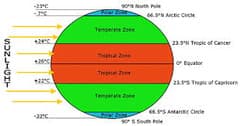 Based on the provided sources, here is a comprehensive extraction of the information regarding the water cycle, energy transfer, and Earth's wind systems, organized into key points: The Water Cycle and Its Reservoirs • Definition: The water cycle is the continuous movement of water among various reservoirs on Earth. • Water Reservoirs: These are storage locations for water and include: ◦ Oceans, seas, and lakes. ◦ Rivers, glaciers, soil, and rocks. ◦ The atmosphere and living organisms. • Total Volume: The total amount of water on Earth does not change, even when it changes state, because it is constantly being replaced or recycled through the cycle. Main Processes and Energy Transfer The movement of water through the cycle is driven by energy (thermal energy from the Sun) and force (gravity and wind). • Energy Gain (Absorption): ◦ Melting: Water changes from a solid state (ice) to a liquid state and gains energy. ◦ Evaporation: Liquid water changes into a gas state (water vapor) by gaining thermal energy. ◦ Transpiration: A specialized type of evaporation occurring in plants where water vapor is released through tiny holes in leaves called stomata. Approximately 10% of water vapor in the air comes from transpiration. • Energy Loss (Release): ◦ Condensation: Water vapor (gas) cools down and changes back into liquid water, releasing energy. ◦ Freezing: Liquid water changes into a solid state (ice) and loses energy. • Other Key Steps: ◦ Precipitation: Water falls back to Earth as rain, snow, sleet, or hail (snow pellets). ◦ Runoff: Water flows over Earth's surface into streams, rivers, and eventually larger bodies of water like oceans. ◦ Collection: Rainwater is collected in different water bodies to start the cycle again. Forces Driving Water Movement • Gravity: The main force that pulls water downward. It is responsible for: ◦ Bringing precipitation (rain and snow) from clouds to the surface. ◦ Moving ice in glaciers from higher to lower elevations. ◦ Causing liquid water to flow downhill into rivers and seas. ◦ Leakage: Pulling liquid water down into the ground to reach groundwater reservoirs. • Wind: Another force that affects water movement and transports water to different locations on Earth. Atmospheric Processes • Cloud Formation: Water vapor attaches to particles such as dust or smoke in the air and condenses into tiny droplets. When millions of these droplets join, they become heavy and fall as rain. • Convection: The transfer of heat in liquids and gases. ◦ Warm air/liquid: Becomes less dense, lighter, and rises upward. ◦ Cold air/liquid: Is more dense, heavier, and moves downward to replace the warm fluid. ◦ This process leads to convection currents, which help determine regional climates and drive wind and ocean currents. Solar Radiation and Climate The amount of solar energy reaching Earth differs from place to place, which affects the weather: • Hottest Regions (Equator): Sun rays fall perpendicular (vertical). Heat is concentrated on a small area, making the weather hot. • Moderate Regions: Sun rays fall semi-inclined. Heat is distributed over a larger area, making the weather warm. • Coolest Regions (Poles): Sun rays fall very slanted (inclined). Heat is spread over a very large area, making the weather very cold. Earth's Wind System • Wind Formation: Wind is generated when warm air (heated by the Sun) rises and is replaced by cooler air flowing from nearby areas. • Factors Affecting Wind: The amount of solar radiation and the rotation of Earth determine global wind directions. • Global Wind Cycle: Unequal heating between the equator and the poles generates a constant wind system. Warm air rises at the equator and moves toward the poles, while cold air from the poles moves toward the equator. • Importance: If there were no wind, the equator would become extremely hot, the poles would freeze solid, and many ecosystems would disappear. Practical Examples • Turkey’s Salt Lake: High evaporation in the summer can turn this large lake into a small puddle or dry it up completely. It is a critical site for flamingos, which migrate there to breed and feed on algae in the shallow, warm water.2.2 Study Guide [ 2.2 Sequence Assessment 1/21 and 1/22] Ecosystems and Ecological Relationships Invasive Species ● An invasive species is a plant, animal, or organism that is not native to a specific area and causes harm to the environment or human health. Why are they harmful? Invasive species often outcompete native species for food, water, and space. They can spread quickly because they lack natural predators in the new environment. What is their impact on the ecosystem? Invasive species can reduce biodiversity by pushing native species to extinction or by changing the habitat in which native species live. Biodiversity and Its Importance to Ecosystems Biodiversity refers to the variety of life in a specific area, including different species of plants, animals, and microorganisms, and the ecosystems they form. ● Stability: Biodiversity makes ecosystems more resilient to changes such as climate change, diseases, and natural disasters. ● Food chains and webs: A greater variety of species means more sources of food for different animals, helping maintain a balanced food web. For example, a forest with many species of plants and animals can recover from a drought more easily than a forest with fewer species. Predator-Prey Relationships In a predator-prey relationship, one organism (the predator) hunts and eats another organism (the prey). The predator benefits by getting food, while the prey loses its life.The population sizes of predators and prey are often linked. If there are more prey, the predator population may grow, but if too many predators eat the prey, the predator population will decrease. This relationship can be shown in the graph below. ● For example: Lions hunt zebras for food. When there are many zebras, lions have more food and their population can grow. However, if too many lions eat the zebras, the zebra population can decrease. Predator-prey relationships help keep animal populations balanced, preventing one species from becoming too numerous and harming the environment. Ecological Relationships There are several types of relationships between organisms in an ecosystem. These include commensalism, parasitism, and mutualism. Commensalism In commensalism, one organism benefits from the relationship while the other is neither helped nor harmed. An example would be Barnacles and Whales. Barnacles attach to the skin of whales. The barnacles get access to nutrient-rich water while the whale swims, but the whale is not affected by their presence. Parasitism In parasitism, one organism (the parasite) benefits at the expense of the other organism (the host), which is harmed. For example, fleas live on dogs and feed on their blood. The fleas benefit, but the dog may suffer from itching, infections, or even anemia. Another example are tapeworms and humans. Tapeworms live in the intestines of humans and absorb nutrients, leaving the human host malnourished. Mutualism In mutualism, both organisms benefit from the relationship. An example would be bees and flowers: Bees collect nectar from flowers to make honey, while helping the flowers by transferring pollen, which helps them reproduce.اسئلة استاذ عماد لغاية سؤال 5 Question 1: "What is the purpose of your report, and who is your target audience?" Answer: "The purpose of my report is to analyze the effects of climate change on coastal ecosystems. My target audience includes students and teachers who want to understand environmental challenges and solutions." Question 2: "Which part of your report did you find most challenging to write?" Answer: "The methodology section was the most challenging because I had to collect data from multiple sources and ensure it was accurate and relevant." Question 3: "How did you organize your report? Explain the structure briefly." Answer: "I divided my report into four sections: introduction, methodology, findings, and conclusion. This helped me present the information logically." Question 4: "What visual aids did you use, and why?" Answer: "I included charts and maps to visually represent data trends and geographical impacts. Visual aids make complex information easier to understand." Question 5: "What did you learn from this report-writing process?" Answer: "I learned how to conduct thorough research, critically evaluate sources, and present information clearly. It improved my time-management skills too."Escape from Unsuitable Conditions Some species can survive unfavorable environmental conditions by escaping from them temporarily. For example, desert animals usually hide underground or in the shade during the hottest part of the day. Many desert species are active at night, when temper- atures are much lower. A longer-term strategy is to enter a state of reduced activity, called dormancy, during periods of unfavorable conditions, such as winter or drought. Another strategy is to move to a more favorable habitat, called migration. An example of migration is the seasonal movements of birds, which spend spring and summer in cooler climates and migrate to warmer climates in the fall. THE NICHE Species do not use or occupy all parts of their habitat at once. The specific role, or way of life, of a species within its environment is its niche (NICH). The niche includes the range of conditions that the species can tolerate, the resources it uses, the methods by which it obtains resources, the number of offspring it has, its time of reproduction, and all other interactions with its environment. Parts of a lion’s niche are shown in Figure 18-6. Generalists are species with broad niches; they can tolerate a range of conditions and use a variety of resources. An example of a generalist is the Virginia opossum, found across much of the United States. The opossum feeds on almost anything, from eggs and dead animals to fruits and plants. In contrast, species that have narrow niches are called specialists. An example is the koala of Australia, which feeds only on the leaves of a few species of eucalyptus trees. Some species have more than one niche within a lifetime. For example, caterpillars eat the leaves of plants, but as adult butter- flies, they feed on nectar. Plants and animals are able to share the same habitats because they each have different niches. FIGURE 18-6 niche from the Old French nichier, meaning “to nest” Word Roots and Origins www.scilinks.org Topic: Niche/Habitats Keyword: HM61029 mb06se_iecs02.qxd 5/24/07 10:25 AM Page 365 366 CHAPTER 18 ENERGY TRANSFER All organisms need energy to carry out essential functions, such as growth, movement, maintenance and repair, and reproduction. In an ecosystem, energy flows from the sun to autotrophs, then to organisms that eat the autotrophs, and then to organisms that feed on other organisms. The amount of energy an ecosystem receives and the amount that is transferred from organism to organism affect the ecosystem’s structure. PRODUCERS Autotrophs, which include plants and some kinds of protists and bacteria, manufacture their own food. Because autotrophs cap- ture energy and use it to make organic molecules, they are called producers. Recall that organic molecules are molecules that con- tain carbon. Most producers are photosynthetic, so they use solar energy to power the production of food. However, some autotrophic bacteria do not use sunlight as an energy source. These bacteria carry out chemosynthesis (KEE-moh-SIN-thuh-sis), in which they use energy stored in inorganic molecules to produce carbohydrates. In terres- trial ecosystems, plants are usually the major producers. In aquatic ecosystems, photosynthetic protists and bacteria are usu-ENGLISH GROUP PROJECT: THE GLOBAL VENTURE (Thailand) Comprehensive Presentation Script & Role Outline (5-Person Distribution) 1. Strategic Role & Workload Distribution Matrix Role / Name Core Domain / Responsibility Presentation Delivery Scope Member 1Member 1 Tan Finance & Housing (Rent, cost of living, deposits, urban/rural margins)Finance & Housing (Rent, cost of living, deposits, urban/rural margins) Slide 3: Finance Lead, Slide 8: Data VisualizerSlide 3: Finance Lead, Slide 8: Data Visualizer Member 2Member 2 Huy Work Culture & Professional Etiquette (Hierarchy, industry growth, networking)Work Culture & Professional Etiquette (Hierarchy, industry growth, networking) Slide 3: Culture Lead, Slide 9: Adaptation ExpertSlide 3: Culture Lead, Slide 9: Adaptation Expert Member 3Member 3 Minh Legal, Immigration & Visa Pathways (Non-Immigrant B visas, extensions, 90-day rules)Legal, Immigration & Visa Pathways (Non-Immigrant B visas, extensions, 90-day rules) Slide 3: Legal Anchor, Slide 4: Legal FrameworkSlide 3: Legal Anchor, Slide 4: Legal Framework Member 4Member 4 THanh Healthcare Ecosystem & Public Safety (Insurance, emergency networks, local hazards)Healthcare Ecosystem & Public Safety (Insurance, emergency networks, local hazards) Slide 3: Safety Anchor, Slide 10: Matrix PresenterSlide 3: Safety Anchor, Slide 10: Matrix Presenter Member 5Member 5 Sơn(project manager),Kiên Logistics, Climate & Project Manager (Transit, weather, group synthesis)Logistics, Climate & Project Manager (Transit, weather, group synthesis) Slide 1-2: Opener, Slide 6: Email Lead, Slide 11-12: CloserSlide 1-2: Opener, Slide 6: Email Lead, Slide 11-12: Closer 3. Complete Presentation Script (Slide-by-Slide) Execution Note: During delivery, presenters should display the corresponding slide from the HTML presentation tool. Speak clearly, maintaining eye contact with the grading panel. 12-Slide Presentation Guide: Secondments in Thailand Slide 1: Title Slide Purpose: Introduce the topic clearly. Content guide: Include the presentation title, group members’ names, course/module name, and date. Speaker guide: Briefly say that the presentation explains what employees and companies should consider before sending someone on secondment to Thailand. Slide 2: Agenda / Overview Welcome everyone. Our presentation is about secondments in Thailand. We will cover the main areas that a company and employee should prepare for before relocation. These include finance and housing, work culture, legal and visa requirements, healthcare and safety, and daily logistics such as transport and climate. By the end of the presentation, we hope to show that a successful secondment depends not only on the job itself, but also on good planning before and after arrival in Thailand. Slide 3: What Is a Secondment? A secondment is a temporary work assignment where an employee is transferred to another country, branch, client site, or partner organization while usually remaining connected to the original employer. Secondments require coordination between the employee, home employer, host organization, and local authorities. Slide 4: Finance & Housing — Cost of Living Finance and housing are one of the first things a secondee should plan before moving to Thailand. The cost of living can vary a lot depending on whether the employee is based in Bangkok, another major city, or a regional area. Urban areas usually have higher rent, but they also offer better access to transport, hospitals, offices, and international services. In smaller cities or rural areas, rent may be lower, but transport and convenience can become bigger concerns. So, the key point is that secondees should not only compare prices, but also consider location, commute, and what support the employer provides. Slide 6: Work Culture — Hierarchy & Etiquette Purpose: Help secondees understand workplace expectations. Content guide: Cover respect for seniority, polite communication, indirect feedback, saving face, punctuality, proper greetings, and professional dress. Speaker guide: Explain that foreign employees should avoid being too blunt in meetings and should observe how local colleagues communicate with managers or senior staff. Suggested visual: “Do and Don’t” etiquette list. Slide 7: Work Culture — Industry Growth & Networking Purpose: Connect secondments to career and business opportunities. Content guide: Mention sectors where Thailand often attracts foreign professionals, such as manufacturing, tourism, logistics, finance, technology, and regional business operations. Discuss relationship-building and networking. Speaker guide: Emphasize that trust and long-term relationships are important in Thai professional settings. Networking can happen through industry events, chambers of commerce, company introductions, and informal business meals. Suggested visual: Thailand industry opportunity map or sector icons. Slide 8: Legal & Immigration — Visa Pathways Purpose: Explain the main legal entry pathway for work-related secondments. Content guide: Introduce the Non-Immigrant B visa as a common work/business visa category. Mention that supporting documents may include passport, application forms, employment or company letters, and other evidence requested by Thai authorities. Speaker guide: Make clear that a visa alone may not be enough to legally work; seconded employees normally need the correct visa and work authorization. The exact process depends on the employer, role, nationality, and assignment structure. Suggested visual: Simple flowchart: Home employer → Host company → Visa application → Arrival → Work permit/compliance. Slide 9: Legal & Immigration — Compliance Rules Purpose: Explain ongoing responsibilities after arrival. Content guide: Cover visa extensions, work permit validity, re-entry permits, address reporting, and 90-day reporting for eligible long-stay foreigners. Speaker guide: Stress that compliance is not a one-time task. Employees and HR teams should track deadlines carefully because missing reporting or renewal dates can cause fines, delays, or legal issues. Suggested visual: Compliance checklist or timeline. Slide 10: Healthcare & Public Safety Purpose: Explain how secondees should prepare for health and safety risks. Content guide: Cover international health insurance, access to private hospitals, emergency numbers, vaccinations or health checks if required, and common local hazards such as road safety, flooding, heat, food hygiene, and mosquito-borne illnesses. Speaker guide: Explain that Thailand has strong healthcare options in major cities, but employees should confirm insurance coverage before arrival. They should also know what to do in an emergency and save important contact numbers. Suggested visual: Emergency preparation checklist. Slide 11: Logistics & Climate Purpose: Explain practical relocation and daily-life planning. Content guide: Cover public transit, taxis, ride-hailing, domestic travel, airport access, SIM cards, banking, weather, rainy season, heat, and packing needs. Speaker guide: Mention that weather affects commuting, clothing, housing choice, and travel planning. Employees should plan around heat, rain, and possible flooding, especially during the rainy season. Suggested visual: Seasonal calendar showing hot, rainy, and cool periods. Slide 12: Project Manager / Group Synthesis Purpose: Bring the presentation together and end with key recommendations. Content guide: Summarize the main risks and preparation steps: budget early, secure compliant visa/work permit arrangements, understand workplace culture, arrange insurance, and prepare for climate/logistics. Speaker guide: Conclude by saying that a successful secondment in Thailand depends on both professional readiness and personal relocation planning. End with 3–5 recommendations for companies and employees. Suggested visual: Final checklist: “Before departure,” “Upon arrival,” and “During secondment.” A simple way to divide the work is: Member 1: Slides 1–3 introduction. Member 2: Slides 4–5 finance and housing. Member 3: Slides 6–7 work culture. Member 4: Slides 8–9 legal and immigration. Member 5: Slides 10–12 healthcare, logistics, and conclusion. Create a review game for 9th grade biology students using the following topics Levels of Organization in an ecosystem- population, community, ecosystem, biome, biosphere Abiotic and Biotic Factors Differences between Food chains and food webs Trophic Levels Producers vs Consumers, Autotrophs vs. Heterotrophs Effects of Greenhouse gases and their effects on global systems. Biome examples Photosynthesis vs cellular respiration Types of Consumers Ecological Pyramids 10% rule Cycles of Matter/ Nutrient Cycles- Water Cycle, Carbon Cycle, Nitrogen Cycle, Phosphorus Cycle (note on the diagrams… the bigger the arrow, the larger amount of matter that moves through the cycle from that point to the next. Macromolecules- Carbohydrates, Lipids, Proteins, Nucleic Acids Nitrogen fixation Denitrification Eutrophication The usable form on nitrogen for plants is nitrate Population density and distribution-random, dispersed and clumped Birth rate and death rate Survivorship curves- Type I, II, and III Density dependent factors Density independent factors Exponential growth- J curve = unlimited resources, no limiting factors Logistical Growth-S curve= limiting factors, carrying capacity Symbiotic Relationships- Competition, predation, Herbivory, mutualism, parasitism, commensalism What is an invasive species? Why might countries limit certain species to coming into a new country or area? What is mycorrhizal? Succession- Primary vs Secondary Pioneer Species Climax community Biodiversity Climate change Title (Slide 0): "Digging Deeper: The Truth About Tillage" Subtitle: How turning the soil affects plants, microbes, and the planet Slide 1: What Is Tillage? Tilling the soil means digging, turning, and loosening it using tools or machines. It's a common farming practice to prepare the land before planting. Slide 2: Why Do Farmers Till? Tillage is usually done before planting to: • Soften and aerate the soil • Mix in nutrients • Remove weeds • Bury crop residues for decomposition and fertility Slide 3: Tools Used for Tillage Farmers use tools like: • Ploughs: Cut deep into the soil • Harrows: Break up clumps and smooth the surface Slide 4: Ploughs vs. Harrows • Ploughs: Used first, go deep, lift and flip soil • Harrows: Used after ploughs, work on the surface to break clumps and level the soil Slide 5: Types of Tillage Systems From most to least soil disturbance: • Conventional Tillage: Deep ploughing • Minimum Tillage: Light disturbance • Conservation Tillage: Only disturb seed zone, keep residues on top • Zero Tillage (No-Till): Plant directly into undisturbed soil Slide 6: Problem 1 – Soil Erosion Tillage removes protective cover, exposing soil to wind and rain. Result: topsoil—the most fertile layer—is easily washed or blown away. Slide 7: Problem 2 – Disruption of Soil Life Soil is a living ecosystem! • Worms, fungi, and bacteria help aerate soil and release nutrients • Tillage destroys their habitat, reducing fertility and soil health Slide 8: Problem 3 – Loss of Soil Structure Healthy soil has pores for air, water, and roots. Tillage breaks the sponge-like structure, and soil compacts over time—like flattening it into a pancake. Hard soil = poor plant growth. Slide 9: Problem 4 – Decreased Organic Matter Microbes "eat" organic matter through aerobic respiration (using O₂ and releasing CO₂). Tillage adds oxygen, microbes speed up, and burn through the soil’s “pantry” of organic matter—leaving it empty and poor. Slide 10: Problem 5 – Greenhouse Gas Emissions Faster decomposition = more CO₂ released. Tillage boosts microbial activity, which increases carbon dioxide emissions—contributing to climate change. ✅ Conclusion (Slide 11): 🌱 Tillage: A Double-Edged Tool Tillage can help prepare the soil and control weeds—but it comes at a cost. Over time, repeated tilling can strip away organic matter, destroy soil life, and release greenhouse gases. It's like spending all your savings for quick results—and being left with nothing for the future. The smarter path? Use reduced or no-till methods that protect soil health, keep carbon in the ground, and support long-term farming success.Climate and Severe Weather