Loading...


Color and Space Terms
Quiz by Tina Duncan
Customize this quiz to suit your class
Instantly translate to 100+ languages
Tag the questions with any skills you have. Your dashboard will track each student's mastery of each skill.
Give this quiz to my class




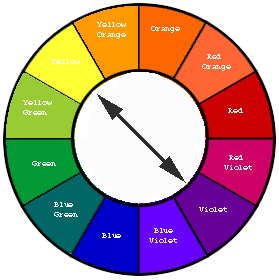
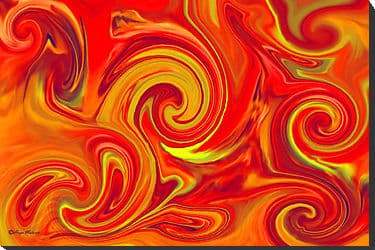


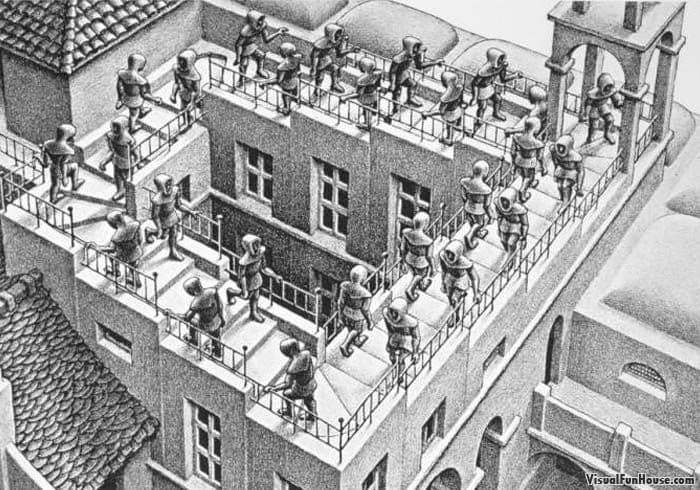


 A solution is a mixture in which one or more substances are uniformly distributed in another substance. Solutions can be mixtures of liquids, solids, or gases. For example, plasma, the liquid part of blood, is a very complex solution. It is composed of many types of ions and large molecules, as well as gases, that are dissolved in water. A solute (SAHL-YOOT) is a substance dissolved in the solvent. The particles that compose a solute may be ions, atoms, or molecules. The solvent is the substance in which the solute is dissolved. For example, when sugar, a solute, and water, a solvent, are mixed, a solution of sugar water results. Though the sugar dissolves in the water, neither the sugar molecules nor the water molecules are altered chemically. If the water is boiled away, the sugar molecules remain and are unchanged. Solutions can be composed of various proportions of a given solute in a given solvent. Thus, solutions can vary in concentra- tion. The concentration of a solution is the amount of solute dis- solved in a fixed amount of the solution. For example, a 2 percent saltwater solution contains 2 g of salt dissolved in enough water to make 100 mL of solution. The more solute dissolved, the greater is the concentration of the solution. A saturated solution is one in which no more solute can dissolve. Aqueous (AY-kwee-uhs) solutions—solutions in which water is the solvent—are universally important to living things. Marine microorganisms spend their lives immersed in the sea, an aqueous solution. Most nutrients that plants need are in aqueous solutions in moist soil. Body cells exist in an aqueous solution of intercellu- lar fluid and are themselves filled with fluid; in fact, most chemical reactions that occur in the body occur in aqueous solutions. Copyright © by Holt, Rinehart and Winston. All rights reserved. Liquid water Solid water Ice (solid water) is less dense than liquid water because of the structure of ice crystals. The water molecules in ice are bonded to each other in a way that creates large amounts of open space between the molecules, relative to liquid water. FIGURE 2-12 solvent from the Latin solvere, meaning “to loosen” Word Roots and Origins CHEMISTRY OF LIFE 43 ACIDS AND BASES One of the most important aspects of a living system is the degree of its acidity or alkalinity. What do we mean when we use the terms acid and base? Ionization of Water As water molecules move about, they bump into one another. Some of these collisions are strong enough to result in a chemical change: one water molecule loses a proton (a hydrogen nucleus), and the other gains this proton. This reaction really occurs in two steps. First, one molecule of water pulls apart another water molecule, or dissociates, into two ions of opposite charge: H2O ∏ H OH The OH ion is known as the hydroxide ion. The free H ion can react with another water molecule, as shown in the equation below. H H2O ∏ H3O The H3O ion is known as the hydronium ion. Acidity or alkalin- ity is a measure of the relative amounts of hydronium ions and hydroxide ions dissolved in a solution. If the number of hydronium ions in a solution equals the number of hydroxide ions, the solution is said to be neutral. Pure water contains equal numbers of hydro- nium ions and hydroxide ions and is therefore a neutral solution. Acids If the number of hydronium ions in a solution is greater than the number of hydroxide ions, the solution is an acid. For example, when hydrogen chloride gas, HCl, is dissolved in water, its mol- ecules dissociate to form hydrogen ions, H, and chloride ions, Cl, as is shown in the equation below. HCl ∏ H Cl These free hydrogen ions combine with water molecules to form hydronium ions, H3O. This aqueous solution contains many more hydronium ions than it does hydroxide ions, making it an acidic solution. Acids tend to have a sour taste; how- ever, never taste a substance to test it for acidity. In concentrated forms, they are highly corrosive to some materials, as you can see in Figure 2-13. Bases If sodium hydroxide, NaOH, a solid, is dissolved in water, it dissociates to form sodium ions, Na, and hydroxide ions, OH, as shown in the equation below. NaOH ∏ Na OH Copyright © by Holt, Rinehart and Winston. All rights reserved. Eco Connection onnection Acid Precipitation Acid precipitation, more commonly called acid rain, describes rain, snow, sleet, or fog that contains high levels of sulfuric and nitric acids. These acids form when sulfur dioxide gas, SO2, and nitrogen oxide gas, NO, react with water in the atmosphere to produce sulfuric acid, H2SO4, and nitric acid, HNO3. Acid precipitation makes soil and bodies of water, such as lakes, more acidic than normal. These high acid levels can harm plant and animal life directly. A high level of acid in a lake may kill mollusks, fish, and amphibians. Even in a lake that does not have a very elevated level of acid, acid precipitation may leach aluminum and magnesium from soils, poisoning water- dwelling species. Reducing fossil-fuel consump- tion, such as occurs in gasoline engines and coal-burning power plants, should reduce high acid levels in precipitation. Sulfur dioxide, SO2, which is produced when fossil fuels are burned, reacts with water in the atmosphere to produce acid precipitation. Acid precipitation, or acid rain, can make lakes and rivers too acidic to support life and can even corrode stone, such as the face of this statue. FIGURE 2-13 44 CHAPTER 2 This solution then contains more hydroxide ions than hydronium ions and is therefore defined as a base. The adjective alkaline refers to bases. Bases have a bitter taste; however, never taste a substance to test for alkalinity. They tend to feel slippery because the OH ions react with the oil on our skin to form a soap. In fact, commercial soap is the product of a reaction between a base and a fat. pH Scientists have developed a scale for comparing the relative con- centrations of hydronium ions and hydroxide ions in a solution. This scale is called the pH scale, and it ranges from 0 to 14, as shown in Figure 2-14. A solution with a pH of 0 is very acidic, a solution with a pH of 7 is neutral, and a solution with a pH of 14 is very basic. A solution’s pH is measured on a logarithmic scale. That is, the change of one pH unit reflects a 10-fold change in the acidity or alkalinity. For example, urine has 10 times the H3O ions at a pH of 6 than water does at a pH of 7. Vinegar, has 1,000 times more H3O ions at a pH of 3 than urine at a pH of 6, and 10,000 times more H3O ions than water at a pH of 7. The pH of a solution can be measured with litmus paper or with some other chemical indicator that changes color at various pH levels. Buffers The control of pH is important for living systems. Enzymes can function only within a very narrow pH range. The control of pH in organisms is often accomplished with buffers. Buffers are chemi- cal substances that neutralize small amounts of either an acid or a base added to a solution. As Figure 2-14 shows, the composition of your internal environment—in terms of acidity and alkalinity— varies greatly. Some of your body fluids, such as stomach acid and urine, are acidic. Others, such as intestinal fluid and blood, areWhat is a Plant Cell? Plant cells are eukaryotic cells that vary in several fundamental factors from other eukaryotic organisms. Both plant and animal cells contain a nucleus along with similar organelles. One of the distinctive aspects of a plant cell is the presence of a cell wall outside the cell membrane. Plant Cell Structure Just like different organs within the body, plant cell structure includes various components known as cell organelles that perform different functions to sustain itself. These organelles include: Cell Wall It is a rigid layer which is composed of polysaccharides cellulose, pectin and hemicellulose. It is located outside the cell membrane. It also comprises glycoproteins and polymers such as lignin, cutin, or suberin. The primary function of the cell wall is to protect and provide structural support to the cell. The plant cell wall is also involved in protecting the cell against mechanical stress and providing form and structure to the cell. It also filters the molecules passing in and out of it. The formation of the cell wall is guided by microtubules. It consists of three layers, namely, primary, secondary and the middle lamella. The primary cell wall is formed by cellulose laid down by enzymes. Cell membrane It is the semi-permeable membrane that is present within the cell wall. It is composed of a thin layer of protein and fat. The cell membrane plays an important role in regulating the entry and exit of specific substances within the cell. For instance, cell membrane keeps toxins from entering inside, while nutrients and essential minerals are transported across. Nucleus The nucleus is a membrane-bound structure that is present only in eukaryotic cells. The vital function of a nucleus is to store DNA or hereditary information required for cell division, metabolism and growth. 1. Nucleolus: It manufactures cells’ protein-producing structures and ribosomes. 2. Nucleopore: Nuclear membrane is perforated with holes called nucleopore that allow proteins and nucleic acids to pass through. Plastids They are membrane-bound organelles that have their own DNA. They are necessary to store starch and to carry out the process of photosynthesis. It is also used in the synthesis of many molecules, which form the building blocks of the cell. Some of the vital types of plastids and their functions are stated below: Leucoplasts They are found in the non-photosynthetic tissue of plants. They are used for the storage of protein, lipid and starch. Chromoplasts They are heterogeneous, colored plastid which is responsible for pigment synthesis and for storage in photosynthetic eukaryotic organisms. Chromoplasts have red-, orange- and yellow-colored pigments which provide color to all ripe fruits and flowers. Central Vacuole It occupies around 30% of the cell’s volume in a mature plant cell. Tonoplast is a membrane that surrounds the central vacuole. The vital function of the central vacuole apart from storage is to sustain turgor pressure against the cell wall. The central vacuole consists of cell sap. It is a mixture of salts, enzymes and other substances. Golgi Apparatus They are found in all eukaryotic cells, which are involved in distributing synthesized macromolecules to various parts of the cell. Ribosomes They are the smallest membrane-bound organelles which comprise RNA and protein. They are the sites for protein synthesis, hence, also referred to as the protein factories of the cell. Mitochondria They are the double-membraned organelles found in the cytoplasm of all eukaryotic cells. They provide energy by breaking down carbohydrate and sugar molecules, hence they are also referred to as the “Powerhouse of the cell.” Lysosome Lysosomes are called suicidal bags as they hold digestive enzymes in an enclosed membrane. They perform the function of cellular waste disposal by digesting worn-out organelles, food particles and foreign bodies in the cell. In plants, the role of lysosomes is undertaken by the vacuoles. Chloroplasts It is an elongated organelle enclosed by phospholipid membrane. The chloroplast is shaped like a disc and the stroma is the fluid within the chloroplast that comprises a circular DNA. Each chloroplast contains a green colored pigment called chlorophyll required for the process of photosynthesis. The chlorophyll absorbs light energy from the sun and uses it to transform carbon dioxide and water into glucose. Structure of Chloroplast Chloroplasts are found in all higher plants. It is oval or biconvex, found within the mesophyll of the plant cell. The size of the chloroplast usually varies between 4-6 µm in diameter and 1-3 µm in thickness. They are double-membrane organelle with the presence of outer, inner and intermembrane space. There are two distinct regions present inside a chloroplast known as the grana and stroma. • Grana are made up of stacks of disc-shaped structures known as thylakoids or lamellae. The granum of the chloroplast consists of chlorophyll pigments and are the functional units of chloroplasts. • Stroma is the homogenous matrix which contains grana and is similar to the cytoplasm in cells in which all the organelles are embedded. Stroma also contains various enzymes, DNA, ribosomes, and other substances. Stroma lamellae function by connecting the stacks of thylakoid sacs or grana. The chloroplast structure consists of the following parts: Membrane Envelope It comprises inner and outer lipid bilayer membranes. The inner membrane separates the stroma from the intermembrane space. Intermembrane Space The space between inner and outer membranes. Thylakoid System (Lamellae) The system is suspended in the stroma. It is a collection of membranous sacs called thylakoids or lamellae. The green colored pigments called chlorophyll are found in the thylakoid membranes. It is the sight for the process of light-dependent reactions of the photosynthesis process. The thylakoids are arranged in stacks known as grana and each granum contains around 10-20 thylakoids. Stroma It is a colorless, alkaline, aqueous, protein-rich fluid present within the inner membrane of the chloroplast present surrounding the grana. Grana Stack of lamellae in plastids is known as grana. These are the sites of conversion of light energy into chemical energy. Chlorophyll It is a green photosynthetic pigment that helps in the process of photosynthesis. Functions of Chloroplast Following are the important chloroplast functions: • The most important function of the chloroplast is to synthesize food by the process of photosynthesis. • Absorbs light energy and converts it into chemical energy. • Chloroplast has a structure called chlorophyll which functions by trapping the solar energy and is used for the synthesis of food in all green plants. • Produces NADPH and molecular oxygen (O 2 ) by photolysis of water. • Produces ATP – Adenosine triphosphate by the process of photosynthesis. • The carbon dioxide (CO2) obtained from the air is used to generate carbon and sugar during the Calvin Cycle or dark reaction of photosynthesis. Mitochondria “Mitochondria are membrane-bound organelles present in the cytoplasm of all eukaryotic cells, that produce adenosine triphosphate (ATP), the main energy molecule used by the cell.” What are Mitochondria? Popularly known as the “Powerhouse of the cell,” mitochondria (singular: mitochondrion) are a double membrane-bound organelle found in most eukaryotic organisms. They are found inside the cytoplasm and essentially function as the cell’s “digestive system.” They play a major role in breaking down nutrients and generating energy-rich molecules for the cell. Many of the biochemical reactions involved in cellular respiration take place within the mitochondria. The term ‘mitochondrion’ is derived from the Greek words “mitos” and “chondrion” which means “thread” and “granules-like”, respectively. It was first described by a German pathologist named Richard Altmann in the year 1890. Structure of Mitochondria • The mitochondrion is a double-membraned, rod-shaped structure found in both plant and animal cell. • Its size ranges from 0.5 to 1.0 micrometers in diameter. • The structure comprises an outer membrane, an inner membrane, and a gel-like material called the matrix. • The outer membrane and the inner membrane are made of proteins and phospholipid layers separated by the intermembrane space. • The outer membrane covers the surface of the mitochondrion and has a large number of special proteins known as porins. Cristae The inner membrane of mitochondria is rather complex in structure. It has many folds that form a layered structure called cristae, and this helps in increasing the surface area inside the organelle. The cristae and the proteins of the inner membrane aid in the production of ATP molecules. The inner mitochondrial membrane is strictly permeable only to oxygen and ATP molecules. A number of chemical reactions take place within the inner membrane of mitochondria. Mitochondrial Matrix The mitochondrial matrix is a viscous fluid that contains a mixture of enzymes and proteins. It also comprises ribosomes, inorganic ions, mitochondrial DNA, nucleotide cofactors, and organic molecules. The enzymes present in the matrix play an important role in the synthesis of ATP molecules. Functions of Mitochondria The most important function of mitochondria is to produce energy through the process of oxidative phosphorylation. It is also involved in the following process: 1. Regulates the metabolic activity of the cell 2. Promotes the growth of new cells and cell multiplication 3. Helps in detoxifying ammonia in the liver cells 4. Plays an important role in apoptosis or programmed cell death 5. Responsible for building certain parts of the blood and various hormones like testosterone and estrogen 6. Helps in maintaining an adequate concentration of calcium ions within the compartments of the cell 7. It is also involved in various cellular activities like cellular differentiation, cell signaling, cell senescence, controlling the cell cycle and in cell growth. Disorders Associated with Mitochondria Any irregularity in the way mitochondria function can directly affect human health, but often, it is difficult to identify because symptoms differ from person to person. Disorders of the mitochondria can be quite severe; in some cases, they can even cause an organ to fail. “On this night, we share a roof protecting us from fleets of inequity. Our unification promises a better tomorrow. Those larger than myself, sitting on their marble thrones, sipping blood from cups composed of human skin and singing songs of so-called virtue, grow weaker each moment. Their caravans are revolting. There is hope yet. There is progress! Though tonight may mark a countdown, it is still a celebration. Look at all we have done, not just for Trials but for Palatium Infra as a whole. In four years, when I’m no longer Sovereignty, the Spoiled Purity and his people will continue to strive. So drink! Smoke! Crush up those exotic plants and snort them! We will not falter, weaken, or wane. Our influence is expanding, and somebody new opens their eyes every day. Even the Silbys of Aculeus have reached alarming potentials despite their embittered minds. So long as you relish in tonight, dance, and pray to your “dead” Gods, our revolution shall rise beyond the bounds of class, and when I’m only a commoner, we shall rise again beyond our brainwashed adversaries! Cheers, my people. Cheers!” Followers raised their cups. Some clinked theirs together. Others stood still and screamed breathlessly in agreement. I smiled with courtesy, then stepped off my platform. My voice still rang across the cellar. Speeches before were grander. Those displays were supposed to be emptying, and yet this one left me bloated, swollen tight. I watched as they popped the corks of their bottles and chanted in the name of Purity. Maybe the quality of my words wasn’t what mattered to them anyway, so long as I screamed loud enough. There’s no merit in attacking your people, a voice corrected me. “That’s right,” I said aloud. “Knox, my-my Sovereign!” squealed a nearby devotee, jittering as he stuffed his face with catered pastries. He was one I’d never seen before or had failed to remember. “Look what I’ve found! It’s wine, and not the shoddy Infran kind, either. Earth-made with good fruit! I don’t know how anyone managed to get their hands on this. Maybe some space travel mischief.” He giggled and held up a small glass bottle. “How neat.” “I want you to have it, Sir.” I nodded my head. “Yes, of course. Thank you.” Backing off into the midst of rowdy disciples, I clutched the bottle. What a waste of grapes. It could have been jam instead. Earthly food had a superior taste, ripe with delicate intricacies and nostalgia, but Palatium Infra had mastered the art of alcohol. Why waste your time with a drunkenness so sad and sickening? The booze of trash. Not many more followers approached me. The barren peroration must have upset them. My hands itched to submerge into my suit pockets, and my legs stood suddenly numb, wobbling. Four more years until I’m nothing. But tonight, you are nothing. “Shut up,” I told myself. Tightly packed together in the corner of the dwelling sat the Sibyls. A mound of writhing fabric and tones of skin made up their unified silhouette. I snapped the strap of the nearest gown, balancing on my hands and knees, waving the bottle before them. In their almost rodent nature, narrow noses prodded my way. Their dresses wrinkled and fell to their ankles. Knees dropped, and eyes widened. Many grumbled at me like hungry she-beasts. Those newer ones with faded curtains for hair, sunken eyes, and dirtied nails looked, hid their face, then sobbed. I imagined them in a pack together, fighting wildly against the Spoiled Purity in their rat decorum–biting down with square teeth laced with rabies. “I’ve got you all something,” I said. “Go back off to your pedestal and yap some more. We don’t want it.” A woman rose from the pile and spat. “You don’t even know what it is yet. It's Earth hooch, or more likely a near-flawless replica. I figured you girls would also like a chance to enjoy yourselves tonight.” “Your playmates have been harassing us since the moment you hung the banners and opened the cellar door.” The youngest, with a striking cyan mop upon her head, uncoiled from the mass. What was she now? 20, 21? We celebrated a birthday recently, I thought as she spun around me. “I remember something about a promise. Multiple promises, actually. Are you trying to bribe us into just shutting up and taking it? Because if another sticky, 40-year-old, Earth-born virgin gropes my shoulder, I’m going to have an aneurysm!” the girl continued. “Why not an Infran follower? Do you like it when they touch you?” I returned her accusing tone. “I’m sorry, sweet prophets, that you feel I’ve neglected my duties. I’ll keep a better eye out. Remember, you can always just holler if somebody is bothering you. And Anwen, friend, if I’ve ever tried to bribe you with anything, it was certainly the hair dye. I mean, look at you! Such handsomeness!” I exclaimed. The other Siblys began to encircle her, uttering compliments or even announcements of their envy. Anwen disappeared in a wink with flushed cheeks back into the mound. “I’ll just leave this here.” Smiling, I set down the bottle. ** “141, 143. . .” I counted each step as I trekked the staircase. There was no doubt I lost track somewhere. The ledges kept spawning under my feet, infinitely multiplying until I wasn’t moving at all–swallowing me up in a whirlpool of stone. My tie still hung around my neck, and my blazer remained tied around my hips as a skirt. Streaks of red dribbled off from the cavity in my chest. It was a gorgeous marking, sensual to my fingertips as I traced its edges. Purity, oh, Purity. Purity and his wings of burnt skin. Purity and his many faces. Purity the spoiled. Purity the mutilated. The Silbys did not bother waiting for me. On bare feet, they stormed up the stairs to their room. A trail of red, though in paint unlike mine, streamed after them. None looked remotely near me as they squeaked and gossiped intangibly. I saved them, those Infran broads, enlightened them. As much as they liked to deny it, spit at me, and bask in the thought of their victimhood, in this home, they stood empowered. You’ve done well, my thoughts affirmed, though in the manner of an insincere commentator rather than a hype man. Teeth grace in tile violin goes laundry paper when. It dissolved into an intruding drivel. I rubbed my head and sniveled. “Do you need help, Knox?” called a Silby. Fattened by my coddling, her shadow fell upon me from the doorway steps ahead. I attempted counting again. There must’ve been at least another hundred between me and her. “I’m hallucinating some,” I said, breathing deeply to suppress a burp as I struggled to recall her name. Two syllables. Typically Latin, though sometimes English. Drops of slobber leaked from my mouth. “I’m hallucinating some, Tybal. Do you like your name, Tybal? I would have named you something better. Ty-Tyballinia. No, we’d have to eliminate the ‘ball’ aspect. It sounds too crude.” “One foot in front of the other,” she said. So I walked. Mess greeted me at the doorway. Dirtied culinary obscured the dark wooden countertops, and the sink lay running. I approached the kitchen table, sat, and set my face down upon its cool wooden surface. Assaulting my nose was the smell of neglected flowers, like soil mixed with the kind of sweet cough medicine that would have left me gagging as a child. Open windows whispered songs of the twilight hour through the vessels of busy trolleys and shooting guns. My mouth strained to vomit, but there was nothing in my stomach to regurgitate except the petals of Stulto’s bloom, which came out effortlessly in little sputters. Teetering, I stood up and brushed disgorged plant parts off the tabletop. “Love,” I said as I slogged up yet another staircase. “Are you awake?” She said she’d wait. Somebody’s gotten her. No, she always misses movie night. That sleepyhead, I assured myself. There was a stirring amidst the manor’s cloak of dusk. Portraits of myself, my wife, and my daughter turned to face me as the hallway lights flickered, escaping their quartz frames to penetrate my ears with nonsense. The taxidermied heads of Infran creatures bared their teeth. I stopped to stare at my favorite, an adabactor with daunting spiked tusks poking out from its forehead. Its nose remained black and sharp, and its eyes wide with malice. “Where is my Spes, Adaba-boy? Is she sleepy?” There’s someone in the house. The sounds of the stirring rose along with my blood pressure. Footsteps orbited around me, drawing near and far and then near again, little dancers in the dark. The carpet immersed me in its mass of purples and blues, leaving my skin stained indigo and my vision abstracted. I toiled to reach the master bedroom across the aisle as it stretched out to me with bright lights and celestial howling, like a dove struggling in a pool of oil. Never again with Stulto’s bloom. Never again on what was already a bad night. My hand brushed the doorknob, and the high abruptly faded into only a persistent hum-buzz twirling around my brain. The portraits returned to their typical depression–Spes posing with her ax, Ari’s school photo, and myself in the cap I wore when addressing the military with the Verbis emblem embroidered in its center. All lifeless shots. Who were they for when they captured not the subject’s essence but only some fragment of their identity? They used to feel personal, not advertisements of some supposed characters. Servants, babysitters, and likewise civilian guests, I reminded myself, mustn’t forget whose home they’re in. Yet my body moved independently, taking Ari’s from its hook and laying it backward against the wall to hide her distant grin and tamed posture. It was time for new pictures. Sweet ones, real ones; time was ticking. I approached my own when the stirring began again. Groans and squeals erupted from the vents as if someone had set a pen of pigs loose in my crawlspace. No, not the crawlspace, my bedroom door. I turned the ruby knob. Underneath a blanket wrestled my two squealing piglets, their skins melting together beneath the layer of duvet. Fishnet leggings and manicured nails outstretched and scraped at the sheet beneath them. One raised its head, a salmon-colored man with sweat running down his forehead. Through the crack in the door, we met eyes, his Infran Dr. Sesuss nose flaring its narrow nostrils. No mark of the Spoiled Purity existed carved onto his naked body. My chest felt tight. I stepped back. I was suffocating. Spes emerged from the linens, her hair flowing down her back and her dark skin glistening in front of the bedroom window. She giggled and held the man, the blanket falling and revealing inches of her body I had not seen in months. “Darling,” whispered the rosy-faced man, “look.” He was unfathomably ugly and grotesquely young, with beady, lifeless pupils that dilated when he faced me. The excess flesh on his face sagged while he bit down on his thin lips. My wife faced me, gasped, and strained to cover herself. Suddenly, I was a stranger. A small child who had walked into his parents having sex. I unfurled the door completely. “Get out of my house,” I said. The man stayed in place. “Get out of my house,” I repeated. “Knox,” Spes began. Tears ran down her round cheeks. “Shut up!” I turned to the man, picking up a marble trophy from on top of my dresser. “Get out of my house! I’ll kill you!” “Knox!” Spes sobbed. “God damn it! I hate you! You barely look at me. Every day, there’s less passion. God, God, God, I don’t want to fuck a dead man!” she screamed, “You get out! Get! Get!” My hands wrapped tighter around the statue. That pig of a man was attached to her at the side, his face equipped with a scowl that challenged mine. He thought I was weak; frail like a decaying dementia-ridden senior. I imagined his skull bashed in, his scowl gone, and the feist and confidence in his face beaten into numbness. A new portrait was in order of such brutality, him as a splintered slab of wood, rashed and beaten, a carcass licking my boot. The churning in my brain had come back. Every wall shook. Clock faces came to life and rang in alarm. Indescribable noises caressed my eardrum before breaking into sorrowful weeps. Was it my own? I stared at Spes in motionless frenzy, clenched my teeth, and screamed like a siren. Passionless. What a lie! An excuse, more like. One that erased all my ventures, reducing me to a nobody. But I was not a nobody. I thought of my sect, my campaigns, my endurance through the political brutality of my empty hive-mind world–even my collection of literature, maps, and artifacts. I thought of daring nights alone with Spes when we were young, ravaging each other, two sardonic eggheads suddenly overcome with desire. The veins in my neck throbbed as I gasped for air. It was all I had. I threw the figurine at the man’s head. Eye shut, I heard the thud. A million singing voices of victory flooded out of the cracks in the floorboard. Proving myself a man to the woman I loved in a display of fervent violence was passion. I strained my ears for his cries, though I did not look yet. There had to be a pause, a moment of relief, where I stood tall as a skyscraper and seemingly fought to stay contained in front of my wife and her wounded, quivering paramour. Frantic footsteps rushed off the bed and past my side. I turned and grappled against myself to seize my wife’s shoulder. “Spes!” My eyelids lifted. Escaping was the man with that same numb expression in which I had imagined him. “You’re insane,” he said. I swiveled back towards the bed. With her curly locks flowing over her breasts and her limbs bent at her sides, Spes sat limp pressed against the headboard, her forehead bludgeoned and the statue resting on her stomach. Lips pursed and sweet, my Renaissance beauty reclined there in the guise of a squashed bug. But she was not dead. The desk ornament I flung was only the size of my shoe. Spes, that dramatist, may have been slightly hurt but was far from dead. She only wanted me to think she was to observe me at my most distraught, like a leech feeding on misery. “Get up.” Staggering toward the bed, I said. “You wanted passion? I showed you passion. ‘Shoved it right into your head. Of course, we both know who that gesture was meant for. . .” I fumbled to find my wit. Cold skin met my hands as I stroked her face, unable to resist checking her pulse, even though she was not dead. “I love you, Spes,” I said. Rain pelted against a nearby window. “Spes, please. Please.” No vibration answered my plea. I lifted my hand, sitting next to her now. Tears did not come. There was not any blood on the trophy, but when I picked it up, it felt to be now only a cruel instrument. It depicted a younger me in white marble, with my glasses and collared shirt being the only things painted. Both were in pink. It was a favorable color. I scrambled from the bed to vomit pure digestive bile on the rug. My stomach heaved. I ran my nails along every piece of myself I saw, a dog chasing my tail. As I slammed myself against walls and convulsed, my own heart grew ever louder in my chest. “Dad? I heard–” Ari’s slippered feet hammered across the floor. “Mom? Mom?” I kept my eyes on the storm. Silence fell. “She-She isn’t—your—.” Gasps interrupted every syllable she spoke. “You’re a murderer. Bad. Like they said,” she breathed, “ You beat her!” The words became mush, alphabet soup. Ari ran back down the hall. “My-My mom is dead. . . .Yes. . . Manor of the Trials Sovereignty. . .Ari Sorkin. . . I’m afraid he’s going to hurt me,” she said, presumably over the phone. It was all too fast. I crawled onto the windowsill, opened the glass, and let myself plummet into the alley below. Gusts of wind howled. The lack of motion or sensation informed me I had passed and again lived. Another Palatium Infra, another strange planet in which the celestial endowed rotting men with the opportunity to inhabit. Was this it? Was it all just an impossible limbo of galactic traveling? My surroundings were overwhelmingly gray, an abyss of clouds. Perhaps I had now met the real coming world, and my family and old friends lived here, ready to rush to my sides, lift me up, and jump for joy. Spes would be there. She would be enraged, but at least she’d be there. You are a bad man. You are a bad man. My eyelashes fluttered. There was a tugging sensation in my leg. The fog was wavering along with my ascendance. “No,” I yearned, trying to grip the clouds and stick them in place. “Stay with me.” But the peace was fleeting. I felt the cement under me and the moist garments clinging to my figure. My leg burned. Carefully, I craned my neck, only to observe the promenade as my surroundings. The most underwhelming of filth and danger, individually Infran. Forever my coming world. What a fool I was, having forgotten my blessing. Those idiot Gods could not tell the difference between assassination and self-infliction; a faulty insurance plan. The urge to cry at last set over me, and so I sat and wailed hot salvia into my palm, shielding my mouth to muffle the noise. Thunder echoed my hushed howling. Raindrops turned to pebbles. Under the ambiance of the stormy night, I could have sworn I heard troops stomping, guns cocking, and the chanting of my name. They had all been waiting for this. Billboards came to life, and I could only sit and spectate as the scenery flashed red. I inhaled fear and sobriety through runny nostrils. “Trials Sovereign Vsevolod “Knox” Sorkin is currently at large for the suspected homicide of Spes Sorkin, breaking the first term of the Sovereignty Charter. We now instruct you to report any sightings of the Earth-born, caucasian, roughly 195 centimeters tall, brown-haired, and brown-eyed man to your local Guard post. One can identify the suspected convict specifically by an occult tattoo of Purity’s Coronet on his lower back. No attempted execution or elongated punishment will take place until our Guards conduct an autopsy proving his guilt, per Life’s 1238 commandment. We cannot be sure when or if the Gods will revoke his blessing. Remember, when Gods frown upon strife, opt for a peaceful life. We permit all grieving festivities until Cagidus 4th. Good year!” towering buildings sang out in broadcast, repeating that same convoluted message quicker the instant it ended. Sometimes, the announcer spoke in Latin for the Infran children, other times in Chinese, Hindi, or Spanish to cater to those of irrelevant tongues. You aren’t a bad man. You are a stupid boy. Puddles sloshed. Somebody was approaching. I didn’t dare waste any remaining energy avoiding the Guards and their prodding blades. How did that phrase go? You dug your grave. Now lie in it. And so I embraced the cement. “Knox?” said the Guard. No, her tone was too sincere, and no authority would proceed in such a manner. There wasn’t confirmation on whether or not I was armed, and it wasn’t as if she could shoot me first. She was a partygoer, having just left from the cellar’s backdoor. I shooed her away with my hand. She hovered, and I discerned her shadow hesitating over my body. A man could not rot in peace. “Come on, get up! They’re after you!” Hands reached around my torso, struggling to handle my weight as they urged me onto my feet. That leg, the burning one, my right, trembled and bent unnaturally upon impact with the ground. The partygoer slung my arm over her shoulder, balancing me. My eyes caught a glimpse of a cyan mop. “Anwen?” I rasped, “hu-who let you out?” Keys jangled in her hands–my keys. “I escaped,” she said casually, coercing me to walk beside her. “Quicken your pace. I just heard somebody on your front porch. ‘You see that compost bin down the alley? We’re gonna burrow right down into the depth of that. If they open it and uncover us, I’ll be on top, and I can hide you and act like I’m just a homeless amica trying to take a nap.” With a tightening grip, she led me like livestock to the stinking crate. “I don’t understand, Anwen,” I said. “They’re going to torture and kill you, stupid. You know they’ve been wanting to, and you just handed the opportunity to them!” “I understand that.” It was becoming increasingly challenging to hide the fragility emerging in my voice. “You said you were escaping. Why stop and help your captor?” “What else could I do? Leave you there?” Attempts to shove my wounded body inside its mass of discarded fruits and vegetables began. She yanked down upon my head and submerged me in the fertilizer sea. The evidence grows indisputable, I thought as I stared at the abruptly humane Infran girl, diving in after me, that I belong here. “Damn me to hell! I’ve killed her! My love is dead!” an uncontrollable cry leaped from my mouth. “Shut up! Soon you’ll be, too, if you don’t quiet down.” The actual noise of the Guards darted past us: disorientated marching, guns clanking against each other, cluttered belts rattling, the Latin squawking. One paused to open the bin’s lid, though only rummaged through the surface layer of peat before carrying on. “What are they talking about? I struggle with my Latin,” I whispered. “The search, mainly.” Aggression remained firey in Anwen’s clenched jaw. Though she sat on top of me, there was a monumental distance between our rain-soaked forms. I curled up into a ball, ducked my head between my knees, and dreamt of Spes, ignoring the stench of spoiled food rising from every crevice of my dwelling. The next coming world was due to adopt me again as I forced sleep. I prayed for a canyon of fluffy haze, where I waltzed with pale memories but found nothing but the petrifying stillness of my mind. Killed and ran. Violent as a Guard just to prove a point and watch it backfire. Why would any heaven want to welcome me? I clung to the picture of Spes in my head like it was the last ember of an extinguished flame. “Did you mean to kill her?” Anwen interrogated. “Someone like you would immutably believe yes.” “And who is someone like me? You can’t even treat me like a person for a moment, can you?” grating drama decorated her words. “You know my opinions. I have not seen much of your or your breed’s faces besides that of cruelty and ignorance.” I retorted. “I just saved you! Does that make me cruel and ignorant?” “It makes you an idiot, which is another word for somebody ignorant.” “And why am I an idiot?” She asked. “Because you helping me does no good. Thank you anyhow. Now, do yourself a favor and scram.” As she bent her leg in anticipation, preparing to strike me on the forehead, I sensed an invisible withdrawal widening the gap between us. “You never answered my question,” Anwen took me by the end of my tattered tie suddenly and started her game of shepherd and sheep over again, pulling me back up to the crate’s exit. It appeared as a shining light at the end of a maze of rubbish and mold. “No. Of course not. Spes was my everything,” I sniffled. “I knew it. You couldn’t even bring yourself to hit us, let alone murder your wife. The girls and I always figured you were sensitive.” My heart rate quickened. Today was one of humbling and misery–one to pray a hail spike would fall from the sky as sharp as a needle, pierce into my eyelid, and lobotomize me. I wished I could have merely died or hit my head hard enough not to have to deal with it all. No, I wished I was Anwen with her snarky, careless glow and lack of depth in her eyes. As we emerged from the compost bin together, I fantasized about strangling her until her face turned purple, her weakening spirit no longer categorizing me as “sensitive”, but the thought could only remind me of wielding that trophy and the microscopic traces of my wife’s tender skin tainting it, which turned my guts inside out. “That’s why I think you could use a little help,” Anwen said, “It seems like you can’t walk, either. Your leg is all twisted up.” She undid one of her trim pigtails and handed me the band. “Take off your tie and put up your hair. ‘Will make you less recognizable. Then swallow your pride and stick with me.”Model Rockets Liftoff! Three... two... one... liftoff! A model rocket shoots into the sky. The rocket can fly up to 1,500 feet (457 m) high! Watching these small rockets fly can be fun and exciting. Model rockets aren't just for fun, though. They also teach us about science and space. The History of Rockets. People in China invented rockets about eight hundred years ago. They filled tubes with gunpowder and shot them at their enemies. Later, scientists built rockets that could go into space. Starting in the 1950s, people began building model rockets for fun. Parts of a Model Rocket. A model rocket kit comes with all the parts a rocket needs. A model rocket's body is a long tube made of cardboard or plastic. The nose cone fits into the top of the tube. The size and shape of a rocket's body and nose cone can change how it flies. Fins help the rocket fly straight. The engine burns fuel to push the rocket into the air. A parachute helps the rocket fall safely back to Earth. People like to make their rockets look great. Many people paint their rockets with different colors and designs. Every rocket is one of a kind! At the Launchpad. The only place to launch a rocket is in an open space. The launch area needs to be far away from people and buildings. A large field or a playground is a good spot. First, set up the launchpad. Place the rocket over the guide wire on the pad. The guide wire keeps the rocket pointing straight up. A girl connects the wire that will allow the controller to start the rocket engine. when it lifts off. Connect the launch controller to the rocket engine. Then step back and press the button on the controller to start the engine. Whoosh! The rocket flies up and away. Clubs and Competitions. People who fly model rockets often join model rocket clubs. Schools or hobby groups can have information about model rocket clubs. A science center or museum might have a model rocket club, too. Many people enter model rocket competitions. They set off rockets and see which one flies the highest and the fastest. Model rocket competitions are held all over the world. In the United States, students between twelve and eighteen can enter the Team America Rocketry Challenge. Every spring, one hundred teams compete to become the best in the country. The winners go on to compete against other teams from around the world. Model rockets are a fun way to learn about science. Who knows how high a model rocket can take your imagination?What do an ancient Greek philosopher and a 19th century Quaker have in common with Nobel Prize-winning scientists? Although they are separated over 2,400 years of history, each of them contributed to answering the eternal question: what is stuff made of? It was around 440 BCE that Democritus first proposed that everything in the world was made up of tiny particles surrounded by empty space. And he even speculated that they vary in size and shape depending on the substance they compose. He called these particles "atomos," Greek for indivisible. His ideas were opposed by the more popular philosophers of his day. Aristotle, for instance, disagreed completely, stating instead that matter was made of four elements: earth, wind, water and fire, and most later scientists followed suit. Atoms would remain all but forgotten until 1808, when a Quaker teacher named John Dalton sought to challenge Aristotelian theory. Whereas Democritus's atomism had been purely theoretical, Dalton showed that common substances always broke down into the same elements in the same proportions. He concluded that the various compounds were combinations of atoms of different elements, each of a particular size and mass that could neither be created nor destroyed. Though he received many honors for his work, as a Quaker, Dalton lived modestly until the end of his days. Atomic theory was now accepted by the scientific community, but the next major advancement would not come until nearly a century later with the physicist J.J. Thompson's 1897 discovery of the electron. In what we might call the chocolate chip cookie model of the atom, he showed atoms as uniformly packed spheres of positive matter filled with negatively charged electrons. Thompson won a Nobel Prize in 1906 for his electron discovery, but his model of the atom didn't stick around long. This was because he happened to have some pretty smart students, including a certain Ernest Rutherford, who would become known as the father of the nuclear age. While studying the effects of X-rays on gases, Rutherford decided to investigate atoms more closely by shooting small, positively charged alpha particles at a sheet of gold foil. Under Thompson's model, the atom's thinly dispersed positive charge would not be enough to deflect the particles in any one place. The effect would have been like a bunch of tennis balls punching through a thin paper screen. But while most of the particles did pass through, some bounced right back, suggesting that the foil was more like a thick net with a very large mesh. Rutherford concluded that atoms consisted largely of empty space with just a few electrons, while most of the mass was concentrated in the center, which he termed the nucleus. The alpha particles passed through the gaps but bounced back from the dense, positively charged nucleus. But the atomic theory wasn't complete just yet. In 1913, another of Thompson's students by the name of Niels Bohr expanded on Rutherford's nuclear model. Drawing on earlier work by Max Planck and Albert Einstein he stipulated that electrons orbit the nucleus at fixed energies and distances, able to jump from one level to another, but not to exist in the space between. Bohr's planetary model took center stage, but soon, it too encountered some complications. Experiments had shown that rather than simply being discrete particles, electrons simultaneously behaved like waves, not being confined to a particular point in space. And in formulating his famous uncertainty principle, Werner Heisenberg showed it was impossible to determine both the exact position and speed of electrons as they moved around an atom. The idea that electrons cannot be pinpointed but exist within a range of possible locations gave rise to the current quantum model of the atom, a fascinating theory with a whole new set of complexities whose implications have yet to be fully grasped. Even though our understanding of atoms keeps changing, the basic fact of atoms remains, so let's celebrate the triumph of atomic theory with some fireworks. As electrons circling an atom shift between energy levels, they absorb or release energy in the form of specific wavelengths of light, resulting in all the marvelous colors we see. And we can imagine Democritus watching from somewhere, satisfied that over two millennia later, he turned out to have been right all along.Alright, Isti — here’s a longer and more detailed English version of the Isaac Newton text, still written at a level that’s accessible for Grade 4 students, but rich enough in information to meet PISA literacy expectations and EF A2-level vocabulary. I’ve kept sentences short, clear, and with explanations for new concepts so it’s easier for young learners to follow, while still including both famous facts and lesser-known stories. ⸻ Isaac Newton: The Man Who Changed the Way We See the World A Boy from a Small Village Isaac Newton was born on January 4, 1643, in Woolsthorpe, a small village in England. His life was not easy. His father died before he was born. When he was just a few months old, his mother remarried and left him to live with his grandmother. Isaac missed his parents, but he kept himself busy by making things and exploring the world around him. As a child, Isaac liked to build models and machines. He made a small windmill that could turn with the wind. He built a water clock that told the time by dripping water into a container. He even made a sundial — a clock that tells the time by using the shadow of the sun. 💡 Did you know? The sundial marks that Isaac carved as a boy can still be seen today on the wall of his old house. ⸻ School and Curiosity When Newton first went to school, he was not the top student. At first, he did not pay much attention in class. But one day, another boy teased him for not being smart. Newton decided to study hard to prove him wrong. Soon, he became the best in his class. Isaac loved asking questions. He wanted to know how and why things happened. He enjoyed watching the stars at night and thinking about how the world worked. ⸻ The Falling Apple and Gravity One of the most famous stories about Newton is the falling apple. One afternoon, Isaac sat in his mother’s garden and saw an apple drop from a tree. This made him think: “Why does the apple fall straight down? Why doesn’t it fly up into the sky?” From this question, Newton began to think about gravity — an invisible force that pulls objects toward each other. Gravity is what keeps our feet on the ground. It’s also what keeps the Moon moving around the Earth and the planets moving around the Sun. 💡 Fun fact: The apple did not hit Newton’s head. That’s just a story people made up later to make the tale more exciting. ⸻ Newton’s Three Laws of Motion Newton studied movement and wrote three important rules: 1. Objects stay still or keep moving unless something makes them change. • Example: A ball will not roll unless you push it. 2. The bigger the push, the bigger the movement. • Example: If you kick a ball harder, it will go faster and farther. 3. Every action has an equal and opposite reaction. • Example: When you jump off a boat, the boat moves backward as you move forward. These three laws are still used today to understand how cars, rockets, and even roller coasters work. ⸻ Discoveries in Light and Color Newton also studied light. He found that white light is not just one color — it is made of many colors. He used a glass prism to split sunlight into a rainbow. This helped scientists understand how colors work. ⸻ Inventions and New Ideas Newton made a special telescope that used mirrors instead of lenses. This type of telescope made images of planets and stars much clearer. It is still called the Newtonian telescope today. He also worked in mathematics and helped create a new type of math called calculus, which is used to study changes and movement. ⸻ Strange Experiments Newton was so curious that he sometimes tested ideas on himself. Once, he put a thin needle, called a bodkin, beside his eye to see how it would change his vision. It was very dangerous, but luckily he did not go blind. 💡 Did you know? Newton also studied alchemy — an old kind of science where people tried to turn metal into gold. He never succeeded, but it showed how wide his interests were. ⸻ Later Life and Work At the age of 27, Newton became a professor at Cambridge University. He later worked for the Royal Mint, making sure coins were made safely and stopping people from making fake money. He was very strict, and some criminals were sent to prison because of his work. Newton never married. He spent most of his life reading, writing, and doing experiments. ⸻ The End of His Life Isaac Newton died in 1727 at the age of 84. He was buried in Westminster Abbey, a famous place in London where great people of Britain are honored. His work changed the world forever. Even today, scientists, engineers, and students still use Newton’s laws and ideas. 💬 Newton once said: “If I have seen further, it is by standing on the shoulders of giants.” This means we can make new discoveries by learning from the work of others who came before us. give 10 questions to each passage with PISA literacy standard for kid 10 years, 1. Nikola Tesla: The Man Who Dreamed of Lightning Born: July 10, 1856 Died: January 7, 1943 When Nikola Tesla was a boy in Croatia, he saw a flash of lightning and asked his mother, “Can we catch the light?” That question never left him. As he grew older, Tesla became a brilliant inventor, especially fascinated by electricity. He believed in a future where energy could be sent wirelessly through the air—like music through the radio! Tesla invented the alternating current (AC) system, which became the foundation of modern electricity. At the time, Thomas Edison promoted direct current (DC), and the two men had a fierce competition. Many laughed at Tesla's bold ideas, but he never gave up. He dreamed of wireless communication, flying machines, and even free energy for everyone. Though he died alone and poor, today the world honors his vision. Think About It: Why do you think people didn’t believe Tesla at first? What can we learn from Tesla’s courage to dream big? 2. Charles Darwin: The Man Who Studied the World’s Weirdest Creatures Born: February 12, 1809 Died: April 19, 1882 When young Charles Darwin got on a ship called HMS Beagle, he didn’t know he would change science forever. He sailed around the world for five years, collecting plants, animals, and fossils. On the Galápagos Islands, he noticed something curious: finches had different beaks depending on their island. Why? Darwin’s observations led him to write the theory of evolution by natural selection. It explained how animals adapt and survive. But his ideas shocked many people because they seemed to challenge religious beliefs. Despite the controversy, Darwin continued his work. His book On the Origin of Species changed how we see life on Earth. Think About It: Should scientists share their ideas even if they go against what others believe? How did traveling help Darwin make new discoveries? 3. Marie Curie: The Woman Who Glowed in the Dark Born: November 7, 1867 Died: July 4, 1934 Marie Curie was born in Poland at a time when girls were not allowed to study science. But that didn’t stop her. She moved to France, worked day and night, and discovered radioactivity, a powerful energy hidden inside atoms. She and her husband, Pierre Curie, found two new elements: polonium and radium. She became the first woman to win a Nobel Prize, and the only person to win in two different sciences: physics and chemistry. Even when Pierre died in an accident, Marie continued their work. Her discoveries helped doctors treat cancer—but working with radioactive materials also harmed her health. She died from radiation exposure, but her legacy lives on. Think About It: What challenges did Marie Curie face as a woman in science? Why is it important to balance discovery with safety? 4. Galileo Galilei: The Star Watcher Who Defied the Church Born: February 15, 1564 Died: January 8, 1642 Galileo loved looking at the stars. He built one of the first powerful telescopes and made stunning discoveries: mountains on the Moon, moons around Jupiter, and that the Earth orbits the Sun—not the other way around. This idea, called heliocentrism, went against the teachings of the Church. He was put on trial and forced to say he was wrong. But he wasn’t. He spent his last years under house arrest, quietly writing. Today, Galileo is called the father of modern science for daring to question what others blindly believed. Think About It: Why do you think Galileo was punished for telling the truth? Should science always follow evidence, even if it goes against powerful beliefs? 5. Isaac Newton: The Man Who Asked “Why?” When an Apple Fell Born: January 4, 1643 Died: March 31, 1727 One day, an apple fell from a tree, and Isaac Newton began to wonder: Why did it fall down, not sideways or up? This simple question led to his theory of gravity. Newton also invented calculus, described the laws of motion, and changed physics forever. But Newton wasn’t just a genius—he was curious, quiet, and often worked alone. He believed everything in nature followed rules, and it was our job to discover them. Thanks to him, we understand how planets move, how rockets launch, and why you fall when you trip. Think About It: How did Newton’s curiosity lead to great discoveries? Do you think working alone helped or hurt Newton? 6. Ada Lovelace: The First Computer Programmer Before Computers Existed Born: December 10, 1815 Died: November 27, 1852 Ada Lovelace was the daughter of the famous poet Lord Byron, but she didn’t love poetry—she loved numbers! At a time when girls were expected to sew, Ada studied mathematics. She met Charles Babbage, who designed an early computer called the Analytical Engine. Ada imagined the machine could do more than just math—it could create music, art, and even write! She wrote what is now considered the first computer program, long before real computers were built. Think About It: How did Ada imagine something that didn’t exist yet? Why do we call her a pioneer in technology? 7. Albert Einstein: The Man Who Brought Time and Space Together Born: March 14, 1879 Died: April 18, 1955 Albert Einstein wasn’t always a good student. In fact, his teachers thought he was slow. But Einstein thought deeply. He asked big questions like, “What if you could ride a beam of light?” His theories of relativity changed how we see space, time, and gravity. He also warned the world about the dangers of nuclear weapons, even though his ideas helped create them. Einstein believed science should help people, not harm them. With his messy hair, kind smile, and brilliant mind, he remains a symbol of genius. Think About It: Can someone be bad in school but still be brilliant? Should scientists be responsible for how their inventions are used? 8. Pythagoras: The Musician Who Loved Math Born: Around 570 BC Died: Around 495 BC Long ago in ancient Greece, Pythagoras believed the universe followed numbers. He discovered the Pythagorean Theorem, a rule about triangles that helps us build houses, design computers, and navigate space. He also believed that music had math inside it—that certain notes made perfect harmony because of mathematical ratios. Pythagoras started a secret school and taught his students to search for truth through numbers, shapes, and sound. Think About It: Why do you think Pythagoras saw math in everything? How does music relate to math? 9. Rosalind Franklin: The Woman Behind the DNA Discovery Born: July 25, 1920 Died: April 16, 1958 Rosalind Franklin loved looking closely at things. She used a special machine called X-ray crystallography to photograph molecules. One of her greatest photos, called Photo 51, showed the shape of DNA, the molecule that carries life’s instructions. But her work was taken without credit. Two men, Watson and Crick, used her photo to build their famous model of DNA and won the Nobel Prize. Rosalind died young and never knew how important her work became. Think About It: Why is it important to give credit in science? What can we learn from Rosalind’s quiet strength? 10. Carl Linnaeus: The Man Who Gave Names to Everything Born: May 23, 1707 Died: January 10, 1778 Have you ever wondered why a tiger is called Panthera tigris? That’s thanks to Carl Linnaeus, a Swedish scientist who created a way to name and organize every living thing. His system is still used today in biology. Linnaeus loved nature and spent his life collecting plants, animals, and even rocks. He believed that by organizing life, we could better understand it. Thanks to him, we now have a global “dictionary of nature.” Think About It: Why is it important to name and organize living things? How does order help us understand the world?I'd Like to Be I'd like to be a happy clown and make everyone laugh. I'd wear big clothes, and a bright red nose, and be pleased with all I have. I'd like to be an athlete, and play basketball each day. I'd leap so high I could touch the sky, and make baskets along the way. I'd like to be a gardener and grow healthy things to eat. I'd plant my seeds, water them, and pull weeds. My garden would be hard to beat. I'd like to be a mermaid and swim in the deep blue sea. The fish and whales could tell their tales, while dolphins sang to me. I'd like to be a cowboy and ride horses every day. And then at night, I would tie them tight and feed them lots of hay. I'd like to be a dancer and twirl and jump and fly. I'd wear fluffy skirts and fancy shirts. People would clap as I danced by. I'd like to be an artist and try to paint the land. I would paint the water blue and the great skies, too. The ground would be the color of sand. I'd like to be a pirate. I would have to be brave and bold. I would sail with a crew on oceans of blue to look for treasure and gold. I'd like to be an astronaut and fly up to the moon. In outer space, I'd find a place to eat without a spoon. I'd like to be a zookeeper and care for birds and snakes. I'd give them food, and watch their moods, and on birthdays give them cakes. I'd like to be a musician and play songs every day. I would play the trumpet, or guitar and strum it, making music my own way. The moral of this lesson is to be what you can be. Dare to dream, and listen to your talents to find what you will be.Create a quiz over the following topic: Visual Art: Elements of Art, Music, Dance, and Drama A. Elements of Visual Art: There are seven primary elements of art (line, shape, form, space, color, value, texture), the components from which any artwork can be built. Any artwork that can stand the test of time will contain these elements. Element 1 – Line Line is the most fundamental concept in art. This element leads the viewer’s eye around the artwork, communicating the piece’s meaning to the viewer. Without this element, none of the other elements could exist. At its most basic foundation, a line is simply a moving dot. When these dots overlap, the line is solid. When they do not overlap, the line is dotted or dashed. These “incomplete” lines can represent movement or hidden material behind the primary figure. Repeated lines create patterns, and these patterned lines create a rhythm for the work. Lines can be: • Curved • Zigzag • Horizontal • Vertical • Diagonal • Implied • Gesture • Varied thicknesses • Varied lengths Examples of lines and their meaning in art: Thick Lines – give emphasis and advance Thin Lines – recede and cause the eye to “lose interest” Straight Lines – rarely found in nature, thus are inorganic. Straight lines are dynamic and mechanistic. Curved Lines – gently change directions and have no sharp angles, suggesting calmness – Curved lines are more readily found in nature and are thus considered organic lines Works with pronounced curved lines include Van Gogh’s The Starry Night (1889). Note the movement across the sky.