Loading...

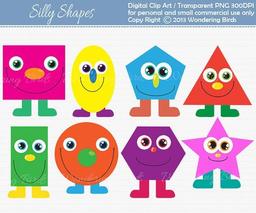
Colors and Shapes practice
Quiz by Delong, Susan
Customize this quiz to suit your class
Instantly translate to 100+ languages
Tag the questions with any skills you have. Your dashboard will track each student's mastery of each skill.
Give this quiz to my class
¿Cómo se dice "the shapes" en español?
los formas
las formas
unos formas
unas formas
¿Cómo se dice "the circle" en español?
el óvalo
el cuadrado
el círculo
el cubo
¿Cómo se dice "the shapes" en español?
¿Cómo se dice "the circle" en español?
¿Cómo se dice "the triangle" en español?
¿Cómo se dice "the square" en español?
¿Cómo se dice "the rectangle" en español?
¿Cómo se dice "the oval" en español?
¿Cómo se dice "the heart" en español?
¿Cómo se dice "the diamond" en español?
¿Cómo se dice "the stripes/ the lines" en español?
¿Cómo se dice "the star" en español?
¿Cómo se dice "the dots" en español?
¿Cómo se dice "the colors" en español?
¿Cómo se dice "blue" en español?
¿Cómo se dice "white" en español?
¿Cómo se dice "red" en español?
¿Cómo se dice "violet" en español?
¿Cómo se dice "purple" en español?
¿Cómo se dice "yellow" en español?
¿Cómo se dice "orange" en español?
¿Cómo se dice "green" en español?
¿Cómo se dice "pink" en español?
¿Cómo se dice "black" en español?
¿Cómo se dice "brown" en español?
¿Cómo se dice "gray" en español?
¿Cómo se dice "sky blue" en español?
¿Cómo se dice "fuchsia" en español?
¿Cómo se dice "turquoise" en español?
¿Cómo se dice "gold" en español?
¿Cómo se dice "silver" en español?
¿Cómo se dice "lilac" en español?
¿Cómo se dice "cream" en español?
¿Cómo se dice "The clock has the shape of a circle" en español?
some red circles
the blue triangles
marrón = café
The chair is black
a green square
the red heart
the yellow folders
some green pens
 When it was his turn to speak, Adam Malik, Presidium Minister for Political Affairs and Minister for Foreign Affairs of Indonesia, recalled that about a year before, in Bangkok, at the conclusion of the peace talks between Indonesia and Malaysia, he had explored the idea of an organization such as ASEAN with his Malaysian and Thai counterparts. One of the “angry young men” in his country’s struggle for independence two decades earlier, Adam Malik was then 50 years old and one of a Presidium of five led by then General Soeharto that was steering Indonesia from the verge of economic and political chaos. He was the Presidium’s point man in Indonesia’s efforts to mend fences with its neighbors in the wake of an unfortunate policy of confrontation. During the past year, he said, the Ministers had all worked together toward the realization of the ASEAN idea, “making haste slowly, in order to build a new association for regional cooperation.” Adam Malik went on to describe Indonesia’s vision of a Southeast Asia developing into “a region which can stand on its own feet, strong enough to defend itself against any negative influence from outside the region.” Such a vision, he stressed, was not wishful thinking, if the countries of the region effectively cooperated with each other, considering their combined natural resources and manpower. He referred to differences of outlook among the member countries, but those differences, he said, would be overcome through a maximum of goodwill and understanding, faith and realism. Hard work, patience and perseverance, he added, would also be necessary. The countries of Southeast Asia should also be willing to take responsibility for whatever happens to them, according to Tun Abdul Razak, the Deputy Prime Minister of Malaysia, who spoke next. In his speech, he conjured a vision of an ASEAN that would include all the countries of Southeast Asia. Tun Abdul Razak was then concurrently his country’s Minister of Defence and Minister of National Development. It was a time when national survival was the overriding thrust of Malaysia’s relations with other nations and so as Minister of Defence, he was in charge of his country’s foreign affairs. He stressed that the countries of the region should recognize that unless they assumed their common responsibility to shape their own destiny and to prevent external intervention and interference, Southeast Asia would remain fraught with danger and tension. And unless they took decisive and collective action to prevent the eruption of intra-regional conflicts, the nations of Southeast Asia would remain susceptible to manipulation, one against another. “We the nations and peoples of Southeast Asia,” Tun Abdul Razak said, “must get together and form by ourselves a new perspective and a new framework for our region. It is important that individually and jointly we should create a deep awareness that we cannot survive for long as independent but isolated peoples unless we also think and act together and unless we prove by deeds that we belong to a family of Southeast Asian nations bound together by ties of friendship and goodwill and imbued with our own ideals and aspirations and determined to shape our own destiny”. He added that, “with the establishment of ASEAN, we have taken a firm and a bold step on that road”. For his part, S. Rajaratnam, a former Minister of Culture of multi-cultural Singapore who, at that time, served as its first Foreign Minister, noted that two decades of nationalist fervor had not fulfilled the expectations of the people of Southeast Asia for better living standards. If ASEAN would succeed, he said, then its members would have to marry national thinking with regional thinking. “We must now think at two levels,” Rajaratnam said. “We must think not only of our national interests but posit them against regional interests: that is a new way of thinking about our problems. And these are two different things and sometimes they can conflict. Secondly, we must also accept the fact, if we are really serious about it, that regional existence means painful adjustments to those practices and thinking in our respective countries. We must make these painful and difficult adjustments. If we are not going to do that, then regionalism remains a utopia.” S. Rajaratnam expressed the fear, however, that ASEAN would be misunderstood. “We are not against anything”, he said, “not against anybody”. And here he used a term that would have an ominous ring even today: balkanization. In Southeast Asia, as in Europe and any part of the world, he said, outside powers had a vested interest in the balkanization of the region. “We want to ensure,” he said, “a stable Southeast Asia, not a balkanized Southeast Asia. And those countries who are interested, genuinely interested, in the stability of Southeast Asia, the prosperity of Southeast Asia, and better economic and social conditions, will welcome small countries getting together to pool their collective resources and their collective wisdom to contribute to the peace of the world.” The goal of ASEAN, then, is to create, not to destroy. This, the Foreign Minister of Thailand, Thanat Khoman, stressed when it was his turn to speak. At a time when the Vietnam conflict was raging and American forces seemed forever entrenched in Indochina, he had foreseen their eventual withdrawal from the area and had accordingly applied himself to adjusting Thailand’s foreign policy to a reality that would only become apparent more than half a decade later. He must have had that in mind when, on that occasion, he said that the countries of Southeast Asia had no choice but to adjust to the exigencies of the time, to move toward closer cooperation and even integration. Elaborating on ASEAN objectives, he spoke of “building a new society that will be responsive to the needs of our time and efficiently equipped to bring about, for the enjoyment and the material as well as spiritual advancement of our peoples, conditions of stability and progress. Particularly what millions of men and women in our part of the world want is to erase the old and obsolete concept of domination and subjection of the past and replace it with the new spirit of give and take, of equality and partnership. More than anything else, they want to be master of their own house and to enjoy the inherent right to decide their own destiny …” While the nations of Southeast Asia prevent attempts to deprive them of their freedom and sovereignty, he said, they must first free themselves from the material impediments of ignorance, disease and hunger. Each of these nations cannot accomplish that alone, but by joining together and cooperating with those who have the same aspirations, these objectives become easier to attain. Then Thanat Khoman concluded: “What we have decided today is only a small beginning of what we hope will be a long and continuous sequence of accomplishments of which we ourselves, those who will join us later and the generations to come, can be proud. Let it be for Southeast Asia, a potentially rich region, rich in history, in spiritual as well as material resources and indeed for the whole ancient continent of Asia, the light of happiness and well-being that will shine over the uncounted millions of our struggling peoples.” The Foreign Minister of Thailand closed the inaugural session of the Association of Southeast Asian Nations by presenting each of his colleagues with a memento. Inscribed on the memento presented to the Foreign Minister of Indonesia, was the citation, “In recognition of services rendered by His Excellency Adam Malik to the ASEAN organization, the name of which was suggested by him.” And that was how ASEAN was conceived, given a name, and born. It had been barely 14 months since Thanat Khoman brought up the ASEAN idea in his conversations with his Malaysian and Indonesian colleagues. In about three more weeks, Indonesia would fully restore diplomatic relations with Malaysia, and soon after that with Singapore. That was by no means the end to intra-ASEAN disputes, for soon the Philippines and Malaysia would have a falling out on the issue of sovereignty over Sabah. Many disputes between ASEAN countries persist to this day. But all Member Countries are deeply committed to resolving their differences through peaceful means and in the spirit of mutual accommodation. Every dispute would have its proper season but it would not be allowed to get in the way of the task at hand. And at that time, the essential task was to lay the framework of regional dialogue and cooperation. The two-page Bangkok Declaration not only contains the rationale for the establishment of ASEAN and its specific objectives. It represents the organization’s modus operandi of building on small steps, voluntary, and informal arrangements towards more binding and institutionalized agreements. All the founding member states and the newer members have stood fast to the spirit of the Bangkok Declaration. Over the years, ASEAN has progressively entered into several formal and legally-binding instruments, such as the 1976 Treaty of Amity and Cooperation in Southeast Asia and the 1995 Treaty on the Southeast Asia Nuclear Weapon-Free Zone. Against the backdrop of conflict in the then Indochina, the Founding Fathers had the foresight of building a community of and for all Southeast Asian states. Thus the Bangkok Declaration promulgated that “the Association is open for participation to all States in the Southeast Asian region subscribing to the aforementioned aims, principles and purposes.” ASEAN’s inclusive outlook has paved the way for community-building not only in Southeast Asia, but also in the broader Asia Pacific region where several other inter-governmental organizations now co-exist. The original ASEAN logo presented five brown sheaves of rice stalks, one for each founding member. Beneath the sheaves is the legend “ASEAN” in blue. These are set on a field of yellow encircled by a blue border. Brown stands for strength and stability, yellow for prosperity and blue for the spirit of cordiality in which ASEAN affairs are conducted. When ASEAN celebrated its 30th Anniversary in 1997, the sheaves on the logo had increased to ten – representing all ten countries of Southeast Asia and reflecting the colors of the flags of all of them. In a very real sense, ASEAN and Southeast Asia would then be one and the same, just as the Founding Fathers had envisioned. This article is based on the first chapter of ASEAN at 30, a publication of the Association of Southeast Asian Nations in commemoration of its 30th Anniversary on 8 August 1997, written by Jamil Maidan Flores and Jun Abad.Research: Scientific Attitudes These are the traits that scientists and researchers practice to ensure reliable results and good research work: Curiosity – Desire to ask questions and seek answers. Drives exploration and discovery. Example: Wondering why leaves change color in autumn. Intellectual Honesty – Reporting observations and results truthfully, even if they don’t support your hypothesis. Open-Mindedness – Willingness to accept new ideas and consider other perspectives. Perseverance – Continuing research despite difficulties or failures. Objectivity – Avoiding bias; basing conclusions only on evidence and facts. Positive Attitude Towards Failure – Viewing mistakes as opportunities to learn and improve. Skepticism – Questioning results and not accepting claims without sufficient evidence. Observation and Inference Observation – Using the senses (or tools) to gather information. Qualitative Observation → Describes qualities (color, shape, texture). Quantitative Observation → Uses numbers or measurements (height, mass, temperature). Inference – Logical explanation or conclusion based on observations and prior knowledge. Example: Seeing smoke and inferring there is fire. 🔎 Science Process Skills These are steps used in scientific investigations: Observing – Using senses and instruments to gather data. Inferring – Making explanations based on observations. Predicting – Stating what you think will happen based on patterns or evidence. Communicating – Sharing results through words, graphs, charts, or reports. Classifying – Grouping objects or data according to similarities and differences. Ordering/Sequencing – Arranging objects or events in correct order (time, size, importance). Measuring – Using standard units and instruments to describe length, mass, volume, time, etc. 📏 Measurement and Measuring Instruments Measurement – The process of comparing an unknown quantity with a standard unit. Common Quantities and Instruments: Length/Distance – Ruler, Meter Stick, Vernier Caliper, Tape Measure. Mass – Balance (triple beam, electronic). Volume – Graduated Cylinder, Measuring Cup, Pipette, Burette. Temperature – Thermometer. Time – Stopwatch, Clock. Electric Current – Ammeter. Voltage – Voltmeter. Key Idea: Accurate measurement requires using the correct instrument and unit (SI Units).Health 11/12 Review for Final Exam Core Concepts - Mental and Emotional Health, Substance Abuse Prevention, Safety and Violence Prevention, Family Life and Human Sexuality, Disease Prevention and Control, Healthy Eating Health Education Skills - goal setting, decision making, accessing information/resources, analyzing influences, communication, self-management, advocacy DIMENSIONS of Wellness - social, spiritual, emotional/mental, environmental, financial, intellectual, multicultural, occupational, physical, sexual RISK factors - anything that increases the risk of disease, injury, or illness. PROTECTIVE factors - anything that decreases the risk of disease, injury, or illness. INTERNAL health factors - health factors that can be either hereditary and genetic or acquired elements -- include smoking and personal diet or eating habits. Example – a genetic predisposition to an illness. EXTERNAL health factors - health factors that are part of the direct outer environment, the geographical location, micro-organisms, socio-economic elements that could affect an individual's health. Example – being unable to afford mental health services. Unit 1- Managing Personal and Community Wellness Explain Maslow’s Hierarchy of Needs in your own words using the image provided. Explain how each Social Determinant of Health may impact a person’s health. Levels of Disease Prevention • PRIMARY The goal is to avoid conditions altogether. • SECONDARY The goal is early detection. • TERTIARY The goal is to minimize the damage (manage). Define the following terms. Fads/Trends Sleep hygiene Driver safety Unit 2- Investigating Social Ecological Factors on Well-Being Socio-Ecological Model – The SEM examines how health behaviors form based on characteristics of individuals, communities, nations and levels in between. Each level overlaps with other levels signifying how the best public health strategies are those that encompass and target a wide range of perspectives. Interpersonal (personal) health vs. intrapersonal (relationship) health Health INEQUITY - systemic, ingrained and unjust barriers that prevent segments of the population from having the opportunity of health leading to health disparity. IMPLICIT BIAS - a form of bias that occurs automatically and unintentionally, that nevertheless affects judgments, decisions, and behaviors. Research has shown implicit bias can contribute to unequal access to quality healthcare, negative patient-provider relationships and interactions; and create mistrust in the healthcare system and practitioners among patients. This can contribute to health disparities. Health DISPARITY - represents a difference in health between populations. It is often used to describe disease burden and other negative health outcomes socially disadvantaged groups may face. Health EQUITY - The opposite of health inequity. It describes a system that supports a high standard of health and healthcare for all people. Racism - Beliefs, attitudes, institutional arrangements, and acts that tend to denigrate individuals or groups because of phenotypic characteristics or ethnic group affiliation. DISCRIMINATION - An unjust differential treatment of a person or a group. PRIVILEGE- The unearned access to resources and social power that are only available to some because of their membership within certain social groups. OPPRESSION is the act of taking away choices from others and can be defined as a system that maintains advantage and disadvantage based on social identities and that acts on multiple levels from interpersonal to institutional and societal. (internalized, interpersonal, institutional, structural) Systematic Oppression - Intentional disadvantage of groups of people based on their identity while advantaging members of dominant group (race, gender, sexual orientation, language, size, ability, etc.). Intersectionality - The complex, cumulative way in which the effects of multiple forms of discrimination (such as racism, sexism, and classism) combine, overlap, or intersect especially in the experiences of marginalized individuals or groups Unit 3- Accessing Resources and Communicating to Support Mental and Emotional Health What is anger? What is anxiety? What is stress? STRESSORS are the things that cause stress. Stressors can be internal and external. A stressor may be a one-time or short-term occurrence, or it can happen repeatedly over a long time. INTERNAL Stressors - are made by your belief system and the way you evaluate yourself. Examples include pessimistic attitude, negative self-talk, deep need to be perfect, low self-esteem or body image, unhealthy standards for self. EXTERNAL Stressors - are stressful things that happen in your surroundings and/or in your environment. Examples include busy schedules, work problems, family issues, financial trouble, social problems, injury, unforeseen circumstances. Socio-economic issues are also a part of external stressors such as poverty, violence, and racism. Define the following mental health conditions. Depression Eating disorders NSSI Non-suicidal self-injury Grief/Loss Suicide prevention A.C.T. • ACKNOWLEDGE- Tell them in a caring way that you recognize that they are having a problem • CARE- You can show you care by actively listening - put away anything else you are doing, make eye contact, sit down, ask questions. • TELL-(call 988 for additional help and support) - Tell them it is important that they speak with a trusted adult. Help them figure out who this may be and offer to go with your friend. A social norm is an unwritten, informal rule meant to guide behavior among the of society. It distinguishes between acceptable and unacceptable, good and bad, and so on. Social norms can influence a person with emotional or mental health disorders, access to care and stigmatize their situation. STIGMA- a mark of disgrace associated with a particular circumstance, quality, or person. • Self-stigma - This describes the internalized stigma that people with mental health conditions feel about themselves. • Public stigma - This refers to the negative attitudes around mental health from people in society. • Institutional stigma - This is a type of systemic stigma that arises from corporations, governments, and other institutions. Unit 4- Evaluating Risks of Substance Use and Abuse Harm Reduction - a set of practical strategies and ideas aimed at reducing negative consequences associated with drug use. Explain how each level of the Social Ecological Model is impacted by addiction. Individual Relationship Community Society SEM Level Contributing/Risk Factors to substance use Preventative/Protective Factors for substance use Individual Interpersonal/Relationship Community Society Unit 5- Analyzing Influences to Examine Ways to Increase Safety and Reduce Violence HATE CRIME - a crime, usually violent, motivated by prejudice or intolerance toward an individual’s national origin, ethnicity, color, religion, gender, gender identity, sexual orientation, or disability. Explain how the media influences violence in society. The Pyramid of Hate Explain the escalation of hate using the Pyramid of Hate visual. List several hate crime motivators. Example: age HEALTHY Relationship Signs - comfortable pace, trust, honesty, independence, respect, equality, kindness, taking responsibility, healthy conflict, fun UNHEALTHY Relationship Signs - intensity, possessiveness, manipulation, isolation, sabotage, belittling, guilting, volatility, deflecting responsibility, betrayal Sexual Assault is a sexual behavior WITHOUT consent. Human trafficking - the recruitment, harboring, transportation, provision, or obtaining of a person for labor or services, using force, fraud, or coercion for the purpose of subjection to involuntary servitude, peonage, debt bondage, or slavery. Sex trafficking - commercial sex act induced by force, fraud, or coercion, or in which the person induced to perform such an act has not attained 18 years of age. Trafficking happens using… • Force - using violence to control someone. • Fraud - using lies to control someone. • Coercion - using threats to control someone. Unit 6- Family Life and Human Sexuality Agency - A belief about yourself and the extent to which you can act on that belief. • The ability to choose freely one’s own narrative. • To embrace the idea that I am the cause (or agent) of my own thoughts and actions. • Personal agency is a personal responsibility for who we are, what we experience, what we do about that experience, and how we shape our world to give us more of the experiences we want. SEXUAL Agency • The ability to choose your own interests and desires vs. what we see in the media or others’ perceptions • The ability to identify, communicate, and negotiate one’s sexual needs • The ability to initiate behaviors that allow for the satisfaction of those needs Sexually Explicit Material - photographs, videos, films, magazines, and books whose primary themes, topics, or depictions involve sexuality that may cause sexual arousal. Sexual scripts - thoughts, patterns, or behavior that a person has about themselves in a romantic or sexual context. It is how people picture themselves or want to project themselves in front of others. Reproductive Rights of Teens - In Maryland, teens have the right to an abortion, keep their child, obtain and use birth control, paternity tests, adoption, give up custody of their child within 10 days of birth (Safe Haven Law). • REPRODUCTIVE RIGHTS- legal rights and the freedom of the individual to control decisions regarding contraception, abortion, sterilization and childbirth. • SAFE HAVEN LAW- a distressed parent who is unable or unwilling to care for their infant can safely give up custody of their baby, no questions asked. CONSENT is an agreement between participants to engage in sexual activity. • It is clearly and freely communicated, verbal, and affirmative. Consent CANNOT be given if… • A person is underage, one or both partners is intoxicated or incapacitated by drugs or alcohol, one partner is asleep or unconscious, one partner feels pressured, threatened or intimidated, or one partner holds a position of power or authority over the other. Unit 7- Advocating for Enhanced Nutrition, Food Systems, and Health Outcomes Dietary Guidelines for Americans Guideline 1: Follow a Healthy Dietary Pattern at Every Life Stage Guideline 2: Customize and Enjoy Food and Beverage Choices to Reflect Personal Preferences, Cultural Traditions, and Budgetary Considerations Guideline 3: Focus on Meeting Food Group Needs with Nutrient-Dense Foods and Beverages, and Stay Within Calorie Limits Guideline 4: Limit Foods and Beverages Higher in Added Sugars, Saturated Fat, and Sodium, and Limit Alcoholic Beverages FOOD DESERT- a neighborhood where there is little or limited access to healthy and affordable food such as fruits, vegetables, whole grains, low-fat milk and other foods that make up the full range of a healthy diet. FOOD INSEQURITY lack of access to a sufficient amount of food because of limited funds. More than 49 million American households are considered food insecure and are vulnerable to poor health as a result. PROCCESED FOODS- any raw agricultural commodities that have been washed, cleaned, milled, cut, chopped, heated, pasteurized, blanched, cooked, canned, frozen, dried, dehydrated, mixed or packaged — anything done to them that alters their natural state.COLORS AND SHAPESFrench colors and shapesSpanish colors and shapesAlign Panel: This panel allows you to align one or more objects the the artboard or other objects. Alignment: Formatting the appearance of text with the margins of the text box. Anchor Point Tool: Allows you to add or remove handles to create a curve on an anchor point. Anchor Points: A point on a path indicates a change of direction. Appearance Panel: This panel shows you the fill, strokes, graphic styles, and effects that have been applied to an object, group or layer and are able to modify theses from this panel directly. Area Type Tool: This occurs when using the type tool and you click and drag a text box, the text will automatically wrap inside the box. Blend Tool: This tool allows you to combine shapes/colors between two or more objects to create a new object between the original, blending the colors and shapes by inserting the middle steps to get from one object to the next. Blob Brush Tool: This tool is used to create free-form objects that can have a more hand-drawn feel. Brushes: Allows you to set the appearance/style of a path, can be applied to existing paths or used to create new paths. Clipping Masks: This command allows you to mask objects to a shape so that only areas that lie within the shape are visible, the mask and objects that are masked are called a clipping set. Closed Path: A path that has the same beginning and ending point. It forms a complete shape that can be filled with color or text. Create Outlines: This command converts text to closed paths and can be found in the Type Menu. Curvature Pen Tool: Allows you to simply create paths with curved anchor points. Curves: Can be applied to an anchor point using handles to create an arched line. Direct Select Tool: Allows you to select individual points of any path. Effects: These can be added to objects to create quick dynamic characteristics. Eraser Tool: This tool allows you to remove anchor points and cut through paths. Expand Objects: This allows you to divide a single object into multiple objects that make up its appearance. Eyedropper Tool: This tool allows you to sample the color or text from an existing part of the artwork. Global Swatches: This is a color swatches that will be automatically updated throughout your artwork when you change them, indicated with a white triangle in the corner of the swatch. Graphic Styles: A set of reusable appearance attributes that allow you to quickly change the look of an object. Grouping: This command allows you to link objects together so that they can be moved, scaled, rotator, or copy. Groups can be nested inside other groups. Hierarchy: To create visual order in design, controlling what the viewer looks at in order using size, color, contrast, etc… Image Trace: This command allows you to convert a raster image into a vector artwork. Isolation Mode: This mode allows you to adjust single objects/groups inside a group without ungrouping the group. Join Tool: This tool joins paths and anchor points together quickly. Kerning: This is the adjustment of the space between two individual letters. Knife Tool: This tool allows you to split an object into 2 pieces along a freehand path you draw. Leading: This is the adjustment of the space between lines of text. Live Corners: This widget appears when using the Direct Select tool and a corner is selected, when used this will create a rounded corner. Live Paint: This command allows you to quickly apply colors to objects in a complex design. Open Path: A path that does not end, not connected back to the original anchor point. Overflow Text: This occurs when the text box is too small to house all the text and is indicated by a small red plus sign in the bottom right corner of the text box. Paintbrush Tool: This tool is used to create free-form paths that can have a more hand-drawn feel. Paragraph Spacing: The space that occurs between lines of text. Pathfinder Panel: This panel allows you to create complex shapes by selecting 2 or more objects and using the buttons in the panel to cut, combine, or divide the objects. Paths: These are created when 2 or more points are connected, these are created using the pen tool. Pen Tool: It allows you to create and edit anchor points and paths. Pencil Tool: This tool is used to create free-form shapes or lines, the accuracy of the lines can be adjusted. Perspective Tool: This tool allows you to place elements on a perspective grid to adjust objects on a different perspective, automatically snapping to the perspective grid. Placeholder Text: Text that is placed in a text box that "holds a place" in a design to allow for creating a layout or adjust the text design. Point Type Tool: This occurs when when using the type tool and you click once, the text will continue without wrapping. Readability: The characteristics of fonts and styles that make test easy to identify and read. Scale, Shear, Distort Objects: This set of commands allows you to adjust the size and perspective of objects. Scissors Tool: This tool allows you to split a path into 2 pieces. Selection Tool: Allows you to select paths, objects or groups by click or dragging over them. Shape Builder Tool: This interactive tool allows you to create complex shapes by merging and erasing simpler objects. Shapes Tools: A group of tools to create basic shapes without using the pen tool (rectangle, ellipse, polygon, star, etc…). Smooth Tool: This tool will smooth a complex path and reduce the number of anchor points. Swatches: This is a saved color that can be applied in a design via the swatches panel and can be grouped, these can include gradients and patterns. Text Wrapping: This is when the text in a text box automatically wraps to the next line when it reaches the edge of the box. Threading Text: This is the ability to create 2 or more text boxes that are linked, when text is added/adjusted in one box, it will affect the other(s). Touch Type Tool: This tool allows you to adjust individual letter in a previously created text box. Tracking: This is the adjustment of the overall spacing between letters. Transform Objects: This allows you to change the size of objects. Type on a Path Tool: This tool allows you to add text along any previously created path. Type Tool: This tool allows you to create text in a design. View Modes: Ability to view projects and adjust the display on the screen. Modes include Outlines, Presentation, & Full Screen.Colors Metals and Shapes