Loading...


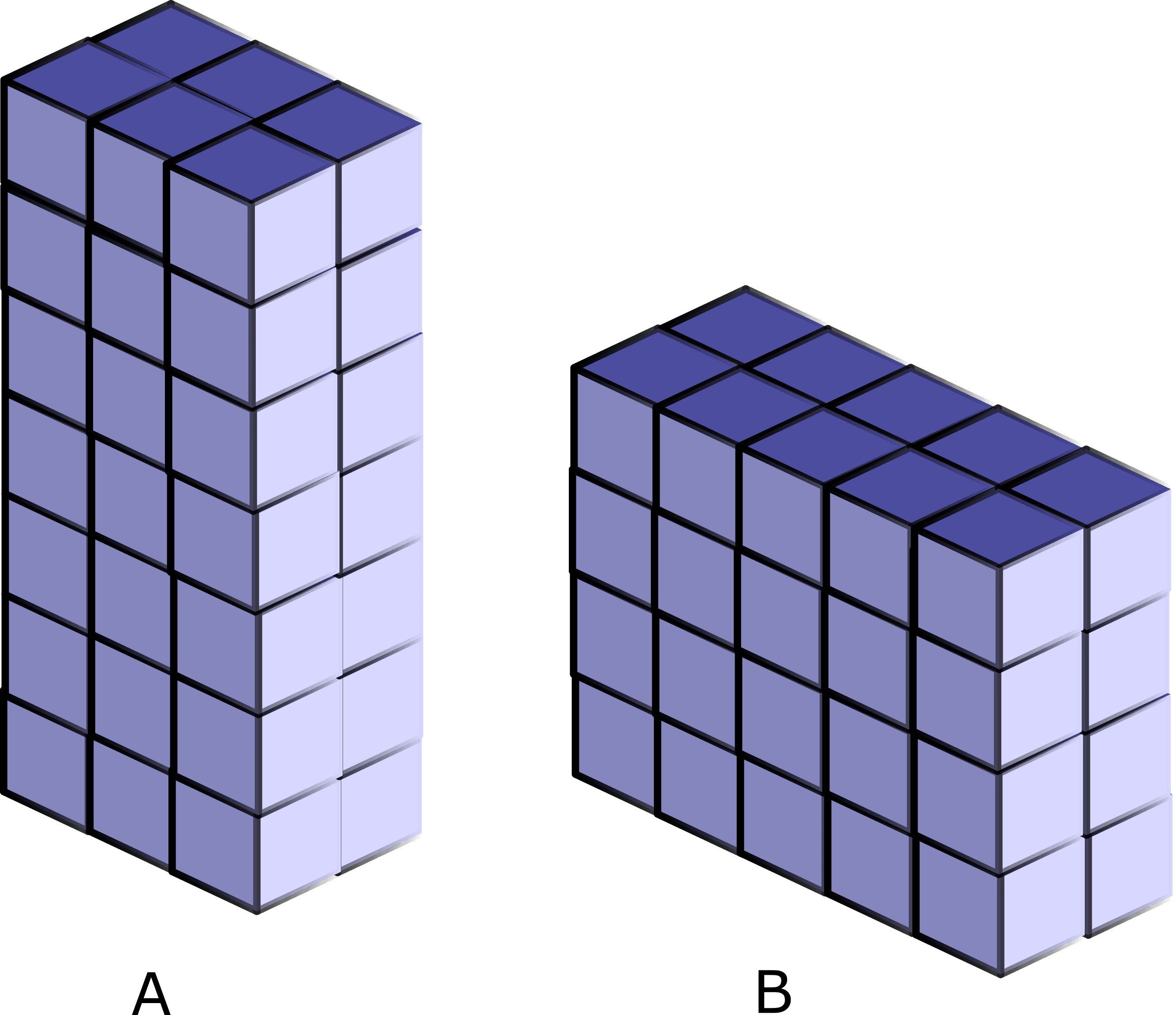
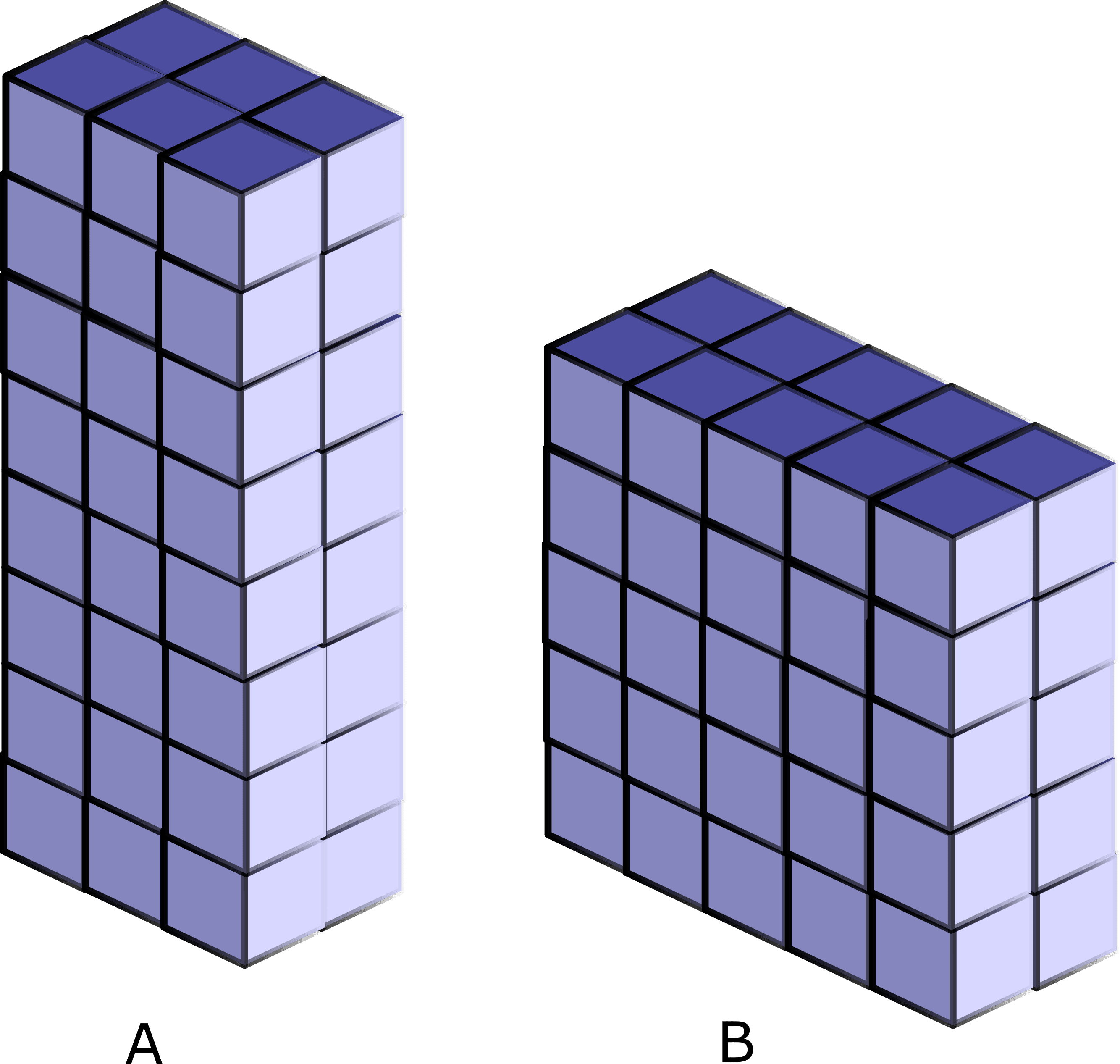
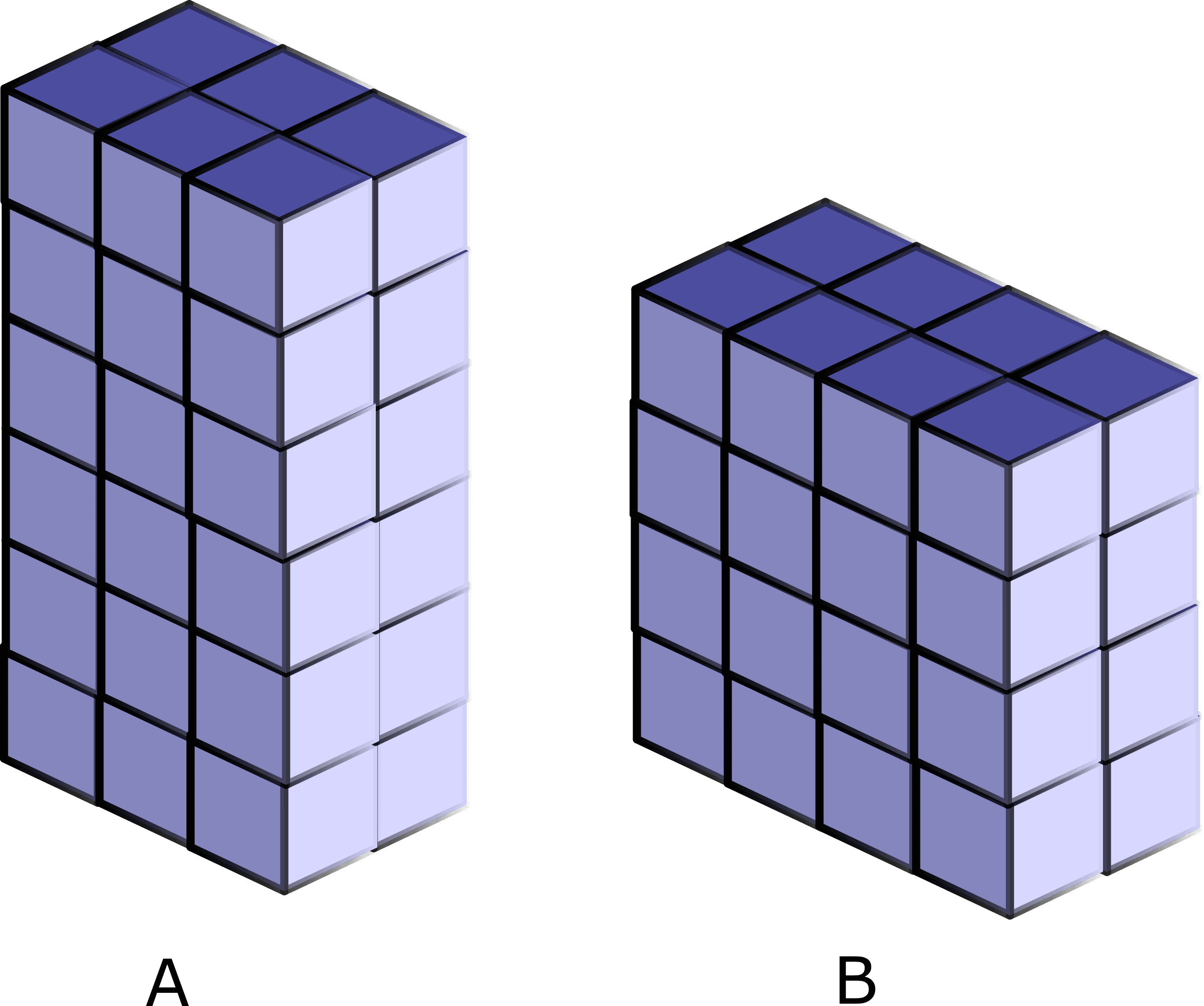
Compare volumes of solid shapes
Quiz by Common Core - Grade 5
Customize this quiz to suit your class
Instantly translate to 100+ languages
Tag the questions with any skills you have. Your dashboard will track each student's mastery of each skill.
Give this quiz to my class

 Compare solid liquid and gas through shape volume atomic structure and amount of kinetic energy6A compare solids, liquids, and gasses in terms of their structure, shape, volume, and kinetic energy of atoms and molecules 6C identify elements on the periodic table as metals, nonmetals, metalloids, and rare Earth elements based on their physical properties and importance to modern life; 6D compare the density of substances relative to various fluidsCompare solids, liquids, and gases in terms of their structure, shape, volume, and kinetic energy of atoms and molecules;Plant cells have three kinds of structures that are not found in animal cells and that are extremely important to plant survival: plastids, central vacuoles, and cell walls. PLANT CELLS Most of the organelles and other parts of the cell just described are common to all eukaryotic cells. However, plant cells have three additional kinds of structures that are extremely important to plant function: cell walls, large central vacuoles, and plastids. To understand why plant cells have structures not found in ani- mal cells, consider how a plant’s lifestyle differs from an animal’s. Plants make their own carbon-containing molecules directly from carbon taken in from the environment. Plant cells take carbon diox- ide gas from the air, and in a process called photosynthesis, they convert carbon dioxide and water into sugars. The organelles and structures in plant cells are shown in Figure 4-21. SECTION 4 OBJECTIVES ● List three structures that are present in plant cells but not in animal cells. ● Compare the plasma membrane, the primary cell wall, and the secondary cell wall. ● Explain the role of the central vacuole. ● Describe the roles of plastids in the life of a plant. ● Identify features that distinguish prokaryotes, eukaryotes, plant cells, and animal cells. VOCABULARY cell wall central vacuole plastid chloroplast thylakoid chlorophyll Chloroplast Golgi apparatus Mitochondrion Cell membrane Nucleolus Nucleus Cytoskeleton Rough endoplasmic reticulum Pore Smooth endoplasmic reticulum Central vacuole Ribosome Cell wall In addition to containing almost all of the types of organelles that animal cells contain, plant cells contain three unique features. Those features are the cell wall, the central vacuole, and plastids, such as chloroplasts. FIGURE 4-21 Copyright © by Holt, Rinehart and Winston. All rights reserved. 88 CHAPTER 4 CELL WALL The cell wall is a rigid layer that lies outside the cell’s plasma membrane. Plant cell walls contain a carbohydrate called cellulose. Cellulose is embedded in a matrix of proteins and other carbohy- drates that form a stiff box around each cell. Pores in the cell wall allow water, ions, and some molecules to enter and exit the cell. Primary and Secondary Cell Walls The main component of the cell wall, cellulose, is made directly on the surface of the plasma membrane by enzymes that travel along the membrane. These enzymes are guided by microtubules inside the plasma membrane. Growth of the primary cell wall occurs in one direction, based on the orientation of the microtubules. Other components of the cell wall are made in the ER. These materials move in vesicles to the Golgi and then to the cell surface. Some plants also produce a secondary cell wall. When the cell stops growing, it secretes the secondary cell wall between the plasma membrane and the primary cell wall. The secondary cell wall is very strong but can no longer expand. The wood in desks and tabletops is made of billions of secondary cell walls. The cells inside the walls have died and disintegrated. CENTRAL VACUOLE Plant cells may contain a reservoir that stores large amounts of water. The central vacuole is a large, fluid-filled organelle that stores not only water but also enzymes, metabolic wastes, and other materials. The central vacuole, shown in Figure 4-22, forms as other smaller vacuoles fuse together. Central vacuoles can make up 90 percent of the plant cell’s volume and can push all of the other organelles into a thin layer against the plasma membrane. When water is plentiful, it fills a plant’s vacuoles. The cells expand and the plant stands upright. In a dry period, the vacuoles lose water, the cells shrink, and the plant wilts. Other Vacuoles Some vacuoles store toxic materials. The vacuoles of acacia trees, for example, store poisons that provide a defense against plant-eating ani- mals. Tobacco plant cells store the toxin nicotine in a storage vacuole. Other vacuoles store plant pigments, such as the colorful pigments found in rose petals. The central vacuole occupies up to 90 percent of the volume of some plant cells. The central vacuole stores water and helps keep plant tissue firm. FIGURE 4-22 Central vacuole Nucleus Chloroplast Copyright © by Holt, Rinehart and Winston. All rights reserved. CELL STRUCTURE AND FUNCTION 89 PLASTIDS Plastids are another unique feature of plant cells. Plastids are organelles that, like mitochondria, are surrounded by a double mem- brane and contain their own DNA. There are several types of plastids, including chloroplasts, chromoplasts, and leucoplasts. Chloroplasts Chloroplasts use light energy to make carbohydrates from carbon dioxide and water. As Figure 4-23 shows, each chloroplast contains a system of flattened, membranous sacs called thylakoids. Thylakoids contain the green pigment chlorophyll, the main mole- cule that absorbs light and captures light energy for the cell. Chloroplasts can be found not only in plant cells but also in a wide variety of eukaryotic algae, such as seaweed. Chloroplast DNA is very similar to the DNA of certain photosyn- thetic bacteria. Plant cell chloroplasts can arise only by the divi- sion of preexisting chloroplasts. These facts may suggest that chloroplasts are descendants of ancient prokaryotic cells. Like mitochondria, chloroplasts are also thought to be the descendants of ancient prokaryotic cells that were incorporated into plant cells through a process called endosymbiosis. Chromoplasts Chromoplasts are plastids that contain colorful pigments and that may or may not take part in photosynthesis. Carrot root cells, for example, contain chromoplasts filled with the orange pigment carotene. Chromoplasts in flower petal cells contain red, purple, yellow, or white pigments. Other Plastids Several other types of plastids share the general features of chloro- plasts but differ in content. For example, amyloplasts store starch. Chloroplasts, chromoplasts, and amyloplasts arise from a common precursor, called a proplastid. Thylakoid Inner membrane Outer membrane chloroplast from the Greek chloros, meaning “pale green,” and plastos, meaning “formed” Word Roots and Origins A chloroplast captures energy from sunlight and uses that energy to convert carbon dioxide and water into sugar and other carbohydrates. FIGURE 4-23 Copyright © by Holt, Rinehart and Winston. All rights reserved. 90 CHAPTER 4 COMPARING CELLS All cells share common features, such as a cell membrane, cyto- plasm, ribosomes, and genetic material. But there is a high level of diversity among cells, as shown in Figure 4-24. There are signifi- cant differences between prokaryotes and eukaryotes. In addition, plant cells have features that are not found in animal cells. Prokaryotes Versus Eukaryotes Prokaryotes differ from eukaryotes in that prokaryotes lack a nucleus and membrane-bound organelles. Prokaryotes have a region, called a nucleoid, in which their genetic material is concen- trated. However, prokaryotes lack an internal membrane system. Plant Cells Versus Animal Cells Three unique features distinguish plant cells from animal cells. One is the production of a cell wall by plant cells. Plant cells contain a large central vacuole. Third, plant cells contain a variety of plastids, which are not found in animal cells. Cell walls, central vacuoles, and plastids are unique features that are important to plant function. 1. Identify three unique features of plant cells. 2. List the differences between the plasma mem- brane, the primary cell wall, and the secondary cell wall. 3. Identify three functions of plastids. 4. Name three things that may be stored in vacuoles. 5. Describe the features that distinguish prokary- otes from eukaryotes and plant cells from animal cells. CRITICAL THINKINGQ1. A teacher designs a lesson where students compute real-life percentages such as discounts and savings. 👉 A student calculates 15% of 200 to determine savings in a purchase. What is the correct result? A. 20 B. 25 C. 30 D. 35 Q2. In a classroom activity, learners compare numbers to find the highest common factor for grouping materials evenly. 👉 What is the GCF of 24 and 36? A. 6 B. 8 C. 12 D. 18 📘 FRACTIONS, DECIMALS, AND POWERS Q3. A learner converts fractions into percentages for data interpretation. 👉 What is 3/4 expressed as a percentage? A. 50% B. 60% C. 75% D. 80% Q4. A student models exponential growth using repeated multiplication. 👉 What is the value of 252^525? A. 25 B. 30 C. 32 D. 64 📘 ALGEBRA (EQUATIONS AND EXPRESSIONS) Q5. A teacher guides students to solve equations that represent real-life situations. 👉 Solve: 2x+8=202x + 8 = 202x+8=20 A. x = 4 B. x = 6 C. x = 8 D. x = 10 Q6. Students simplify expressions to understand relationships between quantities. 👉 Simplify: 3(x+4)−2x3(x + 4) - 2x3(x+4)−2x A. x + 12 B. x + 4 C. 5x + 4 D. 5x + 12 📘 FUNCTIONS AND GRAPHING Q7. A student analyzes a linear equation to determine its rate of change. 👉 What is the slope of y=3x−5y = 3x - 5y=3x−5? A. -5 B. -3 C. 3 D. 5 Q8. A learner evaluates functions to predict outcomes. 👉 If f(x)=2x+3f(x) = 2x + 3f(x)=2x+3, what is f(4)f(4)f(4)? A. 7 B. 9 C. 11 D. 14 📘 GEOMETRY Q9. Students explore geometric shapes and their properties through visual models. 👉 What is the sum of interior angles of a triangle? A. 90° B. 180° C. 270° D. 360° Q10. A student calculates the area of a classroom table with dimensions 8 cm by 5 cm. 👉 What is the area? A. 26 sq cm B. 30 sq cm C. 40 sq cm D. 48 sq cm 📘 MEASUREMENT AND FIGURES Q11. A learner determines the volume of a cube used in a science experiment. 👉 What is the volume of a cube with side 4 cm? A. 16 cubic cm B. 32 cubic cm C. 48 cubic cm D. 64 cubic cm Q12. Students identify shapes used in design projects. 👉 How many sides does a hexagon have? A. 5 B. 6 C. 7 D. 8 📘 STATISTICS AND PROBABILITY Q13. A teacher helps students interpret data sets using measures of central tendency. 👉 What is the mean of 4, 6, 8, 10, 12? A. 6 B. 8 C. 10 D. 12 Q14. A class experiment involves flipping a fair coin. 👉 What is the probability of getting heads? A. 1/4 B. 1/3 C. 1/2 D. 2/3 📘 WORD PROBLEMS (APPLICATION) Q15. A car travels 180 km in 3 hours during a learning task on speed. 👉 What is its average speed? A. 45 km/h B. 60 km/h C. 75 km/h D. 90 km/h Q16. Students analyze work efficiency in a project. 👉 If 5 workers complete a task in 12 days, how long will 10 workers take? A. 3 days B. 6 days C. 8 days D. 12 days Q17. A student solves a problem involving ratios in a classroom population. 👉 If the ratio of boys to girls is 3:2 and there are 30 students, how many boys are there? A. 12 B. 15 C. 18 D. 20 Q18. A learner determines the duration of a scheduled trip. 👉 A journey starts at 8:30 AM and ends at 11:15 AM. How long is the trip? A. 2 hrs 15 mins B. 2 hrs 30 mins C. 2 hrs 45 mins D. 3 hrs 15 mins Q19. A student computes simple interest for financial literacy. 👉 What is the simple interest on ₱1000 at 5% for 2 years? A. ₱50 B. ₱75 C. ₱100 D. ₱150 Q20. A learner solves a perimeter problem involving a rectangle. 👉 A rectangle has a length of 12 cm and perimeter of 34 cm. What is the width? A. 5 cm B. 7 cm C. 10 cm D. 11 cm ✅ ANSWER KEY (BASED ON YOUR REVIEWER) (All verified from your uploaded file) [ilide.info...002acd4e5a | PDF] QAnswer1C2C3C4C5B6A7C8C9B10C11D12B13B14C15B16B17C18C19C20ACompare and order measurements of volume and capacityCells of different organisms and even cells within the same organism are very diverse in terms of shape, size, and internal organization. One theme that occurs again and again throughout biology is that form follows function. In other words, a cell’s function influences its physical features. Cell Shape The diversity in cell shapes reflects the different functions of cells. Compare the cell shapes shown in Figure 4-4. The long extensions that reach out in various directions from the nerve cell shown in Figure 4-4a allow the cell to send and receive nerve impulses. The flat, platelike shape of skin cells in Figure 4-4b suits their function of covering and protecting the surface of the body. As shown below, a cell’s shape can be simple or complex depending on the function of the cell. Each cell has a shape that has evolved to allow the cell to perform its function effectively. SECTION 2 OBJECTIVES ● Explain the relationship between cell shape and cell function. ● Identify the factor that limits cell size. ● Describe the three basic parts of a cell. ● Compare prokaryotic cells and eukaryotic cells. ● Analyze the relationship among cells, tissues, organs, organ systems, and organisms. VOCABULARY plasma membrane cytoplasm cytosol nucleus prokaryote eukaryote organelle tissue organ organ system Cells have various shapes. (a) Nerve cells have long extensions. (b) Skin cells are flat and platelike. (c) Egg cells are spherical. (d) Some bacteria are rod shaped. (e) Some plant cells are rectangular. FIGURE 4-4 (a) Nerve cell (b) Skin cells (c) Egg cell (d) Bacterial cells (e) Plant cells Copyright © by Holt, Rinehart and Winston. All rights reserved. 1. All cubes have volume and surface area. The total surface area is equal to the sum of the areas of each of the six sides (area = length X width). 2. If you split the first cube into eight smaller cubes, you get 48 sides. The volume remains constant, but the total surface area doubles. 3. If you split each of the eight cubes into eight smaller cubes, you have 64 cubes that together contain the same volume as the first cube. The total surface area, however, has doubled again. CELL STRUCTURE AND FUNCTION 73 Cell Size Cells differ not only in their shape but also in their size. A few types of cells are large enough to be seen by the unaided human eye. For example, the nerve cells that extend from a giraffe’s spinal cord to its foot can be 2 m (about 6 1/2 ft) long. A human egg cell is about the size of the period at the end of this sentence. Most cells, how- ever, are only 10 to 50 μm in diameter, or about 1/500 the size of the period at the end of this sentence. The size of a cell is limited by the relationship of the cell’s outer surface area to its volume, or its surface area–to-volume ratio. As a cell grows, its volume increases much faster than its surface area does, as shown in Figure 4-5. This trend is important because the materials needed by a cell (such as nutrients and oxygen) and the wastes produced by a cell (such as carbon dioxide) must pass into and out of the cell through its surface. If a cell were to become very large, the volume would increase much more than the surface area. Therefore, the surface area would not allow materials to enter or leave the cell quickly enough to meet the cell’s needs. As a result, most cells are microscopic in size. Comparing Surface Cells Materials microscope, prepared slides of plant (dicot) stem and ani- mal (human) skin, pencil, paper Procedure Examine slides by using medium magnification (100). Observe and draw the sur- face cells of the plant stem and the animal skin. Analysis How do the surface cells of each organism differ from the cells beneath the surface cells? What is the function of the surface cells? Explain how surface cells are suited to their function based on their shape. Quick Lab Small cells can exchange substances more readily than large cells because small objects have a higher surface area–to-volume ratio. FIGURE 4-5 mb06se_csfs02.qxd 5/18/07 10:54 AM Page 73 74 CHAPTER 4 BASIC PARTS OF A CELL Despite the diversity among cells, three basic features are common to all cell types. All cells have an outer boundary, an interior sub- stance, and a control region. Plasma Membrane The cell’s outer boundary, called the plasma membrane (or the cell membrane), covers a cell’s surface and acts as a barrier between the inside and the outside of a cell. All materials enter or exit through the plasma membrane. The surface of a plasma mem- brane is shown in Figure 4-6a. Cytoplasm The region of the cell that is within the plasma membrane and that includes the fluid, the cytoskeleton, and all of the organelles except the nucleus is called the cytoplasm. The part of the cytoplasm that includes molecules and small particles, such as ribosomes, but not membrane-bound organelles is the cytosol. About 20 percent of the cytosol is made up of protein. Control Center Cells carry coded information in the form of DNA for regulating their functions and reproducing themselves. The DNA in some types of cells floats freely inside the cell. Other cells have a mem- brane-bound organelle that contains a cell’s DNA. This membrane- bound structure is called the nucleus. Most of the functions of a eukaryotic cell are controlled by the cell’s nucleus. The nucleus is often the most prominent structure within a eukaryotic cell. It maintains its shape with the help of a protein skeleton called the nuclear matrix. The nucleus of a typical animal cell is shown inFigure 18-11 represents the amount of energy stored as organic material in each trophic level in an ecosystem. The pyramid shape of the diagram indicates the low percentage of energy transfer from one level to the next. On average, 10 percent of the total energy consumed in one trophic level is incor- porated into the organisms in the next. Why is the percentage of energy transfer so low? One reason is that some of the organisms in a trophic level escape being eaten. They eventually die and become food for decomposers, but the energy contained in their bodies does not pass to a higher trophic level. Even when an organism is eaten, some of the molecules in its body will be in a form that the consumer cannot break down and use. For example, a cougar cannot extract energy from the antlers, hooves, and hair of a deer. Also, the energy used by prey for cellu- lar respiration cannot be used by predators to synthesize new bio- mass. Finally, no transformation or transfer of energy is 100 percent efficient. Every time energy is transformed, such as during the reactions of metabolism, some energy is lost as heat. Limitations of Trophic Levels The low rate of energy transfer between trophic levels explains why ecosystems rarely contain more than a few trophic levels. Because only about 10 percent of the energy available at one trophic level is transferred to the next trophic level, there is not enough energy in the top trophic level to support more levels. Organisms at the lowest trophic level are usually much more abundant than organisms at the highest level. In Africa, for exam- ple, you will see about 1,000 zebras, gazelles, and other herbivores for every lion or leopard you see, and there are far more grasses and shrubs than there are herbivores. Higher trophic levels con- tain less energy, so, they can support fewer individuals.A population is a group of organisms that belong to the same species and live in a particular place at the same time. All of the bass living in a pond during a certain period of time make up a pop- ulation because they are isolated in the pond and do not interact with bass living in other ponds. The boundaries of a population may be imposed by a feature of the environment, such as a lake shore, or they can be arbitrarily chosen to simplify a study of the population. The humans shown in Figure 19-1 are part of the pop- ulation of a city. The properties of populations differ from those of individuals. An individual may be born, it may reproduce, or it may die. A population study focuses on a population as a whole—how many individuals are born, how many die, and so on. Population Size A population’s size is the number of individuals that the population contains. Size is a fundamental and important population property but can be difficult to measure directly. If a population is small and composed of immobile organisms, such as plants, its size can be determined simply by counting individuals. Often, though, individ- uals are too abundant, too widespread, or too mobile to be counted easily, and scientists must estimate the number of individuals in the population. Suppose that a scientist wants to know how many oak trees live in a 10 km2 patch of forest. Instead of searching the entire patch of forest and counting all the oak trees, the scientist could count the trees in a smaller section of the forest, such as a 1 km2 area. The scientist could then use this value to estimate the population of the larger area. SECTION 1 OBJECTIVES ● Describe the main properties that scientists measure when they study populations. ● Compare the three general patterns of population dispersion. ● Identify the measurements used to describe changing populations. ● Compare the three general types of survivorship curves. VOCABULARY population population density dispersion birth rate death rate life expectancy age structure survivorship curve FIGURE 19-1 A population can be widely distributed, as Earth’s human population is, or confined to a small area, as species of fish in a lake are. Copyright © by Holt, Rinehart and Winston. All rights reserved. 382 CHAPTER 19 If the small patch contains 25 oaks, an area 10 times larger would likely contain 10 times as many oak trees. A similar kind of sampling technique might be used to estimate the size of the pop- ulation shown in Figure 19-2. To use this kind of estimate, the sci- entist must assume that the distribution of individuals in the entire population is the same as that in the sampled group. Estimates of population size are based on many such assumptions, so all esti- mates have the potential for error. Population Density Population density measures how crowded a population is. This measurement is always expressed as the number of individuals per unit of area or volume. For example, the population density of humans in the United States is about 30 people per square kilome- ter. Table 19-1 shows the population sizes and densities of humans in several countries in 2003. These estimates are calculated for the total land area. Some areas of a country may be sparsely popu- lated, while other areas are very densely populated. Dispersion A third population property is dispersion (di-SPUHR-zhuhn). Dispersion is the spatial distribution of individuals within the popu- lation. In a clumped distribution, individuals are clustered together. In a uniform distribution, individuals are separated by a fairly con- sistent distance. In a random distribution, each individual’s location is independent of the locations of other individuals in the popula- tion. Figure 19-3 illustrates the three possible patterns of dispersion. Clumped distributions often occur when resources such as food or living space are clumped. Clumped distributions may also occur because of a species’ social behavior, such as when animals gather into herds or flocks. Uniform distributions may result from social behavior in which individuals within the same habitat stay as far away from each other as possible. For example, a bird may locate its nest so as to maximize the distance from the nests of other birds. These migrating wildebeests in East Africa are too numerous and mobile to be counted. Scientists must use sampling methods at several locations to monitor changes in the population size of the animals. FIGURE 19-2 TABLE 19-1 Population Size and Density of Some Countries Population size Population density Country (in millions) (in individuals/km2) China 1,289 135 India 1,069 325 United States 292 30 Russia 146 8 Japan 128 337 Mexico 105 54 Kenya 32 54 Australia 20 3 dispersion from the Latin dis-, meaning “out,” and spargere, meaning “to scatter” Word Roots and Origins Copyright © by Holt, Rinehart and Winston. All rights reserved. POPULATIONS 383 The social interactions of birds called gannets, which are shown in Figure 19-3b, result in a uniform distribution. Each gannet chooses a small nesting area on the coast and defends it from other gannets. In this way, each gannet tries to maximize its distance from all of its neighbors, which causes a uniform distribution of individuals. Few populations are truly randomly dispersed. Rather, they show degrees of clumping or uniformity. The dispersion pattern of a population sometimes depends on the scale at which the popu- lation is observed. The gannets shown in Figure 19-3b are uni- formly distributed on a scale of a few meters. However, if the entire island on which the gannets live is observed, the distribution appears clumped because the birds live only near the shore. POPULATION DYNAMICS All populations are dynamic—they change in size and composition over time. To understand these changes, scientists must know more than the population’s size, density, and dispersion. One important measure is the birth rate, the number of births occur- ring in a period of time. In the United States, for example, there are about 4 million births per year. A second important measure is the death rate, or mortality rate, which is the number of deaths in a