Loading...

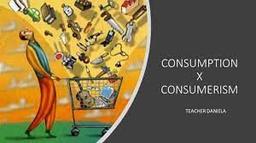
consumption or consumerism?
Quiz by vicente
Customize this quiz to suit your class
Instantly translate to 100+ languages
Tag the questions with any skills you have. Your dashboard will track each student's mastery of each skill.
Give this quiz to my class
CONSUMPTION IS ...
purchase expendable products for the pleasure of buying
acquire useful and necessary products for living
CONSUMERISM IS...
purchase expendable products for the pleasure of buying
acquire useful and necessary products for living
CONSUMPTION IS ...
CONSUMERISM IS...
DRINK WATER
Go to the outstanding fashion.
DRINK COKE
Dress up.
Eat bread
Have a home.
Eat sweets.
Have a second home.
TOURISM
Collect records from your favorite band.
TO MOVE
Follow the Mediterranean diet
Play a musical instrument.
EAT JUNK FOOD
Change your car continuously.
Use public transport
Have a pool in the garden.
A BATH IN THE SEA
Buy luxury objects.
Buy a frying pan for cooking.
 C Consumers and customers C1 Market segmentation, targeting and positioning Learners will understand how and why B2B and B2C organisations segment the market, and how and why marketing activities are adapted according to the different segments identified. • Target market segmentation: o demographics – age, race, religion, gender, family size, ethnicity, income, education level, disability, socio-economic group i.e. socio-economic status, MOSAIC o geographic – location o psychographic – social class, attitudes, lifestyle and personality characteristics o behavioural – spending, consumption, rate of usage, loyalty status, desired benefits o B2B targeting – organisation size, scope, purpose, culture, type of product, industry type, budget holder/purchasing decision maker, budget size. C2 Consumer buying behaviour • Customer needs and wants: o functional benefits o emotional benefits o physiological benefits o luxury or necessity. • Consumer behaviour processes: o what, how much, when, why o impulse purchases o routine purchases o limited decision making o extensive decision making. C3 Customer profiles Learners will understand customer profiling within marketing practice. • External customer: a person or external organisation who buys products. • Internal customer: a person who is directly connected to the organisation, but not necessarily employed by them: o stakeholders o employees o shareholders. • Consumer: a person or business who uses the products they have bought or were bought for them. • Physical goods and intangible services. • Customer profiles: o demographics – age, gender, occupation, income, education o psychographic o behavioural – using web analytics to create userCreate a multiple choice quiz with the following information: Earth’s Sphere Everything on Earth can be placed into one of four major subsystems: land, water, living things, and air. These four subsystems are called "spheres." Specifically, they are the "geosphere" (land), "hydrosphere" (water), "biosphere" (living things), and "atmosphere" (air). Geosphere All the rock, soil and sediments that makeup Earth’s land. It comes from the word “Geo” which means “Earth.” Hydrosphere All the oceans, rivers, lakes and water on Earth. It comes from the word “Hydro” which means “water.” Atmosphere All the gasses surrounding the earth. It comes from the word “Atmos” which means “air.” Biosphere All the living things on Earth. It comes from the word “Bio” which means “life.” Interact act in such a way as to have an effect on another; Freshwater naturally occurring water that is not salty, and is suitable for consumption if clean or processed. Groundwater water held underground in the soil or in pores and crevices in rock Recycling To reuse something that would have otherwise been thrown out or to turn it into something usable again instead of sending it to a landfill. Erosion After pieces of the earth are broken down through weathering, those pieces are moved through Erosion. Erosion is the process of moving things from one place to another. Mushroom Rocks Naturally occurring rocks that look like a mushroom. They can be formed when sand gets carried by wind and hits the rock. This weathers the bottom of the rock more than the top. Dry Ice A solid form of carbon dioxide that is very cold and turns directly from a solid to a gas.Peas Peas are one of the most important vegetables Zimbabweans can grow for export. They are legumes Legumes fix Nitrogen IMPORTANCE OF PEAS Peas have a lot of health benefits for human consumption. They can be eaten raw or added to a variety of dishes Peas have vitamins and antioxidants. They are good for heart performance. They are good for dealing with high blood pressure. They have a very high protein content VARIETIES Some of the common varieties to grow are Snowbird, Sabre, Serge, Alaska, Greenfeast and Recruit Varieties are also called cultivars FAVOURABLE CLIMATE Peas prefer cold conditions to grow well. Temperatures of 22 degrees or below (starting at 13 degrees Celsius) are the best for peas farming. The best temperature is 22 degrees Celsius. Extremely hot temperatures will lead to lack of growth or hard pods. SOIL REQUIREMENTS Soil should be fertile. The soil should have good drainage. Soil pH must be in the range of 6 to 7.5. The best soil type is sandy loam – clay soils can also cut it The soil should be deep LAND PREPARATION Land preparation includes the following Dig or plough to aerate the soil and improve drainage Harrow to break the clods (big lumps) Make ridges to keep water within the bed level the bed to ensure equal water distribution SOWING AND PLANTING Seeds must be sown about 2 to 3 centimeters into the ground The germination process takes place within at most 1 week. When sowing seeds, the in-row spacing should be 5 – 10 centimeters whereas the inter-row spacing should be 25 centimeters. Management Practices Watering is necessary but does not overdo it – water depending on the state of the pea plants. Generally, peas do not require lots of water. WEEDING - Weeding should be done occasionally as informed by the state of the field. MULCHING – to conserve soil moisture PEST CONTROL – to protect crops from damage DISEASE CONTROL – to protect crops from damage TRELLISING – to support indeterminate varieties PEST, DISEASE AND WEED CONTROL Aphids, beetles, leaf weevils, nematodes, and leaf miners are some of the common pests to look out for. Powdery and Downey mildew, fusarium wilt are some of the common diseases to look out for. As much as you can use chemical methods to deal with pests, diseases and weeds you can still use biological and cultural control methods. Most of the pests and diseases that affect peas can be dealt with by usingcultural methods like weed control. getting rid of affected plants and plant debris can control pest and diseases control.1. Sit down – Sit on a chair or lower your body. Example: "Please sit down and relax." (Сядьте и расслабьтесь.) 2. Lie down – Recline or rest horizontally. Example: "You should lie down if you're tired." (Тебе следует прилечь, если ты устал.) 3. Turn down – Refuse an offer or reduce volume/heat. Example: "She turned down the job offer." (Она отказалась от предложения о работе.) 4. Slow down – Reduce speed. Example: "Slow down! The road is icy." (Сбавь скорость! Дорога скользкая.) 5. Calm down – Become less angry or anxious. Example: "Calm down and tell me what happened." (Успокойся и расскажи, что случилось.) 6. Break down – Stop working (machine) or lose control emotionally. Example: "My car broke down yesterday." (Моя машина сломалась вчера.) 7. Write down – Record something on paper. Example: "Write down the phone number." (Запиши номер телефона.) 8. Put down – Place something on a surface or insult someone. Example: "Put down the book on the table." (Положи книгу на стол.) 9. Bring down – Reduce (prices, temperature) or make someone sad. Example: "The news brought her down." (Новость расстроила ее.) 10. Cut down – Reduce consumption (e.g., food, expenses). Example: "I need to cut down on sugar." (Мне нужно сократить потребление сахара.) 11. Let down – Disappoint someone. Example: "He let me down by not coming." (Он меня подвел, не прийдя.) 12. Shut down – Close a business or turn off a machine. Example: "The factory shut down last year." (Фабрика закрылась в прошлом году.) 13. Knock down – Demolish or hit someone to the ground. Example: "They knocked down the old building." (Они снесли старое здание.) 14. Settle down – Start living a stable life or calm down. Example: "They want to settle down and have kids." (Они хотят остепениться и завести детей.) 15. Go down – Decrease or descend. Example: "The price of gas went down." (Цена на бензин снизилась.) 16. Come down – Move from a higher place or become cheaper. Example: "Come down the stairs carefully." (Спускайся по лестнице осторожно.) 17. Hold down – Keep a job or suppress something. Example: "He holds down two jobs." (Он работает на двух работах.) 18. Burn down – Destroy by fire.Camshaft: A rotating shaft in an engine that controls the opening and closing of the intake and exhaust valves. Aftercooler (air to air): A device that cools the compressed air from a turbocharger using outside air. Glow Plugs: Heating elements used to aid in starting diesel engines in cold temperatures. Timing Cover: The cover that protects the timing gears and belt or chain in an engine. Exhaust Manifold: A component that collects exhaust gases from multiple cylinders and directs them to the exhaust pipe. Oil Suction Tube: A tube that draws oil from the oil pan to the oil pump. Air Compressor: A device that increases the pressure of air and is often used to power air brakes or pneumatic tools. Oil Cooler: A device that cools the engine oil, helping prevent it from overheating. Supercharger/Blower: A device that increases the pressure of the air-fuel mixture entering the engine to boost power. Piston Rings: Rings around the piston that seal the combustion chamber, control oil consumption, and conduct heat. Crankshaft: A shaft that converts the linear motion of the pistons into rotational motion to power the vehicle. Oil Pan: A reservoir at the bottom of the engine that collects and holds the engine oil. Connecting Rod: Connects the piston to the crankshaft, converting the piston's motion into rotational motion. Stroke: The distance the piston travels within the cylinder, from top dead center to bottom dead center. 2 Cycle: A type of engine that completes a power cycle in two strokes of the piston. Crankshaft Main Bearing: The bearing that supports the crankshaft in the engine block. Aftercooler (water/coolant): A device that cools the compressed air from a turbocharger using water or coolant. Water Pump: A pump that circulates coolant through the engine and radiator to prevent overheating. Oil Filter: A filter that removes contaminants from the engine oil. Vibration Dampener: A device attached to the crankshaft to reduce engine vibrations. Piston Wrist Pin: The pin that connects the piston to the connecting rod. Valve Cover: The cover that protects the engine's valves and camshaft. Cylinder Block: The main structure of an engine that houses the cylinders and other components. ECM/ECU: Electronic Control Module or Electronic Control Unit, which controls various engine functions. Cylinder Head: The top part of the cylinder that contains the combustion chamber, valves, and spark plugs. Oil Pump: A pump that circulates oil through the engine to lubricate moving parts. Cylinder Liner: A sleeve inside the cylinder that protects it from wear and corrosion. TDC (Top Dead Center): The highest position the piston reaches in its stroke. Bore: The diameter of a cylinder in an engine. Flywheel: A heavy wheel that stores rotational energy to smooth out engine operation. Crankshaft Rod Bearing: The bearing that connects the crankshaft to the connecting rod. Push Tube / Push Rod: Rods that transmit motion from the camshaft to the valves. Piston: A cylindrical component that moves up and down within the cylinder to create power. Flywheel Housing: The casing that surrounds and supports the flywheel. Valve Lifter or Cam Follower: A component that follows the camshaft lobes to open and close the valves. Turbo: A device that increases the engine’s power by forcing more air into the combustion chamber. Intake & Exhaust Valves: Valves that control the intake of air and the exhaust of gases in the engine. Intake Manifold: A manifold that distributes the air-fuel mixture or air to the cylinders. Rocker Arm: A lever that transfers camshaft motion to the valves. Wastegate: A valve that controls the exhaust gases flowing to the turbocharger, preventing excessive boost pressure. Fuel Injector: A device that sprays fuel into the combustion chamber. Fuel Pump: A pump that moves fuel from the fuel tank to the engine. BDC (Bottom Dead Center): The lowest position the piston reaches in its stroke. 4 Cycle: A type of engine that completes a power cycle in four strokes (intake, compression, power, exhaust). Articulated Piston: A piston with two pieces (crown and skirt) joined by a pivot, allowing some flexibility in movement.Agriculture Agriculture is the main source of livelihood in every country in the region except Brunei and Singapore. Agricultural employment, however, has been declining. More than two-thirds of the workforces of Cambodia and Laos practice agriculture. As the economies of the ASEAN countries have been restructured toward growth in industry and services, there has been a corresponding decline in the proportion of the gross domestic product (GDP) derived from agriculture, most significantly in Indonesia, Malaysia, and Thailand. Agricultural output in Southeast Asia has increased significantly since 1970. There are wide variations in this growth across the region, with the greatest gains in Malaysia and Thailand and little or no increase in Cambodia, Laos, and Vietnam. Hunger and malnutrition are problems in pockets of even the most developed countries, but they have been especially serious in Cambodia because of crop failures and internal strife. The condition of the rural population everywhere is clearly related to limited access to land, the landless experiencing greater poverty and poorer health. Landlessness is perhaps most serious in the Philippines. The dominant form of agriculture in the region is wet-rice cultivation. Where conditions permit, two crops typically are planted each year. Other food crops such as corn (maize), cassava, and pulses (legumes) frequently are grown in drier areas where there is too little water for a second planting of rice. Rice production requires a reliable water supply. Thailand and the Philippines rely heavily on rain-fed systems, while Indonesia utilizes irrigation to a large extent. Irrigation or some other form of water control is especially critical in the cultivation of the high-yielding varieties (HYVs) of rice that have been introduced since the 1960s. The spread of the so-called Green Revolution—in which HYVs and chemical fertilizers and pesticides are utilized—has brought mixed results. There is little doubt that production has increased because of the higher yields of these hybrid strains and because their more rapid maturation increases the possibility of multiple annual crops. Frequently, however, poorer farmers are not able to take advantage of these strains, because of the high cost of their use. The goal of rice self-sufficiency has been difficult to achieve for most countries. A large variety of cash crops are grown for the local and export markets, both on large commercial estates and by individual growers or smallholders. Tree crops are the most important in terms of value, although the area devoted to them is limited largely to equatorial areas. Rubber and palm oil are significant in Malaysia, Indonesia, and southern Thailand, while coconuts and sugar are important in the Philippines. Other major export crops are cacao, coffee, and spices, while crops grown largely for local and regional consumption include chilies, sweet potatoes, peanuts (groundnuts), and tobacco. The cultivation of opium poppies is important in parts of Myanmar and Thailand. The emphasis on rubber and palm oil production is in response to a considerable (though fluctuating) worldwide demand for these commodities and because of a nearly continuous harvest period that provides year-round employment. Foreign corporations once dominated production, but, as the region’s countries gained independence, much of the production was nationalized. Government ownership continues to predominate, with increasing private ownership. Fishing contributes only a token amount to the GDP of Southeast Asian countries, but it is an important livelihood in certain areas and supplies a significant portion of the local diet. Marine output has gradually expanded with new technologies. The maritime nations of Thailand, Indonesia, Malaysia, and the Philippines all have globally important fishing industries. Shrimp catches are especially in demand in the world economy. Aquaculture has become increasingly important in the region, such species as shrimp, carp, and grouper being raised in excavated ponds.Animal Rights and Diet Success Criteria I can explain key terms which describe the type of diets people have I can explain the advantages and disadvantages of different types of diet Animal Rights and Diet Match up the terms with the meaning Term Meaning Omnivore - eats fish but no other type of meat Vegetarian - eats most types of meat and vegetables Pescetarian - doesn’t eat any products that come from animals Vegan - doesn’t eat meat but will eat dairy products like milk Place the different diets on a spectrum All meat No animal products at all Vegetarian Vegan Omnivore Pescetarian Omnivore Omnivore Most people in the UK are omnivores Match the countries with the amount of meat eaten per person per year Country Meat per person per year India 9.9 kg USA 4.4 kg Bangladesh 120 kg UK 111.5kg Nepal 84.2 kg Australia 4 kg Numeracy How much meat is consumed in the UK per year? (Amount of meat eaten X the UK population) 2. How much meat is consumed in Bangladesh per year? (Amount of meat eaten X the Bangladesh population) Country Meat per person per year USA 120 kg Australia 111.5kg UK 84.2 kg Nepal 9.9 kg India 4.4 kg Bangladesh 4 kg UK – 64 million Bangladesh – 165 million http://www.telegraph.co.uk/travel/maps-and-graphics/world-according-to-meat-consumption/ 7 Why do people eat meat? Discuss Tradition (their family has always done it) Culture (celebrations) Taste Convenience Nutrients such as B12, protein and iron Consumption of meat is rising across developing countries because higher incomes generally mean more meat eating. Pescetarian "Yeah, I'm a vegetarian." "But that looks like fish you're eating." "Oh yeah, I eat fish.“ An estimated 5% - 6% of people in the UK are pescetarians. How many people is this? Approx. 3.6 million Calculation – 66,000,000 /100 x 5.5 = 3,630,000 9 Which group is cuter? Animals Fish 10 People often don’t feel as much love for fish as they do for fluffy, cute mammals. The may think fish don’t feel pain. They may be fussy. They think fish isn’t meat. Not farmed as much as mammals; can be wild. To get nutrients they wouldn’t get from just vegetables and grains. (Omega 3 is in plants but in higher concentrations in oily fish) Why are people pescetarians? https://www.vegsoc.org/sslpage.aspx?pid=753 http://articles.mercola.com/omega-3.aspx Fish – In a perfect world, fish can provide you all the omega-3s you need. Unfortunately, the vast majority of the fish supply is now heavily tainted with industrial toxins and pollutants, such as heavy metals which include mercury, lead, arsenic, and cadmium, PCBs, and radioactive poisons. These toxins make eating fish no longer recommended. 11 Vegetarianism Vegetarians will not eat any meat or product that comes from the slaughter of animals e.g. gelatine. About 3% of the UK population are vegetarian. How many people is this? 1.9 million 12 Why are people vegetarian? They don’t like the idea that animals are killed so they can eat Health reasons Don’t like meat Brought up vegetarian Environmental reasons Religious reasons (e.g. some Buddhist, Hindus) Watch the following clip twice. The second time, write down the fact which surprises you the most. https://www.youtube.com/watch?v=VW6wfpHFdaI The World Health Organization has classified processed meats – including ham, salami, sausages and hot dogs – as a Group 1 carcinogen (same as smoking/alcohol) which means that there is strong evidence that processed meats cause cancer. Red meat, such as beef, lamb and pork has been classified as a 'probable' cause of cancer. 13 Veganism Not just a diet Around 1% of the population of UK are vegans. A vegan is described by the Vegan Society as “a philosophy and way of living which seeks to exclude—as far as is possible and practicable—all forms of exploitation of, and cruelty to, animals for food, clothing or any other purpose; and by extension, promotes the development and use of animal-free alternatives for the benefit of humans, animals and the environment. In dietary terms it denotes the practice of dispensing with all products derived wholly or partly from animals” Why are people vegan? Why are people vegan? James Aspey: https://www.youtube.com/watch?v=a22XxXP3nU8 Warning: some of the content in this video clip may upset some viewers from 7:14 – 8:11 https://www.youtube.com/watch?v=BtqXeym7H8A Why are people vegan? “Don’t want bad karma” Feel healthier Reduce chances of diseases. Example heart disease. Don’t want to exploit animals Believe in animal rights Sustainability Environment Create a Table of Pros & Cons of Veganism Pros √ Cons - Create a Table of Pros & Cons of Veganism Pros Cons No animals have died for you to eat Some people think it is healthier Help the environment Fewer antibiotics/chemicals that are given to some animals Makes you feel good No vitamin B12 so have to supplement Harder to find food at shops or restaurants May be harder to get enough iron May be more expensive to get substitute meats Judged by family and friends Could put farmers out of business Group Work Source 1 Summarise it in your jotter Explain what the source is/what it says What does it suggest? What is your opinion? Feedback to rest of class https://www.youtube.com/watch?v=SYyjel5VuHg Farmer’s PoemStudying population involves examining various aspects of the demographic composition, dynamics, and characteristics of a group of individuals within a specific geographic area. Here are key areas to explore when studying population: Demography: Population Size: Analyze the total number of individuals in a given area or community. Population Distribution: Examine how the population is spread across different regions or areas. Population Density: Explore the concentration of people in a particular area relative to the size of that area. Population Growth and Decline: Birth Rate: Study the number of live births per 1,000 people in a given year. Death Rate: Examine the number of deaths per 1,000 people in a given year. Migration: Explore patterns of people moving into and out of a specific area. Age Structure: Age Distribution: Analyze the distribution of individuals across different age groups in a population. Dependency Ratio: Examine the ratio of dependent individuals (young and elderly) to the working-age population. Gender Composition: Sex Ratio: Study the ratio of males to females in a population. Population Pyramids: Use population pyramids to visualize the age and gender structure of a population. Fertility and Family Planning: Total Fertility Rate (TFR): Explore the average number of children a woman is expected to have during her reproductive years. Contraceptive Use: Analyze the prevalence of contraceptive methods in a population. Mortality and Health: Life Expectancy: Examine the average number of years a person can expect to live. Infant and Child Mortality: Study the number of deaths among infants and children under the age of five. Urbanization: Urban vs. Rural Population: Analyze the distribution of people in urban and rural areas. Rate of Urbanization: Explore the speed at which people are moving from rural to urban areas. Education: Literacy Rates: Examine the percentage of the population that can read and write. Educational Attainment: Study the level of education achieved by individuals within the population. Socioeconomic Factors: Income Distribution: Explore the distribution of income among the population. Employment Rates: Analyze the percentage of the working-age population that is employed. Cultural and Ethnic Composition: Ethnic Diversity: Examine the presence of various ethnic groups within the population. Healthcare and Quality of Life: Access to Healthcare: Study the availability and accessibility of healthcare services. Quality of Life Indicators: Explore factors such as housing, sanitation, and overall living conditions. Population Policies and Government Interventions: Study the impact of government policies on population dynamics, including family planning programs and immigration policies. Environmental Impact: Explore the relationship between population growth and its impact on the environment, including resource consumption and pollution. Global Population Trends: Examine global population trends and their implications, including aging populations and population growth in developing countries. Studying population involves a multidisciplinary approach that incorporates elements from demography, sociology, geography, economics, and public health. Researchers and policymakers use this information to make informed decisions about resource allocation, development planning, and social policies.