Loading...

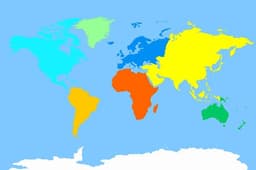
Countries by Continent and Quiz
Quiz by Karla Estefanía De Leon
Customize this quiz to suit your class
Instantly translate to 100+ languages
Tag the questions with any skills you have. Your dashboard will track each student's mastery of each skill.
Give this quiz to my class
Were there any beers left in the refrigerator?
There are a little.
Yes, there will be a few.
There have been some.
There was not even one.
Right now, my mother ______ dinner in the kitchen.
cooks
is cooking
are cooking
cooking
Were there any beers left in the refrigerator?
Right now, my mother ______ dinner in the kitchen.
Sort these countries and capitals.
Countries and Continents of the World.
Select item from the left column and another from right to connect.
Select item from the left column and another from right to connect.
What is the largest country in the world?

How many continents are there?
videoq:Zi_XLOBDo_Y:4:55//What is the name of the person who sings this song?
Who is singing this song?
In which continent is Guatemala located?
videoq:P5ZJui3aPoQ:5:23//What kind of music genre do you consider this song?
 Received: 26 November 2019 Revised: 10 January 2020 Accepted: 19 January 2020 DOI: 10.1111/obr.13005 PEDIATRICS/PHYSIOLOGY Adipokines: A gear shift in puberty Desirée Nieuwenhuis | Natàlia Pujol-Gualdo Amanda J. Kiliaan Department of Anatomy, Radboud university medical center, Donders Institute for Brain, Cognition and Behaviour, Preclinical Imaging Center PRIME, Nijmegen, The Netherlands Correspondence Amanda J. Kiliaan, PhD, Associate Professor, Department of Anatomy, Donders Institute for Brain, Cognition, and Behaviour, Preclinical Imaging Center PRIME, Radboud university medical center, 6500 HB Nijmegen, Geert Grooteplein 21N 6525 EZ Nijmegen, The Netherlands. Email: amanda.kiliaan@radboudumc.nl Funding information Europees Fonds voor Regionale Ontwikkeling (EFRO), Grant/Award Number: BriteN 2016 1 | INTRODUCTION The prevalence of obesity in adolescents and children is increasing in | Ilse A.C. Arnoldussen | Summary In this review, we discuss the role of adipokines in the onset of puberty in children with obesity during adrenarche and gonadarche and provide a clear and detailed overview of the biological processes of two major players, leptin and adiponectin. Adipokines, especially leptin and adiponectin, seem to induce an early onset of puberty in girls and boys with obesity by affecting the hypothalamic-pituitary- gonadal (HPG) axis. Moreover, adipokines and their receptors are expressed in the gonads, suggesting a role in sexual maturation and reproduction. All in all, adipokines may be a clue in understanding mechanisms underlying the onset of puberty in child- hood obesity and puberty onset variability. KEYWORDS adipokines, obesity, puberty 1,2 the age of 5 years were overweight or were with obesity in 2016, and 3 Obesity is defined by an excessive accumulation of white adipose tissue (WAT), and it is often indicated by a body mass index (BMI) 4 above 30. Two main types of adipose tissue were described: WAT and brown adipose tissue (BAT), which differ in morphology and func- 5-7 Ilse A.C. Arnoldussen and Amanda J. Kiliaan contributed equally to this work. This is an open access article under the terms of the Creative Commons Attribution License, which permits use, distribution and reproduction in any medium, provided the original work is properly cited. © 2020 The Authors. Obesity Reviews published by John Wiley & Sons Ltd on behalf of World Obesity Federation Obesity Reviews. 2020;21:e13005. wileyonlinelibrary.com/journal/obr 1 of 10 https://doi.org/10.1111/obr.13005 alarming rates. Specifically, worldwide, 41 million children below this number is expected to increase to 70 million in 2025. obesity is associated with various severe health complications, includ- ing increased risk of diabetes mellitus type 2, hypertension, heart dis- eases, and disturbances in sex hormone levels. 5,6 and mitochondria and plays a role in thermogenesis. Adipocytes in tion. BAT consists of adipocytes containing multiple lipid droplets WAT contain only a few mitochondria and a single lipid droplet. Adipose tissue has several functions including the storage of energy, thermogenesis, and the production and secretion of adipokines Generally, two physiological processes, adrenarche and gonadarche, 11,24 Childhood 5,7,8 a key role in puberty onset. Puberty is known as a period through which the body changes physically, being a physiological process resulting in the maturation of children, i.e. they develop sexual characteristics and obtain reproduc- 9,11 Adipokines are involved in a number of physiological processes including blood pressure, metabo- lism, glucose, and vascular homeostasis and may play amongst others 8-10 (hormones, cytokines, and peptides). tive functions. between obesity and puberty,2,12-23 the biological mechanisms under- lying obesity and puberty onset remain unclear. Hereafter, we review in detail the role of adipokines in the onset of puberty in childhood obesity. Although many studies have shown associations 2 | INITIATION OF PUBERTY PHYSIOLOGICAL PROCESSES IN THE interact to regulate the onset of puberty. During adrenarche, the adrenal cortex secretes steroid hormones (including 2 of 10 NIEUWENHUIS ET AL. androstenedione, dehydroepiandrosterone, dehydroepiandrosterone sulfate (DHEAS), androstenedione, and cortisol), insulin-like growth factor, and growth hormone, which contribute to the pubertal insights on new genetic loci (e.g. melanocortin-4 receptor, mitochon- drial carrier 2, and mitogen-activated protein kinase 13) and on sev- eral pathways that regulate the timing of puberty; however, it partly 34 9,24,25 Both adrenarche and gonadarche are involved in the development growth spurt, body odor, skin oiliness, and skeletal maturation. explains puberty timing variation. Thereby, defining the role of 25 adipokines is of importance in elucidating the variability in puberty as the expression of adipokines is sex-specific and is altered with body composition, adiposity, and during growth spurts. Moreover, adipokines and their receptors are expressed in gonads and several brain regions suggesting involvement in the onset of puberty and sex- ual maturation. Lastly, adipokines interfere in processes regulating timing and duration of puberty, for instance in the HPA and HPG axes which are both key players during adrenarche and gonadarche. Involvement of adipokines in the onset of puberty and specifically in individuals with obesity will be further reviewed in the next 2,24 3 | Puberty onset in girls is assessed using different markers, such as thelarche (breast development), menarche (the start of of pubic hair. pituitary-gonadal (HPG) axis is activated,2,26 and several hormones have been identified to participate in the activation of the HPG axis During gonadarche (Figure 1), the hypothalamic- 2,27 Kisspeptin, neurokinin B, and dynorphin are released by specialized including kisspeptin, neurokinin B, dynorphin, leptin, and ghrelin. 28 key regulator of the pulsatile secretion of gonadotropin releasing neurons, the KNDy neurons in the hypothalamus. Kisspeptin is a 29,30 B stimulates, and dynorphin inhibits the release of kisspeptin, which hormone (GnRH) from the hypothalamus. In addition, neurokinin implies that both coordinate a pulsatile release of kisspeptin. 31 Sub- sections. sequently, the activated HPG axis induces the pituitary gland to secrete luteinising hormone (LH) and follicle stimulating hormone (FSH). As a result, gametogenesis occurs, and the gonads will release sex hormones. Consequently, secondary sex characteristics develop including breast development in girls and an increased testicular vol- 2,26,32 is possibly due to differences in levels of body fat, hypothalamic-pitui- THE ONSET OF PUBERTY IN GIRLS ume in boys. The age at puberty onset varies greatly among individuals, which 19 35 menstruation), and pubic hair development. 33 genome-wide association studies have provided important new tary-adrenal (HPA) axis activity, and genetic background. Recent The average age of However, this age differs between cultures and ethnicities, and since 1980, age at menarche is girls at start of menarche is 12.4 years. 36 significantly decreasing. 36-39 F I G U R E 1 Hormonal regulation in the initiation of puberty in boys and girls. The secretion of kisspeptin, neurokinin B, and dynorphin from KNDy neurons initiate the release of gonadotropin releasing hormone (GnRH) from the hypothalamus. This activates the pituitary gland to produce and secrete luteinising hormone (LH) and follicle stimulating hormone (FSH), which in turn stimulate the gonads to produce estrogen and testosterone in girls and boys, respectively 1467789x, 2020, 6, Downloaded from https://onlinelibrary.wiley.com/doi/10.1111/obr.13005, Wiley Online Library on [10/03/2024]. See the Terms and Conditions (https://onlinelibrary.wiley.com/terms-and-conditions) on Wiley Online Library for rules of use; OA articles are governed by the applicable Creative Commons License NIEUWENHUIS ET AL. 3 of 10 T A B L E 1 Summary of included studies Authors Year Country Study Design Primary Outcome Sex Sample Size (n) Age (y) Data Collection Lian et al21 2019 China Cross-sectional Puberty starts earlier in Chinese Han girls with obesity compared with Chinese Han girls with normal weight. Girls 2996 9-19 2012 and 2013 Biro et al12 Lazzeri et al20 2018 USA 2018 Italy Longitudinal Cross-sectional Body mass index had a greater effect on age at menarche than did race and ethnicity. Girls 946 6-16 2004-2014 Li et al23 2018 China Longitudinal For both, boys and girls, a higher BMI (ie, overweight and obese) is associated with earlier onset of puberty Girls Girls Boys Girls 542 Deng et al22 Flom et al15 2017 China Cross-sectional Increased BMI is associated with early timing spermarche and menarche. Boys Girls Girls 1278258 9-15 2005-2012 He et al24 Holmgren et al17 2017 China 2017 Sweden Cross-sectional Longitudinal Onset of puberty is not related to obesity in boys. Boys Boys Girls Girls 782 7-17 972 929 5839 Kelly et al19 2017 UK 2016 Brazil 2016 USA Longitudinal prospective cohort Higher BMI in girls is associated with the onset of menstruation at an earlier age. 11 10-18 11-17 Barcellos Gemelli et al25 Cross-sectional Longitudinal Excess weight is associated with early age of menarche. Girls 727 2014 2003-2009 Glass et al16 Lee et al26 In girls, but not in boys, greater adiposity is associated with the earlier onset of puberty. Boys Girls 135 Cabrera et al27 Leonibus et al14 2014 USA 2013 Italy Cross-sectional Longitudinal Thelarche occurred earlier than recently reported, while age of menarche remained unchanged. Girls 610 3-17.9 2007 2005-2012 Currie et al13 2012 Europe, USA, Canada Cross-sectional Overweight/obesity during childhood predicts the early onset of puberty in girls. Girls 20410 11, 13, 15 2005-2006 2017 USA Prospective birth cohort Overweight/obese status at the age of 7 ye was associated with increased risk of early menarche 788 From birth to menarche occurred Pregnancies 1959-1966 2016 USA Cross-sectional Boys with overweight enter puberty earlier compared with boys with normal weight or obesity, while puberty starts later in boys with obesity compared with boys with normal weight and overweight. Boys 3872 6-16 2005-2010 Overweight during childhood shows a relation with the early onset of puberty in girls. 6535 4259 695 11 15 5.8-12.2 2009/2010 2013/2014 2014-2017 Higher BMI during childhood is associated with early puberty. 2008 and 2009 2000-2002 Obesity during childhood is related to the earlier onset of puberty. Boys Girls 84 123 71 (Continues) 1467789x, 2020, 6, Downloaded from https://onlinelibrary.wiley.com/doi/10.1111/obr.13005, Wiley Online Library on [10/03/2024]. See the Terms and Conditions (https://onlinelibrary.wiley.com/terms-and-conditions) on Wiley Online Library for rules of use; OA articles are governed by the applicable Creative Commons License 4 of 10 NIEUWENHUIS ET AL. 3.1 | Fat storage For the initiation of puberty, the timing of stimulation and/or inhibi- tion of different hormones is important, and additionally, a certain amount and distribution of body fat is needed in order to start menar- che, which emphasizes the importance of body fat. From an evolution- ary point of view, body fat increases in mammalian females during puberty onset, and it highlights the need to guarantee a healthy preg- 40 women with anorexia nervosa. particularly body fat localized predominantly on the gluteofemoral fat depots, is profoundly associated with start of menarche, more than nancy, offspring, and maternal survival. fat, sex-hormones, and neuroendocrine alterations can evolve in men- strual dysfunction, for instance, in women with severe obesity or in 41-43 44-46 to gluteofemoral fat depots suggesting that leptin may convey infor- amount of total body fat. mation on body fat distribution to the hypothalamus during puberty. An improper level of body Importantly, body fat distribution, Blood leptin levels are strongly related 45 3.2 | HPG axis The HPG axis is activated by the release of kisspeptin resulting in the release of GnRH from the hypothalamus, and LH and FSH from the pituitary gland. In girls, FSH is involved in the development of the folli- cles in the ovaries, and it promotes the secretion of estrogen. LH stim- ulates the production of androgen hormones and induces ovulation 48 9,47 the release of kisspeptin and neurokinin B, and kisspeptin thereby (Figure 1). The secretion of estrogen has an inhibitory effect on inhibits the GnRH release from the hypothalamus. pattern of GnRH is important for the regulation of the menstrual cycle. This roughly 28-day-cycle comprises several phases, including the follicular phase and luteal phase. During the follicular phase, increasing levels of FSH stimulate the maturation of follicles and the production of estrogen from the ovaries. This in turn inhibits the release of FSH from the pituitary gland. A high level of estrogen will induce the production of LH by the pituitary gland, resulting in ovula- tion. The matured follicle secretes progesterone thereby inhibiting the release of GnRH. When the corpus luteum is demolished, there is less 48 3.3 | Adipokines According to results from studies reported in Table 1, girls with obe- sity enter puberty earlier compared with girls with normal higher leptin concentrations inhibit the intake of food and increases inhibition of GnRH. As a consequence, the cycle will start again. whole process, starting from the activated HPG axis, results in the development of the secondary sex characteristics in girls including 9,47 thelarche and menarche. 13,14,16-23,49-51 weight. these girls might be found in the secretion of adipokines. For instance, leptin is positively associated with the amount of body fat. Generally, energy expenditure. 9,52-54 An explanation for the early onset of puberty in The expression This TABLE 1 (Continued) Authors Year Country Study Design Primary Outcome Sample Sex Size (n) Age (y) Data Collection Herman-Giddens et al28 2012 USA Cross-sectional Observed mean ages of beginning genital and pubic hair growth and early testicular volumes were earlier than in past studies, depending on the characteristic and race/ethnicity. Boys 4131 6-16 2005-2010 Sorensen et al29 Aksglaede et al30 2010 2009 Denmark Denmark Cross-sectional/longitudinal Longitudinal Puberty onset at earlier ages was associated with an increased BMI in boys. Boys 1528 5.8-19.9 1991-1993/2006-2008 1930-1969 Juul et al31 Ribeiro et al32 2007 2006 Denmark Portugal Retrospective cohort Cross-sectional Higher BMI is associated with early voice break. 11-15 10-15 1990-1999 Kaplowitz et al18 Abbreviation: BMI, body mass USA Cross-sectional The early onset of puberty in Caucasian girls is likely related to an increased BMI. 5-12 1992-1993 2001 index. The higher BMI in boys and girls at 7 y of age, the earlier they enter puberty. Boys 21 612 Girls 135 223 Boys 463 Boys 382 Girls 437 Girls 10 750 Early sexual maturation in boys and girls is associated with overweight. 1467789x, 2020, 6, Downloaded from https://onlinelibrary.wiley.com/doi/10.1111/obr.13005, Wiley Online Library on [10/03/2024]. See the Terms and Conditions (https://onlinelibrary.wiley.com/terms-and-conditions) on Wiley Online Library for rules of use; OA articles are governed by the applicable Creative Commons License NIEUWENHUIS ET AL. 5 of 10 Leptin may possibly play a role in adrenarche as its plasma level increases with higher levels of body fat and as it can modulate both girls. 33 ing adrenarche. In coherence, in children with obesity, the androgen These findings suggested that lower reproductive status was associated with higher total adiponectin concentrations and that a higher reproductive status was related to higher HMW adiponectin the HPA and HPG axes. These axes are functionally integrated dur- DHEAS was positively associated with leptin levels. Nevertheless, concentrations in girls. In addition, individuals with obesity often another study showed that enhanced adrenal androgen secretion in girls with premature adrenarche was not explained by leptin or BMI 55 ated with androgen levels in girls ; however, it was not related to levels. and IL-6. TNF-α alters, and IL-6 inhibits the expression of 56 8 In addition, the adipokine adiponectin was negatively associ- 57 differences of adiponectin seem to develop during the progression of 56 adiponectin (Figure 2). Thereby, a low level of total adiponectin and/or high levels of inflammatory cytokines in individuals with obe- sity can promote the onset of puberty. Many more adipokines are secreted by WAT including omentin, 52,65-67 9,36,62,68 adrenarche in girls with Prader-Willi syndrome. Interestingly, sex puberty. adrenarche; however, both are not required factors. Thus, leptin and adiponectin might be able to influence In gonadarche, leptin can stimulate the secretion of kisspeptin, and subsequently activation of the HPG axis, which eventually increases the expression of estrogen and androstenedione in the ova- 58 2,60 65-67 The expression of these ries (Figure 2). Ob gene in WAT, resulting in the synthesis and secretion of leptin. Thus, high levels of leptin promote onset of puberty in girls via secre- tion of kisspeptin, and estrogen stimulates leptin secretion addition- ally. Moreover, adiponectin can affect the HPG axis due to the expression of adiponectin receptors in the hypothalamus, pituitary In return, estrogen stimulates the expression of the 59 gland, and gonads. onset as it inhibits the secretion of kisspeptin and GnRH in the hypo- thalamus and the release of GH and LH in the pituitary gland, and 2,60-62 52,60 63 girls with central precocious puberty (CPP). Moreover, total adiponectin had negative correlations with progression of puberty in girls (defined by Tanner stages), whereas HMW adiponectin had FIGURE 2 Adipokinesaffectingthe initiation of puberty in girls. Leptin stimulates the release of kisspeptin in KNDy neurons, which activates the hypothalamus to produce gonadotropin releasing hormone (GnRH). In response to the release of GnRH, the pituitary gland secretes follicle stimulating hormone (FSH) and luteinising hormone (LH), which stimulates the ovaries to release estrogen resulting in the formation of secondary sex characteristics in girls. Estrogen stimulates the production of leptin. Adiponectin inhibits GnRH release resulting in reduced levels of GnRH and thereby a delayed onset of puberty. TNF- α and IL-6 inhibit the production of adiponectin and therefore stimulate the onset of puberty In detail, adiponectin is a regulator of puberty thereby inhibiting the onset of puberty (Figure 2). with obesity often have low levels of adiponectin. et al. showed that total adiponectin was significantly lower, whereas high molecular weight (HMW) adiponectin was significantly higher in ment. 55 63 develop a chronic low-grade inflammatory state, which can be indi- cated by a high level of circulating inflammatory cytokines like TNF-α 64 Individuals Sitticharoon positive associations with LH levels and the progression of puberty in 63 visfatin, resistin, and chemerin. and visfatin are expressed in the ovaries. adipokines in the ovaries suggests a role within the reproductive sys- tem; however, the exact biological processes have to be examined. Thus, specifically leptin, adiponectin, and inflammatory cytokines pro- duced by WAT could be permissive key players during an early onset of puberty in girls with obesity. As an exception, HMW adiponectin seems to have a stimulatory effect on peripheral repro- ductive function as HMW is not able to cross the blood brain 63 barrier. 4 | Markers that are used to assess puberty onset in boys are THE ONSET OF PUBERTY IN BOYS spermarche, voice break, testicular volume, and pubic hair develop- 35 spermarche develop in the early stages of puberty onset, voice In women, omentin, chemerin, While pubic hair development, larger testicular volume, and 69 testicular volume increases, which occurs at an average age of break usually appears in later stages of puberty. Generally, first 1467789x, 2020, 6, Downloaded from https://onlinelibrary.wiley.com/doi/10.1111/obr.13005, Wiley Online Library on [10/03/2024]. See the Terms and Conditions (https://onlinelibrary.wiley.com/terms-and-conditions) on Wiley Online Library for rules of use; OA articles are governed by the applicable Creative Commons License 6 of 10 NIEUWENHUIS ET AL. 11.9 years, followed by the development of pubic hair at 12.2 years of average, and lastly, boys experience spermarche around an aver- 55 related with leptin levels. Thereby, leptin plausibly has a minor impact in adrenarche in boys. Since leptin receptors are found in the hypothalamus, pituitary gland, and testes, they might be involved in the onset of puberty by affecting the HPG axis during gonadarche. Leptin stimulates the release of kisspeptin and GnRH, and as a consequence, it accelerates the onset of puberty (Table 1, Figure 3). In contrast, adiponectin inhibits the secretion of GnRH, GH, LH, and FSH therewith delaying the onset of puberty. However, adiponectin levels are generally lower in men compared with women and even lower in men with obe- age age of 13.4 years. 70 4.1 | Fat storage Many aspects of the reproductive physiology are energetically demanding,71 and therefore, an adequate energy level is necessary. In boys, a dynamic change in body composition occurs around the age of 10 to 13 years, in which they gain approximately 40% of sity. culating inflammatory cytokines. levels can stimulate the HPG axis and therewith an early onset of puberty in boys. Nevertheless, leptin can inhibit the production of tes- 72 mostly consisting of lean mass, which causes exhaustion of most of fat. Subsequently, a growth spurt follows in which they gain tissue 72 in boys, an adequate amount of body fat is important in the onset of their body fat. These alterations in amount of body fat indicate that 4.2 | Puberty in boys is initiated by the release of kisspeptin. As mentioned before, this activates the HPG axis, resulting in the release of GnRH from the hypothalamus, and consequently the release of LH and FSH 9,74 puberty. tosterone from the testes, to estrogen (Figure 3). of the development of secondary sex characteristics in boys. Additionally, leptin can affect fertility in men as it can modulate the nutritional support of spermatogenesis, and moreover, dysfunction of spermatogenesis is associated with an increased leptin level and 73 58 2,60-62 HPG axis from the pituitary gland (Figure 1). and LH stimulates the secretion of testosterone from the testes, which inhibits the release of kisspeptin from the KNDy neurons and 9,48 in men, the release of kisspeptin is more consistent, causing a con- 29,48 subsequently GnRH from the hypothalamus. receptors expressed on KNDy neurons. In humans, KNDy neurons Contrarily to women, LH-induced testosterone levels lead to the stant release of LH. development of secondary sex characteristics in boys. differences between sexes in kisspeptin release are related to a sex- specific and sex steroid-dependent kisspeptin system as estrogen and progesterone modulate kisspeptin activity through the sex-steroid 48 in the infundibular nucleus are involved in negative and positive sex- 48 tal exposure to sex steroids and result in sex-specific differences in steroid feedbacks. kisspeptin release. These sexual dimorphisms are induced by perina- 75,76 4.3 | Adipokines The association between obesity and puberty onset in boys is rather controversial compared with findings in girls. Most studies reported an early onset of puberty in boys associated with increased ate adipose tissue from actual breast tissue. stages are more difficult to assess than female stages as boys lack a more determined marker such as menarche. Thirdly, puberty onset can be indicated by the activation of the HPG axis, and the presence of these secondary sex characteristics is the result of hormonal 2 14,17,22,23,50,51,77,78 BMI, 20,49 all while others reported no associations at Current markers used 79 16,80 or a delayed onset of puberty (Table 1). The presence of excessive adipose tissue can be involved in puberty onset in boys as the secretion of adipokines can modulate both adrenarche and gonadarche. Leptin can affect adrenarche by modulating both the HPG and HPA axes,33 and moreover, androgen levels were positively 55 nal androgen secretion in boys with premature adrenarche was not associated with plasma leptin levels. Nevertheless, enhanced adre- 9 In more detail, 61,62 adiponectin, and individuals with obesity often have high levels of cir- Moreover, inflammatory cytokines, TNF-α, and IL-6, inhibit expression of the leptin receptor in the testis. FSH induces spermatogenesis, too. function and role still have to be examined. 64 High leptin and low adiponectin and fat tissue can convert testosterone Both processes might result in the delay 29,61,79 81,82 In men, other adipokines like chemerin are found in the gonads 65 Thus, particularly high leptin and low adiponectin levels stimulate the HPG axis and thereby accelerate the onset of puberty in boys. Additionally, leptin can dysregulate the development of secondary sex characteristics and spermatogenesis by affecting testosterone levels and nutritional sup- port of spermatogenesis. 5 | LIMITATIONS AND FUTURE RESEARCH DIRECTIONS Even though multiple epidemiological studies have shown the link between puberty onset and obesity, there are some important limita- tions. Firstly, determining both the onset and stage of puberty is rather difficult. For instance, assessing the stage of breast develop- ment in girls with obesity is complicated as clinicians should differenti- 2 changes in response to the activated HPG axis. to determine the onset of puberty refer to secondary sex characteris- tics, such as testicular volume in boys and breast development in girls. A more accurate measurement of puberty onset would be to combine secondary sex characteristics with plasma or serum hormone level measurements such as LH, FSH, adipokines, e.g. leptin. Thereby, differences in puberty measurements could explain variations in the age of puberty onset between boys and girls within different Thereby, resistin is expressed in the testes of rats, but its exact 83 Secondly, male pubertal 1467789x, 2020, 6, Downloaded from https://onlinelibrary.wiley.com/doi/10.1111/obr.13005, Wiley Online Library on [10/03/2024]. See the Terms and Conditions (https://onlinelibrary.wiley.com/terms-and-conditions) on Wiley Online Library for rules of use; OA articles are governed by the applicable Creative Commons License NIEUWENHUIS ET AL. 7 of 10 FIGURE 3 Adipokines affecting the initiation of puberty in boys. Leptin activates kisspeptin secretion in KNDy neurons, this activates the production of gonadotropin releasing hormone (GnRH) from the hypothalamus. GnRH stimulates the pituitary gland to secrete follicle stimulating hormone (FSH) and luteinising hormone (LH), activating the production of testosterone from the testes allowing the development of secondary sex characteristics. Leptin also inhibits the production of testosterone, which may cause a delayed onset of puberty. Adiponectin inhibits GnRH release. Low levels of adiponectin, as a result of TNF-α and IL-6 expression, lead to a reduced inhibition of GnRH. In response to GnRH release, the pituitary gland will secrete FSH and LH, and the testes will produce testosterone resulting in the development of secondary sex characteristics in boys countries, and In addition, the inclusion of a of puberty. ferent time points is complicated, as subjects examined several decades ago presented pronounced differences concerning lifestyle patterns such as nutrition and exercise habits. Lastly, obesity or over- weight is often determined by BMI, a classification based on weight and height measurements. Additionally, it is important that all studies studies or across continents, ethnicities proper age range (8-16 years) is important when assessing the onset (Figure 4). 12-15,17,20-23,49,77-79,84,85 30,47 Furthermore, comparison between studies from dif- 86 Specifically in children, BMI is often dependent on age and growth use the same anthropometric standards and sex-specific cut-offs. 13,14,16-23,49-51,77-80 fat and would represent a more accurate measurement in its regard. Based on this review, several suggestions can be made for further research. Firstly, the roles of adipokines like resistin, chemerin, visfatin, and omentin in puberty onset, fertility, and sexual maturation should be examined in detail. Secondly, future research examining the onset of puberty should combine indicators of puberty onset (e.g. breast development or testicular volume) with plasma or serum hor- mone measurements such as LH, FSH, sex-steroids, adipokines (e.g. spurts. ment in case of growth spurts. distribution of body fat should be taken into account in determining puberty and obesity in children. For instance, the body adiposity index (BAI), which was introduced in 2011 by Bergman et al.,87 uses hip cir- cumference and height in order to estimate the percentage of body 87 Thereby, BMI is a less accurate measure- F I G U R E 4 87,88 Therefore, both percentage and Average age of puberty onset in Europe, China, and the United States according to several studies from Table 1. Age of puberty onset ranges from 8.47 to 13.33 years in girls and from 8.63 leptin), and body fat distribution (e.g. BAI,87 waist-hip ratio's and/or dual-energy X-ray absorptiometry (DXA)2). Additionally, defining con- sistent and general measurements of puberty in both boys and girls, combined with a proper age range (8-16 years), would facilitate the comparisons between different studies and their results. 12-15, 17, 20-23, 25-29, 31 to 13.7 years in boys. included if average age of markers used to assess puberty was not reported. Pink: girls. Blue: boys Studies (Table 1) were not 39, 56 1467789x, 2020, 6, Downloaded from https://onlinelibrary.wiley.com/doi/10.1111/obr.13005, Wiley Online Library on [10/03/2024]. See the Terms and Conditions (https://onlinelibrary.wiley.com/terms-and-conditions) on Wiley Online Library for rules of use; OA articles are governed by the applicable Creative Commons License 8 of 10 NIEUWENHUIS ET AL. 6 | CONCLUSION In conclusion, epidemiological data regarding obesity and puberty onset in girls show similar outcomes as adiposity results in the early onset of puberty in girls. The majority of the studies examining boys with obesity indicate an early onset of puberty, while not all reported an earlier onset of puberty. In detail, high leptin, TNF-α, and IL-6 levels combined with low adiponectin levels stimulate the activation of the HPG axis in girls and boys with obesity, and 5, 45, 50, 51 REFERENCES 1. Kumar S, Kelly AS. Review of childhood obesity: from epidemiology, etiology, and comorbidities to clinical assessment and treatment. May- o Clin Proc. 2017;92(2):251-265. 2. Reinehr T, Roth CL. Is there a causal relationship between obesity and puberty? The Lancet Child & adolescent health. 2019;3(1):44-54. 3. WorldHealthOrganization. Facts and figures on childhood obesity. 2017. 4. Guglielmi V, Sbraccia P. Obesity phenotypes: depot-differences in adipose tissue and their clinical implications. Eat Weight Disord. 2018; 23(1):3-14. 5. Gomez-Hernandez A, Beneit N, Diaz-Castroverde S. Escribano O. Dif- ferential role of adipose tissues in obesity and related metabolic and vas- cular complications. 2016;2016:1-15, 1216783. 6. Zwick RK, Guerrero-Juarez CF, Horsley V, Plikus MV. Anatomical, physiological, and functional diversity of adipose tissue. Cell Metab. 2018;27(1):68-83. 7. Gulyaeva O, Dempersmier J, Sul HS. Genetic and epigenetic control of adipose development. Biochimica et Biophysica Acta (BBA)— Molecular and Cell Biology of Lipids. 2019;1864:3-12. 8. Khan M, Joseph F. Adipose tissue and adipokines: the association with and application of adipokines in obesity. Forensic Sci. 2014;2014: 711-724, 328592. 9. Alotaibi MF. Physiology of puberty in boys and girls and pathological disorders affecting its onset. J Adolesc. 2019;71:63-71. 10. Cousminer DL, Stergiakouli E, Berry DJ, et al. Genome-wide associa- tion study of sexual maturation in males and females highlights a role for body mass and menarche loci in male puberty. Hum Mol Genet. 2014;23(16):4452-4464. 11. Ahmed ML, Ong KK, Dunger DB. Childhood obesity and the timing of puberty. Trends in endocrinology and metabolism: TEM. 2009;20(5): 237-242. 12. Biro FM, Pajak A, Wolff MS, et al. Age of menarche in a longitudinal US cohort. J Pediatr Adolesc Gynecol. 2018;31(4):339-345. 13. Currie C, Ahluwalia N, Godeau E, Nic Gabhainn S, Due P, Currie DB. Is obesity at individual and national level associated with lower age at menarche? Evidence from 34 countries in the Health Behaviour in School-aged Children Study. The Journal of adolescent health: official publication of the Society for Adolescent Medicine. 2012;50(6): 621-626. 14. De Leonibus C, Marcovecchio ML, Chiavaroli V, de Giorgis T, Chiarelli F, Mohn A. Timing of puberty and physical growth in obese children: a longitudinal study in boys and girls. Pediatr Obes. 2014; 9(4):292-299. 15. Flom JD, Cohn BA, Tehranifar P, et al. Earlier age at menarche in girls with rapid early life growth: cohort and within sibling analyses. Ann Epidemiol. 2017;27(3):187-93.e2. 16. Glass NA, Torner JC, Letuchy EM, et al. The relationship between greater prepubertal adiposity, subsequent age of maturation, and bone strength during adolescence. Journal of bone and mineral research: the official journal of the American Society for Bone and Min- eral Research. 2016;31(7):1455-1465. 17. Holmgren A, Niklasson A, Nierop AF, et al. Pubertal height gain is inversely related to peak BMI in childhood. Pediatr Res. 2017;81(3): 448-454. 18. Kaplowitz PB, Slora EJ, Wasserman RC, Pedlow SE, Herman- Giddens ME. Earlier onset of puberty in girls: relation to increased body mass index and race. Pediatrics. 2001;108(2):347-353. 19. Kelly Y, Zilanawala A, Sacker A, Hiatt R, Viner R. Early puberty in 11-year-old girls: Millennium Cohort Study findings. Arch Dis Child. 2017;102(3):232-237. 20. Lazzeri G, Tosti C, Pammolli A, et al. Overweight and lower age at menarche: evidence from the Italian HBSC cross-sectional survey. BMC Womens Health. 2018;18(1):168-174. thereby an early onset of obesity. leptin can inhibit the production of testosterone in boys and subse- quently inhibit the development of secondary sex characteristics affecting spermatogenesis. for other adipokines, like resistin and omentin, are present in the testes and ovaries suggesting a role in puberty or reproduction; 58, 71 however, their plausible function is still unknown. that adipokines may be key regulators in an early onset of puberty in both girls and boys with obesity, specifically by affecting the HPG axis during gonadarche. Future research should focus on assessing puberty onset by measuring consistent puberty markers and determine the percentage of body fat and its distribution and adipokines and hormone serum levels particularly involved in the HPG axis. CONFLICTS OF INTEREST The authors declare no conflict of interest. FUNDING INFORMATION This research was funded by Europees Fonds voor Regionale Ontwikkeling (EFRO), project BriteN 2016. ORCID Ilse A.C. Arnoldussen Amanda J. Kiliaan https://orcid.org/0000-0002-7395-5284 https://orcid.org/0000-0002-2158-6210 13, 14, 16-26, 29-32 Furthermore, several receptors Nevertheless, We conclude Search strategy We searched PubMed for articles published before Novem- ber 15th, 2019 using relevant keywords, including ‘onset of puberty and adiposity/obesity’, ‘onset of puberty’, ‘children with obesity’, ‘adipose tissue’, ‘childhood obesity’, ‘adiposity’, ‘obesity’, ‘adipokine(s)’, ‘HPG axis’, ‘adipokines ovary/ova- ries’, or ‘adipokines testes’, either alone or in combination. Selection criteria used were English language, longitudinal or cross-sectional studies assessing the onset of puberty, including menarche, thelarche, spermarche, or voice break, combined with high BMI or obesity/adiposity, and articles assessing or reviewing adipokines and its effects on the reproductive system. 1467789x, 2020, 6, Downloaded from https://onlinelibrary.wiley.com/doi/10.1111/obr.13005, Wiley Online Library on [10/03/2024]. See the Terms and Conditions (https://onlinelibrary.wiley.com/terms-and-conditions) on Wiley Online Library for rules of use; OA articles are governed by the applicable Creative Commons License NIEUWENHUIS ET AL. 9 of 10 21. Lian Q, Mao Y, Luo S, et al. Puberty timing associated with obesity and central obesity in Chinese Han girls. BMC Pediatr. 2019; 19(1):1-7. 22. Deng Y, Liang J, Zong Y, et al. Timing of spermarche and menarche among urban students in Guangzhou, China: trends from 2005 to 2012 and association with Obesity. Sci Rep. 2018;8(1):263-270. 23. Li W, Liu Q. Association of prepubertal obesity with pubertal devel- opment in Chinese girls and boys: a longitudinal study. 2018;30: e23195. 24. Mendle J, Beltz AM, Carter R, Dorn LD. Understanding puberty and its measurement: ideas for research in a new generation. Journal of research on adolescence: the official journal of the Society for Research on Adolescence. 2019;29(1):82-95. 25. Pagani S, Meazza C, Gertosio C, Bozzola E, Bozzola M. Growth hor- mone receptor gene expression in puberty. Hormone and metabolic research = Hormon- und Stoffwechselforschung = Hormones et metabolisme. 2015;47:581-584. 26. Abreu AP, Kaiser UB. Pubertal development and regulation. Lancet Diabetes Endocrinol. 2016;4(3):254-264. 27. Aguirre RS, Eugster EA. Central precocious puberty: from genetics to treatment. Best Pract Res Clin Endocrinol Metab. 2018;32(4): 343-354. 28. Sultan C, Gaspari L, Maimoun L, Kalfa N, Paris F. Disorders of puberty. Best Pract Res Clin Obstet Gynaecol. 2018;48:62-89. 29. Skorupskaite K, George JT, Anderson RA. The kisspeptin-GnRH path- way in human reproductive health and disease. Hum Reprod Update. 2014;20(4):485-500. 30. Dahl SK, Amstalden M, Coolen L, Fitzgerald M, Lehman M. Dynorphin immunoreactive fibers contact GnRH neurons in the human hypothal- amus. Reprod Sci. 2009;16(8):781-787. 31. Navarro VM, Gottsch ML, Chavkin C, Okamura H, Clifton DK, Steiner RA. Regulation of gonadotropin-releasing hormone secretion by kisspeptin/dynorphin/neurokinin B neurons in the arcuate nucleus of the mouse. J Neurosci. 2009;29(38):11859-11866. 32. Zhai L, Liu J, Zhao J, et al. Association of obesity with onset of puberty and sex hormones in chinese girls: a 4-year longitudinal study. PLoS ONE. 2015;10(8):1-12, e0134656. 33. Cizza G, Dorn LD, Lotsikas A, Sereika S, Rotenstein D, Chrousos GP. Circulating plasma leptin and IGF-1 levels in girls with premature adrenarche: potential implications of a preliminary study. Horm Metab Res. 2001;33(3):138-143. 34. Cousminer DL, Widén E, Palmert MR. The genetics of pubertal timing in the general population: recent advances and evidence for sex-spec- ificity. Curr Opin Endocrinol Diabetes Obes. 2016;23(1):57-65. 35. Marshall WA, Tanner JM. Variations in pattern of pubertal changes in girls. Arch Dis Child. 1969;44(235):291-303. 36. Lacroix AE, Whitten R. Physiology. Treasure Island (FL): Menarche. StatPearls. StatPearls Publishing; 2018. 37. McDowell MA, Brody DJ, Hughes JP. Has Age at Menarche Chan- ged? Results from the National Health and Nutrition Examination Sur- vey (NHANES) 1999–2004. J Adolesc Health. 2007;40(3):227-231. 38. de Muinich Keizer SM, Mul D. Trends in pubertal development in Europe. Hum Reprod Update. 2001;7(3):287-291. 39. Talma H, Schönbeck Y, van Dommelen P, Bakker B, van Buuren S, Hirasing RA. Trends in menarcheal age between 1955 and 2009 in the Netherlands. PLoS ONE. 2013;8:e60056-e60056. 40. Kaplan HS, Lancaster JB. An evolutionary and ecological analysis of human fertility, mating patterns, and parental investment. Off- spring: Human fertility behavior in biodemographic perspective. 2003;1: 170-223. 41. Mitan LA. Menstrual dysfunction in anorexia nervosa. J Pediatr Adolesc Gynecol. 2004;17(2):81-85. 42. Xu H, Li P-H, Barrow TM, et al. Obesity as an effect modifier of the association between menstrual abnormalities and hypertension in young adult women: Results from Project ELEFANT. PLoS ONE. 2018; 13(11):e0207929-e0207929. 43. Tauqeer Z, Gomez G, Stanford FC. Obesity in women: insights for the clinician. J Womens Health (Larchmt). 2018;27(4):444-457. 44. de Ridder CM, Thijssen JH, Bruning PF, Van den Brande JL, Zonderland ML, Erich WB. Body fat mass, body fat distribution, and pubertal development: a longitudinal study of physical and hormonal sexual maturation of girls. J Clin Endocrinol Metab. 1992;75(2): 442-446. 45. Lassek W, Gaulin S. Brief communication: menarche is related to fat distribution. Am J Phys Anthropol. 2007;133(4):1147-1151. 46. Loomba-Albrecht LA, Styne DM. Effect of puberty on body composi- tion. Curr Opin Endocrinol Diabetes Obes. 2009;16:10-15. 47. Simonneaux V, Bahougne T. A multi-oscillatory circadian system times female reproduction. Front Endocrinol. 2015;6:1-15. 48. Marques P, Skorupskaite K, George JT, Anderson RA. Physiology of GNRH and gonadotropin secretion. In: Feingold KR, Anawalt B, Boyce A, et al., eds. Endotext. Endotext.org: South Dartmouth (MA); 2000. 49. Barcellos Gemelli IF, Farias EDS, Souza OF. Age at menarche and its association with excess weight and body fat percentage in girls in the Southwestern Region of the Brazilian Amazon. J Pediatr Adolesc Gynecol. 2016;29(5):482-488. 50. Aksglaede L, Juul A, Olsen LW, Sorensen TI. Age at puberty and the emerging obesity epidemic. PLoS ONE. 2009;4:1-6, e8450. 51. Ribeiro J, Santos P, Duarte J, Mota J. Association between over- weight and early sexual maturation in Portuguese boys and girls. Ann Hum Biol. 2006;33(1):55-63. 52. Budak E, Fernandez Sanchez M, Bellver J, Cervero A, Simon C, Pellicer A. Interactions of the hormones leptin, ghrelin, adiponectin, resistin, and PYY3-36 with the reproductive system. Fertil Steril. 2006;85(6):1563-1581. 53. Castellano JM, Tena-Sempere M. Metabolic control of female puberty: potential therapeutic targets. Expert Opin Ther Targets. 2016; 20(10):1181-1193. 54. Venancio JC, Margatho LO, Rorato R, et al. Short-term high-fat diet increases leptin activation of CART neurons and advances puberty in female mice. Endocrinology. 2017;158(11):3929-3942. 55. l'Allemand D, Schmidt S, Rousson V, Brabant G, Gasser T, Gruters A. Associations between body mass, leptin, IGF-I and circulating adrenal androgens in children with obesity and premature adrenarche. Eur J Endocrinol. 2002;146(4):537-543. 56. Böttner A, Jr K, Müller G, et al. Gender Differences of adiponectin levels develop during the progression of puberty and are related to serum androgen levels. J Clin Endocrinol Metabol. 2004;89(8):4053- 4061. 57. Unanue N, Bazaes R, Iñiguez G, Cortes F, Avila A, Mericq V. Adre- narche in Prader-Willi syndrome appears not related to insulin sensi- tivity and serum adiponectin. Horm Res. 2007;67(3):152-158. 58. Michalakis K, Mintziori G, Kaprara A, Tarlatzis BC, Goulis DG. The complex interaction between obesity, metabolic syndrome and repro- ductive axis: a narrative review. Metabolism: clinical and experimental. 2013;62(4):457-478. 59. Machinal-Quelin F, Dieudonne MN, Pecquery R, Leneveu MC, Giudicelli Y. Direct in vitro effects of androgens and estrogens on ob gene expression and leptin secretion in human adipose tissue. Endo- crine. 2002;18(2):179-184. 60. Dobrzyn K, Smolinska N, Kiezun M. Adiponectin: A new regulator of female reproductive system. Int J Endocrinol. 2018;2018:1-12, 7965071. 61. Martin LJ. Implications of adiponectin in linking metabolism to testic- ular function. Endocrine. 2014;46(1):16-28. 62. Mathew H, Castracane VD, Mantzoros C. Adipose tissue and repro- ductive health. Metabolism: clinical and experimental. 2018;86:18-32. 1467789x, 2020, 6, Downloaded from https://onlinelibrary.wiley.com/doi/10.1111/obr.13005, Wiley Online Library on [10/03/2024]. See the Terms and Conditions (https://onlinelibrary.wiley.com/terms-and-conditions) on Wiley Online Library for rules of use; OA articles are governed by the applicable Creative Commons License 10 of 10 NIEUWENHUIS ET AL. 63. Sitticharoon C, Sukharomana M, Likitmaskul S, Churintaraphan M, Maikaew P. Corrigendum to: Increased high molecular weight adiponectin, but decreased total adiponectin and kisspeptin, in central precocious puberty compared with aged-matched prepubertal girls. Reprod Fertil Dev. 2017;29:2506-2517. 64. Das UN. Is obesity an inflammatory condition? Nutrition. 2001; 17(11-12):953-966. 65. Comninos AN, Jayasena CN, Dhillo WS. The relationship between gut and adipose hormones, and reproduction. Hum Reprod Update. 2014; 20(2):153-174. 66. Singh A, Choubey M, Bora P, Krishna A. Adiponectin and chemerin: contrary adipokines in regulating reproduction and metabolic disor- ders. Reproductive sciences (Thousand Oaks, Calif). 2018;25:1462- 1473. 67. Tsatsanis C, Dermitzaki E, Avgoustinaki P, Malliaraki N, Mytaras V, Margioris AN. The impact of adipose tissue-derived factors on the hypothalamic-pituitary-gonadal (HPG) axis. Hormones (Athens). 2015; 14:549-562. 68. Kang MJ, Oh YJ, Shim YS, Baek JW, Yang S. Hwang IT. The usefulness of circulating levels of leptin, kisspeptin, and neurokinin B in obese girls with precocious puberty. 2018;34:627-630. 69. Lee J, Song J, Hootman JM, et al. Obesity and other modifiable fac- tors for physical inactivity measured by accelerometer in adults with knee osteoarthritis: data from the osteoarthritis initiative (OAI). Arthritis Care Res (Hoboken). 2012;53-61. 70. Bramswig J, Dubbers A. Disorders of pubertal development. Deutsches Arzteblatt international. 2009;106:295-303. quiz 04 71. Elias CF, Purohit D. Leptin signaling and circuits in puberty and fertil- ity. Cell Mol Life Sci. 2013;70(5):841-862. 72. Riumallo J, Durnin JV. Changes in body composition in adolescent boys. Eur J Clin Nutr. 1988;42(2):107-112. 73. Siervogel RM, Demerath EW, Schubert C, et al. Puberty and body composition. Horm Res. 2003;60(Suppl 1):36-45. 74. Zhang J. Gong M. Andrologia: Review of the role of leptin in the regu- lation of male reproductive function; 2018. 75. Kauffman AS, Gottsch ML, Roa J, et al. Sexual differentiation of Kiss1 gene expression in the brain of the rat. Endocrinology. 2007;148(4): 1774-1783. 76. Zeydabadi Nejad S, Ramezani Tehrani F, Zadeh-Vakili A. The role of kisspeptin in female reproduction. Int J Endocrinol Metab. 2017;15:1- 11, e44337. 77. Sorensen K, Aksglaede L, Petersen JH, Juul A. Recent changes in pubertal timing in healthy Danish boys: associations with body mass index. J Clin Endocrinol Metab. 2010;95(1):263-270. 78. Juul A, Magnusdottir S, Scheike T, Prytz S, Skakkebaek NE. Age at voice break in Danish boys: effects of pre-pubertal body mass index and secular trend. Int J Androl. 2007;30(6):537-542. 79. Lee JM, Wasserman R, Kaciroti N, et al. Timing of puberty in overweight versus obese boys. Pediatrics. 2016;137(2):137-146, e20150164. 80. He F, Guan P, Liu Q, Crabtree D, Peng L, Wang H. The relationship between obesity and body compositions with respect to the timing of puberty in Chongqing adolescents: a cross-sectional study. BMC Pub- lic Health. 2017;17:664-673. 81. Ishikawa T, Fujioka H, Ishimura T, Takenaka A, Fujisawa M. Expres- sion of leptin and leptin receptor in the testis of fertile and infertile patients. Andrologia. 2007;39(1):22-27. 82. Martins AD, Moreira AC, Sa R, et al. Leptin modulates human Sertoli cells acetate production and glycolytic profile: a novel mechanism of obesity-induced male infertility? Biochim Biophys Acta. 1852;2015: 1824-1832. 83. Morash BA, Willkinson D, Ur E, Wilkinson M. Resistin expression and regulation in mouse pituitary. FEBS Lett. 2002;526(1-3):26-30. 84. Cabrera SM, Bright GM, Frane JW, Blethen SL, Lee PA. Age of thelarche and menarche in contemporary US females: a cross- sectional analysis. Journal of pediatric endocrinology & metabolism: JPEM. 2014;27(1-2):47-51. 85. Herman-Giddens ME, Steffes J, Harris D, et al. Secondary sexual characteristics in boys: data from the Pediatric Research in Office Settings Network. Pediatrics. 2012;130(5):e1058-e1068. 86. WHO. Physical status: the use and interpretation of anthropometry. Report of a WHO Expert Committee. World Health Organ Tech Rep Ser. 1995;854:1-452. 87. Akin I, Tolg R, Hochadel M, et al. No evidence of “obesity paradox” after treatment with drug-eluting stents in a routine clinical practice: results from the prospective multicenter German DES.DE (German Drug-Eluting Stent) Registry. JACC Cardiovasc Interv. 2012;5(2): 162-169. 88. Marcovecchio ML, Chiarelli F. Obesity and growth during childhood and puberty. World Rev Nutr Diet. 2013;106:135-141. How to cite this article: Nieuwenhuis D, Pujol-Gualdo N, Arnoldussen IAC, Kiliaan AJ. Adipokines: A gear shift in puberty. Obesity Reviews. 2020;21:e13005. https://doi.org/ 10.1111/obr.13005 1467789x, 2020, 6, Downloaded from https://onlinelibrary.wiley.com/doi/10.1111/obr.13005, Wiley Online Library on [10/03/2024]. See the Terms and Conditions (https://onlinelibrary.wiley.com/terms-and-conditions) on Wiley Online Library for rules of use; OA articles are goverSoutheast Asia, vast region of Asia situated east of the Indian subcontinent and south of China. It consists of two dissimilar portions: a continental projection (commonly called mainland Southeast Asia) and a string of archipelagoes to the south and east of the mainland (insular Southeast Asia). Extending some 700 miles (1,100 km) southward from the mainland into insular Southeast Asia is the Malay Peninsula; this peninsula structurally is part of the mainland, but it also shares many ecological and cultural affinities with the surrounding islands and thus functions as a bridge between the two regions. Mainland Southeast Asia is divided into the countries of Cambodia, Laos, Myanmar (Burma), Thailand, Vietnam, and the small city-state of Singapore at the southern tip of the Malay Peninsula; Cambodia, Laos, and Vietnam, which occupy the eastern portion of the mainland, often are collectively called the Indochinese Peninsula. Malaysia is both mainland and insular, with a western portion on the Malay Peninsula and an eastern part on the island of Borneo. Except for the small sultanate of Brunei (also on Borneo), the remainder of insular Southeast Asia consists of the archipelagic nations of Indonesia and the Philippines. Southeast Asia stretches some 4,000 miles at its greatest extent (roughly from northwest to southeast) and encompasses some 5,000,000 square miles (13,000,000 square km) of land and sea, of which about 1,736,000 square miles is land. Mount Hkakabo in northern Myanmar on the border with China, at 19,295 feet (5,881 meters), is the highest peak of mainland Southeast Asia. Although the modern nations of the region are sometimes thought of as being small, they are—with the exceptions of Singapore and Brunei—comparatively large. Indonesia, for example, is more than 3,000 miles from west to east (exceeding the west-east extent of the continental United States) and more than 1,000 miles from north to south; the area of Laos is only slightly smaller than that of the United Kingdom; and Myanmar is considerably larger than France. All of Southeast Asia falls within the tropical and subtropical climatic zones, and much of it receives considerable annual precipitation. It is subject to an extensive and regular monsoonal weather system (i.e., one in which the prevailing winds reverse direction every six months) that produces marked wet and dry periods in most of the region. Southeast Asia’s landscape is characterized by three intermingled physical elements: mountain ranges, plains and plateaus, and water in the form of both shallow seas and extensive drainage systems. Of these, the rivers probably have been of the greatest historical and cultural significance, for waterways have decisively shaped forms of settlement and agriculture, determined fundamental political and economic patterns, and helped define the nature of Southeast Asians’ worldview and distinctive cultural syncretism. It also has been of great importance that Southeast Asia, which is the most easily accessible tropical region in the world, lies strategically astride the sea passage between East Asia and the Middle Eastern–Mediterranean world. Within this broad outline, Southeast Asia is perhaps the most diverse region on Earth. The number of large and small ecological niches is more than matched by a staggering variety of economic, social, and cultural niches Southeast Asians have developed for themselves; hundreds of ethnic groups and languages have been identified. Under these circumstances, it often is difficult to keep in mind the region’s underlying unity, and it is understandable that Southeast Asia should so often be treated as a miscellaneous collection of cultures that simply do not quite fit anywhere else. Roofs of the Forbidden City, Beijing, China Britannica Quiz All About Asia Yet from ancient times Southeast Asia has been considered by its neighbors to be a region in its own right and not merely an extension of their own lands. The Chinese called it Nanyang and the Japanese Nan’yō, both names meaning “South Seas,” and South Asians used such terms as Suvarnabhūmi (Sanskrit: “Land of Gold”) to describe the area. Modern scholarship increasingly has yielded evidence of broad commonalities uniting the peoples of the region across time. Studies in historical linguistics, for example, have suggested that the vast majority of Southeast Asian languages—even many of those previously considered to have separate origins—either sprang from common roots or have been long and inseparably intertwined. Despite inevitable variation among societies, common views of gender, family structure, and social hierarchy and mobility may be discerned throughout mainland and insular Southeast Asia, and a broadly common commercial and cultural inheritance has continued to affect the entire region for several millennia. These and other commonalities have yet to produce a conscious or precise Southeast Asian identity, but they have given substance to the idea of Southeast Asia as a definable world region and have provided a framework for the comparative study of its components.Generate exact multiple choice questions as give below 1. **Which round of negotiations led to the establishment of the World Trade Organization (WTO)?** - (a) Doha Round - (b) Tokyo Round - (c) Uruguay Round - (d) Kennedy Round **Answer:** (c) Uruguay Round 2. **The General Agreement on Tariffs and Trade (GATT) dealt with:** - (a) Goods only - (b) Services only - (c) Intellectual property only - (d) All of the above **Answer:** (a) Goods only 3. **The 'National Treatment' principle means:** - (a) Exported products are treated equally in the domestic market - (b) Imported goods are treated the same as local goods in the domestic market - (c) Exported products should have the same tariff - (d) None of the above **Answer:** (b) Imported goods are treated the same as local goods in the domestic market 4. **'Bound tariff' refers to:** - (a) A limit on tariffs for imports based on WTO commitments - (b) The tax rate on all exports - (c) The overall cost of tariffs - (d) A tariff-free trade condition **Answer:** (a) A limit on tariffs for imports based on WTO commitments 5. **The Most-Favoured Nation (MFN) principle ensures:** - (a) Equal treatment for all WTO members - (b) Only certain countries receive benefits - (c) Tariffs are raised annually - (d) One country is favored over others **Answer:** (a) Equal treatment for all WTO members 6. **The Agreement on Agriculture includes commitments in:** - (a) Market access, domestic support, and export subsidies - (b) Increasing crop yield and technology access - (c) Subsidizing imports only - (d) Agricultural tariffs only **Answer:** (a) Market access, domestic support, and export subsidies 7. **Which agreement replaced the Multi-Fiber Arrangement (MFA)?** - (a) Agreement on Textiles and Clothing - (b) Agreement on Agriculture - (c) TRIPS Agreement - (d) Technical Barriers to Trade Agreement **Answer:** (a) Agreement on Textiles and Clothing 8. **The WTO's TRIPS Agreement pertains to:** - (a) Agricultural products - (b) Intellectual property rights - (c) Investment measures - (d) Customs valuation **Answer:** (b) Intellectual property rights 9. **The Doha Round primarily focuses on:** - (a) Tariffs on manufactured goods - (b) Trade in agricultural goods - (c) Technology trade - (d) Intellectual property in medicine **Answer:** (b) Trade in agricultural goods 10. **The WTO aims to:** - (a) Restrict all trade - (b) Facilitate free and fair trade - (c) Promote monopoly - (d) Limit member negotiations **Answer:** (b) Facilitate free and fair trade 11. **RTAs aim to:** - (a) Block international trade - (b) Reduce trade barriers within a group of countries - (c) Increase tariffs among members - (d) Promote non-trade-related policies **Answer:** (b) Reduce trade barriers within a group of countries 12. **Customs unions require members to:** - (a) Keep individual external tariffs - (b) Impose the same external tariff on non-members - (c) Remove tariffs only temporarily - (d) Avoid any tariffs within the union **Answer:** (b) Impose the same external tariff on non-members 13. **The WTO's highest decision-making body is:** - (a) General Council - (b) Ministerial Conference - (c) TRIPS Council - (d) Dispute Settlement Body **Answer:** (b) Ministerial Conference 14. **Which principle prevents discrimination between WTO members?** - (a) MFN - (b) National Treatment - (c) Market Access - (d) Subsidy Reduction **Answer:** (a) MFN 15. **A common market involves:** - (a) A shared currency - (b) Free movement of goods, services, and factors of production - (c) Only trade agreements for goods - (d) No tariffs on agriculture **Answer:** (b) Free movement of goods, services, and factors of production 16. **The Agreement on Subsidies and Countervailing Measures addresses:** - (a) Trade in textiles - (b) Subsidies that distort trade - (c) All intellectual property laws - (d) Agricultural trade only **Answer:** (b) Subsidies that distort trade 17. **The WTO's TRIMs Agreement regulates:** - (a) Investments - (b) Trade in goods - (c) Trade in services - (d) Agricultural products **Answer:** (a) Investments 18. **The primary goal of the WTO's SPS Agreement is:** - (a) To allow subsidies on food exports - (b) To prevent arbitrary sanitary restrictions on trade - (c) To regulate intellectual property - (d) To impose environmental standards **Answer:** (b) To prevent arbitrary sanitary restrictions on trade 19. **A trading bloc is:** - (a) A group of countries with no trade agreements - (b) A group of countries that may have a common external tariff - (c) Only formed by countries from the same continent - (d) An agreement that restricts all trade **Answer:** (b) A group of countries that may have a common external tariff 20. **The GATT was succeeded by the WTO because:** - (a) GATT was only for developed countries - (b) WTO covers more areas like services and intellectual property - (c) GATT was non-binding - (d) WTO allows subsidies for agriculture **Answer:** (b) WTO covers more areas like services and intellectual property Certainly! Here are an additional 30 multiple-choice questions based on the document content, with answers provided after each question. --- ### Additional Questions and Answers 21. **The WTO’s Agreement on Technical Barriers to Trade (TBT) seeks to:** - (a) Restrict imports to a minimum - (b) Prevent standards from becoming unnecessary trade barriers - (c) Allow countries to set any standard for goods - (d) Promote only national standards for products **Answer:** (b) Prevent standards from becoming unnecessary trade barriers 22. **The Trade Policy Review Mechanism (TPRM) is designed to:** - (a) Impose tariffs on certain goods - (b) Regularly review and assess national trade policies - (c) Regulate customs duties globally - (d) Control intellectual property rights **Answer:** (b) Regularly review and assess national trade policies 23. **The principle of “progressive liberalization” means that:** - (a) Trade barriers are reduced gradually over time - (b) All tariffs are removed immediately - (c) Only developed countries reduce trade barriers - (d) No commitments are required from developing countries **Answer:** (a) Trade barriers are reduced gradually over time 24. **Which council oversees the Agreement on Trade-Related Aspects of Intellectual Property Rights (TRIPS)?** - (a) General Council - (b) Services Council - (c) TRIPS Council - (d) Agriculture Council **Answer:** (c) TRIPS Council 25. **The WTO’s 'Dispute Settlement Body' is responsible for:** - (a) Deciding on national trade policies - (b) Settling trade disputes between member countries - (c) Creating new trade agreements - (d) Setting tariffs for member countries **Answer:** (b) Settling trade disputes between member countries 26. **A customs union differs from a free trade area because it:** - (a) Allows tariffs between member countries - (b) Establishes a common external tariff for non-members - (c) Applies only to services - (d) Imposes import quotas on all goods **Answer:** (b) Establishes a common external tariff for non-members 27. **Which of the following agreements deals with cross-border investments?** - (a) TRIPS - (b) TBT - (c) TRIMs - (d) GATS **Answer:** (c) TRIMs 28. **In a preferential trade agreement, member countries:** - (a) Impose the same tariffs as non-members - (b) Reduce trade barriers for each other only - (c) Apply high tariffs to non-member countries - (d) Have no external trade barriers **Answer:** (b) Reduce trade barriers for each other only 29. **The WTO’s Agreement on Agriculture includes which commitment?** - (a) Export subsidies for all agricultural goods - (b) Reduction of domestic support for farmers - (c) Complete elimination of tariffs on food products - (d) Increase in import quotas on agricultural goods **Answer:** (b) Reduction of domestic support for farmers 30. **The Agreement on Anti-Dumping allows countries to:** - (a) Increase exports by lowering prices - (b) Impose duties on imports sold below fair market value - (c) Eliminate all tariffs on certain goods - (d) Restrict domestic production of certain goods **Answer:** (b) Impose duties on imports sold below fair market value 31. **The main objective of WTO’s “National Treatment” principle is to:** - (a) Prevent imports altogether - (b) Treat foreign goods the same as domestic goods - (c) Impose tariffs on all foreign products - (d) Promote exports **Answer:** (b) Treat foreign goods the same as domestic goods 32. **Which of the following is a major goal of the WTO?** - (a) Ensuring trade restrictions remain high - (b) Promoting international free trade and competition - (c) Limiting access to global markets - (d) Supporting only developed countries **Answer:** (b) Promoting international free trade and competition 33. **An economic and monetary union involves:** - (a) A free trade area only - (b) A common currency among members - (c) No external trade agreements - (d) Different currencies for each member country **Answer:** (b) A common currency among members 34. **The WTO's Ministerial Conference meets:** - (a) Annually - (b) Every two years - (c) Quarterly - (d) Every five years **Answer:** (b) Every two years 35. **The WTO Agreement on Trade-Related Aspects of Intellectual Property Rights (TRIPS) mandates:** - (a) Free trade for all countries - (b) Uniform intellectual property protection standards - (c) Different IP laws for each country - (d) No IP protection for developing countries **Answer:** (b) Uniform intellectual property protection standards 36. **The WTO principle of 'transparency' requires member countries to:** - (a) Keep trade policies secret - (b) Publicly disclose trade policies and practices - (c) Have identical trade policies - (d) Eliminate tariffs on all goods **Answer:** (b) Publicly disclose trade policies and practices 37. **One of the WTO's objectives in dispute settlement is to:** - (a) Resolve trade disputes peacefully - (b) Impose sanctions on non-members - (c) Regulate global tariffs - (d) Control member states' import quotas **Answer:** (a) Resolve trade disputes peacefully 38. **Under the WTO's Market Access commitment, member countries agree to:** - (a) Allow unrestricted imports - (b) Set maximum tariff levels on imported goods - (c) Ban certain goods from other countries - (d) Only trade with specific countries **Answer:** (b) Set maximum tariff levels on imported goods 39. **GATS, or the General Agreement on Trade in Services, governs trade in:** - (a) Agricultural goods - (b) Intellectual property - (c) Services - (d) Manufactured products **Answer:** (c) Services 40. **The Agreement on Pre-shipment Inspection (PSI) aims to:** - (a) Ensure high tariffs on all imports - (b) Allow for inspection of goods before shipping - (c) Eliminate export taxes - (d) Control intellectual property trade **Answer:** (b) Allow for inspection of goods before shipping 41. **Which of the following agreements aims to harmonize customs valuation?** - (a) Anti-Dumping Agreement - (b) Customs Valuation Agreement - (c) TRIMs Agreement - (d) Agreement on Subsidies **Answer:** (b) Customs Valuation Agreement 42. **A significant aspect of the Doha Round is:** - (a) Reducing tariffs on agricultural products - (b) Restricting intellectual property rights - (c) Eliminating all forms of trade - (d) Blocking services trade agreements **Answer:** (a) Reducing tariffs on agricultural products 43. **The term “dumping” in international trade refers to:** - (a) Exporting goods at prices lower than domestic market prices - (b) Importing goods illegally - (c) Increasing domestic prices - (d) Imposing excessive tariffs **Answer:** (a) Exporting goods at prices lower than domestic market prices 44. **WTO members are expected to follow which key principle in reducing tariffs?** - (a) National Treatment - (b) Progressive Liberalization - (c) Quota System - (d) Non-Discrimination **Answer:** (b) Progressive Liberalization 45. **The WTO aims to promote fair competition by:** - (a) Allowing tariffs as the only form of protection - (b) Supporting MFN and anti-dumping measures - (c) Limiting access to agricultural products - (d) Increasing subsidies **Answer:** (b) Supporting MFN and anti-dumping measures 46. **A plurilateral agreement within the WTO:** - (a) Includes all WTO members - (b) Involves only specific countries with shared interests - (c) Bans all tariffs for members - (d) Imposes global trade restrictions **Answer:** (b) Involves only specific countries with shared interests 47. **Trade facilitation in the WTO context means:** - (a) Making trade faster, cheaper, and more predictable - (b) Increasing tariffs on imports - (c) Eliminating all customs procedures - (d) Restricting trade with non-members **Answer:** (a) Making trade faster, cheaperCryptocurrency regulations in Africa vary significantly across the continent, reflecting different approaches by governments to balance innovation with consumer protection and financial stability. Here's an overview of the regulatory landscape in several key African countries: 1. Nigeria Central Bank Ban: In February 2021, the Central Bank of Nigeria (CBN) banned financial institutions from providing services to crypto exchanges, effectively restricting crypto transactions through traditional banking channels. eNaira: Despite the restrictive stance on cryptocurrencies, Nigeria launched its central bank digital currency (CBDC), the eNaira, in October 2021, aiming to enhance financial inclusion and support the digital economy. 2. South Africa Regulatory Framework: The Financial Sector Conduct Authority (FSCA) has proposed a regulatory framework to classify cryptocurrencies as financial products. This will subject crypto service providers to regulations similar to those governing other financial services. AML/CFT Compliance: Crypto exchanges are required to comply with Anti-Money Laundering (AML) and Combating the Financing of Terrorism (CFT) regulations. 3. Kenya Regulatory Caution: The Central Bank of Kenya (CBK) has issued warnings about the risks associated with cryptocurrencies but has not imposed an outright ban. Cryptocurrencies are not considered legal tender. Innovation Support: Kenya is known for its innovative financial services sector, including mobile money, which creates a fertile ground for crypto and blockchain adoption despite the cautious regulatory stance. 4. Ghana Regulatory Research: The Bank of Ghana is conducting research into cryptocurrencies and blockchain technology, with a focus on understanding the potential benefits and risks. Sandbox Initiative: Ghana has introduced a regulatory sandbox to encourage innovation in fintech, including blockchain and cryptocurrencies. 5. Uganda Regulatory Oversight: The Bank of Uganda has warned the public about the risks of cryptocurrencies but has not imposed a ban. There is ongoing discussion about developing a regulatory framework. Blockchain Adoption: Uganda is exploring the use of blockchain technology in various sectors, including agriculture and healthcare. 6. Zimbabwe Ban and Reconsideration: The Reserve Bank of Zimbabwe (RBZ) initially banned banks from processing crypto transactions but has since been exploring ways to regulate the industry. Blockchain Task Force: The government has established a blockchain and digital assets task force to study the implications and potential uses of the technology. 7. Tanzania Government Support: In 2021, the Tanzanian government indicated support for adopting blockchain and cryptocurrency technologies, with the central bank working on creating a regulatory framework. Presidential Endorsement: President Samia Suluhu Hassan called on the central bank to prepare for the adoption of cryptocurrencies. Regional Initiatives and Trends Cross-Border Collaboration: Some African countries are exploring regional cooperation to harmonize crypto regulations and promote cross-border fintech solutions. Fintech Hubs: Countries like Nigeria, South Africa, and Kenya are becoming fintech hubs, attracting startups and investment in the blockchain and crypto space. Education and Awareness: Efforts are being made to educate the public and policymakers about cryptocurrencies and blockchain technology to promote informed decision-making. Challenges and Considerations Regulatory Uncertainty: The lack of clear and consistent regulations across the continent poses challenges for businesses and investors. Risk Management: Balancing innovation with risk management, particularly concerning AML/CFT compliance, is a key concern for regulators. Infrastructure and Accessibility: Limited internet access and technological infrastructure can hinder widespread adoption and effective regulation. The regulatory landscape for cryptocurrencies in Africa is dynamic and evolving, with a mix of cautious approaches and supportive measures aimed at harnessing the benefits of blockchain technology while managing associated risks.When it was his turn to speak, Adam Malik, Presidium Minister for Political Affairs and Minister for Foreign Affairs of Indonesia, recalled that about a year before, in Bangkok, at the conclusion of the peace talks between Indonesia and Malaysia, he had explored the idea of an organization such as ASEAN with his Malaysian and Thai counterparts. One of the “angry young men” in his country’s struggle for independence two decades earlier, Adam Malik was then 50 years old and one of a Presidium of five led by then General Soeharto that was steering Indonesia from the verge of economic and political chaos. He was the Presidium’s point man in Indonesia’s efforts to mend fences with its neighbors in the wake of an unfortunate policy of confrontation. During the past year, he said, the Ministers had all worked together toward the realization of the ASEAN idea, “making haste slowly, in order to build a new association for regional cooperation.” Adam Malik went on to describe Indonesia’s vision of a Southeast Asia developing into “a region which can stand on its own feet, strong enough to defend itself against any negative influence from outside the region.” Such a vision, he stressed, was not wishful thinking, if the countries of the region effectively cooperated with each other, considering their combined natural resources and manpower. He referred to differences of outlook among the member countries, but those differences, he said, would be overcome through a maximum of goodwill and understanding, faith and realism. Hard work, patience and perseverance, he added, would also be necessary. The countries of Southeast Asia should also be willing to take responsibility for whatever happens to them, according to Tun Abdul Razak, the Deputy Prime Minister of Malaysia, who spoke next. In his speech, he conjured a vision of an ASEAN that would include all the countries of Southeast Asia. Tun Abdul Razak was then concurrently his country’s Minister of Defence and Minister of National Development. It was a time when national survival was the overriding thrust of Malaysia’s relations with other nations and so as Minister of Defence, he was in charge of his country’s foreign affairs. He stressed that the countries of the region should recognize that unless they assumed their common responsibility to shape their own destiny and to prevent external intervention and interference, Southeast Asia would remain fraught with danger and tension. And unless they took decisive and collective action to prevent the eruption of intra-regional conflicts, the nations of Southeast Asia would remain susceptible to manipulation, one against another. “We the nations and peoples of Southeast Asia,” Tun Abdul Razak said, “must get together and form by ourselves a new perspective and a new framework for our region. It is important that individually and jointly we should create a deep awareness that we cannot survive for long as independent but isolated peoples unless we also think and act together and unless we prove by deeds that we belong to a family of Southeast Asian nations bound together by ties of friendship and goodwill and imbued with our own ideals and aspirations and determined to shape our own destiny”. He added that, “with the establishment of ASEAN, we have taken a firm and a bold step on that road”. For his part, S. Rajaratnam, a former Minister of Culture of multi-cultural Singapore who, at that time, served as its first Foreign Minister, noted that two decades of nationalist fervor had not fulfilled the expectations of the people of Southeast Asia for better living standards. If ASEAN would succeed, he said, then its members would have to marry national thinking with regional thinking. “We must now think at two levels,” Rajaratnam said. “We must think not only of our national interests but posit them against regional interests: that is a new way of thinking about our problems. And these are two different things and sometimes they can conflict. Secondly, we must also accept the fact, if we are really serious about it, that regional existence means painful adjustments to those practices and thinking in our respective countries. We must make these painful and difficult adjustments. If we are not going to do that, then regionalism remains a utopia.” S. Rajaratnam expressed the fear, however, that ASEAN would be misunderstood. “We are not against anything”, he said, “not against anybody”. And here he used a term that would have an ominous ring even today: balkanization. In Southeast Asia, as in Europe and any part of the world, he said, outside powers had a vested interest in the balkanization of the region. “We want to ensure,” he said, “a stable Southeast Asia, not a balkanized Southeast Asia. And those countries who are interested, genuinely interested, in the stability of Southeast Asia, the prosperity of Southeast Asia, and better economic and social conditions, will welcome small countries getting together to pool their collective resources and their collective wisdom to contribute to the peace of the world.” The goal of ASEAN, then, is to create, not to destroy. This, the Foreign Minister of Thailand, Thanat Khoman, stressed when it was his turn to speak. At a time when the Vietnam conflict was raging and American forces seemed forever entrenched in Indochina, he had foreseen their eventual withdrawal from the area and had accordingly applied himself to adjusting Thailand’s foreign policy to a reality that would only become apparent more than half a decade later. He must have had that in mind when, on that occasion, he said that the countries of Southeast Asia had no choice but to adjust to the exigencies of the time, to move toward closer cooperation and even integration. Elaborating on ASEAN objectives, he spoke of “building a new society that will be responsive to the needs of our time and efficiently equipped to bring about, for the enjoyment and the material as well as spiritual advancement of our peoples, conditions of stability and progress. Particularly what millions of men and women in our part of the world want is to erase the old and obsolete concept of domination and subjection of the past and replace it with the new spirit of give and take, of equality and partnership. More than anything else, they want to be master of their own house and to enjoy the inherent right to decide their own destiny …” While the nations of Southeast Asia prevent attempts to deprive them of their freedom and sovereignty, he said, they must first free themselves from the material impediments of ignorance, disease and hunger. Each of these nations cannot accomplish that alone, but by joining together and cooperating with those who have the same aspirations, these objectives become easier to attain. Then Thanat Khoman concluded: “What we have decided today is only a small beginning of what we hope will be a long and continuous sequence of accomplishments of which we ourselves, those who will join us later and the generations to come, can be proud. Let it be for Southeast Asia, a potentially rich region, rich in history, in spiritual as well as material resources and indeed for the whole ancient continent of Asia, the light of happiness and well-being that will shine over the uncounted millions of our struggling peoples.” The Foreign Minister of Thailand closed the inaugural session of the Association of Southeast Asian Nations by presenting each of his colleagues with a memento. Inscribed on the memento presented to the Foreign Minister of Indonesia, was the citation, “In recognition of services rendered by His Excellency Adam Malik to the ASEAN organization, the name of which was suggested by him.” And that was how ASEAN was conceived, given a name, and born. It had been barely 14 months since Thanat Khoman brought up the ASEAN idea in his conversations with his Malaysian and Indonesian colleagues. In about three more weeks, Indonesia would fully restore diplomatic relations with Malaysia, and soon after that with Singapore. That was by no means the end to intra-ASEAN disputes, for soon the Philippines and Malaysia would have a falling out on the issue of sovereignty over Sabah. Many disputes between ASEAN countries persist to this day. But all Member Countries are deeply committed to resolving their differences through peaceful means and in the spirit of mutual accommodation. Every dispute would have its proper season but it would not be allowed to get in the way of the task at hand. And at that time, the essential task was to lay the framework of regional dialogue and cooperation. The two-page Bangkok Declaration not only contains the rationale for the establishment of ASEAN and its specific objectives. It represents the organization’s modus operandi of building on small steps, voluntary, and informal arrangements towards more binding and institutionalized agreements. All the founding member states and the newer members have stood fast to the spirit of the Bangkok Declaration. Over the years, ASEAN has progressively entered into several formal and legally-binding instruments, such as the 1976 Treaty of Amity and Cooperation in Southeast Asia and the 1995 Treaty on the Southeast Asia Nuclear Weapon-Free Zone. Against the backdrop of conflict in the then Indochina, the Founding Fathers had the foresight of building a community of and for all Southeast Asian states. Thus the Bangkok Declaration promulgated that “the Association is open for participation to all States in the Southeast Asian region subscribing to the aforementioned aims, principles and purposes.” ASEAN’s inclusive outlook has paved the way for community-building not only in Southeast Asia, but also in the broader Asia Pacific region where several other inter-governmental organizations now co-exist. The original ASEAN logo presented five brown sheaves of rice stalks, one for each founding member. Beneath the sheaves is the legend “ASEAN” in blue. These are set on a field of yellow encircled by a blue border. Brown stands for strength and stability, yellow for prosperity and blue for the spirit of cordiality in which ASEAN affairs are conducted. When ASEAN celebrated its 30th Anniversary in 1997, the sheaves on the logo had increased to ten – representing all ten countries of Southeast Asia and reflecting the colors of the flags of all of them. In a very real sense, ASEAN and Southeast Asia would then be one and the same, just as the Founding Fathers had envisioned. This article is based on the first chapter of ASEAN at 30, a publication of the Association of Southeast Asian Nations in commemoration of its 30th Anniversary on 8 August 1997, written by Jamil Maidan Flores and Jun Abad.Soils Southeast Asia, on balance, has a higher proportion of relatively fertile soils than most tropical regions, and soil erosion is less severe than elsewhere. Much of the region, however, is covered by tropical soils that generally are quite poor in nutrients. Often the profusion of plant life is more related to heat and moisture than to soil quality, even though these climatic conditions intensify both chemical weathering and the rate of bacterial action that usually improve soil fertility. Once the vegetation cover is removed, the supply of humus quickly disappears. In addition, the often heavy rainfall leaches the soils of their soluble nutrients, hastens erosion, and damages the soil texture. The leaching process in part results in laterites of reddish clay that contain hydroxides of iron and alumina. Laterite soils are common in parts of Myanmar, Thailand, and Vietnam and also occur in the islands of the Sunda Shelf, notably Borneo. The most fertile soils occur in regions of volcanic activity, where the ejecta is chemically alkaline or neutral. Such soils are found in parts of Sumatra and much of Java in Indonesia. The alluvial soils of the river valleys also are highly fertile and are intensively cultivated. Climate All of Southeast Asia falls within the warm, humid tropics, and its climate generally can be characterized as monsoonal (i.e., marked by wet and dry periods). Changing seasons are more associated with rainfall than with temperature variations. There is, however, a high degree of climatic complexity within the region. Temperatures Regional temperatures at or near sea level remain fairly constant throughout the year, although monthly averages tend to vary more with increasing latitude. Thus, with the exception of northern Vietnam, annual average temperatures are close to 80 °F (27 °C). Increasing elevation acts to decrease average temperatures, and such locations as the Cameron Highlands in peninsular Malaysia and Baguio in the Philippines have become popular tourist destinations in part because of their relatively cooler climates. Proximity to the sea also tends to moderate temperatures. Precipitation Much of Southeast Asia receives more than 60 inches (1,500 millimeters) of rainfall annually, and many areas commonly receive double and even triple that amount. The rainfall pattern is distinctly affected by two prevailing air currents: the northeast (or dry) monsoon and the southwest (or wet) monsoon. The northeast monsoon occurs roughly from November to March and brings relatively dry, cool air and little precipitation to the mainland. As the southwestward-flowing air passes over the warmer sea, it gradually warms and gathers moisture. Precipitation is especially heavy where the airstream is forced to rise over mountains or encounters a landmass. The east coast of peninsular Malaysia, the Philippines, and parts of eastern Indonesia receive the heaviest rains during this period. The southwest monsoon prevails from May to September, when the air current reverses and the dominant flow is to the northeast. The mainland receives the bulk of its rainfall during this period. Over much of the southern Malay Peninsula and insular Southeast Asia there is little or no prolonged dry season. This is especially marked in much of the equatorial region and along the east coast of the Philippines. While the dry and wet monsoons are important in explaining rainfall patterns, so too are such factors as relief, land and sea breezes, convectional overturning and cyclonic disturbances. These factors often are combined with monsoonal effects to produce highly variable rainfall patterns over relatively short distances. While many of the cyclonic disturbances produce only moderate rainfall, others mature into tropical storms—called cyclones in the Indian Ocean and typhoons in the Pacific—that bring heavy rains and destruction to the areas over which they pass. The Philippines are particularly affected by these storms. Plant life Tropical forests in Southeast Asia Tropical forests in Southeast Asia The seasonal nature and pattern of Southeast Asia’s rainfall, as well as the region’s physiography, have strongly affected the development of natural vegetation. The hot, humid climate and enormous variety of habitats have given rise to an abundance and diversity of vegetative forms unlike that in any other area of the world. Much of the natural vegetation has been modified by human action, although large areas of relatively untouched land still can be found. The vegetation can be grouped into two broad categories: the tropical-evergreen forests of the equatorial lowlands and the open type of tropical-deciduous, or “monsoon,” forests in areas of seasonal drought. The evergreen forests are characterized by multiple stories of vegetation, consisting of a variety of trees and plants. Although a large diversity of tree species is found in these forests, members of the Dipterocarpaceae family account for roughly half of the varieties. Deciduous forests are found in eastern Indonesia and those parts of the mainland where annual rainfall does not exceed 80 inches. Just as in the equatorial forest, a wide variety of species is normally the rule. Certain species, such as teak, have become highly valued commercially. Teak is found in parts of Indonesia, Myanmar, Thailand, and Laos. In addition to these two basic types of vegetation, other regional patterns reflect topography. Especially noteworthy are coastal and highland plant communities. Mangrove belts, of which there are more than 30 varieties, occur where silt is deposited in coastal areas. Upland forests dominated by maples, oaks, and magnolias are found especially on mainland mountain slopes. Human activity has been rapidly altering the stands of virgin forest in Southeast Asia. Most deforestation results from removal for fuelwood and clearing for agriculture and grazing. Although only a relatively small portion of the total land area has been permanently cleared for cultivation—e.g., in Java (Indonesia) and western Luzon (the Philippines)—in some areas shifting cultivation has brought about the replacement of virgin forest with secondary growth. In addition, nearly all countries have commercial logging industries; notable are those in Indonesia, Malaysia, Thailand, and Myanmar. A growing problem has been illegal logging. Thus, timber harvesting has come to contribute significantly to deforestation. Programs in social forestry and reforestation have yet to halt the rapid denuding of the landscape. Animal life Southeast Asia is situated where two major divisions of the world’s fauna meet. The region itself constitutes the eastern half of what is called the Oriental, or Indian, zoogeographic region (part of the much larger realm of Megagaea). Bordering along the south and east is the Australian zoogeographic region, and the eastern portion of insular Southeast Asia—Celebes (Sulawesi), the Moluccas, and the Lesser Sunda Islands—constitutes a transition zone between these two faunal regions. a classroom in Brazil More From Britannica education: Southeast Asia Southeast Asia is notable, therefore, for a considerable diversity of wildlife throughout the region. These differences are especially striking between the species of the eastern and western fringes as well as between those of the archipelagic south and the mainland north. The differences stem largely from the isolation, over varying lengths of geologic time, of species following their migration from the Asian continent. In addition, the tropical rain forests in many parts of the region, with their great diversity of vegetation, have made possible the development of complex communities of animals that fill specialized ecological niches. Especially numerous are arboreal and flying creatures. orangutans orangutansOrangutans (Pongo pygmaeus) in Sumatra, Indonesia. The distinction between the two faunal regions is best depicted by their mammal populations. In general, Australia is inhabited largely by marsupials (pouched mammals) and monotremes (egg-laying mammals), while Southeast Asia contains placental mammals and such hybrid species as the bandicoot of eastern Indonesia. Small mammals such as monkeys and shrews are the most numerous, while in many areas the larger mammals have been pushed into more remote areas and national preserves. Bears, gibbons, elephants, deer, civets, and pigs are found in both mainland and insular Southeast Asia, as are diminishing numbers of tigers. The Malayan tapir, a relative of the rhinoceros, is native to the Malay Peninsula and Sumatra, while the tarsier is found in the Philippines and parts of Indonesia. A number of rare endemic species are found in Indonesia and East (insular) Malaysia, including the Sumatran and Javan rhinoceros, the orangutan, the anoa (a dwarf buffalo), the babirusa (a wild swine), and the palm civet. As the pace of development accelerates and populations continue to expand in Southeast Asia, concern has increased regarding the impact of human activity on the region’s environment. A significant portion of Southeast Asia, however, has not changed greatly and remains an unaltered home to wildlife. The nations of the region, with only few exceptions, have become aware of the need to maintain forest cover not only to prevent soil erosion but to preserve the diversity of flora and fauna. Indonesia, for example, has created an extensive system of national parks and preserves for this purpose. Even so, such species as the Javan rhinoceros face extinction, with only a handful of the animals remaining in western JavaThe Community of Portuguese Language Countries (Por- tuguese: Comunidade dos Paises de Lingua Portuguesa; abbr.: CPLP), also known as the Lusophone Common- wealth (Portuguese:Comunidade Lusófona), is an inter- national organization and political association of Luso- phone nations across four continents, where Portuguese is an official language. The CPLP was created on 17 July 1996 by Angola, Brazil, Cape Verde,Guinea-Bissau,Mozambique, Portugal and Sao Tomé and Principe.In 2002, after gaining indepen- dence, Timor-Leste was welcomed as a member country. In 2014, Equatorial Guinea became the organization's ninth member. The population of its member countries adds up to approximately 270 million people. How many member states constitute the Community of Portuguese Speaking Countries (CPLP)? Let's discover four American symbols of freedom and the meanings behind them. The rose earned its place as America's national flower in 1986 due to its symbolic nature of life, love, and devotion, as well as of beauty and eternity.The American bald eagle was adopted as the national bird symbol of the United States of America for its majestic beauty, great strength, long life, and because it's native to North America. In 2004, the oak was designated the national tree of the United States. The oak tree is the most widespread hardwood tree in the United States.Although commonly called “buffalo” since the late 1700s,American bison is the correct name of this animal (a close relative of the European bison). A mature male bison can weigh up to 2000 pounds and stand 6-foot tall at the shoulder - undoubtedly the largest land animal in North America. Which of the following national symbols of the USA is not correct?Volcanic Eruptions Earthquakes are sometimes used in predicting volcanic eruptions. An earthquake alerts the authorities to observe a nearby volcano. When a volcano shows signs of eruption, evacuation of the nearby villages should be immediately implemented Active volcanoes are the ones that are usually closely monitored by volcanologists These are commonly located along plate boundaries specifically along the Pacific Ring of Fire. The Philippines is one of the countries that have a lot of volcanoes. The Pacific Ring of Fire is a region in the Pacific where most active volcanoes are located. The dots in the figure represent the active volcanoes in the world. Active volcanoes are those that have a recorded volcanic eruption in their history. There are two types of volcanic eruptions depending on the magma composition: the explosive type and the Hawaiian or nonexplosive type. The types of eruptions depend on the viscosity and amount of dissolved gases in a magma. Explosive eruptions have magma that is highly viscous and contains large amounts of dissolved gases. On the other hand, the Hawaiian type or nonexplosive eruptions have magma that has low viscosity and low amount of dissolved gases. Viscosity determines the ability of magma to flow. The lower the viscosity, the easier it is for the magma to flow. This viscosity of the magma is affected by silica content and temperature. Low-temperature magma with high silica content are highly viscous, high-temperature magma with low silica content has low viscosity. Therefore, in explosive eruptions, the magma could not easily get out of the vent. This impedes the remaining magma below, causing an increase of pressure. Once the pressure is released. an explosive eruption occurs. Volcanic Hazards Explosive volcanic eruptions release pyroclastic flows and materials that are considered to pose the greatest threat. The pyroclastic flows often render people in a shock state since they become overwhelmed with what they are seeing Too much pyroclastic material (eg., tephra), may bury people and severely damage the agricultural land and livestock. Damaged agricultural land could lead to famine. After an eruption, pyroclastic materials that have settled along the slope of the volcano get mixed with rainwater. This would start a mudflow or lahar moving at high speed, destroying everything along its path. Poisonous gases are also released by volcanoes. These gases can be lethal to people, animals, and plants. Just like earthquakes, violent volcanic eruptions may also happen underwater, which can trigger a tsunami.